

We use cookies to ensure our website works properly and to personalise your experience. Cookies policy
Dattakala College of Pharmacy Pune-Solapur Highway, Swami-Chincholi (Bhigwan), Tal-Daund, Dist-Pune, Maharashtra Pin code -413130.
Imidazole is a compact five-membered 1,3-diazole heterocycle that has maintained strong importance in medicinal chemistry because its two nitrogen atoms provide hydrogen-bonding, basic, coordination and electronic features required for target binding. Substituted imidazole derivatives are frequently reported as antimicrobial, antifungal, anti-inflammatory, anticancer, antitubercular, antiviral, antidiabetic and enzyme-inhibitory molecules. The present manuscript provides a publication-oriented review of substituted imidazole derivatives with emphasis on basic introduction, synthetic routes, FT-IR and NMR characterization, biological activity profile, structure-activity relationship and review-based results. Classical Debus-Radziszewski condensation, N-substitution, hybrid molecule design, microwave-assisted synthesis, ultrasound-assisted synthesis and green catalytic approaches are discussed as major routes for generating imidazole libraries. Characterization is organized around TLC, melting point, FT-IR, 1H NMR, 13C NMR, mass spectrometry and elemental analysis. The biological section highlights antibacterial, antifungal, anti-inflammatory, anticancer, antitubercular and antiviral relevance while cautioning that in vitro zones and MIC values should not be overinterpreted without purity, solvent control, cytotoxicity and mechanistic validation. The review result indicates that electron-withdrawing substituents, halogenated aryl rings, heteroaryl hybrids and balanced lipophilicity frequently improve activity, whereas poor solubility, limited toxicity data and incomplete mechanism confirmation remain major limitations. This manuscript therefore presents imidazole derivatives as valuable pharmacophores for further lead optimization, provided that synthesis, spectral proof and standardized biological testing are integrated in a reproducible manner. [1-8]
Heterocyclic compounds occupy a central position in medicinal chemistry because the introduction of heteroatoms can strongly modify polarity, electron density, hydrogen-bonding behaviour, ionization and interaction with biological macromolecules. Among such scaffolds, imidazole is especially important because it is a small aromatic system containing two nitrogen atoms with different electronic roles. One nitrogen behaves in a pyridine-like manner, while the other contributes pyrrole-like electron density to the aromatic ring. This arrangement allows imidazole derivatives to participate in proton transfer, metal coordination, hydrogen bonding, pi-stacking and enzyme-site recognition. [1,2]
The therapeutic relevance of the imidazole nucleus is visible in well-known drugs such as metronidazole, clotrimazole, ketoconazole, miconazole, tinidazole, losartan and several investigational molecules. In antimicrobial research, imidazole derivatives are particularly attractive because the ring can be attached to aryl, heteroaryl, thiazole, pyrazole, Schiff-base, nitro, halogenated and metal-binding fragments. These substitutions can change membrane penetration, fungal sterol interaction, bacterial enzyme affinity and redox behaviour. [5-8]
Antimicrobial resistance has increased the need for new scaffolds, hybrid pharmacophores and mechanisms that are distinct from conventional antibiotics. Substituted imidazoles are useful in this setting because medicinal chemists can vary N-1, C-2, C-4 and C-5 substitution without losing the aromatic character of the ring. The same scaffold can also be redirected toward antifungal, antitubercular, antiviral, anti-inflammatory and anticancer activity by altering substituent electronics and lipophilicity. [6-12]
The objective of this review manuscript is to present a compact but complete publication-style article on imidazole derivatives. The manuscript includes a basic introduction, chemistry, synthesis, IR and NMR interpretation, activity profile, review-based result and an original flow diagram. It is intentionally written as a review-based research paper; therefore, no fabricated laboratory yield, melting point, MIC or spectral data are inserted. Instead, the results section summarizes what the reviewed literature supports and what future experimental work should validate.
2. Chemistry of the Imidazole Nucleus:
Imidazole has the molecular formula C3H4N2 and molecular weight 68.08 g/mol. It is a planar aromatic heterocycle containing six pi electrons, and this aromatic stabilization explains why many substitutions are tolerated without destroying the ring system. The imidazole ring is amphoteric in a practical medicinal-chemistry sense: it can act as a weak base through the pyridine-like nitrogen and can contribute hydrogen bonding through an N-H unit when not N-substituted. [1,2]
The pKa of the conjugate acid of imidazole is close to physiological relevance, making many imidazole derivatives partially ionizable under biological conditions. This feature may support aqueous solubility and target engagement, but excessive basicity or lipophilicity may also cause off-target binding and toxicity. Thus, medicinal optimization of imidazoles requires a balance among potency, solubility, permeability and safety.
|
Property |
Typical feature |
Importance in derivative design |
|
Ring type |
Five-membered 1,3-diazole |
Provides compact aromatic pharmacophore. |
|
Nitrogen pattern |
One pyridine-like N and one pyrrole-like N |
Supports hydrogen bonding, protonation and metal binding. |
|
Aromaticity |
Six pi-electron system |
Allows stable substituted analogues. |
|
Substitution sites |
N-1, C-2, C-4 and C-5 |
Permits rapid SAR development. |
|
Medicinal value |
Present in antifungal, antiprotozoal and antihypertensive drugs |
Shows scaffold adaptability across therapeutic areas. |
The biological versatility of imidazole derivatives is not due to the ring alone. Activity generally emerges from the combination of the imidazole core with substituents that govern target selectivity. For example, halogens may improve lipophilicity and membrane interaction, nitro groups may support redox activity in specific antimicrobial contexts, and heteroaryl fusion may create additional enzyme-binding contacts. [6,7,10]
3. Rationale, Aim and Objectives:
The rationale for this review is based on the continuous appearance of imidazole derivatives in medicinal chemistry papers and the need to present a clear manuscript that connects synthesis with characterization and biological activity. Many short articles describe active compounds but do not clearly integrate IR interpretation, NMR evidence, antimicrobial testing parameters and SAR-based discussion. A publication-ready review must connect all these components in a systematic order.
Aim:
To review the synthesis, characterization and biological activity profile of substituted imidazole derivatives with special emphasis on IR, NMR and activity-related discussion suitable for manuscript preparation.
Objectives:
To describe the chemical importance of the imidazole nucleus in drug design.
To summarize classical and modern routes for preparing substituted imidazoles.
To explain how FT-IR, 1H NMR, 13C NMR and mass spectrometry confirm imidazole structures.
To organize the major biological activities reported for imidazole derivatives.
To present review-based results, SAR observations, limitations and future research directions.
This manuscript has been designed as a review paper and not as an original wet-laboratory synthesis report. Therefore, actual experimental values such as yield percentage, melting point, MIC or spectral chemical shifts should be inserted only when obtained from a laboratory batch or when reproduced from a cited article with clear attribution. This avoids the scientific risk of fabricated data and makes the manuscript more suitable for ethical submission.
4. Review Methodology:
A narrative review approach was adopted because the subject crosses medicinal chemistry, heterocyclic synthesis, analytical characterization and pharmacological screening. Priority was given to literature that clearly reports imidazole synthesis, characterization, antimicrobial or other biological testing, and structure-activity relationship. Recent studies published during 2024-2026 were also considered to identify current research trends. [12,13,24,27]
The manuscript was arranged according to standard article flow: title, abstract, keywords, introduction, chemistry, synthesis, characterization, biological activities, review result, discussion, conclusion and references. The review also includes an original flow diagram showing how literature evidence should be organized from synthetic design to activity result.
|
Inclusion focus |
Reason for inclusion |
Example information extracted |
|
Synthesis papers |
Show practical access to substituted imidazoles. |
Reactants, catalysts, route type and product class. |
|
Characterization papers |
Confirm the analytical proof expected for publication. |
FT-IR, 1H NMR, 13C NMR, MS and elemental analysis. |
|
Activity papers |
Identify biological scope and assay expectations. |
Organism, assay, MIC, standard drug and controls. |
|
Review papers |
Summarize broad pharmacological trends. |
Activity classes, SAR patterns and limitations. |
|
Guideline/method papers |
Support standardized biological testing. |
Diffusion, dilution, MIC and quality-control principles. |
The review avoids unverified numerical claims. Where the literature does not provide a reliable numerical value, the discussion is limited to qualitative interpretation. This is important because antimicrobial activity can be influenced by assay medium, inoculum, solvent, diffusion capacity, compound purity and incubation conditions. [19-21]
5. Original Flow Diagram
The following original diagram summarizes the recommended manuscript logic for substituted imidazole derivative research. It starts with literature and scaffold selection, moves through route mapping and spectral characterization, then connects activity evidence with SAR interpretation and review-based conclusions.
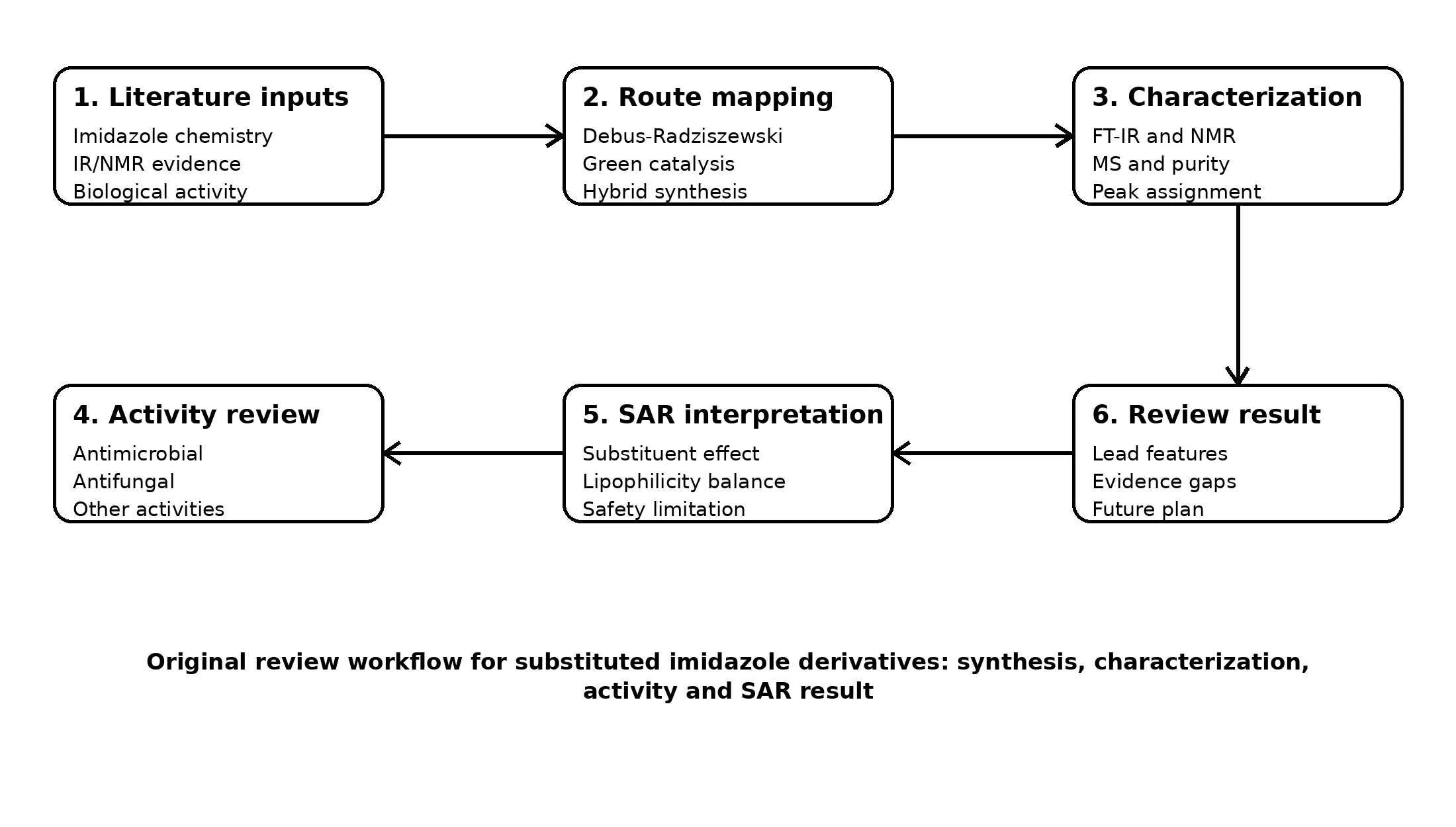
Figure 1. Original flow diagram for organizing synthesis, characterization, biological activity and review-based results of substituted imidazole derivatives.
The diagram is intended for a review manuscript and not as a laboratory protocol. In experimental papers, each box should be supported by batch-specific data such as reaction conditions, purity, spectra and validated biological results. In review writing, each box should be supported by properly cited studies and a clear explanation of how the evidence was interpreted.
6. Classical Synthesis of Substituted Imidazole Derivatives:
The Debus-Radziszewski imidazole synthesis is one of the most recognized classical routes for constructing imidazole rings. The general approach condenses a 1,2-dicarbonyl compound, an aldehyde and an ammonia source such as ammonium acetate to generate 2,4,5-trisubstituted imidazoles. When a primary amine is introduced, N-substituted or tetrasubstituted analogues can be accessed depending on substrate design and reaction conditions. [3,4]
General reaction concept:
1,2-dicarbonyl compound + aldehyde + ammonium acetate or ammonia source -> substituted imidazole derivative.
Mechanistically, the reaction involves imine formation, condensation, cyclization and aromatization. Its continued importance comes from convergent construction of a heteroaromatic ring in one pot. By changing the aldehyde, amine or dicarbonyl partner, a library of imidazole derivatives can be prepared for biological screening.
|
Route |
Typical starting materials |
Main advantage |
Common limitation |
|
Debus-Radziszewski condensation |
Benzil/glyoxal + aldehyde + NH4OAc |
One-pot ring formation and easy diversification. |
May require heat, acid or tedious purification. |
|
N-alkylation or N-acylation |
Imidazole + alkyl/acyl reagent |
Rapid N-substituent variation. |
Over-alkylation and regioselectivity issues. |
|
Hybrid synthesis |
Imidazole linked with pyrazole, thiazole, indole or Schiff base |
Broadens biological profile. |
Longer synthetic route and more characterization. |
|
Cyclocondensation methods |
Amidines, alpha-haloketones or related intermediates |
Useful for specific substitution patterns. |
Substrate-dependent optimization required. |
7. Green, Microwave and Ultrasound-Assisted Synthesis:
Recent imidazole chemistry has increasingly moved toward cleaner and faster synthetic approaches. Green chemistry strategies include solvent-free reactions, ethanol or water as safer media, recyclable heterogeneous catalysts, biopolymer-supported catalysts, nanocatalysts and microwave or ultrasound energy. These methods can shorten reaction time and reduce solvent waste, but their superiority must be supported by yield, purity, catalyst reuse and scalability data. [14-18]
Ultrasound-assisted imidazole synthesis has been reviewed as a method that improves mass transfer, accelerates condensation and may reduce reaction time compared with conventional heating. Microwave-assisted synthesis may also improve conversion and reduce time, although scale-up and hot-spot control must be evaluated carefully. [14]
|
Green parameter |
Preferred practice |
Manuscript reporting requirement |
|
Solvent |
Water, ethanol, solvent-free or benign solvent |
State solvent volume and work-up method. |
|
Catalyst |
Reusable solid acid, chitosan, ionic liquid or nanocatalyst |
Report catalyst loading and reuse cycles. |
|
Energy input |
Microwave or ultrasound when optimized |
Mention power, time, temperature and equipment. |
|
Purification |
Crystallization where possible |
Avoid excessive chromatography when greener option works. |
|
Safety |
Reduced corrosive acid and toxic solvent exposure |
Discuss residue removal before biological testing. |
For biological screening, residual catalysts and solvents must be controlled because they can independently inhibit microbes or affect cell viability. Therefore, a green synthesis claim is incomplete unless product purity and absence of interfering residues are demonstrated by appropriate analytical techniques.
8. Characterization Strategy for Imidazole Derivatives:
Proper characterization is essential before biological testing. A compound should not be evaluated as a novel derivative unless formation of the target structure has been supported by more than one analytical technique. TLC and melting point provide preliminary evidence of purity, while FT-IR, 1H NMR, 13C NMR and mass spectrometry provide structural confirmation. Elemental analysis or high-resolution mass spectrometry adds further support for molecular formula confirmation.
|
Technique |
Information obtained |
Relevance in imidazole manuscript |
|
TLC |
Reaction completion and purity trend |
Shows disappearance of starting material and single product spot. |
|
Melting point |
Identity and purity indication |
Sharp range supports a reasonably pure crystalline product. |
|
FT-IR |
Functional-group evidence |
C=N, N-H, C-N, aryl C=C and substituent bands. |
|
1H NMR |
Proton environment |
Aromatic protons, N-H, alkyl, methoxy or substituent protons. |
|
13C NMR |
Carbon skeleton |
Imidazole carbons, aryl carbons and carbonyl/alkoxy carbons. |
|
Mass spectrometry |
Molecular ion and fragments |
Confirms molecular weight and fragmentation pattern. |
|
Elemental analysis |
C, H, N composition |
Supports empirical formula and product purity. |
A publication-ready manuscript should assign spectral peaks rather than simply listing them. For example, disappearance of an aldehydic proton and appearance of imidazole/aromatic signals support cyclization. A molecular ion peak consistent with the calculated molecular weight strengthens the assignment. [9-13]
9. FT-IR Interpretation:
FT-IR spectroscopy is a rapid tool for confirming major functional groups in substituted imidazole derivatives. Imidazole C=N stretching commonly appears in the 1600-1650 cm-1 region, although the exact position changes with substitution, conjugation and hydrogen bonding. Aromatic C=C stretching may appear around 1450-1600 cm-1, and C-N stretching may be observed in the 1200-1350 cm-1 region. A free imidazole N-H group may show broad stretching around 3200-3400 cm-1, while N-substituted compounds may lack this band.
|
Structural feature |
Typical FT-IR clue |
Interpretation |
|
Imidazole C=N |
Approx. 1600-1650 cm-1 |
Supports heteroaromatic imine-type bond. |
|
N-H stretch |
Approx. 3200-3400 cm-1 |
Present when imidazole N-H remains unsubstituted. |
|
Aryl C=C |
Approx. 1450-1600 cm-1 |
Confirms aromatic substituent or phenyl rings. |
|
C-N stretch |
Approx. 1200-1350 cm-1 |
Supports C-N framework in heterocycle. |
|
NO2 group |
Asymmetric and symmetric nitro bands |
Useful for nitro-substituted aryl imidazoles. |
|
Methoxy group |
C-O stretching band |
Supports anisyl or alkoxy substitution. |
|
Halogenated aryl |
C-Cl/C-Br lower-frequency region |
Supports halo-substituted analogues with MS isotope pattern. |
IR alone is not sufficient to prove a new imidazole structure, because many aromatic and imine-like compounds show overlapping bands. However, it is valuable when interpreted together with NMR and MS. In a manuscript, IR peaks should be assigned to structural features, and the same compound code should be used across the synthetic table, IR table, NMR table and biological result table.
10. 1H NMR and 13C NMR Interpretation:
NMR spectroscopy is the most important routine method for structural confirmation of substituted imidazole derivatives. In 1H NMR spectra, aromatic protons usually appear as multiplets between about 6.5 and 8.5 ppm depending on substitution pattern. Imidazole N-H, if present, may appear as a broad downfield signal and can be confirmed by D2O exchange. Alkyl or methoxy substituents appear in their expected aliphatic regions and should integrate correctly.
13C NMR provides complementary evidence by showing imidazole ring carbons, aryl carbons and substituent carbons. In 2,4,5-triaryl imidazoles, carbon signals may overlap because of multiple aromatic rings, so careful assignment is required. DEPT, HSQC or HMBC may be added if the molecule is complex or if regioisomeric ambiguity is possible.
|
NMR signal type |
Common observation |
Manuscript significance |
|
Aromatic protons |
Multiplets around 6.5-8.5 ppm |
Confirms aryl or heteroaryl substitution. |
|
Imidazole N-H |
Broad/exchangeable downfield signal |
Supports unsubstituted N-H where expected. |
|
Methoxy protons |
Singlet around 3.7-3.9 ppm |
Confirms OCH3-bearing derivatives. |
|
Alkyl substituent |
Aliphatic signals based on group pattern |
Supports N-alkyl or side-chain substitution. |
|
13C imidazole carbons |
Downfield heteroaromatic carbons |
Supports imidazole ring formation. |
|
Carbonyl carbon |
Usually downfield if retained in hybrid structures |
Important for Schiff-base/acylated analogues. |
The most useful NMR discussion connects spectral evidence with reaction outcome. For example, loss of aldehyde proton, correct integration of aromatic and substituent protons, and mass confirmation together provide stronger proof than listing unassigned chemical shifts.
11. Mass Spectrometry, Purity and Reporting Format:
Mass spectrometry is valuable for confirming molecular weight and, in halogenated imidazoles, characteristic isotope patterns. Chlorinated derivatives show M and M+2 peaks, while brominated derivatives show a more prominent M/M+2 pattern. Elemental analysis or high-resolution mass spectrometry can further support molecular formula. Purity must also be addressed before bioassay because unreacted aldehydes, catalysts or solvents may cause false-positive activity.
|
Compound code |
Substituent type |
Expected proof before assay |
Result-reporting note |
|
IMD-1 |
4-chloro phenyl |
IR C=N, aryl protons, M/M+2 isotope pattern |
Do not report activity without solvent control. |
|
IMD-2 |
4-nitro phenyl |
NO2 IR bands, deshielded aryl protons, correct MS |
Discuss redox and toxicity concerns. |
|
IMD-3 |
4-methoxy phenyl |
OCH3 singlet, C-O band, correct molecular ion |
Consider solubility and permeability balance. |
|
IMD-4 |
Heteroaryl hybrid |
Additional heteroaryl NMR pattern and MS |
Mechanistic claim requires target assay. |
|
IMD-5 |
Schiff-base imidazole |
C=N band, imine proton/carbon signal, MS |
Hydrolytic stability should be checked. |
For an experimental manuscript, compound data should be presented as follows: yield, melting point, Rf value, IR peaks with assignment, 1H NMR with solvent, frequency and integration, 13C NMR with solvent and frequency, MS m/z value and elemental analysis. For a review manuscript, the same reporting format can be recommended without inventing values.
12. Antibacterial and Antifungal Activities:
Antimicrobial activity is one of the most frequently reported areas for substituted imidazoles. Testing usually includes Gram-positive organisms such as Staphylococcus aureus and Bacillus subtilis, Gram-negative organisms such as Escherichia coli, Pseudomonas aeruginosa and Klebsiella pneumoniae, and fungal strains such as Candida albicans, Aspergillus niger or Aspergillus fumigatus. [7-12]
Disc diffusion and well diffusion methods are useful for preliminary screening, but zone size depends on diffusion, solubility and agar interaction. MIC determination by broth dilution is more suitable for potency ranking. MBC and MFC values are needed when distinguishing bactericidal or fungicidal effects from simple growth inhibition. Current method references emphasize standardized inoculum, defined medium, incubation time, controls and reproducibility. [19-21,28,29]
|
Endpoint |
Meaning |
Required control/reporting detail |
|
Zone of inhibition |
Clear area around disc or well |
Report concentration, solvent and standard drug. |
|
MIC |
Lowest concentration preventing visible growth |
Report units and method; avoid clinical category unless breakpoint exists. |
|
MBC |
Lowest concentration killing bacteria on subculture |
Report MBC/MIC ratio if possible. |
|
MFC |
Lowest concentration killing fungi on subculture |
Use for fungicidal interpretation. |
|
Solvent control |
Effect of vehicle such as DMSO |
Essential to prove compound-specific activity. |
Antifungal imidazoles are classically associated with disruption of ergosterol biosynthesis through inhibition of lanosterol 14-alpha-demethylase, but novel imidazole derivatives should not be assumed to share this mechanism without biochemical or molecular confirmation. [22,23]
13. Other Biological Activities of Imidazole Derivatives:
Although antimicrobial activity is the main focus of many imidazole studies, the scaffold is pharmacologically broader. Imidazole derivatives have been reported in anti-inflammatory, analgesic, anticancer, antitubercular, antiviral, antidiabetic, antiulcer, antiparasitic and enzyme-inhibitory contexts. This broad profile occurs because imidazole can interact with diverse protein pockets and can be incorporated into molecules with different electronic and lipophilic profiles. [5,24-27]
|
Activity class |
Representative design logic |
Important caution |
|
Antifungal |
Azole-like interaction with sterol pathway or membrane targets |
Mechanism requires sterol or enzyme evidence. |
|
Antibacterial |
Halogenated, nitro or hybrid imidazole analogues |
MIC and cytotoxicity are required before lead claim. |
|
Anti-inflammatory |
Schiff-base or aryl-imidazole analogues designed for inflammatory targets |
In vivo safety and COX/cytokine studies needed. |
|
Anticancer |
Cytotoxic or kinase/enzyme-targeted derivatives |
Selectivity index against normal cells is essential. |
|
Antitubercular |
Lipophilic or nitrogen-rich analogues active against M. tuberculosis |
Requires mycobacterial assay and safety profiling. |
|
Antiviral |
Target-guided imidazole design against viral enzymes |
Docking alone is not biological proof. |
A review-based activity discussion should separate actual experimental evidence from computational prediction. Docking and DFT can help explain binding hypotheses and electronic effects, but they cannot replace biological assays. A strong paper combines synthesis, full spectral proof, standardized in vitro testing, cytotoxicity and mechanistic validation.
14. Review-Based Results: Activity Mapping:
The review result indicates that substituted imidazole derivatives are not a single-activity class; rather, their activity depends on ring substitution, attached pharmacophore, electronic distribution, lipophilicity and assay design. Antibacterial and antifungal activities are the most frequently emphasized in the selected literature, while anti-inflammatory, anticancer, antitubercular and antiviral activities represent important extended pharmacological directions. [6-13,24-27]
|
Review result area |
Observed pattern in literature |
Interpretive conclusion |
|
Synthetic accessibility |
Multicomponent methods provide rapid library generation. |
Imidazole is suitable for SAR-oriented medicinal chemistry. |
|
Spectral proof |
IR, NMR and MS are repeatedly used for confirmation. |
Publication quality improves when peaks are assigned, not only listed. |
|
Antibacterial profile |
Halogenated and electron-withdrawing substituents often improve potency. |
Electronic and lipophilic optimization is important. |
|
Antifungal profile |
Azole-related design remains relevant, especially for membrane/sterol targets. |
Mechanistic proof is needed for novel derivatives. |
|
Broader activity |
Anti-inflammatory, anticancer, TB and antiviral reports are increasing. |
Hybrid design expands biological scope. |
|
Limitations |
Poor solubility, absent cytotoxicity and weak controls are common. |
Assay validity is as important as chemical novelty. |
Overall, the review supports substituted imidazoles as promising lead-like scaffolds rather than finished therapeutic agents. The strongest future candidates will be those with low MIC or IC50 values, clear selectivity, acceptable solubility, reproducible synthesis, full spectral confirmation and target-based mechanistic evidence.
15. Structure-Activity Relationship:
SAR analysis connects structural features with biological response. In substituted imidazoles, the position and electronic character of substituents strongly affect potency. Electron-withdrawing groups such as nitro, chloro, bromo and trifluoromethyl may increase antimicrobial effects in some series by altering electron density, lipophilicity and target-binding interaction. However, the same groups may also increase toxicity or reduce solubility, so their effect must be evaluated case by case. [6,7,11]
|
Structural modification |
Possible activity effect |
Development concern |
|
Halogen substitution |
Improves lipophilicity and membrane interaction in many series. |
May increase cytotoxicity or metabolic persistence. |
|
Nitro substitution |
May enhance antibacterial or antiprotozoal effect. |
Redox toxicity and safety must be monitored. |
|
Methoxy/hydroxy groups |
Can improve binding or modulate solubility. |
Position-dependent effects; not always potency-enhancing. |
|
Heteroaryl hybrids |
Add additional binding sites and pi-interactions. |
More complex synthesis and characterization. |
|
Bulky aryl rings |
Increase hydrophobic target contacts. |
May reduce water solubility and diffusion. |
|
Schiff-base linkage |
Adds imine-based pharmacophore and metal coordination possibility. |
Hydrolytic stability requires study. |
A practical SAR conclusion is that no single substituent guarantees activity. The best derivatives usually combine adequate lipophilicity, balanced polarity, stable structure, target-compatible geometry and acceptable safety. Therefore, future imidazole studies should include both potency and selectivity metrics.
16. DISCUSSION:
The reviewed evidence shows that imidazole derivatives remain attractive because they are synthetically accessible and biologically versatile. Classical Debus-Radziszewski condensation provides a convenient starting point for triaryl and related imidazoles, while modern green and assisted methods aim to improve sustainability and reaction efficiency. Hybrid design further expands biological relevance by combining the imidazole ring with other pharmacophores such as pyrazole, thiazole, Schiff bases, indole or aryl systems. [10-18]
The most common weakness in imidazole derivative manuscripts is incomplete integration of chemistry and biology. Some papers provide biological zones without adequate MIC values; others provide spectral data without clear peak assignment or purity evidence. A publishable manuscript should allow a reader to trace the compound from starting material to final activity result. That means the same compound code must appear consistently in synthesis, spectral tables and biological tables.
Another important issue is mechanism. Imidazole antifungal agents are often linked to ergosterol biosynthesis, but a newly synthesized derivative may act differently. Similarly, antibacterial activity may arise from membrane disruption, enzyme inhibition, metal chelation or redox stress. Therefore, molecular docking should be treated as a hypothesis-generating tool rather than final proof. Strong papers should add enzyme assay, membrane assay, microscopy, sterol quantification, resistance profiling or gene-expression studies where possible. [19-23]
The review-based result supports continued work on imidazole derivatives, especially when chemical design is guided by SAR and biological evaluation is standardized. Future manuscripts should avoid exaggerated clinical claims and should describe new molecules as hits or leads unless supported by in vivo efficacy, toxicity and pharmacokinetic data.
17. Limitations and Future Scope:
This manuscript is limited by its review-based nature. It does not report newly synthesized compounds, actual laboratory yields, melting points, spectral files or original MIC data. Therefore, its results should be understood as evidence synthesis and manuscript guidance. For a final experimental paper, each compound must be synthesized, purified and characterized independently, and activity must be tested under standardized conditions.
|
Limitation in many reports |
Scientific risk |
Recommended improvement |
|
Only zone of inhibition reported |
Diffusion may distort activity interpretation. |
Add MIC, MBC or MFC with controls. |
|
No purity proof before assay |
Impurity may cause false activity. |
Use TLC, melting point, IR, NMR and MS. |
|
No solvent control |
Vehicle may inhibit growth. |
Include DMSO/blank control. |
|
No cytotoxicity test |
Active compound may be nonspecific toxicant. |
Add mammalian cell viability assay. |
|
Only docking study |
Predicted binding may not occur biologically. |
Add enzyme or cell-based validation. |
|
Poor solubility discussion |
Assay concentration may be unreliable. |
Measure solubility or use formulation strategy. |
Future scope should focus on designing imidazole hybrids with better selectivity, testing against resistant strains, including biofilm models, using cytotoxicity and hemolysis assays, applying ADMET prediction early, validating mechanisms experimentally and exploring nanoformulation strategies for poorly soluble leads. Green synthesis should be combined with true product quality and assay reproducibility.
CONCLUSION
Substituted imidazole derivatives represent an important and adaptable class of heterocyclic compounds in medicinal chemistry. Their value arises from the compact aromatic 1,3-diazole ring, the presence of two nitrogen atoms and the ability to introduce diverse substituents at multiple positions. This review manuscript summarizes the basic chemistry, synthesis, FT-IR and NMR characterization, biological activities, SAR observations and review-based results for substituted imidazole derivatives.
The review indicates that multicomponent synthesis, especially Debus-Radziszewski-type chemistry, remains a practical route for generating imidazole libraries. Green, microwave and ultrasound-assisted methods may improve efficiency when validated with yield, purity, catalyst reuse and safe work-up. Characterization should combine TLC, melting point, FT-IR, 1H NMR, 13C NMR, mass spectrometry and elemental or high-resolution mass analysis where possible.
Biologically, imidazole derivatives show strongest recurring relevance in antimicrobial and antifungal research, with additional activity reported in anti-inflammatory, anticancer, antitubercular and antiviral areas. The main review result is that activity is driven by substituent electronics, lipophilicity, hybrid pharmacophore design and assay validity. Electron-withdrawing groups, halogenated aryl rings and heteroaryl hybridization often improve activity, but safety, solubility and mechanism remain limiting factors.
A publishable imidazole manuscript should therefore integrate synthesis, spectral proof and biological testing into one reproducible scientific story. No compound should be advanced as a lead only on the basis of a zone of inhibition or docking score. The strongest future work will combine complete characterization, standardized MIC-based activity, cytotoxicity, ADMET evaluation and mechanism confirmation.
REFERENCES


Pawar Priti, Dr. Vishal Babar, Dr. Sudarshan Nagrale, Synthesis, Characterization and Biological Activities of Substituted Imidazole Derivatives: A Review, Int. J. of Pharm. Sci., 2026, Vol 4, Issue 7, 1154-1166, https://doi.org/10.5281/zenodo.21218148
 10.5281/zenodo.21218148