
View Article

Abstract

Blockchain technology can solve persistent problems in conventional clinical trials since it is decentralised, irreversible, transparent, and safe. This chapter examines how blockchain technology can be incorporated into clinical trial processes to overcome obstacles and challenges with patient confidentiality, data breaches, inefficiencies, and lack of transparency. Blockchain improves data security, streamlines consent and protocol management, and promotes patient-centered procedures by leveraging cryptographic hashing, smart contracts, and decentralized data sharing. The efficiency, dependability, and transparency of trials are increased by blockchain, which offers immediate access to verified data, makes regulatory compliance easier, and enhances stakeholder coordination. Although blockchain has enormous promise to transform clinical research, widespread implementation of this technology will require overcoming infrastructure, legal, and technical obstacles. The entire chapter acknowledges blockchain as a game-changing technology that can speed up medical advancements and enhance patient outcomes by creating clinical trial architectures that are more effective and secure.

Keywords

Blockchain, Clinical trials, Decentralised, Confidentiality, Data breaches, Smart contracts

Introduction

× Popup Image

Blockchain is a decentralized, distributed, and public ledger that works by storing data across many computer networks that can be part of blockchain infrastructure [1]. Blockchain is the foundation of Bitcoin, which was introduced in 2009. It is a system design that is made up of three main elements: a distributed network, a shared ledger, and digital transactions [2]. In blockchain, the information is structured in the form of blocks.

A blockchain comprises chained blocks in which each block is linked to the next. These blocks contain stored data, and each block contains details of transactions that occur between the users of the system. Each block is made up of three main components: first, any data or information stored in the block; second, each block has its fingerprint, known as a hash, which is a way to uniquely identify a block among other blocks; and third, each of these block stores the fingerprint of the block before it. It removes the need for third parties in financial transactions by keeping the data secure and the history of the transactions verifiable[3]. Smart contracts are the essential features of the next-generation blockchain technology platform, which stores, executes, and verifies directly on the blockchain[4]. As blockchain technology continues to evolve, its services are also expanding beyond finance, particularly in the healthcare sector[5-9]. In clinical trials, blockchain-based models are suggested, which empower patients to have more control over their stored medical data and also enhance secure data sharing across the platforms. Additionally, blockchain technology can provide basic support or even replace the data infrastructure used in traditional clinical trials [10-12]. The healthcare sector persistently seeks ways to improve data safety and efficacy in today's digital age. As digitization expands with an increasing population, safeguarding sensitive patient data management is becoming more and more difficult [13].Traditional centralized database systems in today's era are no longer able to meet the complex demands of healthcare organizations, particularly when it comes to ensuring the safety and efficacy of the data[14]. Clinical trials play a crucial role when it comes to developing new treatments and providing evidence-based scientific data on the safety, efficacy, and therapeutics usage of treatment, drug, medical device, or procedure[15].However, the traditional clinical trial system encounters challenges and barriers related to patient enrollment, engagement, and financial cost [16, 17]. Successful patient enrollment plays a vital role in clinical trials; any delay in meeting the enrollment milestone can result in a waste of resources, time, funds and unreliable statistical outcomes[18, 19]. A study showed that about 85% of clinical trials fail to achieve recruitment goals on time[20]. Regardless of numerous studies over the years addressing the difficulties of identifying and enrolling participants into clinical trials, challenges and barriers continue to persist[16, 19, 21].

Data silos, patient recruiting delays, confidentiality issues, and high operating expenses are some of the persistent challenges with traditional clinical trial systems. In order to solve these problems, blockchain provides a decentralized and safesystem that guarantees data integrity, enhances patient involvement, maintains confidentiality, and permits open, instantaneous data exchange. By automating consent and protocol management, smart contracts can cut down on delays and boost productivity. This chapter examines how blockchain technology might modernize clinical trials, enhancing their security, transparency, and patient-centricity.

TECHNICAL FRAMEWORK AND MECHANISM OF BLOCKCHAIN TECHNOLOGY:

Blockchain was first outlined as the foundational block of Bitcoin, which is a cryptocurrency introduced by Satoshi in 2009 [22-24]. Blockchain seeks to establish a reliable consensus for numerous writers to record transaction information, even if those writers are unidentified or unreliable. Blockchain technology is frequently hailed as a cutting-edge and revolutionary system that uses public verifiability to guarantee immutability and audit trails of online users' cryptographically secure transactions. The creation of new bitcoins and the ongoing verification of Bitcoin transactions are both monitored and maintained by the decentralised peer-to-peer Bitcoin system. In order to create new bitcoins, a number of connected computers use the internet to carry out complex cryptographic operations known as mining.Mining involves finding a "proof of work" that validates Bitcoin transactions and adds them to a vast, decentralized, and transparent ledger called Blockchain[22, 24].

Blockchain technology can be constructed either as a "public chain" or a "private chain". The public chain can also be named a "permissionless chain," which means that all users can enter the public chain without any additional setup or special permission. In the public blockchain network and the Ethereum blockchain, "Bitcoin" and "Ether" are digital applications. On the other hand, a private chain is named a "permissioned chain". In the permission chain, only the creator can have control over who can join the network. To participate in the private chain, all nodes must install the identical "genesis block" [Fig. 1], which is defined as the starting block of the private chain created by the creator. Additionally, each of the nodes should connect with at least one other peer node, which is already a part of the chain. As each blockchain has a unique genesis block that can only be obtained from the creator [25, 26]. Key features of blockchain include:
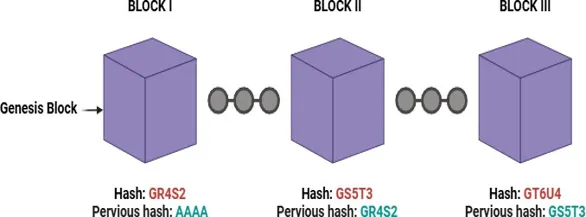
Blockchain Technology [Fig. 1]

Decentralization:

The traditional clinical trial system works under central authorities, such  as regulatory bodies, pharmaceutical industries, or health and research institutions, to supervise and validate data. However, these types of centralized systems are susceptible to data breaches, data tampering, and inefficiencies. In blockchain, no single entity has control over the stored data or information as it functions on a decentralized network where multiple nodes work together to verify and store data, which directly eliminates the chances of fraud and manipulation[27-29]. The data distribution occurs across multiple nodes, unlike the centralized database, which reduces the chances of a cyber-attack.

Immutability:

In blockchain, immutability is one of the key advantages. Each transaction can be available to be seen by everyone, which means the information cannot be changed or removed once the data is stored in a blockchain. Each block of the blockchain is securely connected to the previous one by using cryptographic methods, making it difficult for an unauthorized person to alter or remove the stored information[28, 29].

Transparency:

Blockchain improves transparency by allowing authorized stakeholders real-time access to recorded data. In the case of traditional clinical trials, where information is often divided across multiple organizations, blockchain enables all the relevant parties to access unified and consistent records of clinical trial data[27-30].

Security:

One of the key features of blockchain technology is security, especially when it comes to clinical trials involving patient-sensitive data that needs to be protected. Blockchain safeguards data security through the following mechanisms, ensuring the data is safe and untampered:
      1. Cryptographic Hashing: In blockchain, each of the blocks contains a unique hash, which is linked to the previous block, making it impossible for an unauthorized party to access or manipulate the data. Any attempt to alter the stored data results in changing the hash sequence and notifies the system about potential fraud or tampering [29, 31].
      2. Public and private keys: Blockchain uses asymmetric encryption, where users have unique cryptographic keys that ensure that only an authorized entity can access the stored data[29].
      3. Consensus Mechanism: Blockchain works in accordance with consensus protocols like "Proof of Work" or "Proof of Stake" to verify the transactions, which is a security algorithm. The mining process is the process of resolving a computational problem that is presented by the Proof-of-Work platform. To attach the block to the Blockchain, the node that is interested in mining makes use of the Proof-of-Work protocol. Under these circumstances, the node is required to select the block that possesses the highest hash value, and then it is able to attach the block to the Proof of Stake (PoS) system. Proof of Stake is a protocol that poses a computational difficulty, and the process of minting is the process of addressing that challenge. When it comes to mining, this technique requires a significantly lower number of computations. While the trusted entities collaborate to add records to the Proof-of-Stake protocol, there is also a voting mechanism that determines whether or not the block should be accepted on the Blockchain. This verification process eliminates the alteration of data by unauthorized persons and promotes integrity [29, 32, 33].
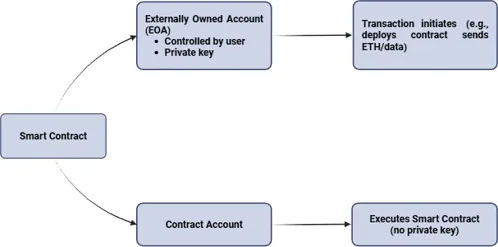
      4. Smart Contract: The script that is kept on the Blockchain is called a smart contract. The smart contract has a set of executable functions, state variables, and a unique address. By addressing the transaction to the smart contract, the user initiates it. Then, based on the information included in the active transaction, the smart contract is executed autonomously and automatically on each node of the chain in the predetermined order.These self-executing contracts automatically enforce predetermined rules and regulations, enhancing the security in clinical trials by minimizing human errors [27, 29, 30]. The smart contract's structure is shown in Fig. 2. The complete working of the blockchain is shown in a flowchart in Fig. 3.

The smart contract structure [Fig. 2]
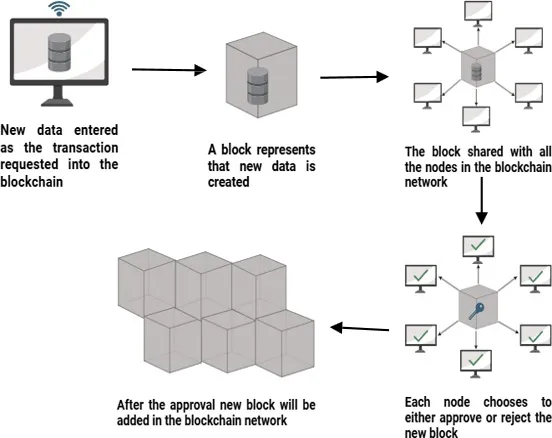
Blockchain in a flowchart [Fig. 3]

CLINICAL TRIALS AND BARRIERS TO TRADITIONAL CLINICAL TRIALS:

In conclusion, because traditional clinical trials rely on a centralised system, they are vulnerable to data manipulation and tampering by an unauthorised individual. This can result in data breaches and a lack of transparency, which further impedes regulatory compliance. By providing a decentralised approach, guaranteeing secure data sharing, reducing the danger of manipulation and falsification, and protecting patient privacy, blockchain technology has the potential to completely change clinical trials. Smart contracts automate trial processes, lowering expenses and burden while guaranteeing protocol compliance.In clinical trials, substantial research data is generated to support the approval of new drugs, a research study is conducted to evaluate the safety, efficacy, and adverse effects of treatments, medical devices, and procedures for human participants[34]. These trials are important for the advancement of medical science, improving the quality of life by promoting patient care, and also ensuring that the new therapies meet the regulatory standards. Throughout the clinical trial, the data of participants at fixed intervals, such as vital signs, symptoms, laboratory tests, adverse reactions, and complications caused by the investigational drug, are gathered by the investigators. Clinical trial collaborative research among diverse stakeholders, which includes regulatory authorities, pharmaceutical industries, clinical sites, and most importantly, the participants included in the study[34]. Clinical trials typically follow a structured process that includes (Fig. 4):
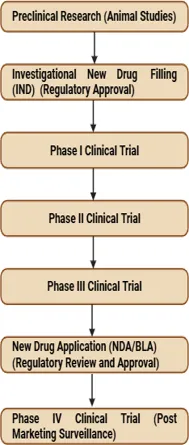
  1. Preclinical stage: It is an early stage that focuses on determining potential treatment effectiveness and includes laboratory and animal testing[34, 35].
  2. Phase 1 Trials: It is the very first stage of human testing and includes healthy volunteers in small-scale designs to primarily assess the safety, tolerability, and pharmacokinetics, and secondarily assess the pharmacodynamics of the new treatment[15, 34, 36-38].
  3. Phase 2 Trials: Therapeutic Exploratory Trials are conducted on a larger group of the population to evaluate the effectiveness (primary objective), safety (secondary objective), and monitor side effects[15, 34, 38, 39].
  4. Phase 3 Trials: Therapeutic Confirmatory trials, extensive testing in large-scale, multicentre, randomized, controlled trials to confirm the efficacy of the drug against existing therapy[15, 34, 38].
  5. Regulatory Submission: Trial findings are presented to regulatory bodies such as the NDA (new drug application). Formal proposals and sufficient evidence are provided related to the drug safety, effectiveness, and potential side effects to the FDA/DCGI to approve new drugs for sale[35].
  6. Phase 4 Trials: Post Marketing Surveillance (PMS) to track the long-term effectiveness, detect rare harmful effects, and evaluateoverdosage to ensure the safety and efficacy of the new treatment [15, 34, 38].

Structural Representation of Clinical Trial [Fig.4]

The traditional clinical trial system faces various challenges and barriers, such as data integrity, transparency, confidentiality, and compliance with regulatory bodies, which can directly result in a negative impact on the reliability, efficiency, and effectiveness of medical research. The complicated nature of clinical trials often leads to research delays, increases the cost, and raises problems related to ethical concerns. The following are the major challenges faced in the traditional clinical trial system:

Data Breach:

In traditional clinical trials, the overall data reporting system is often controlled by researchers involved in the study and pharmaceutical industries, which can lead to data manipulation. Research misconduct, such as missing out on negative findings and exaggerating positive results, can deteriorate the trust in clinical trial research and result in the approval of ineffective or unsafe drugs. Fabrication or misinterpretation of data can lead to severe complications such as harming patient health, hindering the security of sensitive patient data, misguiding healthcare professionals, and wastage of resources. The immutable nature of blockchain secures all the data entries, making them permanent and traceable, reducing the chances of data tampering by preventing access by unauthorized entities[40, 41].

Lack of Transparency:

Clinical trial limited access can lead to slowing the validation of outcomes and hinder research progress. It becomes difficult for independent researchers to verify findings cause the trial data is not completely shared with regulatory bodies or the public in many cases. Lack of transparency can also result in doubling the efforts, where multiple clinical trials unintentionally work on similar studies without sharing the data. Blockchain technology provides real-time access to data to the authorized entity or stakeholders, promoting data integrity and collaboration between research organizations[42].

Patient Confidentiality Concerns:

It becomes difficult to maintain patient anonymity or privacy while maintaining data accessible in clinical trials. Sensitive patient medical information is exposed in the traditional clinical trial method because patient data is kept in a centralised database that is vulnerable to unauthorised access. On the other hand, patients can access their data using private keys thanks to cryptographic security and the decentralised nature of blockchain technology, which guarantees HIPAA and GDPR compliance. Additionally, by enabling the anonymisation and pseudonymization of patient data, blockchain technology guards against data breaches. [43].

Inefficient Data Management:

A large amount of data is created in clinical trials, which is often stored in paper records or siloed digital systems. This fragmented approach can result in errors, such as inefficiencies, and make it challenging to share data across the different systems. Issues like data inconsistencies, information duplication, fabrication, and data omission can hinder the progress of research, escalating the operational cost. The interoperable and cohesive data management system of blockchain technology ensures the easy access of data to all authorized parties. The errors of the traditional clinical trial system can be minimized through blockchain smart contracts[40]

Regulatory Compliance Issues:

The completion of clinical trials is slowed down by the stringent regulatory requirements. Before approving new medications, the regulatory bodies assert this by data assessment and documentation. Manual audits, cross-referencing data from other sources, and resolving anomalies are often necessary to meet compliance standards, which can delay approvals and raise trial expenses. Blockchain reduces the need for human inspections by providing regulators with transparent, verifiable data that is time-stamped to facilitate compliance. Moreover, smart contracts can automate compliance tasks, confirming that every step of the trials  follows  regulatory  standards,  therefore facilitating approvals and diminishing administrative workload[44].

INCORPORATION OF BLOCKCHAIN IN CLINICAL TRIALS:

The incorporation of Blockchain technology in clinical trials improves reliability and trustworthiness by providing secure and decentralized data sharing for research communities and ensuring the safety of patient privacy. Blockchain in clinical trials is transforming healthcare by increasing security, efficiency, and transparency[10].The key roles of blockchain in clinical trials are as follows:

Immutable and Secure Data Recording:

Blockchain technology ensures that the research information or data, informed consent form, patient privacy, and trial findings are stored in an immutable and transparent ledger, which eliminates the chances of data breach, fraud, access, or alteration by unauthorized entities by maintaining confidence in the reliability of study findings[45].

Improves Data Transparency:

Blockchain technology provides real-time access to data or information to all the authorized entities, including stakeholders, researchers, regulatory bodies, and patients. Blockchain empowers the controlled access of medical data to patients, maintains confidentiality, enhances transparency, accelerates the validation process, and promotes collaboration between organizations [10, 45, 46].

Smart Contracts:

Smart contracts handle all the important tasks of clinical trials, including the enrollment of patients, data collection, data validation, and compliance with regulatory guidelines. These contracts function automatically and independently, doing away with the need for a mediator or third party, reducing administrative load, and guaranteeing that trials are carried out precisely and effectively in compliance with protocol. [10].

Improved Patient Consent and Privacy:

Consent is obtained in traditional trials on paper or in centralised digital records, which compromise patient privacy because they are readily lost or altered. Blockchain-based digital system identity solutions guarantee time-stamped, tamper-proof, and easily auditable data by permanently securing patient permission and making it difficult to change. This system reduces the risks and errors in trials and promotes compliance with regulatory bodies, making trials efficient and trustworthy[10, 46].

Decentralized Data Management:

Blockchain minimizes duplication and fabrication, eliminating data barriers by promoting smooth data sharing among different organizations. Blockchain ensures secure access and exchange of trial data within a decentralized network among all the trial stakeholders, such as hospitals, research institutions, and pharmaceutical industries [10, 46].

DISCUSSION AND CONCLUSION:

The implementation of blockchain technology in clinical trials provides a revolutionary approach to overcoming the challenges and barriers of the traditional clinical trial. Blockchain has the ability to securely store data without any breach or tampering only allowing access of authorized entities. Blockchain is a decentralized, immutable, transparent, and secure ledger that plays a crucial role in maintaining data integrity, patient confidentiality, and regulatory guidelines. The major challenge of a traditional clinical trial system is inefficient data management, which directly creates problems like duplication and data fabrication. Blockchain’s immutability ledger system secures the data accuracy and prevents data alteration by unauthorized entities. Cryptographic hashing of blockchain enhances data security and prevents the chances of a data breach or fraud which promotes transparency in clinical trials. The research findings in the traditional clinical trial system are not always fully disclosed which mainly results in biases and inefficiencies in the development of drugs. Blockchain fosters cooperation between academics, regulatory bodies, and healthcare systems by enabling safe data exchange, which encourages evidence-based research. Patient enrolment and consent management are two major obstacles to clinical trials, but blockchain-based smart contracts offer a workable alternative by automating patient consent procedures to improve enrolment transparency. While there are potential benefits to employing blockchain technology in clinical studies, there are also disadvantages. Adoption of blockchain necessitates a significant shift from existing systems, including the development of new legal frameworks, standardised protocols, and dependable infrastructure. Blockchain enhances security as well, but problems with scalability, interoperability, and interface with current healthcare systems must be fixed before it can be widely used.

In conclusion, because traditional clinical trials rely on a centralised system, they are vulnerable to data manipulation and tampering by an unauthorised individual. This can result in data breaches and a lack of transparency, which further impedes regulatory compliance. By providing a decentralised approach, guaranteeing secure data sharing, reducing the danger of manipulation and falsification, and protecting patient privacy, blockchain technology has the potential to completely change clinical trials. Smart contracts automate trial processes, lowering expenses and burden while guaranteeing protocol compliance. Integrating blockchain technology in clinical trials maintains patient confidentiality, enhances consent management, and improves reliability, efficiency, and collaboration among organizations, speeding up medical advancements and improving patient outcomes.

REFERENCES

  1. Zheng, Z., et al. An overview of blockchain technology: Architecture, consensus, and future trends. in 2017 IEEE international congress on big data (BigData congress). 2017. Ieee.
  2. Linn, L.A. and M.B. Koo. Blockchain for health data and its potential use in health it and health care related research. in ONC/NIST use of blockchain for healthcare and research workshop. Gaithersburg, Maryland, United States: ONC/NIST. 2016.
  3. Maslove, D.M., et al., Using blockchain technology to manage clinical trials data: a proof-of-concept study. JMIR medical informatics, 2018. 6(4): p. e11949.
  4. Buterin, V., A next-generation smart contract and decentralized application platform. white paper, 2014. 3(37): p. 2-1.
  5. Kuo, T.-T., H.-E. Kim, and L. Ohno-Machado, Blockchain distributed ledger technologies for biomedical and health care applications. Journal of the American Medical Informatics Association, 2017. 24(6): p. 1211-1220.
  6. Roman-Belmonte, J.M., H. De la Corte-Rodriguez, and E.C. Rodriguez-Merchan, How blockchain technology can change medicine. Postgraduate medicine, 2018. 130(4): p. 420-427.
  7. Gammon, K., Experimenting with blockchain: can one technology boost both data integrity and patients' pocketbooks? Nature Medicine, 2018. 24(4): p. 378-382.
  8. Sylim, P., et al., Blockchain technology for detecting falsified and substandard drugs in distribution: pharmaceutical supply chain intervention. JMIR research protocols, 2018. 7(9): p. e10163.
  9. Ichikawa, D., M. Kashiyama, and T. Ueno, Tamper-resistant mobile health using blockchain technology. JMIR mHealth and uHealth, 2017. 5(7): p. e7938.
  10. Benchoufi, M. and P. Ravaud, Blockchain technology for improving clinical research quality. Trials, 2017. 18(1): p. 1-5.
  11. Benchoufi, M., R. Porcher, and P. Ravaud, Blockchain protocols in clinical trials: Transparency and traceability of consent. F1000Research, 2018. 6: p. 66.
  12. Nugent, T., D. Upton, and M. Cimpoesu, Improving data transparency in clinical trials using blockchain smart contracts. F1000Research, 2016. 5: p. 2541.
  13. Mumtaz, H., et al., Current challenges and potential solutions to the use of digital health technologies in evidence generation: a narrative review. Frontiers in digital health, 2023. 5: p. 1203945.
  14. Kasyapa, M.S. and C. Vanmathi, Blockchain integration in healthcare: a comprehensive investigation of use cases, performance issues, and mitigation strategies. Frontiers in Digital Health, 2024. 6: p. 1359858.
  15. Kandi, V. and S. Vadakedath, Clinical trials and clinical research: a comprehensive review. Cureus, 2023. 15(2).
  16. Frank, G., Current challenges in clinical trial patient recruitment and enrollment. SoCRA Source, 2004. 2(February): p. 30-38.
  17. Patrick-Lake, B., Patient engagement in clinical trials: The Clinical Trials Transformation Initiative’s leadership from theory to practical implementation. Clinical Trials, 2018. 15(1_suppl): p. 19-22.
  18. Lai, J., et al., Drivers of start-up delays in global randomized clinical trials. Therapeutic innovation & regulatory science, 2021. 55: p. 212-227.
  19. Bull, J., et al., Barriers to clinical trial recruitment and possible solutions: A stakeholder survey. App Clin Trials, 2015.
  20. Penberthy, L.T., et al., Effort required in eligibility screening for clinical trials. Journal of Oncology Practice, 2012. 8(6):p. 365-370.
  21. Gul, R.B. and P.A. Ali, Clinical trials: the challenge of recruitment and retention of participants. Journal of clinical nursing, 2010. 19(1-2): p. 227-233.
  22. Marzo, G., F. Pandolfelli, and V.D.P. Servedio, Modeling innovation in the cryptocurrency ecosystem. Sci Rep, 2022. 12(1): p. 12942.
  23. Nakamoto, S., Bitcoin: A peer-to-peer electronic cash system. 2008.
  24. Cocco, L. and M. Marchesi, Modeling and Simulation of the Economics of Mining in the Bitcoin Market. PLoS One, 2016. 11(10): p. e0164603.
  25. Zarchi, G., et al., Blockchains as a means to promote privacy protecting, access availing, incentive increasing, ELSI lessening DNA databases. Frontiers in Digital Health, 2023. 4: p. 1028249.
  26. Zhuang, Y., et al. Applying blockchain technology for health information exchange and persistent monitoring for clinical trials. in AMIA Annual Symposium Proceedings. 2018.
  27. Bahga, A. and V.K. Madisetti, Blockchain platform for industrial internet of things. Journal of Software Engineering and Applications, 2016. 9(10): p. 533-546.
  28. Songara, A. and L. Chouhan. Blockchain: a decentralized technique for securing Internet of Things. in Conference paper. 2017.
  29. Golosova, J. and A. Romanovs. The advantages and disadvantages of the blockchain technology. in 2018 IEEE 6th workshop on advances in information, electronic and electrical engineering (AIEEE). 2018. IEEE.
  30. Bahga, A. and V. Madisetti, Internet of Things: A hands-on approach. 2014: Vpt.
  31. Fernández-Caramés, T.M. and P. Fraga-Lamas, A Review on the Use of Blockchain for the Internet of Things. Ieee Access, 2018. 6: p. 32979-33001.
  32. Spasovski, J. and P. Eklund. Proof of stake blockchain: performance and scalability for groupware communications. in Proceedings of the 9th International Conference on Management of Digital EcoSystems. 2017.
  33. Crosby, M., et al., Blockchain technology: Beyond bitcoin. Applied innovation, 2016. 2(6-10): p. 71.
  34. Mahan, V.L., Clinical trial phases. International Journal of Clinical Medicine, 2014. 5(21): p. 1374.
  35. Huang, W., et al., General principles of preclinical study design. Good research practice in non-clinical pharmacology and biomedicine, 2020: p. 55-69.
  36. Friedman, L.M., et al., Fundamentals of clinical trials. 2015: Springer.
  37. Storer, B.E., Design and analysis of phase I clinical trials. Biometrics, 1989: p. 925-937.
  38. Kandi, V. and S. Vadakedath, Clinical research: an overview of study types, designs, and their implications in the public health perspective. Am J Clin Med Res, 2021. 9(2): p. 36-42.
  39. Torres-Saavedra, P.A. and K.A. Winter, An overview of phase 2 clinical trial designs. International Journal of Radiation Oncology* Biology* Physics, 2022. 112(1):p. 22-29.
  40. Zhuang, Y., et al. Development of a blockchain framework for virtual clinical trials. in AMIA Annual Symposium Proceedings. 2021.
  41. George, S.L. and M. Buyse, Data fraud in clinical trials. Clin Investig (Lond), 2015. 5(2): p. 161-173.
  42. Djurisic, S., et al., Barriers to the conduct of randomised clinical trials within all disease areas. Trials, 2017. 18(1): p. 360.
  43. Nair, S.C. and H. Ibrahim, Assessing subject privacy and data confidentiality in an emerging region for clinical trials: United Arab Emirates. Accountability in research, 2015. 22(4): p. 205-221.
  44. Parveen, A., et al., Challenges and guidelines for clinical trial of herbal drugs. Journal of Pharmacy and Bioallied Sciences, 2015. 7(4): p. 329-333.
  45. Omar, I.A., et al., Applications of blockchain technology in clinical trials: review and open challenges. Arabian Journal for Science and Engineering, 2021. 46(4): p. 3001-3015.
  46. Hussain, S.M., B. Akula, and M.J.C.S. Reis, Blockchain's Impact in Clinical Trials: A Revolution for Transparency, Efficiency, and Ethical Conduct in Drug Development. Blockchain-Enabled Solutions for the Pharmaceutical Industry, 2025: p. 393-411.

Reference

  1. Zheng, Z., et al. An overview of blockchain technology: Architecture, consensus, and future trends. in 2017 IEEE international congress on big data (BigData congress). 2017. Ieee.
  2. Linn, L.A. and M.B. Koo. Blockchain for health data and its potential use in health it and health care related research. in ONC/NIST use of blockchain for healthcare and research workshop. Gaithersburg, Maryland, United States: ONC/NIST. 2016.
  3. Maslove, D.M., et al., Using blockchain technology to manage clinical trials data: a proof-of-concept study. JMIR medical informatics, 2018. 6(4): p. e11949.
  4. Buterin, V., A next-generation smart contract and decentralized application platform. white paper, 2014. 3(37): p. 2-1.
  5. Kuo, T.-T., H.-E. Kim, and L. Ohno-Machado, Blockchain distributed ledger technologies for biomedical and health care applications. Journal of the American Medical Informatics Association, 2017. 24(6): p. 1211-1220.
  6. Roman-Belmonte, J.M., H. De la Corte-Rodriguez, and E.C. Rodriguez-Merchan, How blockchain technology can change medicine. Postgraduate medicine, 2018. 130(4): p. 420-427.
  7. Gammon, K., Experimenting with blockchain: can one technology boost both data integrity and patients' pocketbooks? Nature Medicine, 2018. 24(4): p. 378-382.
  8. Sylim, P., et al., Blockchain technology for detecting falsified and substandard drugs in distribution: pharmaceutical supply chain intervention. JMIR research protocols, 2018. 7(9): p. e10163.
  9. Ichikawa, D., M. Kashiyama, and T. Ueno, Tamper-resistant mobile health using blockchain technology. JMIR mHealth and uHealth, 2017. 5(7): p. e7938.
  10. Benchoufi, M. and P. Ravaud, Blockchain technology for improving clinical research quality. Trials, 2017. 18(1): p. 1-5.
  11. Benchoufi, M., R. Porcher, and P. Ravaud, Blockchain protocols in clinical trials: Transparency and traceability of consent. F1000Research, 2018. 6: p. 66.
  12. Nugent, T., D. Upton, and M. Cimpoesu, Improving data transparency in clinical trials using blockchain smart contracts. F1000Research, 2016. 5: p. 2541.
  13. Mumtaz, H., et al., Current challenges and potential solutions to the use of digital health technologies in evidence generation: a narrative review. Frontiers in digital health, 2023. 5: p. 1203945.
  14. Kasyapa, M.S. and C. Vanmathi, Blockchain integration in healthcare: a comprehensive investigation of use cases, performance issues, and mitigation strategies. Frontiers in Digital Health, 2024. 6: p. 1359858.
  15. Kandi, V. and S. Vadakedath, Clinical trials and clinical research: a comprehensive review. Cureus, 2023. 15(2).
  16. Frank, G., Current challenges in clinical trial patient recruitment and enrollment. SoCRA Source, 2004. 2(February): p. 30-38.
  17. Patrick-Lake, B., Patient engagement in clinical trials: The Clinical Trials Transformation Initiative’s leadership from theory to practical implementation. Clinical Trials, 2018. 15(1_suppl): p. 19-22.
  18. Lai, J., et al., Drivers of start-up delays in global randomized clinical trials. Therapeutic innovation & regulatory science, 2021. 55: p. 212-227.
  19. Bull, J., et al., Barriers to clinical trial recruitment and possible solutions: A stakeholder survey. App Clin Trials, 2015.
  20. Penberthy, L.T., et al., Effort required in eligibility screening for clinical trials. Journal of Oncology Practice, 2012. 8(6):p. 365-370.
  21. Gul, R.B. and P.A. Ali, Clinical trials: the challenge of recruitment and retention of participants. Journal of clinical nursing, 2010. 19(1-2): p. 227-233.
  22. Marzo, G., F. Pandolfelli, and V.D.P. Servedio, Modeling innovation in the cryptocurrency ecosystem. Sci Rep, 2022. 12(1): p. 12942.
  23. Nakamoto, S., Bitcoin: A peer-to-peer electronic cash system. 2008.
  24. Cocco, L. and M. Marchesi, Modeling and Simulation of the Economics of Mining in the Bitcoin Market. PLoS One, 2016. 11(10): p. e0164603.
  25. Zarchi, G., et al., Blockchains as a means to promote privacy protecting, access availing, incentive increasing, ELSI lessening DNA databases. Frontiers in Digital Health, 2023. 4: p. 1028249.
  26. Zhuang, Y., et al. Applying blockchain technology for health information exchange and persistent monitoring for clinical trials. in AMIA Annual Symposium Proceedings. 2018.
  27. Bahga, A. and V.K. Madisetti, Blockchain platform for industrial internet of things. Journal of Software Engineering and Applications, 2016. 9(10): p. 533-546.
  28. Songara, A. and L. Chouhan. Blockchain: a decentralized technique for securing Internet of Things. in Conference paper. 2017.
  29. Golosova, J. and A. Romanovs. The advantages and disadvantages of the blockchain technology. in 2018 IEEE 6th workshop on advances in information, electronic and electrical engineering (AIEEE). 2018. IEEE.
  30. Bahga, A. and V. Madisetti, Internet of Things: A hands-on approach. 2014: Vpt.
  31. Fernández-Caramés, T.M. and P. Fraga-Lamas, A Review on the Use of Blockchain for the Internet of Things. Ieee Access, 2018. 6: p. 32979-33001.
  32. Spasovski, J. and P. Eklund. Proof of stake blockchain: performance and scalability for groupware communications. in Proceedings of the 9th International Conference on Management of Digital EcoSystems. 2017.
  33. Crosby, M., et al., Blockchain technology: Beyond bitcoin. Applied innovation, 2016. 2(6-10): p. 71.
  34. Mahan, V.L., Clinical trial phases. International Journal of Clinical Medicine, 2014. 5(21): p. 1374.
  35. Huang, W., et al., General principles of preclinical study design. Good research practice in non-clinical pharmacology and biomedicine, 2020: p. 55-69.
  36. Friedman, L.M., et al., Fundamentals of clinical trials. 2015: Springer.
  37. Storer, B.E., Design and analysis of phase I clinical trials. Biometrics, 1989: p. 925-937.
  38. Kandi, V. and S. Vadakedath, Clinical research: an overview of study types, designs, and their implications in the public health perspective. Am J Clin Med Res, 2021. 9(2): p. 36-42.
  39. Torres-Saavedra, P.A. and K.A. Winter, An overview of phase 2 clinical trial designs. International Journal of Radiation Oncology* Biology* Physics, 2022. 112(1):p. 22-29.
  40. Zhuang, Y., et al. Development of a blockchain framework for virtual clinical trials. in AMIA Annual Symposium Proceedings. 2021.
  41. George, S.L. and M. Buyse, Data fraud in clinical trials. Clin Investig (Lond), 2015. 5(2): p. 161-173.
  42. Djurisic, S., et al., Barriers to the conduct of randomised clinical trials within all disease areas. Trials, 2017. 18(1): p. 360.
  43. Nair, S.C. and H. Ibrahim, Assessing subject privacy and data confidentiality in an emerging region for clinical trials: United Arab Emirates. Accountability in research, 2015. 22(4): p. 205-221.
  44. Parveen, A., et al., Challenges and guidelines for clinical trial of herbal drugs. Journal of Pharmacy and Bioallied Sciences, 2015. 7(4): p. 329-333.
  45. Omar, I.A., et al., Applications of blockchain technology in clinical trials: review and open challenges. Arabian Journal for Science and Engineering, 2021. 46(4): p. 3001-3015.
  46. Hussain, S.M., B. Akula, and M.J.C.S. Reis, Blockchain's Impact in Clinical Trials: A Revolution for Transparency, Efficiency, and Ethical Conduct in Drug Development. Blockchain-Enabled Solutions for the Pharmaceutical Industry, 2025: p. 393-411.

Photo
Hanzala Khursheed
Corresponding author

Department of Pharmacy, St. Soldier Institute of Pharmacy, Lidhran Campus, Jalandhar, Punjab, India 144011

Photo
Rajesh Kumar
Co-author

Professor, Department of Pharmacy, St. Soldier Institute of Pharmacy, Lidhran Campus, Jalandhar, Punjab, India 144011

Photo
Ajeet Pal Singh
Co-author

Dean Academics, Department of Pharmacology, St. Soldier Institute of Pharmacy, Lidhran campus Behind NIT, Jalandhar-Amritsar Bypass, Jalandhar, Punjab-144001, India

Photo
Amar Pal Singh
Co-author

Principal, Department of Pharmacy, St. Soldier Institute of Pharmacy, Lidhran Campus, Jalandhar, Punjab, India 144011

Hanzala Khursheed, Rajesh Kumar, Ajeet Pal Singh, Amar Pal Singh, The Role of Blockchain in Clinical Trials in Transforming Healthcare: A Review Article, Int. J. of Pharm. Sci., 2026, Vol 4, Issue 6, 7903-7913. https://doi.org/10.5281/zenodo.21100796

More related articles
Development And Characterization of Natural Gum-Ba...
Raj Gadhe, Santosh Kirtane, Darshit Ram, Sheetal Buddhadev...
A Comprehensive Review of Alzheimer’s Disease...
Usmaan Gani, Amar Pal Singh, Ajeet Pal Singh, Rajesh Kumar...
Medication Adherence in Geriatric Patients: A Comp...
Nasir Riyaz, Amar Pal Singh, Ajeet Pal Singh, Rajesh Kumar...
Formulation and Evaluation of Herbal Tablets for Cancer...
Vipin Kumar Singhal, Vishal Garg, Narendra Sharma, Mahesh Saini...
A Review on Pulmonary Drug Delivery System...
Nirmit Patel, Bhoomika Malete, Kavita Rana, Yaksh Gandhi, Siddharth Siddhpura ...
Related Articles
Diabetes Induced Retinopathy...
Tahir Raina, Amar Pal Singh, Ajeet Pal Singh, Rajesh Kumar...
A Review on Herbal Drugs used in the Management of Anxiety Disorders...
Farhat Bhat, Amar Pal Singh, Ajeet Pal Singh, Rajesh Kumar...
Development And Characterization of Natural Gum-Based Sustained Release Matrix T...
Raj Gadhe, Santosh Kirtane, Darshit Ram, Sheetal Buddhadev...
More related articles
Development And Characterization of Natural Gum-Based Sustained Release Matrix T...
Raj Gadhe, Santosh Kirtane, Darshit Ram, Sheetal Buddhadev...
A Comprehensive Review of Alzheimer’s Disease...
Usmaan Gani, Amar Pal Singh, Ajeet Pal Singh, Rajesh Kumar...
Medication Adherence in Geriatric Patients: A Comprehensive Review of Determinan...
Nasir Riyaz, Amar Pal Singh, Ajeet Pal Singh, Rajesh Kumar...
Development And Characterization of Natural Gum-Based Sustained Release Matrix T...
Raj Gadhe, Santosh Kirtane, Darshit Ram, Sheetal Buddhadev...
A Comprehensive Review of Alzheimer’s Disease...
Usmaan Gani, Amar Pal Singh, Ajeet Pal Singh, Rajesh Kumar...
Medication Adherence in Geriatric Patients: A Comprehensive Review of Determinan...
Nasir Riyaz, Amar Pal Singh, Ajeet Pal Singh, Rajesh Kumar...
