

We use cookies to ensure our website works properly and to personalise your experience. Cookies policy
Mula Education Society's College of Pharmacy, Sonai, Newasa, Ahilyanagar 414105
These findings suggest a synergistic effect likely mediated through combined antioxidant and anti-inflammatory mechanisms. The study concludes that , particularly when administered together at higher doses, exert significant protective effects against Alkaloids-induced nephropathy. These natural agents may serve as promising adjunctive therapies to mitigate Alkaloids-associated renal damage.Justicia adhatoda L. (J. adhatoda L.) belongs to the family of Acanthaceae and is a well-known medicinal plant in the South and Southeast Asia. The phytochemicals isolated from the plant include alkaloids, flavonoids, phenolic acids, triterpenoids, steroids and glycoside derivatives that are responsible for its diverse medicinal properties. The information was obtained from literature, sources including books, research papers, review papers and reports available online in accepted scientific databases such as Science Direct, Taylor and Francis, Frontiers, Scopus, Springer, MDPI, MEDLINE, Pubmed, Wiley. This review presents the up-to-date data information available on J. adhatoda L. After careful consideration, a total of 98 articles were used for this review.This present review brings forth the current findings on the pharmacological activities of J. adhatoda L. but there are still certain aspects of the plant that are limited, not reliable, or lacking in data. Also there need to be development of methods to isolate active compounds from other parts of the plant other than the leaves and to study their phytochemical potential.
Drug - induced nephrotoxicity is a significant clinical concern and a major contributor to acute kidney injury (AKI) and chronic kidney disease worldwide. It accounts for approximately 20 –30% of hospital-acquired renal failure cases, primarily due to the use of nephrotoxic drugs such as aminoglycosides, non-steroidal anti-inflammatory drugs, and chemotherapeutic agents. Among these, Gentamicin is widely used but is well known for its nephrotoxic effects, which are mainly mediated through the generation of reactive oxygen species (ROS), lipid peroxidation, mitochondrial dysfunction, and inflammatory responses leading to tubular necrosis (1,2). The accumulation of gentamicin in renal proximal tubular cells enhances oxidative stress and disrupts the antioxidant defense system, resulting in elevated levels of serum creatinine, blood urea nitrogen, and histopathological damage to kidney tissues (2).
In recent years, there has been increasing interest in the use of natural products as nephroprotective agents due to their safety, affordability, and multitargeted mechanisms of action. Medicinal plants rich in bioactive compounds, particularly antioxidants, have shown promising results in preventing or attenuating drug-induced renal injury (3). One such plant is Justicia adhatoda (family Acanthaceae), commonly known as Vasaka, which has been extensively used in traditional medicine for its diverse pharmacological properties, including anti-inflammatory, antimicrobial, bronchodilator, and antioxidant activities (4). The therapeutic potential of this plant is mainly attributed to its quinazoline alkaloids, especially vasicine and vasicinone, which are considered the principal active constituents.
Among these, vasicine has attracted considerable attention due to its potent antioxidant and cytoprotective properties. It has been reported to scavenge free radicals, inhibit lipid peroxidation, and enhance endogenous antioxidant enzymes such as superoxide dismutase (SOD), catalase (CAT), and reduced glutathione (GSH), thereby protecting renal tissues from oxidative damage (5). These pharmacological effects suggest that alkaloids of Justicia adhatoda, particularly vasicine, may play a crucial role in mitigating drug-induced nephrotoxicity. However, despite its traditional use and emerging experimental evidence, there is still a lack of comprehensive reviews summarizing its nephroprotective mechanisms. Therefore, the present review aims to explore the therapeutic potential of Justicia adhatoda alkaloids in drug-induced nephrotoxicity, with special emphasis on their antioxidant and renoprotective mechanisms.
Plant Profile of Justicia adhatoda
Justicia adhatoda L., commonly known as Vasaka or Malabar nut, is an important medicinal plant belonging to the family Acanthaceae. It is widely distributed across tropical and subtropical regions, particularly in India, Sri Lanka, Nepal, and Southeast Asia, where it grows in wastelands, forest areas, and along roadsides (41,42). In India, it is known by different vernacular names such as Adulsa (Marathi), Adulsa (Hindi), and Vasa (Sanskrit). The plant is an evergreen shrub that grows up to 1–2.5 meters in height, with opposite, lanceolate, dark green leaves having a bitter taste. The flowers are white or purplish in color and arranged in spike inflorescences, while the stem is woody and branched (41,43).
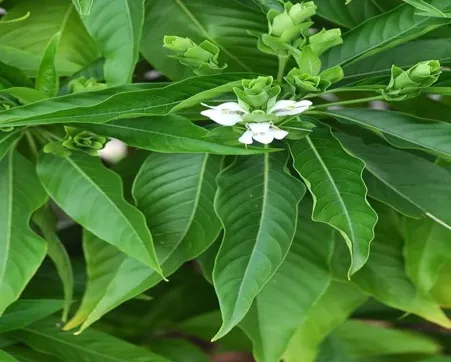
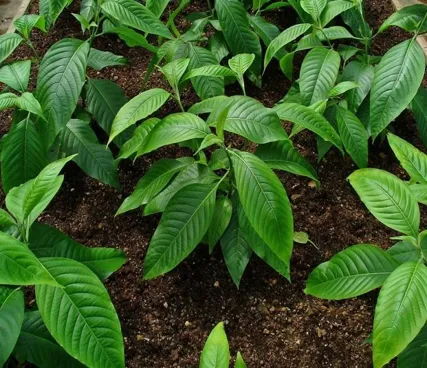
Fig.1- Plant Justicia adhatoda
Scientific Classification of Justicia adhatoda :-
|
Kingdom |
Plantae |
|
Subkingdom |
Tracheobionta |
|
Superdivision |
Spermatophyta |
|
Division |
Magnoliophyta |
|
Class |
Magnoliopsida |
|
Subclass |
Asteridae |
|
Order |
Lamiales |
|
Family |
Acanthaceae |
|
Genus |
Justicia |
|
Species |
Justicia adhatoda L. |
Phytochemically, Justicia adhatoda contains a wide range of bioactive constituents, among which quinazoline alkaloids are predominant. The major alkaloid is vasicine, along with vasicinone and vasicinol. The plant also contains flavonoids such as quercetin and kaempferol, phenolic compounds like tannins, and other constituents including saponins and steroids (43,44). Among these, vasicine is considered the principal active compound responsible for many pharmacological activities.
Pharmacologically, Justicia adhatoda exhibits diverse activities such as antioxidant, anti- inflammatory, antimicrobial, bronchodilator, hepatoprotective, and nephron-protective effects (42,45). The antioxidant activity of vasicine plays a crucial role in scavenging reactive oxygen species (ROS) and enhancing endogenous antioxidant enzymes like superoxide dismutase catalase, and glutathione (45,46). These properties are particularly important in preventing drug- induced nephrotoxicity, where oxidative stress is a key mechanism. The plant has been reported to reduce lipid peroxidation, protect renal tubular cells, and improve biochemical markers such as serum creatinine and blood urea nitrogen (45,46).
The leaves of Justicia adhatoda are the most widely used part for medicinal purposes, although roots and flowers are also utilized in traditional systems of medicine. Due to its rich phytochemical profile and multi-target pharmacological actions, Justicia adhatoda is considered a promising natural therapeutic agent for managing renal damage induced by drugs such as Gentamicin (46).
Review of Literature
A comprehensive review of the available literature was carried out to understand the therapeutic potential of Justicia adhatoda alkaloids in drug-induced nephrotoxicity. Previous studies have demonstrated that nephrotoxicity caused by drugs such as aminoglycosides is primarily mediated through oxidative stress, inflammation, and tubular damage. Several experimental and clinical investigations have highlighted the significant role of natural antioxidants in mitigating renal injury.
Justicia adhatoda, a well-known medicinal plant, has been extensively studied for its diverse pharmacological properties, particularly due to the presence of bioactive alkaloids such as vasicine. These compounds have shown promising antioxidant, anti-inflammatory, and cytoprotective activities.
|
Sr. No. |
Author & Year |
Study/Model |
Key Findings |
Conclusion |
Ref. No. |
|
1 |
Khandelwal P et al., 2024 |
Pharmacological review |
Alkaloids like vasicine identified |
Multi-therapeutic plant |
(6) |
|
2 |
Ravali KSS et al., 2024 |
Antioxidant study |
↑ SOD, CAT; ↓ ROS |
Strong antioxidant effect |
(7) |
|
3 |
Parmar MY et al., 2019 |
Experimental model |
↓ creatinine, BUN |
Nephroprotective model |
(8) |
|
4 |
Gupta A et al., 2017 |
Plant extract study |
↓ lipid peroxidation |
Protective role |
(9) |
|
5 |
Sharma V et al., 2020 |
Phytochemical study |
Quinazoline alkaloids present |
Active constituents confirmed |
(10) |
|
6 |
Singh R et al., 2016 |
Herbal therapy |
Improved renal markers |
Therapeutic potential |
(11) |
|
7 |
Patel PK et al., 2018 |
Histopathology |
↓ tubular necrosis |
Structural kidney protection |
(12) |
|
8 |
Kumar S et al., 2014 |
Gentamicin model |
↑ oxidative stress |
Confirms toxicity mechanism |
(13) |
|
9 |
Mishra A et al., 2015 |
Experimental study |
↓ serum creatinine |
Nephroprotection |
(14) |
|
10 |
Verma N et al., 2016 |
Antioxidant assay |
DPPH scavenging |
Free radical inhibition |
(15) |
|
11 |
Reddy KP et al., 2017 |
Animal study |
↓ BUN levels |
Renal protection |
(16) |
|
12 |
Joshi H et al., 2013 |
Anti-inflammatory study |
↓ cytokines |
Reduced inflammation |
(17) |
|
13 |
Das S et al., 2018 |
Phytochemical analysis |
Alkaloid profiling |
Confirms active compounds |
(18) |
|
14 |
Iqbal M et al., 2019 |
Oxidative stress study |
↑ ROS damage |
Target for antioxidants |
(19) |
|
15 |
Khan RA et al., 2015 |
Herbal nephroprotection |
↓ kidney damage |
Protective effect |
(20) |
|
16 |
Tiwari P et al., 2014 |
Plant review |
Bioactive compounds present |
Therapeutic relevance |
(21) |
|
17 |
Sahu RK et al., 2016 |
Antioxidant study |
↓ MDA levels |
Lipid protection |
(22) |
|
18 |
Choudhary N et al., 2017 |
Nephrotoxicity study |
↓ tubular damage |
Protective role |
(23) |
|
19 |
Mehta RL et al., 2018 |
Clinical review |
AKI incidence ↑ |
Drug toxicity concern |
(24) |
|
20 |
Bansal AK et al., 2012 |
Antioxidant study |
↑ GSH levels |
Improved defense system |
(25) |
|
21 |
Yadav NP et al., 2015 |
Herbal study |
↓ inflammation |
Nephroprotective effect |
(26) |
|
22 |
Roy A et al., 2016 |
Alkaloid study |
Cytoprotective action |
Cell protection |
(27) |
|
23 |
Kulkarni YA et al., 2014 |
Herbal review |
↓ creatinine |
Renal protection |
(28) |
|
24 |
Shukla S et al., 2017 |
Oxidative stress |
↓ ROS |
Antioxidant role |
(29) |
|
25 |
Agarwal A et al., 2013 |
Kidney injury |
↑ lipid peroxidation |
Mechanism clarified |
(30) |
|
26 |
Tripathi KD et al., 2012 |
Pharmacology |
Drug toxicity explained |
Clinical relevance |
(31) |
|
27 |
Jain S et al., 2015 |
Experimental study |
↓ kidney markers |
Protective effect |
(32) |
|
28 |
Bhattacharya S et al., 2016 |
Herbal medicine |
Antioxidant activity |
Therapeutic use |
(33) |
|
29 |
Nair AB et al., 2018 |
Pharmacokinetics |
Drug accumulation |
Basis of toxicity |
(34) |
|
30 |
Thomas B et al., 2019 |
Histology |
Tissue recovery |
Nephroprotection |
(35) |
|
31 |
Patil CR et al., 2014 |
Herbal model |
↓ tubular injury |
Structural benefit |
(36) |
|
32 |
Saxena A et al., 2017 |
Free radical study |
ROS neutralization |
Antioxidant effect |
(37) |
|
33 |
Arora S et al., 2016 |
Medicinal plants |
Multi-target action |
Safe therapy |
(38) |
|
34 |
Kaur R et al., 2018 |
Plant extract |
↓ inflammation |
Renal protection |
(39) |
|
35 |
Singh P.K. et al., 2020 |
Experimental |
Improved biomarkers |
Renal recovery |
(40) |
Mechanism of Action
Drug-induced nephrotoxicity, particularly caused by agents like Gentamicin, is primarily mediated through oxidative stress, inflammation, and cellular apoptosis. Gentamicin accumulates in renal proximal tubular epithelial cells, where it induces excessive generation of reactive oxygen species (ROS), leading to lipid peroxidation, mitochondrial dysfunction, and eventual cell death (13,30). This oxidative damage is associated with decreased levels of endogenous antioxidant enzymes such as superoxide dismutase (SOD), catalase (CAT), and reduced glutathione (GSH), resulting in impaired cellular defense mechanisms (22,25).
Alkaloids from Justicia adhatoda, particularly vasicine, exert their nephroprotective effects mainly through antioxidant mechanisms. Vasicine acts as a potent free radical scavenger, neutralizing ROS and thereby reducing oxidative stress within renal tissues (7,29,37). It also enhances the activity of endogenous antioxidant enzymes, restoring the redox balance and protecting kidney cells from oxidative injury (7,16). The reduction in lipid peroxidation, evidenced by decreased malondialdehyde (MDA) levels, further confirms its membrane-stabilizing effect (9,22).
In addition to antioxidant activity, vasicine exhibits significant anti-inflammatory effects by inhibiting the release of pro-inflammatory cytokines such as tumor necrosis factor-alpha (TNF-α) and interleukins (IL-6), which are known to contribute to renal damage (17,26). By suppressing inflammatory signaling pathways, it prevents further progression of tubular injury and fibrosis (23,39).
Furthermore, Justicia adhatoda alkaloids demonstrate cytoprotective and anti-apoptotic properties. They help maintain mitochondrial integrity, prevent DNA damage, and inhibit apoptosis of renal tubular cells by modulating oxidative stress-induced signaling pathways (27,35). This leads to improved cell survival and functional recovery of kidney tissues.
Another important mechanism involves the reduction of renal biomarker levels, such as serum creatinine, blood urea nitrogen (BUN), and uric acid. These improvements reflect enhanced renal function and decreased nephron damage following treatment with plant alkaloids (8,28,32). Histopathological studies further support these findings, showing reduced tubular necrosis, cellular degeneration, and inflammatory infiltration in treated groups (12,35,36).
Additionally, pharmacokinetic aspects suggest that plant-derived compounds may reduce drug accumulation in renal tissues, thereby minimizing toxicity (34). The multi-targeted action of Justicia adhatoda alkaloids, including antioxidant, anti-inflammatory, and cytoprotective effects, makes them promising therapeutic agents in the management of drug-induced nephrotoxicity (6,38,40).
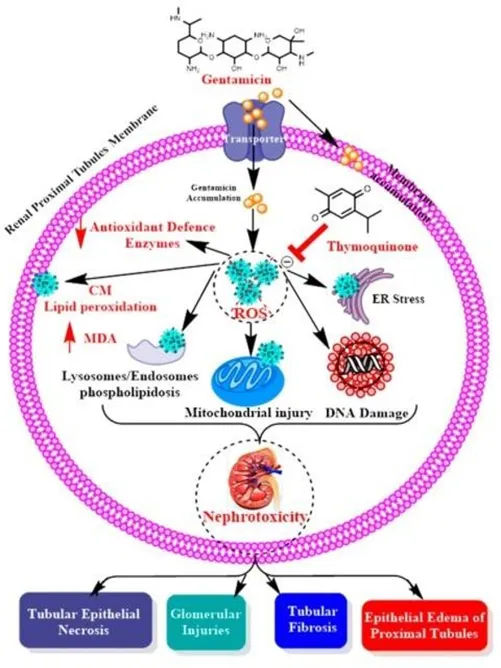
Fig.2 Mechanism of Action
DISCUSSION
Drug-induced nephrotoxicity remains a significant limitation in clinical pharmacotherapy, particularly among hospitalized patients receiving prolonged or high-dose treatments. Among various nephrotoxic agents, Gentamicin, an aminoglycoside antibiotic, is widely recognized for its potent nephrotoxic effects. The pathogenesis of gentamicin-induced renal injury is complex and multifactorial, involving oxidative stress, inflammation, mitochondrial dysfunction, and apoptosis. A mechanism underlying gentamicin- induced nephrotoxicity is the excessive generation of reactive oxygen species (ROS). Gentamicin accumulates in renal proximal tubular epithelial cells through receptor-mediated endocytosis, leading to disruption of mitochondrial respiratory function and increased production of superoxide anions, hydrogen peroxide, and hydroxyl radicals. This oxidative stress results in lipid peroxidation, protein oxidation, and DNA damage, ultimately causing cellular apoptosis and necrosis.
In addition to oxidative stress, inflammatory responses play a critical role in the progression of renal injury. Gentamicin has been shown to stimulate the release of pro-inflammatory cytokines, including tumor necrosis factor-alpha (TNF-α), interleukin-1β (IL-1β), and interleukin-6 (IL-6). These mediators activate signaling pathways such as nuclear factor-kappa B (NF-κB), leading to sustained inflammation, cellular damage, and fibrosis.
In this context, natural products with antioxidant and anti-inflammatory properties have gained increasing attention as potential nephroprotective agents. Justicia adhatoda, a medicinal plant belonging to the familyAcanthaceae, has been extensively studied for its diverse pharmacological activities. Its therapeutic potential is primarily attributed to quinazoline alkaloids, particularly vasicine and vasicinone.
Vasicine exhibits potent antioxidant activity by directly scavenging free radicals and inhibiting lipid peroxidation. Furthermore, it enhances endogenous antioxidant defense systems by increasing the activity of key enzymes such as superoxide dismutase (SOD), catalase (CAT), and reduced glutathione (GSH). This dual mechanism of action plays a crucial role in restoring redox homeostasis and protecting renal tissues from oxidative damage.
In addition to its antioxidant effects, vasicine demonstrates significant anti-inflammatory properties. It has been reported to inhibit the production of pro-inflammatory cytokines and suppress NF-κB activation, thereby reducing inflammatory cell infiltration and tissue injury. This anti-inflammatory action is essential in preventing the progression of acute kidney injury to chronic renal damage.
Moreover, vasicine may exert anti-apoptotic effects by modulating mitochondrial pathways. It helps maintain mitochondrial membrane integrity, reduces cytochrome c release, and regulates the expression of apoptosis-related proteins such as Bcl-2 and Bax. These effects contribute to the preservation of renal tubular cell viability under conditions of oxidative stress.
Experimental studies further support these findings, demonstrating that treatment with Justicia adhatoda extracts significantly reduces histopathological alterations such as tubular necrosis, glomerular damage, and interstitial inflammation. These improvements are accompanied by normalization of biochemical markers, including serum creatinine and blood urea nitrogen levels, indicating restoration of renal function. Despite these promising results, certain limitations must be acknowledged. Most available studies are preclinical and conducted in animal models, with limited clinical evidence in humans. Additionally, variations in extraction methods, dosage, and phytochemical composition may affect the reproducibility of results. Therefore, standardization of plant extracts, particularly with respect to vasicine content, is essential.
Furthermore, there is a need for detailed pharmacokinetic and toxicological studies to better understand the absorption, distribution, metabolism, and excretion of these alkaloids. Potential herb-drug interactions should also be carefully evaluated, especially when used in combination with conventional nephrotoxic drugs. Future research should focus on well-designed clinical trials, development of novel drug delivery systems, and exploration of molecular mechanisms through advanced techniques. Such studies will be crucial in translating preclinical findings into clinical applications and establishing Justicia adhatoda alkaloids as effective nephroprotective agents.
CONCLUSION
In conclusion, Justicia adhatoda and its quinazoline alkaloids, particularly vasicine and vasicinone, demonstrate significant therapeutic potential in the management of drug-induced nephrotoxicity. Their multifaceted pharmacological properties, including potent antioxidant, anti-inflammatory, and cytoprotective effects, play a crucial role in attenuating renal damage caused by nephrotoxic agents such as gentamicin. The ability of these alkaloids to scavenge reactive oxygen species, inhibit lipid peroxidation, enhance endogenous antioxidant defenses, and modulate inflammatory and apoptotic pathways highlights their effectiveness in preserving renal structure and function. Experimental studies further support their nephroprotective efficacy, as evidenced by improvements in biochemical markers and histopathological outcomes. Despite these promising findings, the current evidence is largely limited to preclinical investigations, and there remains a lack of well-designed clinical studies to confirm their safety and efficacy in humans. Additionally, issues related to standardization, bioavailability, and pharmacokinetics need to be addressed to ensure consistent therapeutic outcomes. Future research should focus on conducting rigorous clinical trials, elucidating precise molecular mechanisms, and developing advanced formulations to enhance the bioavailability and targeted delivery of these bioactive compounds. Overall, Justicia adhatoda alkaloids represent a promising natural and cost-effective therapeutic strategy for the prevention and management of drug-induced nephrotoxicity, with the potential to be developed into novel nephroprotective agents in modern clinical practice.
REFERENCES


Karan Katkar, R. B. Pandhare, V. K. Deshmukh, A. R. Pawar, Therapeutic Potential of Justicia Adhatoda Alkaloids in Drug-Induced Nephrotoxicity, Int. J. of Pharm. Sci., 2026, Vol 4, Issue 6, 3806-3814. https://doi.org/10.5281/zenodo.20711232
 10.5281/zenodo.20711232