View Article

Abstract

Oral health is as crucial as overall health. Nowadays, individuals may encounter more oral issues such as periodontal disease, sore throats, gingivitis, plaque, and others. To support good oral health, various products and formulations are developed. It is advised to use a mouthwash to manage bacteria, bad breath, plaque, and toothaches. Because herbal mouthwash has fewer adverse effects, is non-irritating, less poisonous, and does not contain alcohol, it is favoured over chemical mouthwash. Medicinal herbs play a significant part in healing and sickness prevention due to their antiviral and antibacterial properties against human pathogens. Compared to manufactured mouthwash, herbal mouthwash has fewer or no negative effects because it contains extracts from crude medications. Several plant extracts are used to make herbal mouthwashes. Tulsi , guava, and peppermint oil are among the herbs discussed in this article that have dental applications. The general dental health of the populace could be improved by mouthwashes that anyone could easily make and use safely at home using natural materials. The main objective of this review is to use natural mouthwash to maintain oral health.

Keywords

Herbal Mouthwash, Tulsi leave ,guava leave ,Peppermint oil ,literature review, drug profile, Method of extraction, Evaluations test, Result & Discussion.

Introduction

× Popup Image

Oral infections are eliminated by holding mouthwash, an aqueous solution typically used to dissolve plaque, in the mouth and swishing it around with the perioral muscle. Herbal medicine takes an active approach. The primary advantage of this natural herb is that, aside from the fact that no herbal mouthwash contains alcohol or sugar, there have been no known adverse effects from its use. These goods are problematic because the bacteria that cause halitosis and foul breath prefer to eat them and produce the halitosis-causing metabolites. Thus, using herbal mouthwash to stay away from dangerous substances is a good place to start. In dental practice, plaque-induced gingivitis a very prevalent periodontal disease—is frequently observed. Plaque buildup can be avoided and managed by employing several strategies that improve oral hygiene standards.

Goal of herbal mouthwash:

  • To improve oral hygiene.
  • It helps control dental plaque.
  • It can be applied to gum disease.
  • Used to get rid of oral bacteria.
  • It both freshens and covers up foul breath.
  • Using mouthwash is essential to preventing gum disease.
  • Septic tanks are cleaned with it.
  • It reduces pain and inflammation.

Advantages of Herbal Mouthwash:

  • The use of herbal mouthwash has grown advantage over chemical mouthwashes due to their non- irritant and non-staining properties and it does not contain alcohol.
  • They have very minimal or no side effect and they are less harmful.
  • All herbal mouthwashes do not contain alcohol and/or sugar.
  • Herbal mouthwashes are gentle for even the most sensitive mouth.
  • Herbal mouthwashes have naturally antibacterial property.
  • It contains no harsh additives.
  • Herbal mouthwash doesn’t cause dry mouth.
  • It is highly in demand.
  • It keeps your mouth healthy [1]

Disadvantages of the mouthwash:

  • Infants under the age of six should avoid using mouthwash.
  • Since mouthwash sometimes contains an excessive amount of alcohol, it might cause canker 4.
  • Mouthwash has the potential to harm some oral tissues as well as stain and darken teeth.[2]

Types of mouthwash:

  1. Fluoride mouthwash
  2. Antiseptic mouthwash
  3. Cosmetic mouthwash
  4. Natural mouthwash
    1. Fluoride mouthwash:

Fluoride in mouthwashes contains salt which help protect the teeth from cavities. Fluoride is also included in toothpaste and water, therefore it's best to use caution while using this kind of mouthwash because consuming too much fluoride is bad for your general health .

    1. Antiseptic mouthwash:

This is the most widely used mouthwash. People who have mouth infections commonly use this mouthwash, which contains alcohol, to prevent bacterial growth. People with halitosis, or bad breath, can also benefit from this. This is frequently used in conjunction with regular tooth brushing and flossing to help prevent bacteria that lead to mouth infections and foul breath. For instance, Equate Antiseptic Mouthwash.

    1. Cosmetic mouthwash:

A mouthwash that just works to freshen or cover up foul breath and has no effect on your overall oral health.

Ex: Himalaya Herbals Complete Care Mouthwash, for instance.

    1. Natural mouthwash:

It is also a well-liked choice for mouthwash without alcohol. Compared to other types of mouthwash, their chemicals are safer to use.


LITERATURE REVIEW:


Sr. No


Title of research article

Name of herbal plant used

Use of mouthwash

Name of Author

Name of Journal & Year of publication


1

Formulation and Evaluation of Antibacterial herbal mouthwash against oral disorders [5]

Stem and bark of neem buds clovebud

of cinnamon

and root of liquorice

Antimicrobial, anti- inflammatory

Shafi Ahmad, Saloni Sinha, Smriti Ojha

et al.

Indo global journal of pharmaceutical science,2018;8(2):37-40


2

Effect Of Mouth Wash Extracted From Salvadora Persica(Miswak) On Dental Plaque Formation: A Clinical

Trial [6]

Miswak

Antibacterial

Foud hussein al- bayaty, aiman hamad al- koubaisi,

et al.

Journal of medicinal plants research,4(14),pp.1446- 1454,18 july 2010


3

Preparation of antibacterial herbal mouthwash against oral pathogens [7]

Neem, tulsi, mint, pomegrante, turmeric

Antibacterial

J Nasreen Banu, V. Gayathri

International journal of current microbiology and applied science,2016,5(11):205-

221


4

Design, development and evaluation of herbal mouthwash for antibacterial potency against

oral bacteria.[8]

Neem, spinach,tulsi,pep permi nt

Antibacterial

Shweta S. Patil, Akshay R Yadav, Dr.

Atul R Chopade, et al.

Journal of university of shanghai for science and technology, vol 22, issue 11 nov 2020


5

Evaluation of holy basil mouthwash as an adjunctive plaque control agent in a four day

Plaque regrowth model

[9]

Holy basil

Antioxidant activity, anti cancer, anti- inflammatory, Antipyretic.

Mansa Hosamane, Anirudh B. Acharya, Chhavi

Vij, et al.

Journal of clinical experimental dentistry,2014;6(5)


6

Formulation of Antibacterial Mouthwash from Local Herbs: A Mini Review

[10]

Clove, oak gall, turmeric, neem, rosemary, ginger,

peppermint, tea

leaves

Anti- inflammatory, antibacterial

Juman Nafea, Harisun Yaaub, Mohamed Faraj Edbeib, et al.

Journal Of Biochemistry, Microbiology and Biotechnology, 2020(8),

No 2,7-12


7

Antimicrobial Activity of Medicinal Plant Leaf Extracts Against Pathogenic Bacteria [11]

Green Tea, Guava, Neem, Marigold Leaves

Antimicrobial Activity or Anti- Bacterial

Atikya Farjana, Nagma Zerin, Md. Shahidul

Kabir

Asian Pacific Journal Of Tropical

Disease,2014,4(Suppl 2):S920-S923


NEED OF HERBAL MOUTHWASH:

      • Preserves oral hygiene by lowering the amount of microorganisms in the mouth and aiding in the removal of food particles.
      • Breath freshening: Offers a rapid and simple solution for halitosis, or bad breath.
      • Decreases tartar and plaque: helps avoid accumulation that causes cavities and gum disease.
      • Prevents and treats gum disease: can lessen gingivitis risk, bleeding, and irritation.
      • Supports dental care in general: enhances brushing and flossing to provide a more thorough dental hygiene regimen.

AIM: Formulation and Evaluation of herbal mouthwash

OBJECTIVE:

1. To develop formulation of herbal mouthwash:

The present results therefore offer a greater use for traditional use of herbal mouth wash.

2. Safety:

Herbal mouthwash was safe and there was neither report of adverse reactions.

3. Effectiveness:

The objective of present work is to formulate and evaluate herbal mouthwash and to evaluate its effectiveness against microbial load of oral cavity.

4. To maintain oral hygiene:

Oral health is important as overall health. Now-a- days people may faces more oral problems like periodontal disease, sore throat, gingivitis, plaque and so on. For maintaining good oral health various formulations are formulated.

  1. To Prevention, control and reduction of oral infection:

It can reduce the plaque growth in your mouth, decrease your chances of developing gum disease, and prevent tooth decay.

  1. To reduce side effects by promoting herbal use:

The use of herbs in dentistry should be based on evidence of effectiveness and safety. Herbal medicines, derived from botanical sources, have been applied in dentistry for a long history to inhibit microorganisms, reduce inflammation, soothe irritation, and relieve pain.

7. Herbal medicines:

Ayurvedic medicines give a holistic approach toward entire human beings. It can maintain the balance between general and oral health as well as an environment which is in this era necessary for the well-being of humans.

PLAN OF WORK:

    • Literature Survey .
    • Collection of Plant Material .
    • Selection of Excipients for Formulation.
    • Extraction of Herbal Drugs .
    • Development of Formulation .
    • Evaluation of Prepared Formulation.[12]

DRUG PROFILE:

Table No 1: Drug profile

SR.NO

PLANT/HERB

CATEGORY/ USES

1

Tulsi Leave

Antimicrobial, Antioxidant, Anti-inflammatory.

2

Guava Leave

Antibacterial, Antioxidant, Anti-inflammatory.

3

Peppermint Leave

Flavouring-agent, Reducing-agent, Fresh- Breath.

Chemicals, Glasswares And Insruments:

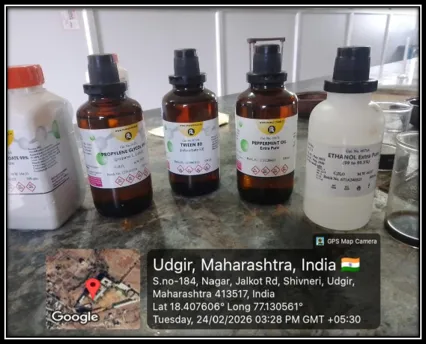
These are obtained from Research-lab fine chemicals industries, Mumbai 400002 (India) Research- lab. , salunke@gmail.com A GMP Certified company chemicals and Glassware used in the experimental work were calibrated in the laboratory the glassware was washed until it was used for experiment .

LIST OF CHEMICAL:

Table No 2: List of chemical

Sr. No

Chemical

Grade

Manufactured By


1

Propylene glycol

Lab Reagent

Research-lab fine chemicals industries, Mumbai 400002 (India) Research-lab. , salunke@gmail.com

2

Sodium benzoate

Lab Reagent

Research-lab fine chemicals industries, Mumbai 400002 (India) Research-lab. , salunke@gmail.com

3

Tween-80

Lab Reagent

Research-lab fine chemicals industries, Mumbai 400002 (India) Research-lab. , salunke@gmail.com

4

Glycerol

Lab Reagent

Research-lab fine chemicals industries, Mumbai 400002 (India) Research-lab. , salunke@gmail.com

5

Ethanol

Lab Reagent

Research-lab fine chemicals industries, Mumbai 400002 (India) Research-lab. , salunke@gmail.com

6

Water

Lab Reagent

Research-lab fine chemicals industries, Mumbai 400002 (India) Research-lab. , salunke@gmail.com

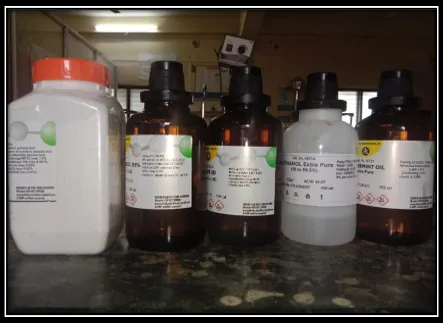
Fig No 1: Chemical Reagent

Instruments:

  • Beakers
  • Measuring cylinders
  • Electronic weighing balance
  • Water bath
  • Whatman filter paper
  • Steam distillation apparatus
  • pH meter
  • Ostwald viscometer
  • Petri dishes

Materials And Method Of Extraction

  1. Tulsi (Ocimum sanctum)

The herb (Tulsi) is useful in teeth disorders. You can use its sun-dried and powdered leaves to wash your teeth. Additionally, it can be combined with mustered oil to create a paste that can be used as toothpaste.
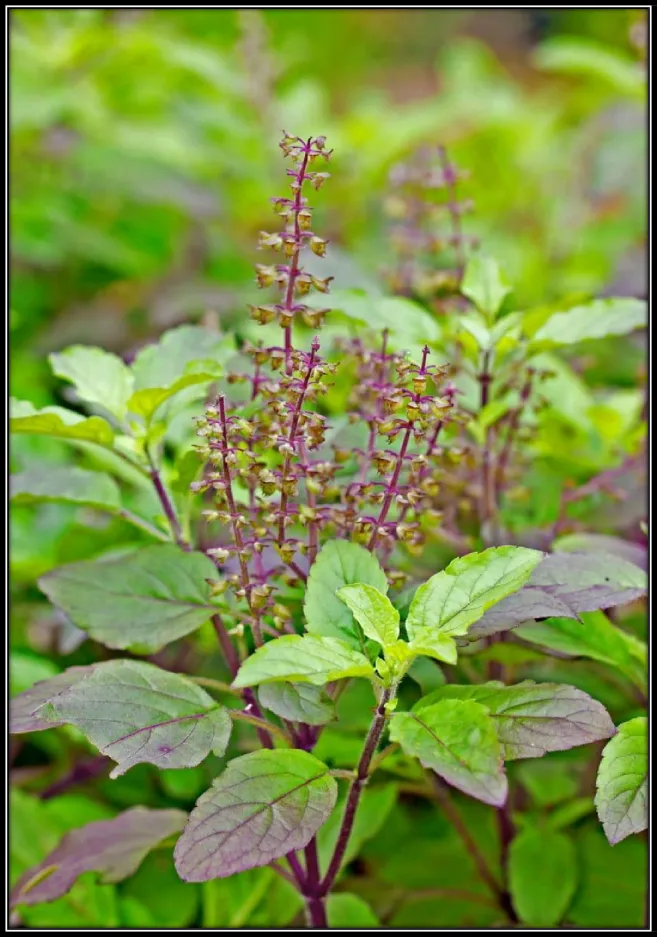
  • Biological source:            It is the fresh and dried leaves of plants from the Ocimum genus, primarily Ocimum sanctum L. (also known as Ocimum tenuiflorum)
  • Kingdom: plantae.
  • Order: lamiales .
  • Family: lamiaceae.
  • Genus: Ocimum Species: sanctum.
  • Geographical Source: North-central India and surrounding South Asian regions.
  • Parts used: Leaves, Seeds and Roots.[13]
    1. Chemical constituents:
      • Eugenol, nerol, eugenol methyl ether.
      • Caryophyllene, terpinene-4-ol-decyladehyde.
      • Camphor and carvacrol.
      • Essential oils, ascorbic acid, carotene, calcium, phosphorus and insoluble oxalates.
      • It also contains terpenes, mucilage, fixed oil andfatty acids.
      • Volatile Oil-0.8% .[14]
    1. Uses of Tulsi plant:
      • In reduction of oral malodour.
      • Anticancer activity of O. sanctum: Tulsi has been shown to possess an excellent anticancer activity.
      • As an antioxidant, it also has the ability to scavenge highly reactive-free radicals.
      • Modulates immunity.
      • As analgesic, antipyretic, and        anti- inflammatory Activity.[15]

Fig No 2: Tulsi leave [16]

    1. Preparation of Ocimum sanctum Leaf Extract. (Tulsi)

Dried Opium sanctum leaves

Powdered (20 g)

Mixed with 100 mL distilled water

Kept overnight at room temperature

Filtered (muslin cloth → Whatman filter paper)

Green filtrate obtained

↓ ried

Residue collected for experiment. [17]
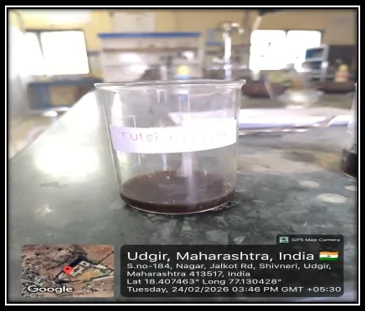
Fig No 3: Tulsi Exract

  1. Guava (Psidium guajava)

Psidium Guajava is the plant that gave rise to guava. It is a member of the Myrtaceae family. Shape: Depending on the species, guava fruits can be round or oval in shape and range in length from 4 to 12 centimeters (1.6 to 4.7 inches) .[18]
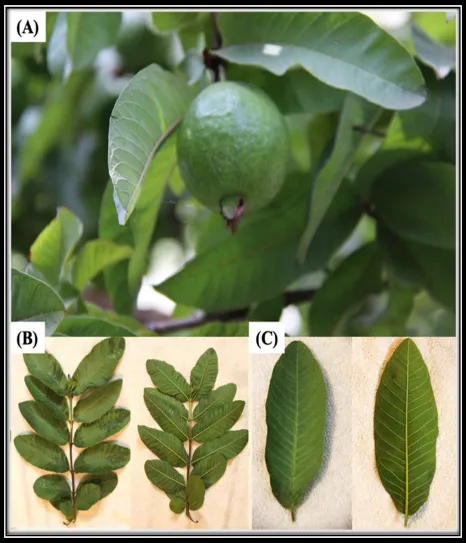
  • Biological source: guava is the evergreen tree Psidium guajava L.
  • Kingdom: Plantae.
  • Order: Myrtales.
  • Family: Myrtaceae Genus: Psidium.
  • Geographical Source: America, specifically a region extending from Mexico and Central America to northern South America. Historically, it is believed to have originated in the savannas and semi- deciduous forests of South America.
  • Species: Psidium guajava. [19]

Fig No 4: Guava with leave [21]

    1. Chemical constituents:
      • Phenolic compounds: These are powerful antioxidants that have health-promoting properties.
      • Flavonoids: Such as quercetin, avicularin, apigenin, guaijaverin, kaempferol, and myricetin, which have been studied for their anticancer, antidiabetic, and antioxidant activities.
      • Tannins: Known for their antimicrobial properties.
      • Terpenoids: Which can produce relaxation effects.
      • Saponins: Compounds with potential health benefits.
      • Vitamins: Including ascorbic acid (vitamin C).
    2. Uses of guava leaves:
      • Antibacterial properties.
      • Anti-inflammatory effects, Reduces dental plaque, Relief from toothache.
    3. Extraction process of guava leaves:

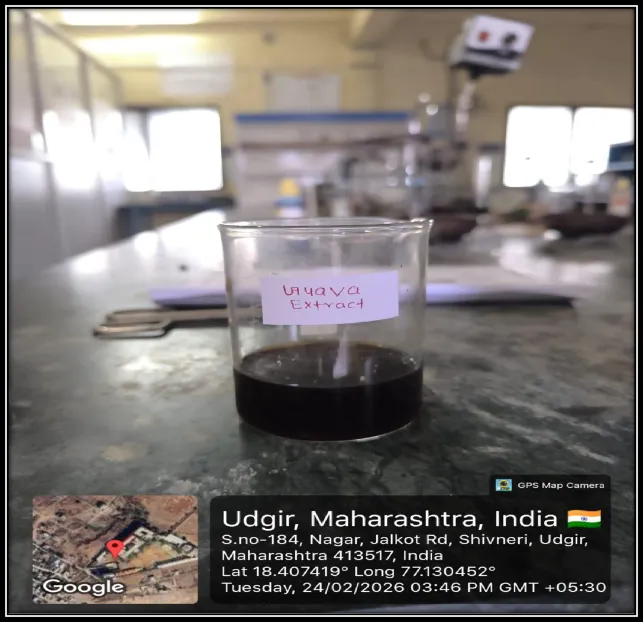
Take 25 gm of leaf powder → into a beaker

Add 200 ml of sterile double distilled water → to the beaker

Heat the mixture → in a water bath

Reduce the volume → till it's less than 50 ml

Filter the liquid

By using Whatman's filter paper

Fig No 5: Guava Extract

  1. Peppermint oil:

Peppermint oil appears to be safe when taken orally (by mouth) or applied topically in the doses commonly used. Peppermint oil has been safely used in many clinical trials. Possible side effects of peppermint oil taken orally include heartburn, nausea, abdominal pain, and dry mouth. [23]
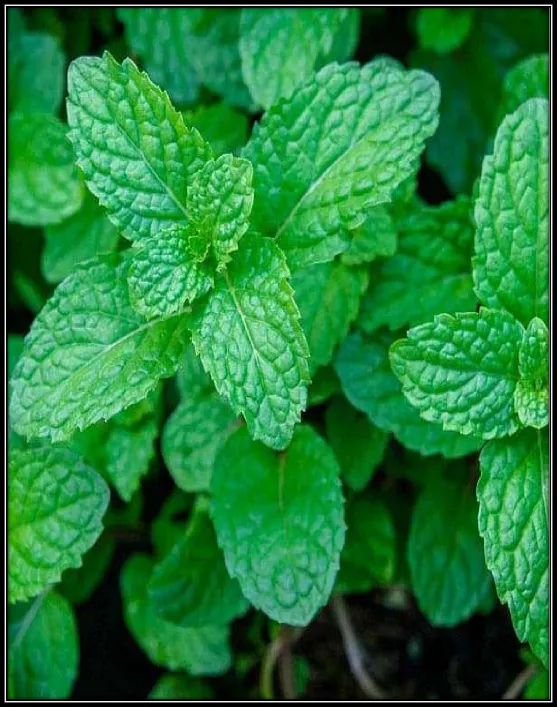
  • Biological Source: Peppermint consists of the leaves and flowering tops of the plant Mentha piperita L.
  • Kingdom: Plantae (Plants).
  • Order: Lamiales.
  • Family: Lamiaceae (also known as the mint family).
  • Geographical Source: it originated in Europe and the Middle East, but the majority of the world's peppermint leaves are now harvested in India (Uttar Pradesh), the United States (Pacific Northwest), and Morocco.
  • Species: Mentha piperita L.
    1. Chemical constituents
      • Essential oil including menthol, menthone, menthofuran.
      • 1,8-cineole, and menthyl acetate. [24]
      • 1,8-cineole, limonene.
      • Beta-pinene and beta- caryophyllene.[25]
    2. Uses of Peppermint Oil:
      • Antioxidant.
      • Anti-inflammatory.
      • Anti-bacterial properties.[26]

Fig No 6: Peppermint leaves [27]

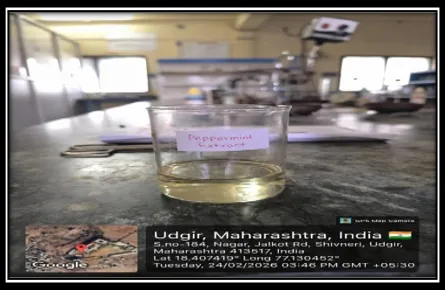
    1. Extraction process of peppermint leave:

Weigh mint leaves (60 g)

Place in distillation flask and add sufficient water

Heat to generate steam (steam distillation process)

Volatile oil vaporizes with steam

Condense vapours (oil + water) using condenser

Collect distillate

Separate oil using separating funnel

Collect and weigh peppermint oil [28]

Fig No 7: Peppermint Extract

Methodology:

  1. Maceration method / Aqueous extraction (hot)

Used for Tulsi leaves (boiling leaf powder in water and filtering).

  1. Hot Aqueous Exraction

Used for Guava leaves (boiling leaf powder in water and filtering).

  1. Steam distillation method

Used for Peppermint oil extraction.

  1. Simple mixing / Solution Method

Used for final formulation of herbal mouthwash (mixing extracts, excipients, preservative, & vehicle.

Formulation Of Herbal Mouthwash:

Table No 3: Formulation of herbal mouthwash


Sr.no.


Ingredients


Formulation (50 ml)


Uses


1.


Guava leaves extract


25 ml


Antibacterial, antioxidants, anti- inflammatory Agents.


2.


Tulsi leaves extract


5ml


Antimicrobial, anti- oxidant, anti- Inflammatory.


3


Peppermint extract (oil)


1 ml


Flavoring agent Reducing pain, fresh breath.


4.


Propylene glycol


7.5 ml


Thickener, Sweetener.


5.


Sodium benzoate


0.1 gm


Preservative.


6.


Tween -80


0.5 ml


Surfactant.


7.


Glycerol


5.96 ml


Humectant.


8.


Ethanol


1 ml


Co-solvent.


9.


Water


q.s


Vehicle.

METHODS OF PREPARATION:

Wash all laboratory apparatus and

accurately weigh all ingredients

Collect fresh guava leaves

Dry guava leaves for 10 days at room temperature

Grind dried leaves to obtain coarse powder

Store powder in airtight container

(cool, dry place; away from sunlight)

Boil guava leaf powder at 90 °C for 15–20 minutes & Filter extract using filter paper

Beaker I: Add ethanol and peppermint oil and mix

Beaker II: Add glycerol, propylene  glycol, Tulsi extract, tween-80, warm  water, and guava extract; dilute

Add sodium benzoate & Add FDA-approved green colorant

Make up final volume with purified water

Transfer prepared mouthwash into tightly closed container. [29]

Evaluation Test Of Herbal Mouthwash:

  • Physical parameters: such as color and odor, were assessed visually.
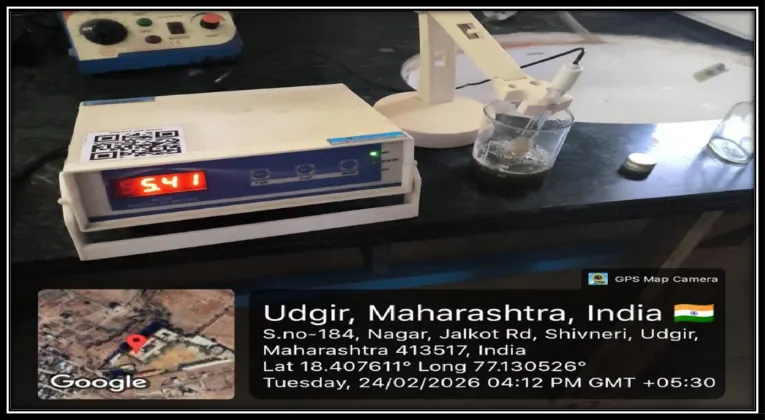
  • PH: A digital pH meter was used to measure the prepared herbal mouthwash's . A standard buffer solution was used to calibrate the pH meter. One milliliter of mouthwash was weighed, dissolved in fifty milliliters of purified water, and its pH was then measured. [30]
  • Determination of Antibacterial Property of Mouthwash:
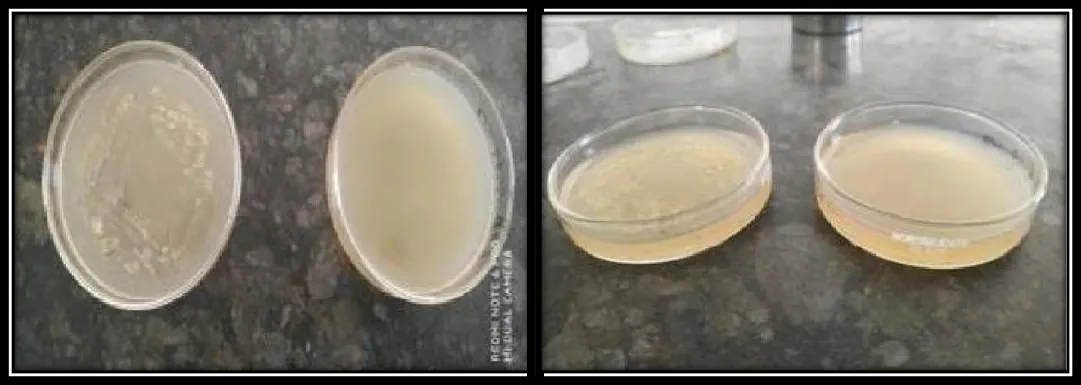
    1. Agar media was prepared then the formulated mouthwash was inoculated on the plates agar media by steak plate method and controlled is prepared by mouthwash. The plates were placed in the incubator and are incubated 37⁰C for 24 hours. After the incubation period the plates were taken out and the Microbial growth were checked and compared with the control.
    2. The antibacterial activities were evaluated by measuring the zones of inhibition (in mm).[31]
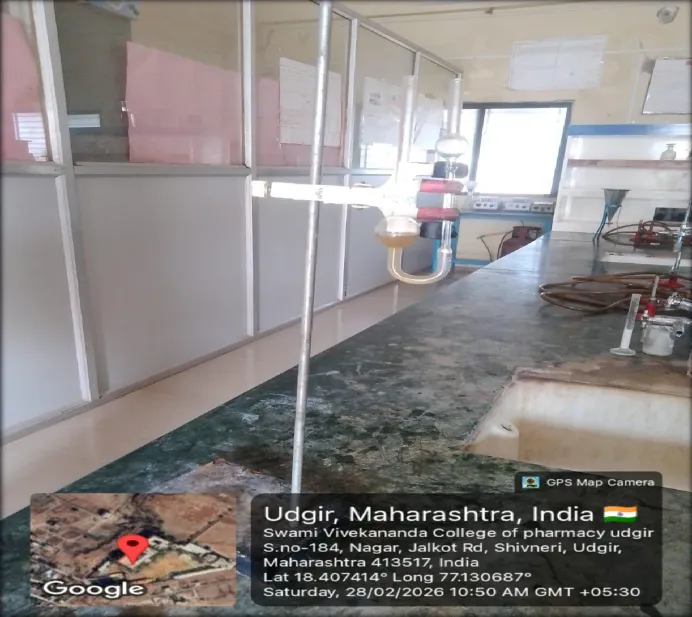
  • Viscosity: A Ostwald viscometer was used to measure the mouthwash's viscosity .The table provides a description of the viscosity results for each created formulation. [32]
  • Foam test: The product's ability to foam was assessed by adding a small amount of water to a measuring cylinder, noting the starting volume, then shaking the cylinder 10 times. The final foam volume was recorded. [33]

Result And Discussion:

    1. Physical Parameter:

Table No 4: Physical parameter of Herbal Mouthwash

Parameters

Formulation

Color

Dark brown

Taste

Slightly bitter

Odour

Minty

2. pH Stability analysis:.

Table No 5: pH of Herbal Mouthwash

Day of measurements

pH range of sample

Ph range of standard

0 to 15day

5-41

5-6

15 to 30day

5-41

5-6

Fig No 8: pH Analysis of Mouthwash

3. Antibacterial activity:

Table No 6: Antibacterial Activity of Mouthwash

Storage of temperature sample

Storage life (log cfu/ml) – 0 th

Ambient (normal room temp.)

No growth


Refrigerated No growth


No growth

  1. Before keeping in incubator

                   (B) After incubator

Fig no 9: Microbial Activity

  1. Viscosity:

Table No 7: Viscosity of Herbal Mouthwash

Formulations

Viscosity (in Centipoise)

Herbal mouthwash

1.690

Standard

2.352

Fig No 10: Viscosity of Herbal Mouthwash by Ostwald viscometer

6. Foam test: Final volume of foam of formulation was noted to around 1 ml.
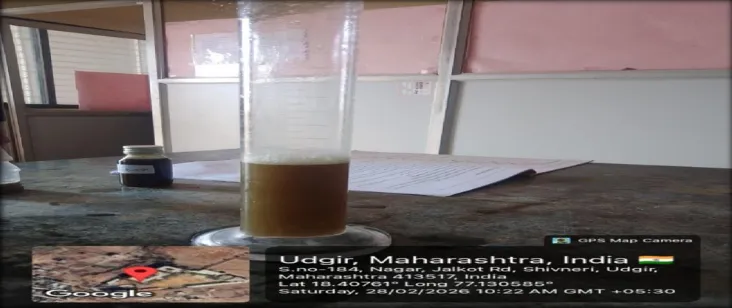
Fig No 11: Foam test of herbal Mouthwash

CONCLUSION:

Many dental diseases, including foul breath, can be effectively treated with the current liquid herbal mouthwash. Furthermore, the absence of any hazardous substances in this preparation gives us peace of mind. The findings of the physicochemical examination verify that the current herbal formulation's color and smell are acceptable, with a pleasant scent and improved aftereffects. The patients favored this herbal mouthwash due to its taste, ease of use, and test length in their mouths after rinsing, and the zone of inhibition results also revealed that it was a powerful plaque inhibitor. As a result, they can be utilized to treat plaque-induced gingivitis in addition to mechanical therapy. The current study has a significant impact on the development of an affordable and successful herbal oral health intervention for low socioeconomic communities. Herbal mouthwashes are an excellent natural option for long-term oral health management since they provide substantial advantages for preventing common dental issues with fewer side effects. They are a useful, scientifically supported supplement to everyday oral care.

REFERENCES

  1. Uddeshavisharam, M. T., Shantaram, M.B.D. Formulation and evaluation of herbal mouthwash. Volume 5, (2023), 1011-1018.
  2. Pawar, Y. V., Gore, A., & Salve, M. T. Thereview on mouth wash.
  3. Bokhare, S. H., Maske, A. S., Mohite, R. S., et.al Herbal Mouthwash for The Management of Oral Diseases.
  4. https://www.doi.org/10.22271/phyto.2025.v14.i2g.15335
  5. Ahmad S, Sinha S, Ojha S, Chadha H, Formulation and Evaluation of Antibacterial Herbal Mouthwash against Oral Disorders. Indo Global Journal of PharmaceuticalSciences.2018;8(2):38.
  6. Al-Bayaty FH, Al-koubaisi AH, Wahid Ali NA, et.al. Effect mouth wash extracted from Salvadora persica (Miswak) on dental formation: A clinical trial. Journal of Medicinal PlantResearch.2010 July 18; 4(14):1447.
  7. Banu NJ and Gayathri V. Preparation of Antibacterial Herbal Mouthwash Againt Oral Pathogen.International Journal of Current Microbiology and Applied Sciences.2016; 5(11):205-221.
  8. Patil SS, Yadav AR, Chopade AR, et.al Design, Development and Evaluation of Herbal Mouthwash forAntibacterialPotencyAgainstOralBacteria.JournalOfUniversityof Shanghai for Science and Technology. Nov 2020;22(11):1137-1148.
  9. Hosamane M , Acharya AB. Evaluation of Holy Basil Mouthwas has An Adjunctive Plaque Control Agent in Afour Day Plaque Regrowth Model. Journal Clinical ExperimentalDentistry.2014;6(5):e491- e496.
  10. Nafea J, Yaakub H, Edbeib MF. Formulation Of Antibacterial Mouthwash from Local Herbs: A Mini Review. Journal Of Biochemistry, Microbiology and Biotechnology.2020;8No2:7-12.
  11. Farjana A, Zerin N, Kabir MD S. Antimicrobial Activity of Medicinal Plant Leaf Extracts Against Pathogenic Bacteria. Asian Pacific Journal of Tropical Disease.2014;4(Suppl 2). S920-S923
  12. Shambharkar SB, Thakare VM. Formulation and evaluation of herbal mouthwash. WJPR. 2021 May 28; 10(9):775-791.
  13. Kukreja, B. J., & Dodwad, V. Herbal mouthwashes-A gift of nature. Int J Pharma Bio Sci, (2012), 3(2), 46-52
  14. Shambharkar, S. B., & Thakare, V. M. Formulation and evaluation of herbal mouthwash. World J Pharm Res, (2021),10(9),775-791.
  15. Singh, M. Tulsi: From the desk of a periodontist. CHRISMED Journal of Healthand Research, (2021), 8(1), 3-5.
  16. https://www.britannica.com/plant/holy-basil
  17. Panchal, P.,            & Parvez,        N.        Phytochemical analysis              of medicinal        herb (Ocimum sanctum). International Journal of Nanomaterials, Nanotechnology and Nanomedicine, (2019), 5(2), 008-011
  18. Shirke V., Dhonnar, R. R., Shelar, et.al. (2023). GUAVA USED TO TREAT MOUTH ULCER.
  19. Ramesh, A., Varghese, S. S., Doraiswamy, J. N., &Malaiappan, S. Herbs as an antioxidant arsenal for periodontal diseases. Journal of intercultural ethnopharmacology, (2016),5(1),92.
  20. Prabhudesai,A. P., Biyani, D. M., &Umekar, M. J. Psidium guajava: Multipurpose Medicinal Herb. Int. J Pharm. Sci. Rev. Res, (2019), 59(1), 125-132.
  21. https://www.mdpi.com/2304-8158/10/4/752
  22. Devi R. B., Barkath, T. N., Vijayaraghavan, P., et.al Analysis of Phytochemical from Psidium guajava Linn Leaf Extract and Their Invitro Antimicrobial Activities. Int. J. Pharma Biol. Sci, (2018), 8, 583-589.
  23. Bodake Ravina, Belhekar Archana, Bochare Vaishnavi, et.al “Formulation and Evaluation of Herbal Mouth Wash”. International Journal of Advanced Research in Science, Communication and Technology (IJARSCT) Volume 2, 2022 ISSN 2581-9429
  24. Beigi, M., Torki-Harchegani, M., & Ghasemi Pirbalouti, A. Quantity and chemical composition of essential oil of peppermint (Mentha × piperita L.) leaves under different drying methods. International Journal of Food Properties, (2018),21(1), 267–276.
  25. Schmidt, E., Bail S., Buchbauer,G., Stoilova, I., et.al Chemical composition, olfactory evaluation and antioxidant effects of essential oil from Mentha x piperita. Natural product communications, (2009), 4(8), 1107–1112.
  26. Wei H, Kong S, Jayaraman V, Selvaraj D, et.al A. Mentha arvensis and Mentha × piperita-Vital Herbs with-Myriads-of-Pharmaceutical-Benefits.Horticulturae.2023; 9(2):224.https://doi.org/10.3390/horticulturae90202 24
  27. https://nurserylive.com/products/omx-peppermint-seeds
  28. Ibrahim M, Ankwai GE, Gungshik JR, et.al. Comparative extraction of essential oils of Mentha piperita (mint) by steam distillation and enfleurage. NJCR. 2021;26(2):56-62.
  29. Ghuge, A. S., &Khandre, R. A. Formulation and evaluation of mouthwash using guava leaves for aphthous ulcer
  30. Patil, S. S., Yadav, A. R., Chopade, et.al development and evaluation of herbal mouthwash for antibacterial potency against oral bacteria. Journal of University of Shanghai for Science and Technology, (2020), 22(11), 881-898.
  31. Development of Alcohol-free Herbal Mouthwash Having Anticancer Property Article · January 2013 CITATIONS 2 4 authors, including: Banani Ray Chowdhury .2013, vol.2(1): 7-12
  32. Mr. Aher Tushar Balasaheb Formulation and evaluation of herbal mouthwash IJARIIEISSN-2024 Vol.10.
  33. Anju V S .Ijppr.Human, 2023; Vol. 27 (3): 516-523.

Reference

  1. Uddeshavisharam, M. T., Shantaram, M.B.D. Formulation and evaluation of herbal mouthwash. Volume 5, (2023), 1011-1018.
  2. Pawar, Y. V., Gore, A., & Salve, M. T. Thereview on mouth wash.
  3. Bokhare, S. H., Maske, A. S., Mohite, R. S., et.al Herbal Mouthwash for The Management of Oral Diseases.
  4. https://www.doi.org/10.22271/phyto.2025.v14.i2g.15335
  5. Ahmad S, Sinha S, Ojha S, Chadha H, Formulation and Evaluation of Antibacterial Herbal Mouthwash against Oral Disorders. Indo Global Journal of PharmaceuticalSciences.2018;8(2):38.
  6. Al-Bayaty FH, Al-koubaisi AH, Wahid Ali NA, et.al. Effect mouth wash extracted from Salvadora persica (Miswak) on dental formation: A clinical trial. Journal of Medicinal PlantResearch.2010 July 18; 4(14):1447.
  7. Banu NJ and Gayathri V. Preparation of Antibacterial Herbal Mouthwash Againt Oral Pathogen.International Journal of Current Microbiology and Applied Sciences.2016; 5(11):205-221.
  8. Patil SS, Yadav AR, Chopade AR, et.al Design, Development and Evaluation of Herbal Mouthwash forAntibacterialPotencyAgainstOralBacteria.JournalOfUniversityof Shanghai for Science and Technology. Nov 2020;22(11):1137-1148.
  9. Hosamane M , Acharya AB. Evaluation of Holy Basil Mouthwas has An Adjunctive Plaque Control Agent in Afour Day Plaque Regrowth Model. Journal Clinical ExperimentalDentistry.2014;6(5):e491- e496.
  10. Nafea J, Yaakub H, Edbeib MF. Formulation Of Antibacterial Mouthwash from Local Herbs: A Mini Review. Journal Of Biochemistry, Microbiology and Biotechnology.2020;8No2:7-12.
  11. Farjana A, Zerin N, Kabir MD S. Antimicrobial Activity of Medicinal Plant Leaf Extracts Against Pathogenic Bacteria. Asian Pacific Journal of Tropical Disease.2014;4(Suppl 2). S920-S923
  12. Shambharkar SB, Thakare VM. Formulation and evaluation of herbal mouthwash. WJPR. 2021 May 28; 10(9):775-791.
  13. Kukreja, B. J., & Dodwad, V. Herbal mouthwashes-A gift of nature. Int J Pharma Bio Sci, (2012), 3(2), 46-52
  14. Shambharkar, S. B., & Thakare, V. M. Formulation and evaluation of herbal mouthwash. World J Pharm Res, (2021),10(9),775-791.
  15. Singh, M. Tulsi: From the desk of a periodontist. CHRISMED Journal of Healthand Research, (2021), 8(1), 3-5.
  16. https://www.britannica.com/plant/holy-basil
  17. Panchal, P.,            & Parvez,        N.        Phytochemical analysis              of medicinal        herb (Ocimum sanctum). International Journal of Nanomaterials, Nanotechnology and Nanomedicine, (2019), 5(2), 008-011
  18. Shirke V., Dhonnar, R. R., Shelar, et.al. (2023). GUAVA USED TO TREAT MOUTH ULCER.
  19. Ramesh, A., Varghese, S. S., Doraiswamy, J. N., &Malaiappan, S. Herbs as an antioxidant arsenal for periodontal diseases. Journal of intercultural ethnopharmacology, (2016),5(1),92.
  20. Prabhudesai,A. P., Biyani, D. M., &Umekar, M. J. Psidium guajava: Multipurpose Medicinal Herb. Int. J Pharm. Sci. Rev. Res, (2019), 59(1), 125-132.
  21. https://www.mdpi.com/2304-8158/10/4/752
  22. Devi R. B., Barkath, T. N., Vijayaraghavan, P., et.al Analysis of Phytochemical from Psidium guajava Linn Leaf Extract and Their Invitro Antimicrobial Activities. Int. J. Pharma Biol. Sci, (2018), 8, 583-589.
  23. Bodake Ravina, Belhekar Archana, Bochare Vaishnavi, et.al “Formulation and Evaluation of Herbal Mouth Wash”. International Journal of Advanced Research in Science, Communication and Technology (IJARSCT) Volume 2, 2022 ISSN 2581-9429
  24. Beigi, M., Torki-Harchegani, M., & Ghasemi Pirbalouti, A. Quantity and chemical composition of essential oil of peppermint (Mentha × piperita L.) leaves under different drying methods. International Journal of Food Properties, (2018),21(1), 267–276.
  25. Schmidt, E., Bail S., Buchbauer,G., Stoilova, I., et.al Chemical composition, olfactory evaluation and antioxidant effects of essential oil from Mentha x piperita. Natural product communications, (2009), 4(8), 1107–1112.
  26. Wei H, Kong S, Jayaraman V, Selvaraj D, et.al A. Mentha arvensis and Mentha × piperita-Vital Herbs with-Myriads-of-Pharmaceutical-Benefits.Horticulturae.2023; 9(2):224.https://doi.org/10.3390/horticulturae90202 24
  27. https://nurserylive.com/products/omx-peppermint-seeds
  28. Ibrahim M, Ankwai GE, Gungshik JR, et.al. Comparative extraction of essential oils of Mentha piperita (mint) by steam distillation and enfleurage. NJCR. 2021;26(2):56-62.
  29. Ghuge, A. S., &Khandre, R. A. Formulation and evaluation of mouthwash using guava leaves for aphthous ulcer
  30. Patil, S. S., Yadav, A. R., Chopade, et.al development and evaluation of herbal mouthwash for antibacterial potency against oral bacteria. Journal of University of Shanghai for Science and Technology, (2020), 22(11), 881-898.
  31. Development of Alcohol-free Herbal Mouthwash Having Anticancer Property Article · January 2013 CITATIONS 2 4 authors, including: Banani Ray Chowdhury .2013, vol.2(1): 7-12
  32. Mr. Aher Tushar Balasaheb Formulation and evaluation of herbal mouthwash IJARIIEISSN-2024 Vol.10.
  33. Anju V S .Ijppr.Human, 2023; Vol. 27 (3): 516-523.

Photo
Pathan Kamran Ayubkhan
Corresponding author

Swami Vivekanand College of Pharmacy, Swami Ramanand Teerth Marathwada University Nande, Bodhan Nagar, Udgir, District Latur, Maharashtra, India

Photo
Panchal Neha Rajkumar
Co-author

Swami Vivekanand College of Pharmacy, Swami Ramanand Teerth Marathwada University Nande, Bodhan Nagar, Udgir, District Latur, Maharashtra, India

Photo
Mulla Samir Ismail
Co-author

Swami Vivekanand College of Pharmacy, Swami Ramanand Teerth Marathwada University Nande, Bodhan Nagar, Udgir, District Latur, Maharashtra, India

Photo
Sardar Parvin Mahamad
Co-author

Swami Vivekanand College of Pharmacy, Swami Ramanand Teerth Marathwada University Nande, Bodhan Nagar, Udgir, District Latur, Maharashtra, India

Photo
Sunil Dongre
Co-author

Swami Vivekanand College of Pharmacy, Swami Ramanand Teerth Marathwada University Nande, Bodhan Nagar, Udgir, District Latur, Maharashtra, India

Photo
Dr. Ganesh Tolsadwad
Co-author

Swami Vivekanand College of Pharmacy, Swami Ramanand Teerth Marathwada University Nande, Bodhan Nagar, Udgir, District Latur, Maharashtra, India

Pathan Kamran Ayubkhan*, Panchal Neha Rajkumar, Mulla Samir Ismail, Sardar Parvin Mahamad, Sunil Dongre, Dr. Ganesh Tolsadwad, Title of the Manuscript: Formulation and Evaluation of Herbal Mouthwash, Int. J. of Pharm. Sci., 2026, Vol 4, Issue 6, 4360-4374. https://doi.org/10.5281/zenodo.20734546

More related articles
Chemical Modification of Levetiracetam Acetamide M...
Manmohan Kumar Nishad, Jitendra Kumar Yadav...
Medicinal Plants in Diabetes Mellitus Management: ...
Shalini Devi, Nisha Devi, Jyoti Gupta, Mohamed Osman ...
Synthesis And Evaluation of an N-Methyl Vilanterol...
Harshit Singh, Dr. Swarup Chatterjee...
Formulation and Evaluation of Herbal cream used for Melasma [Moringa oleifera]...
Varsharani Patil, Kedar kale , Sanket kamble , Mrunali Patil , Kirti Andewad , Sakshi Jagtap ...
Formulation And Evaluation of Herbal Cold Cream for Psoriasis...
Vishakha Borkar, Trupti Harne, Pradnya Chavan, Arpita Chopade, Namrata Chavan...
Related Articles
Formulation and Evaluation of Herbal Tooth Powder...
Dr. Vijaykumar Kale, Vaibhav Narwade, Dr. Mahesh Thakare, Gauri Bhange, Pradip Raut...
Formulation and Evaluation of Herbal Cough Syrup Containing Natural Antitussive ...
Abdul Ansari, Abrar Khan, Ratan Pitale, Vishal Bhondave, Vaibhav Shinde, R. G Pimple, Dr. Ramesh In...
Targeting Oxidative Stress and Inflammation in Nephrotoxicity: Evidence from Eup...
K. Saimahesh , Preethi S.M , likitha V , Niharika C.P , Keshava murthy S.G ...