

We use cookies to ensure our website works properly and to personalise your experience. Cookies policy
Department of Pharmaceutics, Srinivas College of Pharmacy, Mangalore, Karnataka
The pharmaceutical industry has always been at the forefront of innovation, striving to develop more effective and safer drugs. Traditional drug development processes are often time-consuming, costly, and limited in terms of customization. 3D printing technology offers a promising alternative by enabling precise and personalized drug formulations. Traditionally, medications have been manufactured using a "one-size-fits-all" approach, where fixed doses of drugs are produced in mass. However, this method often fails to account for the individual differences in patients genetics, physiology, and specific medical conditions. 3D printing has the potential to overcome these limitations by enabling the precise fabrication of personalized medications, tailored to the unique needs of each patient. Additive manufacturing generates less waste compared to traditional subtractive methods, making it a more sustainable option for drug production. 3D printing technology has emerged as a transformative force in drug delivery, particularly through its ability to create innovative dosage forms. This versatility not only streamlines the production process making it faster, safer and more cost effective but also expands the range of applications within the pharmaceutical industry. As this technology continues to evolve, its integration into pharmaceutical manufacturing could herald a new era in drug development - one that is patient-centered and precision-driven. This review serves as a comprehensive guide for researchers and industry professionals engaged in the field of 3D printed drugs. It aims to foster collaboration, inspire new research initiatives and address existing challenges, ultimately enhancing the development and delivery of personalised medicines.
In contemporary medical practice, therapeutic decision-making is largely guided by a standardized treatment approach, often described as a “one-size-fits-all” model. Under this paradigm, patients with similar diagnoses are typically prescribed identical medications, administered at uniform doses and fixed dosing intervals, with limited consideration of individual variability1. Personalized dosing refers to an individualized approach to drug therapy in which the dose, dosing interval, and treatment duration are tailored to a specific patient rather than applied uniformly across populations. This strategy integrates multiple patient-specific factors, including physiological characteristics (such as organ function and disease state), demographic variables (age, sex, body weight, and ethnicity), and genetic makeup that may influence drug metabolism and response. In addition, the intrinsic properties of the drug substance—such as pharmacokinetics, pharmacodynamics, and therapeutic window—along with formulation-related attributes like release profile, dosage form, and route of administration are carefully considered. By combining these diverse inputs, personalized dosing aims to optimize therapeutic efficacy, minimize adverse effects, and improve overall treatment outcomes, thereby moving beyond the conventional “one-dose-fits-all” paradigm toward truly patient-centric pharmacotherapy2. Three-dimensional (3D) printing, also referred to as additive manufacturing, is an advanced fabrication technology in which physical objects are created through the sequential deposition of material in a precise, layer-by-layer manner. Unlike conventional subtractive manufacturing methods, this approach builds structures by adding material only where required, enabling accurate control over geometry and internal architecture. The process begins with the development of a digital model using computer-aided design (CAD) software, which defines the shape, dimensions, and structural features of the intended object. This digital design is subsequently processed by specialized software that slices the model into a series of thin two-dimensional (2D) cross-sections. These sectional data are then transmitted to a 3D printer, which translates the digital instructions into successive solid layers. As each layer is deposited and fused, the final three-dimensional structure is progressively formed3.
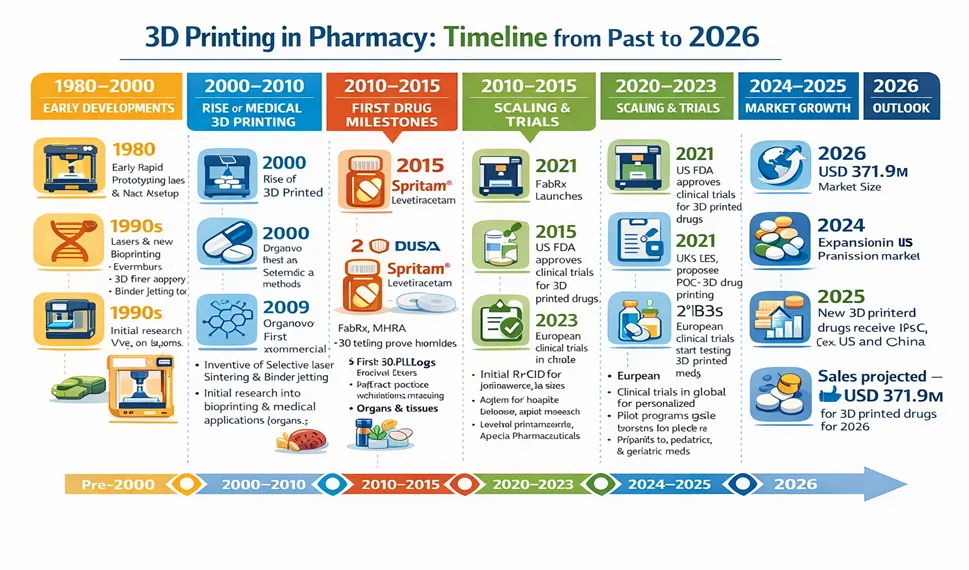
Figure1. Timeline of 3D printing
The hands-on application of additive manufacturing is commonly referred to as rapid prototyping. Rapid prototyping supports iterative design improvements, as modifications can be easily incorporated into updated digital models and reproduced without the need for costly tooling. As a result, it accelerates product development cycles, enhances innovation, and bridges the gap between conceptual design and full-scale manufacturing across various scientific and industrial domains4. In 2015, the U.S. Food and Drug Administration approved SPRITAM®, the first commercially available drug product manufactured using three-dimensional printing technology. This landmark approval marked the beginning of a new era in pharmaceutical manufacturing, often referred to as pharmaco-printing. Consequently, the FDA approval of SPRITAM® served as a catalyst for innovation, paving the way for the integration of advanced manufacturing technologies into modern pharmaceutical development5. Integrating three-dimensional (3D) printing into healthcare environments has the potential to fundamentally transform clinical pharmacy practice. By shifting drug production closer to the point of care, this technology enables pharmacists to move beyond conventional, mass-manufactured medicines toward more flexible and patient-centric solutions.The adaptability of 3D printing also supports timely modification of therapy in response to changing clinical conditions, improving medication adherence and therapeutic outcomes6. Beyond improving patient adherence and overcoming logistical constraints, this approach offers promising economic advantages. The capability to manufacture medicines on demand enables a shift away from centralized, large-scale production and extensive inventory maintenance. By minimizing dependence on bulk manufacturing, long-term storage, and complex supply chains, wastage due to expiration or overproduction can be significantly reduced. Furthermore, localized and need-based drug fabrication may lower transportation and distribution expenses, ultimately contributing to a more efficient and cost-effective healthcare system over time7. Three-dimensional (3D) printing technologies have emerged as versatile tools in pharmaceutical manufacturing, enabling the fabrication of a wide spectrum of drug delivery systems. Using layer-by-layer deposition, this technology has been successfully applied to produce immediate-release and modified-release tablets with precisely controlled drug doses and release profiles8. In addition, 3D printing allows the development of fast-dissolving oral films and dispersible dosage forms, which are particularly beneficial for pediatric, geriatric, and dysphagic patients9. Beyond oral dosage forms, 3D printing has expanded into advanced therapeutic platforms such as microneedle arrays for painless and minimally invasive drug delivery, customized implants with complex geometries for sustained local therapy, and transdermal patches designed for controlled and prolonged drug permeation through the skin. The ability to tailor shape, size, porosity, and drug distribution within a single dosage form highlights the potential of 3D printing to support personalized medicine, enhance patient adherence, and improve therapeutic outcomes10.
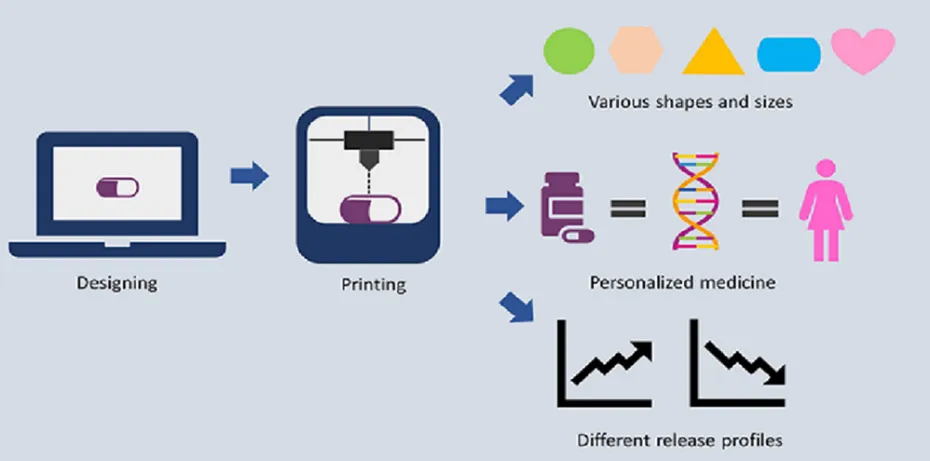
Figure2. 3D Printing in personalized treatment
MECHANISM OF 3D PRINTING:
After printing, the object often requires finishing touches13.
The completed object is a precise replica of the digital model, often used for prototyping, manufacturing, or customized products11.

Figure3. Working mechanism of 3d printing technology
Types of 3D Printing Techniques:
1. Fused Deposition Modeling (FDM):
Fused Deposition Modeling (FDM) is one of the most widely used 3D printing techniques due to its simplicity and cost-effectiveness. It works by extruding a thermoplastic filament, which is melted and deposited layer by layer onto a substrate to create a three-dimensional structure14.
In drug manufacturing, FDM is used to create solid oral dosage forms, such as tablets, sustained release capsule shaped tablets of theophylline were developed15. Drug-laden filaments can be prepared by mixing active pharmaceutical ingredients (APIs) with a polymeric matrix. These filaments are then fed into the FDM printer, which builds customized tablets by adjusting the drug's composition, dosage, and release characteristics. Fabrication of microneedle-based systems for minimally invasive and controlled drug delivery16. In dentistry, drug-incorporated orthodontic retainers have been developed to provide sustained local therapeutic effects while maintaining patient comfort and compliance17. Additionally, 3D-printed topical facial masks embedded with active pharmaceutical ingredients offer targeted and uniform drug deposition on the skin surface18. In the field of women’s health, drug-loaded vaginal rings produced via advanced manufacturing techniques enable prolonged and localized drug release, improving therapeutic efficacy and reducing systemic side effects19.
Customizable drug release profiles, ability to combine multiple APIs in a single tablet, and potential for rapid production of small batches.
The need for thermally stable drugs, as high temperatures are required to melt the polymers, and limited resolution compared to other techniques.
2. Stereolithography (SLA):
Stereolithography (SLA) uses a liquid resin that is cured layer by layer using a UV laser. The laser selectively solidifies the resin in specific areas, gradually building up the desired 3D object20.
SLA is particularly useful for creating highly accurate drug delivery devices and implants. It allows for precise control over the geometry and porosity of the printed structures, making it suitable for producing complex and intricate drug delivery systems. Ascorbic acid–loaded solid hydrogel dosage forms were fabricated using poly(ethylene glycol) dimethacrylate, with riboflavin serving as a biocompatible photoinitiator. This system enabled uniform drug incorporation and stable crosslinked structures, demonstrating potential for controlled drug delivery applications21. Microreservoir-based systems for implantable and transdermal drug delivery were successfully fabricated using stereolithography (SLA) technology. The high printing resolution offered by SLA enabled precise control over reservoir geometry and dimensions, facilitating accurate drug loading and predictable release profiles22.
High resolution, ability to create intricate designs, and suitability for making implants and sustained-release systems.
Limited material selection (photosensitive resins) and the potential for residual photoinitiators, which could pose toxicity concerns in pharmaceutical applications.
3. Selective Laser Sintering (SLS):
Selective Laser Sintering (SLS) involves the use of a laser to selectively fuse powdered materials into a solid structure23. The laser sinters (heats without melting) specific regions of the powder bed, layer by layer, until the desired object is formed24.
SLS has shown promise in fabricating drug-loaded structures, particularly for sustained-release formulations. By adjusting the porosity of the printed object, the release kinetics of the drug can be controlled. This technique also supports the production of personalized dosage forms. Orally disintegrating printlets containing paracetamol were successfully fabricated using polymeric carriers such as hydroxypropyl methylcellulose (HPMC) and Kollidon, enabling rapid tablet disintegration and improved patient convenience25. In a separate approach, ondansetron printlets were produced following drug–cyclodextrin complexation, with mannitol and Kollidon incorporated to enhance drug stability, taste masking, and dissolution performance26. Additionally, mini-printlet formulations combining paracetamol and ibuprofen were explored, allowing tailored and programmable drug release profiles to be achieved within a single dosage unit27. Beyond conventional tablet geometries, paracetamol-loaded gyroid structures were designed using polymers including polyethylene oxide, Eudragit, and ethyl cellulose, demonstrating how complex internal architectures and polymer selection can be strategically employed to modulate drug release kinetics28.
No need for a binder or solvent, high precision, and the ability to produce complex structures with controlled porosity.
Limited range of printable pharmaceutical excipients and potential degradation of heat-sensitive APIs.
4. Inkjet Printing (Binder Jetting):
Inkjet printing, also known as binder jetting, involves the deposition of droplets of liquid binder onto a powder bed to selectively bind the powder particles together. Layers of powder are added sequentially, and the binder is deposited to form the desired structure29.
Inkjet printing is suitable for creating rapid-dissolving formulations and multilayered dosage forms. It allows for precise control over the spatial distribution of APIs, enabling the production of tablets with multiple drugs that have different release profiles. Binder jetting has been widely investigated for tablet fabrication, with excipient type and concentration playing a key role in determining tablet properties. Highly water-soluble fillers, high-moisture wetting agents, and viscous binders have been shown to improve tablet hardness and binding strength while prolonging disintegration time30. Amitriptyline hydrochloride–containing dosage forms were successfully developed using binder jetting technology. This approach enabled precise deposition of the binder solution and uniform drug distribution within the printed tablets, allowing effective control over tablet structure, mechanical strength, and drug release behavior. The study demonstrates the potential of binder jetting as a versatile platform for fabricating personalized oral dosage forms of amitriptyline hydrochloride31.
High precision, flexibility in formulation, ability to print multilayer tablets, and potential for creating personalized medicine.
Limited range of printable materials and challenges with printing viscous liquids.
5. Powder Bed Fusion (PBF):
Powder Bed Fusion (PBF) is a technique that uses a heat source (usually a laser or electron beam) to fuse particles in a powder bed layer by layer. This method is similar to SLS but allows for a broader range of materials to be processed 32.
PBF is used for creating complex, highly porous drug delivery systems, such as implants or scaffolds for tissue engineering. It enables the fabrication of structures with controlled drug release properties and the incorporation of multiple drugs into a single device. Paracetamol and indomethacin successfully processed without significant degradation. Beyond tablets, PBF is expanding into drug-eluting medical devices, antibiotic-loaded implants for bone infection treatment33.
Ability to create porous structures, controlled drug release, and versatility in material selection.
Potential degradation of heat-sensitive drugs and limited use in oral dosage form production.
6. Semi-Solid Extrusion (SSE):
Semi-Solid Extrusion (SSE) involves the use of a semi-solid paste, which is extruded through a nozzle to build up layers and create a three-dimensional object. This technique allows for the incorporation of drugs into a paste-like formulation, which is then shaped into a specific dosage form.
SSE is particularly useful for creating personalized tablets and drug delivery systems with complex geometries. It allows for the precise positioning of drugs within the structure, enabling controlled release profiles. Semi-solid extrusion (SSE) 3D printing was first translated into clinical practice for the on-site manufacture of patient-specific printlets in a hospital pharmacy. In this work, chewable dosage forms with customised flavours and colours were produced on demand and administered to paediatric patients suffering from a rare metabolic condition. Preference studies showed that children favoured chewable printlets over formulations produced using other 3D printing technologies, such as DLP, SLS and FDM. While printlets fabricated by DLP and SLS were initially perceived as more visually appealing, awareness of the chewable nature of the SSE printlets led most children to ultimately select them as their preferred dosage form34.
Flexibility in formulations, compatibility with a wide range of drugs, and the ability to create complex, personalized dosage forms.
Limited to semi-solid formulations and challenges with maintaining stability during the extrusion process.
7. Hot-Melt Extrusion (HME):
Hot-Melt Extrusion (HME) is a technique that involves heating a polymer-based formulation until it becomes a molten semi-solid, which is then extruded through a nozzle to create 3D structures. The extruded material solidifies upon cooling.
HME is widely used to produce sustained-release dosage forms, drug-loaded implants, and filaments for FDM 3D printers. It allows for the incorporation of APIs into polymers that can modulate drug release. Hot-melt extrusion (HME) is widely used to produce solid dispersions that enhance drug solubility and bioavailability by uniformly distributing the API within polymeric or lipid carriers35.
Suitable for controlled-release formulations, high drug loading capacity, and compatibility with thermally stable APIs.
High processing temperatures, which may degrade heat-sensitive drugs, and limited flexibility in the choice of materials.
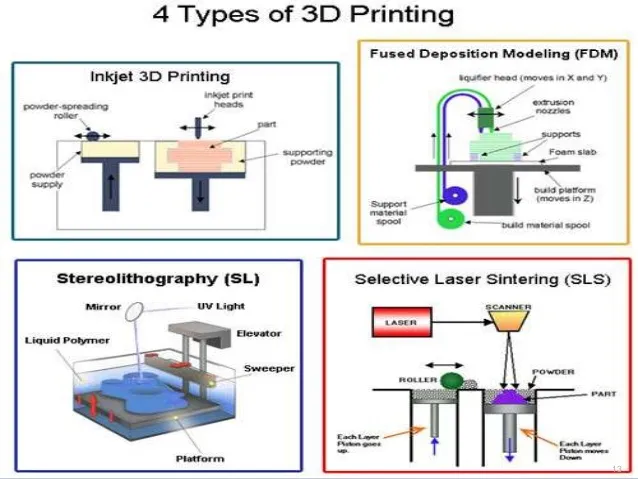
Figure4. Types of 3D printing techniques
Advantages of 3D Printing36,37:
3D printing enables precise tailoring of drug dose, size, shape, and drug release profile according to individual patient needs, overcoming the limitations of conventional “one-dose-fits-all” manufacturing.
Computer-controlled fabrication allows accurate placement of drug and excipients, resulting in excellent content uniformity and reduced dose variability, even for low-dose drugs.
Unlike traditional manufacturing, 3D printing can fabricate complex internal structures (porous matrices, multilayered systems, hollow designs), enabling controlled and programmable drug release behaviour.
Formulations can be designed, modified, and produced quickly without the need for expensive tooling, significantly shortening formulation development and optimisation timelines.
3D printing supports point-of-care and on-demand drug production, reducing reliance on large-scale batch manufacturing, storage, and supply chain constraints.
Customised dosage forms with optimised size, shape, taste, and dosing frequency can enhance patient acceptability and adherence, especially in paediatric and geriatric populations.
Multiple drugs with different release profiles can be integrated into a single dosage form, enabling simplified therapy and reduced pill burden.
Additive manufacturing deposits material layer-by-layer only where required, minimising raw material wastage compared to subtractive manufacturing processes.
The technology enables novel pharmaceutical concepts that are not feasible using conventional methods, fostering innovation in dosage form engineering and drug delivery science.
Disadvantages of 3D Printing38,39,40:
Existing pharmaceutical regulations are designed for batch manufacturing, not on-demand or patient-specific production. This creates ambiguity in approval pathways, quality assurance, and post-marketing surveillance for 3D-printed dosage forms.
Even small variations in printing parameters (temperature, feed rate, layer height) can significantly affect dose accuracy, mechanical strength, and drug release, making reproducibility difficult compared to conventional manufacturing.
Only a narrow range of polymers and excipients possess suitable printability, stability, and regulatory acceptance, restricting formulation flexibility and drug compatibility.
Many 3D printing techniques involve high temperatures or shear forces, which may cause degradation of thermolabile or shear-sensitive drugs, limiting the range of APIs that can be safely processed.
Specialized printers, software, maintenance, and trained personnel increase capital and operational expenditure, making large-scale adoption economically challenging, particularly in low-resource settings.
Additional steps such as drying, curing, or removal of support materials can affect drug stability and increase processing time, complexity, and risk of variability.
Digital design files used in 3D printing are vulnerable to unauthorized access, modification, or replication, posing risks to patient safety and intellectual property protection.
Implementing 3D printing requires significant changes in manufacturing workflows, quality systems, and distribution models, which can be difficult for established pharmaceutical industries to adopt.
3D PRINTING IN PERSONALIZED MEDICINE:
Patient responses to drug therapy vary due to differences in age, genetics, and biological markers, necessitating personalized dosing strategies. Three-dimensional printing enables precise, individualized dose adjustment by digitally modifying the size and geometry of dosage forms, thereby eliminating inaccuracies associated with tablet splitting. This capability has been demonstrated by the fabrication of theophylline tablets with doses ranging from 60–300 mg and by the production of spironolactone and hydrochlorothiazide tablets in which dose was linearly correlated with tablet volume. These studies confirmed high dose accuracy, pharmacopoeial compliance, and strong acceptance of 3D-printed personalized medicines in clinical practice41.
Drug release can be personalized using 3D printing by modifying the tablet’s geometry, polymer type, and internal structure to achieve immediate, sustained, delayed, or pulsatile release. For example, HPMC–diltiazem tablets with varied infill and design patterns, demonstrating in vivo pharmacokinetics matching in vitro release were studied. Some studies have highlighted the role of tablet size, drug loading, and surface area-to-volume ratio in controlling release kinetics. Wen et al. combined gastro-retention with zero-order release for 10–12 hours42, while Gioumouxouzis et al. developed pH-responsive colon-targeted tablets, showing release profiles can be precisely tailored through design43.
Pediatric patients require special consideration in pharmacotherapy due to the need for safe and effective treatments. Pediatric dosage forms are limited and must meet strict criteria regarding dose accuracy, toxicity, and organoleptic properties. Dosing should be carefully determined based on age, development, and body characteristics, and all components, including active ingredients and excipients, must be evaluated for potential toxicity in children. Ease of administration and taste are particularly important, as children are more sensitive to bitter flavors than adults44. Common pediatric formulations include oral solutions, suspensions, orodispersible films, powders, and tablets (small, scored, chewable, or mini/orodispersible tablets)45. 3D printing is emerging as a tool for personalized pediatric medications, allowing customization of shape and color while supporting safe and effective delivery. Additionally, it offers a solution for children with swallowing difficulties by enabling the production of orodispersible films, tablets, and chewable forms46.
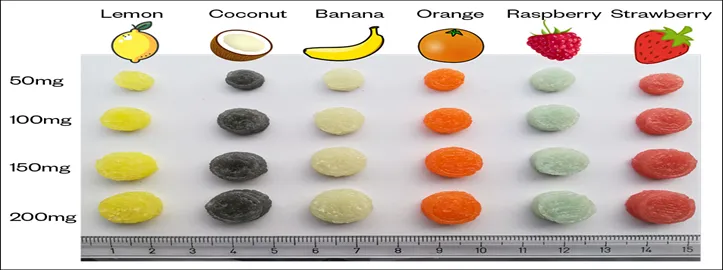
Figure5. 3D printed gummies for pediatrics47.
The geriatric population often faces multiple health conditions and challenges such as variable drug responses, difficulty swallowing, and trouble managing medications (e.g., pill splitting), highlighting the need for personalized medicine48. Polypharmacy, the use of multiple medications by a single patient, often reduces adherence and increases the risk of adverse effects and drug interactions 49. 3D printing provides a potential solution through polypills—single tablets combining multiple drugs tailored to an individual’s therapeutic needs. For example, Khaled et al. developed a 3D-printed polypill with three drugs in separate compartments for controlled release, aimed at hypertensive diabetic patients50. Other studies have created polypills containing four to six drugs for cardiovascular therapy, while some have explored personalized supplementation. Patient preferences are critical for acceptability. Fasto et al. found that polypharmacy patients generally favor conventional tablet shapes, though color and design choices vary individually. Polypills are well-received because they reduce the number of tablets taken daily51.

Figure6. 3D printed tablets in various shapes, 3D printed polypills with different number of compartments( lower)50,51.
Visually impaired patients often face challenges in medication use, particularly in identifying and differentiating drugs once packaging is removed or altered. Three-dimensional (3D) printing enables the direct incorporation of tactile identifiers onto dosage forms, offering a practical solution to this issue. For example, orally disintegrating tablets embedded with Braille and Moon characters have been fabricated to convey information such as drug indication or dose, and their legibility was successfully confirmed by a visually impaired volunteer52. In another approach, 3D-printed intraoral films containing raised Braille text were developed for personalized therapy; in vivo haptic evaluations by recruited volunteers verified the clarity of the tactile characters and demonstrated the potential of 3D printing to enhance medication accessibility for visually impaired patients53.
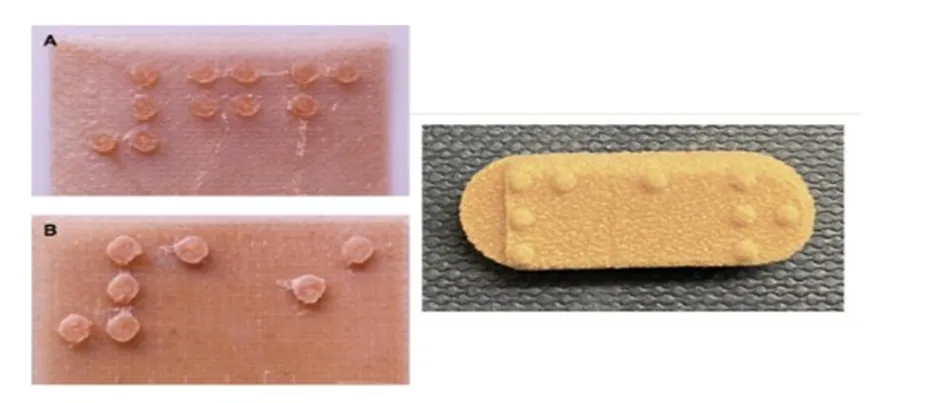
Figure7. 3D printed tablets with Braille and moon characters for visually impaired, intraoral films52,53.
PHARMACEUTICAL 3D PRINTERS:
FabRx Ltd, founded in 2014 by University College London (UCL) academics, has advanced medicine manufacturing. In 2023, the company launched the M3DIMAKER 2 GMP printer, a multi-printhead system building on the single-head M3DIMAKER 1 (2020), initially used for small-batch clinical trial drug production, including paediatric studies. The printers employ melt extrusion with interchangeable printheads supporting semi-solid extrusion (SSE), fused deposition modeling (FDM), and direct powder extrusion (DPE). Users can switch heads for SSE (pneumatic gel/paste extrusion), FDM (filament-based API/excipient printing), or DPE (powder mixture printing). The system also includes online quality control and camera monitoring54.
Triastek Inc., established in 2015 in Nanjing, China, developed the MED® platform for 3D-printed drug delivery. Their FDA-approved products include T19 for rheumatoid arthritis, designed as a chronotherapeutic system55; T20 for cardiovascular and clotting disorders56; and T21 for colon-targeted ulcerative colitis, which in early human studies has shown precise, controlled drug release57.
DoseRx1 (Netherlands): The DoseRx1 system is an open, GMP?qualified 3D printer capable of printing customised oral solid dosage forms directly from refillable cartridges containing API formulations. It supports high throughput and low?temperature printing to preserve API stability and can produce a broad range of drug products with flexible dosage control58.
RECENT ADVANCEMENTS :
FUTURE PERSPECTIVES OF 3D PRINTING TECHNOLOGY :
Additive manufacturing is expected to play a transformative role in the future of pharmaceutical development by enabling flexible, personalized, and digitally driven drug production. As printer technologies evolve toward higher speed, automation, and multi-nozzle architectures, AM is likely to overcome current limitations related to scalability and industrial adoption63. Continuous manufacturing systems integrating hot-melt extrusion, real-time process analytical technologies, and advanced quality control frameworks will further strengthen the feasibility of large-scale production. Material innovation will remain a cornerstone of future progress. The development of pharmaceutical-grade, thermally stable, biocompatible, and print-optimized excipients will significantly expand the range of drugs suitable for AM platforms64. Parallel advancements in photopolymers, low-viscosity inks, and semi-solid formulations will enhance the applicability of inkjet, binder jet, SSE, and stereolithography-based techniques. The integration of artificial intelligence, machine learning, and patient-specific health data with additive manufacturing is anticipated to accelerate the shift toward precision medicine. Such convergence will enable real-time dose customization, adaptive formulation design, and improved therapeutic outcomes65. Additionally, decentralized manufacturing models at hospitals and clinical sites may redefine drug supply chains, reducing wastage and improving accessibility66. From a regulatory standpoint, the establishment of harmonized guidelines tailored to AM-based pharmaceutical products will be critical. Collaborative efforts among regulators, academia, and industry will ensure safe implementation while fostering innovation. Overall, additive manufacturing holds strong potential to transition from an emerging technology to a core pillar of next-generation pharmaceutical manufacturing.
CONCLUSION
3D printing offers significant potential to revolutionize drug development by providing a more personalized and flexible approach to pharmaceutical production. This technology enables the customisation of drug dosages, release profiles, and formulations, allowing for tailored treatments that address individual patient needs. The ability to combine multiple drugs into a single dosage form, improve drug absorption through complex structures, and expedite the drug development process through rapid prototyping are some of the key advantages.
However, challenges such as regulatory hurdles, quality control, and scalability must be addressed to fully realize the benefits of 3D-printed pharmaceuticals.In conclusion, while the adoption of 3D printing in drug development is still in its early stages, its potential to improve personalized medicine and patient outcomes is immense. Continued research, innovation, and collaboration between pharmaceutical companies, regulators, and healthcare professionals will be essential in overcoming existing challenges. As the technology advances, 3D printing is poised to play a crucial role in the future of drug development, transforming how medications are produced and delivered to patients.
REFERENCES


Veena Yallappa Roogi, Krishnananda Kamath K, 3D Printing: A Formula for Success in Drug Development and Personalized Medicine, Int. J. of Pharm. Sci., 2026, Vol 4, Issue 5, 1497-1514. https://doi.org/10.5281/zenodo.20070323
 10.5281/zenodo.20070323