

We use cookies to ensure our website works properly and to personalise your experience. Cookies policy
Godavari Institute of Pharmacy, Kolpa, Latur, Maharashtra, India 413512
Artificial intelligence (AI) is becoming a powerful helper in pharmaceutical research, especially in finding and developing new drugs. Traditional drug development is slow, expensive, and complicated, involving many steps from identifying disease targets to final regulatory approval. AI tools—such as machine learning, deep learning, and natural language processing—can quickly analyze huge amounts of data, opening new ways to improve this process. This review explains how AI is used in key areas like finding drug targets, screening molecules, designing new drugs, predicting safety and side effects, understanding how drugs behave in the body, repurposing old drugs, and supporting clinical trials and personalized treatment. AI helps researchers choose better drug candidates, predict risks, and make treatment plans more tailored to individual patients. The article also highlights popular AI platforms that combine chemical, biological, and clinical data. However, challenges remain: data can be incomplete or biased, AI models are sometimes hard to interpret, and predictions don’t always match real-world results. For these reasons, AI should be seen as a support tool—not a replacement—for lab work, clinical trials, and expert judgment. Looking ahead, the field is moving toward more advanced AI that can handle multiple data types, generate new molecules, model protein structures, and connect lab and clinical workflows more seamlessly.
Review Methodology
A focused literature review was prepared using the material supplied for this article together with relevant peer-reviewed literature identified from PubMed/MEDLINE, Scopus, Web of Science, Google Scholar and EMBASE. Priority was given to literature published from 2020 to 2026, while selected earlier publications were retained where they provide important methodological or historical context for artificial intelligence and computer-aided drug discovery. Search concepts included combinations of “artificial intelligence”, “machine learning”, “deep learning”, “natural language processing”, “generative AI”, “graph neural networks”, “drug discovery”, “target identification”, “virtual screening”, “molecular design”, “ADMET”, “toxicity”, “pharmacokinetics”, “pharmacodynamics”, “drug repurposing”, “pharmacovigilance”, and “clinical trials”.
Relevant studies were screened for direct relevance to AI applications in drug discovery, pharmacology, safety, clinical development, or related translational workflows. Information was organized thematically rather than treated as a formal meta-analysis. The review therefore emphasizes synthesis of applications, practical workflows, representative tools and case studies, together with limitations and future directions. Incomplete or duplicate references supplied during drafting were not carried into the final reference list when adequate bibliographic information could not be established.
|
AI approach |
Typical pharmaceutical use |
Strength / role |
|
Supervised learning |
Activity, ADMET, toxicity, PK/PD prediction |
Learns from labelled experimental or clinical outcomes |
|
Unsupervised learning |
Clustering, pattern discovery, patient/ compound stratification |
Finds structure in unlabeled data |
|
Deep learning |
Virtual screening, image analysis, molecular/property prediction |
Learns complex nonlinear relationships |
|
Graph neural networks |
Molecular property and drug–target modelling |
Represents atoms and bonds as graphs |
|
Natural language processing |
Literature mining, pharmacovigilance, clinical text |
Extracts information from unstructured text |
|
Generative AI |
De novo molecular design, optimization |
Generates candidate structures or sequences |
|
Reinforcement learning |
Goal-directed molecular optimization |
Optimizes candidate generation using reward functions |
Fundamentals of Artificial Intelligence in Pharmaceutical Research
Artificial Intelligence (AI) refers to computer-based technologies that can perform tasks that usually require human intelligence, such as learning, reasoning, pattern recognition, prediction, and decision-making. In recent years, AI has become an important tool in healthcare and pharmaceutical research.
Drug discovery is a long and expensive process that involves target identification, screening of potential compounds, lead optimization, preclinical studies, clinical trials, and regulatory approval. Many drug candidates fail during development because of poor efficacy, toxicity, or safety concerns. AI can help overcome some of these challenges by analysing large amounts of chemical, biological, genomic, and clinical data more efficiently.
Machine learning (ML) and deep learning (DL), which are major branches of AI, are increasingly used in drug discovery. They can support target identification, virtual screening, drug–target interaction prediction, toxicity assessment, drug design, lead optimization, and drug repurposing. AI can therefore reduce the time and resources required for several stages of drug development.
Despite its advantages, AI also has limitations, including the need for high-quality data, model reliability, interpretability, ethical concerns, and regulatory challenges. Therefore, AI should be considered a supportive tool that works alongside researchers rather than a complete replacement for human expertise.
AI in Hit Identification :
Hit identification is a key early step in drug discovery. At this stage, researchers pick out compounds with useful biological activity from large chemical libraries. Traditional approaches like high-throughput screening (HTS) cost a lot and take a long time. AI makes this easier by spotting and prioritising the compounds most likely to be active.
AI-Assisted Virtual Screening :
Virtual screening (VS) uses computers to search through large chemical libraries. AI can sort compounds by how active they are expected to be, or by how well they are likely to interact with a particular target.
There are two main approaches:
Machine Learning for Predicting Hits :
ML models learn from compounds that have already been tested, using details such as molecular fingerprints, descriptors, and SMILES strings. Once trained, these models can predict which untested compounds are most likely to be active.
Basic workflow:
Known compounds → Molecular data → ML/DL model → Library screening → Ranking → Laboratory testing → Confirmed hits
This means fewer compounds have to be tested in the lab.
Deep Learning and Molecular Representation :
Deep learning can pick up complex links between a molecule's structure and its biological activity. Molecules can be fed into these models as fingerprints, SMILES strings, molecular graphs, or 3D structures. Graph Neural Networks (GNNs) are especially helpful here. They treat atoms as nodes and chemical bonds as edges, which lets the model learn the structural features that drive biological activity and target binding.
Graph Neural Networks (GNNs) are especially helpful here. They treat atoms as nodes and chemical bonds as edges, which lets the model learn the structural features that drive biological activity and target binding.
AI for Very Large Chemical Libraries :
With AI, researchers can search chemical libraries that hold millions or even billions of molecules. AI-based filtering narrows these huge collections down to a small,
Manageable set of promising compounds for lab testing.
Large library → AI screening → Filtering → Shortlisted compounds → Laboratory testing
Ranking and Prioritising Hits :
AI can rank compounds by looking at many properties together, such as biological activity, binding affinity, selectivity, drug-likeness, solubility, permeability, ease of synthesis, and possible toxicity.
This helps researchers choose compounds with a strong overall profile, rather than depending on just one predicted property.
Confirming Hits in the Lab :
A compound flagged by AI is not yet a confirmed hit. It still has to be tested in suitable biochemical or cell-based assays. Predictions can be wrong because of poor-quality data, bias in the model, or the model's own limits.
So the path looks like this:
AI prediction → Candidate hit → Laboratory testing → Confirmed hit
AI should support hit identification, not replace laboratory testing.
Advantages and Limitations :
Advantages
Limitations
AI-Based Drug Design :
AI-based drug design uses artificial intelligence (AI), machine learning (ML), deep learning (DL), and generative models to create and refine drug molecules. These tools learn how a molecule's structure relates to its biological activity and its drug-like properties. With that knowledge, AI can predict molecular properties, come up with new compounds, and help improve potency, selectivity, pharmacokinetics, and safety.
Structure-Based AI Drug Design :
Structure-based drug design starts from the 3D structure of a target protein or enzyme. AI helps predict how different molecules will fit and interact with that target.
Key uses include:
Ligand-Based AI Drug Design :
When the structure of the target is not known, AI can learn from compounds that are already known to be active. It works out how chemical structure links to biological activity and uses this to predict new active compounds.
Common methods include QSAR, molecular fingerprints, similarity searching, pharmacophore modelling, and deep learning.
De Novo Drug Design
In de novo drug design, AI builds completely new molecules instead of just picking from existing compound libraries.
Target information + Desired properties → AI model → New molecules → Property filtering → Optimization → Laboratory testing
Generative models can explore a huge range of possible chemicals. Even so, every molecule designed by a computer still has to be tested for activity, safety, and whether it can actually be made.
Generative AI in Drug Design :
Generative AI is being used more and more to design new molecular structures. The main approaches are transformers, diffusion models, variational autoencoders (VAEs), generative adversarial networks (GANs), and reinforcement learning. These models can be steered toward the properties researchers want, such as potency, selectivity, and drug-likeness.
Balancing Multiple Properties :
A good drug candidate has to meet many requirements at once. AI can balance properties such as:
Potency + Selectivity + Solubility + Permeability + Stability + Low toxicity + Ease of synthesis
Looking at all of these together helps researchers find stronger drug candidates.
AI-Assisted Lead Optimization :
Once a promising hit is found, chemists often change its structure to improve its properties. AI can predict what effect each change will have before the molecule is made.
Lead → AI prediction → Structural change → Evaluation → Synthesis → Biological testing
This repeated design–make–test–analyse (DMTA) cycle helps avoid making and testing compounds that are unlikely to work.
AI-Based ADMET Optimization :
During drug design, AI can predict key ADMET properties, including:
This means poor candidates can be dropped earlier in the discovery process.
Advantages
Limitations
Overall Workflow
Target selection
↓
Biological and structural data
↓
AI/ML model
↓
Virtual screening / Molecule generation
↓
Property and ADMET prediction
↓
Multi-parameter optimization
↓
Lead selection
↓
Laboratory validation
↓
Preclinical development
Overall, AI can make drug design faster and more data-driven. Still, molecules designed by AI are only predictions, and they have to be confirmed through laboratory and clinical studies.
Completed 1 step
AI in ADMET Prediction :
ADMET stands for Absorption, Distribution, Metabolism, Excretion and Toxicity. Together, these properties tell us how a drug behaves in the body and whether it is safe to use. Many drug candidates that look promising at first end up failing because of poor pharmacokinetics or unexpected toxicity. AI, and especially ML and DL, can predict these properties early, which helps researchers choose stronger candidates from the start.
Predicting Absorption :
Absorption is about how a drug gets into the bloodstream. AI can predict:
These predictions help flag compounds that are poorly absorbed and show chemists how to improve them.
Predicting Distribution
Distribution describes how a drug travels to and spreads through different tissues. AI can predict properties such as:
BBB prediction is especially valuable for drugs meant to act on the central nervous system.
Predicting Metabolism :
Drugs are mostly broken down by enzymes, mainly the cytochrome P450 (CYP450) family. AI can predict metabolic stability, CYP450 interactions, the sites on a molecule where metabolism happens, hepatic clearance, and whether harmful metabolites might form. This helps spot compounds that are likely to be broken down too quickly or to cause drug interactions.
Predicting Excretion :
Excretion is how the body gets rid of a drug and its metabolites, mostly through the kidneys and liver. AI can help predict renal clearance, hepatic clearance, total clearance, half-life, and elimination rate. These factors matter a lot when working out drug exposure and the right dose.
Predicting Toxicity :
Toxicity is one of the biggest reasons drugs fail during development. AI can help catch potentially harmful compounds early on.
It can predict:
Predicting toxicity early lets researchers drop high-risk compounds before spending money on expensive studies.
Future ADMET research is likely to focus on multimodal models, foundation models, and explainable AI. Researchers are also working on models that cover both small molecules and biologics such as peptides, oligonucleotides, and antibodies.
Overall, AI can improve early ADMET assessment and help researchers find safer and more suitable drug candidates. It should be treated as a supporting tool, not a replacement for laboratory testing.
AI in Pharmacokinetics :
Pharmacokinetics (PK) looks at how a drug moves through the body over time. It covers four main processes: absorption, distribution, metabolism, and excretion (ADME). Key PK parameters include Cmax, Tmax, AUC, clearance (CL), volume of distribution (Vd), half-life (t½), and bioavailability (F). Getting these right matters a great deal for a drug's effectiveness, its safety, and choosing the correct dose.
Traditional PK studies depend on laboratory, animal, and clinical experiments, which are expensive and slow. AI and ML can work through chemical, biological, and PK data to predict how a drug will behave, helping researchers focus on the most promising compounds.
Predicting PK Parameters with AI :
AI models can estimate key parameters such as:
Predicting these values early lets researchers pick stronger candidates before committing to extensive testing.
Absorption and Distribution :
AI can predict the factors that shape absorption, such as solubility, intestinal permeability, gastrointestinal absorption, transport by P-glycoprotein, and oral bioavailability.
For distribution, AI can estimate volume of distribution, plasma protein binding, tissue distribution, membrane permeability, and the ability to cross the blood–brain barrier (BBB). BBB prediction is especially helpful for drugs designed to act on the central nervous system.
Metabolism and Elimination :
AI can predict CYP450-driven metabolism, enzyme inhibition, metabolic stability, metabolic clearance, and likely drug–drug interactions.
It can also estimate renal clearance, hepatic clearance, total clearance, and half-life. These predictions help flag compounds that might leave the body too quickly or cause unwanted metabolic interactions.
Predicting Human PK :
A particularly valuable use of AI is estimating human PK before any clinical study begins. By learning from existing animal and human PK data, AI models can forecast how a new compound is likely to behave in people.
In vitro data → Animal studies → AI-based prediction → Estimated human PK → Clinical testing
This helps guide which drug candidates to choose and how to improve them.
AI and PBPK Modelling :
AI can be paired with physiologically based pharmacokinetic (PBPK) models. These models describe how a drug moves through the body using details about organs, tissues, blood flow, and the drug's own properties.
Experimental data → AI-predicted ADME → PBPK model → Drug concentration profile → PK prediction
Bringing the two together can sharpen predictions of parameters such as AUC and Cmax.
AI in PK–PD Modelling :
AI can also link the amount of drug in the body to the effect it produces.
Pharmacokinetics: What the body does to the drug.
Pharmacodynamics: What the drug does to the body.
AI-based PK–PD models can connect:
Dose → Drug concentration → Exposure at the target → Pharmacological response
This helps predict both efficacy and toxicity, and supports choosing the right dose.
Optimising Doses with AI :
AI can bring together PK data with patient- and drug-related factors to guide dose selection and fine-tune treatment. This can help find the right dosing approach while lowering the risk of giving too little drug to work or too much to be safe.
Overall, AI can make pharmacokinetic prediction quicker and more data-driven, but laboratory and clinical studies are still needed to confirm what it predicts.
AI in Pharmacodynamics :
Pharmacodynamics (PD) explains how a drug produces its effects and how the amount of drug in the body relates to the response it causes. Its core ideas include drug–target interaction, receptor binding, the dose–response relationship, efficacy, potency, and toxicity. AI and machine learning (ML) can
strengthen traditional PD models by uncovering complex patterns in large biological, pharmacological, and clinical datasets.
Predicting Drug Response :
By learning from experimental and clinical data, AI can predict how the body will respond to a drug at different doses or concentrations.
Dose → Drug exposure → Interaction with the target → Pharmacological response
This helps researchers judge a drug's efficacy, potency, and safety at an early stage.
Drug–Target Interaction :
AI can study drug structures, protein sequences, target structures, binding data, and biological activity to predict how a drug interacts with its target. This sheds light on possible mechanisms of action and helps decide which compounds to test first in the lab.
Dose–Response Modelling :
AI can work alongside classic models such as the Emax and Hill models. It is good at picking up complex, nonlinear links between dose, concentration, and response, and it can predict how the response might change under different dosing schedules.
Predicting Efficacy :
ML can analyse clinical and experimental data to predict how patients will respond to treatment, find biomarkers tied to that response, and group patients by likely outcome. This is especially useful in precision medicine, where people can react very differently to the same treatment.
Predicting Toxic Effects :
AI can also predict unwanted effects by linking drug exposure to toxicity. It can help estimate toxicity risk, safety margins, and side effects specific to individual patients, so that efficacy and safety can be weighed together.
AI in PK/PD Modelling :
AI can bring pharmacokinetic (PK) and pharmacodynamic (PD) information together:
Dose → PK: Drug concentration over time → AI/PK-PD model → PD: Pharmacological response
Combining the two improves predictions of drug effects and supports better dose selection during development.
Modelling Effects Over Time :
AI can track how a drug's effects change over time. This is helpful for studying delayed responses, repeated dosing, tolerance, and exposure–response relationships. Pairing AI with mechanistic models gives a clearer picture of complex, time-dependent effects.
Population Pharmacodynamics :
Different patients often respond differently to the same drug. AI can look at factors such as age, body weight, disease status, genetics, organ function, and other medicines being taken to find out what
drives these differences.
Personalised Pharmacodynamics :
AI can combine patient characteristics, drug exposure, and disease information to predict how a particular person will respond to treatment.
Patient data + Drug exposure + Disease information → AI/ML → Predicted response → Tailored treatment
This can help identify which patients are most likely to benefit and which are more likely to experience side effects.
The main challenges are poor data quality, limited transparency of models, difficulty generalising, and the sheer complexity of biology. A model that works well for one drug, disease, or patient group may perform poorly for another. Computer predictions also need to be confirmed through laboratory and clinical studies. For these reasons, AI works best alongside established pharmacometric models and expert pharmacological judgement, not as a full replacement for them.
AI in Pharmacodynamics: Proposed Workflow
Drug candidate → Dose given → PK: Drug exposure → Drug–target interaction → AI/ML-based PD model → Exposure–response prediction → Efficacy and toxicity prediction → Population variability → Individual patient response → Dose optimisation → Laboratory and clinical validation
Completed 1 step
Here's a new version with different wording from the last one:
AI in Drug Repurposing :
Drug repurposing, sometimes called drug repositioning, is the search for new medical uses for drugs that are already on the market or have already been studied. These drugs usually come with existing data on safety, pharmacokinetics, dosing, and manufacturing, so repurposing them can be quicker and cheaper than developing a brand-new medicine. AI and machine learning (ML) can sift through huge amounts of biomedical data to find hidden connections between drugs and diseases and suggest which drugs are worth repurposing.
AI-driven repurposing draws on many kinds of information at once: drug structures, drug–target interactions, disease-related genes, molecular pathways, omics data, patient records, and scientific literature. Looking at all of this together brings out relationships that would be hard to see with conventional methods.
Finding New Drug–Disease Connections :
ML models can suggest new connections between existing drugs and diseases based on how similar molecules are, which targets they hit, which genes are involved in a disease, and which pathways are affected. Network-based approaches link drugs, proteins, genes, and diseases together, making it easier to pick out the strongest candidates for further research.
Matching Drugs to New Targets :
AI can estimate whether a known drug is likely to act on a target that plays a role in a different disease. ML, deep learning, and graph neural networks (GNNs) use information on molecular structure, proteins, and previously known interactions to rank the most promising drug–target pairs.
Network-Based Approaches :
By working with network pharmacology, AI can map out how drugs, targets, and diseases are connected. Studying these maps helps reveal drugs that act on several disease pathways at once, which is particularly valuable for complex, multi-factor diseases.
Using Multi-Omics Data :
AI can combine genomic, transcriptomic, proteomic, and metabolomic data to see how a disease changes the body at the molecular level and how a drug changes it. If a drug pushes these disease-related changes back toward normal, it becomes a strong repurposing candidate.
In the future, AI-based repurposing is expected to merge multi-omics data, knowledge graphs, EHRs, molecular structures, and real-world evidence. Linking AI with molecular docking, network pharmacology, and mechanistic models could make predictions more reliable. Explainable AI, multimodal models, and precision medicine may also help identify exactly which drugs, and which groups of patients, stand to gain the most.
AI in Toxicology :
Toxicity is one of the main reasons drug candidates fail. Traditional toxicology relies on in vitro tests, animal studies, and clinical evaluation, all of which cost a lot and take time. AI, especially machine learning (ML) and deep learning (DL), can help spot possible toxicity much earlier by analysing chemical, biological, omics, and clinical data.
Predicting Toxicity with AI :
AI models learn from compounds that have already been tested and the toxic effects they showed. Using molecular descriptors, fingerprints, physicochemical properties, and structural details, these models can predict a range of toxicity outcomes. Common methods include random forest (RF), support vector machines (SVM), artificial neural networks (ANNs), deep learning, and graph neural networks (GNNs).
Predicting Organ-Specific Toxicity :
AI can predict harm to particular organs, such as:
This makes it possible to catch potentially unsafe compounds early.
Predicting Liver Toxicity :
Drug-induced liver injury is a serious safety concern. AI can pick up chemical and biological patterns linked to liver damage and help steer researchers toward safer compounds. Since liver toxicity can arise through many different biological mechanisms, these predictions still need to be checked in the lab.
Predicting Heart Toxicity :
AI can screen compounds for possible heart-related safety issues. One key use is predicting whether a compound blocks the hERG potassium channel, which can cause QT prolongation and dangerous heart rhythm problems. ML and DL models can flag these higher-risk compounds before they reach the lab.
Predicting Genotoxicity and Mutagenicity :
Using molecular fingerprints, structural alerts, and existing toxicity data, AI can predict whether a compound might damage genetic material or cause mutations. This adds an extra safety check before a compound moves further in development.
Predicting Carcinogenicity :
AI models trained on past data can recognise chemical and biological features linked to cancer risk. This is useful for early risk assessment, but carcinogenicity is a complex, long-term effect, so computer predictions cannot take the place of experimental studies.
Future AI-based toxicology will likely combine chemical structures with omics, imaging, clinical data, organ-on-chip systems, and high-throughput screening. GNNs, generative AI, and multimodal models may improve both the accuracy and the interpretation of toxicity predictions. Working hand in hand with experimental methods, AI could make safety assessment more efficient while cutting down on unnecessary animal testing.
AI in Clinical Pharmacology :
Clinical pharmacology deals with the safe and effective use of medicines in humans. It includes areas such as pharmacokinetics (PK), pharmacodynamics (PD), drug efficacy, safety, drug interactions, and selection of appropriate doses for individual patients. The growing availability of electronic health records, clinical-trial information, pharmacogenomic data, and real-world clinical data has created new opportunities for the use of artificial intelligence (AI) and machine learning (ML) in this field. AI can process large and complex datasets and identify patterns that may be difficult to recognize using conventional methods. This can help healthcare professionals make more informed and individualized treatment decisions.
AI in Personalized Pharmacotherapy :
Patients do not always respond to the same medicine in the same way. Factors such as age, body weight, genetic makeup, disease condition, kidney and liver function, and the use of other medicines can influence treatment outcomes. AI can bring these different factors together and analyse them to estimate how a patient may respond to a particular drug. This may help in selecting a suitable medicine and determining an appropriate dose while reducing the risk of adverse effects.
AI in Precision Dosing :
AI can assist in selecting drug doses according to the individual characteristics of a patient. It can evaluate information such as drug concentrations, laboratory results, patient characteristics, pharmacokinetic parameters, and previous treatment outcomes. This approach may be especially useful for medicines with a narrow therapeutic range, where small changes in dose can result in reduced effectiveness or toxicity. Drugs such as vancomycin and heparin are examples where individualized dosing can be important. AI may also be used alongside model-informed precision dosing (MIPD), although proper clinical testing and validation are necessary before these approaches are routinely used in patient care.
AI in Therapeutic Drug Monitoring :
Therapeutic drug monitoring (TDM) involves measuring drug concentrations in the blood or other biological samples to help maintain drug exposure within an appropriate range. AI can combine drug concentration measurements with patient-specific information to estimate individual pharmacokinetic characteristics and support dose adjustment. This may be particularly useful for medicines that show considerable differences in drug exposure between patients.
AI in Pharmacokinetics and Pharmacodynamics :
AI can be applied to pharmacokinetic and pharmacodynamic data to estimate drug exposure, clearance, volume of distribution, therapeutic response, and the likelihood of toxicity. Machine learning can also be combined with traditional mechanistic PK/PD models. Such combined approaches may provide a more detailed understanding of how a drug behaves in different patients and how individual characteristics influence treatment response.
AI in Pharmacogenomics :
Genetic variation can influence the way a patient metabolizes, transports, or responds to a medicine. It can also affect the risk of experiencing certain adverse drug reactions. AI can integrate genetic information with clinical and pharmacological data to identify associations between genetic variants and drug response. This may support genotype-guided treatment and help in selecting more appropriate medicines or doses for individual patients.
AI in Drug–Drug Interaction Prediction :
Drug–drug interactions (DDIs) can occur when one medicine changes the effects, metabolism, absorption, or elimination of another medicine. AI can help predict possible interactions by analysing information related to drug structures, metabolic enzymes, transport proteins, and clinical data. Such models may help identify drug combinations that could increase toxicity or decrease therapeutic effectiveness and can therefore support safer prescribing.
AI in Clinical Trials :
AI has several potential applications in clinical trials. It can assist in identifying suitable participants, predicting treatment responses, monitoring safety, and analysing clinical data. Natural language processing (NLP) can also be used to examine electronic medical records and other clinical documents to identify patients who meet specific trial eligibility criteria. These applications may improve the efficiency of patient recruitment and reduce some of the time and effort involved in conducting clinical trials.
AI in Clinical Decision Support :
AI-based clinical decision-support systems can provide assistance in areas such as drug selection, dose adjustment, assessment of possible interactions, and identification of patients who may be at increased risk of adverse drug reactions. These systems can provide useful information to healthcare professionals; however, they should be considered supportive tools rather than replacements for clinical judgment. Final treatment decisions should remain under the supervision of qualified healthcare professionals.
AI in Pharmacovigilance :
Pharmacovigilance involves the detection, assessment, and prevention of adverse effects associated with medicines. AI can analyse information from electronic health records, adverse-event reporting systems, scientific literature, and other real-world sources to identify possible safety signals. Machine learning and NLP can help detect patterns within large amounts of safety information, potentially allowing drug-related risks to be recognized earlier than with some conventional approaches.
AI in Clinical Toxicology :
AI can also be used in clinical toxicology to evaluate information related to poisoning and drug toxicity. Patient characteristics, laboratory findings, exposure information, and clinical outcomes can be analysed to estimate the severity of poisoning and possible outcomes. Such systems may support risk assessment and clinical decision-making, but their results should always be reviewed and interpreted by trained healthcare professionals.
AI in Real-World Evidence :
Real-world data obtained from electronic health records, disease registries, prescription databases, and other healthcare systems can provide valuable information about the safety and effectiveness of medicines in routine clinical practice. AI can analyse these large datasets to identify relationships between drug exposure, patient characteristics, and treatment outcomes. In this way, AI-based analysis of real-world evidence can complement findings obtained from randomized clinical trials.
AI and Adaptive Treatment Strategies :
AI can analyse newly available patient information and modify predictions as treatment progresses. Reinforcement learning and other machine learning approaches are being investigated for situations where treatment or dosing decisions need to be made repeatedly over time. The aim is to identify treatment strategies that improve patient outcomes while maintaining safety. However, because these approaches can directly influence clinical decisions, extensive testing and validation are required before they can be widely implemented.
AI in Clinical Pharmacology Workflow :
The use of AI in clinical pharmacology can be represented as:
Patient data → Integration of clinical and pharmacological information → AI/ML analysis → PK/PD and treatment-response prediction → Safety and interaction assessment → Individualized treatment or dose selection → Clinical evaluation → Patient monitoring → Model refinement
In this workflow, AI mainly acts as a decision-support system. The final decision regarding treatment and patient care should remain with the healthcare professional.
AI in Pharmacovigilance :
Pharmacovigilance (PV) is concerned with identifying, assessing, understanding, and preventing adverse drug reactions (ADRs) and other safety-related problems associated with medicines. The rapid growth of information from clinical trials, electronic health records, safety-reporting systems, and scientific publications has made manual review of all available data increasingly challenging. Artificial intelligence (AI), including machine learning (ML), deep learning (DL), and natural language processing (NLP), can help manage these large datasets and support more efficient drug-safety monitoring.
AI in Adverse Drug Reaction Detection :
AI can examine patient information, medication history, laboratory findings, and clinical outcomes to identify patterns that may be associated with adverse drug reactions. Predictive models can also be used to estimate which patients may have a greater risk of developing certain adverse effects. However, such predictions need appropriate clinical validation before they are used in routine practice.
AI in Individual Case Safety Report Processing:
Individual Case Safety Reports (ICSRs) provide important details about suspected adverse events associated with medicines. AI can assist in extracting information about the suspected drug, adverse event, patient, and clinical circumstances. It can also help identify missing information, classify reports, and rank cases according to their priority for further review. This can reduce repetitive manual tasks and allow pharmacovigilance professionals to spend more time on complicated cases.
Natural Language Processing in Pharmacovigilance :
A large amount of safety information is available in the form of written or unstructured text. NLP can help convert this information into useful safety data. It can be applied to sources such as:
NLP systems can identify medicine names, adverse events, symptoms, and possible relationships between a drug and an adverse event. This can make the extraction and review of safety information more efficient.
AI in Signal Detection :
Safety-signal detection aims to identify possible relationships between a medicine and an adverse event that have not been adequately recognized or understood previously. AI can examine large safety databases and identify unusual patterns or associations. These findings can then be used to prioritize potential safety signals for detailed investigation by pharmacovigilance experts.
AI in Causality Assessment :
Causality assessment involves determining whether an adverse event may have been caused by a particular medicine. AI can assist this process by considering factors such as the timing of drug exposure and the event, previous patient history, use of other medicines, dechallenge or rechallenge information, and previously known effects of the drug. AI can help prioritize cases, while the final assessment should remain under expert review.
AI in Duplicate Detection :
A single adverse event can sometimes be reported through more than one source, resulting in duplicate safety reports. AI can compare information such as patient characteristics, suspected medicines, event descriptions, dates, and other case details to identify reports that may describe the same event. Detecting duplicates can improve the quality of safety databases and reduce unnecessary manual review.
AI in Literature-Based Pharmacovigilance :
Scientific literature contains a large amount of information about medicines and their possible adverse effects. AI and NLP can assist in screening large numbers of research articles and publications to identify relevant safety information. This can make literature monitoring more efficient and help pharmacovigilance teams focus on publications that are most likely to contain important safety findings.
Future pharmacovigilance systems are likely to combine information from multiple sources, including electronic health records, individual safety reports, scientific literature, social-media information, genomic data, and other real-world sources. Advances in multimodal AI, transformer-based NLP, knowledge graphs, and explainable AI may improve the ability to identify and investigate potential safety signals.
The most practical future approach is likely to involve human–AI collaboration. AI can handle large-scale data processing, information extraction, and prioritization, while pharmacovigilance experts can provide clinical interpretation, evaluate the evidence, and make final safety decisions.
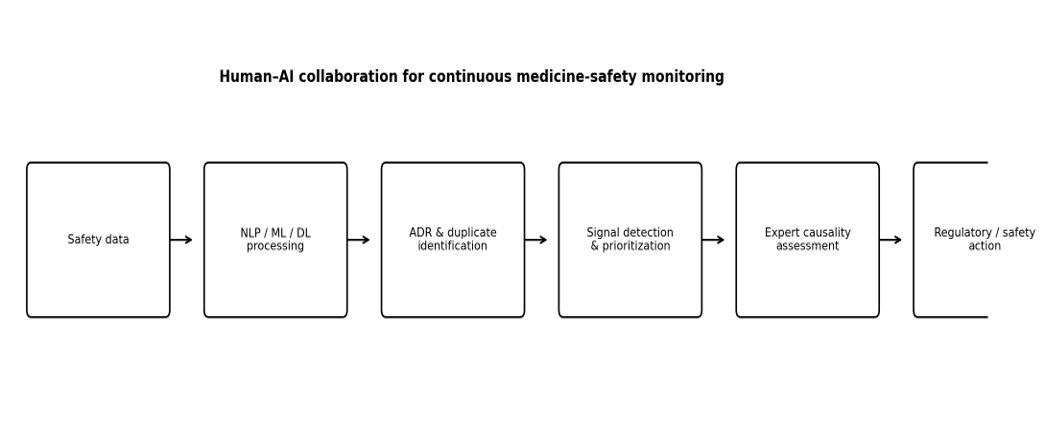
Figure 2. AI-supported pharmacovigilance workflow from safety-data processing to expert and regulatory action.
AI in Clinical Trials and Clinical Development:
AI in Clinical Trials :
Clinical trials play a central role in determining the safety, effectiveness, pharmacokinetics, and clinical benefits of new medicines. However, traditional clinical trials can require considerable time and financial resources. Difficulties such as finding suitable participants, managing complex study protocols, monitoring patients, and handling large volumes of clinical data can further increase the challenges involved. Artificial intelligence (AI), including machine learning (ML), deep learning (DL), natural language processing (NLP), and generative AI, is increasingly being explored to support different stages of clinical trials, from study design and participant recruitment to monitoring, data analysis, and safety assessment. Despite its potential, AI-based approaches require appropriate validation and continued supervision by qualified professionals [1–5].
AI in Clinical Trial Design :
AI can examine information from previous clinical trials, patient populations, treatment outcomes, and study protocols to help researchers develop more suitable trial designs. Machine learning models may assist in refining eligibility criteria, selecting appropriate endpoints, estimating sample sizes, determining treatment allocation, and planning the duration of a study. These applications may help make clinical trials more efficient while maintaining scientific validity [1,3].
AI in Patient Selection and Recruitment :
Finding participants who meet the eligibility requirements is often one of the most time-consuming parts of a clinical trial. AI can analyse electronic health records (EHRs), laboratory results, medical histories, and clinical notes to identify potentially eligible patients. NLP can be particularly useful for extracting relevant information from unstructured medical records, which may speed up the screening and recruitment process [1,2].
AI in Patient Retention and Stratification :
Maintaining patient participation throughout a clinical trial can be challenging. AI models can analyse demographic, clinical, and behavioural information to identify participants who may have a higher likelihood of withdrawing from a study. AI can also divide participants into clinically meaningful groups based on disease severity, biomarkers, genetic characteristics, or expected treatment response. This may help researchers develop more appropriate and well-defined trial populations [1–3].
AI in Biomarker Identification :
AI can analyse different types of biological and clinical information, including genomic, transcriptomic, proteomic, metabolomic, imaging, and patient-level data. By examining these datasets together, AI may help identify biomarkers associated with disease progression or response to treatment. Such biomarkers can be useful for selecting appropriate participants and predicting which patients are more likely to benefit from a particular therapy [1,3].
AI in Dose Selection and Treatment Optimization :
Determining the most appropriate dose is an important part of clinical development. AI can combine pharmacokinetic (PK), pharmacodynamic (PD), demographic, and clinical information to study relationships between dose, drug exposure, therapeutic effects, and toxicity. These approaches may support individualized dose selection and contribute to model-informed drug development.
AI in Adaptive Clinical Trials :
Adaptive clinical trials allow certain aspects of a study to be modified according to predefined rules and information obtained during the trial. AI and ML can analyse interim data to identify treatment-response patterns and potentially recognize patient subgroups that respond differently. However, any AI-supported adaptation must follow appropriate statistical methods, predefined criteria, and regulatory requirements to maintain the validity of the study.
AI in Trial Monitoring :
Monitoring clinical trials involves checking the quality and consistency of collected data and identifying possible problems. AI can help detect missing information, unusual data patterns, protocol deviations, and potential safety concerns. Predictive models may also identify trial sites or datasets that require additional attention. This can reduce some of the manual workload associated with continuous trial monitoring [1,4].
Future clinical trials are likely to make greater use of AI together with electronic health records, real-world data, genomic information, digital biomarkers, wearable devices, medical imaging, and pharmacometric models. AI-supported recruitment, adaptive trial designs, digital twins, automated safety monitoring, and computational trial simulations may improve the efficiency of clinical development.
However, AI is unlikely to replace clinical researchers or conventional clinical evidence. Instead, its greatest value will probably come from supporting researchers in handling complex information, identifying useful patterns, and making better-informed decisions. Strong validation, data protection, transparency, regulatory oversight, and human supervision will remain essential for the safe and reliable use of AI in clinical trials.
AI in Clinical Pharmacology and Precision Dosing: Integrated View :
AI-based clinical pharmacology can combine patient characteristics, drug concentrations, laboratory data, treatment outcomes and other clinical information to support PK/PD modelling, therapeutic drug monitoring and individualized dose selection. These methods complement, rather than automatically replace, established pharmacometric and clinical approaches.
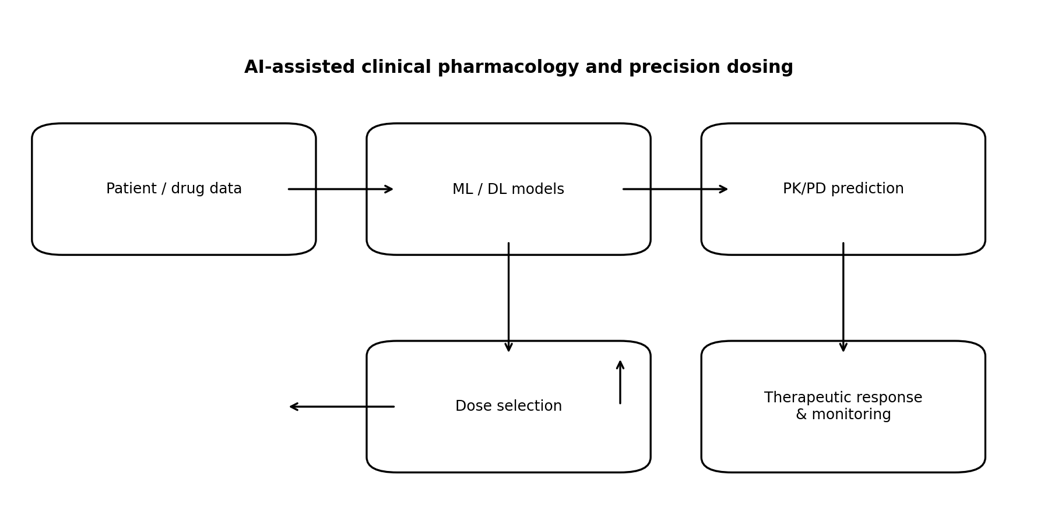
Figure 3. Conceptual AI-supported PK/PD and precision-dosing workflow.
Real-World Applications and Case Studies :
Real-World Applications and Case Studies of AI in Drug Discovery and Pharmacology
Artificial intelligence (AI) is now being applied in several areas of pharmaceutical research, including target identification, virtual screening, molecular design, ADMET prediction, drug repurposing, clinical development, and pharmacovigilance. A number of AI-assisted drug-discovery programs have progressed to preclinical studies or clinical trials, providing useful evidence about both the capabilities and limitations of AI in real-world drug development [1–4].
It is important to recognize that the use of AI does not automatically result in a successful medicine. Some AI-assisted drug candidates have reached clinical trials but were subsequently discontinued, whereas others have continued into later stages of development. Examining both types of outcomes provides a more realistic understanding of the role of AI in pharmaceutical research [1,2].
Baricitinib: AI-Assisted Drug Repurposing :
Benevolent AI applied an AI-based knowledge graph to examine connections between medicines, biological targets, diseases, and information from biomedical literature. Through this analysis, baricitinib, a medicine originally developed for rheumatoid arthritis, was identified as a potential candidate for the treatment of COVID-19.
Subsequent clinical research supported its use in certain hospitalized patients with COVID-19. This example demonstrates how AI can bring together information from different biomedical sources and help identify possible new applications for medicines that are already available [1,2].
AI application: Drug repurposing and biological pathway analysis
Drug: Baricitinib
Original use: Rheumatoid arthritis
New application: COVID-19
Significance: Demonstrates how AI-assisted analysis can help identify a potential new therapeutic indication for an existing medicine.
Halicin: AI-Assisted Antibiotic Discovery :
Researchers at the Massachusetts Institute of Technology (MIT) used a deep-learning model to screen a large collection of chemical compounds for antibacterial activity. The model identified a compound that was subsequently named halicin. It showed broad antibacterial activity, including activity against some bacteria that are resistant to multiple antibiotics.
This study demonstrated that AI can examine large chemical spaces and identify potentially useful antibacterial compounds that may be difficult to discover through conventional screening alone. However, halicin remained at the preclinical stage and has not become an approved clinical antibiotic [1,2].
AI application: Deep-learning-based compound screening
Compound: Halicin
Application: Antibacterial drug discovery
Significance: Demonstrates the ability of AI to identify new potential antibiotic candidates from large chemical libraries.
DSP-1181: AI-Designed Drug for OCD :
DSP-1181 was developed through a collaboration between Exscientia and Sumitomo Pharma for the treatment of obsessive-compulsive disorder (OCD). AI-assisted methods were used during molecular design and optimization to develop a selective 5-HT1A receptor agonist.
The candidate entered Phase I clinical testing in 2020 but was later discontinued. This case illustrates an important limitation of AI-assisted drug discovery: even when computational methods help accelerate the identification and optimization of a promising molecule, the candidate may still fail to demonstrate sufficient clinical potential [1,2].
AI application: AI-assisted molecular design and optimization
Drug candidate: DSP-1181
Target: 5-HT1A receptor
Indication: Obsessive-compulsive disorder
Outcome: Entered Phase I clinical development but was later discontinued.
INS018_055 (Rentosertib): AI-Discovered Drug for IPF :
INS018_055, also known as rentosertib, represents an important example of an AI-originated drug candidate that progressed into clinical development. Insilico Medicine used AI-based approaches for target identification, molecular generation, and compound optimization, with TNIK investigated as a potential therapeutic target for idiopathic pulmonary fibrosis (IPF).
The candidate subsequently advanced into clinical studies, including Phase IIa evaluation. This example illustrates how AI-assisted approaches can contribute to the drug-discovery process from the identification of a potential target through molecular design and eventual testing in humans [1,2].
AI application: Target identification and generative molecular design
Compound: INS018_055 / rentosertib
Target: TNIK
Indication: Idiopathic pulmonary fibrosis
Outcome: Progressed into Phase IIa clinical development.
REC-994: AI-Assisted Discovery for Cerebral Cavernous Malformation :
Recursion used AI-supported phenotypic screening, high-content imaging, and convolutional neural networks (CNNs) to investigate potential treatments for cerebral cavernous malformation (CCM).
The approach allowed researchers to analyse cellular changes and identify compounds showing potentially useful biological effects. REC-994 subsequently entered clinical development, providing an example of how image-based AI approaches can contribute to phenotypic drug discovery [1].
AI application: Phenotypic screening and image analysis
Compound: REC-994
Indication: Cerebral cavernous malformation
AI technologies: High-content imaging and convolutional neural networks
Outcome: Progressed into clinical development.
|
Case study |
AI application |
Development stage / significance |
|
Baricitinib |
Knowledge-graph-based drug repurposing |
AI-assisted identification of a potential COVID-19 application; subsequent clinical evidence supported use in selected patients |
|
Halicin |
Deep-learning compound screening |
Preclinical antibiotic discovery; illustrates screening of large chemical spaces |
|
DSP-1181 |
AI-assisted molecular design |
Entered Phase I for OCD; later discontinued, illustrating that computational acceleration does not guarantee clinical success |
|
INS018_055 / rentosertib |
Target identification and generative design |
Progressed into clinical development for idiopathic pulmonary fibrosis |
|
REC-994 |
AI-assisted phenotypic screening and image analysis |
Entered clinical development for cerebral cavernous malformation |
|
AI + real-world data |
ML/NLP analysis of EHRs, safety and clinical data |
Supports ADR detection, trial recruitment, treatment-outcome analysis and repurposing |
15. AI Platforms and Tools Used in Drug Discovery and Pharmacology :
AI Platforms and Tools Used in Drug Discovery and Pharmacology :
AI has led to the development of many computational platforms for drug discovery and pharmacology. These tools use machine learning (ML), deep learning (DL), generative AI, graph neural networks (GNNs), natural language processing (NLP), molecular modelling, and knowledge graphs.
They can support target identification, protein-structure prediction, virtual screening, molecular design, ADMET prediction, drug repurposing, toxicity assessment, PK/PD modelling, and clinical research. Modern platforms are increasingly combining several of these functions into integrated workflows [1–4].
AlphaFold :
AlphaFold, developed by Google DeepMind, uses deep learning to predict protein structures from amino-acid sequences. Its structural predictions can support target analysis, binding-site identification, docking, and structure-based drug design.
Main use: Protein-structure prediction
Technology: Deep learning
Importance: Provides structural information when experimental structures are unavailable [2,5].
Schrodinger Platform :
Schrödinger combines physics-based molecular modelling with ML methods. Its tools support molecular docking, virtual screening, molecular dynamics, property prediction, free-energy calculations, and ligand optimization.
It represents a physics + AI/ML approach to drug discovery and has been used in several pharmaceutical development programs [1,3].
Insilico Medicine :
Insilico Medicine uses AI for target identification, generative molecular design, and predictive modelling. Its rentosertib (INS018_055) program for idiopathic pulmonary fibrosis is an important example of an AI-assisted candidate progressing into clinical development [1].
Recursion Platform :
Recursion combines AI, automated biology, high-throughput experiments, and high-content cellular imaging. ML models analyse cellular changes to identify disease-related patterns and potential drug candidates.
This phenomics-based approach connects large-scale biological experiments with AI-driven drug discovery [1].
Exscientia Platform :
Exscientia developed AI-based methods for molecular design and lead optimization. Its models can generate and prioritize compounds according to properties such as potency, selectivity, and developability.
The DSP-1181 program is an early example of an AI-assisted molecule entering clinical development [1,3].
BenevolentAI :
BenevolentAI uses AI and knowledge graphs to connect information on diseases, genes, proteins, pathways, drugs, and clinical data. These systems are particularly useful for target identification and drug repurposing.
Its identification of baricitinib as a potential COVID-19 treatment is a well-known example [1,3].
Atomwise :
Atomwise applies deep learning to virtual screening and drug–target interaction prediction. Its technology can screen large chemical libraries and prioritize compounds for experimental testing.
Main use: Virtual screening
Technology: Deep learning
Benefit: Rapid identification of potential active compounds.
|
Platform / tool |
Main approach |
Representative application |
|
AlphaFold |
Deep learning / protein structure prediction |
Protein structure modelling and structure-based drug discovery |
|
Schrödinger platform |
Physics-based modelling + ML |
Docking, molecular dynamics, property prediction and lead optimization |
|
Insilico Medicine |
AI / generative design / predictive modelling |
Target identification and molecular design |
|
Recursion |
AI + automated biology + imaging |
Phenotypic screening and disease-pattern discovery |
|
Exscientia |
AI-assisted molecular design |
Molecular generation and lead optimization |
|
BenevolentAI |
Knowledge graphs + AI |
Target identification and drug repurposing |
|
Atomwise |
Deep learning |
Virtual screening and drug–target prediction |
|
XtalPi |
AI + computational chemistry + automation |
Molecular modelling, crystal prediction and design–make–test cycles |
|
NVIDIA BioNeMo |
AI models for biology and chemistry |
Protein, molecular-interaction and generative modelling |
|
DeepChem |
Open-source ML framework |
Molecular property, toxicity and graph-based modelling |
|
RDKit |
Cheminformatics toolkit |
Molecular descriptors, fingerprints and chemical-data processing |
|
AutoDock / AutoDock Vina |
Molecular docking |
Protein–ligand docking; can be combined with AI-based ranking |
Faster Drug Discovery :
One of the major advantages of AI is its ability to process large amounts of information in a relatively short time. By analysing molecular structures, biological data, and clinical information, AI can help researchers identify promising drug targets and candidate molecules more efficiently. This may shorten some of the early stages of drug discovery.
Handling Large and Complex Data :
Modern pharmaceutical research generates data from many different sources, including genomics, proteomics, metabolomics, chemical databases, clinical trials, and electronic health records. AI can process and connect these different types of information to identify patterns and relationships that may be difficult to recognize through conventional data-analysis methods.
Improved Target and Hit Identification :
AI can combine biological and chemical information to help researchers identify potential therapeutic targets. It can also be used to screen large chemical libraries and rank compounds according to their predicted activity or other desirable characteristics. This allows researchers to concentrate experimental studies on compounds with greater potential.
De Novo Drug Design and Lead Optimization :
Generative AI and machine learning can contribute to the design of new chemical structures and the improvement of existing lead compounds. These approaches can consider factors such as biological activity, physicochemical properties, molecular stability, and drug-likeness. As a result, AI can assist researchers in modifying promising molecules and selecting candidates for further investigation.
Early ADMET and Safety Prediction :
AI can be used to estimate important ADMET properties, including absorption, distribution, metabolism, excretion, and toxicity, during the early stages of drug development. Identifying compounds with unfavourable safety or pharmacokinetic characteristics at an early stage may prevent resources from being spent on candidates that are unlikely to progress successfully.
Improved Clinical Trials :
AI can support several aspects of clinical trials, including participant identification, recruitment, patient stratification, clinical-data analysis, and prediction of treatment outcomes. Natural language processing and machine learning can help analyse medical records and identify patients who meet specific trial requirements. These applications may improve the efficiency of clinical studies and reduce some of the challenges associated with patient recruitment.
Support for Precision Medicine :
Patients can respond differently to the same medicine because of differences in genetics, age, disease status, lifestyle, organ function, and other factors. AI can combine genomic, clinical, and pharmacological information to identify factors associated with differences in treatment response. This may support more individualized drug selection and dose determination.
|
Potential advantage |
How AI can contribute |
Important qualification |
|
Faster information processing |
Rapid analysis of large chemical, biological and clinical datasets |
Speed does not guarantee better clinical outcomes |
|
Prioritization |
Ranks targets, hits and candidate molecules for experimental testing |
Predictions require independent validation |
|
Early safety assessment |
Supports ADMET and toxicity prediction |
False positives and false negatives remain possible |
|
Data integration |
Combines molecular, genomic, clinical and real-world information |
Data quality and harmonization are critical |
|
Personalization |
Supports patient stratification and precision dosing |
Clinical utility requires prospective validation |
|
Reduced unnecessary experiments |
Can filter low-priority candidates before laboratory testing |
Should complement, not replace, experimental work |
Limitations and Challenges :
The principal limitation of AI in drug discovery is that computational performance is strongly dependent on the quality, representativeness and provenance of the underlying data. Incomplete datasets, measurement error, class imbalance, selection bias and differences in experimental conditions can reduce generalizability. A model may also perform well on an internal benchmark but fail when transferred to a new chemical series, biological system or patient population.
Interpretability is another important issue. Highly complex models may provide accurate predictions without making the biological reasoning behind those predictions obvious. This can make scientific review, error analysis and regulatory assessment more difficult. Reproducibility can also be affected by proprietary datasets, changing software environments, undocumented preprocessing and differences in model implementation.
Other challenges include privacy and cybersecurity for clinical data, intellectual-property considerations, computational costs, model drift, inconsistent data standards, uncertainty estimation, and the need for external and prospective validation. Importantly, AI-generated hypotheses must still be tested experimentally. The existence of an AI prediction does not establish efficacy, safety, causality or clinical benefit.
Table 5. Major challenges in AI-enabled drug discovery and pharmacology.
|
Challenge |
Potential consequence |
Preferred response |
|
Poor or biased data |
Unreliable or non-generalizable predictions |
Data curation, quality control and representative datasets |
|
Black-box behaviour |
Limited interpretability and trust |
Explainable AI, uncertainty estimates and expert review |
|
Dataset/model shift |
Performance loss in new settings |
External validation and continuous monitoring |
|
Reproducibility |
Different results across platforms or implementations |
Transparent reporting, versioning and standardized benchmarks |
|
Privacy and IP |
Restrictions on data sharing and model development |
Secure governance and appropriate legal/ethical controls |
|
Clinical translation gap |
Computational success without patient benefit |
Prospective experimental and clinical validation |
|
Regulatory uncertainty |
Difficulty establishing acceptable evidence |
Early regulator engagement and auditable validation |
Ethical, Regulatory and Validation Considerations :
AI systems used in pharmaceutical research should be evaluated with the same scientific discipline applied to other tools that can influence drug-development decisions. Data provenance, model purpose, intended-use population, performance metrics, uncertainty, external validation and failure modes should be documented. When patient data are involved, privacy, informed consent, data security and governance must be addressed. For clinical and pharmacovigilance applications, human
human oversight remains essential. AI can assist with participant identification, endpoint analysis, safety-signal detection and treatment-response prediction, but final clinical or regulatory decisions should remain accountable to appropriately qualified professionals. Validation should be independent where feasible and should include performance across relevant subgroups to identify clinically important bias.
Future Perspectives :
The next generation of AI-enabled pharmaceutical research is likely to combine multimodal learning with chemical structures, protein sequences and structures, genomics, transcriptomics, imaging, electronic health records and real-world evidence. Generative models may increasingly be used for multi-objective molecular design, while protein-structure modelling and molecular simulation can provide complementary structural information.
Another important direction is the integration of AI with laboratory automation and robotics. Rather than treating prediction as a one-way computational step, closed-loop systems can repeatedly design candidates, synthesize or test them, analyse experimental results and update the next round of design. Such systems may improve the efficiency of design–make–test–analyse–learn cycles, but they will still depend on reliable experimental measurements and scientifically meaningful objectives.
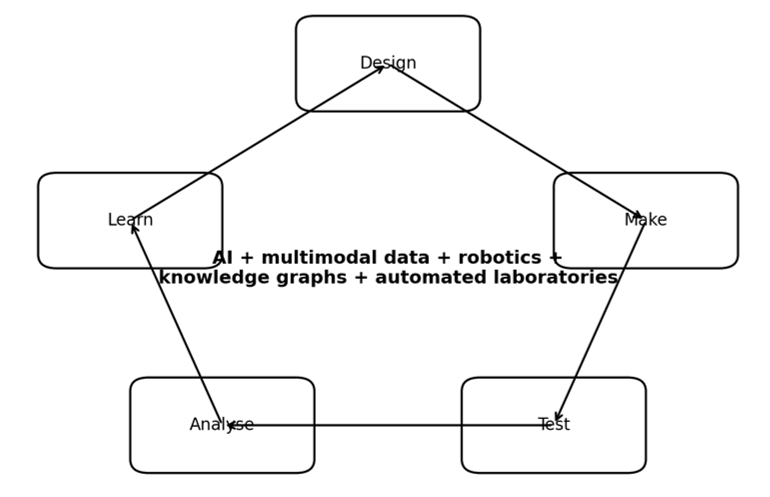
Figure 4. Conceptual closed-loop future workflow for AI-enabled drug discovery.
CONCLUSION
Artificial intelligence is becoming an important supporting technology across drug discovery and pharmacology. Machine learning, deep learning, graph neural networks, natural language processing and generative AI can assist with target identification, virtual screening, molecular design, lead optimization, ADMET and toxicity prediction, PK/PD modelling, drug repurposing, clinical development and pharmacovigilance. The reviewed case studies show both useful progress and important limitations: AI can help identify and prioritize candidates, but computational success does not automatically translate into clinical success.
The most scientifically appropriate view is therefore not that AI replaces conventional pharmaceutical research, but that it can strengthen it. Reliable data, transparent modelling, external validation, laboratory confirmation, clinical evidence and expert judgement remain essential. Future progress will depend on multimodal data integration, explainable and uncertainty-aware AI, automated experimentation, robust regulatory frameworks and closer integration between computational and experimental workflows.
REFERENCES


Siddhant Dhaware, Kaufiya Sayyed, Amrata Suryawanshi, Nishant Kamble, Artificial Intelligence in Drug Discovery and Pharmacology: Applications, Advances, Challenges, and Future Perspectives, Int. J. of Pharm. Sci., 2026, Vol 4, Issue 10, 2939-2966. https://doi.org/10.5281/zenodo.23474852
 10.5281/zenodo.23474852