

We use cookies to ensure our website works properly and to personalise your experience. Cookies policy
Department of Pharmaceutical Quality Assurance, Vidyabharathi College of Pharmacy, Sant Gadge Baba Amravati University, Amravati 444601, Maharashtra, India.
Urolithiasis is a recurrent renal disorder characterized by the formation of calculi in the urinary tract, a recurring kidney disease. Because of their safety and therapeutic effectiveness, herbal medications are becoming more and more popular. A member of the Cucurbitaceae family, Momordica dioica is a medicinal plant with anti-urolithiatic properties that has long been used to treat urinary problems. The goal of this study is to create a tablet formulation of Momordica dioica and assess its in vitro quality criteria. The direct compressed method was used to make the tablets, and their weight variation, hardness, friability, disintegration, dissolution, and drug content were assessed. Acceptable tablet quality and consistency were indicated by the fact that all assessed metrics fell within pharmacopeial limits. The research backs the creation of a standardized herbal tablet formulation for the treatment of urolithiasis.
Urolithiasis is one of the most common disorders of the urinary system, with a high rate of recurrence. Current Treatment options include surgical procedures and synthetic drugs, which may be associated with side effects and High cost. Herbal drugs offer a safer alternative and are widely accepted in traditional medicine systems. Momordica dioica has been reported to possess diuretic, anti-inflammatory, and anti-urolithiatic activities. However, the absence of standardized dosage forms limits its pharmaceutical application. Therefore, the present Study focuses on the development and in-vitro quality evaluation of Momordica dioica tablet formulation.
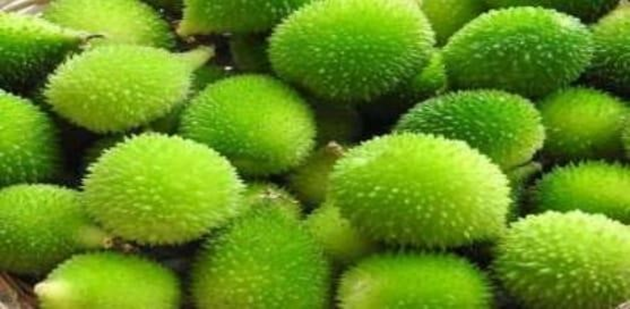
Momerdica diocia fruits
Traditional medicinal herbs are still used across various cultures worldwide for basic healthcare needs, despite developments in modern medicine.[3,4,5]Due to their efficiency, low cost, and availability, these medicinal plants have traditionally been used as a form of therapy in many traditional medical systems. However, the lack of standards for drug authenticity makes natural origin medicines vulnerable to adulteration and substitution. As a result, this affects the strength, quality, and purity of pharmaceuticals. A pharmacognostic investigation is necessary to ensure the authenticity of herbal medicine. Herbal medicines have been utilized for many Years to treat a variety of illnesses. Many human Illnesses have been treated with herbs, which are widely Available, and have a lower risk of side effects.[18-22] In many nations,where 35% of medicines contain natural components,the use of therapeutic plants is growing . The World Health Organization,better known as the WHO, has established specificfor the assurance of safety, and strong quality control profiles, and also outlines the requirements for standardizing herbs, herbal products, and other forms of healthcare .Momordica dioica is a perennial, dioecious cucurbitaceous climbing creeper. Kankoda, kakrol, spiny gourd, teasle gourd, akakara, bodakakara, kakor, kantola, golbandra, parora, kheksa, dharkarela, and batkarila are some of its other names. It is found on the Deccan Plateau and in central India, where it is indigenous to Asia. In addition to Bangladesh, Nepal, Myanmar, China, and Pakistan, it is also dispersed outside of India.[6,7]
Botanical Profile of Momordica Dioica:[8,9]
Vernacular Names of Momordica Dioica:
Bengali: Kartoli
English: Small bitter gourd, Spine gourd,Teasel gourd
Hindi: kakora, Parora,Kantola
Malayalam: Venpaval
Tamil: Paluppakkay
Telugu: Agakara, Karl
Sanskrit: Vahisi
Punjabi: Bharkarela
Marathi: Kantoli
Gujrati: Katwal
Taxonomy of Momordica Dioica:-[10]
|
Kingdom |
Plantae |
|
Sub-Kingdom |
Tracheobionata |
|
Division |
Magnoliphyta |
|
Class |
Magnoliphyta |
|
Super-division |
Spermatophyta |
|
Family |
Cucurbitaceae |
|
Order |
Violales |
|
Genus |
Momordica |
|
Dioica |
Dioica |
MATERIALS AND METHODS:-[11,12,13]
1.Plant Material
Dried fruits of Momordica dioica were procured from a local market and authenticated by a qualified Pharmacognosist. The material was dried, powdered, and stored in airtight containers.
2.Preparation of Extract of Momordica dioica
Momordica dioica (Spiny gourd/Kantola) extract can be prepared using different methods depending on the solvent and purpose (phytochemical screening, tablet formulation, pharmacological study, etc.). Below is a standard laboratory method.[24-27]
Method 1: Soxhlet Extraction (Hydroalcoholic Extract)
Materials Required:
Dried powdered drug (50–100 g)
Solvent: Ethanol (95%) or Hydroalcoholic (70% ethanol)
Soxhlet apparatus
Heating
Procedure:
Weigh 50 g of powdered drug.
Place it in a thimble inside Soxhlet apparatus.
Add 300–500 ml solvent in round bottom flask.
Heat at 60–80°C.
Allow 6–8 hours extraction (until siphon tube runs clear).
Filter the extract.
Concentrate using rotary evaporator at < 45°C. 8. Dry in a water bath to obtain a semisolid mass.
9. Store in desiccator.
Method 2: Maceration Method (Simple Method)
Procedure:
Take 50 g coarse powder.
Add 250 ml hydroalcoholic solvent.
Keep in closed container for 72 hours.
Shake occasionally.
Filter through muslin cloth.
Concentrate filtrate on water bath.
Dry and store.
Tablet Formulation:-
Formulation of tablets from the phenolic Extract was conducted by direct compression Method.[13,14] Direct compression refers to the Practice of compressing tablets directly from Powdered active drug components and Appropriate excipients into a solid compact Without using the granulation process. These Involve mixing and processing formulation Ingredients and then compressing them into Tablets. To achieve the perfect formulation, We performed the “Hit and Trial” method, Experimenting with different formulations to Find the best one. We crafted five unique Formulations through this approach, tweaking The components and proportions each time
Tablets were prepared by the direct compression method using suitable excipients including microcrystalline
Cellulose, polyvinyl pyrrolidone (PVP K-30), sodium starch glycolate, and magnesium stearate.[15,16]
Composition of Momordica dioica Tablet Formulation
|
Ingredient |
Quantity (mg) |
|
Momordica dioica extract |
250 |
|
Microcrystalline cellulose |
200 |
|
Polyvinyl pyrrolidone (PVP K-30) |
30 |
|
Sodium starch glycolate |
15 |
|
Magnesium stearate. |
5 |
In-Vitro Evaluation
The formulated tablets were evaluated for weight variation, hardness, friability, disintegration time, drug content,And dissolution studies according to standard pharmacopeial procedures.
In-Vitro Quality Evaluation Results
|
Parameter |
Result |
Pharmacopoeial Limit |
|
Weight variation |
±4.2% |
±5% |
|
Hardness |
5.2 kg/cm² |
4–6 kg/cm² |
|
Friability |
0.62% |
< 1% |
|
Disintegration time |
6.5 min |
< 15 min |
|
Drug content |
98.4% |
95–105% |
CONCLUSION
The study successfully developed a standardized herbal tablet formulation using the extract of Momordica dioica. By utilizing the direct compression method, the research addressed the previous lack of standardized dosage forms for this medicinal plant, which is traditionally known for its anti-urolithiatic, diuretic, and anti-inflammatory properties. The in-vitro quality evaluation confirms that the formulated tablets are of high quality and consistency, as all tested parameters .
REFERENCES
07.
Phytochemical Investigation and Medicinal Applications of Herb’s,” Asian Journal of
Pharmaceutical Research and Development, vol. 10, no. 6, 2022, doi: 10.22270/ajprd.v10i6.1210.
10.5109/10067.
07.
Phytochemical Investigation and Medicinal Applications of Herb’s,” Asian Journal of
Pharmaceutical Research and Development, vol. 10, no. 6, 2022, doi: 10.22270/ajprd.v10i6.1210.
10.5109/10067.


Furqan shah ashfaque shah, Dr.Monika Jadhao, Shailesh Jawarkar, Dr.Vijay Waghulkar, Amol Sawale, Development and In-Vitro Quality Evaluation of Momordica dioica Tablet Formulation for Urolithiasis, Int. J. of Pharm. Sci., 2026, Vol 4, Issue 4, 2007-2012, https://doi.org/10.5281/zenodo.19551410
 10.5281/zenodo.19551410