

We use cookies to ensure our website works properly and to personalise your experience. Cookies policy
Department of Pharmaceutical Chemistry, Channabasweshwar Pharmacy College (Degree) Latur-413512, Maharashtra, India
Vitex trifolia is one of the Vitex species were known as Lemuni. It is widely used traditionally to reduce pain, fever and minor ailments. Every part of the plant had its advantages; for example, the leaves’ part can relieve pain, treat fever and can help to improve memory. It has potent pharmacological activities such as antioxidant, antinociceptive, anti-inflammatory and anticancer. In addition, every part of the plant has unique constituents with different biological activities. A few isolated and identified flavonoids in Vitex trifolia include casticin, pepsinogen, artemetin, luteolin, penduletin, vitexicarpin and chrysisplenol. These flavonoids can inhibit the cell cycle involved in carcinogenesis and have been reported to have anti-inflammatory properties. Vitex trifolia can be exploited as possible treatments for COVID-19 as the extracts have shown potential anticancer, anti-inflammatory, antioxidant and other pharmacological properties due to the presence of the phytochemical constituents in the plant.Despite existing literature exploring pharmacological attributes and secondary metabolites of related species, a conspicuous gap exists, specifically focusing on the pharmacological activities and novel methods of purification of pure metabolites from Vitex trifolia. This review aimed to fill this gap by delving into traditional medicinal applications, exploring secondary metabolites comprehensively, and providing an in-depth analysis of pharmacological effects of pure metabolites. Combining traditional uses with contemporary pharmacological insights, this article sought to serve as a crucial reference for future research and practical application of Vitex trifolia. This approach contributes substantially to understanding the plant, fostering scientific inquiry, and facilitating its broader application in healthcare
Currently, most of the global population is practising medicinal plants due to their folkloric claims. One of the species widely consumed is the Vitex species. There are almost 270 species of Vitex that have been reported in the traditional system of disease management and one of them is Vitex trifolia L. leaves exhibited inhibition of both Gram-positive and Gram-negative bacteria. It is traditionally used by the tribes and native medical practitioners to treat various ailments, including disorders, tumours, rheumatic pains, inflammation, sprains, and fever and is used in the treatment of tuberculosis. In India, the plant parts like leaves and flowers have significant therapeutic potential. The leaves are used to improve memory, relieving pain, removing bad taste in the mouth, cure fever, and treat hair loss. The aerial parts of this plant are useful in the treatment of diabetes. The aerial parts have friedelin, b sitosterol, b-D-glucoside, long-chain hydrocarbon. Besides, the plant also possesses larvicidal, wound healing, anti-HIV, anticancer, trypanocidal, antimicrobial and antipyretic activities.[1]
Plants play a crucial role in health-related problems due to their rich reservoir of bioactive metabolites. These natural metabolites found in various plant species, such as those belonging to the Verbenaceae family, have shown immense potential in preventing and treating chronic diseases, offering a promising opportunity for therapeutic interventions. Verbenaceae is one of the largest families of the plant kingdom, consisting of trees, shrubs, lianas, and herbs. Verbenaceae comprise of 34 genera and around 1,200 species. Vitex is known as one of the largest genera in the family, possessing species mainly distributed in tropical areas, with a few in subtropical regions.[2]
Vitex trifolia, commonly known as Nirgundi, is a well-known medicinal plant in traditional systems like Ayurveda. It is rich in flavonoids, terpenoids, and phenolic compounds that exhibit antioxidant, anti-inflammatory, and anticancer properties. This review focuses on the phytochemistry, pharmacological activities, and detailed mechanisms by which Vitex trifolia shows potential in the prevention and treatment of skin cancer. [3]
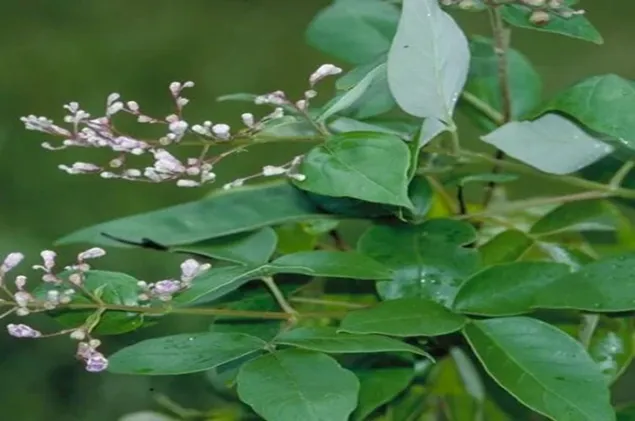
Fig. 1. Vitex trifolia leaves
Taxonomical Classification: [4]
Table 1: Taxonomical Classification of Vitex trifolia
|
Taxonomical Rank |
Taxon |
|
Taxonomy |
Vitex trifolia |
|
Class |
Magnoliopsida |
|
Kingdom |
Plantae |
|
Subkingdom |
Tracheobionta |
|
Sub-phylum |
Angiospermae |
|
Division |
Magnoliopsida |
|
Sub-division |
Spermatophyta |
|
Order |
Lamiaceae |
|
Family |
Verbenaceae |
|
Sub-class |
Asteridae |
|
Genus |
Vitex |
|
Species |
Vitex trifolia linn |
|
Common Name |
Nirgundi |
Profile of the Plant:
In India, Vitex trifolia is widely distributed, mainly in coastal and tropical regions: Coastal & Southern India [Kerala, Tamil Nadu, Karnataka], Western Coast Maharashtra (Ratnagiri, Sindhudurg), Konkan region, North-East India [Assam, Manipur]
BOTANICAL DESCRIPTION:[5,6]
Vernacular Name:[7]
Table 2: Vernacular names of Vitex trifolia
|
Language |
Name |
|
English |
Three leaved chaste tree, Arabian lilac |
|
Marathi |
Nirgudi |
|
Hindi |
Nirgundi |
|
Tamil |
Notchi |
|
Telugu |
Vavili |
|
Kannada |
Lakkigida |
|
Malayalam |
Indrani |
AYURVEDA PROPERTIES: [8]
Table 3: Ayurveda properties of Vitex Trifolia
|
Ras |
Tikta |
|
Vipak |
Katu |
|
Veerya (potency) |
Ushna |
|
Guna |
Laghu |
|
Karma |
Vedanasthapana, Shothahara, krimigha |
|
Effect on dosha |
Reduces vata and kapha, may slightly increase pitta |
|
Effect on dhatu |
Acts mainly on rasa (plasma)and rakta (blood) Supports mamsa dhatu (muscle tissue) |
NUTRITIONAL POTENTIAL:[9]
Presence of bioactive nutrients although not a conventional food crop, Vitex trifolia contains several important nutritional and health-promoting compounds: Flavonoids (e.g., casticin, luteolin, artemetin) Phenolic compounds (high antioxidant content) Iridoids and glycosides Essential oils and terpenoids These compounds act as functional nutrients, supporting body health rather than just providing calories.
Antioxidant capacity (major nutritional benefit) leaves contain high phenolic and flavonoid content shows strong free radical scavenging activity which prevents oxidative stress and reduce risk of chronic diseases (cancer, diabetes, cardiovascular diseases).
Micronutrient-like compounds though exact vitamin/mineral data is limited; studies suggest presence of plant sterols (β-sitosterol) fatty acids and organic acids trace elements (not fully quantified). These contribute to anti-inflammatory effects metabolic health support.
Nutraceutical uses (functional food role): In some traditional systems, leaves and flowers are consumed in herbal preparations used for postpartum nutrition and recovery considered a health tonic in some cultures.
TRADITIONAL USES:[10]
Traditional uses of Vitex trifolia has been widely used in traditional medicine systems like Ayurveda, Unani medicine, and folk practices across Asia.
PHYTOCHEMISTRY:[11]
So far, over 180 metabolites have been identified from different parts of Vitex trifolia. Investigation of the chemical profile has led to the isolation of terpenoids (monoterpenes, sesquiterpenes, diterpenes, triterpenes, and phytosterols), ecdysteroids, flavonoids, lignans, phenylpropanoids, anthraquinone, fatty acids, along with xanthones isolated from the endophytic fungi of the fruit. Among them, the diterpenes special labdane-type are the most significant metabolites in this species. In the following sections, the isolated/identified phytochemicals have been classified.
Terpenoids:
Vitex trifolia is rich in terpenoids, especially monoterpenes, sesquiterpenes, and diterpenes, which contribute to its medicinal properties like anti-inflammatory, antimicrobial, and anticancer activities.
Flavonoids:
Vitex trifolia, including flavones, flavanols, and flavanones. Among these, a particular focus has been noted on methoxylated flavones. These compounds are characterized by having between two to five methoxyl groups and have been detected primarily within polar extracts or fractions derived from the leaves of the plant.
e.g. Casticin, Artemetin, Luteolin, Apigenin, Chrysosplenol D, Penduletin
Table 4: Name of phytoconstituents and structure
|
Sr. No |
Name of compound |
Structure |
|
1 |
Vitexicarpin |
|
|
2 |
Casticin |
|
|
3 |
Luteolin |
|
|
4 |
Penduletin |
|
|
5 |
Persicogenin |
|
|
6 |
Chrysoplenols |
|
|
7 |
Abietatrien-3 β-ol |
|
|
8 |
Rotundifuran |
|
|
9 |
β- sitosterol |
|
|
10 |
Halimadien-6-one |
|
|
11 |
Vitetrifolin -AD |
|
|
12 |
vitexilactone |
|
|
13 |
Campesterol |
|
|
14 |
Artemetin |
|
|
15 |
Cynaroside |
|
|
16 |
Maslinic acid |
|
|
17 |
Oleanolic acid |
|
|
18 |
Gallic acid |
|
|
19 |
Vitexin |
|
|
20 |
1,8 cineole |
|
|
21 |
B- caryophyllene |
|
|
22 |
Alpha-pinene |
|
|
23 |
Sabinene |
|
|
24 |
Taraxerol |
|
PHARMACOLOGICAL ACTIONS:
Table 5: Pharmacological actions of Vitex trifolia
|
Pharmacological Activities |
Part Used |
Reference |
|
Anti-amnesic activity |
Leaves, Roots |
11 |
|
Anti-oxidant |
Leaves |
12 |
|
Hepatoprotective activity |
Bark |
13 |
|
Anti-malaria activity |
Leaves, Fruits |
14 |
|
Wound Healing |
Leaves |
15 |
|
Anti-inflammatory |
Leaves |
16 |
|
Anti-asthmatic |
- |
17 |
|
Antipasmodic |
- |
18 |
|
Cytotoxic |
Leaves |
19, 20 |
|
Anti-microbial |
Leaves |
21 |
|
Anti-viral |
Roots |
22 |
|
Anti-HIV |
Leaves |
23 |
|
Anti-larvicidal |
Leaves |
24, 25 |
|
Respiratory disorder |
Flowers |
26 |
Anti-amnesic activity:[11]
In the passive avoidance and T-maze models, a high dose (20mg/kg, b.w.) of aqueous. Vitex trifolia leaf extract demonstrated a significant anti-amnesic activity. The extract led to a not ably shorter escape latency time(12s) compared to the control, this result was nearly twice as high as that of the control group, indicating improved memory retention compared to both the control and other treatment groups.
Antioxidant activity:[12]
Flavonoids and tannins are major groups of compounds that act as primary antioxidants or free radical scavengers. Anthocyanin is known as an antioxidant, flavonoid where it will be expressed when the chlorophyll in a plant is destroyed due to high temperature. Anthocyanin can block NF-kB activation as well as inhibit NF-kB activity (35). NF-kB is involved with carcinogenesis thus, indirectly, anthocyanin can inhibit cancer.
Hepatoprotective activity:[13]
The observed Frontiers in pharmacology hepatoprotective effects of the tested metabolite were found to be comparable to those of the standard drug, silymarin, administered at a dosage of 100 mg/kg b. w. with 7 days exposure. This similarity is evident from the significant reduction in the serum levels of key liver enzymes, namely, glutamate pyruvate transaminase (SGPT) (342 U/ l in the control group.
Anti-malarial activity:[14]
In an investigation utilizing semi-structured questionnaires and informant interviews to gather knowledge about plants associated with malaria and related symptoms, the antimalarial potential of the extracts from 70 plant species, representing 62 genera and 34 families, was evaluated. The results highlighted Solanaceae as the most frequently cited family, with 7 species showing promising antimalarial properties.
Wound healing effect:[15]
In a comparative analysis of wound healing potential, the ethanol leaf extract of Vitex trifolia demonstrated superior activity compared to Vitex altissima L. The incision wound tissue tensile strength for the positive control was 600.00, while it was 578.20 for Vitex trifolia and 529.08 for Vitex altissima. Hydroxyproline levels, indicative of collagen formation, were higher in the ethanol leaf extract of Vitex trifolia (2,567 µg/100 mg) compared to Vitex altissima (2012 µg/100 mg), with a negative control registering at 1943 µg/ 100 mg.
Anti-inflammatory:[16]
Inflammation is the process of the body’s immune response to the irritant when the body is fighting against the virus or bacteria that attacks the body. The function of inflammation is to eliminate the initial cause of cell injury and initiate tissue repair. Inflammation can be an acute incident and may lead to a chronic condition if assault persists. The acute phase of inflammation is characterized by the rapid influx of blood granulocytes, typically neutrophils, followed swiftly by monocytes that mature into inflammatory macrophages that subsequently proliferate and thereby affect the functions of resident tissue macrophages.
Anti-asthmatic:[17]
Asthma is a common allergic and inflammatory disease of the respiratory system. The prevalence of asthma increased worldwide due to worsening air pollution and immune system dysfunction. Activated Th2 cells will release excess cytokine to stimulate AHR. It will also induce eosinophil infiltration that leads to exacerbation of inflammation and allergic reaction in the lungs. Cytokine induces goblet cell hyperplasia and mucus secretion, which is causing severe respiratory obstruction. Improper activation of Th2 cells is essential for the amelioration of asthma.[14]
Antispasmodic activity:[18]
In an in vivo study the assessment of viteosin-A (34) and vitexicarpin (135), the primary active metabolites present in the n-hexane extract of Vitex trifolia, demonstrated that only vitexicarpin exhibited activity in the tracheospasmolytic bioassay. Notably, this activity was observed at a minimum dose of 1.3×10⁻⁵ M, for30 min, utilizing sensitized guinea pig trachea stimulated by ovalbumin. The findings suggest that vitexicarpin could potentially hinder the effects of histamine released from sensitized mast cells by stabilizing the membrane function of the mast cells.
Anticancer activity:[19]
Data Screening of five samples, namely, Alpinia galanga (L.) Wild. (Zingiberaceae), Piper cubeba L. (Piperaceae), and Santalum album L. (Santalaceae), along with Vitex trifolia. at a concentration of 25 μg/mL and incubated for 24 h, revealed a significant inhibitory activity against the T47D breast cancer cell line, with inhibition percentages of 96.4%, 87.6%, 82.6%, and 88.7%, respectively. Epirubicin and doxorubicin were used as positive control, and DMSO for negative control.
Cytotoxic activity:[20]
The cytotoxic activities of the Vitex trifolia aerial parts were evaluated in an in vivo study using three different extracts: methanol, ethyl acetate, and chloroform. The brine shrimp bioassay method was employed for this purpose. The results indicated that the methanolic extract exhibited the highest cytotoxic activity, with an LC50 value of 140mg/mL.
Antimicrobial activity:[21]
The Vitex trifolia leaf extracts, tested at a concentration of 200 μg/ mL for 30min incubation time, demonstrated varying degrees of inhibition against different microorganisms in an in vitro experiment. The inhibition zone sizes (in mm) for each tested organism were as follows: Bacillus subtilis: 15.3mm; Staphylococcus aureus: 14.0 mm; Pseudomonas aeruginosa: 13.6 mm; Proteus mirabilis: 13.5 mm; Candida tropicalis: 12.8 mm; and Escherichia coli (E. coli): 12.5 mm; Candida albicans: 12.0 mm. The zinc oxide nanoparticles (ZnO NPs) coated with an extract of Vitex trifolia exhibited improved MIC value compared to uncoated ZnO NP.
Antiviral activity:[22]
Vitex trifolia demonstrated significant antiviral activity against Molluscum contagiosum and Herpes simplex, with effective concentrations of approximately 0.25 μg/mL and 0.5 μg/mL, respectively, at a 0.4 μg/mL concentration in an in vitro assay. Importantly, this antiviral efficacy was achieved without causing notable toxicity. These findings highlight the potential of Vitex trifolia as a promising natural source for developing safe and effective antiviral agents. Further exploration into the specific bioactive metabolites and their mechanisms of action, as well as broader applications in clinical settings, would enhance our understanding of the therapeutic potential of Vitex trifolia in antiviral interventions.
Anti-HIV activity:[23]
In a research study, the impact of aqueous and 80% ethanol extracts from 20 medicinal plants of Thai on HIV type 1 reverse transcriptase activity was investigated. The results revealed that the water extracts of Vitex glabrata R. Br. (branch), V. Trifolia. (aerial part), and Vitex negundo L. (aerial part) displayed a remarkably good inhibition ratio (% IR) higher than 90% at a concentration of 200 μg/mL in 1h incubation. Doxorubicin hydrochloride, as a positive control, inhibited the HIV-1 RT activity at 1 mM by 98.3%. These findings suggest that these specific extracts from Vitex glabrata, Vitex trifolia, and Vitex negundo possess a strong potential as candidates for further investigation in the development of anti-HIV therapies due to their significant inhibitory effects on HIV-1 reverse transcriptase activity.
Anti-larvicidal activity:[24, 25]
Vitex trifolia has been shown to have strong mosquito-repelling properties even at low concentrations. Furthermore, compared the essential oils of Vitex trifolia and Vitex agnus-castus L. and found that both oils disrupted mosquito development by increasing larval and pupal duration, mortality, and adult deformities, while also reducing adult emergence, reproductive capacity, and egg viability.
Respiratory disorder:[26]
In an in vitro study screening the inhibitory effect of alcoholic and hexanoic extracts of Vitex trifolia on histamine release from RBL 2H3 cells revealed that 0.5 mg/mL resulted in more than 80% inhibition of IgE-dependent histamine release from RBL-2H3 cells. A separate study demonstrated that combining Curcuma xanthorrhiza Roxb. rhizome (Zingiberaceae; Curcumae xanthorrhizae rhizoma), Vitex trifolia leaves, Zingiber officinale Roscoe. rhizome (Zingiberaceae; Zingiberis rhizoma) and Echinacea purpurea (L.) Moench herb (Asteraceae) exhibited synergistic immunomodulatory effects.
REFERENCES



Vaishnavi Pinjare, Anant Deshpande, Hanuman Hendge, Ikrama Pathan, Amar Fulsundar, Shraddha Belkunde, Aarti Kalshetti, Supriya Kumbhargave, Phytopharmacological Overview of Vitex Trifolia L.: Traditional Uses to Therapeutic Potential, Int. J. of Pharm. Sci., 2026, Vol 4, Issue 5, 8332-8345, https://doi.org/10.5281/zenodo.20475601
 10.5281/zenodo.20475601