

We use cookies to ensure our website works properly and to personalise your experience. Cookies policy
Department of Pharmacy Faculty of Medical Paramedical and Allied Health Science, Jagannath University, Jaipur, Rajasthan, 303901, India
Because of their moisturizing, anti-inflammatory, antimicrobial, antioxidant, and wound-healing qualities, herbal lip balms have emerged as a natural and safer alternative to conventional lip care products. Environmental factors, microbial infections, allergies, nutritional deficiencies, and excessive exposure to sunlight are major causes of lip disorders, including cheilitis. Dryness, cracking, inflammation, soreness, and discomfort of the lips are the hallmarks of these conditions. Lip problems are mostly caused by environmental factors, microbial infections, allergies, nutritional deficiencies, and excessive sun exposure. Long-term usage of conventional lip care products may result in allergic reactions or irritation due to the synthetic ingredients they contain. Because of their moisturizing, anti-inflammatory, antibacterial, antioxidant, and wound-healing qualities, herbal lip balms have become a natural and safer substitute. Herbal lip balm compositions frequently contain herbal constituents such aloe vera, turmeric, neem, coconut oil, beetroot, shea butter, and beeswax. These organic components support healing and hydration while shielding lips from dryness and infections. This review addresses the causes and types of cheilitis, herbal ingredients used in lip balm formulations, methods of preparation, evaluation parameters, therapeutic applications, recent advancements, limitations, and future prospects of herbal lip balm therapy in the treatment of lip disorders. Keywords: Herbal lip balm, Cheilitis, Lip disorders, Herbal cosmetics, Aloe vera The causes and types of cheilitis, herbal substances used in lip balm formulations, preparation techniques, evaluation criteria, therapeutic applications, current developments, drawbacks, and future prospects of herbal lip balm therapy in the treatment of lip problems are all covered in this review
Cheilitis is an inflammatory condition of the lips characterized by redness, scaling, fissuring, dryness, and pain. It can be caused by infections, allergies, nutritional deficiencies, excessive lip licking, dehydration, or exposure to harsh environmental conditions. Common lip disorders include angular cheilitis, actinic cheilitis, exfoliative cheilitis, allergic cheilitis, and chapped lips. Because lips lack sebaceous and sweat glands, they are more vulnerable to dryness and environmental damage than normal skin. Maintaining moisture and avoiding infections, irritation, and cracking requires proper lip care. Redness, scaling, fissuring, dryness, and tenderness are the symptoms of cheilitis, an inflammatory illness of the lips. Infections, allergies, malnutrition, excessive lip-licking, dehydration, or exposure to adverse environmental conditions can all cause it. Angular cheilitis, actinic cheilitis, exfoliative cheilitis, allergic cheilitis, and chapped lips are common lip conditions.
Researchers have been motivated to create sophisticated herbal lip balm formulations with enhanced efficacy, stability, and patient acceptability due to the growing demand for herbal cosmetics and natural therapeutic treatments.
2. Causes and Pathophysiology of Cheilitis
Cheilitis is caused by a variety of factors that affect the delicate lip tissue. Depending on the severity and duration of exposure to causative agents, the condition can be either acute or chronic.
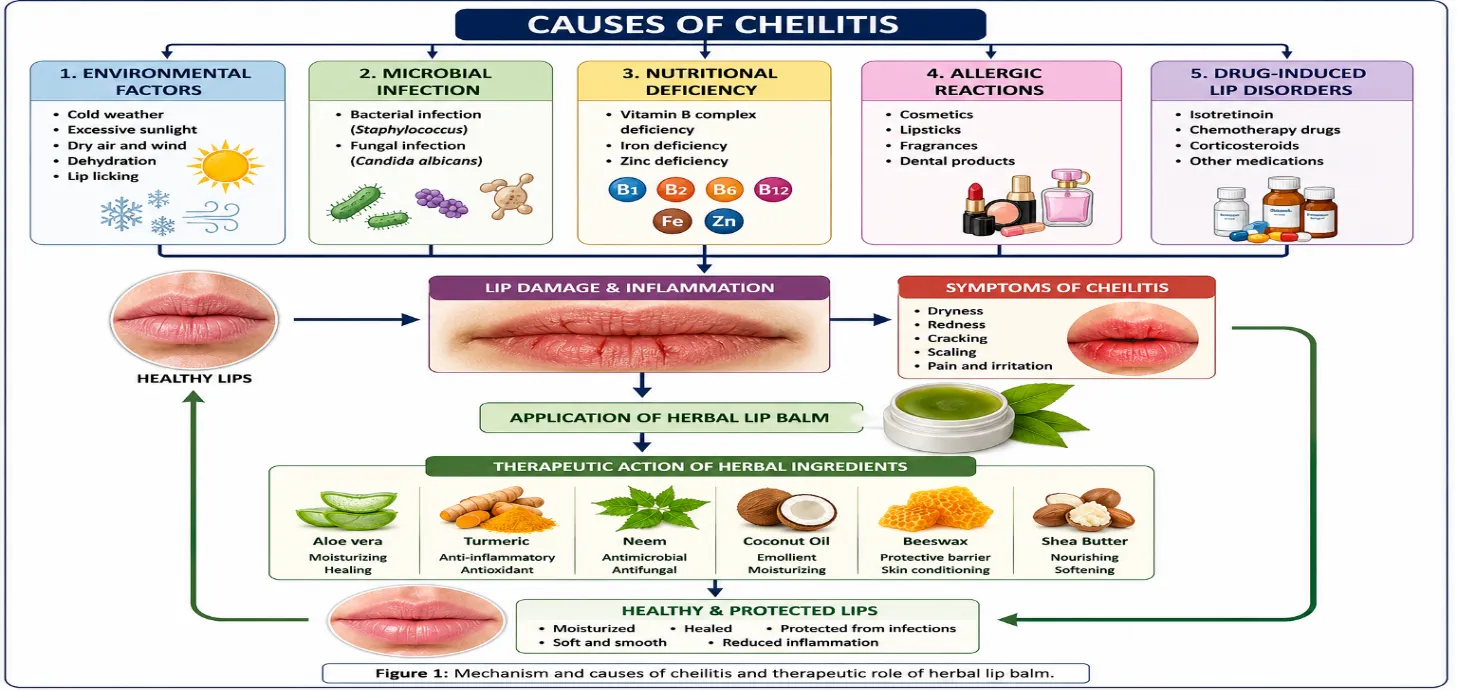
2.1 Environmental Factors
The protective layer of the lips can be harmed by environmental factors such cold temperatures, dry air, wind, dehydration, and prolonged exposure to sunlight, which results in moisture loss and dryness and cracking. Constant exposure results in moisture loss, which causes dryness and cracking.
2.2 Microbial Infection
Angular cheilitis is largely caused by bacterial and fungal infections. Organisms including Candida albicans and Staphylococcus aureus frequently infect injured lip tissues and exacerbate inflammation. Damaged lip tissues are frequently infected by bacteria like Staphylococcus aureus and Candida albicans, which exacerbate inflammation.
2.3 Nutritional Deficiency
Lip inflammation and ulcers can result from vitamin deficiencies, including iron, zinc, and vitamin B complex. A nutritional imbalance promotes vulnerability to infections and impairs tissue repair systems.
2.4 Allergic Reactions
Allergic responses to some cosmetics, lipsticks, toothpaste components, scents, and preservatives can induce allergic cheilitis, which manifests as redness, swelling, irritation, and itching of the lips. Redness, stinging, swelling, and irritation of the lips are symptoms of allergic reactions.
2.5 Drug-Induced Lip Disorders
Dryness and inflammation of the lips are side effects of certain medications, including corticosteroids, accutane, and chemotherapy treatments. Damage to the lip barrier, moisture loss, inflammation, microbial invasion, and tissue irritation are all part of the pathophysiology of cheilitis. Chronic discomfort and severe fissures can result from persistent inflammation.
3. Herbal Lip Balm: Concept and Advantages
Plant oils, herbal extracts, waxes, butters, and other natural ingredients are used to create the semisolid mixture known as herbal lip balm. It is administered topically to hydrate lips and shield them from infections and dryness.
3.1 Advantages of Herbal Lip Balm
Natural Composition
Plant-based components used in herbal lip balms are typically safer and more environmentally friendly.
Moisturizing Effect
Natural waxes and oils hydrate lips and stop them from losing moisture.
Anti-inflammatory Activity
Aloe vera and turmeric are two examples of herbs that lessen irritation and inflammation.
Antimicrobial Property
Coconut oil and neem aid in the prevention of fungal and bacterial diseases.
Antioxidant Action
Antioxidant-rich herbal components shield lips from environmental harm and oxidative stress.
Better Patient Acceptance
Because they have less negative effects than synthetic ones, natural products are favoured.
4. Medicinal Herbs Used in Herbal Lip Balm
Because of their therapeutic qualities, a number of medicinal herbs are included in herbal lip balm formulations.
|
Herb |
Active Constituents |
Therapeutic Action |
|
Aloe vera |
Aloin, polysaccharides |
Moisturizing and wound healing |
|
Turmeric |
Curcumin |
Anti-inflammatory and antioxidant |
|
Neem |
Nimbidin |
Antimicrobial |
|
Coconut oil |
Lauric acid |
Emollient and moisturizing |
|
Beetroot |
Betalains |
Antioxidant and natural coloring |
|
Shea butter |
Fatty acids |
Softening and nourishment |
|
Beeswax |
Esters and fatty acids |
Protective barrier formation |
4.1 Aloe Vera
Because of its calming, hydrating, and therapeutic qualities, aloe vera is utilized extensively. It lessens inflammation and encourages tissue healing.
4.2 Turmeric
Curcumin, an ingredient in turmeric, has antibacterial and anti-inflammatory properties that can be used to heal swollen and cracked lips.
4.3 Neem
Strong antibacterial and antifungal properties of neem aid in the management of microbial diseases linked to cheilitis.
4.4 Coconut Oil
Coconut oil is a great emollient and moisturizer. It keeps lips from drying out and creates a protective barrier.
4.5 Beetroot
Beetroot offers antioxidant defense and natural pigmentation. It is frequently utilized in formulas for tinted herbal lip balms.
5. Formulation and Evaluation of Herbal Lip Balm
5.1 Formulation Method
The fusion procedure is frequently used to make herbal lip balm. Beeswax, oils, and herbal extracts are among the ingredients that are melted and evenly combined.
General Procedure
1. Oils and beeswax are heated until they melt.
2. Add the herbal extracts gradually while stirring constantly.
3. A combination of coloring and flavoring ingredients.
4. The mixture is poured into molds or containers.
5. The item is stored after cooling.
5.2 Evaluation Parameters
Physical Appearance
The product should smell good, be uniformly colored, and have a smooth texture.
pH Determination
To prevent irritation, the pH should be suitable with the lip tissue.
Spreadability
The lip balm shouldn't be very firm and should spread easily.
Melting Point
Stability during storage and application is ensured by an appropriate melting point.
Stability Study
Over time, the formulation's color, odor, texture, and microbiological stability are assessed.
Irritation Test
Redness, itching, or allergic responses shouldn't be brought on by the product.
|
Evaluation Parameter |
Purpose |
|
pH |
Skin compatibility |
|
Spreadability |
Ease of application |
|
Melting point |
Product consistency |
|
Stability |
Shelf life assessment |
|
Irritation test |
Safety evaluation |
6. Therapeutic Applications of Herbal Lip Balm
Many lip conditions are treated with herbal lip balms.
6.1 Angular Cheilitis
Herbal ingredients with antimicrobial activity help control fungal and bacterial infections associated with angular cheilitis.
6.2 Chapped Lips
Natural oils and waxes provide hydration and prevent moisture loss from dry lips.
6.3 Lip Inflammation
Anti-inflammatory herbs such as turmeric and aloe vera reduce swelling and irritation.
6.4 Lip Pigmentation
Beetroot and natural antioxidants help improve lip appearance and reduce pigmentation.
6.5 Sun Protection
Certain herbal lip balms contain SPF ingredients that protect lips from harmful ultraviolet radiation.
7. Recent Advances in Herbal Lip Balm
Recent developments in herbal technology have improved the therapeutic effectiveness of herbal lip balm formulations.
7.1 Nano-Herbal Formulations
Herbal compounds' stability and penetration in lip balm formulations are enhanced by nanotechnology.
7.2 SPF-Based Herbal Lip Balm
In order to reduce UV-induced lip damage, modern formulations include natural sun-protective ingredients.
7.3 Preservative-Free Formulations
To lessen chemical exposure, researchers are creating formulations with natural preservatives.
7.4 Organic Herbal Lip Balm
Consumer demand for organic products made from plant ingredients devoid of chemicals is rising.
7.5 Medicated Herbal Lip Balm
Advanced formulations improve the treatment of severe lip problems by combining medicinal drugs with plant extracts.
8. Limitations and Challenges
Herbal lip balms have certain drawbacks despite their many benefits.
FUTURE PROSPECTS
Future studies on herbal lip balm concentrate on:
• The creation of cutting-edge delivery methods
• Utilizing nanotechnology
• Durable moisturization
• A clinical assessment of herbal components
• The commercialization of customized herbal lip care items
Global demand for herbal lip balms is anticipated to rise as people become more conscious of natural cosmetics.
CONCLUSION
Medicinal herbs like aloe vera, turmeric, neem, coconut oil, and beetroot greatly contribute to lip protection and tissue repair. Recent advancements like nano-herbal formulations, SPF-based products, and preservative-free preparations have improved the quality and therapeutic effectiveness of herbal lip care products, but more clinical research and standardization are needed to establish their long-term safety and efficacy. Herbal lip balms are promising natural formulations used in contemporary pharmaceutical and cosmetic practice. With little adverse effects, they offer moisturizing, antibacterial, anti-inflammatory, antioxidant, and therapeutic properties. Aloe vera, turmeric, neem, coconut oil, and beetroot are examples of medicinal plants that greatly aid in tissue repair and lip protection. The quality and therapeutic efficacy of herbal lip care products have been enhanced by recent developments, such as nano-herbal formulations, SPF-based treatments, and preservative-free preparations. To determine their long-term safety and effectiveness, more clinical research and standardization are necessary. In contemporary pharmaceutical and cosmetic practices, herbal lip balms can function as efficient and secure substitutes for synthetic lip care products.
REFERENCES


Khushi Sharma, Pawan Swami, Advances in Herbal Lip Balm for the Treatment of Cheilitis and Other Lip Disorders: A Review, Int. J. of Pharm. Sci., 2026, Vol 4, Issue 5, 8316-8322. https://doi.org/ 10.5281/zenodo.20472616
 10.5281/zenodo.20472616