

We use cookies to ensure our website works properly and to personalise your experience. Cookies policy
Student of Ashokrao Mane Institute of Pharmaceutical sciences and research, Save, Maharashtra
Natural polysaccharides, especially mucilage, which has superior swelling and binding qualities, are abundant in flaxseed (Linum usitatissimum). The extraction, purification, and characterization of flaxseed mucilage as well as its assessment as a natural binder in the formulation are the main objectives of the current work. Hot water extraction was used to extract mucilage, which was then precipitated with ethanol and dried to produce a fine powder. The organoleptic and physicochemical characteristics of the extracted mucilage, including color, odor, texture, pH, swelling index and flow properties were assessed. The swelling index demonstrated good hydration capacity, and pH of mucilage solution was found to be near neutral (6.5–6.7). The flow characteristics showed good compressibility and granulation compatibility. Diclofenac tablets were made by wet granulation with flaxseed mucilage as a binder, and their evaluation tests are assessed. According to Pharmacopeial criteria, the tablets demonstrated adequate hardness, friability below 1%, disintegration time within limits, and drug release above 75% in 45 minutes. The results indicate that flaxseed mucilage can be utilized in pharmaceutical tablet formulations as a natural, biodegradable, and economical binder.
Flaxseed: Within the Linaceae family, flaxseed (Linum usitatissimum) belongs to the genus Linumn. Certain elements found in flaxseed may provide a number of health benefits. Flaxseed is high in antioxidants, just like other plant-based foods.[1]
Flaxseed, often called linseed, is an annual herb that yields small, flat seeds with a nutty flavor and crispy texture. It is a rabi crop that is a member of the Linaceae family and is frequently called Alsi or Jawas in Indian. Currently, it is grown in more than 50 countries, most of which are in the northern hemisphere. The top producers of flax are the United States, China, India, and Canada. Flaxseed is one of the oldest crops, with evidence suggesting it has been cultivated for thousands of years. Flaxseed is grown all over the world as either an oil crop or a fiber crop; the oil is isolated from the flaxseeds of linseed varieties, while the fiber is extracted from the stems of fiber varieties. Flaxseed has been cultivated and consumed since ancient times due to its high nutritional value and medicinal benefits. The flaxseed hull is composed of a thin endosperm and a thick layer of seed coat. [2]
Plant-derived polymers are highly sought after in the food industry and other sectors due to their numerous commercial utilizes, including emulsifiers, binder and film coating. People are growing more interested in synthetic polymers because of their negative consequences on human health.[3]
Among with important bioactive components in flaxseed include proteins, lignans, dietary fiber, mucilage polysaccharides, and omega-3 fatty acids (α-linolenic acid). Numerous pharmacological effects, including cardioprotective, anti-inflammatory, antidiabetic, and antioxidant qualities, are supported by these constituents. Because of these benefits, flaxseed is considered an essential part of functional foods and nutraceuticals. A significant amount of the outer seed coat of flaxseed is composed of mucilage, a naturally occurring polysaccharide hydrocolloid. When this mucilage is mixed with water, it expands and becomes a thick gel. Acidic polysaccharides (rhamnogalacturonans) and neutral polysaccharides (arabinoxylans) are the main chemical constituents of flaxseed mucilage. These polymers are very capable of water binding, swelling, and viscosity. These physicochemical properties have attracted interest in flaxseed mucilage as a natural therapeutic excipient.
The use of flaxseed mucilage in tablet formulations as a natural binder that enhances granule formation, tablet hardness, and drug release properties has been investigated in recent pharmaceutical studies. As a result, flaxseed mucilage shows promise as a substitute for artificial binders in pharmaceutical dosage forms.[4]
Mucilage are primarily utilized as pharmaceutical additives in various dosage formulations with a variety of uses, including stabilizing, gelling, thickening, binding, dissolving, suspending, and emulsifying agents in biphasic liquid dosage forms. Mucilage can also be used as an adjuvant in dose forms that have both extended and controlled release. The primary fatty acid in Lipidium sativum seeds is linolenic acid, which makes up 32–35% of the oil content (20–25%). They also include naturally occurring antioxidants. The most significant ones found in Lipidium sativum seeds are “imidazole alkaloids (lepidine) and monomeric alkaloids (sinapic acid and sinapine).” (Khalid and others, 2020). Lepidium sativum was found to include cardiac glycoside,phenolic, flavonoids, coumarins, glucosinolates, amino acids, mucilage, resins A preliminary phytochemical analysis revealed saponins, sterols, tannins, volatile oils, and triterpenes.[5]
Flaxseed Mucilage: Arabinoxylans and rhamnogalacturonan polysaccharides, which give flaxseed mucilage its high viscosity and swelling capacity, are its primary constituents. These characteristics improve granule formation and tablet hardness when used as a binder in pharmaceutical tablets. Due to their low toxicity and environmental friendliness, natural mucilages including flaxseed, fenugreek, and plant gums are being utilized more frequently as substitutes for synthetic binders like PVP.[6]
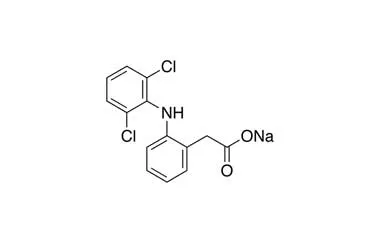
1.1. Diclofenac sodium drug profile:
1) C14H10CL2NNaO2 is the molecular formula.
2) Weight in molecules:318.1
3) Category: Anti-inflammatory and Analgesic.
4) Description: A slightly hygroscopic, white to slightly yellowish crystalline powder.
5) Dose :Orally or Intramuscular Injection,25-75 mg.
6)Structure:
1.2. SINGLE PUNCH COMPRESSION :
A single punching machine, sometimes referred to as an eccentric press or a single station press, applies compaction force to the entire material using only the upper punch; the lower punch is stationary and functions similarly to a hammer.Adaptability in both automated and manual processes. crushed tablets with a single side. Compression cycles don't have any delays. The volume level and tablet weight are not much different. [12]
1.3. ADVANTAGES OF FLAXSEED:
1. They can also be used to modify drug release, which will impact the bioavailability and absorption of integrated drugs. [7]
2. Biodegradable: Since all naturally occurring polymers are produced by living things, these biodegradable materials have no negative effects on people or the environment. Other than that, mucilage sources are renewable.
3. Biocompatible: These herbal materials are very biocompatible because their main component is carbohydrates.
4. Eco-friendly: Because the production processes are straightforward, mucilage is gathered based on seasonal fluctuations in bulk volumes.
5. Non-toxic.
6. Improved adherence by patients. [8]
1.4. DISADVANTAGES OF FLAXSEED:
1. Polymer binder may result in processing problems such as poor dissolving performance, increased tablet hardness, and rapid over-granulation.
2. When selecting polymer binders, strong disintegrates are typically required, but they are very expensive and have a detrimental effect on the end product's stability. [7]
3. Variability in yield from batch to batch: Seasonal and environmental factors affect mucilage production.
4. Decreased rheology during storage: Due to its complexity, mucilage often becomes more viscous when it comes into touch with water. [8]
1.5. LIMITATION OF FLAXSEED:
1. The consistency of mucilage is affected by its composition, which varies according on the source, climate an extraction technique.
2. Low extraction yield and process variability.
3 .Requires controlled pH, temperature, and time.
4. Sensitive to storage conditions and dampness.(15)
5. Could deteriorate overtime.
6. Excessive viscosity might make processing difficult when mixing and granulating.
7. In comparison to synthetic binders, there is a lack of comprehensive analytical and regulatory data.
8. Industrial-scale production is challenging due to the expense of standardization and process heterogeneity.[16]
1.6. APPLICATION OF FLAXSEED:
1. Formulations with controlled and extended release can make use of mucilage.(17)
2. Plant-based mucilage increases the shelf life and storage capacity of products.
3. Because it reduces moisture loss, it can be utilized as an edible coating in food packaging.
4. It can be used as an edible covering in food packaging since it lessens moisture loss.
5.The coated sample had a better texture than the control samples.
6. Encapsulation improves the stability and distribution of food, medicinal, and neutraceutical ingredients.
7. Mucilage's high molecular weight carbohydrates make it effective in nano and microencapsulation.
8. A lot of research is being done on plant-based mucilage as a wall material for encapsulating application. [18]
AIM
To extract mucilage from flaxseed and evaluate of its characteristics as a natural binder in tablet formulations.
2. OBJECTIVE
1. Extraction and purification: From Linum usitatissimum seeds, extract and purify the mucilage using the proper methods.
2. Formulation development: Develop and evaluate pharmaceutical formulations (such as tablets and capsules) using linum usitatissimum mucilage as a natural excipient.
3. Physicochemical characterization: To evaluate the solubility, viscosity, PH, moisture content, and chemical composition (including polysaccharide content) of Linum usitatissimum mucilages.
4. Pharmaceutical evaluation: To determine Linum usitatissimum mucilages potential as a pharmaceutical excipient, including its evaluation tests.
5. Stability and safety assessment: To determine Linum usitatissimum mucilages stability and safety as a pharmaceutical excipient, including its chemical and microbiological stability.
3. LITRETURE REVIEW:
Archana et al. (2022): “An inclusive review on mucilage extraction methods and characterization was presented.” The study discussed hot water extraction, precipitation techniques, and purification processes. It was concluded that plant mucilage has wide applications in nano carrier systems.
Yadav I.K. et al and Jain D.A. et al (2015): Formulation and evaluation of diclofenac sodium sustained release tablets using flaxseed mucilage matrix were carried out. The results demonstrated good tablet hardness, controlled drug release, and stability, confirming its suitability as a natural polymer.
Ahuja M. et al and Kumar S. et al (2011): Isolation and evaluation of natural polysaccharide from flaxseed as a tablet binder were investigated. The study showed that flaxseed mucilage exhibited good compressibility, acceptable friability, and satisfactory dissolution profile.
Rowe R.C. et al. (2009): In the Handbook of Pharmaceutical Excipients, natural polymers were described as safe, biodegradable, and multifunctional excipients. The text supports the use of plant mucilage as binder, disintegrant, and release modifying agent.
Debnath S. et al. (2019): A review on natural binders used in pharmacy explained advantages such as eco-friendliness, cost-effectiveness, and low toxicity. The authors recommended further research on standardization and industrial application of natural binders.
4. MATERIALS AND METHOD:
1. Cleaning and Seed Preparation: Weigh 100 g of flaxseeds. Clean thoroughly to remove dust, foreign objects, and other plant debris. After giving it a brief wash with distilled water, let it air dry.
2. Soaking and Hydration: Soak flaxseeds in 1:20 w/v distilled water (100 g in 2000 mL).Allow the seed to remain at room temperature for four to six hours in order to soften the seed coat and release mucilage.
3: Heating and Extraction: Stirring constantly, heat the soaked seeds in the same water on a hot plate. For one hour, keep the temperature between 65 and 70°C (don't go over 80°C to prevent mucilage deterioration).Mucilage will gradually seep into the water while heating, creating a viscous solution.
4: Filtration: separate the mucilage solution from the seeds by filtering the hot extract through muslin fabric while stirring. To guarantee optimal recovery, repeat extraction using fresh water (1;10w/v). mix the filtrates together.
5 Mucilage Precipitation: Gently stir the mixed filtrate while adding one liter of 95% ethanol. Mucilage precipitates as a white to cream-colored gel-like material. Let it remain at 4°C all night.
6. Washing and drying: To collect the precipitated mucilage, use a filter. Wash with small volumes of ethanol to remove impurities. If available, lyophilize .After being dried, mucilage should be ground into a fine powder and passed through sieve number 60.
7: Storage: Store the powdered dry mucilage in an airtight jar within a desiccator. [9]
4.1 DRUG EXCIPIENT COMPATIBILITY STUDY :
4.1.1. Physical characterization:
Physical characterization of isolated mucilage, including color, texture, fracture, and odor, were described.
4.1.2. Properties of Physiochemistry:
4.1.2.1. Mucilage pH:
Mucilage was weighed and added to water to make a 1% w/v solution. The pH of the solution was determined using a digital pH meter.
4.1.2.2. Swelling Index of Mucilage :
In distilled water, flaxseed mucilage swelling properties were examined. Swelling index is volume in milliliters that one gram of the substance takes up. One gram of the selected mucilage was accurately weighed in order to determine its swelling index. They were thereafter put into a 25 ml measuring cylinder with a glass stopper. After adding 25 milliliters of distilled water, the solutions were thoroughly shaken every ten minutes for an hour before being allowed to stand at room temperature for twenty-four hours.Volumes that the mucilage occupied were measured. Prior to determining the mean values, the procedure was repeated three times.
4.1.3. Flow Properties:
4.1.3.1. Bulk & Tapped Densities:
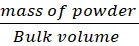
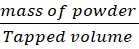
The volume was measured after the pre-weighed amounts of mucilage were added to graduated cylinders. After that, the powder was tapped in a bulk density device until a consistent volume was achieved
Bulk density = mass of powder Bulk volume
Tapped density = mass of powder Tapped volume
4.1.3.2. Powder Compressibility and Hausner's Ratio:
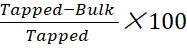
The bulk and tapped densities were used to compute Hausner's ratio.
Carr's index = Tapped-Bulk Tapped ✕ 100
Hausner's Ratio = Tapped Bulk

4.1.3.3. Angle of Repose : It is used to calculate the flow property of powder (like granules in your tablet formulation). Allow powder to flow through a funnel onto a flat surface. A stack takes shape of a cone.
θ = tan-1hr

where ,
θ = angle of repose, h = height of powder cone, r = radius of powder cone [10]
|
Sr.no |
Chemical name |
Quantity |
|
1 |
Diclofenac sodium |
1500 mg |
|
2 |
Flaxseed mucilage |
300mg |
|
3 |
Mannitol |
180 mg |
|
4 |
Sodium alginate |
60 mg |
|
5 |
Talc |
60 mg |
|
6 |
Stearic acid |
3900 mg |
|
7 |
Distilled water |
Q.S |
|
8 |
Ethanol |
1 lit |
Procedure For Preparation of Diclofenac Tablet:
1. Weighing of Ingredients: Using a digital balance, each component including the active pharmaceutical ingredient Diclofenac sodium, the diluent lactose, the disintegrant starch, the binder flaxseed mucilage or PVP, the glidant talc, and the lubricant magnesium stearate is precisely weighed in accordance with the necessary for both the batch size. Proper weighing guarantees consistent pills and accurate dosage.
2. Sieving: The medication and excipients (except from lubricants) are filtered through sieve number 60. This stage ensures a uniform particle size distribution and helps eliminate lumps and unwanted particles in order to effectively mix and granulate.
3. Dry Mixing : In a mortar or mechanical blender, the sieved Diclofenac sodium is thoroughly combined with lactose and starch. To guarantee uniform medication distribution throughout the formulation and avoid dosage fluctuation, uniform mixing is crucial.
4. Preparation of Binder Solution: The binder solution is made independently Flaxseed mucilage is removed and utilized as a natural binder. A proper amount of water is used to dissolved synthetic binder, such as PVP. The binder aids in the formation of granules by keeping powder particles together.
5. Wet Massing: The binder solution is added gradually while the powder mixture is continually stirred. The addition is done carefully to avoid over wetting. Continuing to mix results in a moist, cohesive, and non-sticky material. Granules must be properly wet massed in order to be of excellent quality.
6. Granulation: The wet mass is passed through sieves number 10 or 12 to produce coarse wet granules. This technique increases particle size, improves flow properties, and reduces dust formation.
7. Granule Drying: The wet granules are dried in a hot air oven at 50–60°C. Granules are dried until the proper amount of moisture is present. Under-dried granules may stick when crushed, whereas over-dried granules may become brittle.
8. Sizing (Screening): To reduce aggregates and produce uniformly sized granules, the dry granules are run through sieve number 16. Uniform dimension ensures better compression and flow characteristics.
9. Lubrication: The dried granules are mixed with lubricants like magnesium stearate and glidants like talc. To prevent over-lubrication, which may impact tablet hardness and dissolving, these are gently combined for a brief period of time(2–3minutes).
10. Compression: A tablet compression machine is used to compress the lubricated granules into tablets. To produce tablets of the required quality, characteristics including hardness, thickness, and weight are changed during compression. [11]
4.2 EVALUATION TEST FOR TABLET:
4.2.1. Weight Variation Testing:
The USP 30 was followed in conducting test each of 10 tablets was weighted separately. Mean value of 10 measurements was used to express the results.
Average Weight = Indivisual weight-Average weight Average weight ×100

4.2.2. Tablet Thickness Test:
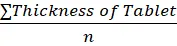
A vernier caliper was used to determine the tablets thickness and the results were expressed as the average of Ten measurements.
Average Thickness = ∑Thickness of Tabletn
4.2.3. Tablet Hardness Test:
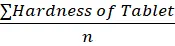
Ten tablets were measured for average hardness. Tablet hardness has been measured using the Monsanto hardness tester.
Average Hardness = ∑Hardness of Tabletn
4.2.4. Friability studies :
20 tablets were randomly selected, powdered and weighed before being placed in the friabilator and allowed to fall freely hundred times at a speed of twenty five revolutions per minute from a height of six inches for four minutes. The tablets were then weighed and ground into powder once again. The percentage of weight lost due to fracture or abrasion was recorded.[13]
% Friability =W1-W2w1

4.2.5. Disintegration Test:
Pour distilled water that is kept at 37 ± 2°C into the disintegration device. Put one tablet into each basket rack assembly tube. Set the device to move the basket up and down at a pace of 28 to 32 cycles per minute. Watch the tablets until they completely dissolve. Note how long it takes for everything to disintegrate completely.[14]
Average DT= disintigration time of tabletn

4.2.6. Dissolution test :
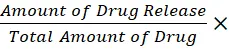
To verify the drug's therapeutic efficacy and bioavailability, the dissolving test is essential. It gauges how much a solution has been formulated. We needed a 101 phosphate buffer with a pH of 6.8 for this test. The buffer was made using the following formula: 6.8 g KH2PO4 0.94 g NaOH dissolved in 1 liter of distilled water yields a phosphate buffer with a pH of 6.8. To make a 2 L buffer solution, 13.6 g KH2PO4 and 1.88 g NaOH were dissolved in 2 liter of distilled water in a 2 volumetric flask. To create a solution, the flask was shaken.Using pure water, the same process was performed to expand the solution and create a two-liter buffer. The buffer's pH was adjusted using HCL and NaOH to reach 6.8.
% Drug Release = Amount of Drug ReleaseTotal Amount of Drug×
5. RESULT AND DISCUSSION
5.1. CHARACTERIZATION OF FLAXSEED MUCILAGE :
5.1.1. Organoleptic Properties of Flaxseed Mucilage:
Table No- 5.1.1 Organoleptic properties of flaxseed mucilage
|
Parameter |
Results |
|
Color |
Yellowish brown |
|
Odour |
Nutty aroma |
|
Taste |
Slightly sweet taste |
|
Texture |
Slimy, gel like texture |
|
solubility |
Water soluble |
The organoleptic evaluation of flaxseed mucilage was carried out all parameters like colour, odour, taste, texture and solubility were found acceptable.Hence, the sample is good quality.
5.1.2. Physiochemical Properties:
Tablet No- 5.1.2 Physiochemical properties of flaxseed mucilage
|
Sr.no |
Parameter |
Flaxseed |
|
5.1.2.1 |
PH |
6.5 |
|
5.1.2.2 |
Swelling index |
21% |
5.1.3. Flow Properties:
Tablet No- 5.1.3. Flow properties of flaxseed mucilage
|
Sr.no |
Parameter |
Flaxseed (g/cm3) |
|
5.1.3.1 |
Bulk density |
0.37 |
|
5.1.3.1 |
Tapped density |
0.44 |
|
5.1.3.2 |
Hausner,s ratio |
1.20 |
|
5.1.3.3 |
Powder flow property |
Good |
The flaxseed mucilage was evaluated for flow properties, pH and swelling index. All values are within the normal range.
5.2. Evaluation Test For Tablet :
5.2.1. Weight Variation Testing:
Tablet No- 5.2.1 weight variation test for Diclofenac tablet
|
Sr. No |
Standard (mg) |
Test (mg) |
|
1 |
203 |
205 |
|
2 |
201 |
197 |
|
3 |
198 |
198 |
|
4 |
202 |
201 |
|
5 |
199 |
202 |
|
6 |
200 |
198 |
|
7 |
197 |
200 |
|
8 |
201 |
204 |
|
9 |
199 |
197 |
|
10 |
200 |
198 |
Formula - Average weight =[Wi-Wavg]Wavg×100
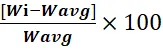
Standard = 203-200200×100
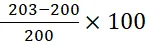
Test = 205-200200×

Natural binders sometimes increase moisture retention and irregular granule size, which may slightly affect uniform die filling. However, if results are within IP limits, it indicates that the natural binder provided satisfactory flow characteristics.
5.2.2. Tablet Thickness:
Thickness test is counducted to ensure dimensional uniformity of the tablets and to confirm their compatibility with the packaging.
Table No-5.2.2. Thickness test for Diclofenac tablet
|
Tablet No |
1 |
2 |
3 |
4 |
5 |
|
Standard (mm) |
4.12 |
4.10 |
4.11 |
4.13 |
4.09 |
|
Test (mm) |
4.22 |
4.21 |
4.20 |
4.23 |
4.19 |
Average Thickness = ∑Thickness of Tabletn
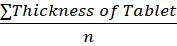
= 4.12+4.10+4.11+4.13+4.095
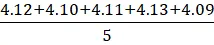
= 20.555

= 4.11 mm
IP does not provide official hardness limit. Thickness should remain uniform (± 5%) for tablets of same batch.
The thickness of standard tablets remained uniform due to consistent compression force. Similarly, the prepared tablets showed uniform thickness, indicating good compressibility of granules containing natural binder.
5.2.3. Hardness Test:
The prepared tablets using natural binder showed satisfactory hardness.
Tablet No- 5.2.3 Hardness test for Diclofenac tablet
|
Tablet No |
1 |
2 |
3 |
4 |
5 |
|
Standard (Kg/cm2) |
4.2 |
4.4 |
4.3 |
4.1 |
4.5 |
|
Test (Kg/cm2) |
5.0 |
4.9 |
5.1 |
4.8 |
5.2 |
Average Hardness = ∑Hardness of Tabletn
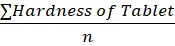
= 4.2+4.4+4.3+4.1+4.55
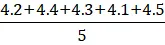
= 21.55

= 4.3 kg/cm2
IP does not provide official hardness limit. Generally acceptable hardness for conventional tablets: 4–8 kg/cm²
Natural binders (like mucilage/gums) can provide good binding ability, but their effect depends heavily on concentration. If hardness is adequate, it confirms that the natural binder produced sufficient binding strength.
5.2.4. Friability Test:
Friability ensures tablets can resist abrasion during handling.
% Friability =W1-W2w1

W2 = Final Weight of Tablet(after test)
= 6.50-6.446.50×100
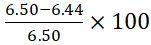
= 0.009×100
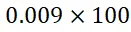
= 0.9 %
IP Limit, Less in weight should not exceed 1.0%.
The standard diclofenac tablets showed friability well below 1%, due to strong binding and optimized compression. The prepared tablets using natural binder also complied with IP friability limit (<1%). This indicates that the natural binder provided sufficient binding strength and produced mechanically stable tablets.
5.2.5. Disintegration Test:
Disintegration ensures tablet breaks down in GI fluid to allow drug release.
Table No- 5.2.5 Disintegration test for Diclofenac tablet
|
Tablet No. |
Standard(min) |
Test (min) |
|
1 |
5.2 |
6.5 |
|
2 |
5.0 |
6.2 |
|
3 |
5.3 |
6.4 |
|
4 |
5.1 |
6.6 |
|
5 |
5.4 |
6.3 |
|
6 |
5.2 |
6.5 |
Test sample -
Average DT= disintigration time of tabletn

= 6.5+6.2+6.4+6.6+6.3+6.56
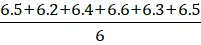
= 38.56

= 6.41 min.
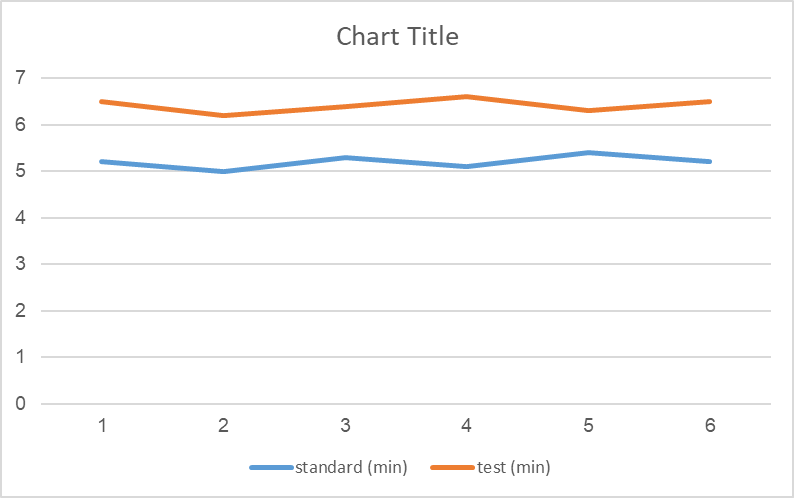
The standard diclofenac tablets disintegrated within the IP limit due to balanced formulation of binder and disintegrant. The prepared tablets also disintegrated within 15 minutes, although natural binder may slightly increase disintegration time due to swelling and gel formation. Compliance with IP indicates that natural binder didi not adversly affect tablet disintegration.
5.2.6. Dissolution Test:
Dissolution is a critical test ensuring proper drug release and bioavailability.
Table No- 5.2.6 Dissolution test for Diclofenac tablet
|
Sr.no |
Dissolution Time (min) |
Absorbance for standard |
%Drug release for standard |
Absorbance for test |
%Drug release for test
|
|
1 |
5 min |
0.120 |
23.07% |
0.200 |
34.48% |
|
2 |
10 min |
0.150 |
48.07% |
0.350 |
60.34% |
|
3 |
20 min |
0.380 |
73.07% |
0.480 |
82.75% |
|
4 |
30 min |
0.480 |
92.30% |
0.540 |
93.10% |
|
5 |
45 min |
0.520 |
-100% |
0.580 |
-100% |
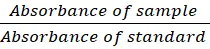
% Drug Release = Absorbance of sample Absorbance of standard
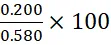
Test = 0.2000.580×100
natural binder did not adversely affect tablet disintegration.
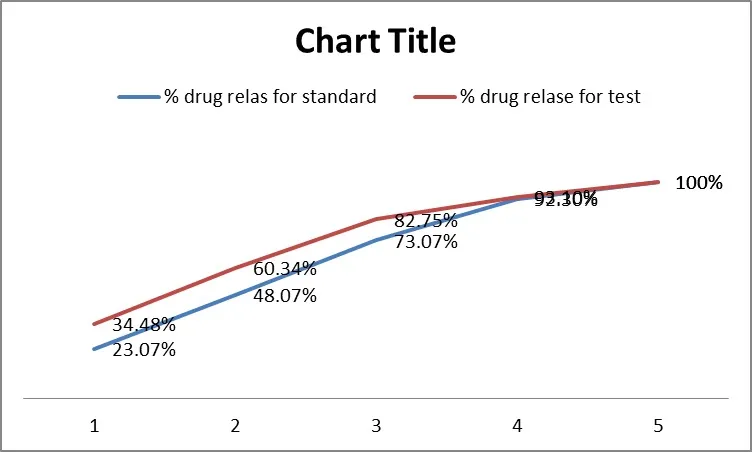
The standard tablets showed rapid dissolution and complied with IP requirement. The prepared tablets using natural binder also complied with the dissolution specification. Slightly slower dissolution may be observed due to the viscous nature of natural binder, which can reduce penetration of dissolution medium. However, achieving ≥80% drug release within specified time confirms that natural binder formulation provides acceptable drug release profile comparable to standard tablets.
CONCLUSION :
The medication release was satisfactory, according to the dissolution study. Therefore, flaxseed mucilage can be regarded as an appropriate and efficient natural binder for tablet production.
The benefits of using flaxseed in a variety of industrial and medicinal applications have been demonstrated in recent years. Flaxseed's nutritional value has been used in the creation of therapeutic agents and functional foods, which are vital for maintaining general health and preventing chronic illnesses like cancer, heart disease, and osteoporosis. One easy and tasty way to improve your nutrition is to include flaxseed in your diet. However, because flaxseed has a strong flavor that may not be desired in some food products, its use in the food industry is somewhat restricted. It has been difficult to control the strong flavor of flaxseed, which has led to a number of solutions, such as using microencapsulation techniques to mask the flavor or replacing whole flaxseed with flaxseed oil. Flaxseed is of great industrial importance because of its many applications in various industr
FUTURE PROSPECTIVE:
Flaxseed (Linum usitatissimum) mucilage has a lot of potential for future research and pharmaceutical applications as a natural excipient. Because of its superior swelling, binding, and gel-forming properties, it can be further studied in complex drug delivery systems such as controlled release, sustained release, and targeted drug delivery formulations. In addition to tablet formulations, it can be used to create transdermal systems, capsules, suspensions, emulsions, and other dosage forms. Future studies may focus on its application in nanotechnology, such as nano-carriers and microencapsulation, to enhance drug stability and bioavailability. For large-scale industrial production, standardizing extraction and purification methods is also essential to ensuring consistent quality. Comparative studies with synthetic binders can establish it as a full replacement for conventional excipients. Further long-term stability, safety, and toxicity studies are required to make sure it is appropriate for commercial use. Furthermore, due to its nutritional and therapeutic benefits, flaxseed mucilage can be widely used in functional foods and nutraceuticals. Because it is non-toxic, biodegradable, and safe for the environment, it is a promising material for future sustainable pharmaceutical development].
REFERENCES






Mayuri Sutar, Umesh Jirole, Dhanashree Jirole, Abhijeet Kulkarni, Pratiksha Kumbhar, Yashraj Chopade, Extraction and Characterization of Flaxseed (Linum usitatissimum) Mucilage as a Natural Binder in Diclofenac Tablets, Int. J. of Pharm. Sci., 2026, Vol 4, Issue 5, 8341-8355. https://doi.org/10.5281/zenodo.20476136
 10.5281/zenodo.20476136