

We use cookies to ensure our website works properly and to personalise your experience. Cookies policy
MET’s Institute Of Pharmacy, MET Bhujbal Knowledge City, Nashik, Maharashtra, India.
Precision medicine is revolutionizing cancer therapy by enabling treatments tailored to an individual’s genetic and molecular profile. This review highlights the role of genomic profiling in identifying actionable mutations, predicting therapeutic responses, and minimizing adverse effects. Techniques such as next-generation sequencing (NGS), whole-genome sequencing (WGS), and transcriptomic analysis are discussed for their contributions to targeted therapies. The paper also addresses challenges in implementing precision medicine in India, including cost, accessibility, and the need for standardized protocols. Recent case studies demonstrate how integrating genomic data into treatment decisions improves patient outcomes and survival rates. Finally, future perspectives, including emerging biomarkers and the integration of pharmacogenomics and immunotherapy, are explored to advance personalized cancer care. This review provides insights for researchers, clinicians, and students seeking to understand the applications and potential of genomic-guided therapy in modern oncology.
Cancer is a heterogeneous disease, and patients with the same cancer type may respond differently to standard therapies. Traditional approaches, such as chemotherapy and radiation, often adopt a “one-size-fits-all” method, leading to variable outcomes and side effects. Precision medicine tailors therapy based on an individual’s genetic, molecular, and phenotypic profile. Genomic profiling identifies mutations and biomarkers that guide targeted therapy. In India, where cancer prevalence is rising, adopting personalized treatment strategies can improve effectiveness and survival. This paper reviews genomic profiling techniques, their clinical applications, challenges, and future perspectives, with a focus on national relevance.
2. METHODOLOGY
A comprehensive literature survey was conducted using PubMed, Google Scholar, and Scopus. Keywords included “Precision Medicine,” “Genomic Profiling,” “Targeted Cancer Therapy,” and “Pharmacogenomics.” Studies from 2015–2025, including clinical trials, case reports, and reviews, were analyzed. Findings were summarized to provide insights into genomic-guided personalized cancer therapy, particularly in the context of India.
3. FINDINGS
3.1 Genomic Profiling Techniques
3.2 Applications In Personalized Therapy
3.3 Case Examples
3.4 Challenges
4. DISCUSSION
Precision medicine enhances treatment efficacy and reduces adverse effects. Combining pharmacogenomics and immunotherapy further improves outcomes. However, challenges such as cost, infrastructure, and standardization remain, especially in developing countries. Early adoption in India can optimize treatment resources and improve patient survival.
5. CONCLUSION
Genomic profiling-based precision medicine is transforming cancer therapy. Even in India, personalized approaches can significantly enhance treatment outcomes and patient quality of life. Future research should focus on cost-effective genomic testing, biomarker discovery, and clinical integration of advanced therapies. This review highlights the potential of precision medicine for safe, effective, and tailored cancer care.
6. FIGURES:
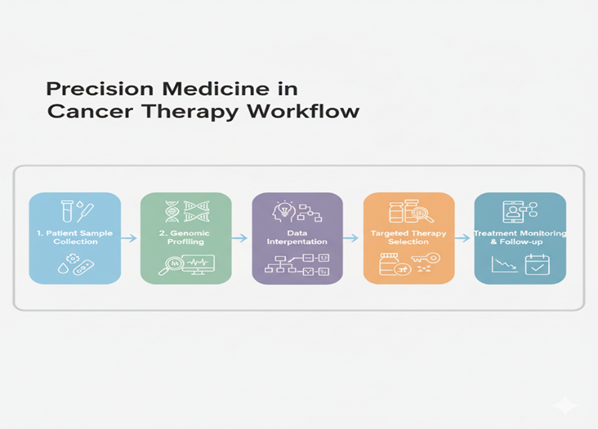
Figure 1: Workflow of Precision Medicine in Cancer Therapy (Patient → Genomic Profiling → Targeted Therapy → Monitoring)
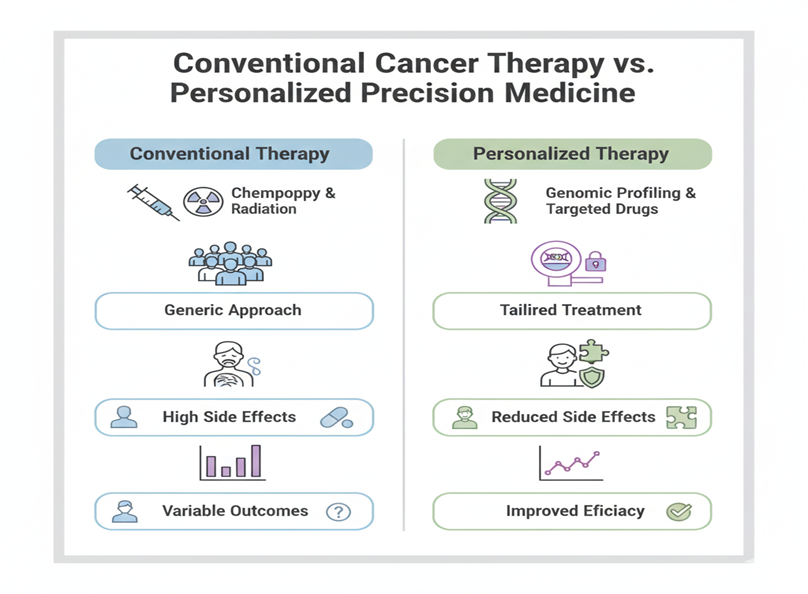
Figure 2: Comparison of Conventional vs Personalized Therapy (Efficacy, Side Effects, Outcomes)
Conflict of Interest: The author declares no conflict of interest.
Funding: No external funding was received for this study.
REFERENCES

Pratik Kasar, Precision Medicine and Genomic Profiling: A Review on Personalized Cancer Therapy Approaches, Int. J. of Pharm. Sci., 2025, Vol 3, Issue 12, 2729-2732. https://doi.org/10.5281/zenodo.17963557
 10.5281/zenodo.17963557