

We use cookies to ensure our website works properly and to personalise your experience. Cookies policy
Hindu college of pharmacy.
Schizophrenia is a chronic, disabling psychiatric disorder characterized by positive symptoms, negative symptoms, cognitive impairment and functional deterioration. Second-generation antipsychotics (SGAs), including risperidone and quetiapine, are widely used because they provide antipsychotic efficacy with a generally lower risk of severe extrapyramidal toxicity than many first-generation agents. This narrative review compares the efficacy, tolerability and clinically important safety characteristics of risperidone and quetiapine in schizophrenia. Evidence from direct randomized trials indicates broadly comparable improvement in overall psychopathology, while differences are more apparent in adverse-effect profiles. Risperidone is more strongly associated with extrapyramidal symptoms and prolactin elevation, whereas quetiapine is more associated with somnolence and has clinically relevant metabolic and cardiovascular considerations. Drug selection should therefore be individualized according to symptom profile, previous response, comorbidities, adverse-effect vulnerability, adherence and patient preference. Baseline and ongoing monitoring of weight, waist circumference, blood pressure, glucose/HbA1c, lipids, movement disorders and other relevant parameters is important during antipsychotic treatment.
Schizophrenia is a severe mental disorder that commonly presents with hallucinations, delusions, disorganized thinking or behavior, negative symptoms and cognitive difficulties. The illness often follows a chronic or relapsing course and can substantially affect social, occupational and functional outcomes. Pharmacological treatment with antipsychotic medication is a central component of management, alongside psychosocial interventions and physical-health care.
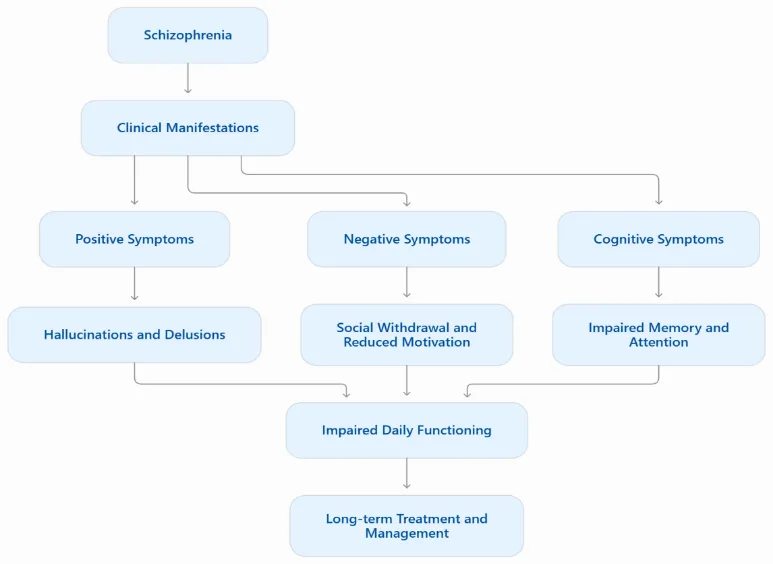
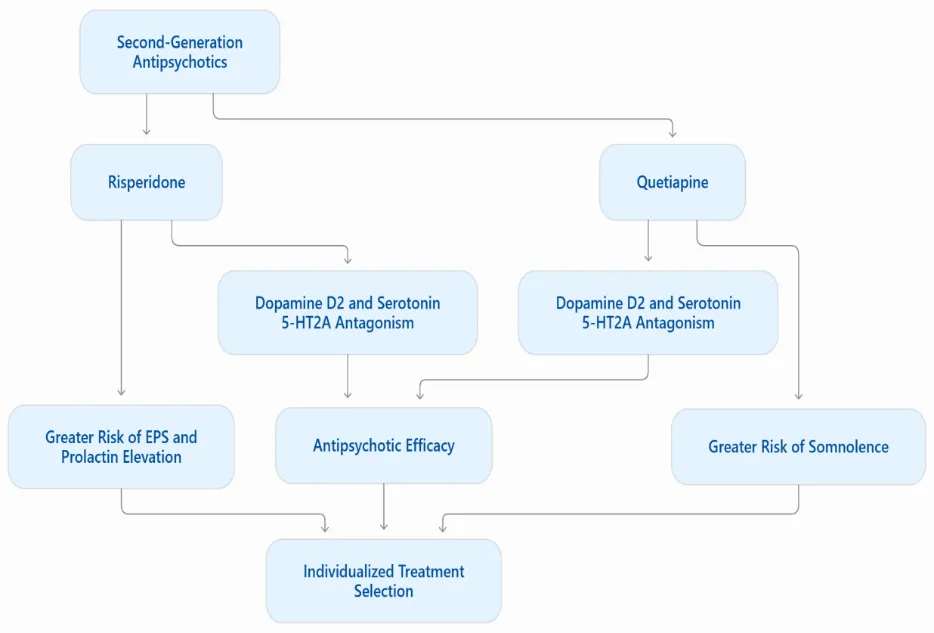
Risperidone and quetiapine are second-generation antipsychotics with different receptor-binding characteristics and adverse-effect profiles. Both can reduce psychotic symptoms, but their relative advantages may depend less on large differences in overall efficacy and more on individual tolerability and clinical circumstances. Direct comparative evidence has found broadly similar improvement in total PANSS scores, while showing greater extrapyramidal symptoms and prolactin elevation with risperidone and greater somnolence with quetiapine.
The purpose of this review is to summarize and critically compare the pharmacology, efficacy, safety, tolerability, monitoring requirements and clinical considerations associated with risperidone and quetiapine in schizophrenia.
Schizophrenia and Antipsychotic treatment:
Schizophrenia is clinically heterogeneous. Positive symptoms generally respond more readily to antipsychotic treatment than persistent negative or cognitive symptoms. Treatment goals include reduction of acute psychotic symptoms, prevention of relapse, preservation or improvement of functioning, and minimization of adverse effects.
Clinical guidance recommends shared decision-making when selecting an antipsychotic. Expected benefits and potential adverse effects should be discussed, including metabolic effects such as weight gain and diabetes, extrapyramidal effects, cardiovascular effects including QT prolongation, and hormonal effects such as increased prolactin. Before treatment, recommended assessment includes weight, waist circumference, pulse, blood pressure, glucose or HbA1c, lipids, prolactin and movement-disorder assessment; ECG is considered when indicated by cardiovascular risk or product information.
Pharmacology:
Risperidone:
Risperidone is an SGA whose principal pharmacological activity involves antagonism at dopamine D2 and serotonin 5-HT2A receptors. Its antipsychotic effect is related primarily to dopaminergic receptor blockade, while serotonergic activity contributes to its overall pharmacological profile. Risperidone is available as an oral formulation and as long-acting injectable preparations in appropriate clinical settings.
Because dopamine D2 blockade can be relatively prominent, risperidone may produce dose-related extrapyramidal symptoms and prolactin elevation. Clinically, these effects can present as akathisia, parkinsonism, dystonia, menstrual disturbances, galactorrhea, sexual dysfunction or other hyperprolactinemia-related effects.
Quetiapine:
Quetiapine is an SGA with antagonistic activity at serotonin 5-HT2A and dopamine D2 receptors, together with activity at histamine H1 and adrenergic alpha receptors. The receptor profile contributes to its clinical effects and adverse-effect pattern. H1 antagonism is associated with sedation and somnolence, while alpha-adrenergic antagonism can contribute to orthostatic hypotension.
Quetiapine generally has a lower propensity for extrapyramidal symptoms and prolactin elevation than risperidone. However, sedation, orthostatic effects and metabolic abnormalities remain important considerations, particularly during dose initiation and long-term treatment.
Comparative efficacy:
Direct comparative evidence generally supports similar overall antipsychotic efficacy between risperidone and quetiapine. In an 8-week double-blind multicenter randomized study of 673 patients, quetiapine and risperidone produced broadly comparable improvements in PANSS total, negative and general psychopathology scores. Response rates, CGI improvement and cognitive outcomes were also similar, although risperidone showed a greater improvement in the PANSS positive subscale in the overall sample; this difference was not observed among completers.
A smaller 12-week comparative study in patients with predominantly negative symptoms reported significant reductions in PANSS and SANS scores with both treatments and found no significant efficacy difference between the two agents. These findings suggest that neither drug can be considered universally superior for overall symptom control and that treatment choice should be guided by the individual's clinical profile.
Evidence synthesized in a Cochrane review of quetiapine versus other atypical antipsychotics suggested that efficacy outcomes sometimes favored comparator drugs, including risperidone, although the clinical importance of relatively small differences was uncertain. Long-term head-to-head evidence across SGAs likewise has not established consistent superiority of one SGA across all efficacy and tolerability outcomes.
Comparative safety and tolerability:
Extrapyramidal symptoms:
One of the clearest comparative differences is the higher burden of extrapyramidal symptoms with risperidone. In the 8-week head-to-head trial, EPS-related adverse events occurred in 22% of risperidone-treated patients compared with 13% of quetiapine-treated patients. A separate comparative study in predominantly negative-symptom schizophrenia also found more EPS and greater need for anticholinergic medication with risperidone. Although quetiapine has a relatively favorable EPS profile, clinicians should still monitor for akathisia, parkinsonism, dystonia and tardive dyskinesia. Risk is influenced by dose, duration, patient factors and concomitant medicines.
Sedation:
Somnolence is a prominent adverse effect of quetiapine. In the direct comparative trial, somnolence occurred in 26% of quetiapine-treated patients versus 20% with risperidone. Another multicenter study reported somnolence in 31.3% of quetiapine-treated patients compared with 15.4% of risperidone-treated patients. Sedation can affect daytime functioning, driving and adherence and should be considered when selecting and timing therapy.
Metabolic effects:
Both risperidone and quetiapine can be associated with weight gain and metabolic abnormalities, although their effects vary among patients and across studies. Comparative evidence has suggested that quetiapine may produce greater cholesterol increases than risperidone in some analyses, while direct short-term trials have sometimes shown minimal differences in weight and glucose. Because people with schizophrenia already have elevated cardiometabolic health risks, antipsychotic treatment should be accompanied by systematic physical-health monitoring. NICE recommends monitoring weight, waist circumference, blood pressure, fasting glucose or HbA1c and lipid levels at specified intervals during treatment.
Cardiovascular and other effects:
Both drugs can have cardiovascular effects, including orthostatic changes and potential QT-interval effects. The clinical relevance depends on dose, individual susceptibility, concomitant medicines and baseline cardiac risk. Quetiapine may cause orthostatic hypotension and dizziness, while sedation may compound falls or functional impairment. Risperidone can also cause orthostatic hypotension and cardiovascular adverse effects.
METHODOLOGY:
It is a randomized comparative study with sample size 673. The review is based on quantitative analysis.
RESULTS:
| Parameter | Risperidone | Quetiapine |
|---|---|---|
| Overall efficacy | Broadly comparable with quetiapine in direct trials; may show stronger positive-symptom effect in some studies. | Broadly comparable overall efficacy; useful across positive and negative symptom domains. |
| EPS | Higher risk than quetiapine, particularly with higher D2 blockade. | Generally lower EPS risk than risperidone. |
| Sedation | Can occur, generally less prominent than with quetiapine. | Common and clinically important. |
| Metabolic effects | Weight and metabolic abnormalities can occur; monitoring required. | Weight and metabolic abnormalities can occur; lipid monitoring is particularly relevant. |
| Clinical selection | May be favored when avoiding prominent sedation is important and prolactin/EPS risk is acceptable. | May be favored when minimizing EPS/prolactin effects is important, provided sedation/metabolic risks are acceptable. |
DISCUSSION:
The available evidence indicates that risperidone and quetiapine both have established efficacy in schizophrenia, with direct trials generally showing similar improvement in overall psychopathology. The most clinically meaningful distinction is often tolerability rather than a large difference in efficacy. Risperidone has a clearer association with EPS and prolactin elevation, whereas quetiapine is more associated with somnolence and has important metabolic and orthostatic considerations.
Interpretation of comparative studies requires caution because studies differ in duration, dosing, illness stage, baseline severity, outcome definitions and rates of treatment discontinuation. Short-term trials may not adequately capture long-term metabolic effects, tardive movement disorders or functional outcomes. Additionally, apparent differences in efficacy can be influenced by dose optimization and whether analyses include patients who discontinue treatment.
Therefore, the concept of a universally 'better' drug is inappropriate. A clinically appropriate choice balances expected symptom benefit with the adverse effects most relevant to the individual patient. Shared decision-making and systematic monitoring are essential
CONCLUSION:
Risperidone and quetiapine are effective second-generation antipsychotics for schizophrenia, and available direct evidence suggests broadly comparable overall efficacy. Their safety profiles differ in clinically relevant ways: risperidone is more strongly associated with extrapyramidal symptoms and prolactin elevation, whereas quetiapine is more strongly associated with somnolence and requires careful attention to metabolic and orthostatic effects. Consequently, treatment should be individualized rather than based on efficacy alone. Regular assessment of psychiatric response, adverse effects, metabolic health, movement disorders and adherence is essential. Clinical pharmacists can play an important role in optimizing therapy, improving medication safety and supporting patient education and adherence.
REFERENCES

Mohammad Hafsa Khan, A Comparative Review of the Efficacy and Safety of Risperidone and Quetiapine in Schizophrenia, Int. J. of Pharm. Sci., 2026, Vol 4, Issue 11, 4164-4168. https://doi.org/10.5281/zenodo.24457695
 10.5281/zenodo.24457695