

We use cookies to ensure our website works properly and to personalise your experience. Cookies policy
P.R. Pote Patil College of Pharmacy, Amravati, Maharashtra, India.
Suzetrigine (VX-548; Journavx) is the first approved selective NaV1.8 inhibitor and the first new class of analgesic approved for moderate-to-severe acute pain in adults in more than two decades. By stabilizing the closed state of NaV1.8 in peripheral nociceptors, it reduces pain-signal transmission without acting on opioid receptors. This review summarizes the role of NaV1.8 in nociception, the discovery and mechanism of suzetrigine, its pharmaceutical and pharmacokinetic properties, and the clinical evidence. In two phase 3 trials of 1,118 patients after abdominoplasty and 1,073 after bunionectomy, suzetrigine reduced pain over 48 hours more than placebo, but did not show superiority over hydrocodone/acetaminophen. Common adverse reactions were pruritus, muscle spasm, increased creatine phosphokinase and rash. Evidence is limited to short-term postoperative pain; a phase 2 trial in painful lumbosacral radiculopathy did not separate suzetrigine from placebo. Suzetrigine is a promising addition to non-opioid options, but not a proven replacement for opioids or established analgesics.
1.1 Pain
Pain is an unpleasant sensory and emotional experience associated with, or resembling that associated with, actual or potential tissue damage. It protects the body from harm.1 Nociceptors detect harmful mechanical, thermal or chemical stimuli and convert them into electrical signals that travel through peripheral sensory neurons to the spinal cord and higher centres, where pain is perceived. Voltage-gated sodium channels generate and propagate these signals; NaV1.7, NaV1.8 and NaV1.9 regulate the excitability of peripheral nociceptive pathways.2,3 Acute pain usually resolves with healing, whereas persistent pain can impair function, sleep, mood and quality of life.
1.2 Types of Pain
Pain can be classified by duration, mechanism and clinical features.1,4 Acute pain follows tissue injury, surgery or inflammation; suzetrigine was developed and approved for moderate-to-severe acute pain in adults.5 Chronic pain persists or recurs for more than three months.1,4 Nociceptive pain arises from actual or threatened damage to non-neural tissue; neuropathic pain from a lesion or disease of the somatosensory nervous system, as in diabetic neuropathy;6 and nociplastic pain from altered nociception without clear tissue damage or neural lesion, as in fibromyalgia.7 These categories are not mutually exclusive, and a patient's pain mechanisms may change over time.4,7
1.3 Analgesics and Their Limitations
Analgesic choice depends on pain severity, duration and mechanism, the patient's condition and the risks of treatment.4,8 The main groups are (i) non-opioid analgesics, including paracetamol (acetaminophen) and non-steroidal anti-inflammatory drugs (NSAIDs) such as ibuprofen, diclofenac and naproxen;8,9 (ii) opioids, including morphine, fentanyl, oxycodone and tramadol, which act mainly on µ-opioid receptors;10 (iii) adjuvant analgesics such as duloxetine, amitriptyline, gabapentin and pregabalin, used in selected neuropathic conditions;6,8 and (iv) novel agents that target specific proteins in pain signalling. In January 2025 the US Food and Drug Administration (FDA) approved suzetrigine (Journavx) for moderate-to-severe acute pain in adults, the first medicine in this fourth group.5,11
Each established group has limitations. NSAIDs can cause gastrointestinal, renal and cardiovascular harm, and excess paracetamol can cause serious liver injury.8,11 Opioids relieve moderate-to-severe pain but cause constipation, nausea, sedation and respiratory depression, and repeated use can lead to tolerance, physical dependence and, in some patients, opioid use disorder.9,10 Conventional analgesics may also control neuropathic pain poorly.6 These limits motivate drugs that act on specific pain-signalling pathways with fewer unwanted effects, and NaV1.8 has drawn particular attention as such a target.3,5
2. Voltage-Gated Sodium Channels
2.1 Structure and Functional States
Voltage-gated sodium (NaV) channels produce the depolarizing phase of the action potential in excitable cells.2,12 The pore-forming α-subunit has about 2,000 amino acids in four homologous domains (DI–DIV), each with six transmembrane segments (S1–S6). S1–S4 form the voltage-sensing domain (VSD) and S5–S6 contribute to the pore. The DIII–DIV linker carries the IFMT (isoleucine–phenylalanine–methionine–threonine) motif involved in fast inactivation. Smaller β-subunits modulate gating and trafficking.2,12,13
Channels cycle through resting (closed), activated (open) and inactivated (closed) states: Resting → Activated → Inactivated → Repriming/Recovery → Resting.2,14,15 Fast inactivation follows opening within milliseconds, and slow inactivation develops over longer periods. The rate of recovery from inactivation affects how well a neuron can fire repetitively.2,14 The contribution of the individual isoforms to the sensory-neuron action potential is illustrated in Figure 1.
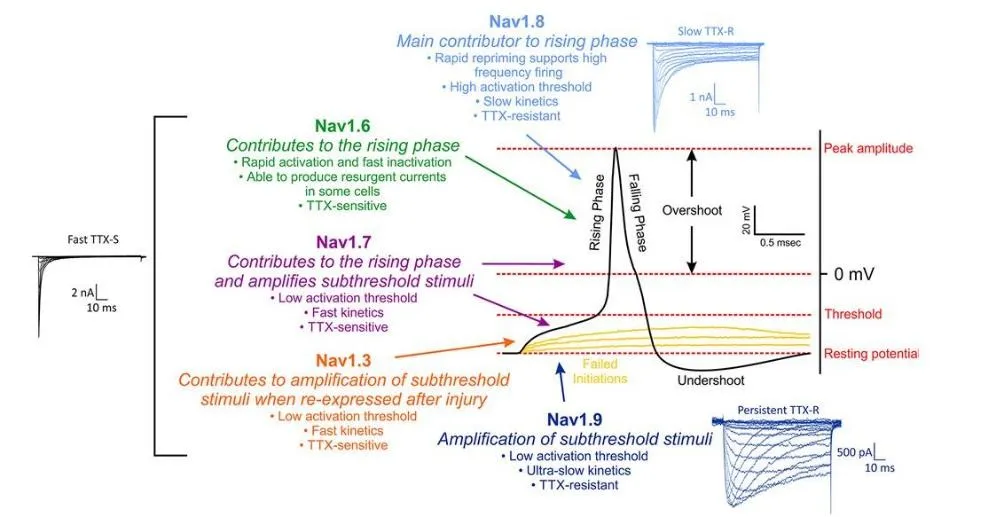
Figure 1: Contribution of NaV1.3, NaV1.6, NaV1.7, NaV1.8 and NaV1.9 to the Sensory-Neuron Action Potential.2
2.2 Classification and Tetrodotoxin Sensitivity
The family has nine α-subunit isoforms, NaV1.1–NaV1.9, encoded by SCN1A–SCN11A.2,16
Tetrodotoxin (TTX)-resistant channels carry a non-aromatic residue (serine or cysteine) in the outer pore that sharply lowers TTX affinity.15,17 The classification is summarized in Table 1.
Table 1: Classification of Voltage-Gated Sodium Channel Isoforms by Tetrodotoxin (TTX) Sensitivity
| Sr. No. | Class | Isoforms | TTX sensitivity |
|---|---|---|---|
| 1 | TTX-sensitive | NaV1.1, 1.2, 1.3, 1.4, 1.6, 1.7 | Blocked by low-nanomolar TTX |
| 2 | TTX-resistant | NaV1.5, 1.8, 1.9 | Need micromolar TTX |
NaV1.8 and NaV1.9 are expressed mainly in sensory neurons; NaV1.5 mainly in the heart.2,17
2.3 Role in Pain Signalling
An action potential generated at a noxious stimulus travels along the sensory axon to the dorsal root ganglion and spinal cord, where it triggers neurotransmitter release onto second-order neurons.2,14,18 After nerve injury or inflammation, altered sodium-channel function can cause spontaneous activity and hyperexcitability.2,14
NaV1.1, 1.3, 1.6, 1.7, 1.8 and 1.9 occur in sensory neurons.2,18–20 NaV1.3 is re-expressed after nerve injury, although it is not a universal mediator of neuropathic pain;2,18,21,22 NaV1.6 is concentrated at nodes of Ranvier.2,22 Human genetics gives the strongest evidence for NaV1.7 and NaV1.9: NaV1.7 gain-of-function mutations cause inherited erythromelalgia and paroxysmal extreme pain disorder, loss-of-function mutations cause congenital insensitivity to pain, and NaV1.9 variants are linked to both painful and painless phenotypes.19,20,23,24 Suzetrigine does not directly inhibit these channels.
3. The NaV1.8 Channel
3.1 Expression and Electrophysiology
NaV1.8, encoded by SCN10A, was first identified as a TTX-resistant channel in sensory neurons.25–29 It is expressed mainly in small- and medium-diameter neurons of the dorsal root and trigeminal ganglia, which are rich in nociceptors, but not exclusively in nociceptors.2,30–33 Its depolarized activation and inactivation, slow inactivation and rapid recovery keep it available during sustained or repetitive depolarization, so it contributes substantially to the action-potential upstroke and repetitive firing.28,34–38
3.2 Evidence That NaV1.8 Is a Pain Target
NaV1.8 knockout animals show altered nociceptive responses,27,28,37,39–42 and its expression, distribution or gating changes after inflammation and nerve injury; it is an important contributor to pathological pain, not its sole determinant.31,32,43–47 Gain-of-function SCN10A variants occur in patients with painful peripheral neuropathy, and common variants are associated with differences in experimental pain sensitivity.48–51 Selective or relatively selective inhibitors reduce NaV1.8 currents and nociceptive behaviour in experimental pain models.27,31,32,43,52–56
3.3 Therapeutic Rationale
Non-selective sodium-channel blockade affects neuronal, cardiac and other tissues. Selective NaV1.8 inhibition aims to suppress pathological pain signalling while sparing unrelated NaV subtypes, which motivated selective small-molecule inhibitors and ultimately suzetrigine.3,33,52,53,57,58
4. History, Discovery and Development
Several programmes tried to develop selective NaV1.8 inhibitors, but combining subtype selectivity with suitable pharmacokinetics was difficult. Early compounds such as A-803467 showed in animals that selective NaV1.8 inhibition can be analgesic, but their pharmacokinetic properties and poor clinical translation halted progression.2,33,53,55,59 Vertex Pharmaceuticals then developed VX-150, whose clinical activity gave proof of concept that NaV1.8 inhibition can relieve pain in humans; limitations of its profile led to discontinuation of that programme and to VX-548, later named suzetrigine.3,57,60,61 The chemical evolution of these inhibitors is shown in Figure 2.
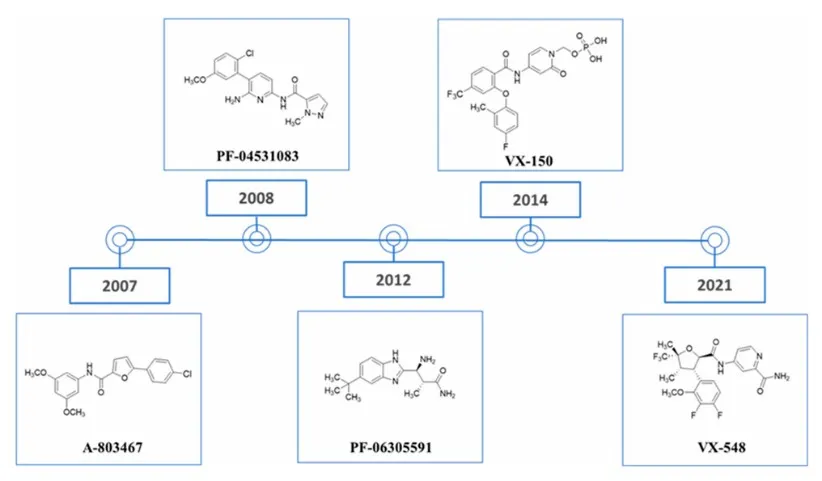
Figure 2: Chemical Evolution of NaV1.8 Inhibitors, 2007–2021, From a-803467 to Suzetrigine (VX-548). Adapted from the Original Source.62
In phase 2 trials after abdominoplasty and bunionectomy, VX-548 reduced pain intensity more than placebo.57 Vertex reported phase 3 results in January 2024 and submitted a New Drug Application.63–65 The FDA approved suzetrigine on 30 January 2025 as an oral, non-opioid, selective NaV1.8 inhibitor for moderate-to-severe acute pain in adults, the first approved drug of its kind.5,63–66
5. Structural and Pharmacological Characteristics
Suzetrigine (formerly VX-548) is an orally active small molecule: a pyridine-2-carboxamide derivative with a chiral substituted tetrahydrofuran ring, molecular formula C21H20F5N3O4 and molecular weight about 473.4 g/mol.3,33,57,67
In recombinant human NaV systems and primary human dorsal root ganglion (DRG) neurons, suzetrigine showed at least 31,000-fold selectivity for NaV1.8 over the other NaV subtypes tested, and no meaningful activity against 180 other molecular targets. Its half-maximal inhibitory concentration (IC50) against native TTX-resistant NaV1.8 current in human DRG neurons was approximately 0.68 nM.3 Other electrophysiology work reported about 0.27 nM for human NaV1.8 under different experimental conditions.60 These potency and selectivity figures come from the suzetrigine-specific pharmacology study3 and the state-dependence studies;60,61 earlier NaV1.8 blockers (A-803467, PF-01247324, A887826 and pyridyl carboxamides) are cited only as background on the compound class.59,68–70
Inhibition is state-dependent and can be partly relieved by strong depolarization, a reverse-use-dependent behaviour.56,60,61,71,72 NaV1.8 is expressed mainly in peripheral sensory neurons, and human tissue databases show no meaningful SCN10A expression in the central nervous system. Preclinical and clinical safety assessments have not shown the central effects typical of opioids,3,48,73–75 but this does not mean adverse effects are absent.
6. Mechanism of Action
Suzetrigine is not a classical pore blocker. It binds allosterically to the second voltage-sensing domain (VSD2) of NaV1.83,15,76 and stabilizes the channel in its closed, non-conducting state. It binds preferentially when the voltage sensors are at rest and has lower affinity once they are depolarized and activated, which reduces the number of channels available for activation.3,60 Studies with physiological action-potential waveforms indicate that suzetrigine still inhibits substantially during normal nociceptor activity.61,77
The resulting fall in inward Na+ current lowers nociceptor excitability and repetitive firing. It does not necessarily silence the neuron, because other sodium channels also contribute to excitability.29,73,75,77 The overall sequence is: suzetrigine binds VSD2 → closed state stabilized → fewer NaV1.8 channels available → reduced Na+ current → lower nociceptor excitability and repetitive firing → less peripheral pain-signal transmission → analgesia.2,3,60,61 The state-dependent binding of suzetrigine to the closed state of NaV1.8 is illustrated in Figure 3.
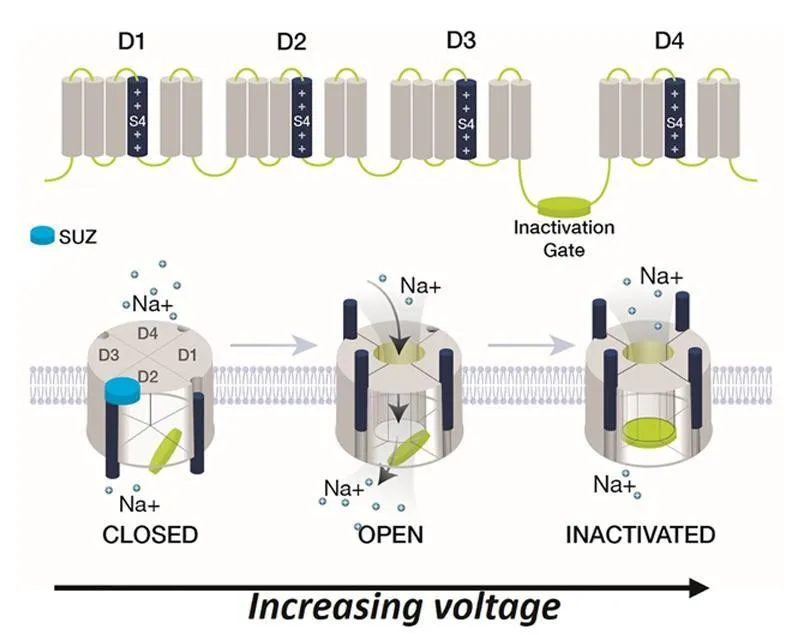
Figure 3: State-dependent Binding of Suzetrigine to the Closed State of NaV1.8 with Increasing Voltage. Adapted from the Original Source.3
7. Pharmaceutical and Pharmacokinetic Profile
7.1 Dosage Form and Dosing
Suzetrigine (Journavx) is an oral 50 mg film-coated tablet developed by Vertex Pharmaceuticals and approved by the FDA on 30 January 2025 for moderate-to-severe acute pain, including postoperative pain, in adults.5,66 The current US label specifies three steps:66
1. Dose 1: 100 mg, taken on an empty stomach at least 1 hour before or 2 hours after food, to avoid delayed onset.
2. Doses 2–4: 50 mg every 12 hours, starting 12 hours after the initial dose, with or without food.
3. Dose 5 and later: 50 mg every 24 hours, starting 12 hours after dose 4, with or without food.
Treatment should be as short as the patient's goals allow; use for acute pain has not been studied beyond 14 days.66 Food and drink containing grapefruit should be avoided because they affect CYP3A-mediated metabolism.66,78,79 Lower doses apply in moderate hepatic impairment (Child-Pugh B) and with moderate CYP3A inhibitors, and severe hepatic impairment (Child-Pugh C) should be avoided; the exact regimens are in sections 2.2 and 2.3 of the label and should be consulted directly.66 The formulation and dosing are summarized in Table 2.
Table 2: Formulation and Dosing of Marketed Suzetrigine Tablets66
| Sr. No. | Parameter | Description |
|---|---|---|
| 1 | Brand name / strength | JOURNAVX; 50 mg per tablet (film-coated, oral) |
| 2 | Appearance | Blue, oblong tablet; "VX50" on one side |
| 3 | Dose 1 | 100 mg on an empty stomach, at least 1 hour before or 2 hours after food |
| 4 | Doses 2–4 | 50 mg every 12 hours, starting 12 hours after dose 1; with or without food |
| 5 | Dose 5 and later | 50 mg every 24 hours, starting 12 hours after dose 4; with or without food |
| 6 | Food precaution | Avoid grapefruit-containing food and drink |
| 7 | Dose adjustment | Moderate hepatic impairment and moderate CYP3A inhibitors: reduced dosing per label66 |
7.2 Pharmacodynamics
Suzetrigine binds VSD2 of NaV1.8 and holds the channel closed, which reduces sodium conductance and the generation and propagation of action potentials in pain-sensing neurons; it does not act through opioid receptors.3,24 In two randomized trials after abdominoplasty or bunionectomy it reduced pain more than placebo, which does not show superiority to opioids or efficacy in every pain type (Section 8).80
7.3 Pharmacokinetics
After oral dosing the median time to maximum concentration (Tmax) is about 3 hours when fasting. The apparent volume of distribution is about 495 L, protein binding about 99%, and the mean effective half-life about 23.6 hours.66,81 Suzetrigine is metabolized mainly by CYP3A.66,82 Its major active metabolite, M6-SUZ, also inhibits NaV1.8 but is about 3.7-fold less potent than the parent compound in the reported assay.66 The pharmacokinetic parameters are summarized in Table 3.
Table 3: Pharmacokinetic Parameters of Suzetrigine and ITS Active Metabolite M6-SUZ66
| Sr. No. | Parameter (steady state) | Suzetrigine | M6-SUZ |
|---|---|---|---|
| 1 | AUC0–24h, µg·h/mL (CV%) | 11.5 (25.6%) | 34.7 (25.6%) |
| 2 | Cmax, µg/mL (CV%) | 0.62 (27.7%) | 1.5 (24.5%) |
| 3 | Median Tmax, h (range) | 3.0 (1.50–5.03) | 10.0 (4.0–48.1) |
| 4 | Protein binding | 99% | 96% |
| 5 | Mean effective half-life, h (CV%) | 23.6 (36.2%) | 33.0 (34.9%) |
| 6 | Apparent volume of distribution, L | 495 (25.0%) | not applicable |
| 7 | Primary metabolic pathway | CYP3A | CYP3A |
| 8 | Excretion | Feces 49.9%; urine 44.0% (mainly as metabolites) | not reported |
7.4 Drug Interactions and Special Populations
The interaction section of the label should be read in full; its main points are:66
8. Clinical Evidence
Suzetrigine beat placebo in both pivotal trials but did not beat hydrocodone/acetaminophen (HB/APAP) on the key secondary endpoint, and the evidence base is limited to two surgical models over 48 hours.
8.1 Pivotal Phase 3 Trials
NAVIGATE 1 (bunionectomy; NCT05553366) and NAVIGATE 2 (abdominoplasty; NCT05558410) were randomized, double-blind, placebo- and active-controlled trials in adults with moderate-to-severe pain after surgery (NPRS ≥ 4). Participants received suzetrigine (100 mg, then 50 mg every 12 hours), HB/APAP (5/325 mg every 6 hours) or placebo for 48 hours, randomized 2:2:1. The primary endpoint was the time-weighted sum of the pain intensity difference over 0–48 hours (SPID48) versus placebo; the key secondary endpoint was SPID48 versus HB/APAP.80 The principal results are summarized in Table 4.
Table 4: Primary and Key Secondary Results of the Phase 3 Randomized Trials80
| Sr. No. | Item | Abdominoplasty (NAVIGATE 2) | Bunionectomy (NAVIGATE 1) |
|---|---|---|---|
| 1 | Participants | 1,118 | 1,073 |
| 2 | Arms (n) | Suzetrigine 447; HB/APAP 448; placebo 223 | Suzetrigine 426; HB/APAP 431; placebo 216 |
| 3 | SPID48 difference vs placebo (LS mean, 95% CI) | 48.4 (33.6–63.1); P < 0.0001 | 29.3 (14.0–44.6); P = 0.0002 |
| 4 | Suzetrigine vs HB/APAP (SPID48) | No significant difference | No significant difference |
| 5 | Median time to ≥ 2-point NPRS reduction, suzetrigine vs placebo | 119 vs 480 min | 240 vs 480 min |
The investigators concluded that suzetrigine reduced pain over 48 hours more than placebo and that its effect was similar to HB/APAP.80 Superiority over HB/APAP was not shown, and because no formal non-inferiority analysis was performed, the data do not establish equivalence either. A third, single-arm phase 3 study enrolled 256 patients with surgical and non-surgical acute pain and was consistent with the randomized trials' safety profile, but it has no control group.83
8.2 Earlier and Related Studies
Phase 2 trials after abdominoplasty and bunionectomy tested several doses against placebo, with hydrocodone/acetaminophen as a reference, and showed greater pain reduction than placebo.57 In a phase 2 study of painful lumbosacral radiculopathy, pain-score reduction with suzetrigine was similar to placebo.24
8.3 Critical Appraisal
The strengths and limitations of the clinical evidence are summarized in Table 5.
Table 5: Critical Appraisal of the Clinical Evidence for Suzetrigine
| Sr. No. | Aspect | Assessment |
|---|---|---|
| 1 | Efficacy vs placebo | Statistically significant in both trials; magnitude smaller after bunionectomy than after abdominoplasty |
| 2 | Efficacy vs active comparator | Not superior to HB/APAP 5/325 mg; no formal non-inferiority analysis; no comparison with higher-dose opioids or with NSAID combinations |
| 3 | Population | Adults without chronic pain after two elective surgeries; 98% women in the abdominoplasty trial; mean age 42 (abdominoplasty) and 48 (bunionectomy) |
| 4 | Duration | 48 hours of randomized treatment; label notes no study beyond 14 days |
| 5 | Safety follow-up | Short; long-term and repeated-use safety not established |
| 6 | Generalizability | Unproven for chronic, neuropathic or severe pain (for example major orthopaedic or abdominal surgery) |
| 7 | Gaps | Head-to-head trials against NSAIDs or paracetamol-based regimens; opioid-sparing outcomes; neuropathic pain trials |
9. Safety, Adverse Effects and Limitations
In trials, suzetrigine was generally well tolerated and most adverse events were mild to moderate.80 The prescribing information lists pruritus, muscle spasms, increased creatine phosphokinase and rash as the most common adverse reactions occurring more often than with placebo; in the pooled phase 3 randomized trials pruritus occurred in 2.1% of suzetrigine, 1.6% of placebo and 3.4% of HB/APAP patients.66 Nausea, headache, dizziness and constipation were also reported, with frequencies that varied between studies and arms.80,83 Strong CYP3A inhibitors are contraindicated and use in severe hepatic impairment should be avoided66 (Section 7.4).
Several limitations constrain interpretation:
10. Future Prospects
Ongoing research is testing suzetrigine in peripheral neuropathic pain, particularly painful diabetic peripheral neuropathy, in phase 3 studies; effectiveness in chronic neuropathic pain has not been established.24,84 Priorities include long-term safety, effectiveness across pain conditions, combination with other analgesics, direct comparison with NSAID and paracetamol-based regimens, and any role in reducing opioid use.24,84
CONCLUSION
Suzetrigine is a selective NaV1.8 inhibitor that offers a new, non-opioid mechanism for moderate-to-severe acute pain in adults. Randomized trials show significant benefit over placebo in two postoperative settings and acceptable short-term tolerability.66,80 It has not been shown to outperform hydrocodone/acetaminophen, and it should not be regarded as a replacement for opioids or established analgesics. Its wider clinical role depends on results in chronic and neuropathic pain and on long-term safety data.
Acknowledgement
[Authors to add acknowledgements, if any.]
Conflicts of Interest
[Authors to declare any conflicts of interest; otherwise state that none exist.]
REFERENCES


Sanidhya Meti, Pankaj Chaudhary, Suzetrigine: A Selective NaV1.8 Sodium Channel Inhibitor for Non-Opioid Pain Management, Int. J. of Pharm. Sci., 2026, Vol 4, Issue 11, 4105-4117. https://doi.org/10.5281/zenodo.24457451
 10.5281/zenodo.24457451