

We use cookies to ensure our website works properly and to personalise your experience. Cookies policy
Department of Pharmacy, Siddhis Institute of Pharmacy, Nandgaon, Murbad, Maharashtra 421401, India, Department of pharmacy, Nandgoan, Murbad, maharashtra, India.
Active pharmaceutical ingredients (APIs) are the substances in medicines responsible for producing the intended pharmacological activity. The development of an API is a multidisciplinary process that integrates medicinal chemistry, process chemistry, chemical engineering, analytical science, materials science and pharmaceutical quality systems. Successful development requires the selection of a suitable synthetic or biotechnological route, optimization of reaction and purification conditions, control of impurities, establishment of material attributes, and demonstration that the manufacturing process consistently produces material of the required quality. Characterization establishes the identity, structure, purity, physical and chemical properties, while quality control (QC) verifies that each batch complies with approved specifications. This review summarizes the major stages of API development, including route selection, process development, scale-up, crystallization, drying, milling, packaging and technology transfer. It also discusses key characterization tools such as infrared spectroscopy, nuclear magnetic resonance, mass spectrometry, chromatographic methods, thermal analysis, X-ray powder diffraction and particle-size analysis. Important QC parameters include identity, assay, related substances, residual solvents, water content, inorganic impurities, solid-state form and microbiological quality where applicable. The role of current good manufacturing practices and International Council for Harmonisation (ICH) guidelines, particularly Q7, Q11, Q3A, Q3C, Q3D, Q6A, Q2 (R2) and Q14, is highlighted. A lifecycle and risk-based approach, supported by process understanding, validated analytical procedures and a defined control strategy, is essential for ensuring API quality, patient safety and reliable commercial manufacture.
An active pharmaceutical ingredient (API), also called a drug substance, is the component of a medicinal product that provides the intended pharmacological effect. The quality of the API has a direct influence on the safety, efficacy, stability and performance of the finished dosage form. API development therefore extends beyond synthesizing a molecule: it involves establishing a reproducible, economical, safe and scientifically understood process capable of delivering material that consistently meets predefined quality requirements. [1,2,3]
API development begins with a candidate molecule and proceeds through route selection, laboratory synthesis, process optimization, impurity understanding, scale-up, analytical characterization, control-strategy design and transfer to routine manufacturing. Chemical APIs may be produced by organic synthesis, fermentation, extraction or combinations of these approaches. Biotechnological drug substances require additional controls related to cell substrates, biological activity, product-related variants and process-derived contaminants. The present review mainly discusses small-molecule chemical APIs, while noting where biological APIs require different considerations. [1,2,4,5]
Modern development is guided by quality risk management and lifecycle thinking. ICH Q11 addresses development and manufacture of drug substances, while ICH Q7 provides GMP guidance for API manufacture. ICH Q8, Q9 and Q10 provide complementary principles for pharmaceutical development, risk management and the pharmaceutical quality system. Analytical procedure development and validation are addressed by ICH Q14 and Q2 (R2), respectively. [1-5]
2. OBJECTIVES OF API DEVELOPMENT
The principal objective is to establish a process that can repeatedly manufacture an API with the required identity, strength, purity and physical properties. Specific objectives include: [2-5,9]
3. OVERVIEW OF THE API DEVELOPMENT PROCESS
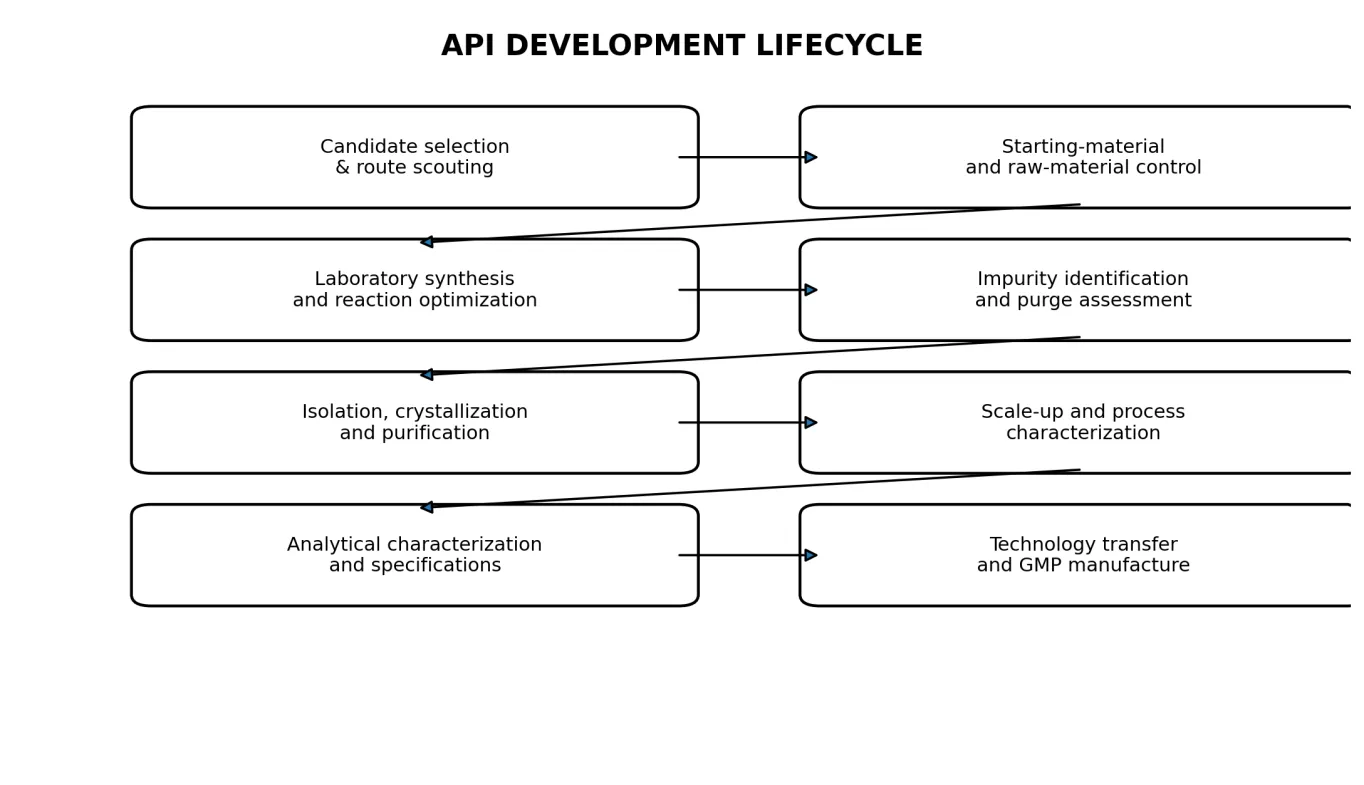
Figure 1: Overview of the Major Stages in Small-Molecule API Development.
API development is iterative rather than strictly linear. Analytical results and process knowledge feed back into route selection and optimization. A typical sequence is shown below.
Table 1: Simplified Process Sequence Linking API Development Stages.
| 1. Drug candidate selection | 2. Route and starting-material selection |
|---|---|
| 3. Laboratory synthesis | 4. Process optimization and impurity study |
| 5. Isolation and purification | 6. Scale-up and process characterization |
| 7. Analytical characterization | 8. Control strategy and validation |
| 9. Technology transfer | 10. Routine GMP manufacture and lifecycle review |
4. PROCESS DEVELOPMENT OF APIs
4.1 Selection of the synthetic route
Route selection is an early strategic decision. Candidate routes are compared for number of steps, overall yield, selectivity, availability and quality of starting materials, cost, safety, environmental impact, scalability and intellectual-property considerations. A route with a high laboratory yield may be unsuitable if it uses hazardous reagents, unstable intermediates, difficult separations or materials that are hard to source consistently. The selected route should be capable of producing the desired molecular structure with controlled impurity levels and a practical manufacturing footprint. [2,3,4]
4.2 Starting materials and raw-material controls
Starting materials, reagents, catalysts, solvents and processing aids can influence final API quality. Their specifications should address identity, purity and relevant attributes such as water content, particle size or microbial quality when these affect processing. Starting-material selection and justification should be documented. Supplier qualification, incoming testing, traceability and change notification help reduce variability. [1,2,3]
4.3 Reaction development and optimization
Reaction development establishes conditions that provide adequate conversion and selectivity while minimizing unwanted by-products. Variables may include temperature, pressure, reaction time, concentration, pH, solvent composition, reagent equivalents, catalyst loading and order or rate of addition. Screening experiments are followed by structured optimization. Design of Experiments (DoE) can identify interactions between variables and help define an operating region. Critical process parameters (CPPs) are those process variables whose variability can affect a critical quality attribute (CQA). [2,3,4]
4.4 Impurity formation and control
Impurities may arise from starting materials, reagents, catalysts, side reactions, incomplete reactions, intermediates, solvents, equipment, degradation or cross-contamination. Process understanding should identify plausible impurity pathways and determine which impurities may persist through downstream operations. Purge studies can assess the ability of crystallization, extraction, distillation, washing or other steps to remove impurities. Potential mutagenic impurities require a specific risk assessment and control strategy in accordance with applicable guidance. [2,6]
4.5 Isolation and purification
Isolation converts the reaction mixture into a manageable intermediate or solid API. Common operations include extraction, phase separation, precipitation, crystallization, filtration, centrifugation and washing. Crystallization is particularly important because it can influence chemical purity, polymorphic form, solvate or hydrate formation, crystal habit and particle-size distribution. Solvent selection, supersaturation, cooling or antisolvent addition, seeding, agitation and aging time should be studied and controlled. [2,3,9]
4.6 Drying, milling and blending
Drying removes residual process solvent and water to a defined endpoint without causing degradation or an unwanted solid-state transformation. Drying conditions should consider temperature, vacuum, airflow, bed depth and time. Milling or micronization may be used to obtain a target particle-size distribution, but excessive energy can cause amorphization, heat generation or changes in flow and dissolution. Blending may be required to improve homogeneity before packaging or further processing. [1,2,7,12]
4.7 Scale-up and process characterization
Scale-up from laboratory to pilot and commercial equipment introduces changes in heat transfer, mass transfer, mixing, gas-liquid contact, filtration capacity and drying behavior. Scale-up should be based on engineering principles and experimental evidence rather than simple proportional enlargement. Process characterization evaluates the relationship between process variables and CQAs, establishes suitable ranges and supports a science-based control strategy. Representative batches and appropriate sampling plans are important for demonstrating process consistency. [2-5,13]
4.8 Technology transfer and commercial manufacture
Technology transfer moves process knowledge, analytical methods, specifications and control strategies from development to the manufacturing site. A transfer package normally includes process descriptions, material specifications, equipment requirements, critical parameters, in-process controls, sampling instructions, analytical methods, safety information, deviation history and acceptance criteria. Transfer should be planned, documented and reviewed by development, manufacturing, engineering and quality units. [1,2,5]
1. CHARACTERIZATION OF APIs
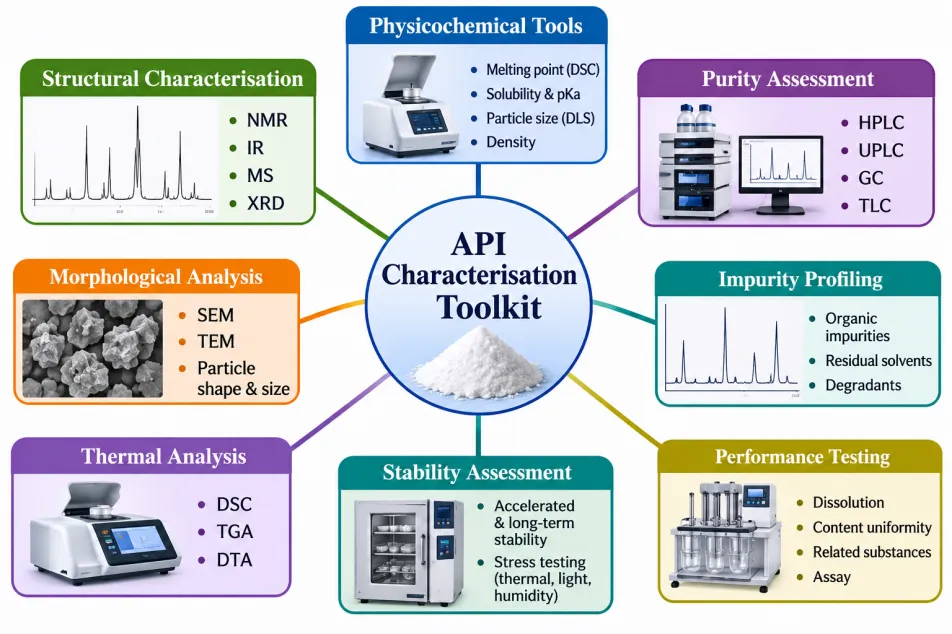
Figure 2: Analytical Techniques Commonly Used to Characterize an API.
Characterization establishes that the material is the intended substance and describes attributes that may affect quality, stability, handling and downstream formulation. The extent of characterization is selected according to the nature of the API, development stage, route of synthesis and intended use. [2,9,12]
5.1 Structural identification
Identity testing confirms the molecular identity of the API. Infrared (IR) spectroscopy provides information about functional groups and characteristic bond vibrations. Nuclear magnetic resonance (NMR) spectroscopy, including proton and carbon NMR, supports structural elucidation and assessment of molecular environments. Mass spectrometry (MS) provides molecular-mass and fragmentation information. Elemental analysis may provide additional compositional evidence. No single technique is universally sufficient; orthogonal methods are often combined. [9]
5.2 Chromatographic characterization
High-performance liquid chromatography (HPLC) and ultra-high-performance liquid chromatography (UHPLC) are widely used to measure assay and related substances. Gas chromatography (GC) is commonly used for volatile residual solvents and other volatile components. Thin-layer chromatography may be useful for preliminary monitoring, although it is generally less quantitative than modern instrumental methods. Ion chromatography can be used for selected inorganic ions or ionic impurities. Method selection depends on analyte properties, required sensitivity and intended purpose. [6,9]
5.3 Thermal analysis
Differential scanning calorimetry (DSC) measures heat-flow events such as melting, crystallization and glass transitions. Thermogravimetric analysis (TGA) measures mass change as a function of temperature and can help assess water or solvent loss and thermal stability. These methods are useful for studying thermal behavior, solvates, hydrates and possible solid-state transitions. [9,12]
5.4 Solid-state characterization
X-ray powder diffraction (XRPD) is used to identify crystalline phases and distinguish polymorphic forms. Solid-state NMR, Raman spectroscopy and infrared spectroscopy can provide complementary information. Dynamic vapor sorption (DVS) evaluates moisture sorption behavior. Solid-state form can influence solubility, dissolution, stability, manufacturability and bioavailability; therefore, a suitable form should be selected and controlled. [9]
5.5 Particle and powder properties
Particle-size distribution can be measured by laser diffraction, microscopy or other suitable techniques. Particle morphology is assessed using optical or electron microscopy. Bulk density, tapped density, flow properties and surface area may be important when the API is intended for solid dosage forms. These properties are not necessarily release tests for every API; they should be included when scientifically relevant to the intended process or product. [2,9]
5.6 Water content and residual solvents
Karl Fischer titration is commonly used for water determination. Loss on drying is a less specific measurement because it may include water and other volatile substances. Residual solvents are commonly determined by headspace GC. Solvent limits should be based on ICH Q3C and the solvent's toxicological classification and permitted daily exposure, as applicable. [7,9]
5.7 Stability characterization
Stability studies evaluate the effect of temperature, humidity, light and other relevant conditions on API quality over time. Stress testing may include hydrolysis, oxidation, photolysis and thermal exposure to understand degradation pathways. Stability-indicating analytical methods should distinguish the API from relevant degradation products. Results support retest periods, storage conditions and packaging selection. [12]
6. QUALITY CONTROL OF APIs
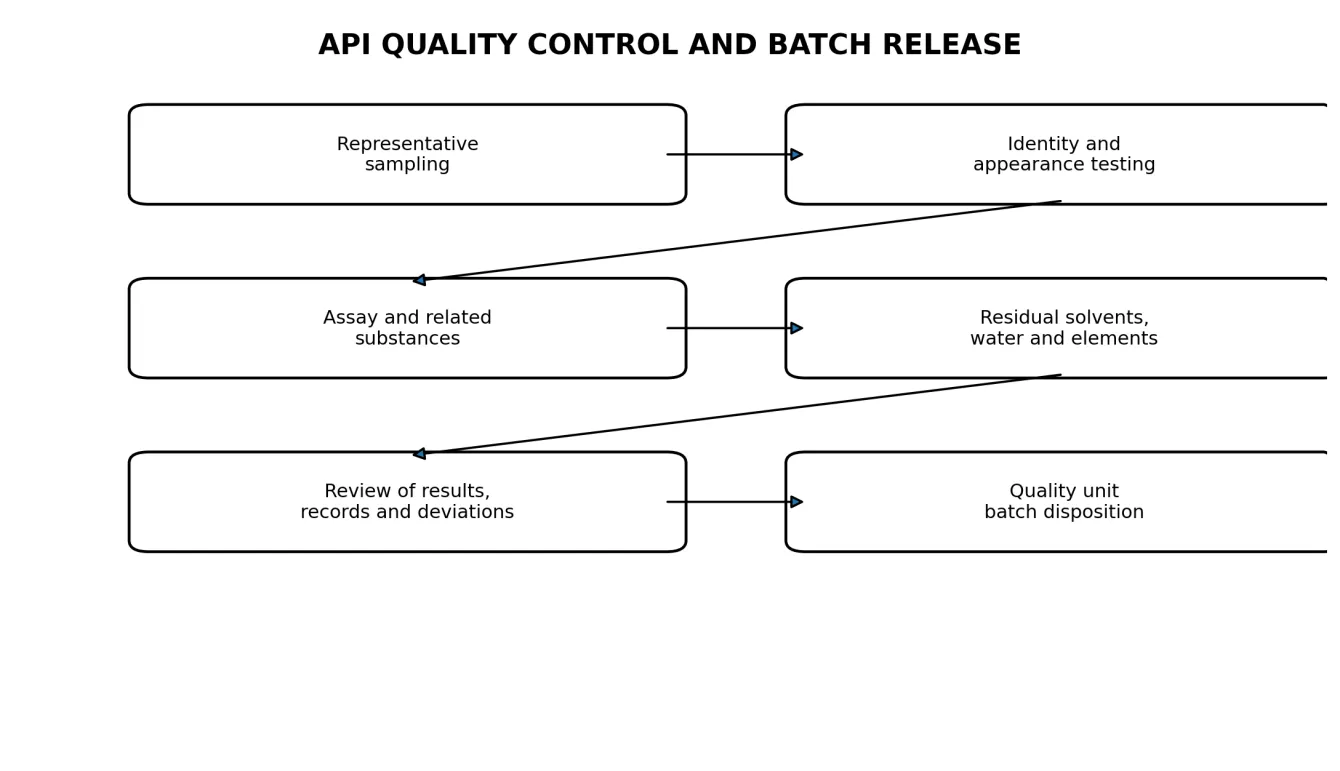
Figure 3: Typical Quality-Control Sequence for API Batch Evaluation and Release.
Quality control is the system of sampling, specifications, testing, documentation and release decisions used to ensure that an API batch meets established quality requirements. Specifications should be justified by development data, process capability, stability knowledge, pharmacopoeial requirements and applicable regulatory guidance. Tests and acceptance criteria are substance-specific; the examples below are not universal limits. [1,2,9]
Table 2: Examples of API Quality Attributes and Commonly Used Analytical Approaches.
| Quality attribute | Typical test / technique | Purpose |
|---|---|---|
| Description / appearance | Visual examination | Checks physical appearance and obvious abnormalities. |
| Identification | IR, HPLC retention time, UV, NMR or other suitable method | Confirms the identity of the API. |
| Assay / content | Validated HPLC, titration or other suitable method | Measures API content or potency. |
| Related substances | HPLC / UHPLC / GC as appropriate | Detects and quantifies process and degradation impurities. |
| Residual solvents | Headspace GC | Controls volatile organic solvents. |
| Water content | Karl Fischer titration | Measures water that may affect stability or processing. |
| Inorganic impurities / elemental impurities | ICP-MS, ICP-OES or suitable compendial methods | Controls relevant elemental contaminants. |
| Solid-state form | XRPD, DSC, Raman or other suitable method | Confirms polymorphic or crystalline form when relevant. |
| Particle-size distribution | Laser diffraction / microscopy | Controls particle properties where linked to performance. |
| Microbiological quality | Microbial enumeration / specified-organism tests, when applicable | Assesses microbiological quality based on route and intended use. |
6.1 Identity testing
Identity tests should be specific enough to distinguish the API from likely contaminants or related compounds. Pharmacopoeial methods may be used when applicable and suitable. Where more than one identification test is required, the combination should provide adequate assurance of identity. [9]
6.2 Assay and potency
Assay determines the amount of API in the sample, usually expressed on an appropriate basis such as as-is, dried or anhydrous. The calculation basis and correction for water or residual solvents should be clearly defined. Potency is particularly relevant for biological substances and may require a functional or biological assay rather than a simple chemical content measurement. [9]
6.3 Related substances and impurity profiling
Impurity testing evaluates specified, unspecified and total impurities according to the applicable specification and regulatory framework. Analytical methods should demonstrate adequate specificity, sensitivity and quantitation capability. Impurity limits are established using toxicological qualification, manufacturing capability, stability data and applicable ICH thresholds. For new drug substances, ICH Q3A provides guidance on organic impurities; ICH Q3C addresses residual solvents; ICH Q3D addresses elemental impurities. [6-8]
6.4 Elemental impurities
Potential sources include catalysts, reagents, raw materials, water, equipment and container-closure systems. A risk-based assessment should consider the manufacturing process and potential contribution of each source. ICP-MS and ICP-OES are commonly used techniques, selected according to the elements, expected concentrations and required performance. [8]
6.5 Microbiological quality
Microbiological testing requirements depend on the API's source, manufacturing process, intended dosage form and applicable regulatory or pharmacopoeial expectations. Non-sterile APIs may require microbial limits or specified-organism testing when justified. Sterile APIs and biologically derived materials require additional controls appropriate to their manufacturing and intended use. [1,9]
6.6 Sampling and batch release
A representative sampling plan is essential because analytical results are meaningful only when samples represent the batch. Sampling procedures should define locations, quantities, tools, precautions and handling. Batch release requires review of test results, manufacturing records, deviations, out-of-specification investigations and other relevant documentation by authorized quality personnel. Results should be traceable to the batch and the approved analytical procedure. [1,2,9]
7. ANALYTICAL METHOD DEVELOPMENT AND VALIDATION
Analytical procedures are developed to measure specific quality attributes for a defined purpose, such as identity, assay, impurities or stability testing. Development should consider analyte properties, sample preparation, separation or detection principles, specificity, range, robustness and system suitability. ICH Q14 describes science- and risk-based analytical procedure development, while ICH Q2 (R2) describes validation principles. [10,11]
Table 3: Common Analytical Procedure Performance Characteristics.
| Performance characteristic | Meaning / evaluation |
|---|---|
| Specificity / selectivity | Ability to assess the analyte in the presence of relevant matrix components, impurities or degradants. |
| Accuracy | Closeness of measured results to an accepted reference value. |
| Precision | Closeness of agreement among repeated measurements; may include repeatability and intermediate precision. |
| Linearity / response | Relationship between analyte concentration and analytical response, where relevant to the procedure. |
| Range | Interval over which suitable accuracy and precision have been demonstrated. |
| Detection limit | Lowest amount that can be detected, where relevant. |
| Quantitation limit | Lowest amount that can be quantified with suitable performance, especially for impurity methods. |
| Robustness | Ability to remain reliable under small deliberate variations in analytical conditions. |
Validation is not a one-time substitute for ongoing control. System suitability, reference standards, calibration, analyst training, instrument qualification, change control and periodic review support continued method performance. Method transfer or verification may be required when procedures move between laboratories or sites. [1,10,11]
8. REGULATORY GUIDELINES AND GMP REQUIREMENTS
API manufacture is governed by national regulations and internationally harmonized guidance. The International Council for Harmonisation (ICH) provides widely used quality guidelines. Their applicability depends on the API type, market, product stage and local regulatory requirements. [1-5,9-12]
Table 4: Selected ICH Guidelines Relevant to Chemical API Development.
| Guideline | Main relevance to API development |
|---|---|
| ICH Q7 | Good manufacturing practice for active pharmaceutical ingredients. |
| ICH Q8(R2) | Pharmaceutical development and scientific understanding of product and process. |
| ICH Q9(R1) | Quality risk management across the product lifecycle. |
| ICH Q10 | Pharmaceutical quality system and continual improvement. |
| ICH Q11 | Development and manufacture of drug substances, including starting-material and process considerations. |
| ICH Q3A(R2) | Impurities in new drug substances (organic impurities). |
| ICH Q3C | Impurities: guideline for residual solvents. |
| ICH Q3D | Guideline for elemental impurities. |
| ICH Q6A | Specifications: test procedures and acceptance criteria for new drug substances and products. |
| ICH Q2(R2) | Validation of analytical procedures. |
| ICH Q14 | Analytical procedure development. |
| ICH Q1A(R2) | Stability testing of new drug substances and products. |
8.1 Good manufacturing practices
ICH Q7 describes GMP expectations for API manufacture. Core elements include a documented quality system, qualified personnel, suitable premises and equipment, controlled materials, approved procedures, production and laboratory controls, validation, change control, deviation investigation, complaint handling, records and self-inspection. Quality responsibilities should be independent of production decisions where required, and batch disposition should be performed by authorized personnel. [1,5]
8.2 Documentation and data integrity
Reliable documentation provides evidence that activities were performed according to approved procedures. Records should be contemporaneous, attributable, legible, original or verified true copies, accurate, complete and readily retrievable. Electronic systems should be appropriately controlled, validated and protected against unauthorized changes. Laboratory notebooks, raw data, chromatograms, calculations, audit trails and batch records should be retained according to applicable requirements. [1,5]
8.3 Quality risk management
Risk management tools such as failure mode and effects analysis (FMEA), cause-and-effect diagrams and risk ranking can help prioritize development experiments and controls. Risk assessments should be scientifically justified and revisited when new knowledge becomes available. Risk management does not replace compliance testing; it helps focus resources on attributes and operations with the greatest potential impact on quality. [4,5]
9. COMMON CHALLENGES IN API DEVELOPMENT
These challenges can be reduced through early risk assessment, appropriate process analytical technology, sound engineering, supplier controls, impurity fate-and-purge studies, robust analytical methods and effective change management.
10. RECENT AND EMERGING APPROACHES
10.1 Quality by Design and Design of Experiments
Quality by Design (QbD) applies systematic development based on predefined objectives, product and process understanding, risk assessment and a control strategy. DoE can efficiently investigate the effects and interactions of process parameters. The objective is not merely to find one successful set of conditions, but to understand a robust operating region supported by data. [3-5]
10.2 Process analytical technology
Process analytical technology (PAT) uses timely measurements to understand and control manufacturing processes. Examples include in-line or at-line Raman, near-infrared spectroscopy, particle-size monitoring and process sensors. PAT may support improved process understanding, reduced variability and, where justified, real-time process decisions. [3,4,11]
10.3 Continuous manufacturing
Continuous manufacturing processes materials through connected operations rather than relying exclusively on discrete batch steps. Potential advantages include improved process control, smaller equipment footprints and more consistent operation. Implementation requires understanding residence-time distribution, material traceability, diversion strategies, control systems and process monitoring. ICH Q13 provides guidance on continuous manufacturing of drug substances and drug products. [17]
10.4 Green chemistry and sustainable process design
Sustainable API development seeks to reduce hazardous reagents, solvent consumption, waste, energy use and unnecessary process steps. Solvent selection guides, catalytic reactions, telescoped synthesis, solvent recovery and process intensification can improve environmental performance. Safety, quality and lifecycle cost must be considered together; a greener route must still meet all quality and regulatory requirements. [2,3,4]
11. FUTURE PERSPECTIVES
Future API development is expected to increasingly combine predictive modeling, automation, advanced analytics and real-time process monitoring. Digital tools can support reaction prediction, impurity risk assessment, process simulation and data trending, although model outputs require appropriate verification and scientific oversight. More widespread use of continuous processing and PAT may improve process control when supported by suitable regulatory strategies. Advances in crystallization science and solid-state analytics will remain important for controlling polymorphs and particle attributes. Across all approaches, the central requirement remains unchanged: the manufacturing process and analytical control strategy must reliably ensure that the API is suitable for its intended use. [2-5,11,17]
CONCLUSION
API development is a comprehensive lifecycle activity that links chemical or biological production with characterization, analytical control, GMP manufacture and regulatory compliance. A successful process must be scientifically understood, economically and technically feasible, safe to operate and capable of consistently producing an API that meets predefined specifications. Characterization techniques establish identity and elucidate chemical, physical and solid-state properties, while a fit-for-purpose QC program controls assay, impurities, residual solvents, water, elemental contaminants and other relevant attributes. ICH Q7, Q11, Q3A, Q3C, Q3D, Q6A, Q2 (R2) and Q14 provide important frameworks for manufacturing, specifications and analytical science. The integration of quality risk management, QbD, process characterization, validated analytical procedures and lifecycle monitoring supports robust API manufacture and ultimately helps protect patient safety. [1-12]
13. ACKNOWLEDGEMENT
The author may acknowledge the support of the department, institution, research supervisor or other contributors, where applicable. Please replace or remove this section according to the actual work.
14. CONFLICT OF INTEREST
The author should declare any financial or personal relationships that could inappropriately influence the work. If none, the following statement may be used: “The author declares no conflict of interest.”
15. FUNDING
Funding information should be added where applicable. If no external funding was received, state: “No external funding was received for this review.”
REFERENCES

Vishakha Bhoir, Girish Kokate, Patel Khushi, Cbchinu, Sahil Dhanke, A Review on API Development: Process, Characterization and Quality Control, Int. J. of Pharm. Sci., 2026, Vol 4, Issue 11, 4069-4079. https://doi.org/10.5281/zenodo.24457240
 10.5281/zenodo.24457240