

We use cookies to ensure our website works properly and to personalise your experience. Cookies policy
Siddhi's Institute of pharmacy college.
Quality by Design (QbD) is a systematic, science- and risk-based approach to pharmaceutical development in which product quality is planned from the earliest stages rather than assessed only through end-product testing. It integrates prior knowledge, formulation and process understanding, risk assessment, experimental design, analytical science, and lifecycle management to establish a product and manufacturing process capable of consistently meeting predefined quality objectives. This review describes the conceptual foundations of QbD and its principal elements: the quality target product profile (QTPP), critical quality attributes (CQAs), critical material attributes (CMAs), critical process parameters (CPPs), risk assessment, design of experiments (DoE), design space, control strategy, process analytical technology (PAT), and continual improvement. The relationship between QbD and the ICH quality guidelines, particularly Q8 (R2), Q9 (R1), and Q10, is discussed alongside relevant considerations from analytical procedure development and validation guidance. Applications in immediate-release and modified-release oral dosage forms, poorly soluble drugs, topical products, and complex delivery systems are summarized. A practical, stepwise workflow is presented to show how product requirements can be translated into measurable attributes, risk-ranked variables, statistically designed experiments, and a justified control strategy. Potential benefits include improved process understanding, reduced variability, more robust scale-up, and better lifecycle decisions; however, these benefits depend on adequate data, competent teams, appropriate models, and meaningful implementation rather than documentation alone. Challenges include initial resource demands, uncertainty in risk scoring, model limitations, scale dependence, and inconsistent organizational adoption.
Pharmaceutical quality is essential to patient safety, therapeutic efficacy, and reliable product availability. Traditionally, formulation development has often relied on sequential experimentation, fixed manufacturing instructions, and testing of finished batches against established specifications. End-product testing remains necessary, but it cannot alone guarantee that every relevant source of variability is understood or controlled. A batch may pass a limited set of tests while latent weaknesses in material properties or process conditions remain undetected. QbD responds to this limitation by building quality into the product and process through systematic development and documented scientific understanding [1–3].
The central premise is that quality should be designed into a medicine based on its intended use, rather than assumed to result from testing alone. QbD starts by defining what the product must achieve, identifying attributes that affect quality and patient outcomes, understanding how materials and process variables influence those attributes, and establishing controls that maintain performance. ICH Q8 (R2) describes pharmaceutical development as a process of designing a quality product and manufacturing process that consistently delivers the intended performance [1]. ICH Q9 (R1) provides principles for risk-based decision-making, while ICH Q10 describes a pharmaceutical quality system supporting knowledge management and continual improvement throughout the product lifecycle [2,3].
QbD is not a single statistical method or a mandatory checklist that must be applied identically to every product. It is a development philosophy supported by a set of complementary tools. The appropriate degree of formality depends on product complexity, patient risk, prior knowledge, uncertainty, and the stage of development. A conventional approach and an enhanced QbD approach can coexist; the enhanced approach is characterized by stronger understanding of relationships among material attributes, process parameters, and product performance [1,4].
This review provides a practical overview for pharmacy and pharmaceutical-science readers. It explains key terminology, outlines a typical workflow, discusses experimental and analytical tools, and illustrates how QbD may be applied across dosage forms. It also considers implementation barriers and common errors, emphasizing that conclusions must be supported by product-specific data and current jurisdictional requirements.
2. Review Scope and Approach
This article is a narrative review and educational synthesis rather than a prospectively registered systematic review. Sources were identified through targeted searches of regulatory guidance and scientific literature, including ICH documents, US Food and Drug Administration guidance, PubMed-indexed reviews, and relevant pharmaceutical-development publications. Priority was given to foundational guidance on pharmaceutical development, quality risk management, pharmaceutical quality systems, analytical validation, process validation, and peer-reviewed discussions of QbD. The core regulatory references include ICH Q8 (R2), Q9 (R1), Q10, Q12, Q14, and Q2 (R2), where relevant [1–7].
The discussion is organized around the QbD development sequence: define the intended product, identify quality attributes, understand material and process risks, perform targeted experiments, define the operating region and control strategy, and use lifecycle knowledge to improve the process. Because regulatory documents and regional implementation practices may be updated, researchers should verify the current versions and local requirements before preparing a submission or publication.
3. Concept and Evolution of QbD
QbD emerged from broader quality-management thinking that emphasizes prevention, process capability, and knowledge-driven improvement. In pharmaceutical development, it provides a structured means of connecting the clinical purpose of a medicine to formulation choices and manufacturing conditions. Yu and colleagues described key QbD elements as QTPP, CQAs, product and process understanding, control strategy, and process capability/continual improvement [4]. These elements are interdependent: the QTPP informs which attributes matter, risk assessment helps prioritize the variables that may affect them, experimental work builds evidence about cause-and-effect relationships, and the control strategy translates that evidence into routine practice.
A key distinction is between quality assurance by testing and quality assurance through design. Testing evaluates samples at selected points; QbD seeks to understand why the product meets or might fail to meet its requirements. Testing is not replaced. Rather, it is supplemented by knowledge of raw materials, unit operations, equipment, process variability, and the mechanisms that govern performance. QbD can therefore support a more rational balance of incoming-material controls, in-process monitoring, release testing, and continued process verification [1,3,8].
QbD also supports communication across development, manufacturing, quality control, regulatory affairs, engineering, and supply-chain teams. Shared definitions and documented rationale help teams distinguish a critical variable from a merely measurable variable. The goal is not to collect the largest possible amount of data, but to generate relevant, reliable evidence that reduces uncertainty and enables decisions.
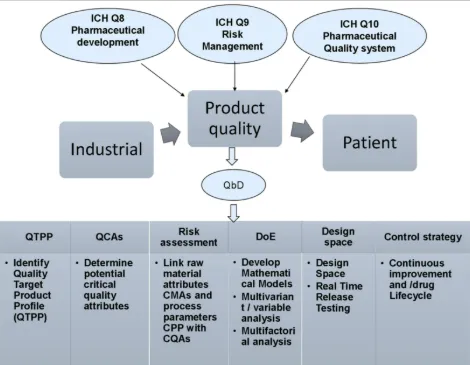
Figure 1: Conceptual QbD Flow
4. Regulatory and Quality-System Framework
4.1 ICH Q8 (R2): Pharmaceutical Development
ICH Q8 (R2) provides the principal framework for pharmaceutical development and explains concepts including QTPP, CQAs, risk assessment, design space, control strategy, and lifecycle management [1]. It encourages applicants to demonstrate understanding of how formulation components and manufacturing processes affect product quality. A design space may be proposed when supported by suitable knowledge and data, but it is not a universal prerequisite for every product or application. The guideline recognizes that development approaches vary with the product and the depth of prior knowledge.
4.2 ICH Q9 (R1): Quality Risk Management
ICH Q9 (R1) frames QRM as a systematic process for assessment, control, communication, and review of risks to product quality across the lifecycle [2]. Risk decisions should be based on scientific knowledge and linked to patient protection. The effort and documentation should be proportionate to the level of risk, uncertainty, and complexity. Risk tools can structure discussion, but a numerical score should not be mistaken for objective truth when its assumptions or evidence are weak.
4.3 ICH Q10: Pharmaceutical Quality System
ICH Q10 describes a model pharmaceutical quality system for development and commercial manufacture [3]. Its enabling elements include process performance and product quality monitoring, corrective and preventive action, change management, and management review. Knowledge management and quality risk management are central enablers. QbD-generated knowledge becomes valuable only when it is maintained, communicated, and used during manufacturing and change evaluation.
4.4 Lifecycle and Analytical Guidance
ICH Q12 addresses technical and regulatory considerations for pharmaceutical product lifecycle management, including established conditions and post-approval change management [5]. ICH Q14 describes a science- and risk-based approach to analytical procedure development, while ICH Q2 (R2) addresses validation of analytical procedures [6,7]. These guidelines complement QbD because reliable analytical methods are necessary to measure CQAs, detect process changes, and support evidence-based decisions. FDA guidance on process validation similarly emphasizes process design, process qualification, and continued process verification [8].
Table 1: Regulatory Guidelines Related to QbD
| Guideline | Main focus | Relevance to QbD |
|---|---|---|
| ICH Q8(R2) | Pharmaceutical development | QTPP, CQAs and design space |
| ICH Q9(R1) | Quality risk management | Risk identification and control |
| ICH Q10 | Pharmaceutical quality system | CAPA and continual improvement |
| ICH Q12 | Product lifecycle management | Post-approval changes |
| ICH Q14 | Analytical procedure development | Science-based analytical methods |
| ICH Q2(R2) | Analytical validation | Method reliability |
5. Core Elements of QbD
5.1 Quality Target Product Profile (QTPP)
The QTPP is a prospective summary of the quality characteristics needed to ensure the intended safety and efficacy of the drug product. It is derived from the intended clinical use, route of administration, dosage form, strength, dosing regimen, target population, and relevant product-performance expectations [1,4]. For an immediate-release tablet, the QTPP may include identity, strength, dosage form, route, assay, content uniformity, dissolution, microbial quality where applicable, stability, packaging, and shelf life. A modified-release product may require a more detailed release profile and evidence that the profile remains suitable under relevant conditions.
The QTPP should be specific enough to guide decisions but should not simply reproduce a finished-product specification. It describes the intended product profile; subsequent work identifies measurable attributes and acceptance criteria. A clear QTPP also prevents development teams from optimizing a convenient laboratory response that does not reflect clinical or product requirements.
5.2 Critical Quality Attributes (CQAs)
A CQA is a physical, chemical, biological, or microbiological property or characteristic that should be within an appropriate limit, range, or distribution to ensure desired product quality [1]. Potential CQAs depend on dosage form and route. Examples include assay, degradation products, content uniformity, dissolution, particle-size distribution, viscosity, pH, sterility, particulate matter, and preservative content, where relevant. Not every measured attribute is critical; criticality should be justified by the potential effect on safety, efficacy, or product performance.
CQA identification combines prior knowledge, pharmacopeial expectations, clinical relevance, product characterization, and risk assessment. The initial list is provisional and should be refined as understanding improves. If an attribute is considered non-critical, the rationale should be recorded rather than assumed. Attributes can become more important when formulation, manufacturing scale, packaging, or intended use changes.
5.3 Critical Material Attributes (CMAs)
CMAs are material properties that can affect a CQA. They may relate to the active pharmaceutical ingredient (API), excipients, water, or packaging components. For a tablet, relevant properties can include API particle size, polymorphic form, moisture content, bulk density, excipient grade, polymer viscosity, lubricant surface characteristics, and binder properties. For suspensions, particle size, wetting behaviour, and suspending-agent properties may be important. Supplier and lot variability must be considered because a formulation developed with one material lot may behave differently with another.
Material specifications should focus on properties that are meaningful to product performance. Overly broad specifications may admit material variability that the process cannot tolerate; overly narrow specifications can increase cost without a demonstrated quality benefit. QbD uses evidence to determine which material attributes require control and how much control is needed.
5.4 Critical Process Parameters (CPPs)
CPPs are process parameters whose variability can affect a CQA and therefore should be monitored or controlled to ensure the process produces the desired quality [1]. Examples may include granulation liquid addition rate, impeller speed, mixing time, drying temperature, residual moisture endpoint, compression force, coating spray rate, inlet-air temperature, and line speed. The list is process-specific: a parameter that is critical for one product or equipment configuration may be less important for another.
A parameter should not be labelled critical solely because it is easy to measure or routinely recorded. Its criticality should be supported by mechanistic understanding, prior knowledge, risk analysis, or experimental evidence. Interactions also matter: a parameter may have little effect alone but become influential when combined with another parameter.
Table 2: Relationship Between QTPP, CQA, CMA and CPP in Tablet Formulation
| QbD element | Meaning | Example in tablet formulation |
|---|---|---|
| QTPP | Desired product profile | Immediate-release tablet |
| CQA | Critical quality attribute | Dissolution, assay, hardness |
| CMA | Critical material attribute | API particle size, binder grade |
| CPP | Critical process parameter | Mixing time, compression force |
| Control strategy | Controls to maintain quality | In-process testing and material controls |
5.5 Risk Assessment and Knowledge Management
Risk assessment helps organize what is known and uncertain about links among material attributes, process parameters, and CQAs. Common tools include preliminary hazard analysis, Ishikawa (fishbone) diagrams, failure mode and effects analysis (FMEA), fault-tree analysis, risk-ranking matrices, and cause-and-effect matrices. FMEA typically considers the potential failure mode, its effect, possible cause, existing controls, and a rating of severity, occurrence, and detectability. Risk scores are useful for prioritization but have limitations: different combinations can yield the same score, and subjective ratings can create false precision [2].
Risk analysis should be iterative. Early-stage assessments may rely heavily on prior knowledge and expert judgment; later assessments should incorporate data from experiments, engineering runs, scale-up, and commercial experience. Assumptions, evidence quality, disagreement, and residual uncertainty should be recorded. Risk management is not a one-time workshop but an ongoing activity linked to change control and process monitoring.
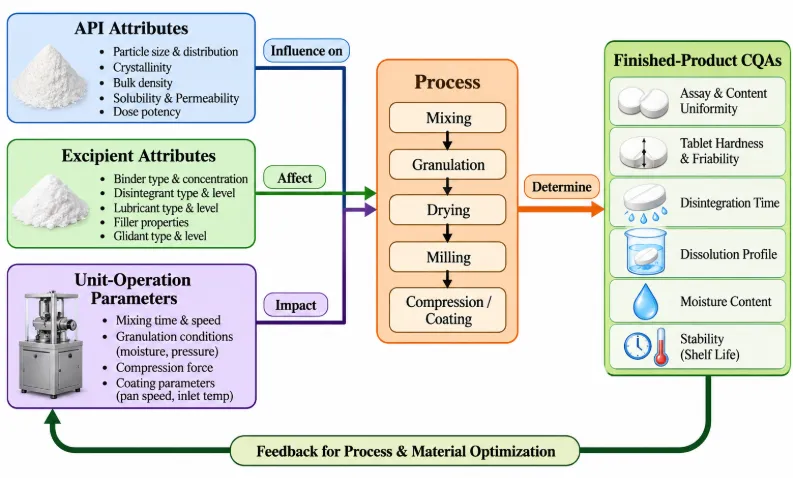
Figure 2: Cause-and-effect Map for an Oral Solid Dosage Form
5.6 Design of Experiments (DoE)
DoE is a structured statistical approach for studying the effect of multiple factors and their interactions on selected responses. Compared with changing one factor at a time, appropriately designed experiments can reveal interactions and estimate effects with fewer experiments when the design is chosen well. Common designs include screening designs, full or fractional factorial designs, response-surface designs such as central composite and Box–Behnken designs, mixture designs for formulation components, and robustness studies.
A successful DoE begins with a clear objective, a defensible factor range, defined responses, suitable experimental units, randomization where appropriate, replication or estimation of pure error, and a preplanned analysis. Factors may include excipient proportions, granulation liquid, mixing time, compression force, or coating conditions; responses may include dissolution, hardness, friability, assay variability, or disintegration. Statistical significance should be interpreted alongside effect size, uncertainty, mechanistic plausibility, and practical importance. A fitted model must be checked for residual patterns, lack of fit, prediction performance, and applicability within the studied region.
Table 3: Different DoE Designs and Their Applications in Pharmaceutical Development
| DoE design | Purpose | Pharmaceutical application |
|---|---|---|
| Screening design | Identify important factors | Selecting critical formulation variables |
| Full factorial design | Study main effects and interactions | Studying binder and disintegrant levels |
| Fractional factorial design | Study multiple factors with fewer experiments | Preliminary formulation screening |
| Central Composite Design (CCD) | Optimize selected variables | Tablet hardness and dissolution optimization |
| Box–Behnken Design | Study quadratic effects | Optimization of granulation parameters |
| Mixture design | Study component proportions | Optimization of excipient composition |
5.7 Design Space
A design space is a multidimensional combination and interaction of input variables and process parameters demonstrated to provide assurance of quality [1]. It is not simply a broad operating range or a collection of acceptable parameter limits. Its boundaries should be supported by data and an understanding of how the selected variables influence relevant CQAs. A design space can be developed at a unit-operation level or across connected process steps, depending on the evidence and the development strategy.
The design space should be distinguished from proven acceptable ranges for individual parameters. A parameter-by-parameter range may not capture interactions; conversely, a multidimensional design space can describe combinations that are acceptable even when individual factors vary together. Extrapolation beyond the experimental region is generally not justified without additional evidence. Scale, equipment geometry, mixing regime, and heat or mass transfer can alter relationships, so the design space should be relevant to the intended manufacturing context.
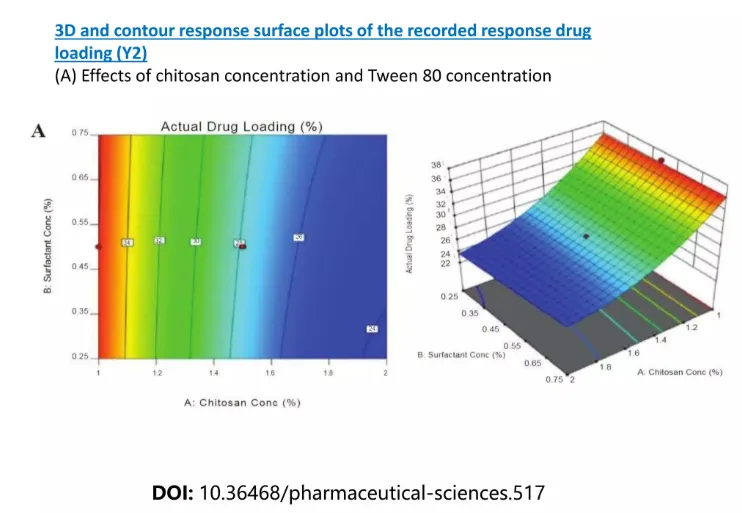
Figure 3: Design of Experiments and Design Space in Pharmaceutical Formulation Development
5.8 Control Strategy
The control strategy is a planned set of controls derived from current product and process understanding that ensures process performance and product quality [1,3]. It may include API and excipient controls, supplier qualification, in-process controls, equipment settings, environmental controls, process monitoring, finished-product tests, packaging controls, and stability monitoring. Controls should address identified risks and be supported by evidence.
A good control strategy does not mean measuring everything at maximum frequency. It combines prevention, monitoring, and detection in a proportionate way. For example, controlling a critical API particle-size distribution may be more effective than attempting to correct dissolution problems only through final-product testing. The strategy should state what is controlled, how it is measured, acceptance criteria, sampling approach, response to excursions, and responsibilities for review.
5.9 Process Analytical Technology (PAT) and Real-Time Release Testing
PAT refers to systems for designing, analyzing, and controlling manufacturing through timely measurements of critical quality and performance attributes of raw and in-process materials and processes. Potential tools include near-infrared or Raman spectroscopy, imaging, particle-size measurement, moisture sensors, and multivariate data analysis. PAT can support better process understanding and timely intervention when the measurement is suitable, calibrated, maintained, and integrated into a validated control system.
Real-time release testing (RTRT) may be possible when appropriate process knowledge and measurement systems provide assurance that the relevant quality attributes are met. It should not be treated as a shortcut around specifications or validation. The analytical model, sampling strategy, measurement uncertainty, data integrity, and handling of out-of-trend signals need careful justification. Not every product or process is a good candidate.
5.10 Continual Improvement
QbD continues after launch. Routine process data, deviations, complaints, stability trends, supplier changes, and periodic product-quality reviews can update the knowledge base and risk assessments. Change management should evaluate whether a proposed change affects CQAs, the control strategy, process capability, or the assumptions supporting a design space. Lifecycle learning closes the loop between development and commercial manufacturing [3,5,8].
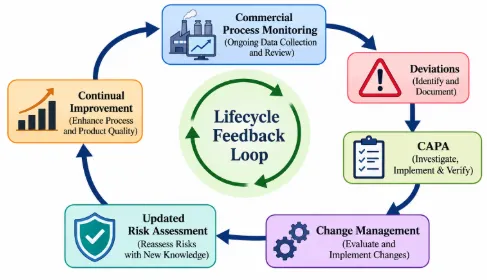
Figure 4: Lifecycle Feedback Loop in QbD
6. Practical QbD Workflow for Formulation Development
The following workflow is a useful general model. It should be adapted to the product, development phase, route, and available knowledge; it is not a substitute for a product-specific protocol.
1. Define the intended use and QTPP. Translate the clinical and user needs into measurable quality and performance objectives.
2. Collect prior knowledge. Review API properties, excipient functions, relevant literature, compendial requirements, platform knowledge, and experience with similar products.
3. Identify potential CQAs. Build an initial list and assess the potential effect of each attribute on safety, efficacy, manufacturability, and stability.
4. Map material and process variables. Identify potential CMAs, CPPs, and other factors that may affect CQAs across unit operations.
5. Perform risk assessment. Use a transparent tool to prioritize variables and document assumptions, uncertainty, and existing controls.
6. Design and conduct experiments. Use screening, optimization, and confirmation studies suited to the objective; plan analytical methods and data handling in advance.
7. Develop predictive understanding. Evaluate factor effects and interactions, verify model assumptions, and test predictions with confirmatory experiments.
8. Establish operating ranges and a control strategy. Define justified controls for incoming materials, process parameters, in-process attributes, and release testing.
9. Scale up and validate. Assess whether the laboratory relationships remain valid at pilot and commercial scale; conduct process qualification and ongoing verification as applicable.
10. Maintain lifecycle knowledge. Trend process and product data, review deviations, reassess risks, and manage changes through the pharmaceutical quality system.
7. Applying QbD to Different Formulation Types
7.1 Immediate-Release Oral Tablets
Immediate-release tablets are frequently used to illustrate QbD because the relationships among API properties, excipient functionality, granulation, compression, disintegration, and dissolution can be studied systematically. A QTPP might specify strength, route, immediate-release performance, acceptable appearance, stability, and packaging. Candidate CQAs include assay, content uniformity, dissolution, degradation products, hardness or tensile strength where relevant to performance, friability, and disintegration.
Potential CMAs include API particle size and solid form, diluent particle-size distribution, binder grade, disintegrant functionality, and lubricant characteristics. Potential CPPs include granulation endpoint, drying conditions, milling screen, blend time, compression force, and coating parameters. Risk assessment can identify variables likely to influence dissolution or content uniformity. DoE can then quantify the effects and interactions of the high-priority variables. The final control strategy may include material controls, granulation endpoint monitoring, blend uniformity strategy, compression controls, and dissolution testing.
7.2 Modified-Release Formulations
Modified-release products require careful control of the release mechanism and its consistency over time. Relevant CQAs may include the dissolution profile at multiple time points, dose uniformity, polymer or coating attributes, and stability-related changes in release. For matrix tablets, polymer grade and amount, drug solubility, compression, and tablet geometry may interact. For coated multiparticulates, coating weight gain, film composition, curing, and process uniformity can be important.
Because release performance can be sensitive to combinations of variables, one-factor-at-a-time experimentation may be inadequate. A well-designed DoE can map factor interactions, while confirmatory batches and discriminatory dissolution methods help verify the model. The control strategy should focus on variables with demonstrated influence on release and on methods capable of detecting meaningful changes.
7.3 Poorly Water-Soluble Drugs
For poorly soluble APIs, dissolution and bioavailability can be influenced by particle size, polymorphic form, wetting, excipient selection, and manufacturing history. QbD can structure the selection and optimization of approaches such as particle-size reduction, amorphous solid dispersions, lipid-based formulations, or surfactant-containing systems. These approaches have different failure modes, including recrystallization, phase separation, moisture sensitivity, and changes in dissolution during storage.
Potential CQAs should therefore reflect the chosen formulation mechanism. For an amorphous solid dispersion, for example, physical stability and drug crystallinity may be relevant alongside assay and dissolution. Analytical methods must be capable of detecting the changes that matter. The control strategy may combine incoming API characterization, polymer moisture control, process-temperature monitoring, residual-solvent testing where relevant, and stability-indicating methods.
7.4 Suspensions, Emulsions and Topical Products
In dispersed systems, attributes such as particle or droplet size, viscosity, pH, physical stability, redispersibility, dose uniformity, and microbial quality may be important depending on the product. Material attributes can include polymer grade, surfactant properties, oil phase composition, and API particle characteristics. Process parameters may include homogenization energy, mixing order, temperature, and cooling profile. Since physical stability may evolve during storage, accelerated and long-term stability data should be interpreted alongside mechanistic understanding.
7.5 Nanomedicines and Complex Delivery Systems
Nanoparticles, liposomes, and other complex delivery systems can require more extensive characterization because size distribution, surface properties, encapsulation, free drug, morphology, and release behaviour may affect performance. QbD remains conceptually useful, but its application may be complicated by analytical limitations, scale-dependent mixing, and multiple interacting attributes. A risk-based approach should prioritize attributes linked to product function and ensure that analytical procedures are fit for purpose. Models should not be relied on beyond the range in which their predictions have been verified.
8. Analytical Science as a Foundation for QbD
QbD decisions depend on trustworthy measurements. An analytical procedure must be suitable for the intended purpose and capable of measuring the attribute with appropriate accuracy, precision, specificity, range, and robustness. ICH Q14 supports science- and risk-based analytical procedure development, while ICH Q2 (R2) provides a framework for validation [6,7]. Method development should begin early enough that formulation experiments do not rely on a method that lacks suitable sensitivity or discrimination.
Analytical methods can themselves have critical parameters, such as extraction time, mobile-phase composition, column temperature, sample preparation, or detector settings. Risk assessment and DoE may be applied to method development as well as formulation and process development. Where multivariate models or spectroscopic PAT tools are used, data representativeness, calibration, model maintenance, and independent validation become particularly important.
Data integrity is another foundation. Raw data, metadata, calculations, exclusions, model versions, and decisions should be traceable. Unexplained removal of observations or selective reporting of favourable responses undermines the reliability of QbD conclusions. A reproducible record should allow another qualified analyst to understand how the result was generated and why a decision was made.
9. Illustrative Case Example: Tablet Formulation
The following example is hypothetical and is provided to demonstrate the logic of QbD; it does not represent validated manufacturing instructions or a specific commercial product. Consider development of an immediate-release tablet containing a poorly soluble API. The desired profile includes dose accuracy, acceptable mechanical integrity, suitable dissolution, chemical stability, and manufacturability at scale.
Step 1: The team defines the QTPP and identifies dissolution, assay, content uniformity, degradation products, and stability as likely CQAs. Step 2: Prior knowledge suggests that API particle size, disintegrant level, binder level, lubrication, and compression may influence dissolution or tablet performance. Step 3: A cause-and-effect matrix and FMEA rank these variables according to severity and available evidence. Step 4: A screening DoE is used to determine which variables and interactions warrant further study. Step 5: A response-surface design explores the high-priority factors within justified ranges. The team examines dissolution alongside hardness, friability, disintegration, and content uniformity rather than optimizing one response in isolation.
Step 6: Model adequacy is assessed and selected predictions are confirmed with additional batches. If the model is not predictive, the team revisits the factor ranges, analytical method, and possible unmeasured variables. Step 7: The team establishes controls for material attributes and process parameters that have demonstrated influence on CQAs. Step 8: Pilot-scale work tests whether the identified relationships transfer to larger equipment. Step 9: The control strategy is finalized with appropriate in-process monitoring, release testing, stability monitoring, deviation handling, and change management. This sequence illustrates how QbD connects evidence to decisions without assuming that statistical optimization alone guarantees product quality.
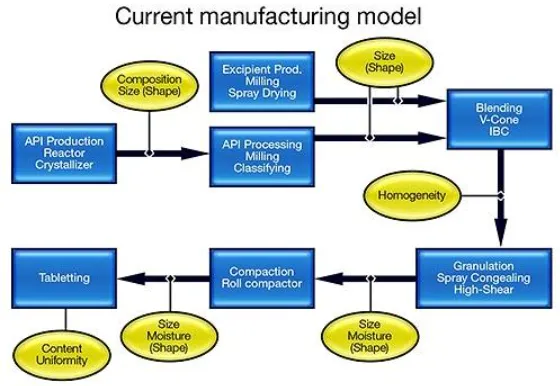
Figure 5: Application of QbD in Immediate-Release Tablet Formulation Development
10. Benefits and Potential Value
A well-executed QbD programme can improve understanding of cause-and-effect relationships, focus experiments on high-impact variables, and reduce reliance on trial-and-error development. It can support more robust formulations, identify material variability that matters, improve transfer from development to manufacturing, and provide a rational basis for process monitoring and change evaluation [4,9,10]. By making assumptions and evidence explicit, QbD can also improve communication among technical and quality teams.
Potential operational benefits include fewer unexpected deviations, more efficient investigations, better-informed supplier management, and more effective use of analytical data. These outcomes are not automatic. They depend on the quality of the development strategy, the relevance of selected CQAs, the validity of the experiments, the competence of personnel, and the degree to which the resulting knowledge is used in routine operations.
11. Challenges and Limitations
11.1 Initial Resource and Expertise Requirements
QbD can require additional analytical work, experimental batches, statistical expertise, equipment characterization, and cross-functional coordination early in development. Organizations with limited resources may struggle to maintain specialist skills or invest in suitable PAT and data systems. A proportionate approach can help: apply the greatest depth of study to the highest-risk and most uncertain areas rather than treating every variable as equally important.
11.2 Weak or Subjective Risk Assessments
Risk assessments may be influenced by incomplete information, group dynamics, or arbitrary scoring scales. A highly ranked variable is not necessarily causal, and a low score does not prove absence of risk. Teams should distinguish evidence from opinion, record uncertainty, and update scores when new information becomes available. Risk tools guide prioritization; they do not replace experimental confirmation or scientific judgment [2].
11.3 DoE and Model Misuse
Poorly selected factor ranges, too few experimental runs, confounding, inappropriate response transformations, or failure to examine residuals can lead to misleading models. Statistical significance is not equivalent to practical importance, and a good fit to development data does not guarantee prediction outside the tested region. Confirmation runs and independent verification are essential where decisions carry substantial quality risk.
11.4 Scale-Up and Technology Transfer
A process that behaves predictably at laboratory scale may behave differently in larger equipment because of changes in mixing, heat transfer, shear, residence time, or equipment geometry. Scale-up should therefore test the assumptions behind the model and identify which parameters remain meaningful across scales. Technology-transfer packages should include rationale and knowledge, not only a list of settings.
11.5 Organizational and Regulatory Misunderstandings
Some organizations interpret QbD as a documentation exercise or assume that every project must establish a formal design space. Others assume that design space automatically permits changes without regulatory assessment. These interpretations are too simplistic. The development approach should be justified, the evidence should match the claims, and changes should be managed according to applicable regulatory commitments and guidance [1,5].
12. QbD Compared with a Traditional Development Approach
Table 4: Comparison Between Traditional Development and QbD Approach
| Parameter | Traditional approach | QbD approach |
|---|---|---|
| Development | Trial and error | Science-based development |
| Quality | Tested into product | Built into product |
| Risk assessment | Limited | Systematic |
| Experiments | One-factor-at-a-time | Design of Experiments |
| Process understanding | Limited | Comprehensive |
| Quality control | Mainly final testing | Integrated control strategy |
| Improvement | Reactive | Continuous |
This comparison is conceptual rather than absolute. Many traditional development programmes already use scientific reasoning, and not every QbD project requires advanced modelling or a formal design space. The distinction lies in the systematic integration and documentation of knowledge, risk, experimentation, and control.
13. Practical Implementation Checklist
1. QTPP is documented and linked to the intended clinical use and dosage form.
2. Potential CQAs are identified with a rationale for criticality and non-criticality.
3. Relevant CMAs and CPPs are mapped to CQAs across unit operations.
4. Risk assessment records evidence, uncertainty, current controls, and planned actions.
5. Analytical methods are suitable for the attributes and decisions they support.
6. Experimental designs have clear objectives, appropriate factor ranges, and a planned analysis.
7. Model assumptions, residuals, limitations, and confirmation results are documented.
8. Operating ranges and control strategy are supported by data and fit the intended scale.
9. Technology transfer includes scientific rationale, not only numerical settings.
10. Deviations, complaints, stability trends, and process data are reviewed throughout the lifecycle.
11. Changes are assessed through change management and relevant regulatory commitments.
12. Training, responsibilities, data integrity, and knowledge-management practices are maintained.
14. Future Perspectives
QbD is increasingly connected with digital manufacturing, continuous processing, multivariate monitoring, automation, and advanced data analytics. These tools may improve process visibility and enable faster detection of deviations, but they also introduce new considerations related to data quality, model governance, cybersecurity, instrument maintenance, and change control. A digital model is only as reliable as its training data, assumptions, measurement system, and ongoing verification.
Continuous manufacturing can benefit from QbD because material attributes, process dynamics, and product quality can be linked across connected unit operations. However, continuous systems may require additional attention to residence-time distribution, start-up and shutdown material, diversion strategies, sensor performance, and control-loop behaviour. The QbD principles remain the same: define the quality objective, understand relevant variability, control risks, and verify performance.
Future progress also depends on stronger case studies that report not only successful outcomes but also failed experiments, model limitations, scale-up challenges, and the resources required. Transparent reporting would help practitioners judge which methods are transferable and which are highly product-specific. Training that combines formulation science, statistics, analytical chemistry, regulatory knowledge, and manufacturing practice is likely to be important for effective implementation.
CONCLUSION
Quality by Design provides a systematic framework for developing pharmaceutical formulations through planned quality objectives, risk-based prioritization, structured experimentation, process understanding, and lifecycle control. Its core elements—QTPP, CQAs, CMAs, CPPs, DoE, design space, control strategy, PAT, and continual improvement—are most effective when treated as connected parts of a scientific decision-making process. ICH Q8 (R2), Q9 (R1), and Q10 provide a complementary regulatory and quality-system foundation, while lifecycle and analytical guidance support the continued use of knowledge after development.
QbD does not remove the need for specifications, testing, validation, or regulatory compliance. Rather, it strengthens their scientific basis by helping developers understand which attributes matter, why they vary, and how risk can be controlled. Implementation should be proportionate, evidence-led, transparent about uncertainty, and appropriate to the product and manufacturing scale. When embedded into everyday development and quality systems, QbD can support more robust formulation development and more informed lifecycle decisions.
Declarations
Funding: [Insert funding information or state ‘No specific funding was received.’]
Conflicts of interest: [Insert disclosure or state ‘The author (s) declare no competing interests.’]
Author contributions: [Insert individual contributions according to the target journal’s policy.]
Acknowledgements: [Insert acknowledgements, if applicable.]
Ethics approval: Not applicable to this literature-based review.
Data availability: No new datasets were generated for this review.
REFERENCES

Vinaya Vekhande, Quality by Design (QbD) Approach in Pharmaceutical Formulation Development, Int. J. of Pharm. Sci., 2026, Vol 4, Issue 11, 4132-4145. https://doi.org/10.5281/zenodo.24457593
 10.5281/zenodo.24457593