

We use cookies to ensure our website works properly and to personalise your experience. Cookies policy
Final year B Pharm, Dept. of Pharmacognosy, Bharathi College of Pharmacy, Bharathinagara, Mandya-571422, Karnataka, India.
Citrus sinensis (L.) Osbeck (sweet orange) is one of the most widely cultivated citrus fruits worldwide and is recognized for its high nutritional and medicinal value. In addition to being an important dietary source of vitamin C, the fruit contains a wide range of bioactive phytochemicals, including flavonoids, phenolic acids, carotenoids, limonoids, essential oils, pectin, and organic acids. The peel, particularly the flavedo and albedo, represents a rich reservoir of these compounds and has gained considerable attention for pharmaceutical, nutraceutical, cosmetic, food, and environmental applications. This review summarizes the botanical characteristics, phytochemical profile, and major pharmacological properties of C. sinensis, including antioxidant, antimicrobial, anti-inflammatory, antidiabetic, hepatoprotective, cardioprotective, and anticancer activities. Furthermore, the review highlights the industrial significance of orange peel as a sustainable source of valuable bioactive compounds and functional ingredients. The growing utilization of citrus processing by-products supports waste valorization and promotes environmentally sustainable practices. Overall, C. sinensis represents a promising natural resource with significant therapeutic potential and broad industrial applicability, warranting further research for the development of novel health-promoting products.
Orange constitutes about 60% of the total citrus world production. In 2008, 3.23 million tons of citrus fruit were produced in Egypt, contained 2.14 million tons of orange. A large portion of this production is addressed to the industrial extraction of citrus juice which leads to huge amounts of residues, including peel and segment membranes. Peels represent between 50 to 65% of total weight of the fruits and remain as the primary byproduct.1 It is consumed all over the world as an excellent source of vitamin C, a powerful natural antioxidant that builds the body immune system. Important phytochemicals like liminoids, synephrine, hesperidin flavonoid, polyphenols, pectin, and sufficient amount of folacin, calcium, potassium, thiamine, niacin and magnesium are also present.2
Scientific Classification:3
Kingdom : Plantae
Subkingdom : Tracheobionta
Superdivision : Spermatophyta
Division : Magnoliophyta
Class : Magnoliopsida
Subclass : Rosidae
Order : Sapindales
Family : Rutaceae
Genus : Citrus
Species : Citrus sinensis (L.)
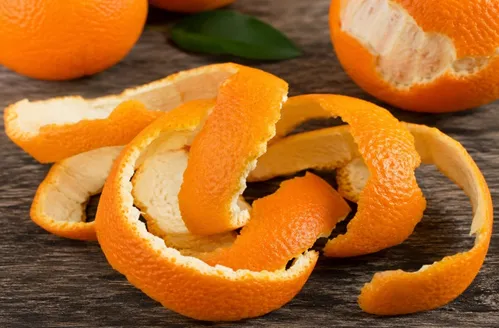
Fig 1: Fresh orange peel (Citrus sinensis (L.) Osbeck
Botanical description
C. sinensis tree grows in tropical, semitropical, and warm temperate regions, becoming the world's most widely cultivated citrus fruit tree. The tree is native to Asia and is now widespread throughout the Pacific and warm areas of the world. It is an evergreen flowering tree typically growing to 7.5 m, but occasionally reaching heights up to 15 m, consists of a compact crown with mostly spiny branches. Leaves are smooth, dark green, 3–5 mm wide, 6.5–15 cm long alternate with toothed blades differently shaped, oval or elliptical, connected to the stem by winged petioles. As copious oil is present in leaves radiates a strong characteristic citrus odor.
Flowers are small, waxy white, and fragrant which are axillary in whorls of 6 (5 cm wide) with five white petals and 20 to 25 yellow stamens.4
Fruits are varied in their shape and size (from round to oblong). These are mostly greenish in color after gaining their full size it shows bright yellow to orange color instead of green. Fruits are round, 4–12 cm, consisting of a leathery peel 6 mm thick, tightly adherent, protecting the juicy inner pulp, which is divided into segments that may not contain seeds, depending on the cultivar. Fruits are full of flavor, fragrance, and juice.
The external coloured surface of the orange peel is called a flavedo, whereas an inner white spongy structure is called an albedo. Flavedo contains bags with essential oils (EO) mostly composed of limonene, whereas the albedo has a foamy structure and features a high content of pectin. Fruit is covered by skin-like tissue called an endocarp, which is composed of pulp and juice, where there are also membranes to delimit each of the segments.5
Phytochemical composition

Fig 2: Stucture and parts of Citrus sinensis
Citrus sinensis (L.) Osbeck is a rich source of diverse phytochemicals distributed throughout its peel, pulp, seeds, and leaves. The fruit peel, particularly the flavedo and albedo, contains the highest concentration of bioactive compounds and has attracted considerable attention for its pharmaceutical, nutraceutical, cosmetic, and food applications. The major classes of phytochemicals include flavonoids, phenolic acids, essential oils, carotenoids, limonoids, coumarins, alkaloids, phytosterols, pectin, vitamins, and organic acids.
Flavonoids
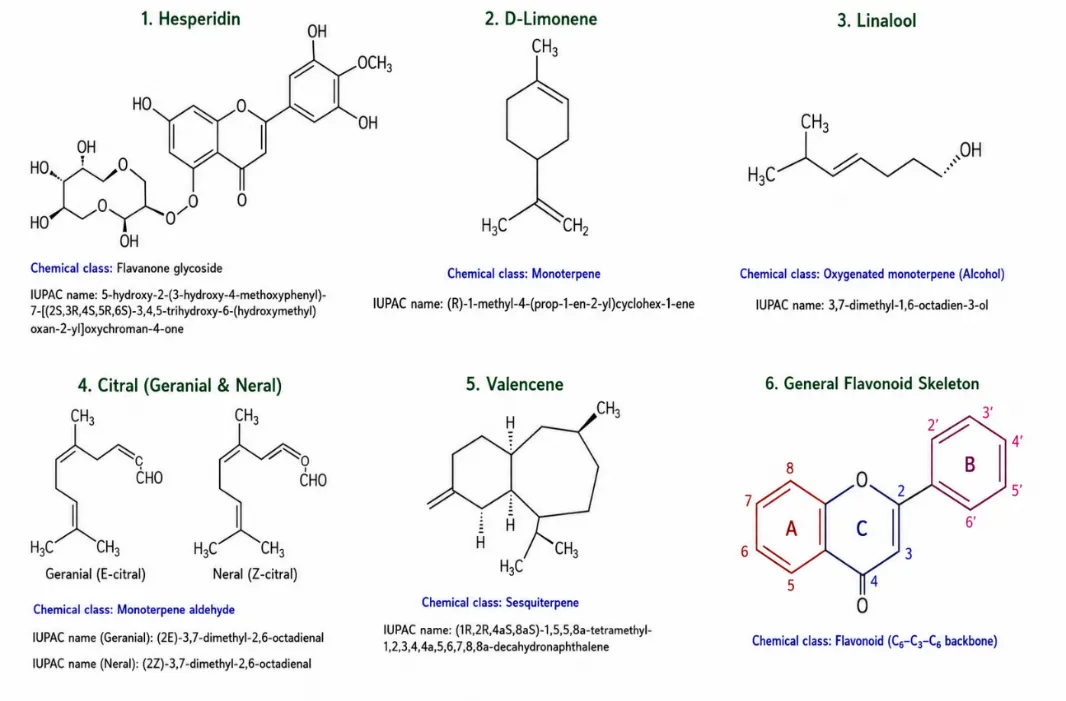
Flavonoids are one of the most abundant classes of polyphenolic compounds present in Citrus sinensis (sweet orange). They are distributed throughout the fruit, particularly in the peel, where their concentration is considerably higher than in the pulp and juice. These compounds play an important role in plant defence and contribute to the antioxidant, anti-inflammatory, antimicrobial, antidiabetic, cardioprotective, neuroprotective, and anticancer properties of C. sinensis. The predominant flavonoids in sweet orange belong to the flavanone class, although flavones and flavonols are also present in smaller quantities.The principal flavonoid of Citrus sinensis is hesperidin, which is considered the characteristic flavanone glycoside of sweet orange. Other important flavanones include narirutin, didymin, neohesperidin, and naringin (present in lower concentrations). Flavonols such as quercetin, kaempferol, and rutin, together with flavones including diosmin, have also been identified.6
Phenolic compounds
Phenolic compounds are one of the major groups of secondary metabolites present in Citrus sinensis (sweet orange). They are widely distributed in the peel, pulp, juice, seeds, and leaves, with the peel containing the highest concentration.The major phenolic compounds identified in Citrus sinensis include phenolic acids and polyphenolic flavonoids. Phenolic acids occur in both free and bound forms and are mainly derivatives of hydroxybenzoic acid and hydroxycinnamic acid. Hesperidin is the predominant phenolic flavonoid in sweet orange peel, whereas ferulic acid, caffeic acid, chlorogenic acid, and gallic acid are the major phenolic acids.7
Essential Oils, Terpenes and Other Volatile Compounds of Citrus sinensis
The peel of Citrus sinensis is a rich source of essential oil, which is obtained mainly by cold pressing or steam distillation. The oil consists predominantly of monoterpenes, along with smaller amounts of sesquiterpenes, oxygenated terpenes, aldehydes, alcohols, esters, and ketones. These volatile compounds are responsible for the characteristic aroma of sweet orange and exhibit antioxidant, antimicrobial, anti-inflammatory, antifungal, and anticancer activities.8
D-Limonene is the major constituent of Citrus sinensis essential oil, representing approximately 90–95% of the total oil. Other important monoterpenes include β-myrcene, α-pinene, β-pinene, γ-terpinene, sabinene, α-terpinene, terpinolene, and p-cymene. Oxygenated terpenes such as linalool, citral, α-terpineol, geraniol, and nerol contribute to the pleasant fragrance and biological activities of the oil. Sesquiterpenes such as valencene, β-caryophyllene, α-humulene, and germacrene D are present in smaller quantities and enhance the characteristic aroma. Other volatile compounds, including octanal, nonanal, decanal, linalyl acetate, geranyl acetate, carvone, and piperitone, also contribute to the flavour and pharmacological properties of the essential oil.9
Pharmacological Activities
Citrus sinensis (L.) Osbeck has been extensively investigated for its pharmacological properties because it contains a wide range of bioactive compounds, including flavonoids, phenolic acids, carotenoids, limonoids, vitamin C, and essential oils. These phytochemicals exhibit several biological activities that support the traditional and therapeutic use of sweet orange.
Hepatoprotective Activity
The antioxidant constituents of Citrus sinensis protect liver cells from oxidative injury by reducing lipid peroxidation and enhancing endogenous antioxidant enzyme activity. Experimental studies have demonstrated hepatoprotective effects against chemically induced liver damage.
Hepatoprotective Activity
The antioxidant constituents of Citrus sinensis protect liver cells from oxidative injury by reducing lipid peroxidation and enhancing endogenous antioxidant enzyme activity. Experimental studies have demonstrated hepatoprotective effects against chemically induced liver damage.
Antimicrobial Activity
Extracts and essential oils of Citrus sinensis exhibit antibacterial and antifungal activities against several pathogenic microorganisms. The antimicrobial activity is mainly attributed to limonene, linalool, citral, and other volatile compounds present in the peel essential oil. These compounds disrupt microbial cell membranes and inhibit microbial growth.10
Antidiabetic Activity
Several studies have shown that Citrus sinensis extracts improve glucose metabolism by inhibiting α-amylase and α-glucosidase enzymes, enhancing insulin sensitivity, and reducing oxidative stress associated with diabetes. Hesperidin is considered one of the major compounds responsible for these effects.
Anti-inflammatory Activity
Flavonoids such as hesperidin and naringenin reduce inflammation by inhibiting the production of pro-inflammatory cytokines and enzymes including cyclooxygenase (COX) and lipoxygenase (LOX). These compounds also suppress oxidative stress-mediated inflammatory pathways.11
Anticancer Activity
The flavonoids, limonoids, and monoterpenes present in Citrus sinensis have demonstrated antiproliferative activity against various cancer cell lines. These compounds induce apoptosis, inhibit tumour cell proliferation, and reduce oxidative damage associated with carcinogenesis.
Cardioprotective Activity
Citrus sinensis flavonoids help lower serum cholesterol, reduce lipid peroxidation, improve endothelial function, and protect against cardiovascular diseases. Hesperidin has been reported to improve vascular health and reduce blood pressure.12
Applications of Citrus sinensis (Sweet Orange)
Citrus sinensis (L.) Osbeck is one of the most economically important citrus fruits and has extensive applications in the food, pharmaceutical, nutraceutical, cosmetic, and agricultural industries. The fruit, peel, seeds, leaves, and essential oil are utilized because of their rich content of flavonoids, essential oils, vitamin C, pectin, and other bioactive compounds. Recent research has also highlighted the potential of orange peel as a sustainable source of value-added products, thereby reducing agricultural waste.
Pharmaceutical Industry
The peel and essential oil of Citrus sinensis are used in the development of herbal medicines owing to their antioxidant, anti-inflammatory, antimicrobial, cardioprotective, hepatoprotective, and anticancer properties. Hesperidin and limonene have attracted considerable interest as potential therapeutic agents in the management of chronic diseases.
Nutraceutical Industry
Citrus sinensis peel is incorporated into dietary supplements because it is rich in flavonoids, vitamin C, dietary fibre, and phenolic compounds. These nutraceutical products are used to improve immune function, reduce oxidative stress, and support cardiovascular health.13
Food Industry
Sweet orange is widely consumed as a fresh fruit and processed into juice, jams, marmalades, candies, beverages, and confectionery products. Orange peel is used as a natural flavouring and colouring agent, while its essential oil is incorporated into food products because of its pleasant aroma. The high pectin content of the peel is utilized as a gelling and stabilizing agent in the preparation of jams and jellies.
Pharmaceutical Excipients
Orange peel is an important commercial source of pectin, which is used as a pharmaceutical excipient in tablet formulations, controlled drug delivery systems, suspensions, gels, and wound dressings because of its excellent gelling and stabilizing properties.14
Cosmetic Industry
Sweet orange essential oil is widely used in perfumes, soaps, creams, lotions, shampoos, and skin-care products due to its pleasant fragrance and antioxidant properties. The oil also exhibits antimicrobial activity, making it useful in personal care formulations.
Food Preservation
The essential oil of Citrus sinensis possesses antimicrobial and antioxidant properties that help inhibit microbial growth and delay lipid oxidation in food products. Therefore, it is increasingly being investigated as a natural food preservative.
Aromatherapy
The essential oil of sweet orange is commonly used in aromatherapy to promote relaxation, reduce stress, improve mood, and enhance psychological well-being. Limonene and linalool are considered the major aroma-active compounds responsible for these effects.15
Industrial Applications
The essential oil of Citrus sinensis is used in the manufacture of cleaning agents, air fresheners, detergents, and natural solvents. D-Limonene, the major constituent of orange peel oil, is an environmentally friendly solvent that is widely employed in industrial formulations
Agricultural Applications
Orange peel waste is converted into compost, organic fertilizers, animal feed, and biofuels. Citrus peel extracts are also investigated as natural biopesticides and insect repellents because of their limonene content.
Environmental Applications
Orange peel has been explored as an inexpensive biosorbent for the removal of heavy metals, dyes, and other pollutants from wastewater. The peel is also utilized in the production of biochar and biodegradable packaging materials, contributing to sustainable waste management.16
CONCLUSION
Citrus sinensis (L.) Osbeck is an important medicinal and nutritional plant with a rich composition of bioactive phytochemicals that contribute to its diverse pharmacological properties. The presence of flavonoids, phenolic compounds, essential oils, carotenoids, vitamins, and pectin makes sweet orange a valuable natural source for pharmaceutical, nutraceutical, cosmetic, food, and environmental applications. In particular, orange peel, often regarded as an agricultural by-product, possesses significant economic and therapeutic potential due to its high concentration of biologically active constituents. Recent advances in research have emphasized the utilization of citrus waste for the production of value-added products, thereby supporting sustainable waste management and circular bioeconomy approaches. Although numerous experimental studies have demonstrated promising biological activities, further clinical investigations, standardization of extracts, and safety evaluations are necessary to establish their therapeutic efficacy in humans. Overall, Citrus sinensis remains a versatile and sustainable natural resource with considerable potential for future pharmaceutical and industrial development.
Acknowledgement: We would like to express our sincere gratitute to Bharathi College of Pharmacy, Bharathinagara, Mandya, Karnataka.
Conflict of Interest : No conflict of interest
REFERENCES





Vageesh Revadigar, Priya mariswamy, Ranjitha N D, Deeksha G, Chandana K R, A Comprehensive Review of Citrus sinensis (L.) Osbeck: Phytochemical Composition, Pharmacological Activities, and Applications, Int. J. of Pharm. Sci., 2026, Vol 4, Issue 8, 1008-1015, https://doi.org/10.5281/zenodo.21821170
 10.5281/zenodo.21821170