View Article

Abstract

Water quality analysis is essential for protecting public health, supporting industrial activities, and maintaining environmental safety. This review discusses different types of drinkable water, including tap, bottled, reverse osmosis, alkaline, and electrolyzed-reduced water. It summarizes major physical, chemical, and biological parameters such as turbidity, pH, total dissolved solids, dissolved oxygen, COD, BOD, bacteria, viruses, and algae. The review also highlights important steps in water analysis, including sampling, preservation, method selection, laboratory testing, and reporting. Common analytical techniques such as spectrophotometry, ion chromatography, atomic absorption spectroscopy, HPLC, electrochemical methods, and microbial testing are described. Special attention is given to alkaline and electrolyzed-reduced water, including their proposed benefits and possible harmful effects. Major limitations include high cost, complex instrumentation, sample instability, calibration requirements, and difficulties in data interpretation. Standardized methods, validated instruments, and proper quality-control practices are therefore necessary for reliable water analysis and safe water management.

Keywords

Water quality, drinking water, alkaline water, electrolyzed-reduced water, analytical methods, water testing

Introduction

× Popup Image

Water is a fundamental resource essential for sustaining life, supporting ecosystems, and driving economic activities. However, ensuring the availability of clean and safe water is increasingly challenging due to various anthropogenic and natural factors, including pollution, urbanization, industrialization, and climate change. In recent years, significant advancements have been made in water analysis techniques, driven by the need for more sensitive, selective, and efficient methods for detecting and quantifying contaminants in water. These techniques range from traditional methods such as spectroscopy, chromatography, and electrochemistry to cutting-edge technologies such as nanomaterial-based sensors, microfluidic devices, and remote sensing techniques. Each technique offers unique advantages and capabilities for analyzing different types of contaminants, from organic pollutants and heavy metals to pathogens and emerging contaminants. [1]

Water quality analysis is extremely necessary in the sectors of:

  • Public Health (especially for drinking water)
  • Industrial Use

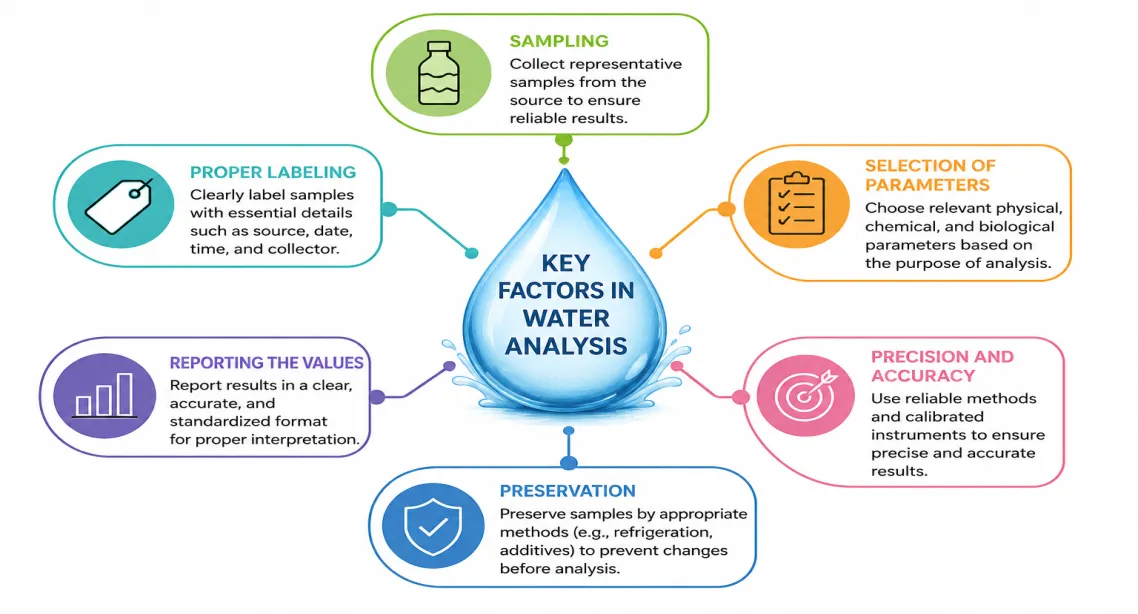
Key factors of water Analysis :


Fig.1 Key Factors of Water Analysis

1.1. Selection of Parameters [2]

The parameters of water quality are selected entirely according to the need for a specific use of that water. Some examples are: Drinking , Irrigation (pH, conductivity, sodium and potassium), Industries, Domestic consumption.

1.2. Selection of method [2]

The methods of water quality analysis are selected according to the requirement. The factors playing key role for the selection of methods are:

  1. Volume and number of sample to be analyzed
  2. Cost of analysis
  3. Precision required
  4. Promptness of the analysis as required

1.3. Precision and Accuracy of method selected as per requirement [2]

What precision and accuracy to be maintained against a particular method is decided according to the objective of the monitoring. The factors influencing this decision includes:

 Budget of Monitoring System

 Parameters to be Monitored

 Use of the Water

1.4. Proper Sampling [2]

Proper sampling is a vital condition for correct measurement of water quality parameters. Even if advanced techniques and sophisticated tools are used, the parameters can give an incorrect image of the actual scenario due to improper sampling.

1.5. Proper Labelling [2]

Proper labeling prevents sample misidentification and ensures the responsibility and accountability of the collector. The sample container should be labeled properly, preferably by attaching an appropriately inscribed tag or label. Alternatively, the bottle can be labeled directly with a water-proof marker. Barcode labels are also available nowadays.

1.6. Preservation [2]

Usually a delay occurs between the collection and analysis of a sample. The characteristics of the sample can be changed during this period. Therefore proper preservation is required in the way to laboratory after collection, and in the laboratory up to when analysis starts.

1.7. Analysis [2]

The samples, after reaching laboratory, are analyzed, according to the requisite parameters, following standard methods and protocols.

1.8. Reporting [2]

The ultimate procedure of water analysis is to prepare a proper report against the submitted requisition. The report must be authenticated before handing over the authority. All data should be kept in the laboratory log and preferably in laboratory database.

  1. Types of Drinkable Water

2.1. Tap Water

2.2. Bottled Wate [10]

2.3. Reverse Osmosis (RO) Water [11]

Industrial & Commercial Uses:

  1. Food & Beverage Production
  2. Pharmaceutical Manufacturing
  3. Electronics & Semiconductor Fabrication
  4. Automotive Manufacturing
  5. Textile Industry
  6. Wastewater Treatment & Recycling
  1. Types Of Water Testing

There are various parameters for water analysis or water testing. Water testing is done for the testing of water at a particular level. So that we understood that the water which we used in ourday to day life like drinking water is safe for our health and hygiene or not. See Fig.2 and Table 2
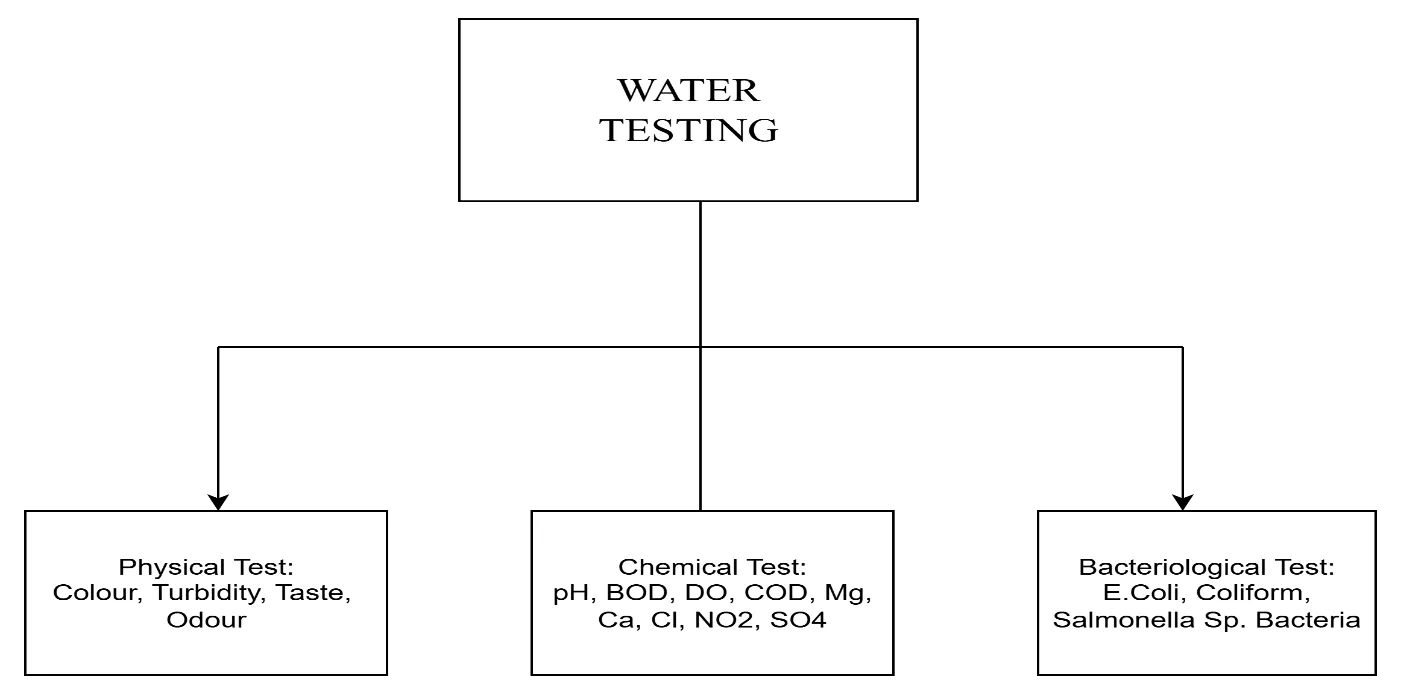
 

Fig.2 Types of Water Testing

Below given table gives the Detailed parameters of water testing. (See Table 2)

Table:3 Parameters of Water Testing

3.1 PHYSICAL PARAMETERS

3.1.1. Turbidity
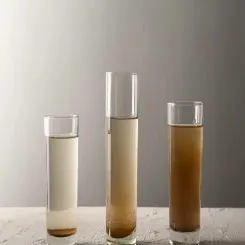
 

Fig.3 Turbidity[12]

3.1.2. Temperature:.[12]

3.1.3. Color

3.1.4. Taste and Odor

TON or TTN = (A + B) / A

where TON is the threshold odor number and TTN is the threshold taste number.[12]

      1. Solids (TDS)

Solids occur in water either in solution or in suspension. This material is usually called total dissolved solids or TDS.[12]

Total solid (TS) = Total dissolved solid (TDS) + Total suspended solid (TSS)

Water can be classified by the amount of TDS per liter as follows:

• freshwater: <1500 mg/L TDS;

• brackish water: 1500–5000 mg/L TDS;

The residue of TSS and TDS after heating to dryness for a defined period of time and at a specific temperature is defined as fixed solids. Volatile solids are those solids lost on ignition (heating to 550°C).[12]

3.2. CHEMICAL PARAMETERS

3.2.1. pH
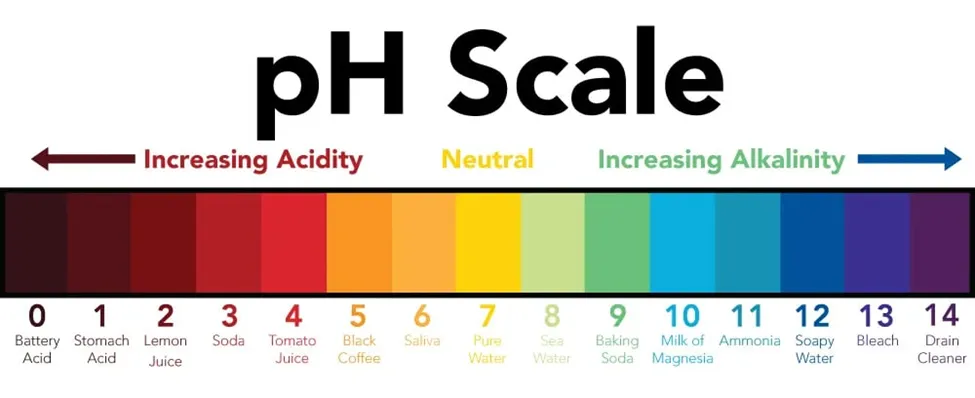
 

Fig.4 pH scale [13]

3.2.2. Acidity

Acidity is the measure of acids in a solution. The acidity of water is its quantitative capacity to neutralize a strong base to a selected pH level. Acidity in water is usually due to carbon dioxide, mineral acids, and hydrolyzed salts such as ferric and aluminum sulfates..[12]

3.2.3. Alkalinity

The alkalinity of water is its acid-neutralizing capacity comprised of the total of all titratable bases. Alkalinity of water is mainly caused by the presence of hydroxide ions (OH−), bicarbonate ions (HCO3−), and carbonate ions (CO3 2−), or a mixture of two of these ions in water. As stated in the following equation, the possibility of OH− and HCO3− ions together are not possible because they react together to produce CO3 2− ions. [12,13]

OH− + HCO 3− → CO 3 2− + H 2 O

Alkalinity is determined by titration with a standard acid solution (H2SO4 of 0.02 N) using selective indicators (methyl orange or phenolphthalein).[14]
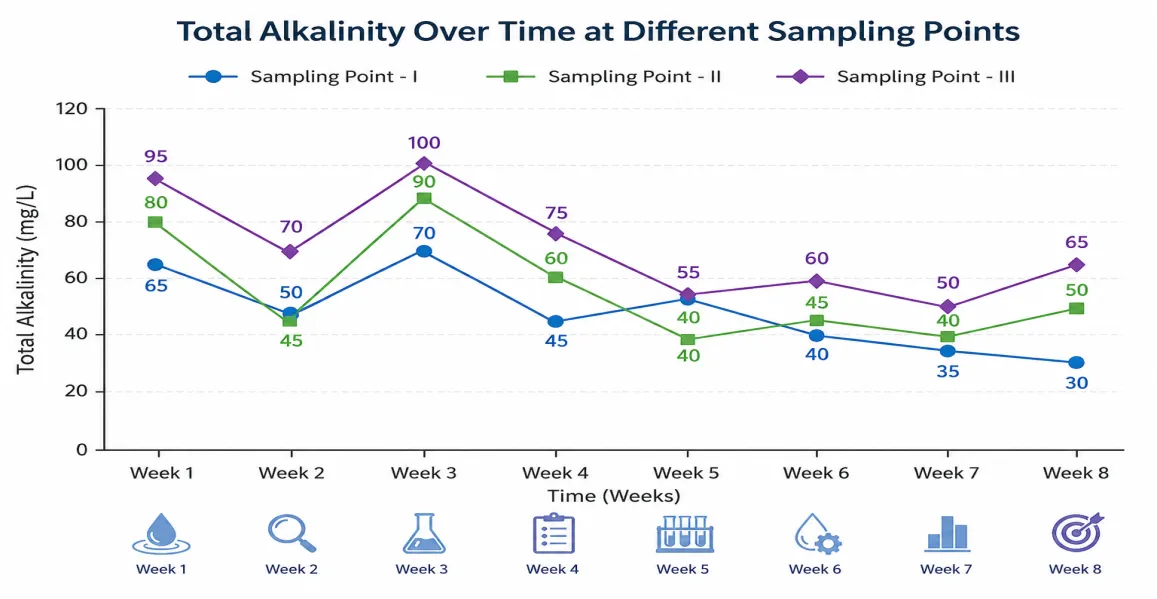
 

Fig.5 Alkalinity Comparison By Sampling Point

3.2.4. Chloride

Chloride occurs naturally in groundwater, streams, and lakes, but the presence of relatively high chloride concentration in freshwater (about 250 mg/L or more) may indicate wastewater pollution..[14]

3.2.5. Dissolved Oxygen

  Dissolved oxygen (DO) is considered to be one of the most important parameters of water quality in streams, rivers, and lakes. For example, the saturation concentration at 20°C is about 9 mg/L and at 0°C is 14.6 mg/L. [15,17]

3.2.6. Chemical Oxygen Demand (COD)
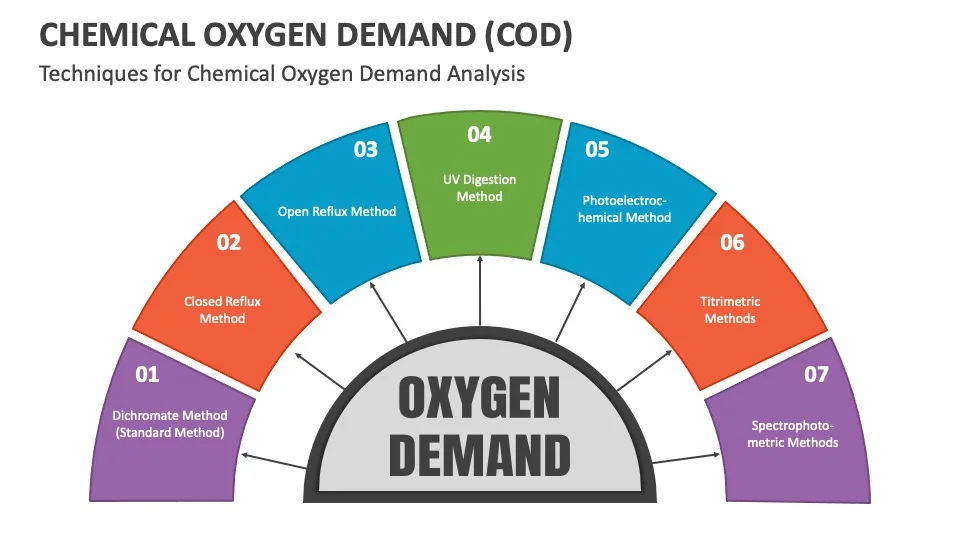


Fig.6 Techniques for COD Analysis

Chemical Oxygen Demand (COD) is a water quality parameter that quantifies the amount of oxygen needed to chemically oxidize organic substances.

 COD testing is vital for assessing the quality of wastewater and the efficiency of water treatment processes, as well as for evaluating the potential environmental impact of discharges. The most commonly used method for measuring COD is the Dichromate Method (Closed Reflux Method), which involves the use of a strong oxidizing agent, potassium dichromate (K₂Cr₂O₇), in an acidic solution to oxidize organic compounds.[18]

3.2.7. Biochemical Oxygen Demand (BOD)

Biochemical Oxygen Demand (BOD) is a critical water quality parameter that measures the amount of dissolved oxygen required by microorganisms to break down organic material in a water sample over a specified period, typically five days (BOD₅).[19]

3.3. BIOLOGICAL PARAMETERS

3.3.1 Bacteria

 Bacteria are considered to be single-celled plants because of their cell structure and the way they ingest food [12]
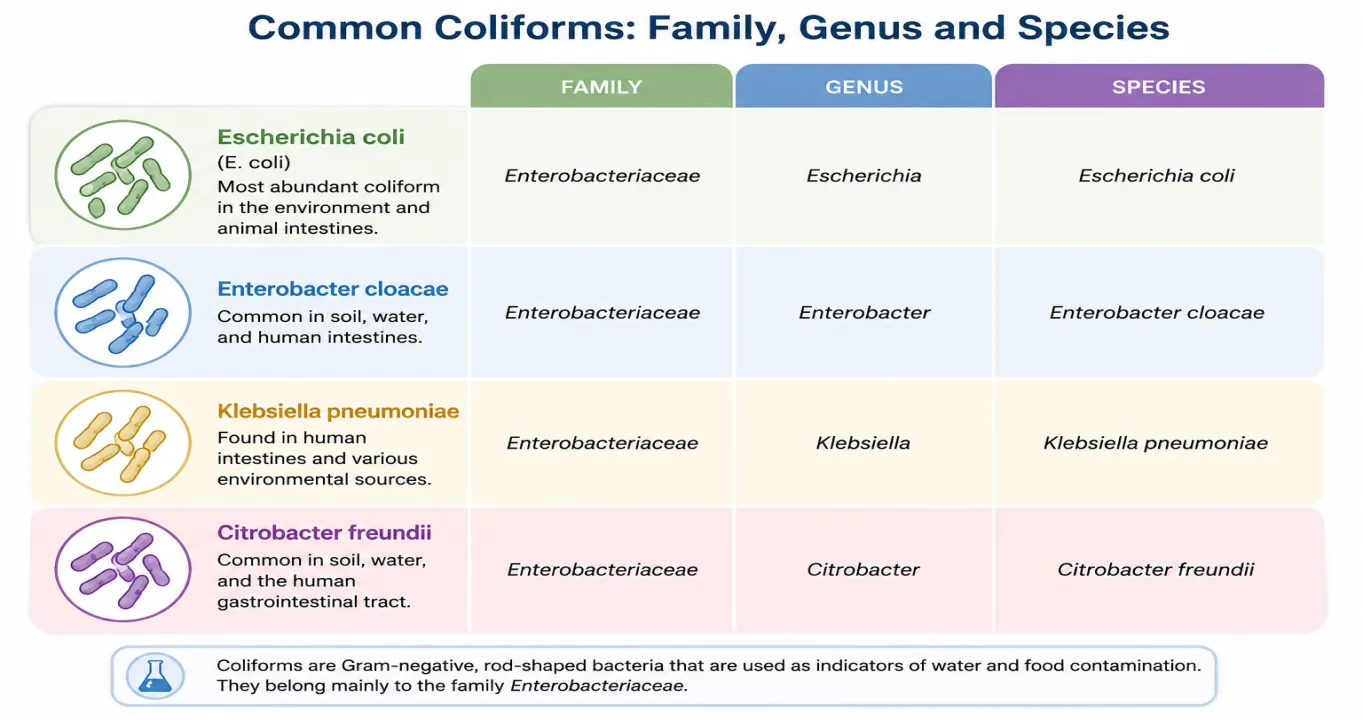
 

Fig.9 Family, Genera and species of some common coliforms

Bacterial testing in water analysis is essential to evaluate the microbiological quality of water and ensure its safety for human consumption, recreational use, or environmental discharge. One of the most widely used methods to detect bacteria in water is the membrane filtration (MF) method, where a known volume of water is passed through a sterile membrane filter that traps bacteria Bacterial testing plays a crucial role in water quality assessment by identifying potential microbial hazards and ensuring compliance with public health standards.[20]

3.3.2. Viruses

Viruses are the smallest biological structures known to contain all genetic information necessary for their own reproduction. [12]

Testing for viruses in water is a vital component of water quality analysis, particularly for drinking water and recreational waters, as viruses can cause serious diseases such as hepatitis, gastroenteritis, and poliomyelitis. Unlike bacteria, viruses are much smaller, cannot multiply outside a host, and often occur in very low concentrations, making their detection more complex and sensitive. [21]

3.3.3. Algae

 Algae are microscopic plants, which contain photosynthetic pigments, such as chlorophyll. They are autotrophic organisms and support themselves by converting inorganic materials into organic matter by using energy from the sun, during this process they take in carbon dioxide and give off oxygen. [12, 21]

  1. Challenges of Water Analysis:

While advanced analytical techniques offer numerous benefits, they also come with challenges and limitations that researchers must consider. Some of the key challenges include:

4.1. Complexity and Cost: [1]

4.2. Data Interpretation [1]

4.3. Method Validation and Standardization

4.4. Instrument Downtime and Maintenance [1]

4.5. Regulatory Compliance [1]

  1. Limitations of Water Analysis:

5.1. Instrumentation Limitations: Despite technological advancements, analytical instruments may have inherent limitations in terms of sensitivity, resolution, dynamic range, and detection limits. Instrument performance may vary depending on factors such as sample type, matrix effects, and experimental conditions. [1]

5.2. Data quality and Statistical limitations [22]

 5.3. Geographic & Capacity Inequities [23]

  1. Alkaline Water

Acidity is most important and ignored reason in development of different diseases like hypertension, skin diseases, hyperthyroidism, hyperlipidemia, cancer, diabetes and related diseases etc. In allopathy physician only work on sign and symptoms of the diseases after performing various expensive diagnosis test like ECG, Kidney function, Blood test etc., but the root of this disease condition is completely ignored. The Natural alkaline water is one the solution to cure root of this diseases.[24]
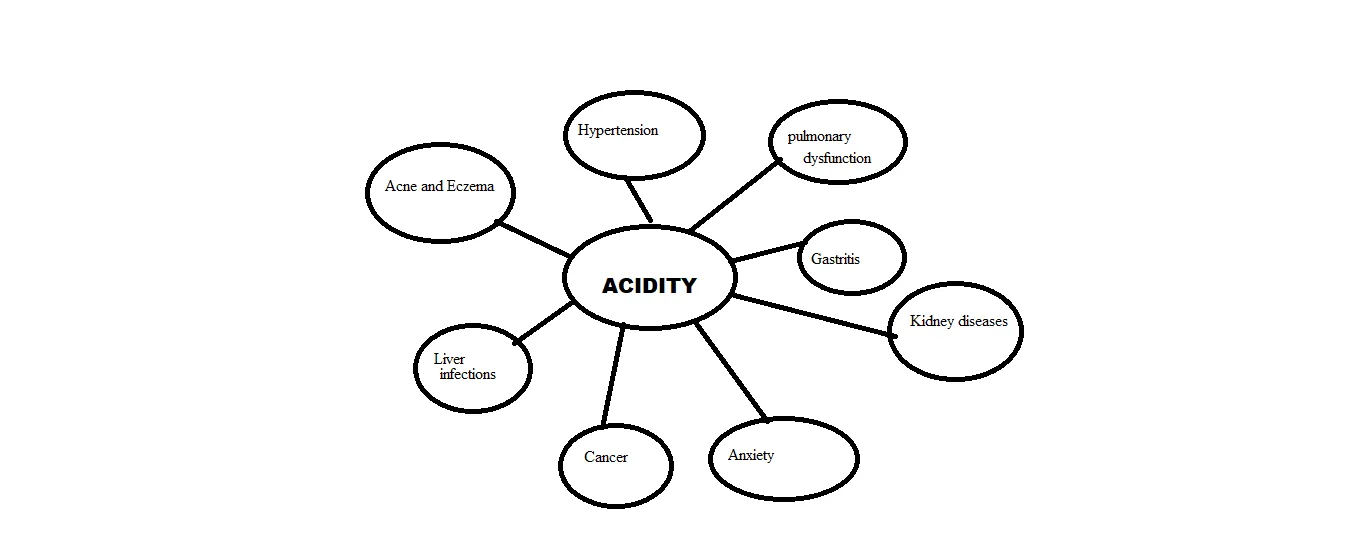
 

Fig.12 Diseases Cause Due To Acidity
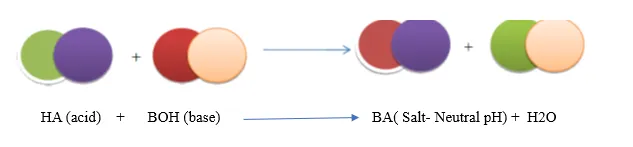


Fig.13 Mechanism of alkaline water

The "basic" in alkaline water alludes to its pH level. A pH level is a number that estimates how acidic or soluble a substance is on a size of 0 to 14. For instance, something with a pH of 1 would be acidic and something with a pH of 13 would be basic. Basic water has a higher pH level than standard drinking water.[24]

Different methods exist for creating alkaline water within the home environment.[25]

  1. Using Baking Soda
  2. Lemon Water Method
  3. Alkaline Drops
  4. Water Ionizers.
  5. Adding pH Boosting Minerals

Home-made alkaline water offers affordable benefits to consumers but alkaline water products at stores differ substantially in price from both bottled and ionized water versions.[25]

Below given table summarizing the key methods for making alkaline water at home, with ingredient ratios, expected pH outcomes, and pros/cons:

  1. Electrolyte Reduced Alkaline Water [32].

7.1. The Health Effects of Drinking electrolyzed-reduced alkaline water

The impact on health of drinking a particular type of water called “electrolyzed-reduced” water and show observations from the blood.[33]

7.2. Health Benefits of Alkaline Ionized Water [AIW][34]

7.2.1. Antioxidants: [34]

7.2.2. Effects of AIW in diabetes [34]

7.2.3. Effects of AIW on cancer cells: Apart from making the hydration status of the human body better, AIW also promotes health in the long run..[34]

7.2.4. Effects of AIW in the renal system [34].

7.3. Potential Harmful effects from ingesting high pH alkaline ionized water.

  1. Analytical methods for Water Analysis:

Table: 7 Different Analytical Methods for Water Analysis

Sr. No:

Methods

Description

Parameters Analyzed

References

1

Gravimetric Analysis

Based on the measurement of mass of precipitate after filtration and drying.

Total Suspended Solids (TSS), Chlorides, Sulfates

44

2

Spectrophotometry

Measures the absorbance of light at specific wavelengths to identify water contaminants.

Nutrients (Nitrate, Phosphate, etc.), Chlorine, Heavy Metals (e.g., Lead, Copper)

45

3

Ion Chromatography (IC)

Separates ions based on their interaction with a resin, then quantifies them.

Anions (e.g., Nitrate, Sulfate), Cations (e.g., Sodium, Potassium)

46

4

Atomic Absorption Spectroscopy (AAS)

Measures the absorption of light by free atoms to quantify metals.

Heavy Metals (Lead, Cadmium, Zinc, Iron)

47

5

High-Performance Liquid Chromatography (HPLC)

Separates mixtures based on interactions with a column, identifying organic compounds

Organic Contaminants (Pesticides, VOCs), Disinfection Byproducts

48

6

Electrochemical Methods (pH, ORP, Conductivity)

Measures electrical properties to detect various parameters

pH, Conductivity, Oxidation-Reduction Potential (ORP)

49

7

Microbial Biomonitoring (Bioassays)

Evaluates the response of living organisms (e.g., algae, fish) to contaminants

Toxicity, Ecotoxicology

50

CONCLUSION:

Water analysis plays a vital role in ensuring the safety, quality, and suitability of water for human consumption and various other applications. With the increasing demand for clean drinking water, understanding the different types of water—such as tap, bottled, alkaline, and electrolyte-reduced water—has become increasingly important. Each type comes with unique properties and health implications, making accurate testing essential. Various analytical methods, ranging from traditional techniques to advanced instrumental approaches, help assess physical, chemical, and microbiological parameters. However, challenges such as sample contamination, detection limits, and access to high-end testing technologies persist, particularly in resource-limited settings. Furthermore, while alternative waters like alkaline and ERW (electrolyte-reduced water) offer potential health benefits and potential harmful effects. In conclusion, continued advancement in water testing technologies and the implementation of standardized protocols are essential to address current limitations. Promoting awareness about water quality and encouraging regular analysis can help protect public health and support sustainable water management practices.

REFERENCES

  1. Paliwal M. K, Govt Shakambhar P.G. College, Journal of Survey in Fisheries Sciences, 2022; 8(2): 611-620.
  2. Matsui, Y., Yamagishi, T., Terada, Y., Matsushita, T., Inoue, T., 2007. Suspended particles and their characteristics in water mains: developments of sampling methods. Journal of Water Supply: Research and Technology–AQUA, 56(1), 13–24.
  3. Patel S, Gupta R, Sharma A, Mehta V, Joshi M. Evaluation of Heavy Metal Contamination in Tap Water and Groundwater Sources of Rural India. Journal of Environ Sci & Pollution Resources; 2020; 8(2): 135–142.
  4. Kumar A., Singh R., Meena P., Verma N., Thakur S. Comparative Analysis of Tap Water and Bottled Water Quality in Urban India. International Journal of Hydrolysis Resources; 2017; 5 (4): 210–219.
  5. Patel D., Joshi M., Trivedi S., Shah P., Rao K. Microbiological and Chemical Evaluation of Bottled Drinking Water Sold in Indian Markets. Asian Journal of Water Environ. Pollution; 2019; 16 (1): 34–42.
  6. Ali M., Qureshi N., Sharma P., Das R., Gupta T. Seasonal Variation in Tap Water Quality and Its Compliance with Drinking Standards. Environmental Monitoring Journal; 2020; 12 (3): 101–112.
  7. Rao V.K., Iyer P., Chatterjee S., Menon L., Singh P. Assessment of RO Water Purifiers: Performance, Efficiency, and Water Quality Outcomes. In: Gupta A., ed. Recent Advances in Water Resource Management. New Delhi: Allied Publishers; 2018: 76–91.
  8. Banerjee R., Choudhary A., Mishra L., Nair S., Tripathi S. Physicochemical and Bacteriological Comparison of Tap, Bottled, and RO Water in Central India. Journal of Clean Water Studies; 2021; 9 (2): 58–67.
  9. Sharma N., Kapoor R., Desai A., Iqbal S., Rathi V. Evaluation of Tap and RO Water Quality in Residential Areas of Delhi. Indian Journal of Environmental Health Sciences; 2022; 7 (1): 19–28.
  10. Mukherjee P., Jain M., Thomas D., Bhatt R., Kale S. Comparative Study on the Safety Standards of Bottled and Tap Water in Metropolitan Cities. International Journal of Drinking Water Safety; 2020; 4 (3): 55–63.
  11. Yadav H., Singh B., D’Souza R., Pillai M., Khan F. Chemical Characteristics of Tap, RO, and Bottled Water: A Public Health Perspective. In: Verma S., ed. Advances in Water Quality and Health Risk Assessment. Hyderabad: Techno Science Press; 2023: 102–117.
  12. Sharma P, Kumar V, Rao S, Desai M, Singh A. Assessment of physical, chemical and biological parameters. International Journal of Water Quality Studies; 2019; 7(3): 98–105.
  13. Singh A, Patel S, Kumar P, Gupta R. Assessment of pH, Acidity, and Alkalinity in River Water for Seasonal Variations. Review of Chemical Parameters in Environmental Science; 2021; 18(4): 215–223.
  14. Gupta M, Sharma K, Verma V, Soni R. Monitoring pH and Alkalinity in Irrigation Water from Agricultural Regions. Journal of Agricultural Water Quality and Chemical Balance; 2022; 19(2): 88–97.
  15. Bansal P, Sharma A, Jain S, Kumar V. Analysis of COD and BOD in Drinking Water from Municipal Supplies. Journal of Chemical Indicators and Water Monitoring; 2020; 15(3): 134–141.
  16. Jain R, Yadav A, Sharma K, Roy N. Comparative Study of Alkalinity and Acidity in Groundwater Sources of Rural Areas. Regional Journal of Chemical Water Assessments; 2023; 14(2): 102–110.
  17. Thakur P, Kumar R, Singh S, Mehta S. Impact of Seasonal Temperature on DO and BOD in Freshwater Ecosystems. Journal of Aquatic Chemistry and Environmental Analysis; 2022; 16(6): 452–460.
  18. Bansal P, Sharma A, Jain S, Kumar V. Analysis of COD and BOD in Drinking Water from Municipal Supplies. Journal of Chemical Indicators and Water Monitoring; 2020; 15(3): 134–141.
  19. Rao N, Patel M, Choudhury A, Jain R. Determination of BOD and COD in Industrial Effluents from Textile Units. Chemical Reviews in Industrial Water Parameters; 2021; 22(5): 312–319.
  20. Bansal P, Roy N, Sharma V, Das S. Evaluation of Bacterial and Viral Loads in Treated vs Untreated Sewage. Review of Biological Parameters in Water Treatment; 2020; 13(1): 89–96.
  21. Thakur P, Singh S, Choudhury A, Sharma A. Monitoring of Cyanobacteria and Harmful Algal Blooms in Agricultural Reservoirs. Journal of Environmental Algal Research; 2022; 16(5): 331–339.
  22. Verma A, Gupta M, Singh J, Agarwal P. Investigating the Limitations in Water Quality Analysis for Arsenic Contamination Detection. Water Quality Review and Advances; 2022; 5(2): 112-120.
  23. Bhardwaj K, Kapoor A, Soni R, Mehta A. Limitations in Water Analysis: The Impact of Mining Activities on Water Quality Assessment. Journal of Water Analysis & Sustainability; 2019; 10(4): 156-164.
  24. Kumar R, Verma S, Mehta P, Yadav K. Assessment of Water Quality in Coastal Areas: A Comparative Study of Groundwater and Alkaline Water. Journal of Alkaline Water Studies; 2021; 9(3): 175-183.
  25. Singh V, Patel M, Gupta R, Sharma K, Bansal T. Impact of Industrial Waste on Alkaline Water Contamination: A Case Study from Northern India. Alkaline Water Research and Reviews; 2019; 7(4): 224–230.
  26. Sharma N, Desai V, Mehta R. Heavy Metals in Alkaline Drinking Water: A Survey of Rural Areas in Southern India. Alkaline Water Quality Review; 2020; 12(1): 56-63.
  27. Chaudhary S, Joshi R, Kaur S. Electrolyte Reduced Water Sources: A Study of Quality Analysis in Rural Areas. Journal of Water & Electrolyte Reduction; 2022; 11(2): 101-109.
  28. Chaudhary A, Kaur D, Sharma M. Comparative Analysis of Electrolyte Reduced Water in Rural Drinking Sources. Journal of Rural Health & Water Management; 2020; 15(4): 220-227.
  29. Bansal S, Rathi M, Goyal N. Electrolyte Levels in Rural Water Systems: A Detailed Quality Assessment and Future Recommendations. Journal of Environmental Science & Pollution Control; 2020; 12(6): 304-311.
  30. Patel J, Agarwal R, Verma T, Soni D. Monitoring Electrolyte Reduced Water: Limitations in Testing and Their Implications. International Journal of Electrolyte Water Science; 2018; 6(3): 220-225.
  31. Reddy G, Khan M, Verma S, Kumar A. Electrolyte Reduced Water and Heavy Metals: A Review of Analytical Limitations in Detection Techniques. Electrolyte Water Research Journal; 2021; 14(4): 200-211.
  32. Gupta S, Yadav M, Mehta V. Limitations in Analyzing Electrolyte Reduced Water in Industrial Areas: A Study of Contaminant Detection Methods. Electrolyte Water Health Review; 2020; 8(1): 95-102.
  33. Jain P, Sharma D, Saxena R. Electrolyte Reduced Water Contamination by Heavy Metals: Challenges in Testing and Methodologies. Journal of Electrolyte Water Management; 2021; 13(2): 85-92.
  34. Patel R, Sharma A, Verma T, Yadav M. Investigating the Efficacy of Electrolyte Reduced Water for Human Health: Analytical Limitations in Quality Assessment. Journal of Electrolyte Water Research & Applications; 2021; 15(2): 132-140.
  35. Singh R, Gupta P, Sharma S, Kapoor D. Electrolyte Reduced Water Contamination and Detection: A Review of Testing Techniques and Their Limitations. Electrolyte Water Science and Technology; 2020; 13(1): 76-85.
  36. Bansal N, Agarwal M, Soni P. A Study of Electrolyte Reduced Water in Urban Water Systems: Limitations in Testing Methods for Heavy Metals. Journal of Environmental Water Analysis; 2022; 14(3): 145-153.
  37. Desai V, Mehta S, Reddy A, Jain R. Water Quality Testing in Electrolyte Reduced Water: Challenges in Detection and Reporting. International Journal of Water Science and Analysis; 2019; 8(2): 90-97.
  38. Joshi M, Patel D, Verma R, Reddy P. Exploring the Limitations of Electrolyte Reduced Water in Water Purification Systems: An Evaluation of Analytical Methods. Electrolyte Water Studies Journal; 2021; 7(4): 210-217.
  39. Kaur S, Sharma M, Gupta V, Soni R. Electrolyte Reduced Water: Evaluation of Quality Control and Testing Limitations in Rural Regions. Journal of Electrolyte Water Management; 2020; 9(3): 123-130.
  40. Chaudhary P, Saxena S, Verma J, Agarwal K. Electrolyte Reduced Water for Industrial Use: The Limitations of Standard Water Testing in Contaminated Areas. Electrolyte Research and Water Purification; 2022; 10(1): 66-73.
  41. Patel S, Desai A, Mehta V, Yadav K. The Role of Electrolyte Reduced Water in Water Conservation: Limitations in Analytical Techniques and Implications. Journal of Water Resources and Electrolyte Studies; 2021; 12(2): 112-119.
  42. Bhardwaj D, Sharma P, Agarwal R. Electrolyte Reduced Water as a Sustainable Solution: Challenges in Quality Analysis and Testing. Sustainable Water Practices Journal; 2020; 5(3): 91-98.
  43. Jain R, Gupta S, Singh T, Verma A. Advances and Limitations in Electrolyte Reduced Water Analysis for Domestic and Industrial Applications. Water and Electrolyte Research Review; 2019; 8(4): 134-140.
  44. Singh P, Gupta V, Sharma D, Patel M. Analytical Methods for Electrolyte Reduced Water Quality: A Comprehensive Review of Detection Techniques for Chemical Contaminants. Journal of Water Chemistry & Analysis; 2021; 13(2): 98-105.
  45. Reddy A, Mehta P, Agarwal S, Joshi R. Electrolyte Reduced Water and Heavy Metal Detection: Advances in Analytical Methods and Their Applications. Electrolyte Water Quality Research; 2020; 11(3): 143-150.
  46. Sharma K, Jain R, Verma V, Soni M. Use of Atomic Absorption Spectroscopy and ICP-MS in the Analysis of Electrolyte Reduced Water: A Review. Journal of Water Analytical Techniques; 2022; 14(2): 102-109.
  47. Patel S, Bhardwaj D, Agarwal N, Mehta K. Emerging Analytical Techniques for Electrolyte Reduced Water: A Focus on Electrode-Based Sensors and Spectrometry. Electrolyte Water Technology and Analysis; 2021; 7(1): 75-82.
  48. Gupta R, Desai V, Yadav S, Jain M. The Application of Ion Chromatography in Electrolyte Reduced Water Quality Testing: A Comparative Review. Electrolyte Water and Environmental Monitoring; 2020; 8(4): 118-125.
  49. Bansal T, Verma A, Kapoor S, Reddy K. Review of Electrolyte Reduced Water Detection: Limitations of Traditional and Modern Analytical Methods. International Journal of Water Science & Technology; 2022; 10(5): 200-208.
  50. Kaur V, Patel A, Sharma S, Saxena P. Analytical Challenges in the Detection of Microorganisms in Electrolyte Reduced Water: A Review of Techniques and Limitations. International Journal of Water Testing & Quality Assurance; 2021; 7(3): 115-122

Reference

  1. Paliwal M. K, Govt Shakambhar P.G. College, Journal of Survey in Fisheries Sciences, 2022; 8(2): 611-620.
  2. Matsui, Y., Yamagishi, T., Terada, Y., Matsushita, T., Inoue, T., 2007. Suspended particles and their characteristics in water mains: developments of sampling methods. Journal of Water Supply: Research and Technology–AQUA, 56(1), 13–24.
  3. Patel S, Gupta R, Sharma A, Mehta V, Joshi M. Evaluation of Heavy Metal Contamination in Tap Water and Groundwater Sources of Rural India. Journal of Environ Sci & Pollution Resources; 2020; 8(2): 135–142.
  4. Kumar A., Singh R., Meena P., Verma N., Thakur S. Comparative Analysis of Tap Water and Bottled Water Quality in Urban India. International Journal of Hydrolysis Resources; 2017; 5 (4): 210–219.
  5. Patel D., Joshi M., Trivedi S., Shah P., Rao K. Microbiological and Chemical Evaluation of Bottled Drinking Water Sold in Indian Markets. Asian Journal of Water Environ. Pollution; 2019; 16 (1): 34–42.
  6. Ali M., Qureshi N., Sharma P., Das R., Gupta T. Seasonal Variation in Tap Water Quality and Its Compliance with Drinking Standards. Environmental Monitoring Journal; 2020; 12 (3): 101–112.
  7. Rao V.K., Iyer P., Chatterjee S., Menon L., Singh P. Assessment of RO Water Purifiers: Performance, Efficiency, and Water Quality Outcomes. In: Gupta A., ed. Recent Advances in Water Resource Management. New Delhi: Allied Publishers; 2018: 76–91.
  8. Banerjee R., Choudhary A., Mishra L., Nair S., Tripathi S. Physicochemical and Bacteriological Comparison of Tap, Bottled, and RO Water in Central India. Journal of Clean Water Studies; 2021; 9 (2): 58–67.
  9. Sharma N., Kapoor R., Desai A., Iqbal S., Rathi V. Evaluation of Tap and RO Water Quality in Residential Areas of Delhi. Indian Journal of Environmental Health Sciences; 2022; 7 (1): 19–28.
  10. Mukherjee P., Jain M., Thomas D., Bhatt R., Kale S. Comparative Study on the Safety Standards of Bottled and Tap Water in Metropolitan Cities. International Journal of Drinking Water Safety; 2020; 4 (3): 55–63.
  11. Yadav H., Singh B., D’Souza R., Pillai M., Khan F. Chemical Characteristics of Tap, RO, and Bottled Water: A Public Health Perspective. In: Verma S., ed. Advances in Water Quality and Health Risk Assessment. Hyderabad: Techno Science Press; 2023: 102–117.
  12. Sharma P, Kumar V, Rao S, Desai M, Singh A. Assessment of physical, chemical and biological parameters. International Journal of Water Quality Studies; 2019; 7(3): 98–105.
  13. Singh A, Patel S, Kumar P, Gupta R. Assessment of pH, Acidity, and Alkalinity in River Water for Seasonal Variations. Review of Chemical Parameters in Environmental Science; 2021; 18(4): 215–223.
  14. Gupta M, Sharma K, Verma V, Soni R. Monitoring pH and Alkalinity in Irrigation Water from Agricultural Regions. Journal of Agricultural Water Quality and Chemical Balance; 2022; 19(2): 88–97.
  15. Bansal P, Sharma A, Jain S, Kumar V. Analysis of COD and BOD in Drinking Water from Municipal Supplies. Journal of Chemical Indicators and Water Monitoring; 2020; 15(3): 134–141.
  16. Jain R, Yadav A, Sharma K, Roy N. Comparative Study of Alkalinity and Acidity in Groundwater Sources of Rural Areas. Regional Journal of Chemical Water Assessments; 2023; 14(2): 102–110.
  17. Thakur P, Kumar R, Singh S, Mehta S. Impact of Seasonal Temperature on DO and BOD in Freshwater Ecosystems. Journal of Aquatic Chemistry and Environmental Analysis; 2022; 16(6): 452–460.
  18. Bansal P, Sharma A, Jain S, Kumar V. Analysis of COD and BOD in Drinking Water from Municipal Supplies. Journal of Chemical Indicators and Water Monitoring; 2020; 15(3): 134–141.
  19. Rao N, Patel M, Choudhury A, Jain R. Determination of BOD and COD in Industrial Effluents from Textile Units. Chemical Reviews in Industrial Water Parameters; 2021; 22(5): 312–319.
  20. Bansal P, Roy N, Sharma V, Das S. Evaluation of Bacterial and Viral Loads in Treated vs Untreated Sewage. Review of Biological Parameters in Water Treatment; 2020; 13(1): 89–96.
  21. Thakur P, Singh S, Choudhury A, Sharma A. Monitoring of Cyanobacteria and Harmful Algal Blooms in Agricultural Reservoirs. Journal of Environmental Algal Research; 2022; 16(5): 331–339.
  22. Verma A, Gupta M, Singh J, Agarwal P. Investigating the Limitations in Water Quality Analysis for Arsenic Contamination Detection. Water Quality Review and Advances; 2022; 5(2): 112-120.
  23. Bhardwaj K, Kapoor A, Soni R, Mehta A. Limitations in Water Analysis: The Impact of Mining Activities on Water Quality Assessment. Journal of Water Analysis & Sustainability; 2019; 10(4): 156-164.
  24. Kumar R, Verma S, Mehta P, Yadav K. Assessment of Water Quality in Coastal Areas: A Comparative Study of Groundwater and Alkaline Water. Journal of Alkaline Water Studies; 2021; 9(3): 175-183.
  25. Singh V, Patel M, Gupta R, Sharma K, Bansal T. Impact of Industrial Waste on Alkaline Water Contamination: A Case Study from Northern India. Alkaline Water Research and Reviews; 2019; 7(4): 224–230.
  26. Sharma N, Desai V, Mehta R. Heavy Metals in Alkaline Drinking Water: A Survey of Rural Areas in Southern India. Alkaline Water Quality Review; 2020; 12(1): 56-63.
  27. Chaudhary S, Joshi R, Kaur S. Electrolyte Reduced Water Sources: A Study of Quality Analysis in Rural Areas. Journal of Water & Electrolyte Reduction; 2022; 11(2): 101-109.
  28. Chaudhary A, Kaur D, Sharma M. Comparative Analysis of Electrolyte Reduced Water in Rural Drinking Sources. Journal of Rural Health & Water Management; 2020; 15(4): 220-227.
  29. Bansal S, Rathi M, Goyal N. Electrolyte Levels in Rural Water Systems: A Detailed Quality Assessment and Future Recommendations. Journal of Environmental Science & Pollution Control; 2020; 12(6): 304-311.
  30. Patel J, Agarwal R, Verma T, Soni D. Monitoring Electrolyte Reduced Water: Limitations in Testing and Their Implications. International Journal of Electrolyte Water Science; 2018; 6(3): 220-225.
  31. Reddy G, Khan M, Verma S, Kumar A. Electrolyte Reduced Water and Heavy Metals: A Review of Analytical Limitations in Detection Techniques. Electrolyte Water Research Journal; 2021; 14(4): 200-211.
  32. Gupta S, Yadav M, Mehta V. Limitations in Analyzing Electrolyte Reduced Water in Industrial Areas: A Study of Contaminant Detection Methods. Electrolyte Water Health Review; 2020; 8(1): 95-102.
  33. Jain P, Sharma D, Saxena R. Electrolyte Reduced Water Contamination by Heavy Metals: Challenges in Testing and Methodologies. Journal of Electrolyte Water Management; 2021; 13(2): 85-92.
  34. Patel R, Sharma A, Verma T, Yadav M. Investigating the Efficacy of Electrolyte Reduced Water for Human Health: Analytical Limitations in Quality Assessment. Journal of Electrolyte Water Research & Applications; 2021; 15(2): 132-140.
  35. Singh R, Gupta P, Sharma S, Kapoor D. Electrolyte Reduced Water Contamination and Detection: A Review of Testing Techniques and Their Limitations. Electrolyte Water Science and Technology; 2020; 13(1): 76-85.
  36. Bansal N, Agarwal M, Soni P. A Study of Electrolyte Reduced Water in Urban Water Systems: Limitations in Testing Methods for Heavy Metals. Journal of Environmental Water Analysis; 2022; 14(3): 145-153.
  37. Desai V, Mehta S, Reddy A, Jain R. Water Quality Testing in Electrolyte Reduced Water: Challenges in Detection and Reporting. International Journal of Water Science and Analysis; 2019; 8(2): 90-97.
  38. Joshi M, Patel D, Verma R, Reddy P. Exploring the Limitations of Electrolyte Reduced Water in Water Purification Systems: An Evaluation of Analytical Methods. Electrolyte Water Studies Journal; 2021; 7(4): 210-217.
  39. Kaur S, Sharma M, Gupta V, Soni R. Electrolyte Reduced Water: Evaluation of Quality Control and Testing Limitations in Rural Regions. Journal of Electrolyte Water Management; 2020; 9(3): 123-130.
  40. Chaudhary P, Saxena S, Verma J, Agarwal K. Electrolyte Reduced Water for Industrial Use: The Limitations of Standard Water Testing in Contaminated Areas. Electrolyte Research and Water Purification; 2022; 10(1): 66-73.
  41. Patel S, Desai A, Mehta V, Yadav K. The Role of Electrolyte Reduced Water in Water Conservation: Limitations in Analytical Techniques and Implications. Journal of Water Resources and Electrolyte Studies; 2021; 12(2): 112-119.
  42. Bhardwaj D, Sharma P, Agarwal R. Electrolyte Reduced Water as a Sustainable Solution: Challenges in Quality Analysis and Testing. Sustainable Water Practices Journal; 2020; 5(3): 91-98.
  43. Jain R, Gupta S, Singh T, Verma A. Advances and Limitations in Electrolyte Reduced Water Analysis for Domestic and Industrial Applications. Water and Electrolyte Research Review; 2019; 8(4): 134-140.
  44. Singh P, Gupta V, Sharma D, Patel M. Analytical Methods for Electrolyte Reduced Water Quality: A Comprehensive Review of Detection Techniques for Chemical Contaminants. Journal of Water Chemistry & Analysis; 2021; 13(2): 98-105.
  45. Reddy A, Mehta P, Agarwal S, Joshi R. Electrolyte Reduced Water and Heavy Metal Detection: Advances in Analytical Methods and Their Applications. Electrolyte Water Quality Research; 2020; 11(3): 143-150.
  46. Sharma K, Jain R, Verma V, Soni M. Use of Atomic Absorption Spectroscopy and ICP-MS in the Analysis of Electrolyte Reduced Water: A Review. Journal of Water Analytical Techniques; 2022; 14(2): 102-109.
  47. Patel S, Bhardwaj D, Agarwal N, Mehta K. Emerging Analytical Techniques for Electrolyte Reduced Water: A Focus on Electrode-Based Sensors and Spectrometry. Electrolyte Water Technology and Analysis; 2021; 7(1): 75-82.
  48. Gupta R, Desai V, Yadav S, Jain M. The Application of Ion Chromatography in Electrolyte Reduced Water Quality Testing: A Comparative Review. Electrolyte Water and Environmental Monitoring; 2020; 8(4): 118-125.
  49. Bansal T, Verma A, Kapoor S, Reddy K. Review of Electrolyte Reduced Water Detection: Limitations of Traditional and Modern Analytical Methods. International Journal of Water Science & Technology; 2022; 10(5): 200-208.
  50. Kaur V, Patel A, Sharma S, Saxena P. Analytical Challenges in the Detection of Microorganisms in Electrolyte Reduced Water: A Review of Techniques and Limitations. International Journal of Water Testing & Quality Assurance; 2021; 7(3): 115-122

Photo
Hina Bagada
Corresponding author

A.R. College of Pharmacy & G. H. Patel Institute of Pharmacy, Gujarat Technological University, Vallabh Vidyanagar, Anand-388120, Gujarat, India

Photo
Saloni Thaker
Co-author

A.R. College of Pharmacy & G. H. Patel Institute of Pharmacy, Gujarat Technological University, Vallabh Vidyanagar, Anand-388120, Gujarat, India

Photo
Sujal Patel
Co-author

A.R. College of Pharmacy & G. H. Patel Institute of Pharmacy, Gujarat Technological University, Vallabh Vidyanagar, Anand-388120, Gujarat, India

Photo
Jiya Patel
Co-author

A.R. College of Pharmacy & G. H. Patel Institute of Pharmacy, Gujarat Technological University, Vallabh Vidyanagar, Anand-388120, Gujarat, India

Photo
Sakshi singh
Co-author

A.R. College of Pharmacy & G. H. Patel Institute of Pharmacy, Gujarat Technological University, Vallabh Vidyanagar, Anand-388120, Gujarat, India

Saloni Thaker, Sujal Patel, Jiya Patel, Sakshi singh, Hina Bagada*, A Comprehensive Review Of Water Quality Analysis: Parameters, Analytical Methods, And Emerging Perspectives, Int. J. of Pharm. Sci., 2026, Vol 4, Issue 7, 5840-5853. https://doi.org/10.5281/zenodo.21704321

More related articles
Analytical Method Development and Validation for Q...
Arpit Shinganjude, Nandini Tale, Shrutika Kawane, Shyamkumar Dabh...
COPD: A Review...
Ranvijay Kumar Singh , Lalit Kumar, Amar Pal Singh, Ajeet Pal Sin...
Review Article on Pharmacovigilance...
Jaspreet Kaur, Gaurav Hastir, Amar Pal Singh, Ajeet Pal Singh, Ra...
Review Article of Eye Cosmetic Product...
Sapna, Simran Kaur, Amar Pal Singh, Ajeet Pal Singh, Rajesh Kumar...
Barriers And Facilitators to HPV Immunisation Uptake Among Adolescents: A System...
Dr. Poonam Thakur, Dr. Uma Rani, Anjali, Ch. Lavanya, Pragya Pathak, Dr. C. R. Shamsheer Begum...
Related Articles
Comprehensive Review of Pazopanib with Low Oral Efficacy and Bioavailability...
Durga Madhab Nayak, Dr. Debasish Ghose, Dr.Sambit Kumar Parida...
A Comprehensive Review on RP-HPLC Method Development and Validation for Simultan...
Vanita Sawant, Pratiksha Wagh, Nikita Mawal, Smita Aher...
Analytical Method Development and Validation for Quantitative Estimation of Diso...
Arpit Shinganjude, Nandini Tale, Shrutika Kawane, Shyamkumar Dabhade, Mahesh Jadhao, Sajeeyaparveen ...
More related articles
Analytical Method Development and Validation for Quantitative Estimation of Diso...
Arpit Shinganjude, Nandini Tale, Shrutika Kawane, Shyamkumar Dabhade, Mahesh Jadhao, Sajeeyaparveen ...
COPD: A Review...
Ranvijay Kumar Singh , Lalit Kumar, Amar Pal Singh, Ajeet Pal Singh , Parul Verma...
Review Article on Pharmacovigilance...
Jaspreet Kaur, Gaurav Hastir, Amar Pal Singh, Ajeet Pal Singh, Rajesh Kumar...
Analytical Method Development and Validation for Quantitative Estimation of Diso...
Arpit Shinganjude, Nandini Tale, Shrutika Kawane, Shyamkumar Dabhade, Mahesh Jadhao, Sajeeyaparveen ...
COPD: A Review...
Ranvijay Kumar Singh , Lalit Kumar, Amar Pal Singh, Ajeet Pal Singh , Parul Verma...
Review Article on Pharmacovigilance...
Jaspreet Kaur, Gaurav Hastir, Amar Pal Singh, Ajeet Pal Singh, Rajesh Kumar...