

We use cookies to ensure our website works properly and to personalise your experience. Cookies policy
1 Department of Pharm. Chemistry, ASPM’s K. T. Patil College of Pharmacy, Dharashiv-413501, (Maharashtra) India
2 Department of Pharmaceutics, ASPM’s K. T. Patil College of Pharmacy, Dharashiv-413501, (Maharashtra) India
3 Department of Pharmacology, ASPM’s K. T. Patil College of Pharmacy, Dharashiv-413501, (Maharashtra) India
The majority of rivers in developing nations like India have a problem with water pollution. As a result, maintaining water quality while keeping to the appropriate standards for drinking, agriculture, and industry has proven difficult. One of the key metrics for evaluating water quality is phosphate. Phosphate is thought to be one of the key indicators of water quality. The major river of Dharashiv district (Maharashtra State, India) is Terna. One of the major water pollutants of Terna River is phosphate. The amount of phosphate has been determined by the single solution method, i.e., by the Ascorbic Acid method in conjunction with UV-Visible Spectrophotometer. The data has been analysed using the straight-line equation method. The calibration curve for phosphate was found to be linear up to 200 ppb of phosphorus with a correlation coefficient of 0.9918. The proposed method was applied to the determination of phosphate in some samples of Terna River; satisfactory results were obtained
Water in the ecosystem has different uses involving drinking, agriculture, industrial activities, and hydropower generation, and these uses, quality, and availability of water are affected by population growth, urbanization, and various human activities1, 2 (Al-Ansari, 2013; Amin et al., 2016). Its quality and availability are significantly affected by population growth, urbanization, and various anthropogenic activities 3, 4, 5 (Alauddin et al., 2012; Mahadevan et al., 2020; Pradhan & Pokhrel, 2013). The majority of rivers in developing nations like India suffer from water pollution 3, 6, 4 (Alauddin et al., 2012; Kharat & Pagar, 2009; Mahadevan et al., 2020). Consequently, maintaining water quality to appropriate standards for drinking, agriculture, and industry has proven challenging 4 (Mahadevan et al., 2020). Phosphate serves as one of the key indicators for evaluating water quality 3, 6 (Alauddin et al., 2012; Kharat & Pagar, 2009). Specifically, the over-enrichment of aquatic environments by anthropogenic phosphorus runoff facilitates eutrophication, leading to algal blooms and a subsequent reduction in dissolved oxygen levels 7 (Ahmed & Arshad, 2023).
One of the major water pollutants of Terna River is phosphate. In Dharashiv District, the main crops like soybean, jawar, chickpea plants, sugarcane, main fruits like papaya, pomegranates, and main vegetables like tomatoes, brinjals are cultivated. Many farmers use organophosphorus insecticides including Malathion, Parathion, and Diarithion. A large amount of fertilizers, pesticides, and herbicides are used on crops, and the organophosphate insecticides used on fruits and vegetables in the field may get washed by rainwater and may reach the river through agricultural run-off. Detergents are important contributors of phosphate 8 (Federico Maggi et al., 2023).
Huge quantities of detergents are used annually. Most of it is flushed in to the sewer systems from bathrooms, kitchens, laundries, factories, and other industrial establishments.
Phosphate reflects BOD (Biological Oxygen Demand); therefore the number of microbes like Escherichia coli (bacterium) also increase tremendously3 (Odum EP, 1971). Municipal wastewater networks receive vast quantities of point-source nutrient pollution flushed directly from residential bathrooms, kitchens, commercial laundries, and diverse industrial establishments 9 (Minnesota Pollution Control Agency, 2021). Although inorganic phosphates do not directly exert an oxidative demand on their own, their heavy introduction into wastewater drains serves as a powerful accelerator of Biological Oxygen Demand (BOD) by triggering rapid microbial eutrophication and subsequent organic decomposition processes that exhaust dissolved oxygen 10, 11 (Correll, 1998; Mainstone & Parr, 2002). Concurrently, this highly enriched, elevated-BOD environment removes standard nutrient limitations for enteric pathogens like Escherichia coli. Equipped with highly responsive phosphate-specific transport systems, E. coli cells aggressively accumulate available environmental phosphorus to fuel nucleic acid synthesis and cellular division, which leads to tremendous bacterial proliferation and prolonged survival outside the host intestinal tract 12, 13 (Hsieh & Gardner, 2024; Prado et al., 2019).
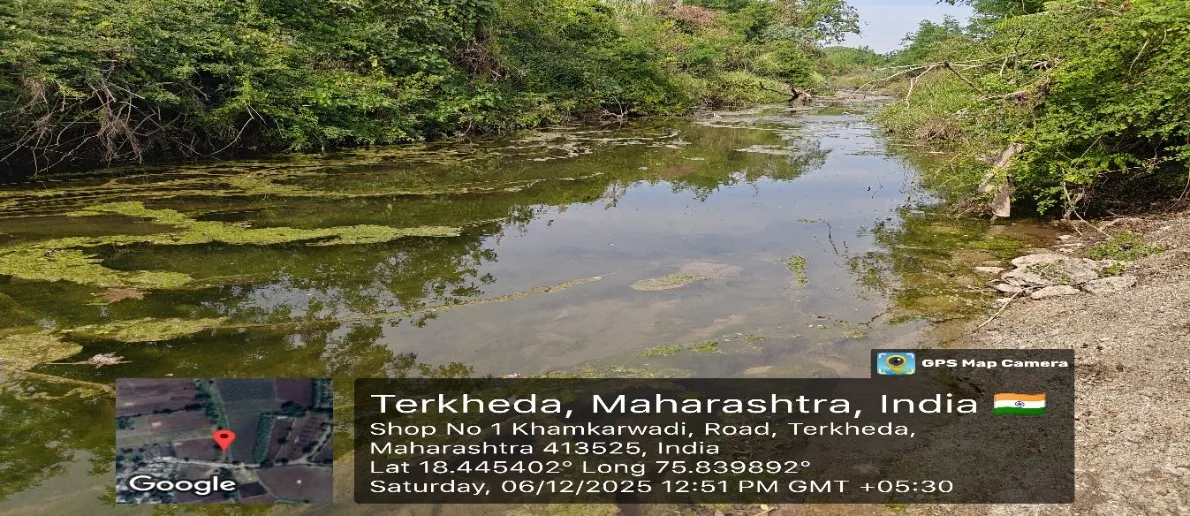
Fig. 1-Water sample collection site T1 (Terkheda goan, Dist. Dharashiv, Maharashtra, India)
The number of Escherichia coli per unit volume of water is main parameter of water pollution. Phosphate affects degradation lead to oxygen depletion which affects (and even kills) fish and other aquatic decomposing plants are known to produce toxins as strychnine which kills animals including cattle. Phosphate insecticides cause irreversible inhibition of enzyme chlorine steerage. These agents are absorbed by all routes including skin, mucosa and symptoms include weakness, blurred vision, headache, giddiness, nausea and pain in chest14 (Higgins IJ et al., 1975). Organophosphates may cause harmful effects on wild life. They affect calcium metabolism in birds, which affects egg laying with egg shell and consequently reproductive failure15 (Pawar KR, 2004). In the present study, the amount of phosphate present in the water samples of Terna river (Dharashiv District, Maharashtra State, India) by ascorbic acid method in conjugation with UV-Visible (1800) Spectrophotometer13, 14 (J. Murphy et al., 1962; Bassett J et al., 1979).
EXPERIMENITAL
REAGENTS
FIELD WORK
Water samples of Terna River were collected from six different places. Water samples for analysis were taken from the collection sites in the month of November, 2025, in one liter capacity plastic bottles. Table 1 summarizes the water sample collection sites of Terna River.
Table 1. Water sample collection sites of Terna River of Dharashiv District, Maharashtra
|
Sample Label |
Collection site |
Terna River zone |
|
T1 |
Terkheda |
Upstream/Reference |
|
T2 |
Ratnapur-Satwaiwadi |
Confluence |
|
T3 |
Pangoan (goan) |
Intermediate |
|
T4 |
Dahiphal (goan) |
Intermediate |
|
T5 |
Terna (Dam) |
Reservoir |
|
T6 |
Ter (goan) |
Downstream impact zone |
CALIBRATION CURVE
A calibration curve is necessary to establish a relationship between the absorbance and the phosphate content for spectrophotometer analysis. Standard 10 ppm phosphate solution was prepared by dissolving 0.04393 gm. potassium dihydrogen phosphate (A.R.) in water and diluted to 1000 ml. From 10 ppm solution, the 25 ppb, 50 ppb, 75 ppb, 100 ppb, 150 ppb & 200 ppb solutions were prepared. These solutions were prepared as per Table 2.
Table 2. Preparation of standard phosphate solution
|
Vol. of 10 ppm Phosphate Stock (mL) |
Final Volume (mL) |
Target Phosphate Concentration (ppb) |
|
0.000 |
50 |
00 |
|
0.125 |
50 |
25 |
|
0.250 |
50 |
50 |
|
0.375 |
50 |
75 |
|
0.500 |
50 |
100 |
|
0.625 |
50 |
150 |
|
0.750 |
50 |
200 |
The absorbance of standard solutions of KH2PO4 was measured by using a Shimadzu UV-Visible (1800) spectrophotometer at 882 nm6, 7 (J. Murphy et al., 1962 & Bassett J et al., 1979). The calibration curve for phosphate was found to be linear up to 200 ppb of phosphorus with a correlation coefficient of 0.9918. The calibration curve is constructed by plotting absorbance values against the concentration of standard solutions. A straight line graph passing through the origin has been obtained. This confirms the validity of Beer-Lambert’s law. Fig. 2 shows the linearity curve graph of Standard Phosphate solution.
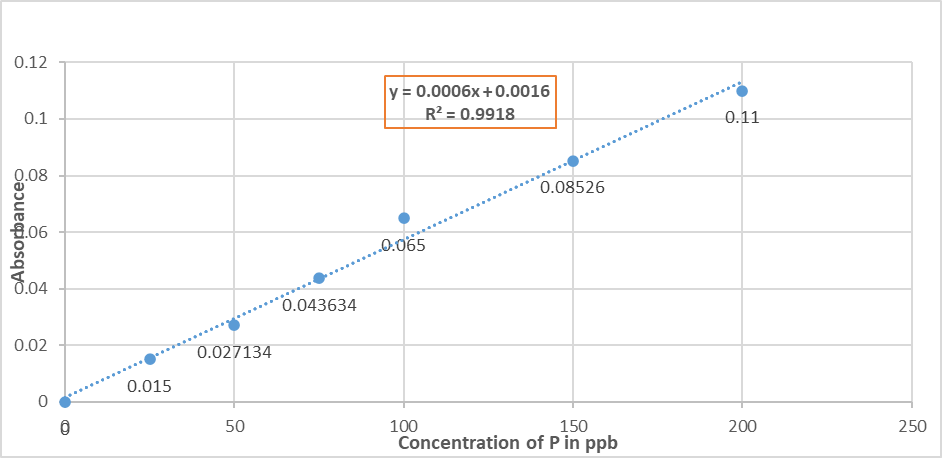
Fig.2-Linearity curve graph of Standard Phosphate solution
METHOD
The molybdenum blue phosphorus method in conjunction with UV-Visible (1800) Spectrophotometer is a very sensitive method8 (S. J. Kharat et al., 2009) for the determination of phosphorus at 882 nm. Phosphate in the sample can be determined at sub-ppb concentration at 882 nm. Ammonium molybdate and potassium antimony tartrate react in acid medium with orthophosphate to form heteropoly acid-phosphomolybdic acid-that is reduced to intensely colored molybdenum blue by ascorbic acid6 (J. Murphy et al., 1962). Intensity of the color solutions is normally measured on a visible spectrophotometer.
The absorbance of the solution can be expressed by straight line equation9 (Hongg R. et al., 1987)
Absorbance= (Slope × Concentration) + Intercept (1)
Rearranging the equation (1), the concentration is expressed as
Concentration = (Absorbance- Intercept) / Slope (2)
By using equation (2) we can calculate the amount of phosphate present in the solution.
RESULTS AND DISCUSSION
Table 3 shows the absorbance, amount of phosphate determined by Shimadzu UV-Visible (1800) Spectrophotometer, and calculated by equation 2 of water samples of Terna River. From Table 3, it is clear that sample T6 shows the highest value of phosphate (124 ppb by spectrophotometer). Sample T6 was collected from Terna goan which is 25 km away from Dharashiv city.
Table 3 - Absorbance and concentration of phosphate in ppb of water samples of Terna River
|
Water Samples |
Absorbance |
Concentration of Phosphate (ppb) |
|
T1 |
0.0353 
|
56 
|
|
T2 |
0.0373 
|
60 |
|
T3 |
0.0437 |
70 |
|
T4 |
0.0606 |
98 
|
|
T5 |
0.0709 
|
116 |
|
T6 |
0.0761 |
124 
|
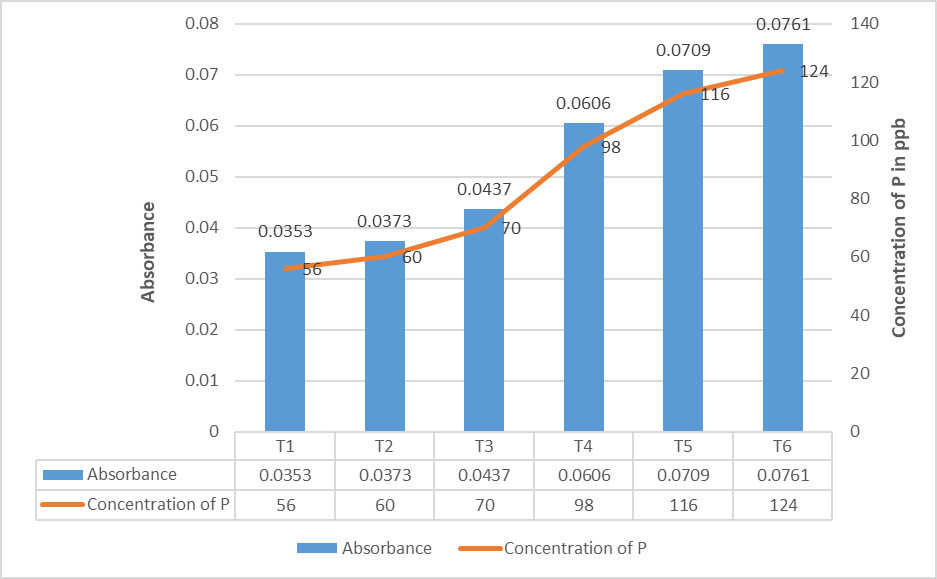
Fig.3- Graphical representation, of absorbance and concentration of Phosphate in ppb of water samples of Terna River
CONCLUSION
The higher concentration of phosphate at this site (T6) arises because of a number of factors as-The large influx of pilgrims (thousands during major festivals like Wari days) generates a massive amount of solid waste. Offerings like flowers, garlands, and coconuts are often thrown into the river, contributing to the waste build-up, Sludge water. Water containing molasses from Terna sugar factory, Dhoki, Dharashiv district, Cremation ashes (holy belief).Phosphate level in the sample T1 to T6 increased. Fairly satisfactory results were obtained (as shown in Table 3 and Fig.3).
REFERENCES

V. G. Chougule*, S. V. Mali, R. P. Umbare, Spectrophotometric Quantification Of Phosphate Levels In Water Samples From The Terna River, Maharashtra, India, Int. J. of Pharm. Sci., 2026, Vol 4, Issue 7, 5716-5722. https://doi.org/10.5281/zenodo.21690224
 10.5281/zenodo.21690224