

We use cookies to ensure our website works properly and to personalise your experience. Cookies policy
Department of pharmaceutical chemistry and Quality assurance, shri Sarvajanik pharmacy college, Near Arvind Baug, Gujarat Technological University, Mehsana-3841001, Gujarat, India
By striking a balance between environmental sustainability, analytical quality, and practical economics, White Analytical Chemistry (WAC) has evolved as a comprehensive, forward-thinking paradigm intended to transcend the eco-centric constraints of Green Analytical Chemistry (GAC). Although GAC places a high priority on reducing hazardous waste, toxic solvents, and energy metrics, it occasionally jeopardizes important performance metrics like operational viability, sensitivity, and accuracy. In order to close this gap, WAC presents an integrated Red-Green-Blue (RGB) color model that assesses analytical techniques along three different dimensions: Blue for practical and economic efficiency (cost, time, and sample requirements), Green for environmental and operator safety (toxicity, waste minimization, and energy reduction), and Red for analytical performance (scope, precision, accuracy, and sensitivity). This paper offers a thorough summary of the historical development from the roots of green chemistry to the structured WAC framework. The modern metric tools used to measure technique sustainability and "whiteness," such as Complex GAPI, AGREE, and the Blueness Assessment Group Index (BAGI) tool, are rigorously examined. The study also examines the strategic application of WAC concepts in a variety of domains, with a particular emphasis on food safety matrices, advanced pharmaceutical quality control, regulatory affairs compliance, and environmental monitoring. In the end, this evaluation emphasizes how important the WAC framework is for promoting balanced, optimized, and truly sustainable analytical processes in both university research and high-throughput commercial laboratories.
A new analytical science concept called White Analytical Chemistry (WAC) expands upon Green Analytical Chemistry (GAC), which has gained popularity due to its capacity to create materials with less of an impact on the environment. GAC focuses on minimizing waste production and hazardous chemicals and solvents. Sustainable chemistry, on the other hand, is a broader phrase that includes the social, economic, and environmental consequences of the production and utilization of materials. Nowak et al. presented WAC, a relatively new technique created in 2021, to solve the shortcomings of GAC and close a gap in the field. Based on the Green/Red/Blue color paradigm, the WAC concept combines ecological aspects (green) and functionality (red and blue criteria) to classify analytical techniques as white[1]. Toxic characteristics, sample volume, solvents, waste, energy usage, and direct consequences from 12 GAC principles are among the regulations it contains. Additionally, the method incorporates four blue principles (efficiency of total cost and time spent during the analytical process) and four red principles (scope of application, detection and quantification limits, precision and trueness). The Eco-Scale, the National Environmental Methods Index (NEMI), the Green Analytical Procedure Index (GAPI), and the Analytical Greenness Calculator (AGREE) are some of the metric tools that have been developed to quantify greenness. These tools aid in both qualitative and quantitative measurement of the level of adherence to GAC principles[2].
The use of Green Analytical Chemistry (GAC) principles entails striking a balance between the method's potential utility and its environmental friendliness. A method's practical and economic elements, such as cost, speed, and simplicity, as well as its analytical efficiency, determine its usefulness. Recent developments in WAC-based biological, food, and environmental applications are discussed in this review study. The majority of recently published studies have successfully tested the core concepts of WAC. This is the first review paper to assess WAC principles in culinary and environmental applications by applying the green, red, and blue criteria pertaining to ecological and functional parts of analytical procedures to previously published studies[3].
Modern analytical science faces the critical challenge of balancing innovation and growth with environmental responsibility. White analytical chemistry (WAC) emerges as a holistic paradigm, extending beyond the eco-centric focus of green analytical chemistry (GAC) to encompass the full spectrum of analytical method development. This article traces the evolution from green chemistry principles to the comprehensive WAC framework, highlighting its red-green-blue (RGB) model. The RGB model evaluates analytical methods across three dimensions: green for environmental impact, red for analytical performance (such as sensitivity and accuracy), and blue for practical and economic considerations (such as cost, time, and simplicity). In this article, we go over how WAC encourages a more thorough evaluation of sustainability in analytical processes, focusing on things like operator safety, energy efficiency, waste prevention, and the creation of sophisticated tools and criteria for assessing method "whiteness." In order to promote genuinely sustainable and effective analytical processes in scientific research and beyond, this integrated approach is essential[4].

Fig. 1. A brief historical infographic presents the evolution of Green Chemistry (GC) to Green Analytical Chemistry (GAC) to White Analytical Chemistry (WAC), where AC means Analytical Chemistry.
Phase I: The Foundations of Green Chemistry (1997–2001)
Phase II: Bridging the Gap to Analytical Chemistry (1999–2008)
Although the initial focus of Green Chemistry was chemical synthesis, researchers soon discovered that analytical laboratories (testing, quality control, and monitoring) were also significant users of energy and toxic solvents
Phase III: The Dawn of Dedicated Green & White Analytical Frameworks (2013–2021)
An important change in analytical research is the change from Green Analytical Chemistry (GAC) to White Analytical Chemistry (WAC). GAC frequently disregarded other aspects including cost, analyst safety, and performance in favour of lowering environmental impact by the use of cleaner reagents, solvents, and energy. Researchers discovered that putting environmental impact first could result in trade-offs between cost, accuracy, and usefulness when analytical demands increased globally. WAC, a more comprehensive framework, ensures green, safe, economical, high-performing, and broadly accessible analytical techniques by striking a balance between environmental responsibility, economic viability, safety, social duty, and analytical efficiency[3,6].
By integrating red, green, and blue principles into the creation and validation of analytical techniques, White Analytical Chemistry (WAC) concepts offer an integrated and novel approach. WAC integrates the fundamental principles of GAC with analytical performance indicators and pragmatic considerations, as seen in Fig. below. The red component includes the analytical parameters required for a
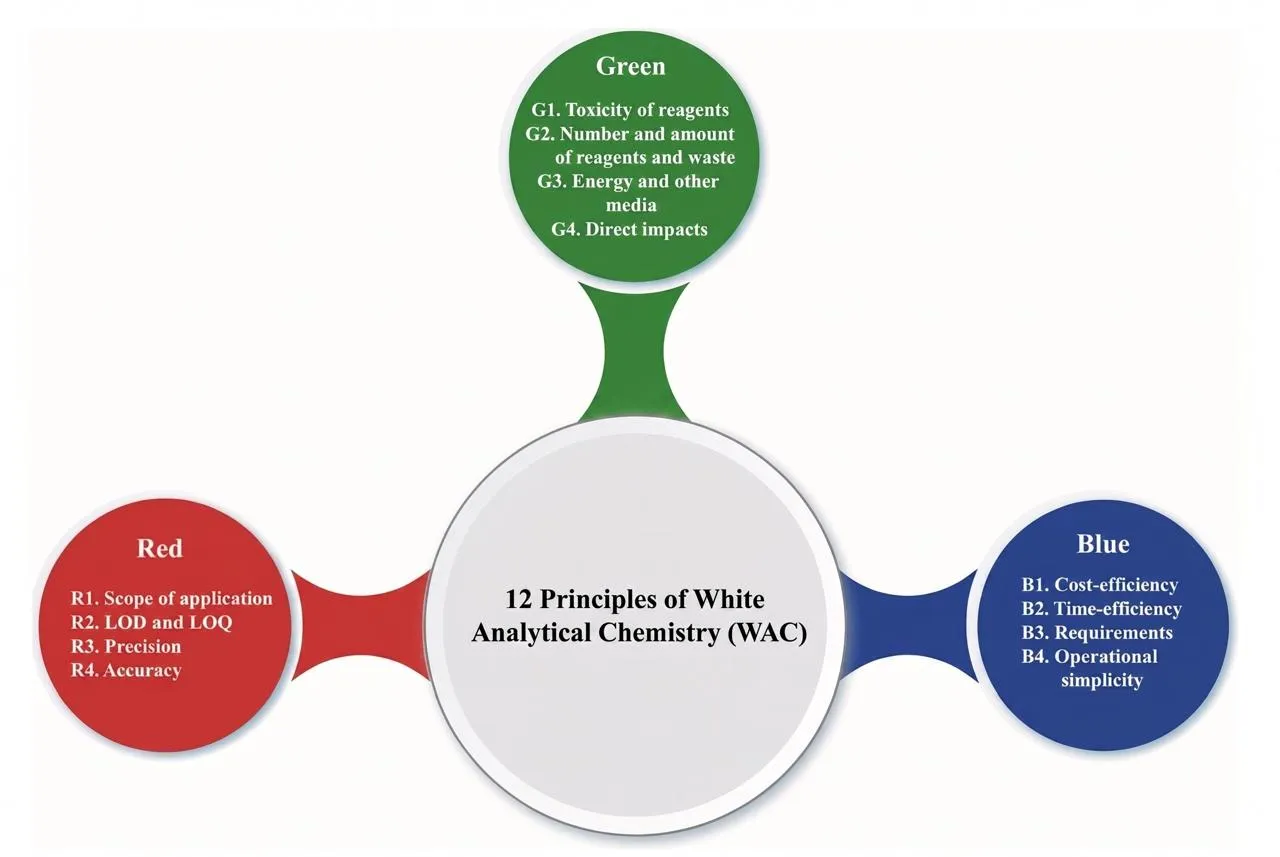
Fig. 2. The 12 principles of White Analytical Chemistry (WAC) guiding sustainable analytical practices.
technique to be executed properly and efficiently. It emphasizes qualities like resilience, sensitivity, accuracy, and precision. Since the technique features will impact the reliability of identification, measurement, and differentiation between various analytes present within the sample, these attributes serve as the foundation for delivering accurate and credible analyses. The red dimension guarantees that procedural precision is not compromised, whereas a traditional green chemistry technique could compromise on the exact analytical results.
By taking into account ecological, health, safety, and environmental factors, the green principle carries on the GAC legacy. Green approaches include ways to handle solvents safely, minimize waste production, use less energy, and lessen environmental toxicity. By implementing these green practices, techniques can lessen their negative effects on the environment, making them eco-friendly and consistent with sustainable development objectives. The ecological footprint of any analytical process can be decreased by employing energy-efficient methods, biodegradable chemicals, and renewable resources[10].
The blue element takes into account operational aspects like cost, time, and simplicity in order to address the practical utility of analytical approaches. In addition to performing well, an analytical method needs to be accessible and consistent with real-world laboratory restrictions in order to be widely used.
Techniques with high scores on these blue criteria are more likely to be used, particularly in labs with limited resources. This practical aspect increases WAC's adaptability, allowing it to be used in a greater variety of institutional and industrial settings.
Based on the RGB color paradigm, where red, green, and blue light mix to generate white light, the name "white" in White Analytical Chemistry (WAC) was chosen as a metaphor to represent the integration of analytical, ecological, and practical factors into a cohesive and balanced technique. Therefore, compared to GAC principles alone, analytical techniques based on WAC principles are better positioned to accomplish environmental goals without compromising quality, efficiency, or scalability[7,8].
The RGB model, which is the conceptual basis of WAC, produces "white" (full) analytical perfection through the integration of three different aspects. Four fundamental principles for each color dimension are outlined in the RGB12 system, which formalizes this[16].
Red: Analytical Performance
The conventional pillars of analytical validation are represented by the red dimension. Analytical integrity cannot be compromised in routine pharmaceutical quality control, whether assessing stationary and mobile phase dynamics in gas chromatography, confirming detection limits in flame emission spectroscopy, or performing linearity assessments with accurate standard deviation calculations (σ). Among the red principles are:
Green: Environmental and Operator Safety
The fundamental principles of GAC are preserved in the green dimension. It evaluates the method's environmental impact, including:
Blue: Practical and Economic Efficiency
A method's practicality in an industrial or high-throughput laboratory is assessed by the blue dimension. Even if a procedure is precise and environmentally friendly, it is not "white" if it necessitates a significant financial outlay.
Assessment of the technique's complex GAPI tool:
A more comprehensive, partially quantitative inspection is possible using the Complex GAPI tool. It enhances the initially developed GAPI metric by including a hexagonal region, which symbolizes the steps and processes prior to the analytical approach. From the sample gathering and transport using sample storage, retention, preparation, and final evaluation, this innovative tool covers every aspect of an analytical process. Complex GAPI also offers easy-to-use software for creating visual pictograms. With a reduced E-factor of 1 and an abundance of positive green symbols indicating little waste creation and a positive influence on ecological responsibility, the suggested strategy proved to be very advantageous for this study, as Fig. shows. However, the primary focus of Complex GAPI is the environmental factors. A more comprehensive evaluation that takes into account numerous environmentally friendly initiatives including waste reduction, energy efficiency, and the use of renewable materials. The recommended approach proved to be highly beneficial for this study, as Fig.3, illustrates, with a lower E-factor of 1 and a large number of positive green symbols signifying little waste formation and a good influence on ecological responsibility. However, the environmental elements are Complex GAPI's main concern. a more thorough assessment that considers a variety of eco-friendly measures, such as the use of renewable resources, energy efficiency, and waste reduction[3,11,12].

Fig. 3. Pictogram For The GAPI Greenness Assessment Tool
AGREE (Analytical GREEnness Metric): A few years later, Psillakis and colleagues developed the analytical greenness assessment for sample preparation (AGREE prep). AGREE prep is based on the ten green sample preparations (GSP) concepts, which assess the following: (i) where sample preparation should be done; (ii) using hazardous materials; (iii) sustainability, durability, and recycling of materials; (iv) how to reduce the amount of waste produced; (v) sample size; (vi) sample efficiency; (vii) process integration and digitization; (viii) energy use; (ix) subsequent arrangement for analysis; and (x) operator's confidentiality. The weight is indicated by what protrudes from the circle, and each principle has the same arc extension. The AGREE prep form and the significance of each category are shown in Fig.4.[3,11,12,13]
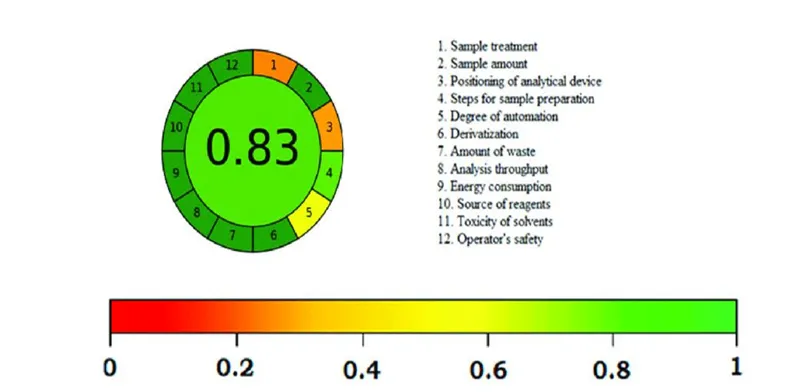
Fig. 4. Pictogram For The AGREE Greenness Assessment Tool
Assessment of blueness through (BAGI) tool:
Ten characteristics are taken into account when evaluating criteria: type of analysis, quantity of analytical substances, equipment, sample performance, sample preparation techniques, hourly measurements, reagents/materials, degree of automated processes, preconcentration requirements, and sample volume. An precise evaluation of the blueness or applicability of an analytical procedure is made possible by BAGI. Each of these ten factors is rated on a scale from 1 (worst) to 10 (best). The composite BAGI score is computed as the geometric mean of the results for the ten distinct criteria. A higher BAGI score indicates an analytical approach that is more pertinent, practical, and appropriate for the task. Our method showed remarkable blueness with a high BAGI score of 67.5. The ease of use and simplicity of the online software for BAGI, as illustrated in Fig., attests to the many benefits of the strategy we adopt, including increased functionality, reduced risk, and time and cost savings[3,11,12].

Fig. 5. Pictogram for The BAGI Greenness Assessment Tool
As a link between innovation and compliance, WAC plays an especially significant role in highly regulated industries.
Pharmaceutical Quality Control and Regulatory Affairs
Strict adherence to Good Documentation Practice (GDP) and successful USFDA submissions (like Drug Master Files) require unimpeachable data in pharmaceutical manufacturing. WAC is essential in creating stability-indicating assays that are both environmentally friendly and rigorous enough to pass pharmaceutical inspection conventions. For example, when validating an analytical method, a laboratory must rigorously calculate the standard deviation and evaluate linearity datasets to prove accuracy. WAC makes sure these red-dimension requirements are met while also optimizing the blue and green dimensions.
Complex Formulation Analysis
The usefulness of WAC is demonstrated by the examination of advanced dosage formulations. WAC drives the development of effective extraction techniques, whether it is determining the relationship between a solid tablet's thickness (e.g., 2.84 mm) and its obtained diameter for appropriate dissolution profiling or quantifying the active pharmaceutical ingredient in semi-solid matrices like topical insulin creams. It promotes the use of miniaturized sample preparation methods that maintain exact drug recovery rates while significantly reducing solvent use.
Adopting WAC provides multidimensional benefits to academic research facilities and industrial manufacturing plants alike:
High-Performance Liquid Chromatography (HPLC):
When examining the pumps and stationary phases in HPLC systems, it is noted that traditional methods often utilize hazardous acetonitrile as a mobile phase. A completely eco-friendly approach would suggest using either pure water or highly unconventional micellar fluids, which might lead to pressure complications in standard HPLC pumps or inadequate resolution in the stationary phase. WAC encourages analysts to consider mixtures of ethanol or Cyrene—materials that are considerably greener than acetonitrile (enhancing the Green score), affordable and easily accessible (boosting the Blue score), while ensuring clear, separated peaks without interference (upholding the Red score).
Documentation and Regulatory Affairs:
Comprehensive technique validation is required by regulatory organizations, such as those overseeing USFDA Drug Master File submissions and Good Documentation Practice. Because WAC measures the superiority of the method, it is a perfect fit for these submissions. In a research article or regulatory document, presenting an RGB12 score quantitatively demonstrates the modernity, safety, and analytical soundness of the selected analytical approach.
One of the most important areas for WAC application is the pharmaceutical sector. Continuous, high-throughput testing that closely complies with USFDA and ICH regulations is necessary for drug manufacture. Strong analytical data that exhibits both stability-indicating capabilities and contemporary, sustainable methods is becoming more and more important for the submission of Drug Master Files (DMF).
Additionally, considerable sample preparation is required for the analysis of complicated formulations, such as sophisticated modified-release solid doses or innovative topical medicines. WAC promotes switching from liquid-liquid extraction, which requires a lot of organic solvents, to quicker, greener alternatives like automated QuEChERS techniques or solid-phase microextraction (SPME), which greatly increase the Blue and Green scores while upholding the Red validation criteria.
In contemporary laboratories, White Analytical Chemistry (WAC) is an emerging holistic paradigm that strikes a balance between environmental responsibility, analytical performance, and practical viability. The Red-Green-Blue (RGB) model, Complex GAPI, AGREE, and BAGI tools are just a few of the framework dimensions and assessment metrics used to evaluate method sustainability that are highlighted in this paper, with the RGB framework serving as its fundamental conceptual basis. Future studies should concentrate on combining WAC principles with sophisticated quality systems such as Design of Experiments (DoE) and Analytical Quality by Design (AQbD), particularly for complicated formulation analysis and regulated pharmaceutical quality control. Implementing this balanced model to maximize laboratory safety, time efficiency, and operating costs is also becoming more and more important. In general, these sustainable methods are crucial for maintaining analytical integrity and adhering to regulations in various scientific and industrial contexts.
REFERENCES



Akshat Shah*, Prince Modi, Dr.Khushbu Patel, Dr. C. N. Patel, A Detail Review On White Analytical Chemistry (Wac) As A Comprehensive Framework For Sustainable Pharmaceutical Analysis: A Transition From Green Analytical Chemistry (GAC), Int. J. of Pharm. Sci., 2026, Vol 4, Issue 7, 5044-5055. https://doi.org/ 10.5281/zenodo.21620923
 10.5281/zenodo.21620923