

We use cookies to ensure our website works properly and to personalise your experience. Cookies policy
Department of Pharmaceutical Quality Assurance, D.S.T.S. Mandal’s College of Pharmacy, Solapur, Maharashtra, India
Background: Curcumin is a natural compound found in turmeric that has many health benefits; but it does not mix well with water, which makes it hard to use in medicines. Natural Deep Eutectic Solvents (NADES) are eco-friendly solutions that help dissolve substances that don’t mix well with water, and they follow the ideas of green chemistry. Objective: This study tried to make a Natural Deep Eutectic Solvent (NADES) by mixing citric acid, glycerin, and D-glucose, and checked how well it could improve the solubility of curcumin in water. Methods: NADES formulations were made by heating and stirring, using various ratios of citric acid, glycerin, and D-glucose. Curcumin was tested using organoleptic evaluation, melting point measurement, solubility checks, UV–Visible spectrophotometric analysis, making a calibration curve, and performing an assay. The solubility of curcumin in the prepared NADES was tested using the shake flask method, and the amount of drug was measured at a wavelength of 425 nm with a UV-Visible spectrophotometer. Results: Curcumin had a maximum wavelength absorption of 425 nm and showed an assay result of 98.5 ± 0.4%. Among the prepared mixtures, the one with a ratio of citric acid to glycerin to D-glucose of 1:4:1 had the best solubility, which was 3.485 mg per mL.The mixture with a ratio of 1:2:1 had a solubility of 1.451 mg per mL. The better solubility was because of the hydrogen bonds between the components in the NADES and the higher amount of glycerin, which made the mixture less thick and helped dissolve more curcumin. Conclusion: The created NADES worked well to improve the solubility of curcumin and showed that it could be a simple, eco-friendly, and sustainable option as a solvent. Using materials that come from natural sources and break down easily, along with less reliance on traditional organic solvents, helps follow the ideas of green chemistry when making medicines.
The bright yellow pigments found in the rhizomes of Curcuma longa L. (C. longar) make it a well-known plant. This species is known for its distinctive coloration. The pigments are called curcuminoids and are made up of polyphenols that have a conjugated -system. Their presence in the contents of curcuminoids per rhizome ranges from 1 to 15%. Of the many representatives, this study focused on three – curcumin, which is the most prominent of these compounds accounting for about 71% of all curmucinoids: demethoxycucumine (19%) and bisdemetoxycurcuminer (9%), [1,2,3]. Curcumin and curcumineroids are frequently used interchangeably in literature for convenience.ed. Therefore, it will happen in this article too.
The extensive research on extracting active compounds from plant material has been dominated by the beneficial properties of curcuminoids, which include anti-cancer, antioxidant, anti–inflammatory, and antiviral properties, [4,5,6] as evidenced by approximately 400 publications in the Web of Science over the past 10 years. [7] The majority of research that is already utilized in industry relies on non-sustainable or petroleum-based solvents like methanol or acetone. However, this practice is not sustainable. Despite being one of the most exceptional solvents known to humanity, acetone is not in line with the 12 principles of green chemistry proposed by P. Anastas Following F Chemat, there are 6 principles of green extraction and Anastas [8]. Chemat [9]. Due to its high volatility, which makes it non-biodegradable, it must be removed after extraction. This leads to waste generation. Thus, research has been conducted on alternative solvents. [10,11,12,13,14]
The main goal of drug delivery is to get the right effect from the medicine while keeping harmful side effects as low as possible. [15]For an active pharmaceutical ingredient to work in the body, it needs to dissolve in the body fluids where it is delivered.[16] Because of this, having poor water solubility is still a big problem in making medicine, since many new drugs that are found don’t dissolve well in water.[17] Low solubility can cause the drug to not be absorbed well by the body, making it less effective. It might also mean you need a bigger dose, which can lead to more unwanted side effects like stomach upset.[18] To deal with these problems, different methods have been created. These include making the particles smaller through processes like micronization [19]or forming nanocrystals, [20]changing the crystal structure by making salts,[21]preparing cocrystals,[22] or altering the polymorphic form.[23] Other common methods used are cyclodextrin complexation,[24] amorphous[25] solid dispersions, [26] changing the pH,[27] and lipid-based[28] drug delivery systems. Even though these methods work well, they usually require complicated ways of making things and end up costing more to produce. So, creating easy-to-use, safe, and eco-friendly solvent systems that help drugs dissolve better has become a key focus in pharmaceutical research. Natural Deep Eutectic Solvents (NADES) have become a great choice as eco-friendly solvents because they can dissolve many substances well, are friendly to living things, break down easily in the environment, and are not harmful. These qualities make them a good option for improving the solubility of drugs that don’t mix well with water.
Deep Eutectic Solvents are mixtures made by combining two or more solid materials that turn into a liquid with a much lower melting point than each material on its own.[29] The lowering of the melting point is mainly because the parts in the mixture form strong hydrogen bonds with each other. Natural Deep Eutectic Solvents (NADES) are a type of DES made from naturally found substances like organic acids, sugars, amino acids, and polyols.[30] Because of their special physical and chemical features, like being low in vapor pressure, breaking down easily in the environment, being eco-friendly, having low harmful effects, being simple to make, and being affordable, NADES have become a better choice compared to traditional organic solvents.[31] They stay liquid across a wide range of temperatures and have great abilities to dissolve and stabilize things. These good qualities have made them very useful in the pharmaceutical and biotechnology industries. They are used for extracting active ingredients,[32] keeping sensitive molecules stable, carrying out enzyme reactions and biological transformations, [33] improving how well substances dissolve in water, and making compounds that don't dissolve well in the body more effective.[34,35]
A Natural Deep Eutectic Solvent (NADES) was created using citric acid, glucose, and glycerin to enhance the solubility of curcumin in water. This study is ongoing. The stable hydrogen-bonded network was formed by utilizing glucose and glycerin as hydrogen bond acceptors, with citric acid serving as the hydrogen bonds’ donor. Enhanced drug solubility and handling characteristics were achieved by reducing the viscosity of the system with the help of glycerin. We used the shake flask method to test whether curcumin boosted its solubility in the prepared NADES, and UV–Visible spectrophotometry was used to determine the concentration of the dissolved drug. Increasing the solubility and pharmaceutical performance of compounds that are poorly soluble in water through the use of this solvent system is highly beneficial for the environment.
2. MATERIALS AND METHODS:
2.1.Materials:
In this study, the following substances were used: curcumin (CAS No.458-37-7), citric acid (CAS No.77-92-9), D-glucose (CAS No.50-99-7), glycerin (CAS No.56-81-5), and distilled water (CAS No.7732-18-5). Curcumin, citric acid, D-glucose, and glycerin were all of analytical reagent quality and were used as they were, without any extra cleaning or processing. Distilled water was made in the lab and used during the entire study.
2.2.Methods:
2.2.1.Preformution study:
2.2.1.1.Description: The physical features of curcumin were checked by looking at it with the eyes. The sample was checked for its color, smell, and how it looked under usual lab conditions.[29]
2.2.1.2.Melting Point Determination: The melting point of curcumin was found by using the capillary tube method. A little amount of curcumin powder was placed into a sealed capillary tube up to a height of about 2 to 3 millimeters. The capillary tube was put into a melting point apparatus and heated slowly. The temperature at which the sample fully melted was noted as the melting point.[29]
2.2.1.3.Solubility Study: Solubility of curcumin was tested in distilled water, ethanol, phosphate buffer with a pH of 6.8, and phosphate buffer with a pH of 7.4. A precise amount of 10 mg of curcumin was added individually to 10 mL of each solvent in separate clean 10 mL volumetric flasks. The mixtures were mixed using ultrasound for 60 minutes at room temperature to help dissolve the drug. After sonication, the solutions were filtered using Whatman No.1 filter paper to take out any drug particles that hadn't dissolved. The filtrates were diluted properly with the correct solvent, and the absorbance was checked at 425 nm using a UV–Visible spectrophotometer, comparing them to the blank sample. The amount of dissolved curcumin was found using the calibration curve that was made earlier. Each experiment was done three times, and the results were shown as the average plus or minus the standard deviation.[30]
2.2.1.4. Determination of λmax of Curcumin by UV–Visible Spectrophotometry: A precise amount of 10 mg of curcumin was placed into a 10 mL volumetric flask and dissolved in ethanol. The volume was brought up to 10 mL using ethanol to create a stock solution that is 1 mg/mL or 1000 µg/mL. A suitable amount of the stock solution was then mixed with ethanol to reach the right concentration for testing. The solution was tested across a range of wavelengths from 200 to 800 nanometers using a UV-Visible spectrophotometer, and ethanol was used as the reference. The wavelength that gives the highest absorption was noted. The maximum wavelength, or λmax, for curcumin was determined to be 425 nm,[29] and this value was used for all the following spectrophotometric tests.[31]
2.2.1.5. Preparation of Calibration Curve of Curcumin: A stock solution of curcumin was made by dissolving 10 mg of curcumin in 10 mL of ethanol to get a concentration of 1000 µg/mL. Aliquots of 0.1, 0.2, 0.3, 0.4, and 0.5 mL were put into separate 10 mL volumetric flasks, and each was filled to the top with ethanol to create solutions with concentrations of 10, 20, 30, 40, and 50 µg/mL respectively. The absorbance of each solution was measured at 425 nm using a UV–Visible spectrophotometer, and ethanol was used as the blank. A calibration curve was made by graphing absorbance values against concentration levels, and the equation that best fits the data was found.[31][32]
2.2.1.6. The absorbance of the unknown sample was measured at 425 nm using a UV–Visible spectrophotometer with ethanol as the blank. The concentration of curcumin was calculated from the calibration curve using the regression equation, [29][31]and the percentage assay was determined using the following equation:

2.2.2.Preparation of Natural Deep Eutectic Solvent (NADES): Natural Deep Eutectic Solvents (NADES) were made by mixing citric acid, D-glucose, and glycerin in the right amounts based on their molar ratio. The carefully measured parts were put into a clean glass container and heated while stirring continuously with a magnetic stirrer at a temperature below 80°C, specifically between 70 and 80°C, for 45 to 60 minutes until a clear and uniform liquid was formed. The prepared NADES was cooled down to room temperature and kept in a sealed container for later use.[33]
2.2.3. Solubility Enhancement of Curcumin in NADES: A measured amount of curcumin was put into the prepared NADES, and the mixture was kept stirring constantly at a temperature between 60 and 70 degrees Celsius for 4 to 5 hours to help the curcumin dissolve properly. The mixture was left to reach a stable temperature at room temperature for 24 hours. After the solution had settled, it was passed through a Whatman No.1 filter paper to take out any drug that hadn't dissolved. The clear filtrate was diluted properly with ethanol, and the absorbance was checked at 425 nm using a UV-Visible spectrophotometer, with ethanol used as the reference. The amount of curcumin that was dissolved was found using the calibration curve that was made earlier.[33][34]
2.2.4. Data Analysis: The solubility of curcumin in the made NADES was found using a calibration curve and was checked against how much it dissolves in distilled water and other solvents. Each experiment was done three times, and the results were shown as the average plus or minus the standard deviation.[33][34]
3. RESULTS AND DISCUSSION:
3.1 organoleptic properties:
|
Sr. No |
Parameters |
Observation |
|
1. |
Colour |
Bright yellow |
|
2. |
Odour |
Characteristic |
|
3. |
Appearance |
Fine crystalline powder |
3.2. Melting Point:
|
Sr. No |
Ingredients |
Melting point |
|
1. |
Citric acid |
153°C |
|
2. |
Glucose |
146°C |
|
3. |
Glycerin |
185°C |
|
4. |
NADES |
70-80°C |
3.3. Solubility Study:
|
Sr. No |
Solvents |
Solubility( ug/ml) |
|
1. |
Water |
-2.16 |
|
2. |
Ethanol |
96.92 |
|
3. |
PBS(6.8) |
13.36 |
|
4. |
PBS(7.4) |
32.09 |
3.4. Determination of λmax of Curcumin by UV–Visible Spectrophotometry:
The UV–Visible spectrum of curcumin in ethanol was measured across the wavelength range from 200 to 800 nanometers. Curcumin showed its strongest light absorption at 425 nm, and this wavelength was chosen for making the calibration curve, doing the assay, and all future UV spectrophotometric tests.
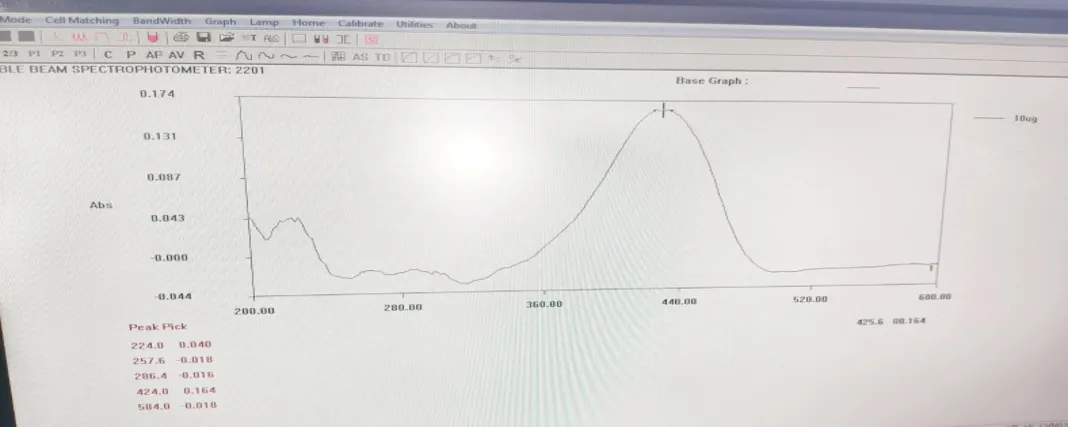
Figure 1. UV–Visible absorption spectrum of curcumin in ethanol showing λmax at 425 nm.
3.5. Preparation of Calibration Curve of Curcumin:
A calibration curve for curcumin was made by checking the absorbance of standard samples at 425 nm with a UV-Visible spectrophotometer. As the amount of curcumin increased, the absorbance also increased, showing a straight-line relationship in the chosen range of concentrations. The regression equation found was y equals 0.0087 times x plus 0.1188, and the correlation coefficient (R squared) was 0.9778, showing strong linearity. This calibration curve was used to measure the amount of curcumin in all the later studies.
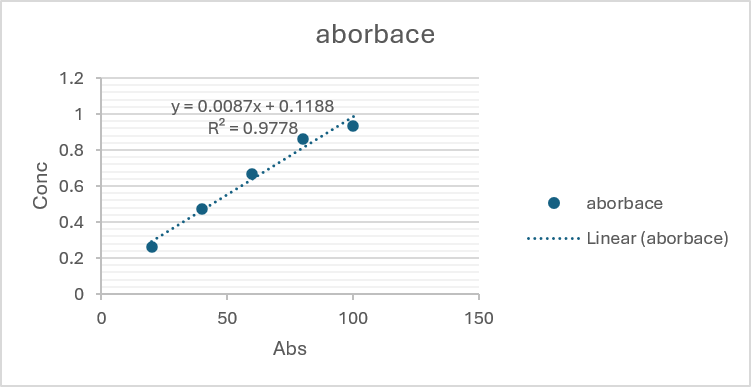
Figure 2.Calibration curve of curcumin in ethanol at 425 nm.
3.6.Assay of Curcumin:
The percentage assay of curcumin was found to be 98.5 ± 0.4%, confirming the purity and suitability of the drug for further studies.
3.7.Preparation of Natural Deep Eutectic Solvent (NADES):
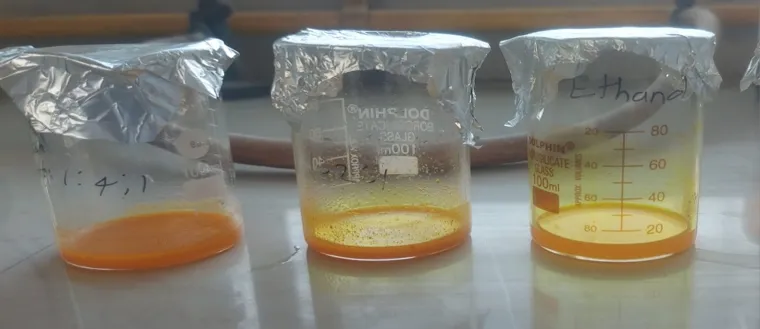
Figure 3. Preparation of Natural Deep Eutectic Solvent (NADES)
3.8.Solubility Enhancement of Curcumin in NADES :
|
Sr. No |
Formulation (CA:Gly:Glu) |
Absorbance |
Solubility (mg/mL) |
|
1. |
(1:2:1) |
0.245 |
1.451 |
|
2. |
(1:4:1) |
0.422 |
3.485 |
|
3. |
Water |
0.03 |
-1.21 |
4. DISCUSSION :
This study looked at using a Natural Deep Eutectic Solvent made from citric acid, glycerin, and D-glucose as an eco-friendly solvent to boost the solubility of curcumin in water. The made NADES created a clear and steady liquid when heated to 70–80°C, showing that the eutectic mix worked well because the chosen ingredients formed strong hydrogen bonds with each other.
Preformulation studies showed that curcumin is pure and meets quality standards. The drug looked like a bright yellow, fine crystal powder and had a distinct smell. The UV–Visible spectrum showed the highest absorption at 425 nm, and this was used to measure amounts accurately. The calibration curve showed strong linearity (R² = 0.9778), which means the method used is reliable for measuring curcumin levels. The test result showed 98.5 percent purity with a small variation of plus or minus 0.4 percent, meaning the drug sample was pure enough to continue with more research.
The solubility test showed that curcumin does not dissolve well in water but dissolves much better in the NADES solutions that were made. Among the systems tested, the mix with citric acid, glycerin, and D-glucose in the ratio 1:4:1 had the best solubility, which was 3.485 mg per mL.The mix with the ratio 1:2:1 had lower solubility, at 1.451 mg per mL. This improvement might be because of the strong network of hydrogen bonds formed between the NADES parts and curcumin, which helps dissolve the drug better and makes the molecules interact more effectively. The higher amount of glycerin in the 1:4:1 mixture probably helped create better bonds and keep the dissolved curcumin stable.
The results show that the created NADES is a good and eco-friendly solvent that helps improve the dissolving ability of curcumin, which doesn’t mix well with water. These findings suggest that NADES could be used in making medicines instead of traditional chemical solvents.
CONCLUSION
This study created a Natural Deep Eutectic Solvent (NADES) made from citric acid, glycerin, and D-glucose to improve the solubility of curcumin. Among the tested mixtures, the one with citric acid, glycerin, and D-glucose in the ratio 1:4:1 had the best solubility, at 3.485 mg per mL.This shows that NADES works well as a green and effective solvent for compounds that don’t dissolve easily in water. The prepared NADES was easy to make, worked well in tests, and greatly helped in dissolving curcumin.
The solvent system created follows several green chemistry rules since it uses natural, biodegradable, and low-toxicity materials, reduces the need for harmful organic solvents, and uses an energy-saving method to make it. So, the proposed NADES is a green and sustainable option that can be used in the pharmaceutical industry. Future research should look into how stable the product is, how well it gets absorbed by the body, and how it can be used on a bigger scale to better show its value in making eco-friendly medicines.[36]
REFERENCES

Shweta Prashant Ilkal, A. M. Ansari, A Green Chemistry Approach for Enhancing Curcumin Solubility Using Sustainable Natural Deep Eutectic Solvent Systems, Int. J. of Pharm. Sci., 2026, Vol 4, Issue 8, 2870-2878. https://doi.org/10.5281/zenodo.22023024
 10.5281/zenodo.22023024