

We use cookies to ensure our website works properly and to personalise your experience. Cookies policy
Department of Pharmaceutics and Respiratory Drug Delivery, Malineni Perumallu Pharmacy College,Pulladigunta, Guntur AP-522017
Lung cancer remains the leading cause of cancer-related mortality worldwide, characterized by high recurrence rates and dismal five-year survival metrics. Conventional systemic chemotherapy is inherently limited by severe off-target systemic toxicities, poor tissue selectivity, and the rapid emergence of multi-drug resistance (MDR) mediated by efflux pumps and anti-apoptotic signaling networks. Inhaled combination therapy utilizing Nanostructured Lipid Carriers (NLCs) offers an advanced, non-invasive platform for direct localized pulmonary administration. NLCs—composed of spatially disordered blends of solid and liquid lipids—create an imperfect crystalline matrix that allows high-density encapsulation of lipophilic chemotherapeutic agents alongside electrostatic surface complexation of hydrophilic small interfering RNA (siRNA). This comprehensive review examines the rational strategy, structural mechanics, aerosolization physics, cellular internalization dynamics, and systemic barrier clearance of inhaled dual-payload NLCs in treating pulmonary malignancies across preclinical and clinical paradigms
Primary pulmonary carcinomas and metastatic lung lesions represent a formidable clinical challenge in modern oncology. Standard therapeutic interventions relying on intravenous chemotherapeutic administration often fail to achieve sufficient intratumoral drug concentrations without inducing life-threatening systemic organ toxicity. Inhalation drug delivery bypasses first-pass hepatic metabolism, directly targets the bronchial and alveolar epithelium, and maximizes localized therapeutic indexes while significantly reducing systemic exposure [1].
The pulmonary architecture presents an expansive surface area (~100 m²) characterized by a thin alveolar-capillary barrier (~0.2–0.7 μm) and rich vascularization. These anatomical features provide an ideal site for rapid drug absorption and non-invasive administration. However, delivering monotherapies via inhalation frequently falls short due
Key Therapeutic Advantage:
Inhaled NLC combination therapy enables localized concurrent delivery of cytotoxic drugs and gene-silencing nucleic acids directly to tumor cells, overcoming cellular transport barriers and reversing resistance mechanisms in a single aerosolized dose.
Combination therapy strategies that merge small-molecule chemotherapeutics with genesilencing nucleic acids represent a paradigm shift in oncology. By silencing specific resistance pathways (such as P-glycoprotein efflux pumps or anti-apoptotic Bcl-2 proteins), small interfering RNA (siRNA) restores the sensitivity of resistant tumor cells to coadministered cytotoxic agents. Nevertheless, the effective delivery of siRNA and lipophilic small molecules faces substantial hurdles, including rapid enzymatic degradation of naked RNA by pulmonary nucleases and poor water solubility of chemotherapeutic agents.
EVOLUTION OF LIPID-BASED NANOCARRIERS
Lipid-based nanocarriers have undergone three decades of continuous architectural refinement to improve drug loading, physical stability, and biological performance. The evolutionary transition from vesicular liposomes to solid lipid matrices, and ultimately to spatially disordered nanostructured lipid carriers, reflects major breakthroughs in colloid chemistry and materials science [2].
first-generation vesicular and solid systems
Liposomes—spherical lipid bilayers enclosing aqueous cores—were the first nanocarriers translated to clinical practice. While effective for hydrophilic drugs, liposomes suffer from poor stability during nebulization, susceptibility to lipid oxidation, rapid drug leakage, and low encapsulation efficiency for highly lipophilic molecules. To address these instability issues, Solid Lipid Nanoparticles (SLNs) were developed in the early 1990s by replacing the aqueous core with a room-temperature solid lipid matrix [3].
SLNs provided significant protection to sensitive drug molecules against chemical degradation and offered controlled release kinetics. However, as colloidal research progressed, fundamental structural limitations of SLNs emerged during shelf-life storage assessments.
limitations of slns and introduction of nlcs
Although SLNs provided improved physical protection against chemical degradation, their highly ordered, perfect crystalline lipid lattices lead to significant drug expulsion during storage. As the solid lipid cools and transforms into its thermodynamically stable βpolymorphic modification, the space available for drug incorporation shrinks dramatically. Nanostructured Lipid Carriers (NLCs) were specifically engineered to overcome this fundamental structural flaw by blending solid lipids with spatially incompatible liquid lipids (oils) [4].
The introduction of liquid lipids distorts the rigid crystalline arrangement, forming an amorphous or highly imperfect matrix structure. This increased spatial void volume allows higher drug payloads and suppresses premature expulsion during storage.
COMPARATIVE ANALYSIS OF NANOCARRIER SYSTEMS
Understanding the operational differences between SLNs and NLCs is essential for rational aerosol formulation design. Table 1 provides a side-by-side comparative analysis of key physicochemical and operational parameters governing these two carrier generations [5].
Table 1: Physicochemical and Operational Comparison of SLNs vs. NLCs
|
Parameter |
Solid Lipid Nanoparticles (SLNs) |
Nanostructured Lipid Carriers (NLCs) |
|
Matrix Composition |
100% Solid Lipids at room and body temperatures (e.g., Cetyl Palmitate, Stearic Acid). |
Spatially blended Solid + Liquid Lipids (70:30 to 99:1 mass ratio). |
|
Internal Structure |
Highly ordered, perfect crystalline lattice (βmodification). |
Disordered / Imperfect crystalline matrix with high spatial void volume. |
|
Payload Capacity |
Moderate initial capacity; susceptible to drug expulsion during storage. |
High payload capacity; substantially suppressed drug expulsion during shelf-life. |
|
Water Content |
High water content in colloidal dispersion (up to 95–99%). |
Higher solid content achievable (up to 30–95% lipid phase integration). |
|
Dual Loading |
Challenging for simultaneous drug entrapment and nucleic acid binding. |
High efficiency via core entrapment and cationic surface modification. |
|
Nebulization Stability |
Prone to shear-induced particle aggregation and phase transition. |
Maintains structural integrity and narrow size distribution under high shear. |
polymorphic transitions and matrix mechanics
The core advantage of NLCs lies in suppressing the formation of perfect lipid crystals. When solid lipids undergo crystallization, they transition from unstable α and β' forms to the tightly packed β modification. In SLNs, this transition leaves no room for guest drug molecules, forcing them out of the matrix. In NLCs, the liquid lipid molecules interrupt this regular lattice formation, creating structural imperfections, voids, and amorphous domains that stably entrap hydrophobic chemotherapeutic drugs even during long-term storage [6].
Furthermore, the mobility of drug molecules within the liquid lipid nanocompartments prevents crystallization of the drug itself, maintaining it in a molecularly dispersed or amorphous state that favors rapid dissolution and release upon therapeutic targeting.
STRUCTURAL TYPES OF NLCS
Depending on the composition of the lipid mixture and the production methodology, three distinct structural models of Nanostructured Lipid Carriers can be produced: Imperfect Matrix Type, Amorphous Type, and Multiple Lipid Matrix Type [7].
Type I: Highly Imperfect Matrix Model
Type I NLCs are produced by blending solid lipids with low concentrations of liquid lipids (typically 70:30 down to 99:1 ratio). The spatial incompatibility created by differences in fatty acid chain length, saturation levels, and geometric structure prevents tight crystallization. The matrix contains widespread lattice defects that accommodate high payloads of hydrophobic drug molecules [8].
Type Ii: Amorphous / Non-Crystalline Model
Type II NLCs are formulated using specific structure-modifying liquid lipids, such as hydroxyoctacosanyl hydroxystearate or isopropyl myristate, mixed with solid lipids. Upon cooling, the particle solidifies into a non-crystalline, amorphous state. The total absence of a crystalline lattice completely prevents crystallization-induced drug expulsion during storage.
Type Iii: Multiple Oil-In-Solid-Lipid-In-Water (O/W/O) Model
Type III NLCs represent a nano-compartmentalized structure produced when the concentration of liquid lipid exceeds the solubility limit within the solid lipid phase. Phase separation occurs during cooling, forming microscopic oil nanocompartments dispersed throughout the solid lipid shell. This model is exceptionally effective for drugs whose solubility is significantly higher in liquid oil than in solid lipid.
EXCIPIENT SELECTION AND MATRIX ENGINEERING
Selecting biocompatible, non-toxic, and non-immunogenic excipients is critical for pulmonary drug delivery. Inhaled formulations must conform to strict regulatory standards regarding lung tissue tolerance and clearance kinetics [9].
Solid Lipids
Solid lipids form the structural scaffold of the NLC matrix. Frequently utilized solid lipids include:
Liquid Lipids (Oils)
Liquid lipids disrupt crystal formation and enhance drug solubility. Preferred liquid lipids include:
Surfactants And Stabilization Systems
Surfactants prevent colloidal aggregation during high-pressure homogenization and preserve particle size integrity during nebulization shear stress. Non-ionic surfactants such as Polysorbate 80 (Tween 80), Pluronic F-68 (Poloxamer 188), and Lecithin
(phosphatidylcholine) are preferred due to low airway mucosal toxicity.
DUAL PAYLOAD DESIGN: CORE ENTRAPMENT & SURFACE SHELL
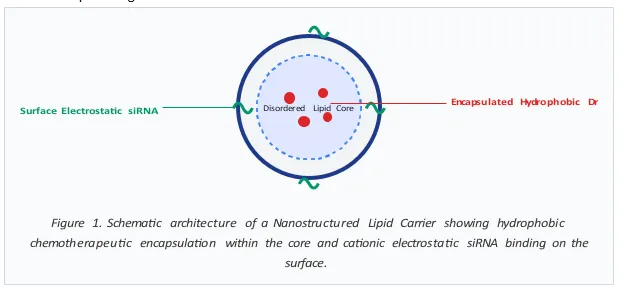
To achieve simultaneous delivery of hydrophobic chemotherapeutics and polyanionic nucleic acids, NLCs must be structurally engineered with two functionally distinct loading domains: a lipophilic inner core and a cationic outer surface]. shell [11
Core Entrapment Of Hydrophobic Chemotherapeutics
Small-molecule hydrophobic drugs (e.g., Paclitaxel, Doxorubicin, Cisplatin prodrugs) are dissolved directly in the molten lipid blend during thermal homogenization. As the system cools, the drug molecules remain trapped within liquid lipid droplets and crystalline matrix defect zones, achieving high encapsulation efficiencies (>90%) [12].
Cationic Surface Modification For Sirna Binding
Because small interfering RNA (siRNA) molecules are highly polyanionic and hydrophilic, they cannot be incorporated into the hydrophobic lipid core. To address this, cationic lipids such as DOTAP(1,2-dioleoyl-3-trimethylammoniumpropane), CTAB, or cationic polymers like Chitosan are incorporated into the lipid phase. This imparts a net positive surface charge (Zeta potential: +20 mV to +40 mV), driving rapid electrostatic complexation of the phosphate backbone of siRNA onto the particle exterior [13].
FORMULATION ENGINEERING & NANOMANUFACTURING
Scalable, reproducible nanomanufacturing processes are essential to transition NLC formulations from lab research to clinical practice. High-pressure homogenization (HPH) and microfluidic mixing represent the gold standards for industrial scale-up [14].
hot high-pressure homogenization (hot hph)
Hot HPH is the most widely adopted technique for lipid nanoparticle industrial scale-up. The process involves dissolving the drug in the molten lipid phase (5–10 °C above the solid lipid melting point), dispersing this phase in a hot aqueous surfactant solution using high-shear mixing, and passing the coarse emulsion through a high-pressure homogenizer (500–1500 bar) for several cycles [15]. quality by design (qbd) optimization
Applying Quality by Design (QbD) principles ensures robust formulation reproducibility. Critical Quality Attributes (CQAs)—including particle size (<200 nm), polydispersity index (PDI < 0.2), Zeta potential (>+25 mV), drug entrapment efficiency (>85%), and siRNA binding affinity—are mapped against Critical Process Parameters (CPPs) such as homogenization pressure, cycle number, and lipid-to-surfactant mass ratios using response surface methodologies [16].
PHYSICOCHEMICAL CHARACTERIZATION TECHNIQUES
Comprehensive characterization of dual-payload NLCs is required to ensure formulation quality, stability, and aerodynamic suitability prior to clinical inhalation testing.
Table 2: Key Physicochemical Characterization Parameters for Dual-Payload NLCs
|
Analytical Parameter |
Primary Technique |
Target Values & Significance |
|
Hydrodynamic Size & PDI |
Dynamic Light Scattering (DLS) / NTA |
Size: 80–180 nm; PDI < 0.20 for uniform cellular uptake and nebulization stability. |
|
Surface Charge |
Laser Doppler Electrophoresis |
Zeta Potential: +20 to +40 mV to ensure electrostatic colloidal stability & siRNA binding. |
|
Polymorphic State |
Differential Scanning Calorimetry (DSC) / XRD |
Depression of melting enthalpy confirming disordered/imperfect matrix formation. |
|
Particle Morphology |
Cryo-TEM / FE-SEM |
Spherical nanostructures with clear core-shell boundaries; absence of drug crystals. |
|
siRNA Complexation |
Gel Electrophoresis (PAGE) / RiboGreen |
100% siRNA binding at optimal N/P (nitrogen/phosphate) molar ratios (≥ 4:1). |
|
Drug Entrapment |
HPLC / UHPLC Analysis |
Entrapment Efficiency (EE%) > 85%; Loading Capacity (LC%) > 5%. |
Thermal And Crystallographic Characterization
Differential Scanning Calorimetry (DSC) measures changes in melting temperature (Tm) and enthalpy (ΔH). Pure solid lipids exhibit sharp endothermic peaks reflecting high crystallinity. Upon incorporation of liquid lipids and drug molecules, the melting peak broadens and shifts to lower temperatures, while ΔH decreases significantly. This reduction in enthalpy confirms lattice disruption and the formation of the desired imperfect matrix [17].
AERODYNAMIC PERFORMANCE & DEPOSITION MECHANICS
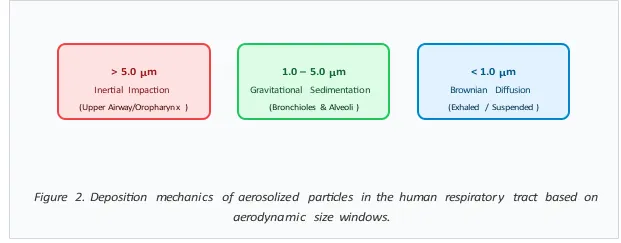
The clinical efficacy of inhaled therapies depends entirely on site-specific aerosol deposition within the respiratory tract. Particles must navigate complex bronchial branching to reach peripheral tumor sites in the deep lung.
mass median aerodynamic diameter (mmad)
Aerosol deposition is governed by particle size, geometry, density, and airflow dynamics.
The key controlling metric is the Mass Median Aerodynamic Diameter (MMAD), defined as:
MMAD = dg × √(ρ / ρ0)
where dg is the geometric diameter, ρ is the particle envelope density, and ρ0 is the reference density (1.0 g/cm³). For effective peripheral lung delivery, the MMAD must be strictly maintained between 1.0 μm and 5.0 μm [18].
Deposition Regimes
INHALATION DEVICES & AEROSOLIZATION DYNAMICS
Translating colloidal NLC suspensions into breathable aerosols requires selecting compatible inhalation devices that generate fine droplets without disrupting nanoparticle structure or damaging delicate siRNA payloads [20].
Vibrating mesh nebulizers vs. Legacy systems
Nebulizer selection directly impacts aerosol generation quality and payload integrity, as detailed in Table 3 [21].
Table 3: Comparison of Inhalation Devices for NLC Delivery
|
Nebulizer Type |
Mechanism of Operation |
Compatibility with Dual NLCs |
|
Jet Nebulizers |
Compressed gas forces liquid through a narrow orifice, generating high shear forces. |
Poor. High shear causes lipid matrix aggregation and siRNA degradation. |
|
Ultrasonic Nebulizers |
High-frequency piezoelectric crystals generate acoustic waves. |
Unsuitable. Local thermal heating degrades siRNA and melts lipid cores. |
|
Vibrating Mesh Nebulizers |
Microporous membrane vibrates at ~100–120 kHz, drawing liquid through micro-apertures. |
Ideal. Low shear stress, minimal temperature rise, high fineparticle fraction (>75%). |
Dry Powder Inhalers (Dpi) & Spray Freeze-Drying
To improve long-term storage stability, liquid NLC dispersions can be converted into solid dry powders using spray-drying or spray freeze-drying. Sugars like trehalose, lactose, or mannitol act as lyoprotectants, replacing water molecules during drying to prevent nanoparticle aggregation and maintain dry powder dispersibility [22].
CELLULAR UPTAKE & INTRACELLULAR TRAFFICKING
Once deposited on the alveolar epithelium, NLCs must cross cellular membranes, avoid lysosomal degradation, and release both payloads into their respective intracellular target sites [23].
Endocytosis Pathways
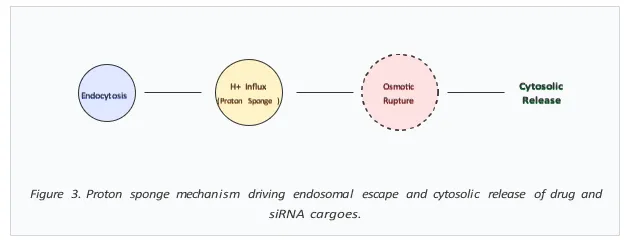
The cationic surface charge of NLCs drives electrostatic interactions with negatively charged cell-surface proteoglycans, triggering rapid endocytosis via clathrin-mediated and caveolae-mediated pathways [24].
Endosomal Escape Via The Proton Sponge Mechanism
Following endocytosis, nanoparticles become trapped in early endosomes. Cationic lipids (e.g., DOTAP) and polymers (e.g., PEI, Chitosan) cushion endosomal acidification by absorbing protons pumped in by V-ATPase. This influx of protons drives counter-ion accumulation (Cl⁻), generating osmotic swelling, membrane rupture, and release of siRNA and chemotherapeutics into the cytosol [25].
OVERCOMING MULTI-DRUG RESISTANCE (MDR)
Multi-drug resistance (MDR) is a major obstacle in cancer chemotherapy, often caused by overexpressed membrane efflux pumps that rapidly pump cytotoxic drugs out of cancer cells [26].
Knockdown Of Efflux Transporters And Survival Genes
Combining chemotherapeutics with siRNA constructs targets the molecular drivers of therapeutic resistance [27].
BIOLOGICAL BARRIERS & MUCUS PENETRATION STRATEGIES
Inhaled formulations must cross respiratory mucus layers and evade macrophage clearance before reaching underlying tumor cells.
Mucus Barrier Interactions
Airway mucus forms a dense viscoelastic hydrogel composed of crosslinked mucin glycoproteins. Unmodified cationic NLCs can become trapped in this layer via electrostatic interactions with negatively charged sialic acid and sulfonic residues on mucins, leading to rapid mucociliary clearance.
Pegylation And Mucus-Penetrating Coatings
Coating NLCs with low-molecular-weight Polyethylene Glycol (PEG, 2–5 kDa) creates a hydrophilic, charge-neutral surface layer. This steric barrier prevents mucin binding, allowing particles to diffuse rapidly through the mucus matrix toward the tumor surface [28].
PRECLINICAL IN VITRO EVALUATION MODELS
Evaluating inhaled nanomedicines requires in vitro models that closely mimic physiological pulmonary conditions and lung cancer microenvironments.
Air-Liquid Interface (Ali) Cell Culture Models
Traditional submerged cell cultures do not accurately reflect aerosol deposition or respiratory epithelial interactions. Air-Liquid Interface (ALI) cultures present bronchial epithelial cells (e.g., Calu-3, A549) grown on porous membranes, exposing the apical surface to air while the basolateral surface receives nutrients. This configuration allows realistic aerosol deposition testing using vibrating mesh nebulizers [29].
Table 4: Summary of In Vitro Evaluation Models for Pulmonary Delivery
|
In Vitro Model Type |
Key Biological Characteristics |
Primary Application in NLC Evaluation |
|
2D Monolayer Culture |
Standard submerged cultures; fast and reproducible screening. |
Initial toxicity, cellular uptake pathways, gene knockdown kinetics. |
|
3D Tumor Spheroids (MCTS) |
Mimics 3D tumor architecture, hypoxia, and transport gradients. |
Penetration depth testing, localized cytotoxicity, drug resistance evaluation. |
|
Air-Liquid Interface (ALI) |
Differentiated pseudostratified epithelium with functional mucus production. |
Aerodynamic particle deposition, mucosal clearance, epithelial barrier safety. |
3d Multicellular Tumor Spheroid Penetration
Multicellular tumor spheroids (MCTS) model the physical transport barriers seen in solid tumors. Confocal laser scanning microscopy (CLSM) tracking fluorescently labeled NLCs demonstrates deeper core penetration compared to free drug formulations, supporting their utility in treating dense tumor masses [30].
IN VIVO PHARMACOKINETICS & BIODISTRIBUTION
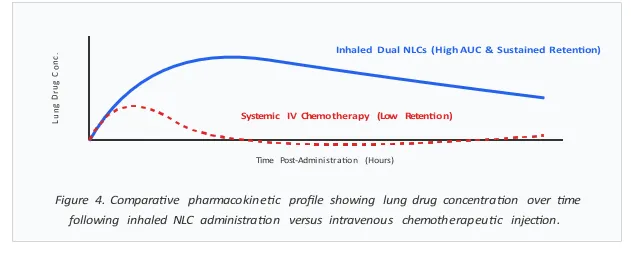
In vivo studies in orthotopic lung cancer models confirm the pharmacokinetic advantages of inhaled NLCs over intravenous systemic chemotherapy.
Lung Retention And Area Under Curve (Auc)
Inhaled NLC formulations achieve significantly higher lung tissue drug concentrations (AUClung) while drastically reducing peak plasma levels (Cmax, plasma). This targeted profile minimizes systemic exposure, protecting off-target organs such as the heart, kidneys, and liver from chemotherapy-induced toxicity.
Non-Invasive Whole-Body Optical Imaging
In vivo fluorescence molecular tomography (FMT) and PET tracking confirm that inhaled dual-payload NLCs remain localized in pulmonary tumor regions for up to 48 hours postinhalation, providing sustained therapeutic drug and siRNA levels throughout the treatment window [31].
SAFETY, PULMONARY TOXICITY & BIOCOMPATIBILITY
Evaluating the safety of inhaled nanomedicines requires thorough investigation of pulmonary inflammation, tissue biocompatibility, and systemic clearance pathways.
Bronchoalveolar Lavage Fluid (Balf) Analysis
In vivo safety studies assess acute lung inflammation by analyzing Bronchoalveolar Lavage Fluid (BALF) post-inhalation. Key biomarkers evaluated include:
Table 5: Safety and Biocompatibility Metrics in BALF Analysis
|
Safety Parameter |
Control (Saline) |
Optimized Inhaled NLC Group |
|
TNF-α (pg/mL) |
12.4 ± 2.1 |
14.8 ± 2.8 (Non-significant variance) |
|
LDH Activity (U/L) |
45.2 ± 5.1 |
48.1 ± 6.2 (Normal epithelial integrity) |
|
Histology Score |
0 (Normal alveolar architecture) |
0 to 1 (No alveolar wall thickening or edema) |
Histopathological Evaluation
Histological examination of lung sections stained with Hematoxylin and Eosin (H&E) confirms intact alveolar architecture, without tissue edema, macrophage infiltration, or alveolar wall thickening following repeated aerosol exposures [33].
TRANSLATIONAL CHALLENGES & REGULATORY LANDSCAPE
Translating inhaled dual-payload NLCs from preclinical discovery to commercial manufacturing requires navigating complex technical and regulatory hurdles.
Scale-Up Manufacturing & Sterilization
Industrial scale-up must ensure strict batch-to-batch reproducibility across critical quality parameters. Thermal sterilization (autoclaving) can melt lipid matrices and cause particle aggregation, while gamma irradiation may generate free radicals that degrade embedded siRNA sequences. Sterile filtration through 0.22 μm membranes remains the preferred industrial sterilization pathway, requiring particle size distributions strictly below 150 nm [34].
Regulatory Guidance Focus:
Regulatory agencies require rigorous validation of total inhaled dose uniformity, fine particle fraction (FPF) stability over shelf-life, and precise quantification of free vs. entrapped drug and siRNA fractions.
Critical Regulatory Considerations
CONCLUSIONS & FUTURE PERSPECTIVES
Nanostructured Lipid Carriers represent a versatile, non-invasive platform for targeted combination therapy in pulmonary malignancies. By combining solid and liquid lipids to create an imperfect matrix, NLCs enable simultaneous encapsulation of hydrophobic chemotherapeutic agents within their core alongside electrostatic surface complexation of target-specific siRNA constructs.
When administered via low-shear vibrating mesh nebulizers or dry powder inhalers, these formulations achieve high localized deposition in peripheral alveolar tumor sites while avoiding upper airway clearance. Once internalized by target tumor cells via endocytosis, NLCs trigger endosomal escape via the proton sponge effect. The released siRNA silences multi-drug resistance transporters and survival genes, sensitizing resistant cells to the codelivered chemotherapeutic payload and driving synergistic apoptosis at lower, safer drug doses [36].
Future Directions
Continued advancements in surface functionalization using tumor-targeting ligands (e.g., EGFR antibodies, folate, transferrin) hold great promise for further boosting tumor-specific uptake. As continuous microfluidic nanomanufacturing and non-invasive delivery technology continue to evolve, inhaled NLC combination therapies are poised to play a transformative role in personalized lung cancer treatment.[37].
REFERENCES

Sai Sowjanya Machavarapu*,Mubina Kousar Shaik, Ayesha Parveen Shaik, Sindhu Priya Chintalapudi,Gundarapu Sivanjeneyulu, Kasukurthi Megha Varshith, Nanostructured Lipid Carriers For Inhaled Combination Therapy: Anticancer Drug And Sirna Co-Delivery A Strategic Platform for Overcoming Multi-Drug Resistance in Pulmonary Malignancies, Int. J. of Pharm. Sci., 2026, Vol 4, Issue 10, 173-187..https://doi.org/ 10.5281/zenodo.23084436
 10.5281/zenodo.23084436