

We use cookies to ensure our website works properly and to personalise your experience. Cookies policy
Chameli Devi Institute of Pharmacy, Indore, Madhya Pradesh.
Vitiligo is a chronic acquired depigmenting disorder characterized by loss of functional melanocytes and the appearance of depigmented macules. The present study aimed to develop and evaluate a polyherbal gel containing Bakuchi (Psoralea corylifolia), turmeric (Curcuma longa) and Aloe vera for topical application. Herbal extracts supplied by Amruta Herbals Pvt. Ltd., Indore, India, were incorporated into Carbopol 940-based gel formulations F1-F6 with varying proportions of the botanical extracts and propylene glycol. The formulations were evaluated for appearance, homogeneity, pH, viscosity, spreadability and extrudability, followed by stability observation at 25°C, 4°C and 37°C. The pH ranged from 5.99 ± 0.04 to 6.73 ± 0.01, viscosity from 15,483 ± 0.47 to 17,975 ± 0.47 cP, spreadability from 5.00 ± 0.47 to 7.69 ± 0.81 g·cm/s, and extrudability from 75.1 ± 0.14% to 93.3 ± 0.01%. Based on the overall physicochemical characteristics reported in the thesis, F4 was selected as the optimized formulation. The selected formulation maintained a brownish-yellow colour and smooth feel during the reported stability observations, with relatively limited changes in pH and viscosity. The findings demonstrate the feasibility of formulating the selected botanicals as a topical gel; however, clinical efficacy and repigmentation cannot be concluded from physicochemical evaluation alone. Further phytochemical standardization, phototoxicity testing, microbial quality assessment, skin-safety studies, in-vitro release/permeation studies and controlled clinical investigations are warranted.
Vitiligo is an acquired depigmenting disorder characterized by selective loss or dysfunction of melanocytes, resulting in sharply demarcated depigmented areas of skin. The disease has a multifactorial pathogenesis involving genetic susceptibility, autoimmune mechanisms, oxidative stress and melanocyte dysfunction, and can substantially affect quality of life [1,17,18,19]. Current management is individualized according to disease extent, activity, site and patient characteristics. Topical corticosteroids, topical calcineurin inhibitors, phototherapy and selected newer systemic or topical approaches are among the evidence-based options described in international recommendations [2,3].
Topical delivery is particularly relevant for localized skin disorders because it allows application directly to the affected site and can improve local exposure while reducing unnecessary systemic distribution. The formulation characteristics of a topical preparation—especially viscosity, spreadability, rheology, pH and physical stability—can strongly influence application behaviour and patient acceptability [4].
Medicinal plants have attracted considerable interest as potential complementary approaches in vitiligo. However, evidence from clinical studies of natural products remains heterogeneous, and systematic reviews continue to characterize the evidence base as promising but limited by small studies, heterogeneous preparations and insufficient clinical confirmation [5,22,23]. The presence of a botanical ingredient should therefore not itself be interpreted as proof of efficacy or safety.
Bakuchi (Psoralea corylifolia) is traditionally associated with the management of vitiligo. Its seeds contain furanocoumarins and other bioactive constituents, including psoralen-related compounds, which have attracted interest because of their effects on melanogenesis and their historical relationship with photochemotherapy [6,8,24]. At the same time, psoralen-containing materials can produce phototoxic reactions, and safety reviews have reported adverse reactions associated with Psoralea corylifolia preparations [7].
Curcuma longa (turmeric) contains curcuminoids and other constituents with antioxidant and anti-inflammatory activities. Systematic reviews indicate potential dermatological applications of turmeric and curcumin, although the quality and indication-specific strength of clinical evidence vary; for vitiligo specifically, the evidence remains limited and does not yet support a strong clinical recommendation [9-11,25]. Aloe vera has also been extensively investigated for topical dermatological use, particularly in relation to skin repair and wound healing, but evidence for a direct repigmenting effect in vitiligo remains insufficient [12,13].
The supplied thesis investigated a polyherbal gel containing Bakuchi, turmeric and Aloe vera using Carbopol 940 as the gelling polymer. The present article restructures the thesis work into a continuous original-research format, retaining the experimental formulation and numerical findings reported in the source. The objective was to identify a formulation with acceptable physicochemical properties and short-term stability for further investigation.
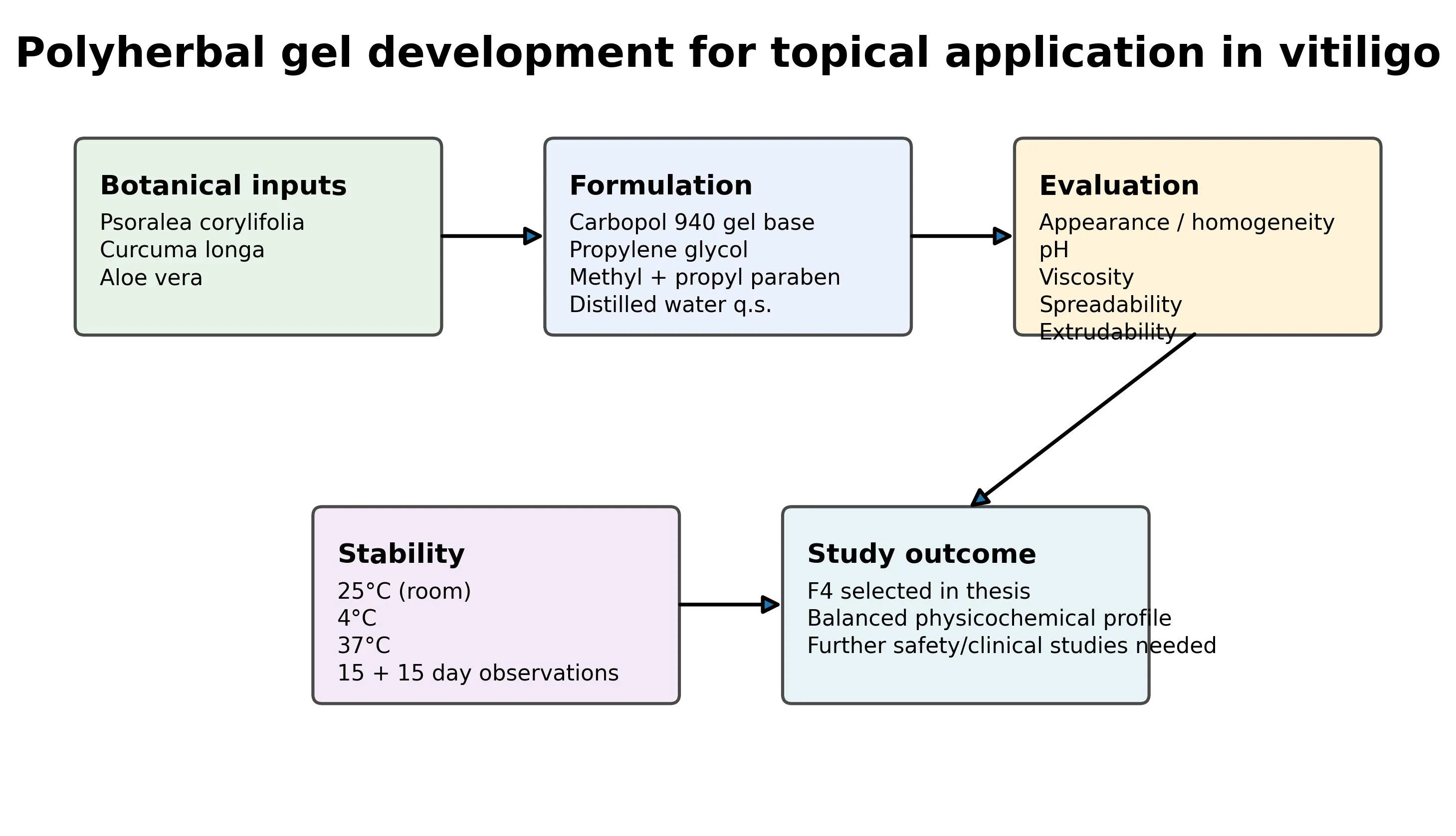
Development, formulation and pharmaceutical evaluation of the Bakuchi–turmeric–Aloe vera polyherbal gel.
2. MATERIALS AND METHODS
2.1 Materials
Bakuchi extract (Psoralea corylifolia), turmeric extract (Curcuma longa) and Aloe vera extract were the principal botanical materials. For herbal materials, recognized quality-control guidance emphasizes identity, purity, contaminants and appropriate marker-based standardization [27,28]. The supplied thesis reports that the extracts were procured from Amruta Herbals Pvt. Ltd., Indore, Madhya Pradesh, India, along with certificates of analysis. Carbopol 940, propylene glycol, methyl paraben, propyl paraben and distilled water were used as formulation excipients/vehicle components according to the thesis formulation.
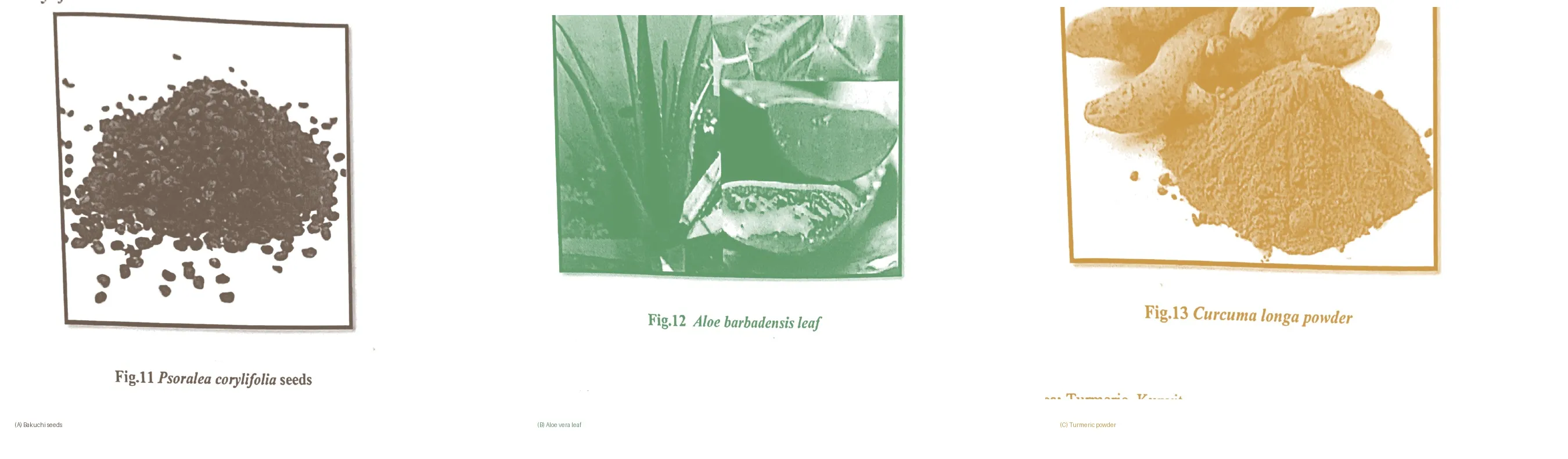
Figure 1. Botanical materials represented in the supplied thesis: (A) Bakuchi (Psoralea corylifolia), (B) Aloe vera and (C) turmeric (Curcuma longa). Images reproduced from the source thesis/project report.
2.2 Formulation design
Six formulations (F1-F6) were prepared by varying the amounts of the three herbal extracts and propylene glycol while maintaining Carbopol 940, methyl paraben and propyl paraben at the quantities specified in the thesis. Distilled water was added q.s. to final volume.
Table 1. Composition of the polyherbal gel formulations F1-F6 as reported in the supplied thesis.
|
Ingredient |
F1 |
F2 |
F3 |
F4 |
F5 |
F6 |
|
Carbopol 940 (g) |
1 |
1 |
1 |
1 |
1 |
1 |
|
Bakuchi extract (g) |
3 |
2.5 |
2 |
1.5 |
1 |
2.5 |
|
Turmeric extract (g) |
2.5 |
2 |
2 |
1.5 |
2 |
1.5 |
|
Aloe vera extract (g) |
2.5 |
1.5 |
1.5 |
0.5 |
1.5 |
0.5 |
|
Propylene glycol (mL) |
1 |
2 |
2.5 |
3 |
3.5 |
4 |
|
Methyl paraben (g) |
0.2 |
0.2 |
0.2 |
0.2 |
0.2 |
0.2 |
|
Propyl paraben (g) |
0.02 |
0.02 |
0.02 |
0.02 |
0.02 |
0.02 |
|
Distilled water |
q.s. |
q.s. |
q.s. |
q.s. |
q.s. |
q.s. |
2.3 Preparation of polyherbal gel
Carbopol 940 was dispersed in distilled water with continuous stirring. Carbopol-based topical gels are widely evaluated using pH, viscosity, spreadability, stability and related application properties, supporting the choice of these pharmaceutical quality attributes in the present work [25,26]. The herbal extracts were weighed and mixed with the required quantity of propylene glycol. The extract mixture was incorporated into the Carbopol dispersion with continued stirring. Methyl paraben and propyl paraben were added, followed by homogenization for approximately 1 hour. The dispersion was neutralized to develop the gel structure, and the final volume was adjusted with distilled water. The prepared formulations were filled into suitable containers/tubes for evaluation.
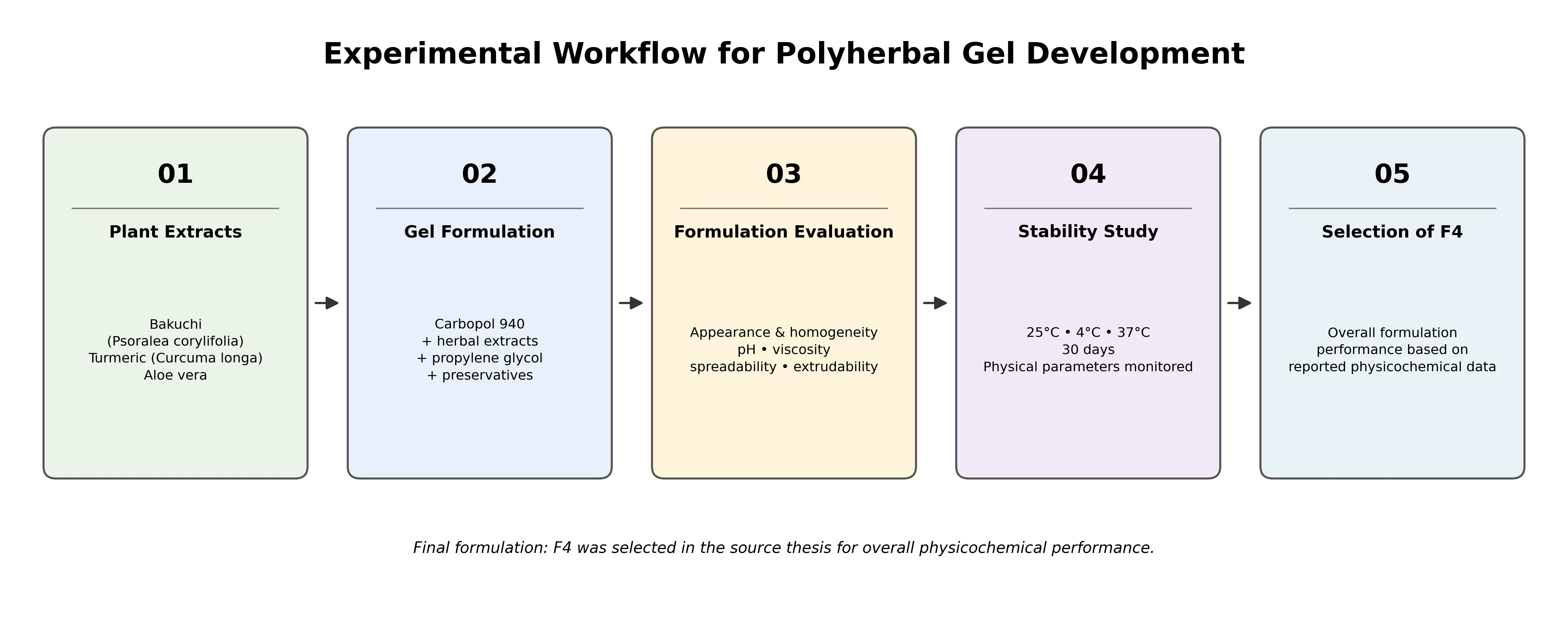
Figure 2. Experimental workflow reconstructed directly from the formulation and evaluation procedure reported in the supplied thesis.
2.4 Evaluation of formulations
2.4.1 Morphological characterization
The formulations were examined visually for colour, odour, homogeneity, presence of lumps and grittiness. The source thesis reports yellow to yellow-orange/orange appearances, pleasant odour and absence of visible lumps and grittiness in the evaluated formulations.
2.4.2 pH
One gram of gel was dispersed in 100 mL distilled water and pH was measured using a digital pH meter according to the procedure described in the thesis.
2.4.3 Viscosity and rheology
Viscosity was measured using a Brookfield viscometer (LVDV-I+) at 10 rpm, with the reading recorded after stabilization as described in the source protocol.
2.4.4 Spreadability
Spreadability was determined by the two-slide method 24 hours after preparation. The thesis reports S = M × L/T, where S represents spreadability, M is the weight attached to the upper slide, L is the distance travelled and T is the time required for separation.
2.4.5 Extrudability
Extrudability was assessed using collapsible tubes by measuring the amount of gel extruded under the specified test conditions. Results were expressed as percentage extrudability.
2.4.6 Stability study
The formulations were stored at 25°C, 4°C and 37°C for 30 days. The study design was interpreted as a short-term physical stability screen; formal long-term stability programs should be designed with reference to applicable stability guidance [29]. Appearance, feel, pH, viscosity and spreadability were monitored during the reported observation periods.
3. RESULTS
The results are presented below at the point where they are discussed, rather than as detached tables. The source thesis reports F4 as the overall optimized formulation. The numerical data show that F6 had the highest individual values for viscosity, spreadability and extrudability; therefore, F4 should be understood as the thesis-selected overall formulation rather than the output of a formal statistical multi-response optimization.
3.1 Morphological characteristics
Table 2. Representative morphological observations reported in the thesis for the later formulations.
|
Formulation |
Colour |
Odour |
Homogeneity |
Grittiness |
|
F4 |
Yellow |
Pleasant |
No lumps |
No |
|
F5 |
Yellow |
Pleasant |
No lumps |
No |
|
F6 |
Yellow-orange |
Pleasant |
No lumps |
No |
The source morphology table also contains an F7 entry, although F7 is absent from the formulation-composition and quantitative evaluation tables. The present manuscript therefore does not treat F7 as an experimental formulation.
3.2 Physicochemical evaluation
Table 3. Physicochemical evaluation of formulations F1-F6. Values reproduced from the supplied thesis.
|
Formulation |
pH |
Viscosity (cP), 10 rpm |
Spreadability (g·cm/s) |
Extrudability (%) |
|
F1 |
5.99 ± 0.04 |
15483 ± 0.47 |
5.00 ± 0.47 |
75.1 ± 0.14 |
|
F2 |
6.55 ± 0.42 |
15550 ± 0.81 |
5.84 ± 0.81 |
81.0 ± 0.006 |
|
F3 |
6.32 ± 0.05 |
16833 ± 0.46 |
6.28 ± 0.46 |
81.6 ± 0.008 |
|
F4 |
6.68 ± 0.32 |
17150 ± 0.79 |
7.53 ± 0.79 |
88.9 ± 0.01 |
|
F5 |
6.61 ± 0.02 |
17016 ± 0.47 |
7.39 ± 0.47 |
88.7 ± 0.06 |
|
F6 |
6.73 ± 0.01 |
17975 ± 0.47 |
7.69 ± 0.81 |
93.3 ± 0.01 |
The pH values ranged from 5.99 ± 0.04 to 6.73 ± 0.01. Viscosity increased from 15,483 ± 0.47 cP in F1 to 17,975 ± 0.47 cP in F6. Spreadability increased from 5.00 ± 0.47 to 7.69 ± 0.81 g·cm/s, while extrudability increased from 75.1 ± 0.14% to 93.3 ± 0.01%. F4 showed pH 6.68 ± 0.32, viscosity 17,150 ± 0.79 cP, spreadability 7.53 ± 0.79 g·cm/s and extrudability 88.9 ± 0.01%.
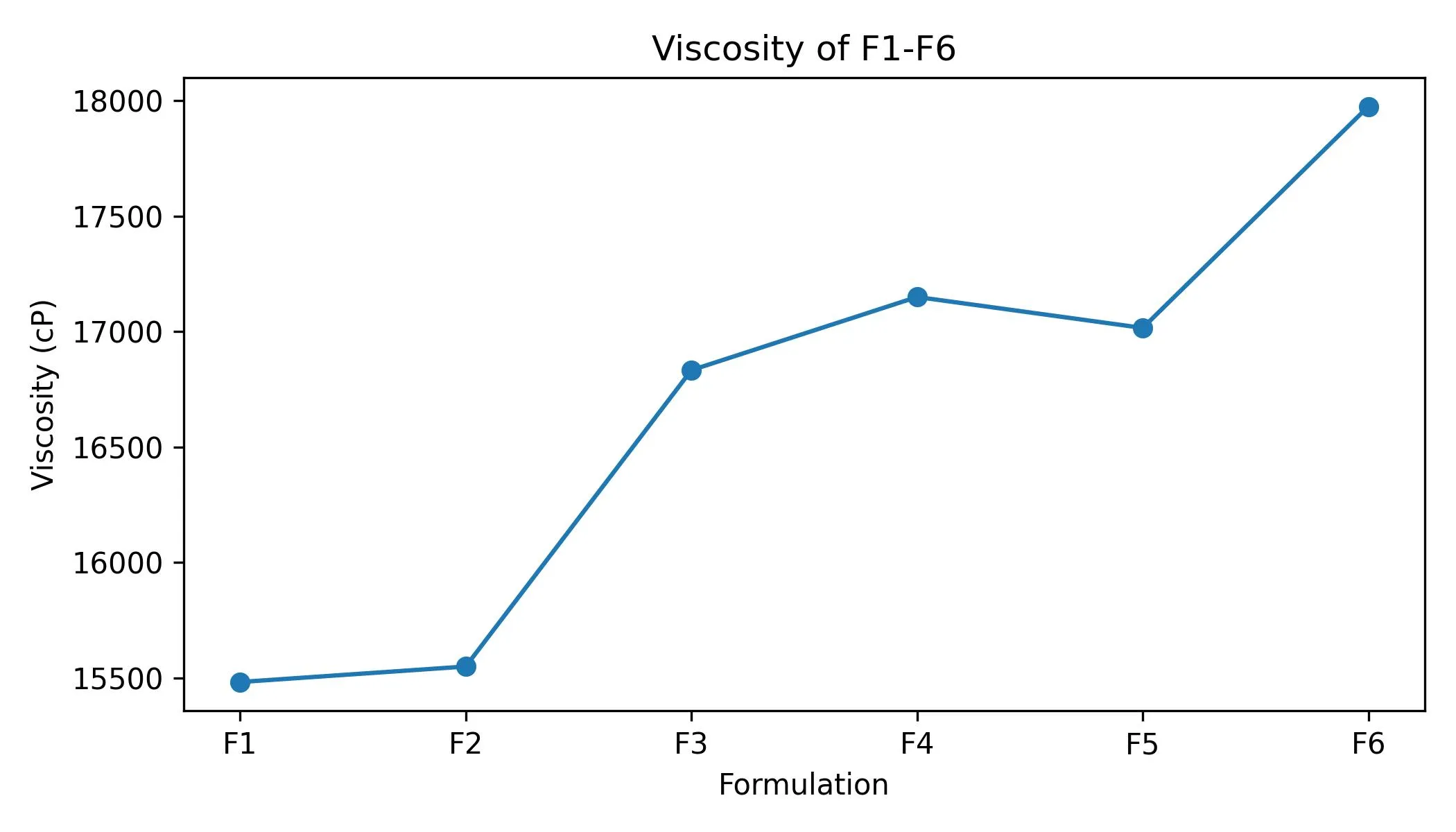
Figure 3. Viscosity profile of formulations F1-F6 at 10 rpm, using the numerical values reported in the thesis.
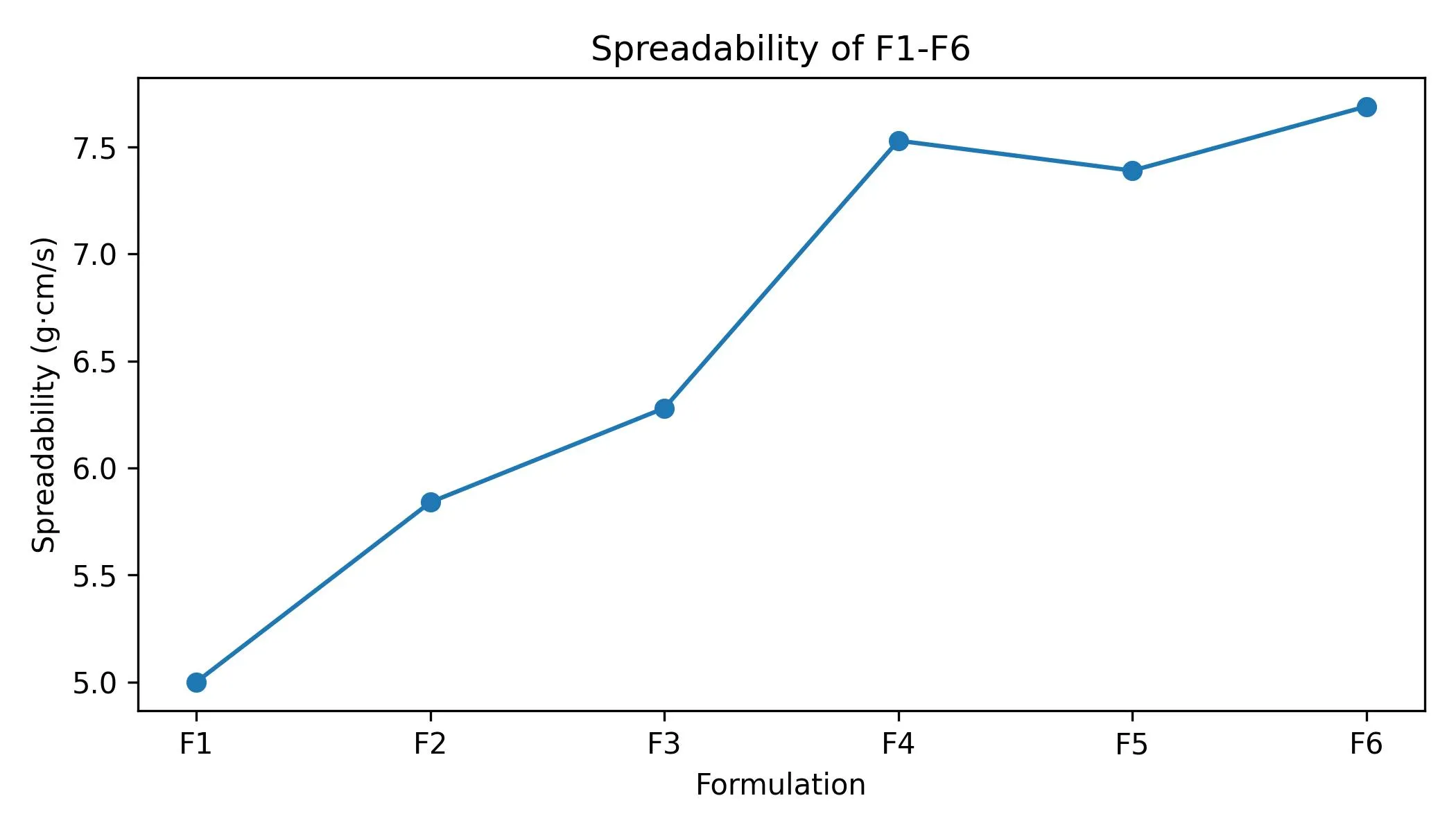
Figure 4. Spreadability profile of formulations F1-F6 using the numerical values reported in the thesis.
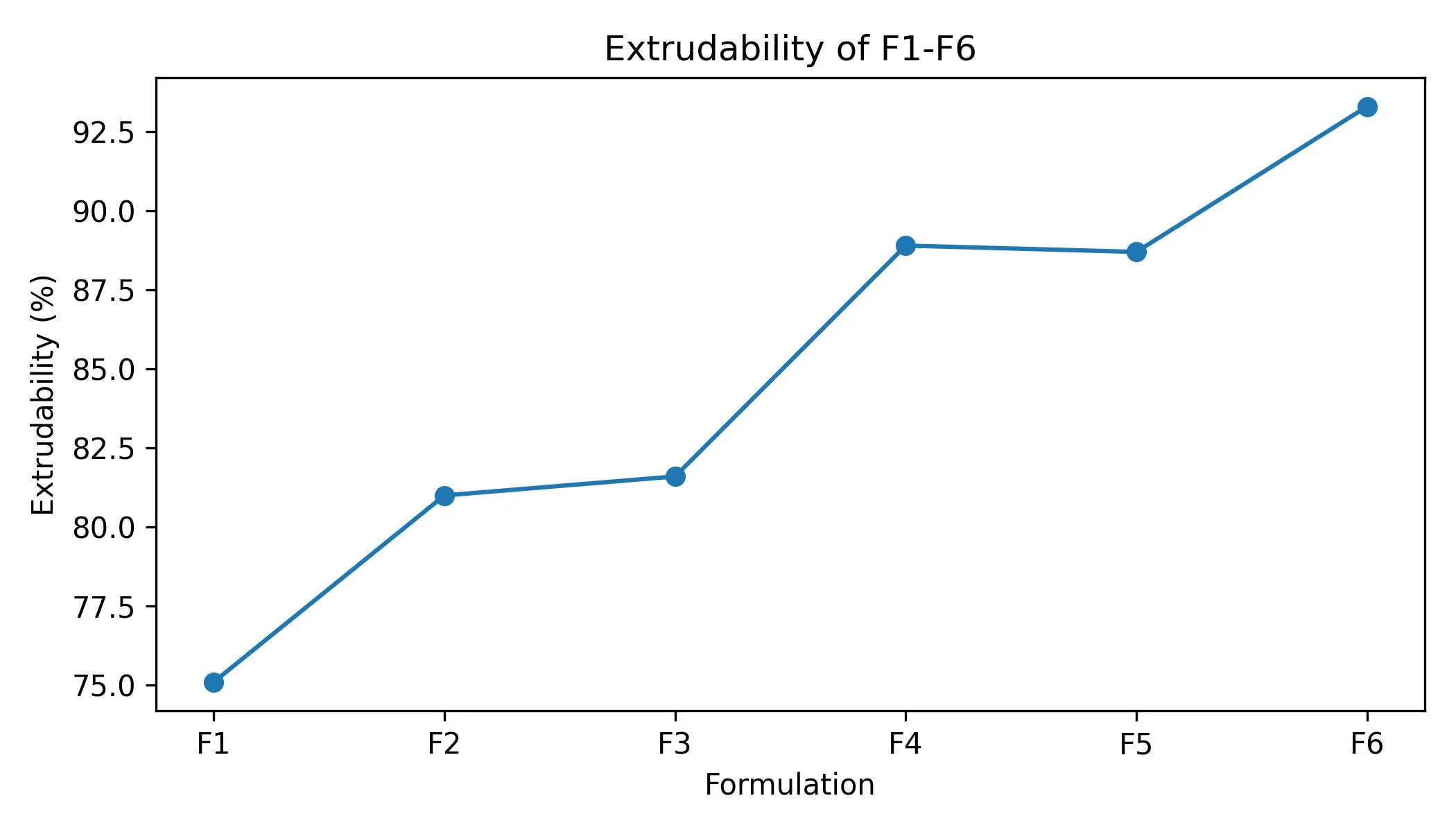
Figure 5. Extrudability profile of formulations F1-F6 using the numerical values reported in the thesis.
3.3 Stability of F4
Table 4. First 15-day stability observations for F4.
|
Parameter |
25°C (first 15 d) |
4°C (first 15 d) |
37°C (first 15 d) |
|
Colour |
Brownish yellow |
Brownish yellow |
Brownish yellow |
|
Feel |
Smooth |
Smooth |
Smooth |
|
pH |
6.73 |
6.71 |
6.80 |
|
Viscosity (cP) |
17975 |
17950 |
18000 |
|
Spreadability (g·cm/s) |
7.69 |
7.67 |
7.67 |
Table 5. Second 15-day stability observations for F4.
|
Parameter |
25°C (second 15 d) |
4°C (second 15 d) |
37°C (second 15 d) |
|
Colour |
Brownish yellow |
Brownish yellow |
Brownish yellow |
|
Feel |
Smooth |
Smooth |
Smooth |
|
pH |
6.74 |
6.79 |
6.80 |
|
Viscosity (cP) |
17951 |
16875 |
17925 |
|
Spreadability (g·cm/s) |
7.19 |
8.69 |
8.72 |
The selected formulation retained its brownish-yellow appearance and smooth feel throughout the reported stability observations. pH remained within a relatively narrow range, while viscosity showed a larger reduction at 4°C during the second 15-day period. Spreadability also varied more substantially during the second observation period. These changes should be confirmed with replicate measurements and predefined acceptance criteria in a future stability program.
4. DISCUSSION
The present study demonstrates that Bakuchi, turmeric and Aloe vera extracts can be incorporated into a Carbopol 940-based topical gel with measurable and reproducible pharmaceutical characteristics. The use of a semisolid topical system is consistent with the importance of localized therapy in vitiligo and with earlier work examining topical delivery systems for this condition [4].
The inclusion of Bakuchi is pharmacologically rational from a traditional and experimental perspective. Psoralea corylifolia contains furanocoumarins and other compounds of interest in pigmentary disorders [6,8]. However, the safety profile requires particular attention. Psoralen-related constituents are photosensitizing, and published reviews have documented phototoxic reactions associated with medicinal plants used in vitiligo [7]. Therefore, future formulation development should include quantitative marker standardization and dedicated phototoxicity/sensitization assessment.
Curcuma longa contributes curcuminoids with antioxidant and anti-inflammatory properties. Reviews of dermatological evidence support continued investigation of turmeric/curcumin preparations but also emphasize limitations in the clinical evidence base [9-11]. Because the present study did not quantify curcuminoids in the final formulation, the biological activity of the gel cannot be predicted from the nominal extract quantity alone.
Aloe vera has a substantial history of topical use and has been investigated for wound healing and skin repair [12,13]. In the current formulation it should be regarded as a complementary botanical ingredient. A direct repigmenting effect in vitiligo cannot be established from the present physicochemical study.
The formulation screening results show that F6 had the highest numerical values for viscosity, spreadability and extrudability, whereas F4 was selected as the overall optimized formulation in the thesis. Recent topical-gel literature also demonstrates that polymer concentration and formulation composition can materially alter viscosity and spreadability [25,26]. This apparent difference is important. Because several variables were changed simultaneously between batches and no formal design-of-experiments or desirability-function optimization was reported, the data support empirical formulation screening rather than statistical optimization. F4 may therefore be described as the thesis-selected optimized batch, but not as a statistically optimized composition.
The pH values across formulations showed comparatively limited variation. The viscosity and application-related properties generally increased in later batches, although the simultaneous change in propylene glycol and extract quantities prevents attribution of the trend to a single factor. A future quality-by-design study could investigate polymer concentration, extract ratio and cosolvent concentration independently and define critical quality attributes and an optimized design space.
The stability observations for F4 suggest acceptable short-term physical stability under the tested conditions [29], particularly with respect to colour and consistency. Nevertheless, the changes in spreadability and viscosity during the second observation period indicate that longer-term stability should be confirmed. Chemical stability of marker compounds, microbial limits and preservative efficacy were not reported and are important for subsequent development.
Most importantly, the present study should not be interpreted as evidence of clinical efficacy. Current international recommendations for vitiligo emphasize evidence-based individualized treatment [2,3], while reviews of herbal/natural products continue to identify limitations in clinical evidence [5]. The present contribution is therefore best positioned as a formulation-development study that establishes a basis for subsequent biological and clinical investigation.
5. CONCLUSION
A polyherbal topical gel containing Bakuchi, turmeric and Aloe vera was developed in six trial formulations using Carbopol 940 and evaluated for key pharmaceutical properties. The formulations showed measurable differences in pH, viscosity, spreadability and extrudability, with F4 selected as the overall optimized batch in the source thesis. Short-term stability observations indicated maintenance of colour and smoothness, with relatively limited pH changes. The study supports the feasibility of the selected botanical combination as a topical formulation platform, but it does not establish clinical efficacy or safety in vitiligo. Further work should focus on phytochemical standardization, phototoxicity and skin-safety testing, microbiological quality, in-vitro release/permeation, and appropriately designed clinical studies.
6. LIMITATIONS
The study is a formulation-development investigation and does not include clinical assessment of repigmentation.
Microbial quality and phototoxicity testing were not reported.
No formal design-of-experiments or inferential statistical optimization was reported.
7. DECLARATIONS
Acknowledgments: The authors acknowledge [Chameli Devi Institute of Pharmacy] and Amruta Herbals Pvt. Ltd., Indore, Madhya Pradesh, India, for supplying the herbal extracts with certificates of analysis, as recorded in the source thesis.
REFERENCES

Ishika Panchal *, Nidhi Pal, Akanksha Thakur, Shanu Yadav, Dr. Arun Kumar Gupta, Development And Pharmaceutical Evaluation Of A Polyherbal Gel Containing Psoralea Corylifolia, Curcuma Longa And Aloe Vera For Topical Application In Vitiligo, Int. J. of Pharm. Sci., 2026, Vol 4, Issue 10, 145-156.https://doi.org/10.5281/zenodo.23075745
 10.5281/zenodo.23075745