

We use cookies to ensure our website works properly and to personalise your experience. Cookies policy
Department of Pharmacology, SHEAT College of Pharmacy, Ghani Ayar, Varanasi, Uttar Pradesh, India
Musa paradisiaca is a monoherbacious plant belonging to the family Musaceae, distributed throughout the tropical and subtropical countries. The plant parts are widely used to treat different diseases in humans in traditional medicines, such as diabetes, diarrhea, dysentery, hypertension, hysteria, epilepsy, leprosy, hemorrhages, renal calculi and ulcers. The main pharmacological activities of this plant are antilithiatic, antioxidant, antibacterial, antidiabetic, antiulcer, antidiarrhoeal, hypocholesterolaemic, hepatoprotective, antisnake venom, wound healing, hair growth promoting, antifungal and antimenorrhagic activity. This review presents information on morphology, traditional uses, phytochemistry and pharmacological activities of Musa paradisiaca.
Herbal medicines have been used by the mankind since time immermorial. Ayurveda, the oldest traditional system of India, reveals that ancient Indians had a rich knowledge of medicinal value of different plants. India has been endowed with a very rich flora owing to the extreme variations in climate and geographical conditions prevalent in the country. With the advent in science, many of the crude drugs used in traditional system have been investigated scientifically. Musa paradisiaca Linn., known as Kadali in sanskrit is a highly valued medicinal plant widely used in Indian traditional system of medicine for curing various ailments1. In this review a comprehensive account of the morphology, phytochemical constituents, traditional uses, pharmacological activities and toxicity study are included in view of the many recent findings of importance on this plant.
Taxonomy
Kingdom: Plantae
Subkingdom: Tracheobionta
Super division: Spermatophyta
Division: Magnoliophyta
Class: Liliopsida
Subclass: Zingiberidae
Order: Zingiberales
Family : Musaceae
Genus : Musa
Species : paradisiaca
Synonyms2
Musa sapientum L., M. paradisiaca L. var sapientum (L) Kuntze, Plantain
Vernacular names3
Sanskrit :Vana laxmi, Kadali, Rambha (unripe), Mochaka
English : Plantain or Banana
Hindi : Kela Maharashtrian : kela
Gujarati : Keda
Sindhi : Kewiro
Telugu : Kadalamu, Ariti
Tamil : Kadali
Malayali : Vasha
Konkan : Keli
Flowering and Fruiting time: Throughout the year Parts Used: Fruit, leaves and stems
Distribution
Edible Bananas originated in the Indo-Malaysian region reaching to northern Australia. They were known in the Mediterranean region in the 3rd Century B.C and are believed to have been first carried to Europe in the 10th Century A.D. Early in the 16th Century, Portuguese mariners transported the plant from the West African coast to South America. It even spread into the Islands of the Pacific and to the West Coast of Africa as early as 200-300 BC. In different countries about 300 varieties of bananas are grown, of which a vast majority have been growing in Asian, Indo-Malaysian and Australian tropics and are now widely found throughout the tropical and subtropical countries. India, Philippines, China, Brazil, Indonesia, Mexico, Colombia, Thailand are the top banana producing countries4. Bananas and Plantains are today grown in every humid tropical region and constitute the fourth largest fruit crop of the world, following the grape, citrus fruits and apple.
Morphology
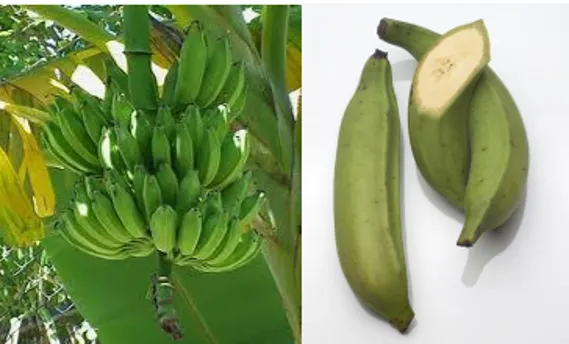
Habit: One of the tallest herbaceous plants, Musa paradisiaca's pseudostem is created by the imbricate leaf sheaths and is soft and succulent. A substantial rhizome is another distinguishing feature (up to 9 m in length).
Flower: The inflorescence, which begins at the top of the false trunk and spirals downward, produces clusters of androgynous flowers first. After that, the inflorescence generates clusters of female flowers. Flowers are comprised of an upper ovary and five stamens.
Fruit: The cultivated versions of this berry typically do not contain seeds and take on a morphology that is fleshy and long. The exterior layer of fresh fruits has a bluish-green hue, is glossy, and is mucilaginous; in contrast, the inner layer of fresh fruits is white in colour, powdery, and contains very few seeds, if any at all.
Leaves, stem, root: This evergreen plant has the potential to grow to a height of 6 metres. The leaves are most accurately described as being enormous, unbroken, and straightforward. In most cases, they take on a pinnatifid shape and originate from a rhizome that grows underground. The dried out leaf bases cluster together to form a fake trunk5, 6.
Phytochemical constituents
Tannin and gallic acid are components of the plant that are found in the vegetative parts of the plant. Roughly 22 percent of the mature fruit is made up of sugar, 4.8 percent of the starch, 1 percent of the fat, and 6 to 13 percent of the extractives that are not nitrogenous. It has a somewhat high vitamin C content, as well as modest vitamin B content7. It was in unripe bananas that researchers first found the flavonoid that is now known as leucocyanidin. The mineral makeup of the fruit includes magnesium, iron, potassium, zinc, copper, phosphorus, aluminium, sodium, manganese, and nitrogen. Manganese is also present in the fruit. In the fruit, there are high concentrations of molecules of varying sizes, including both small and large. The immature fruit is abundant in calcium and selenium, but the ripe fruit has a significantly larger quantity of phosphorus and manganese in it. Aspartic acid, glutamic acid, and leucine are the three amino acids that are found in mature fruit in the greatest quantities8. The fruit contains a compound referred to as sitoindoside IV, which is an acylsteryl glycoside. The ash of the mature fruit husk contains a number of different minerals, including carbonates of potash and soda, chloride of potassium alkaline phosphates, lime silica, and others. The green plantain contains a significant amount of tannin. The juice that is extracted from the stems of plantain flowers contains a variety of different chemicals, some of which are listed below: potash, soda, lime, magnesium, alumina, chlorides, sulphuric anhydride, phosphoric anhydride, silica, and carbon anhydride.
Traditional Uses
Root is anthelmintics, antibillious and a valuable alterative. Juice of tender root is used in haemorrhage. It is also used in anaemia and Cachexia. Root juice is used for urine retention, gonnorrhoea, bronchocele and strumous affections. Flowers are Astringent. Cooked flowers are used in diabetes. Juice of flowers mixed with curds used in dysmennorrhoea and Menorrhagia. Juice of stem is used in otalgia and haemoptysis. Ripe fruit is Laxative (fully ripe fruit taken in early mornings), emollient, demulcent and nutrient9. Unripe fruit is cooling, astringent, and antiscorbutic (in dry state) and used in diabetes, diarrhea and dessert. Flour of green plaintain is used as chappatis in cases of dyspepsia with flatulence and acidity. Leaf is used as cool dressing to denuded wound and blisters.
Reported Pharmacological Activities
Antiurothiatic Activity
Panigrahi et al., reported antiurolithiatic effect of aqueous-ethanol extract of M. paradisiaca pseudostem in ethylene glycol-induced nephrolithiasis in rats as evidenced by significant inhibition of Ethylene glycol (0.75%) and Ammonium Chloride (1%) induced rise in crystalluria and oxaluria, hypercalciuria, polyuria, crystal deposition in urine, raised serum urea, and creatinine as well as nitric oxide concentration and erythrocytic lipid peroxidation in lithiatic group10. Gopakumara reported antiurolithiatic activity of core of the pseudostem of Musa paradisiaca in clinical study11.
Antiulcerative Activity
Elango et al., studied antiulcer activity of a siddha drug-ripe fruit Musa paradisiaca bhasma in rats in which ethanol (80%) induced acute ulcer model and acetic acid induced chronic ulcer model. The bhasma was administered in the dose of 10 and 20 mg/kg orally 1 hour prior to ulcer induction in acute model and administered daily for period of 10 days in chronic model. The antiulcer activity of the bhasma was indicated by significant reduction of the ulcer index and rise in mucin content. Antioxidant activity was also observed by estimation of catalase, superoxidase dismutase, lipid peroxidation12. Herbert et al., investigated the cytoprotective effect of the methanolic extract of Musa paradisiaca in combination with catecholamines on indomethacin-induced peptic ulcer. The pylorus ligation technique was used for cytoprotective and Anti-secretory action of the extract. The results suggested that the methanolic extract of Musa paradisiaca possess cytoprotective effect against indomethacin-induced ulceration.13
Analgesic activity
Hallikeri et al., also reported antinociceptive activity of corm extract of M. paradisiaca cv Puttabale in acetic acid induced writhing test, tail-flick test and hot plate test [30]. Gupta et al., reported that the aqueous extract of M. paradisiaca (250 mg/kg, 1000mg/kg, p.o.) showed significant analgesic activity in the experimental models (hot-plate method and writhing method) of rats14.
Adaptogenic activity
Ittiyavirah and Anurenj studied antistress activity of acetone extracts of unripe fruit peels and ripe fruit peels acetone extracts of M. paradisiaca in stress induced depression, chronic variable stress and anoxia stress models of animal and result indicated significant antistress activity of unripe fruit peel extract in stress induced depress model while both extracts showed protective effect in other two models15.
Antidiarrhoeal activity
Sampath Kumar et al., 2012 discussed the antidiarrhoeal activity. The banana pectin (a soluble polymer) can help normalize bowel movement and stop constipation. However, intake of banana may benefit people suffered from diarrhea. In a study, 31 patients with diarrhea and receiving enteral feedings were randomized to receive either banana flakes or medical treatment for diarrhea. The researchers found that the banana flake group had fewer diarrheas clinically; with 57% of the subject’s were diarrhea free on their last study day when compared to 24% of the medically treated subjects16. This study proves the antidiarrhoeal activity of Musa paradisiaca.
Antidiarrhoeal activity of Banana flakes was also studied by Emery et al., 1997. Banana flakes were tested and found effective in the treatment of diarrhea in critically ill patients receiving enteral feedings17.
Anti-snake venom activity
Prasobh et al., 2014 studied the anti-snake venom activity. Plantain juice is used as an antidote for snake bite. The roots can arrest hemoptysis and possess strongly astringent and anthelmentic properties18. Borges et al., 2005 reported the invitro neutralizing capacity of Bothrops jararacussu and Bothrops neuwiedi snake venoms by the stem juice of Musa paradisiaca. The phospholipase A2 (PLA2) and hemorrhagic activities induced by the venom was inhibited by the extract as it forms unspecific complex with the venom protein. However, the in vivo activity of the extract in mice was not significant to protect against the venom19.
Wound healing activity
Mokbel et al., 2005 studied the wound healing activity of Musa paradisiaca. The rats were given graded dose of (50-200 Kg/day) of aqueous and methanol extract of Musa paradisiaca orally for a period of 10-21 days depending upon the type of study. The extract when studied for incision and dead space wounds parameters increased wound breaking strength and levels of hydroxyl proline, hexuronic acid, hexosamine, superoxide dismutase, reduced glutathione in the granulation tissue and decreased the percentage of wound area, scar area. When compared with the control group the extracts showed good results20.
Hair Growth promoting activity
Andrade et al., 2008 carried out the hair Growth promoting activity of Musa paradisiaca .The extract of Musa paradisiaca unripe fruit when tested for the hair growth activity was assayed by studying hair length and microscopic study of follicles in vehicle control, 2% minoxidil treated and extracts treated animals. The findings suggest that extract of Musa paradisiaca unripe fruit has potential as a hair growth promoter. An extract of the trunk's juice can be used to massage scalp to promote healthy growth of hair and preventing hair loss.21
Antimenorrhagic activity
Consuming one cooked banana flower with one cup of curd or yogurt is one of the most efficient ways of treating excessive bleeding during menstruation. The cooked banana flower and curd combination increases the level of progesterone in the body and thereby reduces bleeding associated with menorrhagia. The flowers are also taken as an infusion in normal doses for painful menstruation. Thus Sampath Kumar et al., 2012 described the antimenorrhagic activity of banana flower22.
Antidepressant Activity
Parle and Malik reported significant antidepressant potential of Musa paradisiaca fruit paste (5%, 10% and 20% w/w once daily for 15 successive days) in forced swim test and tail suspension test. Baclofen (10 mg/kg, i.p.), prazosin (62.5 mg/kg, i.p.) and p-CPA (100 mg/kg, i.p.) significantly antagonized this reduction in immobility time. Furthermore, Musa paradisiaca paste inhibited significantly the Monoamine oxidase and malondialdehyde levels. These findings reveal the anti-depressant potential of banana fruit appears to be related to anti-oxidant, pro adrenergic, pro-serotonergic and/ or Monoamine oxidase inhibitory activity exhibited by the banana fruit23. Darji and Galani also reported significant reduction of the immobility time with 14 days treatment of hydroalcoholic extract of Musa paradisiaca fruit (250 and 500 mg/kg, p.o.) in the forced swim test and tail suspension test. Antidepressant potential of the fruit extract was reduced by Haloperidol (0.1 mg/kg, i.p.) and increased by Bromocriptine mesylate (2 mg/kg, i.p.). The neurochemical estimation revealed the level of norepinephrine, dopamine and serotonin were increased with 14 days fruit extract treatment24.
Antidiabetic Activity
Ojewole and Adewunmi reported significant hypoglycemic effect of methanolic extract of mature, green fruits of Musa paradisiacal (100-800 mg/kg p.o.) in normal and streptozotocin -treated, diabetic mice25. The Ethanol and Ethanol: water (1:1) extracts of M. paradisiaca flowers were administered to normal and alloxan induced diabetic rats. The blood glucose levels were measured daily after oral administration of extracts at doses of 100, 250 and 500 mg/(kg.d). Both the extracts reversed the permanent hyperglycemia within a week in alloxan induced diabetic rats. The EtOH extract (250 mg/kg) was found to be 7.69% more potent hypoglycemic effect than standard oral hypoglycemic drug, glibenclamide 0.2 mg/kg b.w., respectively26.
Antihypertensive Activity
Osim et al., reported antihypertensive effect of ripe banana pulp (50 g/rat/day) in deoxycorticosterone enantate (DOC, 25 mg/rat) induced hypertensive rats. This effect may be due to the high tryptophan and carbohydrate content of banana that increases serotonin levels and gives serotonin-mediated natriorexic effect27. Orie reported that the effect of aqueous extract of plantain (Musa paradisiaca) showed concentration dependant hypotensive effect in both noradrenaline and potassium chloride-contracted aortic rings and portal vein isolated from rat28.
Antilipidemic Activity
Vijayakumar et al., 2009 carried out the hypocholesterolaemic activity of Musa paradisiaca. In a study of male rats on a diet containing lard (50 g/kg) and cholesterol (5 g/kg), freeze-dried banana pulp showed a marked cholesterol-lowering effect when incorporated into a diet at the level of 300 or 500 g/kg, while the hot air dried banana pulp did not show the effect. Flavonoids isolated from unripe fruits showed hypolipidemic activity evidenced by decrease in cholesterol, triglycerides, free fatty acids and phospholipids levels in serum, liver, kidney and brain of rats. The cholesterol lowering effect was attributed to a higher degradation rate of cholesterol than synthesis29.
Hepatoprotective activity
Iweala et al., 2011 investigated the biochemical and histological effects of consumption of Musa paradisiaca supplemented diet in hepatotoxic rats. Twenty-four rats were divided into four hepatotoxic and non-hepatotoxic groups and fed a Musa paradisiaca-supplemented diet30. The parameters measured included alanine transaminase, aspartate transaminase, total protein, glucose, total triglycerides, total cholesterol, reduced glutathione, lipid peroxidation and packed cell volume. Histological changes in tissue sections of liver and testes were also examined. The results obtained showed that alanine transaminase and aspartate transaminase did not significantly change except in the hepatotoxic control group which showed an increase in aspartate transaminase31. Cholesterol and triglycerides were significantly.
Antioxidant Activity
Methanol extracts of banana flowers possess antioxidant properties and thereby stabilize the free radicals formed as a result of various metabolic processes in the body. If the free radicals are not neutralized, their unstable electrons react with the DNA and proteins of human cells and alter their properties. This can lead to several chronic conditions, including cancer and heart disease. So banana flower extracts can be used to make health supplements due to its antioxidant potential32. Thus Loganayaki et al., 2010 proved the antioxidant effect of Musa paradisiaca.
Antibacterial activity
Karadi et al., 2011 studied the in vitro antimicrobial effect of crude extract of Musa paradisiaca and Cocos nucifera on bacteria Escherichia coli, Staphylococcus aureus, Bacillus subtilis, Pseudomonas aeruginosa and fungi Candida albicans, Candida tropicalis & Aspergillus niger33. The agar disc diffusion method was used to 167 determine the inhibitory effect of both the test plants. Both the plants extract showed inhibitory effect on test organisms. The extract of Musa paradisiaca produced wider zones of inhibition against Candida albicans, than the crude extract of Cocos nucifera34.
CONCLUSION
Medicinal plants have attracted considerable global interest in recent years. Musa paradisiaca is a medicinal plant with diverse pharmacological activities. The main pharmacological activities of this plant are antilithiatic, antioxidant, antibacterial, antidiabetic, antiulcer, antidiarrhoeal, hypocholesterolaemic, hepatoprotective, antisnakevenom, wound healing, hair growth promoting, antifungal and antimenorrhagic activity. Due to the medicinal properties there is enormous scope for future research on Musa paradisiaca. It is of great importance to carry out further research to investigate the unexploited potential of this plant for the discovery of safer drugs.
REFERENCES

Aman Kumar, Radhika Patel, A Phytopharmacology of Musa paradisiaca, Int. J. of Pharm. Sci., 2026, Vol 4, Issue 8, 2754-2762. https://doi.org/10.5281/zenodo.21981129
 10.5281/zenodo.21981129