- Nanotechnology is the science and application of materials at the nanoscale, generally within the range of approximately 1–100 nanometers for nanotechnology applications. At this scale, materials may exhibit distinctive physical, chemical, and biological properties compared with their larger-scale forms. In pharmaceutical sciences, nanotechnology is used to develop drug delivery systems that can improve the performance of therapeutic agents. These systems are designed to transport drugs, protect them from degradation, modify their release, and potentially improve their distribution within the body. Traditional drug delivery systems, including tablets, capsules, injections, and conventional suspensions, are widely used in medical practice. However, some drugs have poor water solubility, low bioavailability, short biological half-lives, or significant adverse effects. For example, liposomal formulations can encapsulate certain anticancer drugs and modify their distribution in the body.
2.Classification of Nanotechnology-Based Drug Delivery Systems
Nanotechnology-based drug delivery systems can be classified according to their composition and structure
2.1 Liposomes
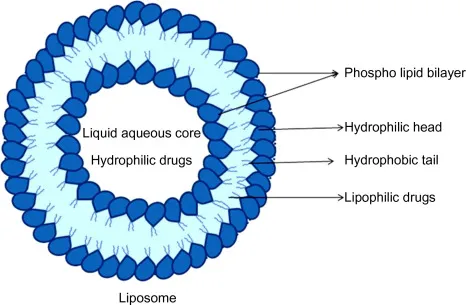
- Liposomes are spherical vesicles composed primarily of phospholipid bilayers surrounding an aqueous compartment.
- Their structure allows them to carry different types of drugs:
- Hydrophilic drugs may be incorporated into the aqueous compartment.
- Lipophilic drugs may be incorporated into the lipid bilayer.
- Advantages:
- Can carry different classes of drugs.
- May protect drugs from degradation.
- Can modify drug distribution and release
- Some formulations have demonstrated improved therapeutic performance.
- Applications:
- Cancer treatment.
- Antifungal therapy.
- Antimicrobial delivery.
- Vaccine and other therapeutic research.
2.2 Polymeric Nanoparticles
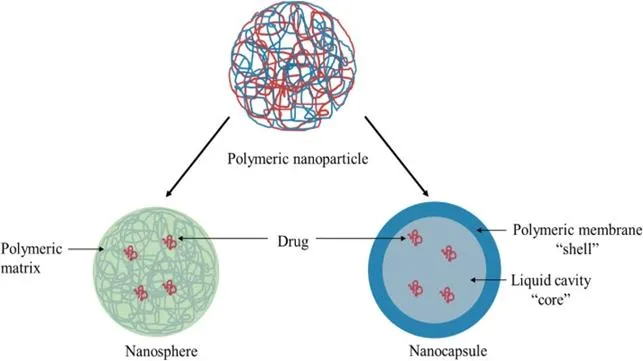
- Polymeric nanoparticles are nanoscale systems made from natural or synthetic polymers.
- Depending on their structure, they may be classified as:
- Nanocapsules: The drug is contained within a core surrounded by a polymeric membrane.
- Nanospheres: The drug is distributed throughout a polymeric matrix.
- Commonly investigated materials include biodegradable polymers such as polylactic-co-glycolic acid (PLGA).
Advantages:
- Drug release can be modified
- Different drug can be incorporated
- Biodegradable polymers can be in suitable formulation
- Surface properties can be modified
Application:
- Cancer research.
- Protein and peptide delivery.
- Vaccine development.
- Controlled-release formulation
2.3 solid lipid nanoparticles
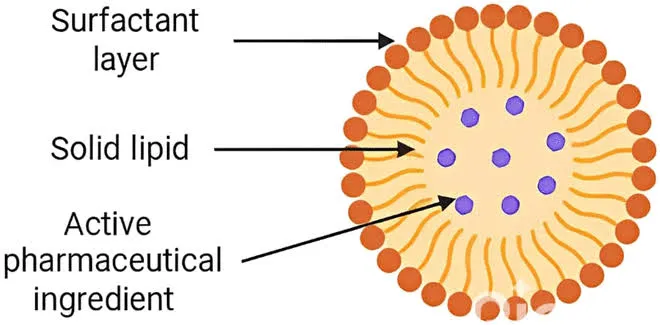
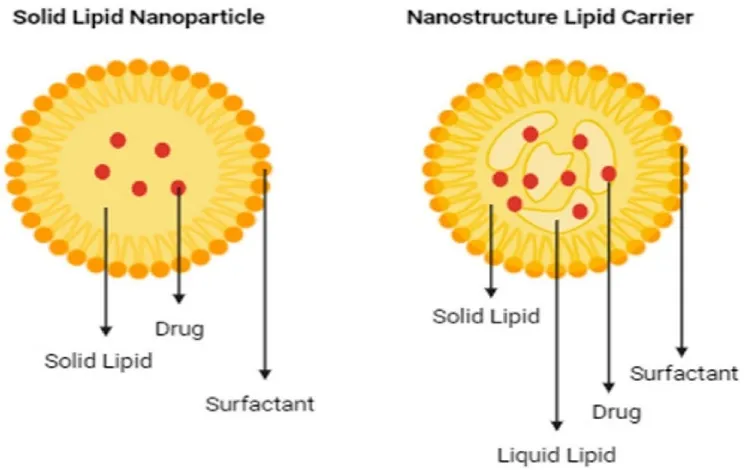
- Solid lipid nanoparticles are colloidal carriers containing a lipid matrix that remains solid under appropriate storage and physiological conditions.
- Solid lipids.
- Surfactants or stabilizers.
- An active pharmaceutical ingredient.
- An aqueous phase used during preparation
- Advantages:
- May improve the bioavailability of certain drugs
- Can use physiologically compatible lipid material
2.4 Nanostructured Lipid Carriers
- Nanostructured lipid carriers are lipid-based nanocarriers containing a mixture of solid and liquid lipids.
- The combination creates a less ordered lipid matrix than that of many solid lipid nanoparticles.
Advantages:
- Topical drug delivery.
- Dermatological formulations.
- Delivery of poorly water-soluble compounds.
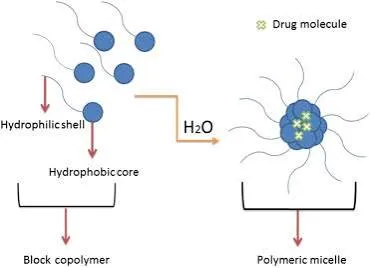
2.5 Polymeric Micelles
- Polymeric micelles are self-assembled structures formed from amphiphilic polymers.
- They commonly contain a hydrophobic core and a hydrophilic outer region.
- The hydrophobic core can accommodate certain poorly water-soluble drugs, while the outer region helps stabilize the structure in an aqueous environment.
- Advantages:
- May improve the apparent solubility of poorly soluble drugs.
- Can be designed for modified drug release.
- Surface properties can be tailored.
2.6 Dendrimers:
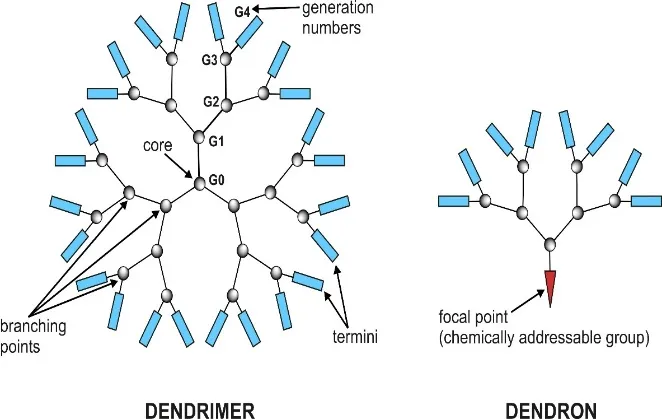
- Dendrimers are highly branched, approximately spherical macromolecules with a defined architecture and multiple surface functional groups.
- Drugs may be associated with dendrimers through encapsulation, electrostatic interactions, or chemical attachment.
- Advantages:
- Precisely controllable molecular architecture.
- Multiple sites for drug attachment or surface modification.
- Potential for targeted delivery research.
2.7 Lipid Nanoparticles
- Lipid nanoparticles are an important platform for delivering nucleic acids and other therapeutic molecules.
- They are particularly significant in messenger RNA delivery and gene-based therapeutics.
- Application
- mRNA delivery.
- Gene-silencing approaches.
- Nucleic-acid-based medicines.
- Vaccine technology.
2 Principles of Nanotechnology in Drug Delivery
Nanotechnology-based drug delivery systems are developed using several important principles.
- Nanoscale particle size
- Nanocarriers can be engineered with small particle sizes and specific surface properties. These characteristics influence drug solubility, cellular uptake, circulation, and tissue distribution.
- However, nanoparticles do not automatically reach every target tissue. Their behavior depends on particle size, surface chemistry, biological barriers, and the characteristics of the disease.
3.2 Improved drug solubility
- Some pharmaceutical compounds have low aqueous solubility, which can limit their absorption and bioavailability.
- Nanocarriers can incorporate poorly soluble drugs into lipid matrices, polymeric structures, or other suitable formulations.
- This may improve apparent solubility and drug availability, depending on the formulation.
- 3.3 Protection from degradation
- Nanocarriers may protect encapsulated drugs from environmental conditions, enzymatic degradation, or premature breakdown.
- This is particularly relevant for certain proteins, peptides, and nucleic-acid-based therapeutics.
- 3.4 Controlled drug release
- Nanocarriers can be designed to release drugs gradually or in response to specific conditions.
- Release may be influenced by:
- Diffusion of the drug through the carrier.
- Degradation of the carrier material.
- Changes in pH.
- Enzymatic activity.
- Temperature or other external stimuli in specially designed systems.
- 3.5 Targeted drug delivery
- Targeted delivery aims to increase drug accumulation or uptake in a particular tissue or cell population.
- Two broad approaches are used:
- Passive targeting: Relies on the distribution characteristics of the nanocarrier and the biological environment of the target tissue.
- Active targeting: Uses ligands, antibodies, peptides, or other recognition molecules to interact with specific cellular targets.
- Active targeting does not guarantee that a nanocarrier will reach the intended tissue or improve clinical outcomes. Its effectiveness depends on biological and formulation-related factors.
4. Preparation Methods of Nanotechnology-Based Drug Delivery Systems
- The preparation method influences particle size, drug loading, stability, drug release, and the suitability of the final formulation for administration.
4.1 Solvent Evaporation Method
This method is commonly investigated for polymeric nanoparticles.
Procedure:
- Dissolve a suitable polymer and drug in an appropriate volatile solvent.
- Disperse this organic phase in an aqueous phase containing a stabilizer.
- Form an emulsion using an appropriate mixing method.
- Remove the solvent by evaporation.
- Collect and purify the resulting nanoparticles.
- Evaluate particle size, drug loading, and stability.
- The method is useful for incorporating certain poorly water-soluble drugs into polymeric carriers.
4.2 Nanoprecipitation Method
- Nanoprecipitation is a method for producing polymeric nanoparticles.
- General principle:
- A polymer and drug are dissolved in a suitable solvent and introduced into a nonsolvent phase. As the solvent mixes with the nonsolvent, the polymer precipitates and nanoparticles form.
- Particle characteristics depend on factors such as solvent selection, mixing conditions, polymer concentration, and stabilizer composition.
4.3 Thin-Film Hydration Method
- General procedure:
- Dissolve appropriate lipids in a suitable organic solvent.
- Remove the solvent to form a thin lipid film.
- Hydrate the film using an appropriate aqueous phase.
- Allow vesicles to form.
- Reduce particle size when necessary.
- Remove unencapsulated drug and evaluate the formulation.
- This method is widely used in laboratory research, although additional processing and optimization may be necessary for a particular products
- 4.4 Ultrasonication uses high-frequency sound energy to reduce particle or vesicle size.
- It is used in laboratory preparation of some liposomes, lipid nanoparticles, and other nanoscale dispersions.
- Potential limitations include heating, material degradation, and difficulties in scaling up some procedures.
4.5 Microfluidic Methods
- Microfluidic technologies control the mixing of small volumes of fluids within specialized channels.
- They can provide controlled mixing conditions for preparing certain lipid nanoparticles and other nanocarriers.
- Potential advantages include reproducibility and control over particle characteristics. However, process optimization and scale-up validation remain necessary
5 . Mechanism of Drug Delivery Using Nanocarriers
The mechanism of nanotechnology-based drug delivery generally involves several stages.
Stage 1: Drug loading
The active pharmaceutical ingredient is encapsulated, incorporated, adsorbed, or chemically attached to the nanocarrier.
Stage 2: Administration
The formulation is administered through an appropriate route, such as oral, intravenous, topical, or another route depending on the product.
Stage 3: Transport in the body
The carrier interacts with biological fluids, proteins, tissues, and cellular barriers.
These interactions influence circulation time, distribution, and elimination.
Stage 4: Tissue accumulation
The nanocarrier may accumulate in particular tissues depending on its properties and the biological environment.
Some targeting approaches use specific molecular interactions to improve uptake by selected cells.
Stage 5: Cellular uptake
Certain nanocarriers enter cells through processes such as endocytosis. The precise uptake mechanism depends on the carrier and the target cell.
Stage 6: Drug release
The drug is released through diffusion, carrier degradation, chemical cleavage, or other formulation-dependent mechanisms.
Stage 7: Therapeutic action
The released drug interacts with its biological target and produces the intended therapeutic effect.
Important: Not all nanocarriers follow the same pathway. Their behaviour depends on composition, particle characteristics, administration route, and the drug being delivered.
6 Advantages of Nanotechnology in Drug Delivery
- Improved solubility: May improve the formulation of poorly water-soluble drugs.
- Enhanced stability: Can protect selected drugs from degradation.
- Modified drug release: Allows the design of controlled or sustained-release systems.
- Altered biodistribution: Can change where a drug accumulates in the body.
- Potential for targeted delivery: May improve delivery to selected cells or tissues.
- Reduced toxicity in some formulations: Modified drug distribution can reduce certain adverse effects.
7 Applications of Nanotechnology in Drug Delivery Systems
7.1 cancer treatment
- Cancer is an important area of nanomedicine research because some anticancer drugs can affect both cancerous and healthy cells.
- Nanocarriers may modify the distribution of anticancer drugs and, in some cases, improve the balance between therapeutic effects and adverse effects
- Applications include:
- Liposomal anticancer formulations.
- Nanoparticle-mediated drug delivery.
- Targeted delivery research.
- Combination drug-delivery systems.
- Investigational delivery of nucleic-acid therapeutics.
- Example: Liposomal doxorubicin is a clinically established formulation that illustrates how nanotechnology can modify the delivery of an existing anticancer drug.
7.2 Brain Drug Delivery
- The blood–brain barrier restricts the passage of many substances from the bloodstream into the brain.
- Researchers are investigating nanocarriers to improve the delivery of selected therapeutic agents across or through this barrier.
- Potential applications include research into treatments for neurological disorders and brain tumours.
- However, effective brain delivery remains challenging, and many proposed nanocarriers have not demonstrated established clinical benefit.
7.3 Gene and Nucleic-Acid Delivery
- Nucleic acids, including mRNA and small interfering RNA (siRNA), may be unstable in biological fluids and can have difficulty entering cells.
- Lipid nanoparticles can protect nucleic acids and support their delivery into cells.
- Potential applications include:
- Gene silencing.
- mRNA-based therapeutics.
- Genetic medicine.
- Vaccine development.
- Lipid nanoparticle technology has already contributed to clinically used nucleic-acid-based products.
7.4 Antimicrobial Drug Delivery
- Nanotechnology is being studied as a way to improve the delivery of selected antimicrobial agents.
- Potential objectives include modifying drug release, improving local delivery, and increasing the stability of certain compounds.
- Applications are being explored in bacterial, fungal, and other infectious diseases.
- However, experimental improvements in laboratory studies do not necessarily establish better outcomes in patients.
7.5 Oral Drug Delivery
- Some drugs exhibit poor oral absorption because of low solubility, instability in the gastrointestinal tract, or limited permeability.
- Nanocarriers may improve the apparent solubility of selected drugs and influence their interactions with the gastrointestinal environment.
- Potential benefits depend on the drug, carrier composition, and formulation design.
7.6 Ophthalmic Drug Delivery
- The eye presents several barriers to effective drug delivery, including tear clearance and limited penetration into certain ocular tissues.
- Nanotechnology-based formulations are being investigated to improve drug retention, stability, and delivery to ocular tissues.
- Potential applications include the delivery of selected drugs for ocular inflammation, infection, and other eye disorders.
7.7 Vaccine Delivery
- Nanotechnology can support vaccine delivery by protecting selected biological materials and influencing their uptake by immune cells.
- Lipid nanoparticles have played an important role in the delivery of mRNA in certain vaccines.
- Other nanocarriers are being investigated as antigen-delivery platforms and vaccine adjuvants.
8 Limitations and Challenges
- Despite its potential, nanotechnology-based drug delivery has several limitations.
8.1 Toxicity and Biocompatibility
- Some nanomaterials may cause unwanted biological effects depending on their composition, dose, particle properties, and route of administration. Toxicity and Biocompatibility
- Some nanomaterials may cause unwanted biological effects depending on their composition, dose, particle properties, and route of administration.
8.2 Manufacturing Cost
- Some nanocarriers may undergo aggregation, drug leakage, particle-size changes, or chemical degradation during storage.
- Appropriate formulation and stability studies are necessary.
8.3 Stability Problems
- Some nanocarriers may undergo aggregation, drug leakage, particle-size changes, or chemical degradation during storage.
- Appropriate formulation and stability studies are necessary
8.4 Scale-Up Difficulties
- A method that produces satisfactory nanoparticles in a laboratory may not produce identical results at an industrial scale.
8.5 Regulatory Challenges
- Nanomedicines may require detailed characterization of particle size, size distribution, composition, surface properties, drug loading, release characteristics, and stability.
Regulatory evaluation must account for the properties of the specific product and its intended use.
8.6 Biological carriers
- Nanocarriers may be removed by the body's clearance systems or fail to reach their intended tissues.
- Biological fluids and proteins can also alter nanoparticle behaviour.
8.7 Limited Clinical Translation
- Many promising nanocarriers remain at the laboratory or clinical-investigation stage.
- Results from cell studies or animal models do not necessarily predict safety and effectiveness in humans.
- Reviews of approved nanomedicines and liposomal products emphasize the importance of formulation quality, manufacturing consistency, and regulatory evaluation.
9 Recent Advances in Nanotechnology- Based Drug Delivery
- Stimuli-responsive nanocarriers
- These systems are designed to release drugs in response to particular conditions, such as changes in pH, temperature, or enzyme activity.
- They may provide improved control over drug release, although clinical performance depends on the disease environment and formulation.
- 9.2 Smart nanocarriers
- Smart nanocarriers are designed to respond to biological signals or external stimuli.
- Potential applications include controlled drug release and more selective delivery to particular tissues.
- 9.3 Personalized nanomedicine
- Personalized nanomedicine aims to adapt treatment to individual biological characteristics, disease features, or therapeutic requirements.
- Further research is needed to determine which approaches provide meaningful clinical benefits.
- 9.4 Nanotechnology in gene therapy
- Nanocarriers are being developed to transport genetic material into selected cells.
- Lipid nanoparticle platforms have become particularly important in nucleic-acid delivery, while other approaches remain under investigation.
- 9.5 Combination Nano therapy
- Some nanocarriers are designed to transport multiple therapeutic agents or combine therapeutic and diagnostic functions.
- Such systems may provide new treatment possibilities, but their complexity can also increase manufacturing and safety challenges.
10. Future Perspectives
- Nanotechnology has significant potential to contribute to the development of new pharmaceutical formulations. Future research should focus on improving safety, reproducibility, cost-effectiveness, and clinical performance.
Important future directions include:
1. Biodegradable nanocarriers: Developing materials that break down into well-characterized products and have acceptable safety profiles.
2. Improved targeting: Investigating methods to increase drug delivery to intended tissues while limiting exposure to healthy tissues.
3. Better manufacturing methods: Developing scalable and reproducible processes suitable for pharmaceutical production.
4. Personalized treatment: Exploring nanocarriers that address the needs of specific patient populations.
5. Improved analytical methods: Developing reliable methods to characterize nanocarrier structure, composition, drug loading, and stability.
6. Long-term safety research: Evaluating the distribution, metabolism, elimination, and potential accumulation of nanomaterials.
11 CONCLUSION
Nanotechnology has become an important field in pharmaceutical sciences because it provides new approaches to drug formulation and delivery. Liposomes, polymeric nanoparticles, solid lipid nanoparticles, nanostructured lipid carriers, dendrimers, polymeric micelles, and lipid nanoparticles offer different strategies for improving drug stability, modifying release, and changing drug distribution.
Applications include cancer treatment, nucleic-acid delivery, vaccine development, antimicrobial therapy, and research into neurological and ocular diseases. Some nanotechnology-based medicines are already used clinically, demonstrating the practical value of selected nanocarrier platforms.
Nevertheless, nanotechnology-based drug delivery systems face challenges related to toxicity, stability, production costs, manufacturing consistency, and regulatory requirements. Not every nanocarrier improves therapeutic outcomes, and many promising systems require further clinical investigation.
In conclusion, nanotechnology offers valuable opportunities for developing advanced drug delivery systems, but successful pharmaceutical translation requires evidence of safety, quality, and clinical effectiveness.
REFERENCES
- Sahu T, Ratre YK, Chauhan S, Bhaskar LVKS, Nair MP, Verma HK. Nanotechnology based drug delivery system: Current strategies and emerging therapeutic potential for medical science. Journal of Drug Delivery Science and Technology. 2021;63:102487. DOI: 10.1016/j.jddst.2021.102487.
- Liu P, Chen G, Zhang J. A Review of Liposomes as a Drug Delivery System: Current Status of Approved Products, Regulatory Environments, and Future Perspectives. Molecules. 2022;27 (4):1372. DOI: 10.3390/molecules27041372.
- Bobo D, Robinson KJ, Islam J, Thurecht KJ, Corrie SR. Nanoparticle-Based Medicines: A Review of FDA-Approved Materials and Clinical Trials to Date. Pharmaceutical Research. 2016;33:2373–2387. DOI: 10.1007/s11095-016-1958-5.
- Choi YH, Han HK. Nanomedicines: current status and future perspectives in aspect of drug delivery and pharmacokinetics. Journal of Pharmaceutical Investigation. 2018;48:43–60. DOI: 10.1007/s40005-017-0370-4.
- FarokhzadIslam S, Ahmed MMS, Islam MA, Hossain N, Chowdhury MA. Advances in nanoparticles in targeted drug delivery—a review. Results in Surfaces and Interfaces. 2025; article 100529. doi: 10.1016/j.rsurfi.2025.100529 OC, Langer R. Impact of nanotechnology on drug delivery. ACS Nano. 2009;3 (1):16–20. DOI: 10.1021/nn900002m.
- Mitchell MJ, Billingsley MM, Haley RM, Wechsler ME, Peppas NA, Langer R. Engineering precision nanoparticles for drug delivery. Nature Reviews Drug Discovery. 2021;20:101–124.
- Anselmo AC, Mitragotri S. Nanoparticles in the clinic. Bioengineering & Translational Medicine. 2016;1 (1):10–29. DOI: 10.1002/btm2.10003.
- 8.Suri SS, Fenniri H, Singh B. Nanotechnology-based drug delivery systems. Journal of Occupational Medicine and Toxicology. 2007;2:16. DOI: 10.1186/1745-6673-2-16.
- Sahu T, Ratre YK, Chauhan S, Bhaskar LVKS, Nair MP, Verma HK. Nanotechnology based drug delivery system: Current strategies and emerging therapeutic potential for medical science. Journal of Drug Delivery Science and Technology. 2021;63:102487. DOI: 10.1016/j.jddst.2021.102487.
- Pandey J, Dubey R, Kate A, Prasad B, Sinha A, Mishra MS. Nanomedicines: A focus on nanomaterials as drug delivery system with current trends and future advancement. Drug Research. 2022;72 (7):355–366. DOI: 10.1055/a-1824-4619.
- Nanoparticles in drug delivery: From history to therapeutic applications. Nanomaterials. 2022;12 (24):4494. DOI: 10.3390/nano12244494.
- Prakash S. Nano-based drug delivery system for therapeutics: A comprehensive review. Biomedical Physics & Engineering Express. 2023;9 (5). DOI: 10.1088/2057-1976/acedb2
- Prakash S. Nano-based drug delivery system for therapeutics: A comprehensive review. Biomedical Physics & Engineering Express. 2023;9 (5). DOI: 10.1088/2057-1976/acedb2
- John J. Advancements in nano-based drug delivery systems for therapeutics: A comprehensive review. RSC Pharmaceutics. 2026;3:43–59. DOI: 10.1039/D5PM00179J.
- Pathak P, Chettupalli AK, Bukke SPN, et al. Nanotechnology-driven smart drug delivery systems bridging pharmaceutical sciences, biomaterials and clinical translation. Discover Applied Sciences. 2026. DOI: 10.1007/s42452-026-09530-z
- Farokhzad OC, Langer R. Impact of nanotechnology on drug delivery. ACS Nano. 2009;3 (1):16–20.
- PatraIslam S, Ahmed MMS, Islam MA, Hossain N, Chowdhury MA. Advances in nanoparticles in targeted drug delivery—a review. Results in Surfaces and Interfaces. 2025; article 100529. doi: 10.1016/j.rsurfi.2025.100529 JK, Das G, Fraceto LF, et al. Nano based drug delivery systems: Recent developments and future prospects. Journal of Nanobiotechnology. 2018;16:71.
- Mitchell MJ, Billingsley MM, Haley RM, Wechsler ME, Peppas NA, Langer R. Engineering precision nanoparticles for drug delivery. Nature Reviews Drug Discovery. 2021;20:101–124.
- Allen TM, Cullis PR. Liposomal drug delivery systems: From concept to clinical applications. Advanced Drug Delivery Reviews. 2013;65 (1):36–48.
- Jadhav V. et al. (2024) Current advancements in functional nanomaterials for drug delivery systems. Nano-Structures & Nano-Objects. May 2024; article 101177. DOI: 10.1016/j.nanoso.2024.101177
- John J. et al. (2026) Advancements in nano-based drug delivery systems for therapeutics: A comprehensive review. RSC Pharmaceutics. 2026;3:43–59. DOI: 10.1039/D5PM00179J
- Babu S, Ravi PS. (2026) Nanotechnology-Based Drug Delivery Systems: Advances and Challenges. Polymers for Advanced Technologies. 2026;37 (3):e70563. DOI: 10.1002/pat.70563
- 23.Pathak P. et al. (2026) Nanotechnology-driven smart drug delivery systems bridging pharmaceutical sciences, biomaterials and clinical translation. Discover Applied Sciences. Published September 14, 2026. DOI: 10.1007/s42452-026-09530-z
- Nanotechnology-driven drug delivery systems for lung cancer: computational advances and clinical perspectives. Thorac Cancer. 2025;16 (14):e70134. doi: 10.1111/1759-7714.70134
- Tenchov R, Hughes KJ, Ganesan M, et al. Transforming medicine: cutting-edge applications of nanoscale materials in drug delivery. ACS Nano. 2025;19 (4):4011–4038. doi: 10.1021/acsnano.4c09566
- Thakur S, Godela R, Mandava K, et al. Advances in nanocarrier technology for drug encapsulation: a comprehensive overview. Discover Materials. 2025;5:124. doi: 10.1007/s43939-025-00271-1



 10.5281/zenodo.24006787