

We use cookies to ensure our website works properly and to personalise your experience. Cookies policy
Yashodeep college of pharmacy,saralgaon,Tal-Murbad ,Dist - Thane.
Severe combined immunodeficiency (SCID) comprises a heterogeneous group of inherited disorders characterized by profound defects in T-cell development and, in most forms, impaired B-cell and natural killer (NK) cell function. Untreated infants typically present within the first months of life with recurrent, opportunistic and life-threatening infections, failure to thrive and chronic diarrhoea. Over the past three decades, more than 20 causative genes have been identified, and the genetic architecture of SCID now guides diagnosis, prognosis and therapeutic choice. This review summarizes the molecular classification of SCID, the immunological basis of lymphocyte developmental arrest, and the diagnostic pathway including newborn screening. It critically compares current therapeutic approaches, namely haematopoietic stem cell transplantation (HSCT), enzyme replacement therapy (ERT) for adenosine deaminase (ADA) deficiency, supportive immunoglobulin replacement, and ex vivo gene therapy. The review also addresses adverse effects such as insertional oncogenesis, graft-versus-host disease and busulfan-related toxicity, identifies research gaps, and discusses future directions including improved conditioning regimens and in vivo gene editing. A literature search of peer-reviewed sources was conducted to support the conclusions presented.
Primary immunodeficiency diseases (PIDs) are a large group of inherited disorders affecting the development or function of the immune system [1]. Among them, severe combined immunodeficiency is the most serious clinical entity because it results in the absence of effective adaptive immunity during infancy. The term SCID describes a clinical phenotype rather than a single disease, and it encompasses numerous monogenic defects that converge on impaired lymphocyte maturation [2,3].
The clinical hallmark of SCID is a lymphopenia accompanied by low or absent T-cell numbers and, in many forms, absent or non-functional B cells. Affected infants are highly susceptible to opportunistic pathogens including Pneumocystis jirovecii, cytomegalovirus, adenovirus and persistent respiratory and gastrointestinal organisms. Without definitive treatment, survival beyond the first two years of life is uncommon [4]. Because early intervention before the onset of serious infection substantially improves outcomes, SCID has been designated a time-critical condition in newborn screening.
Advances in molecular genetics, immunophenotyping and transplantation medicine have changed the outlook for SCID. The introduction of T-cell receptor excision circle (TREC) based screening has enabled detection before symptoms develop [5,20]. Simultaneously, gene therapy has progressed from first-in-human experiments to licensed products for ADA deficiency [8,11]. Nonetheless, safety concerns such as vector-mediated oncogenesis persist, and access to curative therapy remains uneven across countries. The present review synthesizes these developments in a pharmacy and clinical-pharmacology context, with emphasis on the drugs, biologics and genetic therapies used in SCID management.
4. OBJECTIVES OF THE REVIEW
The principal objectives of this review are: (i) to describe the genetic and immunological classification of SCID; (ii) to outline the diagnostic approach including newborn screening; (iii) to evaluate the pharmacological and biological therapies currently available, including their mechanisms, pharmacokinetic and pharmacodynamic properties; (iv) to compare the efficacy and safety of HSCT, ERT and gene therapy; (v) to identify limitations, research gaps and priorities for future investigation.
5. LITERATURE SEARCH STRATEGY
A structured search was designed to identify peer-reviewed articles, consensus statements and key landmark studies addressing SCID. Search terms combined controlled vocabulary and free-text
keywords, including "severe combined immunodeficiency", "SCID", "primary immunodeficiency", "newborn screening", "TREC", "hematopoietic stem cell transplantation", "adenosine deaminase deficiency", "gene therapy", "X-linked SCID" and "insertional oncogenesis". Databases consulted were PubMed/MEDLINE and, where appropriate, reference lists of key reviews. Inclusion criteria were: human studies or clinical series involving SCID; English-language articles; and publication in peer-reviewed journals. Priority was given to articles published in the last ten to fifteen years, while foundational studies that established key concepts were retained. Conference abstracts, non-peer-reviewed commentaries and studies without verifiable bibliographic details were excluded. Reference accuracy should be confirmed against the primary database before formal submission.
Table 1 summarizes the search framework and selection criteria.
Table 1: Literature Search Framework and Selection Criteria
| Element | Specification |
|---|---|
| Databases | PubMed/MEDLINE; reference lists of key reviews and guidelines |
| Core concepts | SCID; primary immunodeficiency; newborn screening; HSCT; gene therapy; ADA deficiency |
| Language | English |
| Study types | Human clinical studies, registry analyses, consensus statements, landmark mechanistic studies |
| Time frame | Priority 2010 onward; earlier landmark studies included where foundational |
| Exclusions | Non-peer-reviewed material, animal-only studies without translational relevance, unverifiable citations |
6. BACKGROUND AND OVERVIEW OF THE TOPIC
The immune system depends on a continuous supply of lymphoid progenitors derived from haematopoietic stem cells. Lymphopoiesis proceeds through defined stages: commitment of common lymphoid progenitors, rearrangement of antigen receptor genes by the RAG1/RAG2 recombinase, signalling through cytokine receptors that share the common gamma chain (γc, encoded by IL2RG), and positive and negative selection of developing T cells within the thymus [2]. Disruption at any of these steps can produce the SCID phenotype.
Cytokine signalling is central to this process. Interleukin-7 (IL-7), acting through the IL-7 receptor alpha chain (IL7R) together with γc, drives survival and proliferation of early T and B cell progenitors. Interleukin-2, -4, -7, -9, -15 and -21 all employ γc, and JAK3 is the principal intracellular kinase associated with this receptor family [2,3]. Consequently, mutations affecting γc, JAK3 or IL7R produce a T-negative and, in the case of γc and JAK3, B-negative phenotype with NK-cell deficiency.
Metabolic defects also cause SCID. Adenosine deaminase (ADA) and purine nucleoside phosphorylase (PNP) regulate purine metabolism, and their deficiency leads to accumulation of deoxyadenosine and deoxyguanosine metabolites that are toxic to developing lymphocytes [11]. Figure 1 illustrates the principal developmental checkpoints at which genetic defects arrest lymphocyte maturation.
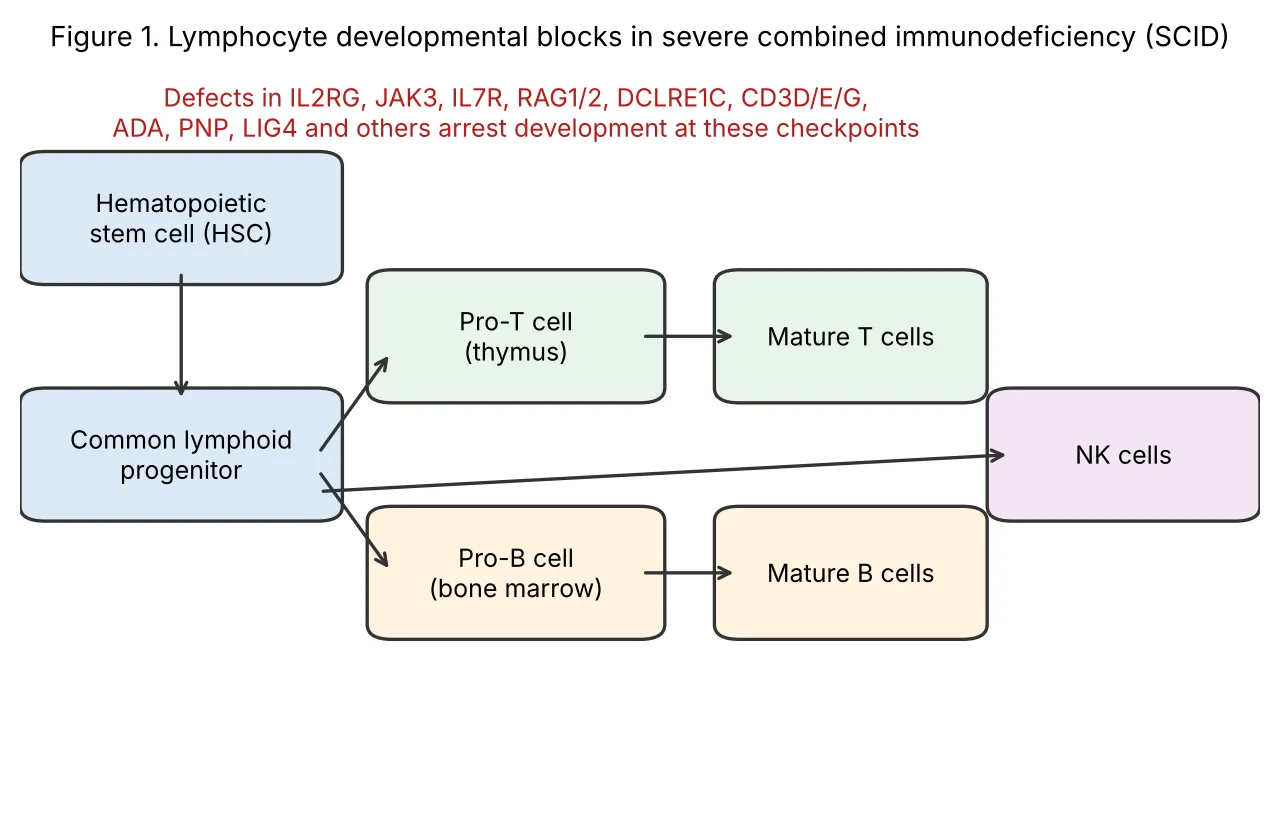
Figure 1: Lymphocyte Developmental Blocks in Severe Combined Immunodeficiency (SCID). Genetic Defects in Cytokine Signalling, V (D)J Recombination and Purine Metabolism Arrest Development at Distinct Checkpoints.
7. CURRENT STATUS AND CLINICAL/PHARMACEUTICAL IMPORTANCE
SCID is rare, with an estimated incidence in the range of approximately one in 50,000 to one in 100,000 live births in population-based screening programmes [5]. Its clinical importance is disproportionate to its frequency because untreated disease is nearly always fatal in early childhood. In the United States, SCID was added to the Recommended Uniform Screening Panel in 2010, and newborn screening programmes have since been implemented in several countries [5,20].
From a pharmaceutical perspective, SCID management is distinctive because it relies on several categories of products: immunoglobulin replacement, anti-infective prophylaxis, enzyme replacement biologics, cell-based products, and advanced therapy medicinal products such as lentiviral and gammaretroviral vector-transduced autologous haematopoietic cells. Regulatory approval of Strimvelis (autologous CD34+ cells transduced with a gammaretroviral vector encoding ADA) in the European Union in 2016 marked the first marketing authorization of an ex vivo gene therapy for this group of disorders [8]. Elapegademase, a polyethylene glycol-conjugated ADA, has also been licensed in the United States for ADA-deficient SCID, providing an alternative to older formulations that have since been withdrawn from some markets [11].
8. PATHOPHYSIOLOGY, MECHANISM AND SCIENTIFIC BASIS
8.1 Immunological consequences
The absence of functional T cells eliminates cell-mediated immunity, while the failure of B-cell maturation or of T-cell help results in severe hypogammaglobulinaemia. The result is combined susceptibility to viral, fungal, bacterial and protozoal pathogens. Live vaccines, particularly live attenuated viral vaccines such as measles, mumps and rubella, can cause disseminated infection and are contraindicated in affected infants [4].
8.2 Molecular basis of V (D)J recombination defects
RAG1 and RAG2 form the recombinase complex that initiates V (D)J recombination. Hypomorphic RAG mutations produce a spectrum ranging from classical SCID to Omenn syndrome, with oligoclonal autoreactive T cells and eosinophilia, reflecting incomplete recombination and altered repertoire selection [13]. Defects in DNA repair factors, including Artemis (DCLRE1C) and DNA ligase IV (LIG4), similarly impair coding-end joining and lead to radiosensitivity together with lymphopenia.
8.3 Metabolic toxicity
In ADA deficiency, accumulation of deoxyadenosine triphosphate inhibits ribonucleotide reductase and promotes apoptosis in lymphocytes, particularly in thymocytes [11]. Additional toxicity arises from S-adenosylhomocysteine accumulation, which inhibits methylation reactions. PNP deficiency primarily affects T cells, with deoxyguanosine triphosphate accumulation driving apoptosis, and is often accompanied by neurological manifestations.
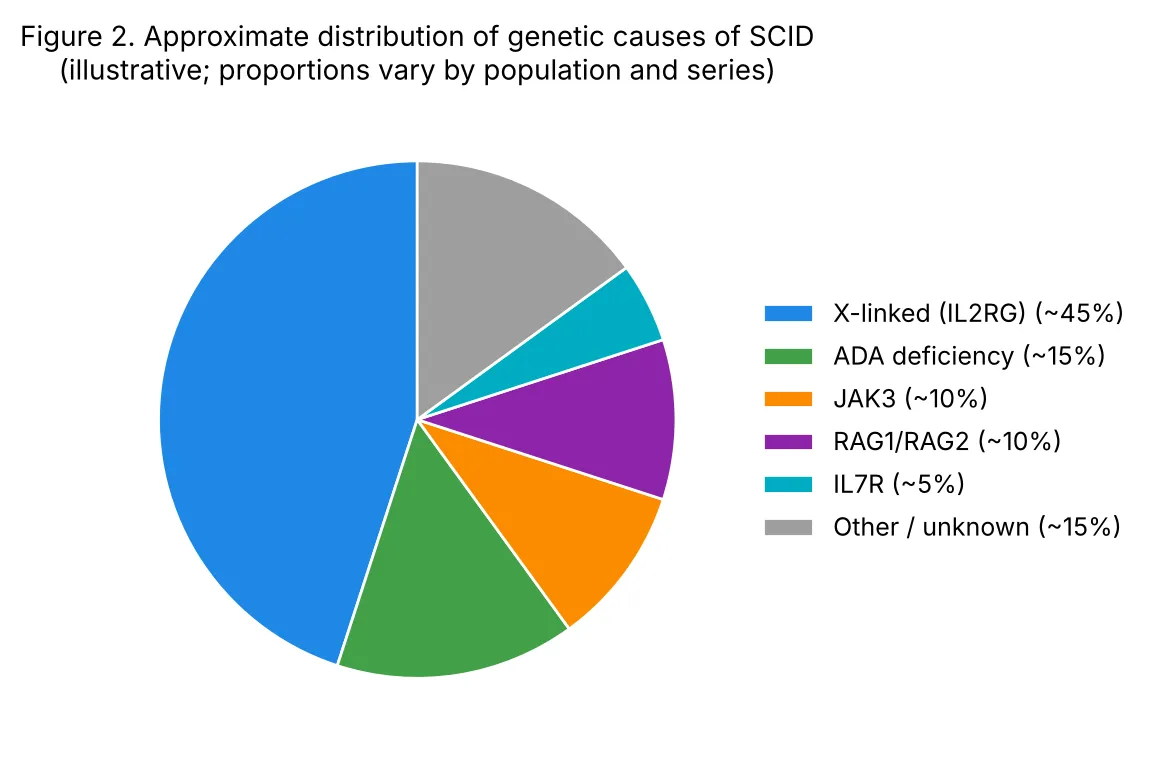
Figure 2: Approximate Distribution of Genetic Causes of SCID. Values Are Illustrative and Vary by Population and Cohort; They Are Intended to Indicate Relative Frequency Rather Than to Provide Precise Epidemiological Estimates.
9. CLASSIFICATION AND TYPES
SCID is classified according to the genetic defect, inheritance pattern and immunophenotype. Broad categories include T-B-NK- SCID, T-B+NK- SCID, T-B+NK+ SCID (including ADA and PNP deficiency), and leaky or atypical forms with residual lymphocyte function. Table 2 summarizes the principal genetic causes, the immunophenotype and the main clinical features.
Table 2: Principal Genetic Causes of SCID, Inheritance, Immunophenotype and Key Clinical Features
| Gene (protein) | Inheritance | Immunophenotype | Key features |
|---|---|---|---|
| IL2RG (γc) | X-linked | T-B+NK- (B cells present but non-functional) | Most common form (approximately 45 percent in many series); requires γc for IL-2/IL-7 signalling |
| JAK3 | Autosomal recessive | T-B+NK- | Kinase downstream of γc; similar phenotype to X-linked form |
| IL7R | Autosomal recessive | T+B-NK+ | Impaired T-cell progenitor survival; NK cells usually preserved |
| ADA | Autosomal recessive | T-B-NK- | Metabolic toxicity; responsive to ERT and gene therapy |
| RAG1 / RAG2 | Autosomal recessive | T-B-NK+ | V(D)J recombination defect; hypomorphic forms cause Omenn syndrome |
| DCLRE1C (Artemis) | Autosomal recessive | T-B-NK+ | DNA repair defect; radiosensitivity |
| PNP | Autosomal recessive | T-B+NK+ | Purine metabolism defect; neurological involvement |
| CD3D / CD3E / CD3G | Autosomal recessive | T-B+NK+ | Defective pre-TCR and TCR complex assembly |
Recognition of these categories is important for therapeutic planning. For instance, the presence of circulating B cells in X-linked SCID influences decisions about immunoglobulin replacement, whereas the presence of NK cells in RAG deficiency does not preclude severe disease.
10. PHARMACOLOGICAL OR THERAPEUTIC ASPECTS
Pharmacological management of SCID is multimodal. Its objectives are prevention of infection, correction of humoral deficiency, provision of metabolic support where required, and definitive restoration of immunity. Table 3 presents the principal therapeutic agents and their roles.
Table 3: Pharmacological and Biological Agents Used in SCID Management
| Agent / class | Indication | Typical use and principal considerations |
|---|---|---|
| Intravenous immunoglobulin (IVIG) / subcutaneous immunoglobulin (SCIG) | Hypogammaglobulinaemia | Regular replacement to maintain IgG trough levels; dosing individualized by trough monitoring |
| Trimethoprim-sulfamethoxazole | Pneumocystis jirovecii prophylaxis | Standard prophylaxis until immune reconstitution; monitor haematological and renal parameters |
| Antiviral agents (e.g., acyclovir, ganciclovir) | Viral prophylaxis or treatment | Used selectively; cytomegalovirus surveillance is important |
| Elapegademase (PEG-ADA) | ADA-deficient SCID | Enzyme replacement; reduces circulating deoxyadenosine and supports lymphocyte recovery |
| Busulfan (conditioning) | Pre-transplant or pre-gene therapy conditioning | Myelosuppressive alkylating agent; dose-dependent toxicity including hepatic veno-occlusive disease |
| Granulocyte-colony stimulating factor (G-CSF) | Mobilization of CD34+ cells | Used for autologous collection prior to gene therapy |
11. MECHANISM OF ACTION
11.1 Immunoglobulin replacement
IVIG provides pooled polyclonal IgG that supplies neutralizing antibodies and opsonizing activity. Its mechanism is passive, and it does not correct the underlying lymphocyte defect. Therefore, it is a bridge to definitive therapy rather than a cure.
11.2 Enzyme replacement
Elapegademase is a conjugate of bovine ADA with polyethylene glycol. Polyethylene glycol conjugation prolongs circulating half-life and reduces immunogenicity relative to unmodified enzyme. Systemic ADA activity catabolizes deoxyadenosine and related metabolites, thereby reducing lymphocyte toxicity and permitting partial immune recovery in many patients.
11.3 Gene transfer
Ex vivo gene therapy involves collection of autologous CD34+ haematopoietic progenitors, transduction with a vector carrying a functional copy of the defective gene, and reinfusion after myeloablative or reduced-intensity conditioning. Gammaretroviral and lentiviral vectors integrate into the host genome, providing stable expression in progeny cells. Clinical studies in SCID-X1 demonstrated restoration of T-cell immunity, but also revealed vector-associated oncogenesis, establishing the importance of vector design, including self-inactivating long-terminal-repeat configurations [10,14,15].
12. PHARMACOKINETICS
Immunoglobulin G has a plasma half-life of approximately three weeks, which underlies dosing at intervals of several weeks for IVIG and SCIG in replacement therapy [1]. Distribution of IgG is largely confined to the intravascular and extravascular fluids, and catabolism occurs predominantly in endothelial and reticuloendothelial cells. Trough monitoring is therefore essential for individualized dosing and for avoiding under-replacement.
Elapegademase demonstrates a prolonged circulating half-life compared with native ADA, enabling intermittent administration. Pharmacokinetic parameters vary between patients, and clinical response is typically assessed by plasma deoxyadenosine concentrations and erythrocyte ADA activity [11].
For busulfan, pharmacokinetic variability is considerable. Clearance differs with body weight and age, and therapeutic drug monitoring of area-under-the-curve targets has been used to reduce toxicity in paediatric conditioning regimens [19]. Table 4 summarizes key pharmacokinetic considerations.
Table 4: Summary of Pharmacokinetic Considerations for Principal SCID Therapies
| Agent | Route | Key pharmacokinetic feature | Clinical implication |
|---|---|---|---|
| IgG (IVIG/SCIG) | IV / SC | Half-life about 3 weeks | Dosing interval of 3–4 weeks; trough monitoring |
| Elapegademase | IM | PEG conjugation prolongs circulation | Intermittent dosing; biomarker monitoring |
| Busulfan | IV | High inter-individual variability in clearance | Targeted dosing; toxicity monitoring |
| Autologous transduced cells | IV infusion | Engraftment-dependent; persistence in progeny | Monitor vector copy number and chimerism |
13. PHARMACODYNAMICS
The pharmacodynamic endpoints relevant to SCID therapy include restoration of lymphocyte counts, normalization of T-cell receptor excision circle levels, functional T-cell proliferation to mitogen and antigen, immunoglobulin levels, and reduction of plasma deoxyadenosine. Successful reconstitution is typically associated with the emergence of a diverse T-cell receptor repertoire and sustained vaccine responses [6,7].
For ERT, pharmacodynamic response is a function of ADA activity and downstream metabolic normalization, and lymphocyte recovery may be incomplete despite biochemical correction in some patients. For gene therapy, pharmacodynamic benefit depends on the proportion of corrected haematopoietic progenitors and on the selective expansion of transduced lymphocytes. Vector copy number and clonal dynamics are therefore important surrogate markers [14,15].
14. CURRENT TREATMENT AND EXISTING APPROACHES
Definitive curative treatment of SCID requires haematopoietic reconstitution with functional lymphocytes. HSCT from an HLA-matched sibling or matched unrelated donor is the established standard, with survival rates reported as high when transplantation is performed early and before infection-related complications [6,16]. Haploidentical HSCT, including T-cell-depleted and post-transplant cyclophosphamide-based protocols, has expanded access for patients lacking a matched donor [17]. Figure 3 outlines the diagnostic and therapeutic pathway.
Historical outcomes demonstrate that transplantation results depend strongly on donor type, conditioning intensity, and the presence of active infection at the time of transplant. A large registry analysis of transplantation outcomes for SCID covering 2000 to 2009 reported survival that differed according to donor source and pre-transplant clinical status, underscoring the importance of early referral [6,16,23]. Natural history studies further indicate that immune reconstitution after transplantation is variable, and that T-cell recovery may be delayed in some subgroups [7].
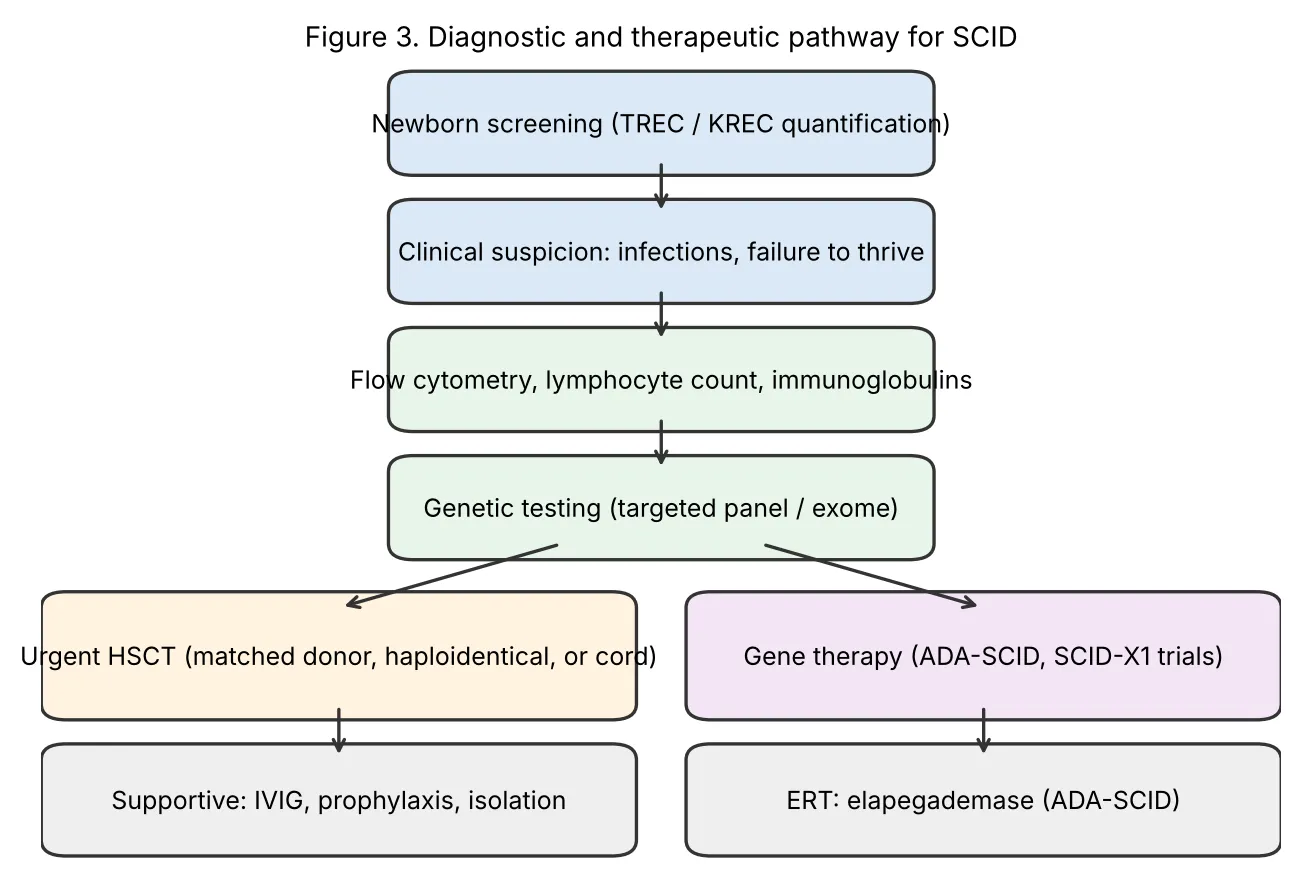
Figure 3: Diagnostic and Therapeutic Pathway for Severe Combined Immunodeficiency. Newborn Screening, Clinical Evaluation and Genetic Confirmation Precede Urgent Definitive Therapy.
In patients who cannot yet receive definitive therapy, supportive care includes immunoglobulin replacement, prophylaxis against Pneumocystis and other opportunistic organisms, strict infection-control measures, avoidance of live vaccines, and management of comorbidities. ADA-deficient patients may receive ERT as a bridging measure or as a long-term therapy when suitable donors are unavailable [11].
15. RECENT ADVANCES AND EMERGING APPROACHES
15.1 Newborn screening
TREC quantification in dried blood spots detects thymic output and has been adopted in multiple national and regional programmes. The United States pilot programmes demonstrated feasibility and identified affected infants before clinical presentation [5,18]. Subsequent analyses have highlighted the need to incorporate secondary markers, such as kappa-deleting recombination excision circles (KRECs), to improve specificity and to detect B-cell defects [20]. Figure 4 summarizes key historical milestones.
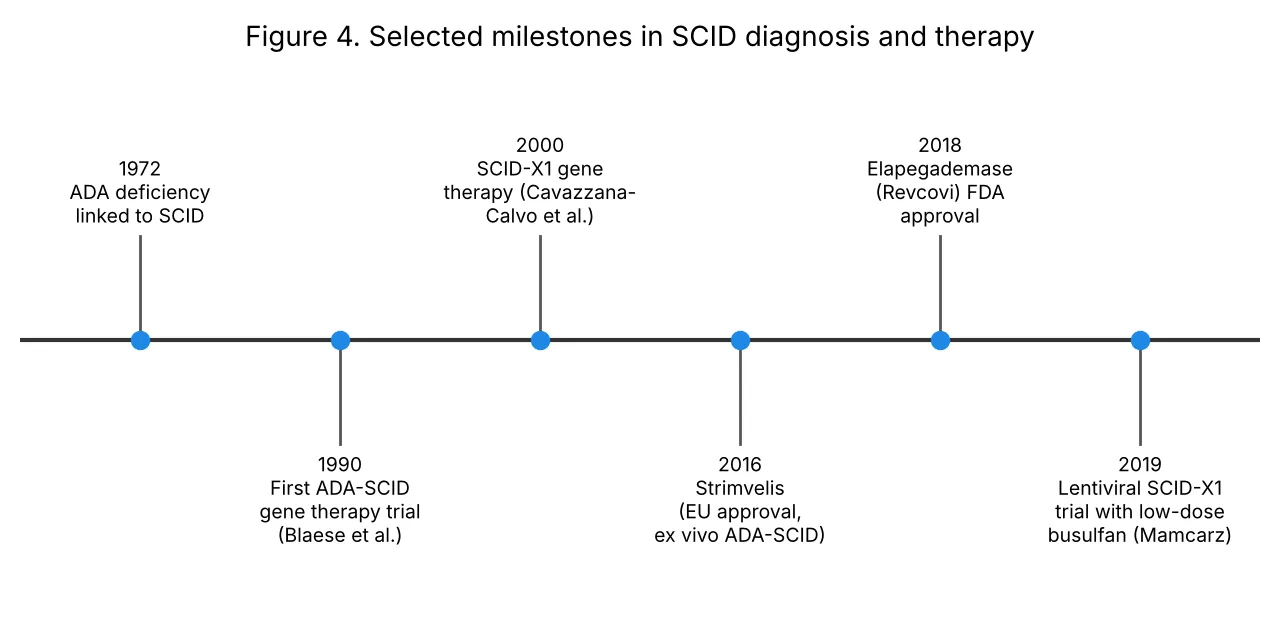
Figure 4: Selected Milestones in SCID Diagnosis and Therapy, Including the First Ada-Scid Gene Therapy Trial, the First SCID-X1 Gene Therapy Report, Licensing of Ex Vivo ADA Gene Therapy, and Lentiviral Gene Therapy with Reduced-Intensity Conditioning.
15.2 Gene therapy
Lentiviral vectors with improved safety profiles have been applied to SCID-X1, and trials combining lentiviral transduction with low-dose busulfan have reported restoration of T-cell immunity in infants [19]. Compared with earlier gammaretroviral approaches, self-inactivating lentiviral vectors reduce the risk of enhancer-mediated transactivation, although the long-term risk profile continues to be monitored [10,19]. Ongoing research includes improved vector designs with insulator elements and the use of lineage-specific promoters.
15.3 Genome editing
Site-specific nucleases, including CRISPR-Cas9 systems, offer the possibility of targeted correction or insertion at defined genomic loci, potentially avoiding random integration. Preclinical studies in haematopoietic progenitors have demonstrated feasibility, but clinical application for SCID remains at an early stage, and off-target activity and editing efficiency require further characterization.
15.4 Reduced-intensity conditioning
Reduced-intensity conditioning regimens aim to limit toxicity while providing sufficient space for donor or corrected cell engraftment. Their use in SCID is increasingly common, particularly for patients with active infection, although the balance between engraftment and immune reconstitution requires continued evaluation.
16. CLINICAL STUDIES AND RESEARCH EVIDENCE
The foundational clinical demonstration that gene therapy could restore immunity in SCID came from trials in SCID-X1 patients treated with gammaretroviral vectors. Cavazzana-Calvo and colleagues reported restored T-cell function in infants treated in France, providing proof of principle for gene transfer in a primary immunodeficiency [9]. Hacein-Bey-Abina and colleagues subsequently documented sustained immune reconstitution in a larger cohort, but also identified clonal T-cell expansion linked to insertional activation of LMO2 in two patients [10,15,21].
Following these observations, detailed mechanistic studies confirmed that vector integration near proto-oncogenes can drive clonal expansion, and that the risk is influenced by vector design, transduction efficiency and patient factors [14,22]. Subsequent gene therapy trials for ADA-deficiency and SCID-X1 have reported encouraging survival and immune reconstitution rates while maintaining close post-treatment surveillance [8,11,19].
Registry-based and natural history studies provide complementary evidence. Analyses of primary immunodeficiency transplant outcomes in Europe have reported improved survival over time, with outcomes determined by donor type, age at transplant and infection status [16]. More recent natural history data from the Primary Immune Deficiency Treatment Consortium describe immune reconstitution kinetics after transplantation in a cohort of SCID patients and identify factors associated with T-cell recovery [7]. Table 5 summarizes representative evidence.
Table 5: Summary of Representative Clinical and Research Evidence in SCID
| Study (ref.) | Design | Population / intervention | Principal finding |
|---|---|---|---|
| Cavazzana-Calvo et al., 2000 [9] | Early clinical trial | SCID-X1 infants; ex vivo gammaretroviral gene therapy | Restoration of T-cell immunity |
| Hacein-Bey-Abina et al., 2002 [10] | Clinical cohort | SCID-X1; gammaretroviral gene therapy | Sustained correction of immunity |
| Aiuti et al., 2002 [12] | Clinical cohort | ADA-SCID; gene therapy with reduced conditioning | Immune reconstitution and metabolic correction |
| Hacein-Bey-Abina et al., 2003 [15] | Safety report | SCID-X1 patients | LMO2-associated clonal T-cell proliferation |
| Pai et al., 2014 [6] | Registry analysis | SCID HSCT, 2000–2009 | Outcomes linked to donor type and infection status |
| Heimall et al., 2017 [7] | Natural history study | SCID patients after HSCT | Variable immune reconstitution kinetics |
| Mamcarz et al., 2019 [19] | Clinical trial | SCID-X1 infants; lentiviral vector with low-dose busulfan | Restoration of T-cell immunity with lentiviral gene therapy |
17. SAFETY, ADVERSE EFFECTS AND LIMITATIONS
Each therapeutic modality has distinct safety considerations. Table 6 summarizes the principal adverse effects and mitigation strategies.
Table 6: Principal Safety Concerns and Mitigation Strategies in SCID Therapy
| Therapy | Principal adverse effects | Mitigation strategies |
|---|---|---|
| HSCT | Graft-versus-host disease; infection; veno-occlusive disease; graft failure | Donor selection, GVHD prophylaxis, conditioning optimization, careful infection surveillance |
| Immunoglobulin replacement | Infusion reactions; thrombosis; renal impairment | Slow infusion rates, hydration, monitoring of renal function |
| ERT (elapegademase) | Injection-site reactions; hypersensitivity; antibody formation | Monitoring of biomarkers; clinical assessment of hypersensitivity |
| Gammaretroviral gene therapy | Insertional oncogenesis; clonal expansion; leukaemia | Use of self-inactivating vectors; long-term follow-up; integration-site analysis |
| Lentiviral gene therapy | Busulfan toxicity; theoretical integration-related risk | Low-dose conditioning; vector copy number surveillance |
Insertional oncogenesis is the most serious concern in gene therapy. In the early SCID-X1 trials, clonal T-cell expansion with LMO2 activation was observed in some patients, and leukaemia occurred in a subset of treated children [14]. These events have shaped regulatory expectations for long-term monitoring and integration-site analysis. Limitations of current evidence include small sample sizes, heterogeneity among genetic subgroups, and variable follow-up durations.
18. COMPARATIVE ANALYSIS
Comparison of therapeutic options requires consideration of efficacy, feasibility, time to treatment, donor requirements, and long-term safety. Table 7 presents a comparative overview of the principal approaches.
Table 7: Comparative Analysis of Therapeutic Approaches for SCID
| Criterion | HSCT (matched donor) | Haploidentical HSCT | ERT (ADA-SCID) | Gene therapy |
|---|---|---|---|---|
| Curative potential | High | High, dependent on protocol | Partial to substantial; not curative in all | High for indicated genotypes |
| Donor requirement | Matched donor needed | Family donor | None | Autologous cells |
| Time to treatment | Moderate | Moderate | Rapid availability | Longer manufacturing timeline |
| Principal risk | GVHD, infection | GVHD, infection | Hypersensitivity, incomplete reconstitution | Insertional oncogenesis, conditioning toxicity |
| Long-term data | Extensive | Growing | Extensive for ERT | Growing; long-term surveillance required |
HSCT remains the most widely applied curative approach. ERT provides a valuable bridge and may achieve durable benefit for ADA-deficient patients, while gene therapy offers autologous treatment without donor limitations but requires specialized infrastructure and long-term vigilance for oncogenic events.
19. CHALLENGES AND RESEARCH GAPS
Several challenges limit the optimal management of SCID. First, the genetic heterogeneity of SCID means that many patients lack a precise molecular diagnosis, and a proportion of cases remain unexplained despite comprehensive sequencing. Second, newborn screening programmes require harmonized algorithms, follow-up pathways and reliable secondary markers to reduce false-positive rates and ensure timely confirmation [5,20]. Third, access to gene therapy and advanced conditioning is restricted to specialized centres, raising equity concerns. Fourth, the optimal conditioning intensity for gene therapy and for haploidentical transplantation remains incompletely defined. Table 8 summarizes principal research gaps and suggested priorities.
Table 8: Principal Research Gaps and Future Priorities in SCID
| Research gap | Suggested priority |
|---|---|
| Unexplained SCID phenotypes | Systematic exome and genome sequencing; functional validation of variants |
| Newborn screening false positives | Multiplex assays incorporating TREC, KREC and additional markers; standardized follow-up |
| Long-term safety of gene therapy | Extended follow-up with integration-site and clonal tracking |
| Conditioning toxicity | Prospective evaluation of reduced-intensity regimens and targeted busulfan dosing |
| Global access | Health economic analysis and capacity building in low- and middle-income settings |
20. FUTURE PERSPECTIVES
Future developments are likely to focus on safer and more precise genetic interventions, including self-inactivating vectors with regulated expression, site-specific genome editing, and possibly in vivo delivery strategies that avoid cytotoxic conditioning. Improved conditioning agents, including antibody-based approaches that deplete haematopoietic stem cells without alkylating chemotherapy, may broaden eligibility for gene therapy in infants with active infection. In parallel, refinement of newborn screening through multiplexed molecular assays and integration with genomic medicine is expected to shorten the diagnostic interval and improve outcomes. Coordinated international registries will be essential for generating the long-term data needed to guide regulatory decision-making and clinical practice.
DISCUSSION
The management of SCID has evolved from supportive care alone to an era in which multiple curative options are available. The principal therapeutic challenge is balancing the urgency of treatment against the need for safe and durable immune reconstitution. HSCT remains the cornerstone, but donor availability, graft-versus-host disease and infection risk continue to limit its success. Gene therapy has shown that autologous correction is feasible and can produce durable immunity, yet the experience with insertional oncogenesis underscores the importance of vector engineering and long-term surveillance.
Newborn screening represents a major advance because it enables treatment before infection-related injury. Its value depends on the performance of the assay, the availability of confirmatory testing and the capacity to deliver definitive therapy promptly. Pharmacological supportive care, including immunoglobulin replacement and anti-infective prophylaxis, remains indispensable, particularly for infants awaiting definitive therapy. From a pharmacy perspective, careful dosing, monitoring of trough levels and attention to drug interactions are integral to safe care.
Several uncertainties remain. Much of the evidence derives from small cohorts and registry analyses with variable follow-up, and direct comparisons between modalities are limited. Future studies should adopt standardized outcome measures, including survival, immune reconstitution, quality of life and long-term oncological surveillance, to permit more definitive comparison.
CONCLUSION
Severe combined immunodeficiency is a genetically heterogeneous, life-threatening condition that requires urgent recognition and treatment. Advances in molecular diagnosis, TREC-based newborn screening, haematopoietic transplantation, enzyme replacement and gene therapy have transformed prognosis for many affected infants. Successful management depends on early diagnosis, timely access to definitive therapy, meticulous supportive care and long-term monitoring for treatment-related adverse events. Continued research into safer vectors, genome editing, refined conditioning and equitable global access will be essential to further improve outcomes.
REFERENCES

Suraj Sapate, Sachi Telgote, Dr. Shriram Bairagi, Severe Combined Immunodeficiency Diseases., Int. J. of Pharm. Sci., 2026, Vol 4, Issue 11, 4029-4041. https://doi.org/10.5281/zenodo.24456627
 10.5281/zenodo.24456627