

We use cookies to ensure our website works properly and to personalise your experience. Cookies policy
1Student of Pharmacy Yashodeep college of pharmacy, saralgaon, Tal-Murbad , Dist – Thane 421401.
2Assistant Professor Yashodeep College Of Pharmacy saralgaon Tal kalyan Dist Thane 421401.
3The Principal of the Yashodeep college of pharmacy saralgaon Tal kalyan Dist Thane 421401.
Chronic degenerative diseases have reached epidemic proportions in industrialized and developing countries . Many studies haver shown that plant can be helpful to prevent or treat disediseas pasidum guajava is small medicinal tree that is native to south America and brazil is among the world’s top producers and most the country’s production is destined for the food industry it is popularly known as guava and has been use traditionally as a medicinal plant through the world for a number of ailments the aim of this review is precent some chemical compound in p guajava and there pharmacological effect the main constituents of guava leaves phenolic compound issoflavonoids galic acid catechin epicathechin rutin narigenin kaempferol the pul is rich in ascorbic acid carotenoids [lycopene B-carotene and D-cryptoxanthin] the seeds skin and barks possess glycosides carotenyds and phenolic compounds . All parts of the plant have been used different purpose hepatoprotection antioxidant anti-inflamentry anti spasmodic anti-cancer antimicrobial antihyperglycemic analgesic endothelil progenitor anti-stomachache and anti-diarrhea p guajava nas many effects on health and that it should researched more extensively in clinical triais furthermore lives seed and peal are treated has wastes by the food processing industry and are discured so their use may reduce the disposal of these part of guava as pollutants
Nature has blessed guava or Psidium guajava with many essentiall nutrient Historically guava is said to be cultivated is south Africa for commercial purpose and and has been brought to country india by the Portuguese as a fruit guava is very common Asian country but occupies the greater contry mainly beacuase medicinal properties it is a small belonging to family Mytracase the tree can be soil provide the climate tropical or subtropical india is largest producer of guava as on date followed by neighbouring country chaina guava fruits are usivally 12 centimeter [1.6 to 4.7 in] long round or oval depending on the speciece the fruit is basically green in colour which [2]
1.1 Food value of guava fruit
Table 1: [3]
|
Calories 77786g Moisture 2.875.5g Crude fiber 0.971.0g Protein 0.170.5 Fat 0.4370.7 Ash 9.5710 Carbohydrate 9.1717mg Calcium 17.8730mg Phosphorous 0.3070.70mg Iron 2007400 I.U. Carotene (Vitamin A) 0.046mg Thiamin 0.0370.04mg Riboflavin 0.671.068mg Niacin 40 I.U. Vitamin B3 35 I.U. Vitamin G4 36750mg |
1.2 Botanical classification
Table 2: [2]
|
Kingdom |
Plantae – Plants |
|
Subkingdom |
Tracheobionta Vascular plants |
|
Superdivision |
Spermatophyta Seed plants |
|
Division |
Magnoliophyta Flower plants |
|
Class |
Magnoliopsida Dicotyledonous |
|
Subclass |
Rosidae |
|
Order |
Myrtales |
|
Family |
Myrtaceae |
|
Subfamily |
Myrtoideae |
|
Tribe |
Myrteae |
|
Gender |
Psidium |
|
Species |
Psidium guajava |
1.3 Guava leaf Image
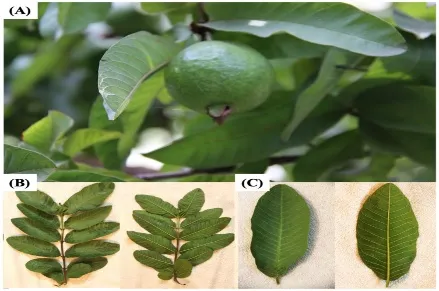
Figure None: 01[4]
(A) Guava fruit and leaves, (B) bunch of guava leaves with dorsal view on the left and ventral view on the right, (C) guava leaf with dorsal view on the left and ventral view on the right.
2.1 Nutrition Profile of Guava Leaves
Guava leaves are like a little powerhouse of nutrients that work wonders and help to improve your health. Here are some insights into those medicinal leaves and how they help you stay healthy.
2.2 May benefit your digestive system
Guavas are an excellent source of dietary fibre. Eating more guavas may aid healthy bowel movements and prevent constipation.Just one guava can provide 12% of your recommended daily intake of fiber.Additionally, guava leaf extract may benefit digestive health. Research suggests that it may reduce the intensity and duration of diarrhea. Several studies have also shown that guava leaf extract is antimicrobial. This means that it can neutralize harmful microbes in your gut that can cause diarrhea[6]
2.3 Relieve Painful Periods
Women who have painful menstrual cramps may want to give the guava leaf a try. One study found that guava leaf extract was more effective than painkillers at dealing with menstrual cramps. [7]
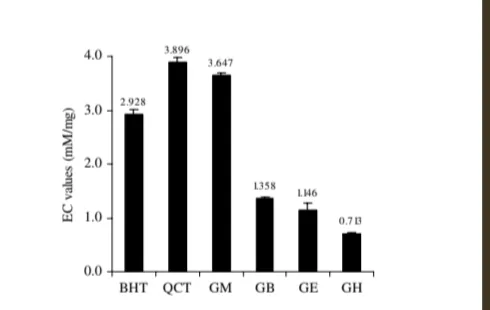
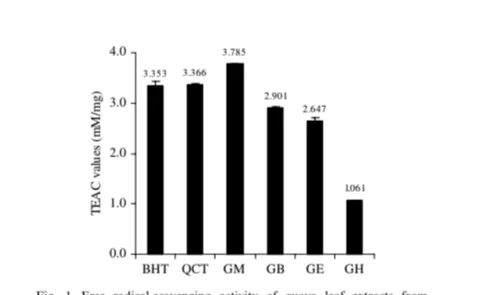
Figure None: 02 [8] Fig :03[8]
3 . Chemical Composition Of Guava
The guava fruit contains vitamin A, C, iron, phosphorus and calcium. It has more vitamin C than the orange. The fruit contains saponin, oleanolic acid, lyxopyranoside, arabopyranoside, guaijavarin, quercetin and flavonoids[9]
3.1 Identification Of Phenolic Compounds
As first step, to identify the phenolic compounds, a conventional extraction described by Seo and coworkers (2014) using an ethanol:water mixture (70:30, v/v) was carried out in commercial guava leaves. After that, the extracts were analysed by HPLC-DAD-QTOF-MS and seventy two phenolic compounds could be identified.[10]
3.2 Biological activity
Scientific investigations on the medicinal properties of guava dates back to the 1940s
A summary of the findings of these studies performed is presented below.
Toxicology : This toxicologic study was conducted using dry leaves of Psidium guajava L. In this plant material, acute toxicologic study by the following methods: mean lethal dose LD50 test in Swiss mice and alternative toxicology (acute toxic classes) in Wistar rats. We also made the genotoxic of 2 extracts, one of aqueous type, and the other of henaxic type in an in vitro system of short-term somatic segregation induction assay in the Aspergillus nidulans fungus and an in vivo assay of the dry drug [11]
4 GETTING MOUTHWASH READY
EXTRACT FROM GUAVA LEAVES (0.5%):
1. Freshly picked guava leaves were carefully cleaned and allowed to air-dry in the shade at ambient temperature for 7–10 days.
2. Dried leaves were powdered using a mechanical grinder.
3. The powdered leaves were extracted using 95% ethanol in a Soxhlet apparatus for 6–8 hours.
4. The extract was condensed under vacuum conditions with rotary evaporator to yield a semi-solid mass.
5. The obtained residue was reconstituted in distilled water to form a 0.5% weight/volume solution.
6. The prepared solution was passed through a 0.45 μm membrane filter for clarification and kept in amber-tinted bottles at 4°C until required.[12]
5 Health Benefits of Guava Leaves
Not only guava, but guava leaves also have tremendous health benefits:
5.1 Health Benefits & Medicinal Uses of Guava
Guava is rich in vitamins, antioxidants, dietary fiber, and
bioactive compounds, making it beneficial for a wide range
of health concerns
1. Immune Health: High vitamin C content strengthens
immunity and reduces inflammation.
2. Digestive Health: Over 5 g fiber per 100 g; promotes
digestion, prevents constipation, feeds healthy gut
bacteria. Leaf extracts traditionally treat diarrhea.
3. Blood Sugar Regulation: Leaf extracts reduce post-
meal blood glucose spikes.
4. Cardiovascular Support: Potassium regulates blood
pressure; fiber & antioxidants lower LDL cholesterol.
5. Skin & Anti-aging: Antioxidants and vitamin C
combat oxidative stress, keeping skin firm and youthful.
6. Anti-inflammatory & Antibacterial: Leaf extracts
inhibit bacteria such as Staphylococcus aureus and E.
coli.
7. Anti-cancer: Lycopene in pink guava reduces the risk
of prostate and breast[14]
5.2 Guava Leaves and Blood Sugar Management
Unlike the fruit, guava leaves aren’t valued for their nutrients but for the natural compounds they contain. They are rich in flavonoids, polyphenols and tannins, including quercetin, which researchers believe may help slow the breakdown of carbohydrates in the gut. As a result, glucose enters the bloodstream more gradually, reducing the sharp rise in blood sugar that often follows a meal . Human studies on guava leaf tea have also reported modest improvements in post-meal blood glucose levels, particularly when consumed regularly alongside a healthy diet . While these findings are encouraging, guava leaves aren’t a substitute for diabetes medication. Think of them as a supportive dietary addition rather than a treatment on their own. More large, long-term clinical studies are still needed before firm recommendations can be made .[15]
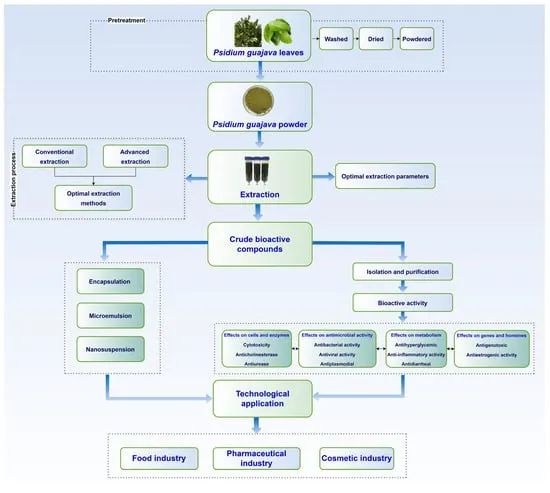
Figure None: 04[16]
5.3 Schematic extraction and technological applications of bioactive compounds from guava leaves (Psidium guajava L)
6 α-Glucosidase and α-amylase inhibitory activities of guava leaves
The 75% ethanol extract of guava (Psidium guajava Linn.) leaves was further separated using different solvents, including dichloromethane (CH₂Cl₂), ethyl acetate (EtOAc) and n-butanol (n-BuOH). This process resulted in four different fractions. Among them, the ethyl acetate and n-butanol fractions showed strong inhibitory effects against the enzymes α-glucosidase and α-amylase, which are involved in carbohydrate digestion and blood glucose regulation.
Further investigation of these active fractions led to the isolation of seven flavonoid compounds: quercetin, kaempferol, guaijaverin, avicularin, myricetin, hyperin and apigenin. These compounds were isolated using an enzyme assay-guided fractionation technique. Their chemical structures were identified through mass spectrometry (MS) and nuclear magnetic resonance (NMR) analysis.
The isolated compounds were then evaluated for their enzyme-inhibitory activities. Among them, quercetin, kaempferol and myricetin demonstrated particularly strong inhibitory effects against sucrase, maltase and α-amylase. Their respective IC₅₀ values were 3.5, 5.2 and 3.0 mM against sucrase; 4.8, 5.6 and 4.1 mM against maltase; and 4.8, 5.3 and 4.3 mM against α-amylase. Myricetin showed the strongest overall activity, producing approximately 70% inhibition of sucrase at a concentration of 1.5 mg/mL.
The study also suggested that the position of hydroxyl groups and their number in the flavonoid structure play an important role in enzyme inhibition. In particular, hydroxyl group substitution at the 3-position of the flavonoid structure and the presence of multiple hydroxyl groups influenced the inhibitory activity. Additionally, combining certain flavonoid compounds produced a synergistic effect against α-glucosidase, although a similar effect was not observed against α-amylase.
Overall, this study highlights the potential of guava leaves as a natural source of flavonoids with α-glucosidase and α-amylase inhibitory properties. These findings suggest that guava leaf constituents may be useful for further investigation in the development of natural approaches for managing post-meal blood glucose levels. However, further studies are needed to establish their effectiveness and safety in humans[17]
6.1 Biological Activities of Guava Leaf Extracts
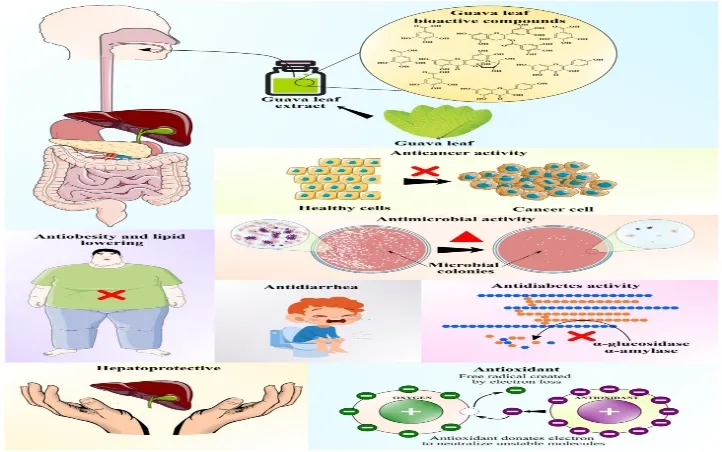
Figure None: 05
1. Antioxidant Activity : Guava leaf extracts demonstrate potent free-radical scavenging capacity due to high total phenolic and flavonoid content. They neutralize reactive oxygen species (ROS), reduce lipid peroxidation, and preserve cellular glutathione levels[18]
2.Anticancer/Antitumor Activity
Cancer is a complex health disorder which is identified by the development of cell proliferation or a decrease, causing apoptosis . It can be caused by several exogenous and endogenous factors involved in the excessive production of reactive oxygen species (ROS). This can result in single- or double-strand breaks in DNA or RNA, base mutations, chromosomal breaking and reorganization, DNA cross-linkage, nucleic acid degradation, damage to cell membrane integrity due to lipid peroxidation, and tumor formation[19]
3.Antidiabetic Activity
Diabetes is a major chronic disease and about 10% of the world’s population suffer from blood glucose metabolic disorder, mainly characterized by a hyperglycemic condition. This situation is either characterized by insufficient secretion of insulin from β-cells of pancreatic islets (type 1 diabetes) or the inability of cells to react in response to the secreted insulin (type 2 diabetes)[20]
6.2 Objectives of Studying Guava Leaves
Phytochemical Profiling : Identify and isolate active bioactive compounds, including polyphenols, flavonoids (such as quercetin and guaijaverin), tannins, saponins, triterpenoids, and essential oils.
Pharmacological Validation : Evaluate traditional medicinal claims through in vitro and in vivo testing to assess therapeutic potential for conditions such as diabetes, diarrhea, microbial infections, and inflammation.
Extraction Optimization: Determine the most effective extraction techniques (e.g., green extraction, ethanolic, aqueous, or supercritical fluid extraction) to maximize yield and antioxidant capacity.
Safety & Toxicity Assessment : Establish safe dosage thresholds, cytotoxicity profiles, and potential side effects for human consumption and clinical formulation.
Product Development: Explore applications for value-added products in the pharmaceutical, nutraceutical, cosmeceutical, and food preservation sectors.[21]
Investigating Antimicrobial and Anti-infective Properties: To evaluate the leaf extracts’ bacteriostatic and fungistatic efficacy against various pathogens (including Staphylococcus aureus, Escherichia coli, and intestinal parasites) to validate its traditional use in treating diarrhea, dysentery, and wound infections.[22]
Pharmacognostic and Standardization Evaluation: To establish macro-morphological, micro-anatomical (e.g., studying trichomes, stomata, and vascular bundles), and physicochemical standards (such as ash values and extractive values) to authenticate the plant material and prevent adulteration.[23]
6.3 Scope of Guava Leaves
A. Phytochemical Composition
Guava leaves are rich in bioactive compounds :
Flavonoids: Quercetin, guaijaverin, avicularin, and morin.
Phenolics & Tannins: Ferulic acid, gallic acid, ellagic acid, and condensed tannins.
B. Pharmacological Scope
Antidiabetic Activity : Inhibits key digestive enzymes .
Antimicrobial & Antiviral Activity: Exhibits broad-spectrum inhibition against pathogens like Staphylococcus aureus, Escherichia coli, Salmonella, and infantile rotavirus.
Antidiarrheal & Spasmolytic Effect: Quercetin inhibits acetylcholine- and calcium-induced intestinal contractions, reducing gut motility.
Antioxidant & Anti-Inflammatory: Scavenges free radicals (ROS), downregulates inflammatory mediators (e.g., nitric oxide), and offers hepatoprotective benefits.[24]
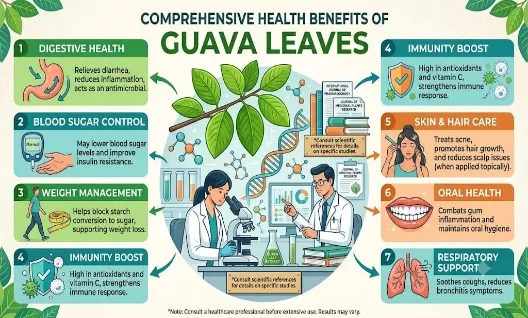
Figure None: 06
Health Benefits
1 Blood Sugar Regulation : Guava leaf extracts help manage blood glucose levels and improve insulin resistance. Active compounds like corosolic acid act as alpha-glucosidase inhibitors, slowing down carbohydrate metabolism and preventing sharp post-meal blood sugar spikes[25]
Digestive Health and Diarrhea Relief : Traditionally used as a first-line remedy for gastrointestinal issues, guava leaf extracts exhibit strong antimicrobial and antispasmodic properties. They can inhibit gut pathogens that cause infectious diarrhea and relax intestinal smooth muscle to reduce cramps[26]
2.Cardiovascular Support: The antioxidants and polyphenols present in the leaves help protect heart tissue from free radical damage. Regular consumption or supplementation has been linked in animal and clinical studies to reductions in blood pressure and improvements in lipid profiles (lowering LDL cholesterol while preserving HDL)[27]
1. Digestive Health
Key Benefits: Relieves diarrhea, reduces inflammation, and acts as an antimicrobial.
Visual : An illustration of a human stomach showing active digestion/relief arrows.
2. Blood Sugar Control
Key Benefits : May lower blood sugar levels and improve insulin resistance.
Visual : A blood glucose monitor reading "Normal" being used on a finger.
3. Weight Management
Key Benefits : Helps block starch conversion to sugar, supporting weight loss.
Visual: A person walking beside a measuring tape.
4. Immunity Boost
Key Benefits : High in antioxidants and vitamin C, which strengthens the body's immune response.
Visual : A shield symbol protecting against viruses/bacteria.
5. Skin & Hair Care
Key Benefits : Helps treat acne, promotes hair growth, and reduces scalp issues when applied topically.
Visual : A woman applying skin/hair care treatment.
6. Oral Health
Key Benefits: Combats gum inflammation and maintains overall oral hygiene.
Visual : A healthy smile showing teeth and gums.
7. Respiratory Support
Key Benefits : Soothes coughs and reduces symptoms of bronchitis.
Visual : An illustration of human lungs.[28]
7 Advantage of guava leaf :
Antioxidant Activity:
Guava leaves are rich in natural antioxidants, including phenolic compounds and flavonoids such as gallic acid, catechins, and quercetin. These compounds help neutralize free radicals and protect body cells from oxidative damage, which may contribute to reducing the risk of various chronic diseases.
Antimicrobial and Anti-inflammatory Activity:
Guava leaf extracts have shown antibacterial and antifungal activities against different microorganisms. They may also help reduce inflammation by suppressing certain inflammatory pathways. These properties indicate their potential use in wound healing and managing oral health problems, such as mouth ulcers and gum inflammation.
Cardiovascular Protective Activity:
Guava leaves may contribute to maintaining heart health. Studies suggest that guava leaf preparations may help regulate blood pressure and reduce LDL cholesterol and triglyceride levels. These effects indicate their potential role in supporting cardiovascular health. [29]
7.1 Disadvantages are guava leaf :
1. Gastrointestinal disturbances : Excessive consumption of guava leaf preparations may cause digestive discomfort, nausea, or constipation in some individuals; however, evidence on these specific adverse effects is limited.
2. Allergic reactions: Individuals sensitive to guava or related plant materials may experience allergic reactions, although the frequency is not well established.
3. Limited clinical evidence : Many reported medicinal effects are based on laboratory and animal studies. More well-designed human clinical trials are required to confirm their efficacy and safety. .
4. Drug interactions : The possible effects of guava leaf extracts on blood glucose levels may require caution in people taking antidiabetic medicines.
5. Variation in chemical composition: The concentration of bioactive compounds, including flavonoids and tannins, can vary with plant variety, growing conditions, harvesting, and extraction methods.
6. Lack of standardization : Different preparation methods may produce extracts with different strengths, making consistent dosage and therapeutic effects difficult to establish.
7. Safety during pregnancy and breastfeeding: There is insufficient evidence to establish the safety of concentrated guava leaf extracts during pregnancy and breastfeeding.
8. Quality and contamination concerns: Improper collection, storage, or processing may lead to contamination with microorganisms, pesticides, or heavy metals.[30]
CONCLUSION
Guava leaves (Psidium guajava L.) are known for their various medicinal benefits because they contain several natural bioactive compounds, including flavonoids, tannins, phenolic compounds, and essential oils. These compounds contribute to their antioxidant, antimicrobial, anti-inflammatory, antidiarrheal, antidiabetic, and wound-healing activities. Due to these properties, guava leaves have been traditionally used in herbal medicine and may also be useful in developing natural herbal formulations. However, most of the available evidence comes from laboratory experiments and preclinical studies. More clinical research is needed to confirm their effectiveness, safety, and suitable dosage in humans. Overall, guava leaves are a promising natural source of medicinal compounds with potential health benefits, but further scientific studies are necessary to support their therapeutic use..[31]
REFERENCES

Kajal Vishe, Vedika Ghodvinde, Dr. Shriram Bairangi, Medicinal Properties of Guava Leave, Int. J. of Pharm. Sci., 2026, Vol 4, Issue 11, 4048-4057. https://doi.org/10.5281/zenodo.24457028
 10.5281/zenodo.24457028