View Article

  • A Review on: Determination of Remdesivir Using a Validated RP-HPLC (Reversed-Phase High- Performance Liquid Chromatography) Method in Bulk and Pharmaceutical Formulations.

  • 1Student of Loknete Shri Dadapatil Pharate College of Pharmacy, Mandavgan Pharata.
    2Principal of Loknete Shri Dadapatil Pharate College of Pharmacy, Mandavgan Pharata.
    3Associate Prof. of Loknete Shri Dadapatil Pharate College of Pharmacy, Mandavgan Pharata.
    4Associate Prof. of Loknete Shri Dadapatil Pharate College of Pharmacy, Mandavgan Pharata.
    5Assistant Prof. of Dr B B Khaladkar College of Pharmacy, Wakhari

Abstract

Remdesivir is a broad-spectrum antiviral nucleotide analogue that gained significant importance during the COVID-19 pandemic due to its efficacy against SARS-CoV-2. Accurate and reliable analytical methods are essential for the qualitative and quantitative determination of Remdesivir in pharmaceutical formulations and biological matrices. Among various analytical techniques, Reverse Phase High Performance Liquid Chromatography (RP-HPLC) remains the most widely employed method because of its simplicity, sensitivity, precision, and cost-effectiveness. Recent advancements have also introduced LC-MS/MS, UPLC, and green analytical approaches for improved sensitivity and environmental sustainability. This review summarizes the current analytical methodologies developed for Remdesivir estimation, including chromatographic conditions, validation parameters, stability-indicating methods, and bioanalytical applications. The review also discusses method validation according to ICH guidelines and highlights future trends in analytical research for antiviral drug analysis.

Keywords

Remdesivir, RP-HPLC, Method Validation, LC-MS/MS, Stability-Indicating Method, Antiviral Drugs, Analytical Chemistry

Introduction

× Popup Image

Remdesivir is a nucleotide analogue prodrug developed for the treatment of RNA viral infections. It acts by inhibiting RNA-dependent RNA polymerase, thereby preventing viral replication. The drug demonstrated remarkable therapeutic potential during the COVID-19 pandemic and became one of the first antiviral agents approved for clinical use against SARS-CoV-2. Due to its extensive pharmaceutical applications, reliable analytical methods are required for quality control, stability assessment, and pharmacokinetic studies.

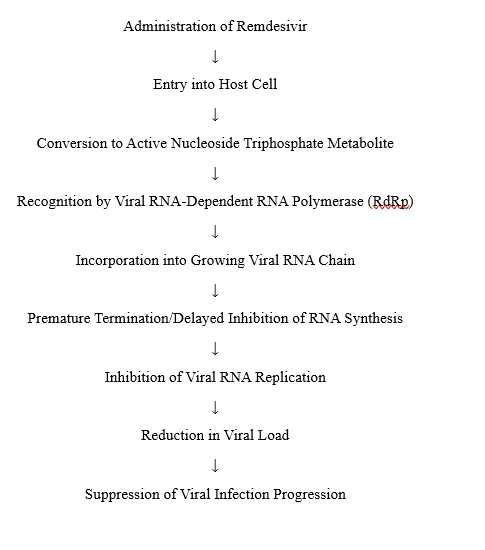
Remdesivir is a nucleotide analogue prodrug developed for the treatment of RNA viral infections. Its antiviral activity is mediated through inhibition of RNA-dependent RNA polymerase (RdRp), which disrupts viral RNA synthesis and prevents viral replication. The drug gained significant attention during the COVID-19 pandemic owing to its demonstrated therapeutic efficacy against COVID-19 and became one of the first antiviral agents approved for the treatment of infections caused by COVID-19. Given its widespread clinical use and pharmaceutical importance, the development of reliable analytical methods is essential for quality control, stability evaluation, pharmacokinetic investigations, and regulatory compliance.

2. REMDESIVIR: DRUG OVERVIEW
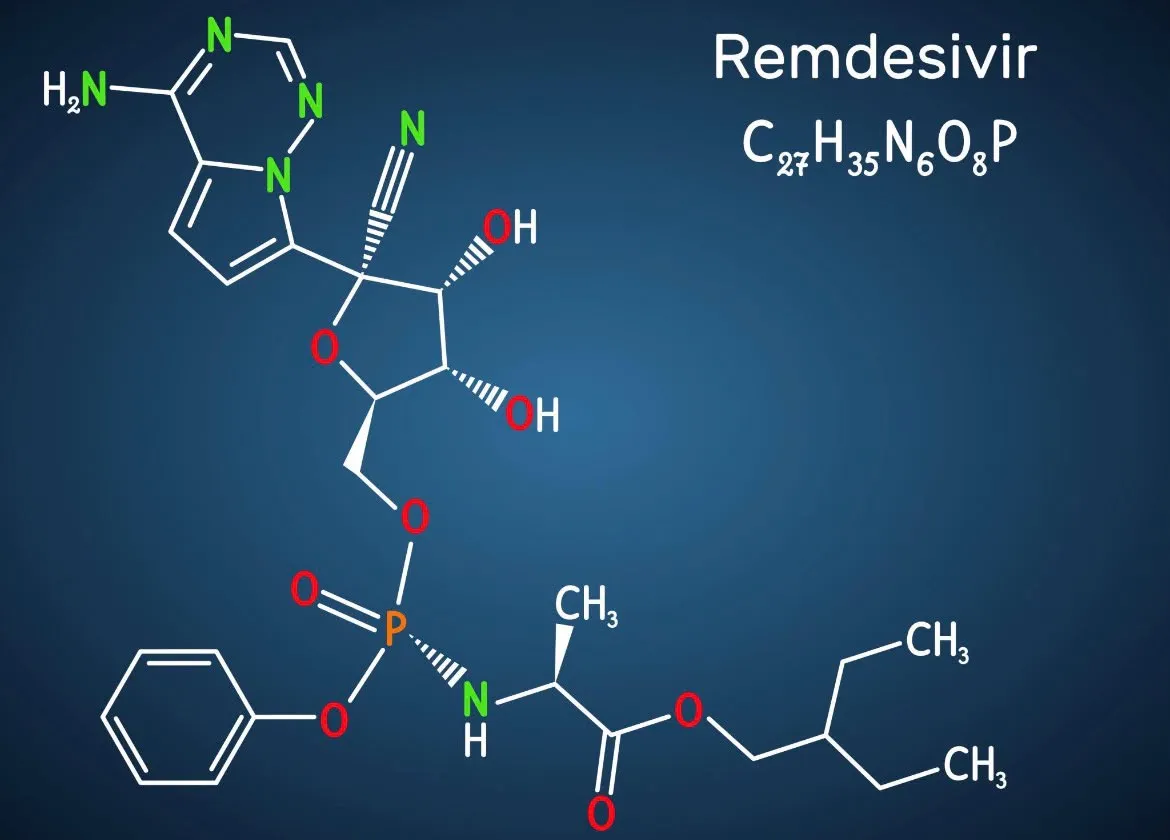
  • Chemical Formula: C27H35N6O8P
  • Molecular Weight: 602.6 g/mol
  • Drug Class: Antiviral Nucleotide Analog
  • Route of Administration: Intravenous
  • Mechanism: Inhibition of Viral RNA Polymerase
  • Brand Name: Veklury

Figure 1: Chemical Structure of Remdesivir
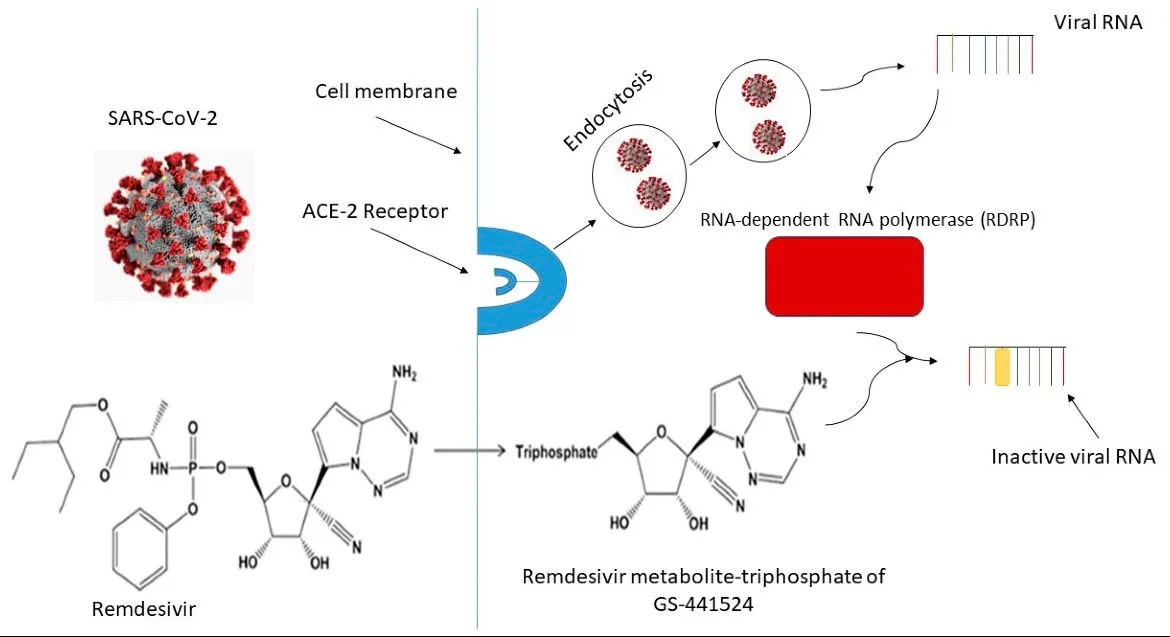
  1. Mechanism of Action of Remdesivir

Figure 2: Mechanism of Action of Remdesivir
 

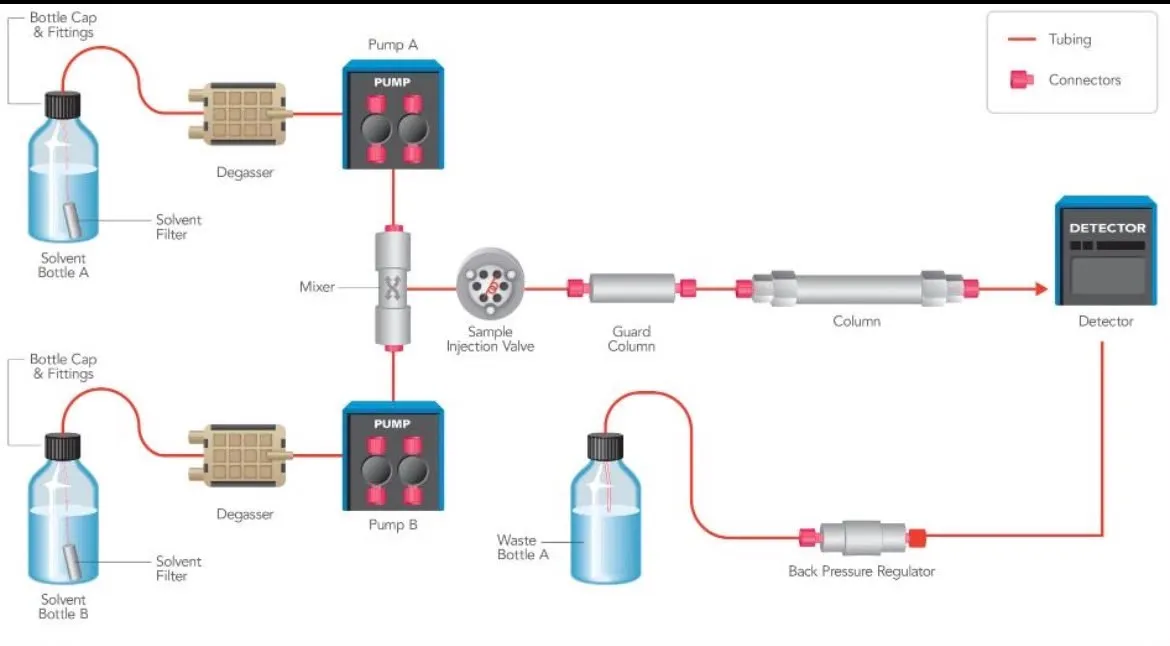
  1. Schematic Representation of RP-HPLC System

Figure 3: Schematic Representation of RP-HPLC System

Flow: Mobile Phase Reservoir → Degasser → Pump → Injector/Autosampler → C18 Reverse-Phase Column → UV/PDA Detector → Data System → Chromatogram Output.

3. ANALYTICAL TECHNIQUES FOR REMDESIVIR ESTIMATION

3.1 UV Spectrophotometric Methods

UV-visible spectrophotometry is a simple and economical analytical technique used for preliminary drug estimation. Several methods have been reported for Remdesivir quantification in bulk and formulations.

Advantages:

  • Cost-effective
  • Rapid analysis
  • Simple sample preparation

Limitations:

  • Lower sensitivity
  • Interference from excipients

3.2 RP-HPLC METHODS

RP-HPLC is the most frequently used analytical technique for Remdesivir determination.

Common Chromatographic Conditions:

  • Column: C18
  • Mobile Phase: Acetonitrile–Buffer mixtures
  • Flow Rate: 0.8–1.0 mL/min
  • Detection Wavelength: 245–254 nm
  • Injection Volume: 10–20 µL

Advantages:

  • High precision
  • Excellent reproducibility
  • Good resolution
  • Suitable for routine quality control

4. METHOD VALIDATION ACCORDING TO ICH GUIDELINES

Validation Parameters:

  • Specificity
  • Linearity
  • Accuracy
  • Precision
  • LOD
  • LOQ
  • Robustness
  • Ruggedness

Acceptance Criteria:

  • Linearity: r² > 0.999
  • Accuracy: 98–102%
  • Precision: %RSD < 2%
  • System Suitability: N > 2000, Tailing Factor < 2

5. STABILITY INDICATING METHODS

Stability studies are performed under:

  • Acidic degradation
  • Alkaline degradation
  • Oxidative degradation
  • Thermal degradation
  • Photolytic degradation

Stability-indicating methods help identify degradation products and ensure product safety throughout shelf life.

6. BIOANALYTICAL METHODS

LC-MS/MS techniques have become highly important for pharmacokinetic and bioavailability studies.

Advantages:

  • Extremely sensitive
  • Highly selective
  • Suitable for plasma analysis
  • Low detection limits

7. GREEN ANALYTICAL APPROACHES

Recent studies emphasize environmentally friendly analytical methods using:

  • Reduced solvent consumption
  • Green solvents
  • Shorter run times
  • Lower energy requirements

These approaches align with sustainable pharmaceutical analysis.

8. FUTURE PERSPECTIVES

Future analytical research should focus on:

  • Green chromatography
  • UPLC-based rapid methods
  • Artificial intelligence-assisted method optimization
  • Real-time process analytical technology
  • Bioanalytical applications in personalized medicine

9. CONCLUSION

The present study entitled “Determination of Remdesivir Using a Validated RPHPLC Method in Bulk and Pharmaceutical Formulations” was successfully carried out with the objective of developing a reliable analytical method for the estimation of Remdesivir. A simple, rapid, and efficient RP-HPLC method was developed using a C18 column with a mobile phase consisting of Acetonitrile and 0.1% Orthophosphoric acid (60:40 v/v, pH 3.2). The method showed a well-defined peak for Remdesivir with a retention time of approximately 3.27 minutes, indicating a fast and effective separation. The developed method was validated according to ICH Q2(R1) guidelines. The validation parameters, including system suitability, linearity, accuracy, precision, specificity, robustness, LOD, and LOQ, were found to be within acceptable limits. The method exhibited excellent linearity over the concentration range of 10–60 µg/mL with a high correlation coefficient (R² = 0.9998). The accuracy studies demonstrated recovery close to 100%, and precision studies showed %RSD values less than 2%, confirming the reliability of the method. The method was found to be specific, as no interference from excipients was observed at the retention time of Remdesivir. Robustness studies confirmed that small variations in experimental conditions did not significantly affect the analytical performance. The sensitivity of the method was adequate, with low LOD and LOQ values. The developed method was successfully applied for the estimation of Remdesivir in pharmaceutical formulation, and the assay results were found to be within acceptable limits (approximately 99.96% of the labeled claim). In conclusion, the proposed RP-HPLC method is simple, accurate, precise, sensitive, robust, and cost-effective, making it highly suitable for routine quality control analysis of Remdesivir in bulk drug and pharmaceutical dosage forms.

REFERENCES

  1. Eastman RT, Roth JS, Brimacombe KR, Simeonov A, Shen M, Patnaik S, et al. Remdesivir: A review of its discovery and development leading to emergency use authorization for treatment of COVID-19. ACS Central Science. 2020;6(5):672–683.
  2. Warren TK, Jordan R, Lo MK, Ray AS, Mackman RL, Soloveva V, et al. Therapeutic efficacy of the small molecule GS-5734 against Ebola virus in rhesus monkeys. Nature. 2016;531(7594):381–385.
  3. Beigel JH, Tomashek KM, Dodd LE, Mehta AK, Zingman BS, Kalil AC, et al. Remdesivir for the treatment of COVID-19 – Final report. New England Journal of Medicine. 2020;383:1813–1826.
  4. Gordon CJ, Tchesnokov EP, Woolner E, Perry JK, Feng JY, Porter DP, et al. Remdesivir is a direct-acting antiviral that inhibits SARS-CoV-2 RNA-dependent RNA polymerase. Journal of Biological Chemistry. 2020;295(20):6785–6797.
  5. Humeniuk R, Mathias A, Cao H, Osinusi A, Shen G, Chng E, et al. Safety, tolerability, and pharmacokinetics of remdesivir in healthy subjects. Clinical and Translational Science. 2021;14(3):896–906.
  6. Patel N, Pandya M, Rawat F, Goswami J, Prajapati D, Dudhatra B, et al. Novel stability-indicating RP-HPLC method for remdesivir with LC–MS/MS identification of degradation products. Discovery Chemistry. 2025;2:351.
  7. Ratnaparkhi M, Tekade A, Salvankar SS, Dalvi SD. RP-HPLC method development and validation for the determination of remdesivir in IV formulation. Indian Drugs. 2025;62(6):45–49.
  8. Khan NU, Iqbal M, Khan BA. A systematic approach to estimate and validate RP-HPLC assay method for remdesivir and favipiravir in capsule dosage form. PLoS One. 2025;20(4):e0321474.
  9. Ibrahim M, Irfan M, Khalid SH. Validated isocratic stability-indicating RP-HPLC method for concurrent remdesivir estimation in drug products. Pakistan Journal of Pharmaceutical Sciences. 2025;38(6):2120–2128.
  10. Nassar MW, Serag A, Hasan MA, Kamel M, et al. Development and validation of RP-HPLC method for simultaneous determination of antiviral drugs. Scientific Reports. 2025;15:25470.
  11. Sathya Sowmya P, Harikrishnan N. Bioanalytical method development and validation for determination of remdesivir in rat plasma by RP-HPLC. Frontiers in Health Informatics. 2024;13(8).
  12. Ravisankar P, Navya CN, Pravallika D, Sri DN. A review on step-by-step analytical method validation. Journal of Pharmaceutical Analysis. 2015;5(3):135–145.
  13. Snyder LR, Kirkland JJ, Dolan JW. Introduction to Modern Liquid Chromatography. 3rd ed. Hoboken: John Wiley & Sons; 2012.
  14. Kazakevich Y, LoBrutto R. HPLC for Pharmaceutical Scientists. Hoboken: Wiley-Interscience; 2007.
  15. International Council for Harmonisation (ICH). Validation of Analytical Procedures: Text and Methodology

Reference

  1. Eastman RT, Roth JS, Brimacombe KR, Simeonov A, Shen M, Patnaik S, et al. Remdesivir: A review of its discovery and development leading to emergency use authorization for treatment of COVID-19. ACS Central Science. 2020;6(5):672–683.
  2. Warren TK, Jordan R, Lo MK, Ray AS, Mackman RL, Soloveva V, et al. Therapeutic efficacy of the small molecule GS-5734 against Ebola virus in rhesus monkeys. Nature. 2016;531(7594):381–385.
  3. Beigel JH, Tomashek KM, Dodd LE, Mehta AK, Zingman BS, Kalil AC, et al. Remdesivir for the treatment of COVID-19 – Final report. New England Journal of Medicine. 2020;383:1813–1826.
  4. Gordon CJ, Tchesnokov EP, Woolner E, Perry JK, Feng JY, Porter DP, et al. Remdesivir is a direct-acting antiviral that inhibits SARS-CoV-2 RNA-dependent RNA polymerase. Journal of Biological Chemistry. 2020;295(20):6785–6797.
  5. Humeniuk R, Mathias A, Cao H, Osinusi A, Shen G, Chng E, et al. Safety, tolerability, and pharmacokinetics of remdesivir in healthy subjects. Clinical and Translational Science. 2021;14(3):896–906.
  6. Patel N, Pandya M, Rawat F, Goswami J, Prajapati D, Dudhatra B, et al. Novel stability-indicating RP-HPLC method for remdesivir with LC–MS/MS identification of degradation products. Discovery Chemistry. 2025;2:351.
  7. Ratnaparkhi M, Tekade A, Salvankar SS, Dalvi SD. RP-HPLC method development and validation for the determination of remdesivir in IV formulation. Indian Drugs. 2025;62(6):45–49.
  8. Khan NU, Iqbal M, Khan BA. A systematic approach to estimate and validate RP-HPLC assay method for remdesivir and favipiravir in capsule dosage form. PLoS One. 2025;20(4):e0321474.
  9. Ibrahim M, Irfan M, Khalid SH. Validated isocratic stability-indicating RP-HPLC method for concurrent remdesivir estimation in drug products. Pakistan Journal of Pharmaceutical Sciences. 2025;38(6):2120–2128.
  10. Nassar MW, Serag A, Hasan MA, Kamel M, et al. Development and validation of RP-HPLC method for simultaneous determination of antiviral drugs. Scientific Reports. 2025;15:25470.
  11. Sathya Sowmya P, Harikrishnan N. Bioanalytical method development and validation for determination of remdesivir in rat plasma by RP-HPLC. Frontiers in Health Informatics. 2024;13(8).
  12. Ravisankar P, Navya CN, Pravallika D, Sri DN. A review on step-by-step analytical method validation. Journal of Pharmaceutical Analysis. 2015;5(3):135–145.
  13. Snyder LR, Kirkland JJ, Dolan JW. Introduction to Modern Liquid Chromatography. 3rd ed. Hoboken: John Wiley & Sons; 2012.
  14. Kazakevich Y, LoBrutto R. HPLC for Pharmaceutical Scientists. Hoboken: Wiley-Interscience; 2007.
  15. International Council for Harmonisation (ICH). Validation of Analytical Procedures: Text and Methodology

Photo
Shamali Sonawane
Corresponding author

Student of Loknete Shri Dadapatil Pharate College of Pharmacy, Mandavgan Pharata.

Photo
Hemant Kamble
Co-author

Principal of Loknete Shri Dadapatil Pharate College of Pharmacy, Mandavgan Pharata

Photo
Shubham Dhavale
Co-author

Assistant Prof. of Dr B B Khaladkar College of Pharmacy, Wakhari

Photo
Sugriv Ghodake
Co-author

Associate Prof. of Loknete Shri Dadapatil Pharate College of Pharmacy, Mandavgan Pharata

Photo
P. Jadhav
Co-author

Associate Prof. of Loknete Shri Dadapatil Pharate College of Pharmacy, Mandavgan Pharata

Shamali Sonawane, Hemant Kamble, P. Jadhav, Sugriv Ghodake, Shubham Dhavale, A Review on: Determination of Remdesivir Using a Validated RP-HPLC (Reversed-Phase High- Performance Liquid Chromatography) Method in Bulk and Pharmaceutical Formulations, Int. J. of Pharm. Sci., 2026, Vol 4, Issue 6, 5122-5128. https://doi.org/10.5281/zenodo.20766412

More related articles
Synthesis Of 2 Methylbenzimidazol Using Microwave ...
Bhakti Gaikwad, Swapnali Suryawanshi, Rasika Devale...
A Pharmacological and Clinical Reappraisal of Pipe...
Deshmukh Rutuja, Sakshi Padole, Dr. Priyanka Sable...
Formulation And Evaluation of Herbal Dual Action A...
Snehal Dhamodkar , Rohini Kale, Shivam Manjare , Swarup Aher, Vai...
Nanoemulsions As Drug Delivery Systems: Formulation Strategies, Characterization...
Suchitra Thorat, Rini Punathil, Aakanksha Gaikwad, Dr. Sanket Dharashivkar...
Role of Quality Management System (QMS) for Effective Regulatory Compliance...
Mayuri Janakwade, Nikita Delmade, Rohit Muneshwar, Dr. Jadhav S. B., Dr. Vijay Navghare...
Related Articles
Neuroinflammatory Signaling in Chronic Insomnia: From Microglial Activation to S...
Saniya M. Mulla, Dr. Padma. L. Ladda, Shirish Patil, Shravani Patole...
RP-HPLC Method Development and Validation for Simultaneous Estimation of Amlodip...
Supriya Davkare, Dr. Nagaraju Potnuri, Kodalkar V. N., Gayatri Maneri ...
Synthesis Of 2 Methylbenzimidazol Using Microwave Method ...
Bhakti Gaikwad, Swapnali Suryawanshi, Rasika Devale...
More related articles
Synthesis Of 2 Methylbenzimidazol Using Microwave Method ...
Bhakti Gaikwad, Swapnali Suryawanshi, Rasika Devale...
Formulation And Evaluation of Herbal Dual Action Anti-Dandruff Shampoo...
Snehal Dhamodkar , Rohini Kale, Shivam Manjare , Swarup Aher, Vaishnav Mungelvar ...
Synthesis Of 2 Methylbenzimidazol Using Microwave Method ...
Bhakti Gaikwad, Swapnali Suryawanshi, Rasika Devale...
Formulation And Evaluation of Herbal Dual Action Anti-Dandruff Shampoo...
Snehal Dhamodkar , Rohini Kale, Shivam Manjare , Swarup Aher, Vaishnav Mungelvar ...