

We use cookies to ensure our website works properly and to personalise your experience. Cookies policy
1 Pharm D Interns, Ezhuthachan College of Pharmaceutical Sciences, Marayamuttom, Thiruvananthapuram, Kerala, India.
2 Assistant Professor, Department of Pharmacy Practice, Ezhuthachan College of Pharmaceutical Sciences, Marayamuttom, Thiruvananthapuram, Kerala, India.
3 Consultant Surgical Oncologist at NIMS Medicity (Noorul Islam Multi-Speciality Hospital) in Aralummoodu, Neyyattinkara, Thiruvananthapuram, Kerala, India.
4 Principal/HOD, Department of Pharmacy Practice, Ezhuthachan College of Pharmaceutical Sciences, Marayamuttom, Thiruvananthapuram, Kerala, India.
Hidradenitis suppurativa (HS) is a chronic, relapsing inflammatory disorder of the pilosebaceous unit that commonly affects intertriginous regions and can significantly impair quality of life because of recurrent abscesses, sinus tract formation, and scarring. We report the case of a 19-year-old female who presented with recurrent pain, swelling, and purulent discharge from the right axilla. Ultrasonography demonstrated an infected subcutaneous sinus tract with adjacent inflammatory foci and reactive axillary lymphadenopathy, leading to a diagnosis of Hurley stage II hidradenitis suppurativa. The patient underwent wide local excision of the diseased tissue followed by rhomboid flap reconstruction under general anaesthesia. Histopathological examination of the excised specimen confirmed the diagnosis and excluded malignancy. The postoperative course was uneventful, with satisfactory wound healing, preservation of shoulder function, and no evidence of recurrence during four months of follow-up. This case highlights the value of early diagnosis, appropriate imaging, histopathological confirmation, and timely surgical intervention in achieving favourable clinical and functional outcomes in patients with localized hidradenitis suppurativa.
Definition
Hidradenitis suppurativa (HS), also known as acne inversa, is a chronic, recurrent inflammatory disorder of the pilosebaceous unit that predominantly affects apocrine gland–bearing areas, including the axillae, groin, perineum, buttocks, and inframammary regions. It is characterized by painful inflammatory nodules, recurrent abscesses, sinus tract formation, purulent discharge, and progressive scarring. Beyond its physical manifestations, the disease often has a profound impact on daily activities, psychological well-being, and overall quality of life because of persistent pain, recurrent flare-ups, and cosmetic disfigurement. [2]
Etiology
Although the exact etiology of HS remains incompletely understood, the condition is believed to result from follicular occlusion followed by rupture of the hair follicle, which initiates an exaggerated inflammatory response. This process leads to chronic inflammation, abscess formation, interconnected sinus tracts, and fibrosis of the surrounding tissues. Several factors, including obesity, smoking, hormonal influences, genetic susceptibility, and immune dysregulation, have been implicated in disease onset and progression, suggesting that HS is a Hidradenitis suppurativa (HS), also known as acne inversa, is a chronic, recurrent inflammatory disorder of the pilosebaceous unit that predominantly affects apocrine gland-bearing areas, including the axillae, groin, perineum, buttocks, and inflammatory regions. It is characterized by painful inflammatory nodules, recurrent abscesses, sinus tract formation, purulent discharge, and progressive scarring. Beyond its physical manifestations, the disease often has a profound impact on daily activities, psychological well-being, and overall quality of life because of persistent pain, recurrent flare-ups, and cosmetic disfigurement. [2]
Pathophysiology
The exact pathogenesis of hidradenitis suppurativa remains incompletely understood. Current evidence suggests that follicular occlusion initiates the disease process, followed by rupture of the hair follicle and a persistent inflammatory response that results in abscess formation, sinus tract development, and progressive fibrosis of the surrounding tissues. Several factors, including obesity, smoking, hormonal influences, genetic susceptibility, and immune dysregulation, have been implicated in disease development and progression, highlighting the multifactorial nature of the disorder. [4]
Epidemiology
Hidradenitis suppurativa affects approximately 1%–4% of the general population and is more frequently observed in women, with the highest incidence during early adulthood. Despite its prevalence, diagnosis is often delayed because the early lesions may resemble recurrent furunculosis, infected epidermoid cysts, or simple skin abscesses. Delayed diagnosis can result in disease progression, leading to extensive sinus tract formation, irreversible scarring, functional limitation, and a marked reduction in quality of life. [3]
Diagnosis & Treatment
Disease severity is commonly assessed using the Hurley staging system, which classifies HS into three stages based on the extent of abscess formation, sinus tract development, and scarring. Medical management, including antibiotics, hormonal therapy, anti-inflammatory agents, and biologic therapies, is generally effective in the early stages of the disease. However, patients with persistent sinus tracts, extensive fibrosis, or recurrent disease frequently require definitive surgical intervention. Wide local excision followed by appropriate reconstructive procedures remains one of the most effective treatment strategies for achieving durable disease control and reducing the risk of recurrence. [6]
Accurate assessment of disease extent is essential for appropriate surgical planning. Ultrasonography is a valuable imaging modality that helps identify subclinical sinus tracts, inflammatory extensions, and associated soft tissue involvement that may not be evident on clinical examination alone. Histopathological evaluation of the excised specimen further confirms the diagnosis and excludes other pathological conditions, thereby strengthening diagnostic accuracy and supporting definitive management. [7]
This report describes the successful management of a 19-year-old female with localized right axillary hidradenitis suppurativa who presented with recurrent pain, swelling, and purulent discharge. The diagnosis was established through clinical evaluation, ultrasonography, and histopathological examination. The patient underwent wide local excision followed by rhomboid flap reconstruction, resulting in satisfactory wound healing, preservation of shoulder function, and no evidence of recurrence during follow-up.
CASE PRESENTATION
History and Clinical examination
A 19-year-old female patient attended the Department of General Surgery with complaints of pain, swelling, and discharge of pus from the right axillary area. Her symptoms were recurring and gradually progressive and she had discomfort in moving her shoulder joint and thus was not able to perform her routine activities. There was no history of trauma and similar disease lesions elsewhere in the body. She did not have a history of any medical illness like diabetes mellitus, hypertension, tuberculosis or autoimmune disorder or any other significant medical illness. There was also no history of any prior surgery for the same.
The patient was conscious and alert in general appearance. Her vital parameters were normal. Systemic examination of the cardiovascular, respiratory, abdominal, and central nervous systems revealed no significant abnormalities.
Locally, there were multiple sinus tracts discharging pus with induration and tenderness with chronic inflammatory changes of the overlying skin consistent with hidradenitis suppurativa. A further radiological work up was done.
Laboratory Investigation
Hematology and biochemical tests were done in the preoperative assessment phase and were all within normal limits for surgical operation.
COVID-19 test by RT-PCR was conducted prior to surgery and it was found to be negative.
Imaging Studies
Ultrasonography of the Right Axilla demonstrated an infected subcutaneous tract measuring approximately 3.1 cm in length with a luminal diameter of approximately 5 mm with superficial opening at 1.5cm apart Multiple axillary lymph nodes noted. An infected subcutaneous tract with two tiny evolving inflammatory foci adjacent to the tract along with reactive axillary lymph nodes.
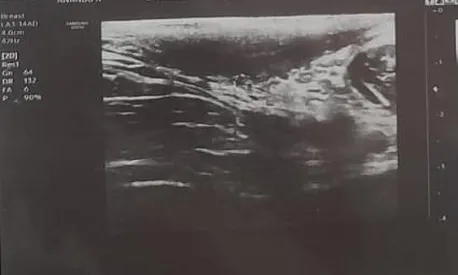
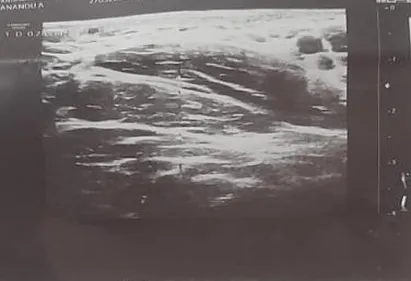
Figure 1: Ultrasonography of the right axilla demonstrating an infected subcutaneous sinus tract with multiple superficial skin openings, adjacent inflammatory foci and reactive axillary lymph nodes.
Diagnosis
According to the clinical evaluation and ultrasound findings, the patient had right axillary hidradenitis suppurativa. The signs and symptoms that led to the diagnosis included recurrent painful swelling, pus formation, multiple sinuses, tenderness and induration. In addition, the ultrasound indicated an infected subcutaneous sinus tract and inflammatory masses adjacent to the reactive axillary lymph nodes. According to the presence of sinus tract and inflammatory process, the condition was staged as Hurley stage II hidradenitis suppurativa.
Treatment
Medical Management during Hospitalization
The patient received Intravenous ceftriaxone - tazobactam, Intravenous pantoprazole, Intravenous paracetamol, Intravenous fluids, analgesics and supportive Care.
Surgical Management
The patient underwent a procedure of wide excision of right axillary hidradenitis suppurativa with Rhomboid flap reconstruction under General Anaesthesia (GA).
Operative findings revealed Multiple discharging sinuses, extensive induration surrounding the sinus tracts, diseased tissue completely excised and rhomboid flap used for reconstruction of the defect.
The surgery was completed successfully without any postoperative complications.
Histopathological Examination
Histopathological examination of the excised tissue confirmed the diagnosis of hidradenitis suppurativa. Microscopic examination demonstrated extensive inflammatory cell infiltration predominantly composed of neutrophils with admixed lymphohistiocytic cells surrounding the eccrine sweat glands and ducts. The sweat ducts were dilated, and focal erosion of the overlying epidermis was observed. Areas of hemorrhage and vascular proliferation were also present, reflecting chronic active inflammation. Importantly, no evidence of dysplasia or malignancy was identified. These histopathological findings correlated well with the patient's clinical presentation and supported the diagnosis of hidradenitis suppurativa.
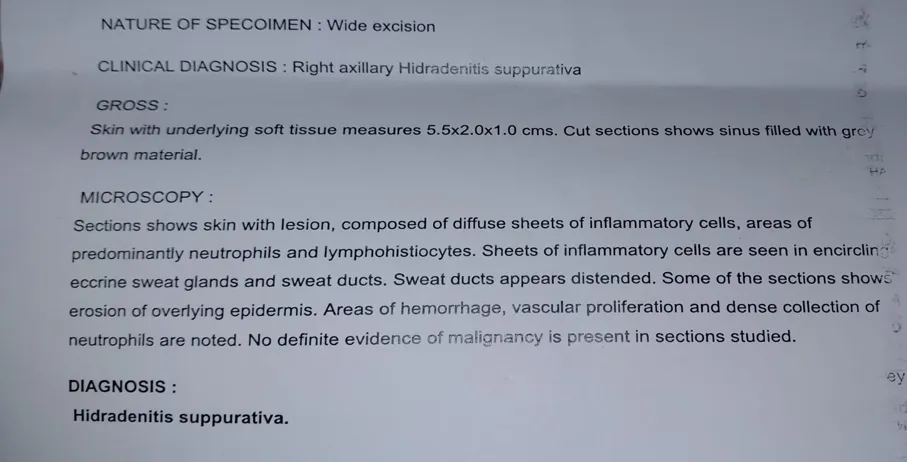
Figure 2. Histopathological examination of the excised right axillary lesion showing features consistent with hidradenitis suppurativa, with no evidence of malignancy.
Discharge Medications
Following an uneventful postoperative recovery, the patient was discharged in a stable condition with oral cefuroxime 500 mg plus clavulanic acid 125 mg twice daily for seven days to prevent postoperative infection, chymotrypsin–trypsin 100,000 AU twice daily for ten days to reduce postoperative inflammation and facilitate healing, pantoprazole 40 mg twice daily for seven days for gastric protection, and paracetamol 650 mg twice daily for two days, followed by use as needed for pain relief. Topical mupirocin ointment was prescribed for local application over the surgical wound until complete wound healing. The patient was advised to maintain proper wound hygiene, undergo regular wound dressing, avoid excessive shoulder movements during the initial recovery period, and attend scheduled follow-up visits to assess wound healing and monitor for any evidence of recurrence.
CLINICAL OUTCOME
Recovery following the operation was satisfactory. The pain and the presence of pus had subsided completely. There was gradual healing of the surgical site. The patient was discharged in good health status and had been advised about drug intake, proper wound dressing, maintaining hygiene, no friction over the surgical area and follow-up in the surgical out-patient department. The patient was followed for 4 months with no evidence of recurrence.
DISCUSSION
Hidradenitis suppurativa (HS) is a chronic inflammatory disorder of the pilosebaceous unit that is characterized by recurrent painful nodules, abscesses, sinus tract formation, and progressive scarring. The disease most frequently affects intertriginous regions, particularly the axillae and groin, and often has a prolonged relapsing course that significantly impairs physical function and quality of life. Although medical therapy is effective in the early stages, surgical intervention remains the preferred treatment for patients with localized Hurley stage II disease who fail to respond adequately to conservative management. In the present case, wide local excision followed by rhomboid flap reconstruction resulted in complete symptom resolution, satisfactory wound healing, preservation of shoulder function, and no evidence of recurrence during follow-up. (1)
Alharbi et al. emphasized that complete surgical excision is the cornerstone of treatment for localized HS because it removes chronically inflamed tissue and sinus tracts that contribute to persistent disease and recurrence. The clinical outcome observed in the present case supports this recommendation, as complete excision successfully eliminated the recurrent inflammatory lesions and achieved an uncomplicated postoperative recovery. Unlike the broader review by Alharbi et al., which included patients with disease affecting different anatomical sites and varying clinical severity, this report illustrates the successful treatment of isolated axillary Hurley stage II HS using a single-stage reconstructive procedure. (1)
Kofler et al. reported that radical surgical treatment of HS is associated with favorable wound healing, improved functional capacity, and better quality of life in appropriately selected patients. A comparable outcome was achieved in the present patient, who recovered without wound-related complications and retained full shoulder mobility after reconstruction. While their study evaluated a large and heterogeneous patient population, this case highlights that equally satisfactory functional and cosmetic outcomes can be achieved in localized axillary disease when surgical planning is individualized according to the extent of tissue involvement. (6)
Wortsman et al. demonstrated that ultrasonography provides valuable information regarding the true extent of HS by identifying hidden sinus tracts and inflammatory extensions that may not be evident on clinical examination. In this patient, preoperative ultrasonography accurately delineated the affected tissue, allowing appropriate surgical planning and complete excision of the diseased area. This finding reinforces the growing role of imaging as an adjunct to clinical assessment, particularly when defining surgical margins and minimizing the likelihood of residual disease. (7)
Mehdizadeh et al. observed that recurrence following surgery is influenced largely by the completeness of excision, with wider resections providing superior long-term disease control compared with more limited procedures. The present case is consistent with these findings, as no evidence of recurrence was observed during the follow-up period after wide local excision and rhomboid flap reconstruction. Although the duration of follow-up was relatively short, the favorable postoperative course suggests that meticulous surgical technique combined with appropriate reconstruction can provide effective disease control in selected patients with localized HS. (8)
Compared with previously published reports, this case demonstrates several clinically important features, including disease confined to a single axillary region in a young patient, the use of preoperative ultrasonography to guide surgical planning, histopathological confirmation of the diagnosis, and successful rhomboid flap reconstruction with preservation of shoulder function. These findings emphasize the importance of individualized treatment planning and support the role of complete surgical excision with appropriate reconstruction in achieving favourable functional recovery, satisfactory cosmetic outcomes, and effective short-term disease control in patients with localized Hurley stage II hidradenitis suppurativa.
CONCLUSION
Hidradenitis suppurativa remains a challenging chronic inflammatory disorder that requires early recognition and appropriate management to prevent disease progression and long-term complications. This case highlights the importance of integrating clinical evaluation with ultrasonography and histopathological examination to establish an accurate diagnosis and guide treatment decisions. Wide local excision followed by rhomboid flap reconstruction resulted in favourable wound healing, preservation of shoulder function, and no evidence of recurrence during follow-up, demonstrating the effectiveness of this surgical approach in selected patients with localized Hurley stage II disease. The significance of this report lies in reinforcing the value of definitive surgical management combined with histopathological confirmation for achieving satisfactory clinical and functional outcomes. It also adds to the growing clinical evidence supporting flap-based reconstruction as a reliable option after wide excision and underscores the importance of individualized treatment planning and regular follow-up to optimize long-term outcomes.
REFERENCES



Vibisha Victor, Nandana R S, Chintha Chandran, G. S. Jeevan, Shaiju S Dharan, Wide Local Excision with Rhomboid Flap Reconstruction for Right Axillary Hidradenitis Suppurativa in a Young Female: A Case Report, Int. J. of Pharm. Sci., 2026, Vol 4, Issue 7, 5974-5980. https://doi.org/10.5281/zenodo.21713392
 10.5281/zenodo.21713392