

We use cookies to ensure our website works properly and to personalise your experience. Cookies policy
1,2,3 Department of Pharm. D, Abhinav Education Society’s College of Pharmacy (B. Pharm), Narhe, Pune, Maharashtra, India.
4 Clinical Pharmacologist, Sahyadri Super Speciality Hospital Hadapsar, Pune, Maharashtra, India.
5,6 Department of Pharmacology, Abhinav Education Society’s College of Pharmacy (B. Pharm), Narhe, Pune, Maharashtra, India.
Background: Surgical site infections (SSIs) remain a leading cause of postoperative morbidity, and appropriate antibiotic prophylaxis is critical for their prevention. Adherence to standardized hospital antibiotic policies regarding drug selection, timing, and duration is essential to minimize SSI risk and curb the emergence of antimicrobial resistance. Aim: To evaluate the pattern of antibiotic selection, timing, and duration of surgical prophylaxis administered to surgical patients in accordance with the institutional antibiotic policy at a tertiary care hospital. Methodology: A prospective observational study was conducted over six months in a tertiary care Hospital, Pune. A total of 350 in-patients undergoing various surgical procedures were enrolled. Data on patient demographics, diagnosis, surgical details, laboratory investigations, and perioperative antibiotic use were recorded using a standardized data collection form and assessed for compliance with the hospital's antibiotic prophylaxis policy. Result: The study population was predominantly female (58%), with the majority (50%) belonging to the 21-40-year age group. Elective procedures constituted (88%) of surgeries, while emergency procedures accounted for (12%). Cephalosporins, particularly cefuroxime, were the most commonly prescribed prophylactic agents (68%). Compliance with policy-directed antibiotic selection was observed in (81%) of cases, whereas timing compliance was comparatively lower at (77%). Conclusion: Overall adherence to the surgical antibiotic prophylaxis protocol was 81%, with the remaining 19% non-adherence primarily attributable to inconsistencies in timing, drug selection, or duration of therapy. Such deviations carry substantial risk for antimicrobial resistance and postoperative complications. Regular antibiotic stewardship audits, targeted prescriber education, and multidisciplinary coordination are recommended to strengthen protocol compliance and improve surgical patient outcomes.
Surgical site infections (SSIs) constitute one of the most frequent postoperative complications and impose a substantial burden on healthcare systems worldwide, contributing to increased morbidity, prolonged hospital stay, and escalating treatment costs [1,2]. The Centers for Disease Control and Prevention (CDC) defines SSIs as infections occurring within 30 days of a surgical procedure, or within one year if an implant is placed, and further classifies them as superficial incisional, deep incisional, or organ/space infections to standardize surveillance and reporting [1].
Surgical antibiotic prophylaxis (SAP) refers to the administration of antibiotics prior to a surgical procedure with the aim of preventing postoperative infection, and is distinct from therapeutic antibiotic use in the management of established infection [3]. The efficacy of SAP is governed by four key determinants: appropriate antibiotic selection, optimal timing of administration, adequate dosing, and appropriate duration of therapy. Of these, timing is particularly critical, as achievement of adequate tissue and serum antibiotic concentrations at the time of incision is essential to prevent intraoperative microbial contamination of the surgical site [3,4].
Appropriately administered SAP has been demonstrated to substantially reduce the incidence of SSIs, with reported reductions of up to 50% in some studies [5]. Reflecting this evidence, international bodies such as the World Health Organization (WHO), the CDC, and the American Society of Health-System Pharmacists (ASHP) recommend administration of prophylactic antibiotics within 60 minutes prior to incision, preferential use of narrow-spectrum agents, and restriction of prophylaxis to a single preoperative dose or short-course regimen for the majority of surgical procedures [3-6].
Despite the availability of well-defined guidelines, inappropriate use of SAP remains widespread in clinical practice. It is estimated that surgical prophylaxis accounts for 30-50% of all antibiotic use in hospitals, and that 30-90% of this use may be inappropriate [6,7]. Commonly reported deviations include incorrect timing of administration, inappropriate antibiotic selection, and unwarranted prolongation of postoperative antibiotic therapy beyond recommended durations. Such practices not only increase healthcare costs and the risk of adverse drug reactions but also contribute significantly to the global emergence of antimicrobial resistance, a public health threat of major concern [5,7].
The burden of SSIs is disproportionately higher in low- and middle-income countries, including India, where elevated infection rates have been attributed to variability in infection control practices and inconsistent adherence to prophylaxis guidelines [5,8]. Ongoing evaluation of institutional SAP practices is therefore essential to identify gaps in compliance and to inform targeted antimicrobial stewardship interventions.
In this context, the present study was undertaken to evaluate the prescribing patterns of SAP and to assess adherence to institutional antibiotic policy among patients undergoing surgical procedures at a tertiary care hospital.
2.1 Study Design, Setting, and Population:
A prospective observational study was conducted over six months in the Department of Surgery at a tertiary care Hospital, Pune hospital in Pune, India, to assess utilization patterns and guideline adherence for SAP across surgical specialties. A total of 350 in-patients undergoing elective or emergency surgical procedures, irrespective of age or sex, were enrolled to reflect real-world clinical practice.
Patients undergoing any surgical procedure and receiving antibiotic prophylaxis during the study period were included, while those managed solely on an outpatient basis or with incomplete antibiotic administration records were excluded. A total of 350 consecutive eligible patients were enrolled over the six-month period.
Data were prospectively recorded on a structured proforma using patient medical records, perioperative charts, and laboratory reports. Variables included demographic details (age, sex, body weight), clinical diagnosis, type and duration of surgery, wound classification, and department. Antibiotic-related variables comprised drug name, dose, route, timing relative to incision, frequency, and duration of therapy. Intraoperative parameters (incision time, operative duration, blood loss, need for re-dosing) and relevant hematological/biochemical investigations were also documented.
Appropriateness of SAP was assessed against the hospital's antibiotic policy as the reference standard, based on antibiotic selection, timing, duration, and intraoperative re-dosing. Selection was deemed appropriate if consistent with recommended agents for the procedure; timing was appropriate if administered within 60 minutes before incision; duration was assessed against guideline recommendations favoring single-dose or short-course regimens. For procedures exceeding the recommended coverage window (e.g., >4 hours for cefuroxime), re-dosing compliance was evaluated, and each parameter was classified as compliant or non-compliant. The primary outcome was the proportion of cases compliant with policy for antibiotic selection and timing; secondary outcomes included utilization patterns, single-versus combination-agent prophylaxis, and adherence to re-dosing recommendations.
Selection bias was minimized through consecutive enrollment of eligible patients, and information bias was reduced by direct extraction of data from clinical records using a standardized format. The study was conducted per institutional ethical guidelines, with patient confidentiality maintained and data anonymized prior to analysis.
Data were entered and analyzed using Microsoft Excel. Categorical variables were expressed as frequencies and percentages, with results presented in tabular and graphical form.
Of the 350 patients enrolled, the majority were female (204, 58%) compared to male (146, 42%) and half (50%) patients were belonged to the 21-40-year age group (Figure 1). Weight stratification showed most patients (177, 50%) in the 51-70 kg range (Table 1).
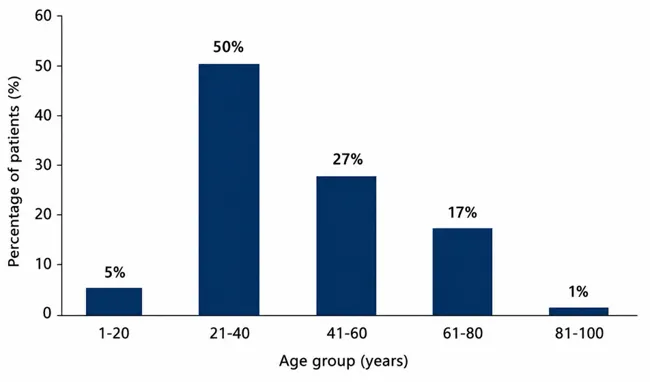
Figure 1: Age-wise distribution of study patients (n = 350)
Table 1: Weight distribution of study patients (n = 350)
|
Weight group (kg) |
No. of patients |
Percentage (%) |
|
<50 |
45 |
13 |
|
51-70 |
177 |
50 |
|
71-90 |
107 |
31 |
|
>90 |
21 |
6 |
Elective procedures constituted 88% (n = 308) of cases, while emergency procedures accounted for 12% (n = 42). By standard wound classification, clean-contaminated procedures were most frequent (50%), followed by clean (40%), contaminated (8%), and dirty wounds (2%) (Figure 2).
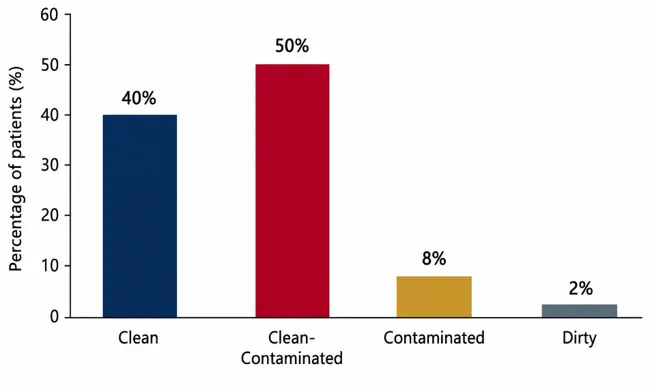
Figure 2: Surgical wound classification (n = 350)
The highest caseload was recorded in Obstetrics & Gynaecology (91, 26%), followed by Orthopaedics (78, 22%) and General Surgery (59, 17%) (Table 2).
Table 2: Department-wise distribution of surgical cases (n = 350)
|
Department |
No. of cases |
Percentage (%) |
|
Obstetrics & Gynaecology |
91 |
26% |
|
Orthopedic |
78 |
22% |
|
General Surgery |
59 |
17% |
|
Urology |
37 |
10% |
|
Gastro-enterology |
21 |
6% |
|
Onco-surgery |
17 |
5% |
|
Neuro-surgery |
13 |
4% |
|
Others |
34 |
10% |
Cephalosporins were the predominant class prescribed, with cefuroxime used in (68%) of patients, reflecting a strong institutional preference for second-generation cephalosporins (Figure 3).
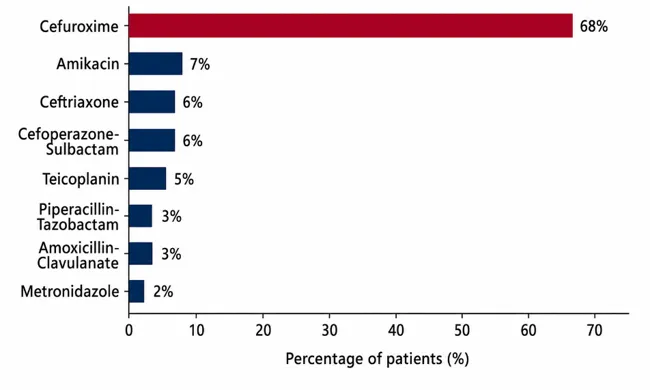
Figure 3: Distribution of antibiotic agents used for surgical prophylaxis (n = 350)
Most patients (86%) received antibiotics for prophylactic intent, and single-agent regimens predominated (92%) over two- or three-drug combinations (Table 3).
Table 3: Indication and combination pattern of antibiotic use (n = 350)
|
Parameter |
Category |
No. of patients |
Percentage (%) |
|
Indication |
Prophylaxis |
300 |
86 |
|
Treatment |
50 |
14 |
|
|
Regimen |
Single agent |
322 |
92 |
|
Two-drug combination |
12 |
3 |
|
|
Three-drug combination |
16 |
5 |
Most procedures (44%) lasted 1-2 hours; surgeries exceeding 4 hours together accounted for only 15% of cases (Figure 4).
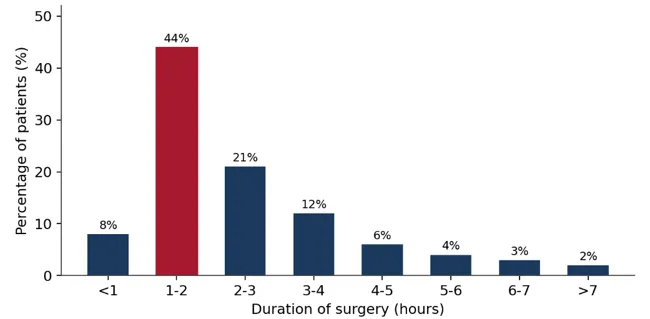
Figure 4: Distribution of surgical duration among study patients (n = 350)
Of the 15 surgeries exceeding the 4-hour cefuroxime coverage window, an intraoperative repeat dose was administered as per policy in only 5 cases (33%), while re-dosing was omitted in the remaining 10 cases (67%), indicating a notable gap in re-dosing compliance during prolonged procedures.
Overall compliance with the hospital's antibiotic selection policy was 81% (285/350), and timing compliance administration within 60 minutes before incision was 77% (275/350) (Figure 5).
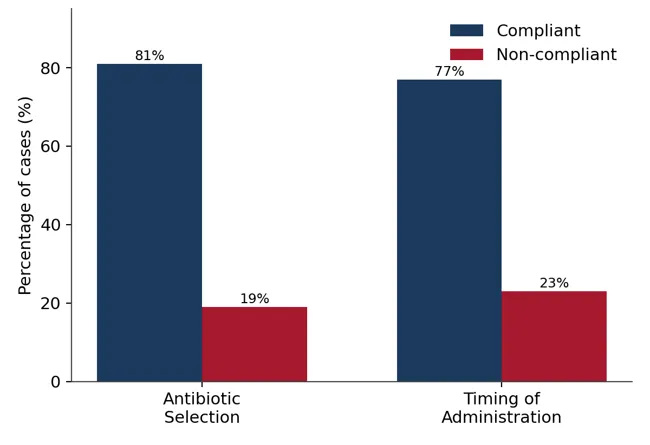
Figure 5: Compliance with hospital antibiotic policy for selection and timing (n = 350)
The present observational study evaluated adherence to SAP policy and the factors influencing its rational use in a tertiary care hospital, revealing an overall selection compliance of 81% and timing compliance of 77%. These findings indicate a reasonably structured, policy-aligned approach to antibiotic use, though notable gaps persist, particularly regarding timely administration and intraoperative re-dosing during prolonged procedures. The predominance of cases from the Obstetrics & Gynaecology and Orthopaedics departments identifies these units as major contributors to institutional surgical antibiotic consumption and, therefore, priority targets for future stewardship efforts. The restrained use of dual- or triple-drug combinations, observed in only a small minority of patients, further suggests a conscious institutional effort to limit unnecessary antibiotic exposure, consistent with core antimicrobial stewardship principles.
When compared with existing literature, our compliance rates are considerably higher than those reported by Gurunthalingam et al., who found that only 2.53% of surgical cases at a tertiary teaching hospital in Central India received SAP that was fully appropriate with respect to national and international guidelines, with major deviations in both timing and duration of administration [9]. The markedly better performance observed in our cohort likely reflects closer institutional adherence to a locally adapted antibiotic policy, although the wide disparity between the two studies underscores how variable SAP compliance can be even within similar tertiary-care Indian settings.
Similarly, Rehan et al. reported a mean duration of prophylactic antibiotic therapy of approximately five days in a tertiary care teaching hospital in India, far exceeding the single-dose or short-course regimens recommended by international guidelines for clean and clean-contaminated surgery [10]. In contrast, our study demonstrated comparatively better stewardship, with the majority of patients receiving prophylaxis strictly for its intended preventive indication and shorter, more guideline-concordant courses, suggesting incremental improvement in institutional prescribing discipline relative to earlier Indian benchmarks.
Sheikh et al., in a prospective study conducted in an Indian surgical population undergoing elective laparoscopic cholecystectomy, demonstrated that a single preoperative intravenous dose of ceftriaxone achieved adequate serum and tissue concentrations throughout surgery and was associated with a SSI rate of only 2% [11]. This evidence supporting single-dose cephalosporin prophylaxis lends support to the monotherapy-predominant approach observed in our cohort, where cefuroxime was the agent of choice in the majority of patients. This preference for a single narrow-spectrum cephalosporin over multidrug regimens aligns with literature favoring single-agent prophylaxis for most clean and clean-contaminated procedures, reinforcing the appropriateness of our institution's current antibiotic choice pattern.
Despite these favorable comparisons, residual non-compliance in antibiotic selection and, more prominently, in timing of administration and intraoperative re-dosing, mirrors the deviations reported in comparable Indian and international cohorts, and has been attributed to similar causes emergency clinical circumstances, individual prescriber judgment, and inconsistent familiarity with hospital policy [9,10]. Since suboptimal timing and inadequate re-dosing are recognized contributors to both SSI risk and the selective pressure driving antimicrobial resistance, these gaps warrant continued attention despite the overall favorable compliance profile of this study.
Future scope: Future research should focus on multi-centric and longitudinal studies to validate these findings across diverse surgical settings and patient populations, and should incorporate direct correlation with SSI outcomes, which was beyond the scope of the present observational design. Structured pre- and post-intervention studies evaluating the impact of prescriber education, computerized reminders, or pharmacist-led stewardship rounds on timing and re-dosing compliance would help identify effective, sustainable strategies for closing the residual gaps identified here. Additionally, integration of antimicrobial consumption and resistance surveillance data would allow future work to more directly link SAP compliance with downstream antimicrobial resistance trends, strengthening the evidence base for institutional policy refinement.
This prospective observational study of 350 surgical patients demonstrated an overall compliance of 81% with the hospital's antibiotic selection policy and 77% with recommended timing of administration, reflecting a reasonably well-structured approach to SAP. Cefuroxime emerged as the preferred agent, and single-drug regimens predominated over combination therapy, indicating an institutional inclination toward rational, guideline-concordant prescribing. However, the persistent non-compliance in timing (23%) and the poor adherence to intraoperative re-dosing in prolonged surgeries highlight specific, actionable gaps that continue to pose risks for SSI and antimicrobial resistance. Strengthening these areas through regular audits, targeted prescriber education, and multidisciplinary stewardship efforts will be essential to further optimize prophylactic practices and improve surgical outcomes at this institution.
The authors are grateful to Dr. Trupti Tuse, Principal, Abhinav Education Society's College of Pharmacy, (B. Pharm), Narhe, Pune, Maharashtra, for providing the necessary facilities and institutional support for conducting this study. The authors sincerely thank Mrs. Sudha Nerlekar, Assistant Professor, Abhinav Education Society's College of Pharmacy, (B. Pharm), Narhe, Pune, Maharashtra, and Dr. Rahul Surve for their valuable guidance and support throughout the study. The authors also acknowledge all the patients who participated in this research and extend their gratitude to their families for their constant encouragement and support.
The authors declare that there is no conflict of interest regarding the publication of this manuscript.
Saroj Mohite: Conceptualization, Investigation, Data Curation, Formal Analysis -Writing Original draft
Prasad Ghatole: Data Collection, Literature Review, and Investigation.
Shrushti Pawar: Data Curation, Validation, and Formal Analysis.
Mrs. Sudha Nerlekar: Supervision, Methodology.
Dr. Rahul Surve: Validation, Project Administration.
ASHP: American Society of Health-System Pharmacists
CDC: Centers for Disease Control and Prevention
SAP: Surgical Antibiotic Prophylaxis
SSI: Surgical Site Infection
WHO: World Health Organization
REFERENCES




Saroj Mohite, Prasad Ghatole, Shrushti Pawar, Dr. Rahul Surve, Sudha Nerlekar, Dr. Trupti Tuse, Evaluation of Surgical Antibiotic Prophylaxis Practices in a Tertiary Care Hospital: A Prospective Observational Study, Int. J. of Pharm. Sci., 2026, Vol 4, Issue 7, 5942-5950. https://doi.org/10.5281/zenodo.21713123
 10.5281/zenodo.21713123