

We use cookies to ensure our website works properly and to personalise your experience. Cookies policy
Abasaheb Kakade College Of B. Pharmacy Bodhegaon.
Herbal hydrogel patches are being investigated as topical delivery systems that combine plant-derived constituents with hydrophilic polymer networks. Hydrogels can absorb and retain water, and their composition can be adjusted to influence flexibility, swelling, adhesion and release. This review summarizes the principles of topical delivery, hydrogel materials, skin-penetration pathways, herbal ingredients, formulation approaches and evaluation requirements. Aloe vera, Curcuma longa, Azadirachta indica and Centella asiatica are among the plants investigated for biological activities relevant to skin applications. Commonly studied polymers include polyvinyl alcohol (PVA), polyvinylpyrrolidone (PVP), carbomers and natural polymers. Release from a hydrated matrix may involve diffusion, polymer relaxation and, in some systems, matrix degradation. Important quality attributes include appearance, thickness, weight uniformity, folding endurance, surface pH, moisture behaviour, swelling, marker content, in-vitro release, skin compatibility and stability. Development challenges include variability in herbal extracts, poor solubility of some phytochemicals, chemical instability, limited skin permeation, microbial quality, mechanical weakness and insufficient clinical evidence. Standardized raw materials, validated analytical methods, reproducible manufacturing and appropriately designed safety and efficacy studies are required before therapeutic claims can be established.
Topical drug delivery is widely used to treat localized skin conditions because a formulation can be applied directly to the affected area. Hydrogels are three-dimensional networks of hydrophilic polymers that absorb and retain water while maintaining a defined structure. Their water content, swelling, mechanical strength and polymer composition influence their suitability for wound care and topical delivery [5,22,23].
Herbal hydrogel patches combine selected plant-derived constituents with a hydrated polymeric matrix. They are being explored for skin care and wound-management applications. Their development requires identification and standardization of the plant material, selection of compatible excipients, a reproducible preparation process and tests appropriate to the intended use. Topical delivery should be distinguished from transdermal delivery: topical products generally aim for an effect at or near the application site, whereas transdermal systems are designed to deliver an active substance through the skin into systemic circulation [6–14,30].
The potential advantages of a patch include localized application and sustained contact with a selected skin area. However, these outcomes depend on the active constituent, formulation design, skin condition and intended route; they should not be assumed without experimental evidence.
2. HYDROGELS: MATERIALS AND CLASSIFICATION
Hydrogels consist of cross-linked hydrophilic polymer chains that form a network capable of retaining water. Natural polymers used in hydrogel research include alginate, chitosan, cellulose derivatives, collagen and gelatin. Their properties can include water uptake and biodegradability, but performance varies with source, processing and formulation [18–20].
Synthetic polymers include PVA, PEG, PVP and polyacrylamide-based materials. Their composition and molecular characteristics can be adjusted to obtain reproducible swelling and mechanical properties. Polymer concentration, molecular weight, cross-linking method and processing conditions all influence the final material [21–23]. Hybrid hydrogels combine natural and synthetic components to balance selected material properties.
An appropriate hydrogel for topical use should have acceptable biocompatibility, handling properties, structural integrity, active-ingredient compatibility, reproducible loading and a release profile suited to its purpose. Physical, chemical and microbiological stability, as well as packaging compatibility, must also be considered. Requirements differ between a preformed patch, wound dressing and injectable hydrogel; these dosage forms should not be treated as interchangeable.
2.1 Emerging hydrogel technologies
Stimuli-responsive hydrogels are being investigated for changes in swelling or release in response to pH, temperature, enzymes or other environmental triggers. Self-healing networks, composite materials, sensors and advanced manufacturing methods are additional research directions. Their clinical value remains dependent on formulation-specific evidence of safety, performance and reproducibility [22,23].
3. HERBAL CONSTITUENTS FOR TOPICAL FORMULATIONS
Plant extracts contain mixtures of phytochemicals, and their composition can vary with species, plant part, cultivation, harvesting, storage and extraction. Aloe vera-derived materials and curcumin from Curcuma longa have been investigated in hydrogel and wound-related research. Neem (Azadirachta indica) and Centella asiatica are also discussed in topical herbal research. Reported biological activities, such as antioxidant, anti-inflammatory or antimicrobial effects, should be linked to the particular extract, marker compounds, dose and experimental model rather than generalized to every preparation [34–44].
Standardization is essential because differences in phytochemical composition may alter solubility, stability, biological activity and release. A publication should identify the botanical name, plant part, source, authentication method, extraction procedure and, where possible, marker compounds and their analytical method. The word “herbal” does not itself establish safety; irritation, sensitization, contamination and interactions with excipients must be assessed.
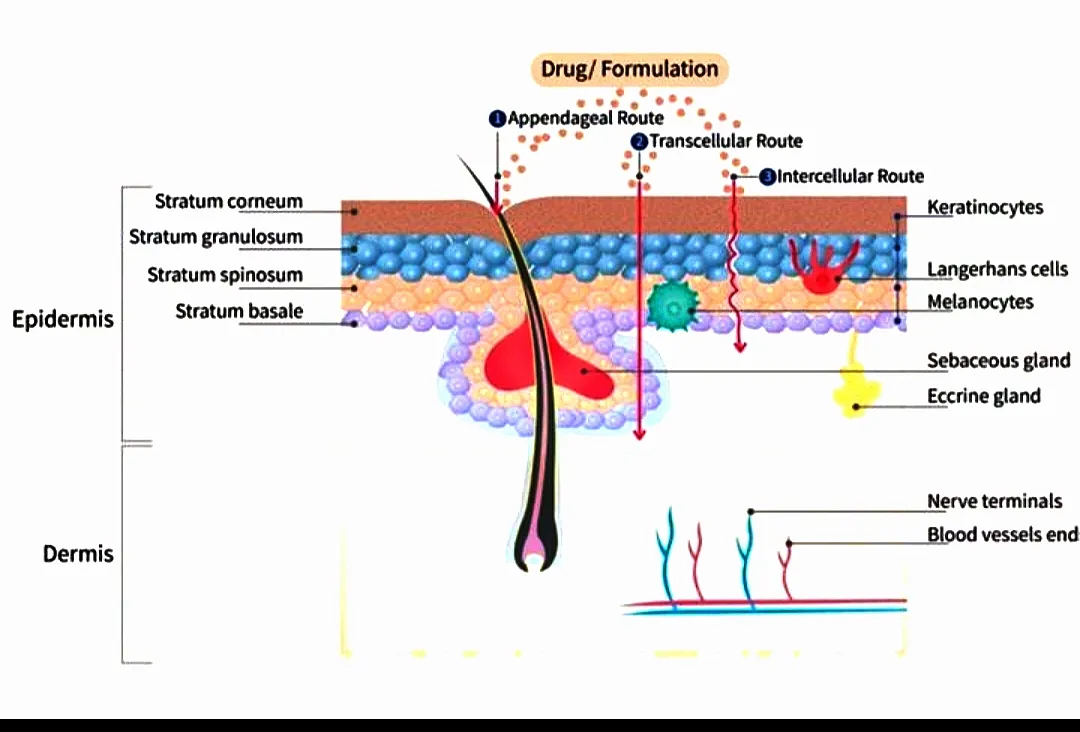
Figure 1: Schematic representation of skin pathways involved in topical delivery.
4. PRINCIPLES AND MECHANISM OF TOPICAL DELIVERY
After application, the hydrated patch contacts the skin and releases its incorporated constituents into the formulation–skin interface. Release may be influenced by polymer composition, cross-link density, swelling, solubility, molecular size and interactions between the active constituent and polymer [24–29]. The constituent must then partition from the formulation into the stratum corneum, the principal barrier to topical penetration.
Three pathways are commonly described: (i) the intercellular route, through lipid regions between corneocytes; (ii) the transcellular route, through corneocytes and intervening lipid domains; and (iii) the transappendageal route, through hair follicles and sweat or sebaceous structures. The relative contribution depends on the physicochemical properties of the molecule and the condition of the skin [24,25,30–33].
After crossing the stratum corneum, a substance may diffuse into viable epidermal and dermal layers. For a locally acting product, retention near the application site may be desired. Systemic absorption may occur if sufficient material reaches dermal blood vessels, but this is not the objective of a conventional topical formulation.
Passive diffusion can be described in simplified form by Fick’s law: J = D × K × ΔC / h, where J is flux, D is the diffusion coefficient, K is the partition coefficient, ΔC is the concentration gradient and h is the effective diffusion path length. Actual permeation also depends on molecular size, lipophilicity, aqueous solubility, skin hydration, formulation pH, contact time and skin condition. Herbal extracts add complexity because their constituents have different physicochemical properties.
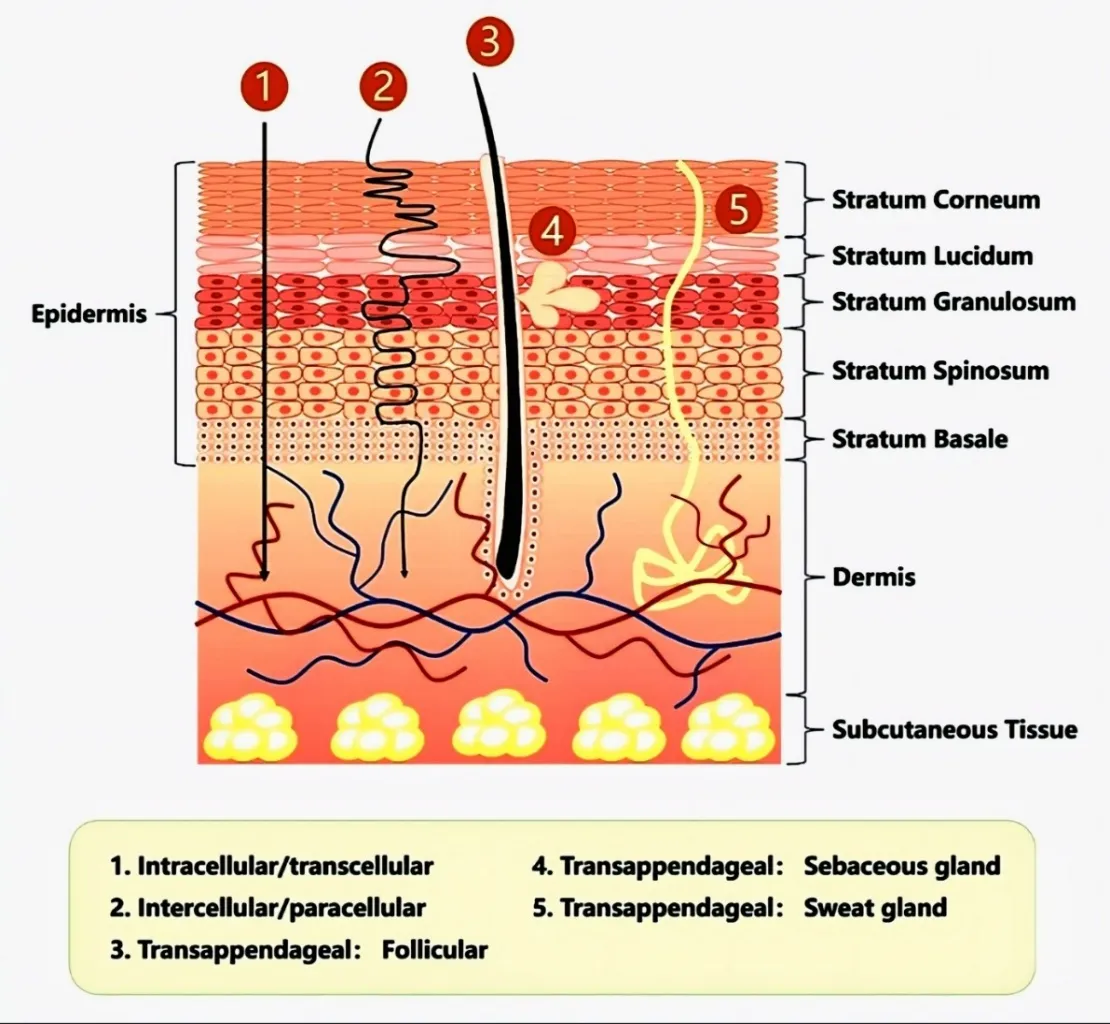
Figure 2: Principal pathways of drug penetration through the skin.
5. LITERATURE REVIEW
Lai and Rogach (2017) discussed hydrogels as carriers for herbal medicines and described how hydrated polymer networks can incorporate plant-derived materials and influence release [37]. Mishra et al. (2022) reviewed herbal and nanocarrier-based transdermal patches, emphasizing the skin barrier and approaches investigated to modify permeation [38].
Khan et al. (2013) reported the development and optimization of an Aloe vera topical gel using Carbopol 934 and evaluated its wound-healing potential [39]. Da Silva et al. (2021) characterized an Aloe vera hydrogel for topical wound-related use, including physical characterization and an in-vivo study [40]. A 2023 review summarized Aloe vera hydrogel preparation, structure, release mechanisms and wound-related applications [41].
Chen et al. (2025) reviewed curcumin-loaded hydrogels for skin wound healing, discussing curcumin’s reported antioxidant and anti-inflammatory properties and the potential of hydrogel matrices to maintain a moist environment and prolong release [42]. A 2026 review considered herbal-based hydrogels for topical applications, including formulation, characterization and translational challenges [43]. Sodiyal, Raj and Patil (2026) described herbal hydrogel patches containing Aloe vera and Curcuma longa, prepared using chitosan and Carbopol 934 and evaluated for physical properties, skin irritation and in-vitro permeation [44].
Taken together, these studies indicate active research interest, but the evidence is heterogeneous. Studies of gels, wound dressings, injectable hydrogels and transdermal patches do not necessarily establish the performance of a preformed herbal hydrogel patch. Comparisons should account for the dosage form, plant extract, polymer system, experimental model and endpoint.
6. FORMULATION APPROACH
A typical formulation strategy begins with selecting and characterizing the herbal material and polymers. PVA may provide film formation, while PVP can modify flexibility and matrix properties. PEG and glycerin may act as plasticizers or humectants. Aloe vera gel and curcumin extract are included as illustrative herbal components in the source formulation. Peppermint oil, if used, requires suitable dispersion, for example with a compatible surfactant such as polysorbate 80. A preservative such as sodium benzoate should only be used after compatibility, pH suitability and preservative effectiveness have been established.
A general preparation sequence is: weigh the polymers; disperse and dissolve PVA in water using controlled heating and stirring; add PVP gradually; incorporate PEG and glycerin; add the characterized herbal ingredients using conditions that minimize degradation; premix any oil with a suitable surfactant; add the mixture gradually; adjust to the final batch mass with water; deaerate; cast uniformly; dry or condition under recorded conditions; inspect the films; and package them in suitable containers.
The source draft provides four illustrative batches in which PVA and PVP concentrations vary while the other listed ingredients remain constant. The quantities are reproduced below as supplied and must be checked against the actual laboratory batch record before publication. In particular, the sodium benzoate quantity and unit require confirmation; “q.s.” water is adjusted to a stated final batch mass.
| Ingredient | F1 | F2 | F3 | F4 | Role |
|---|---|---|---|---|---|
| PVA | 10 g | 10 g | 14 g | 14 g | Film-forming polymer |
| PVP K-30 | 4 g | 8 g | 4 g | 8 g | Modifies flexibility/release |
| PEG | 3 g | 3 g | 3 g | 3 g | Plasticizer |
| Glycerin | 2 mL | 2 mL | 2 mL | 2 mL | Humectant/plasticizer |
| Aloe vera gel | 5 g | 5 g | 5 g | 5 g | Herbal ingredient |
| Curcumin extract | 0.5 g | 0.5 g | 0.5 g | 0.5 g | Herbal active |
| Peppermint oil | 0.3 mL | 0.3 mL | 0.3 mL | 0.3 mL | Cooling sensation |
| Tween 80 | 0.5 mL | 0.5 mL | 0.5 mL | 0.5 mL | Oil dispersant |
| Sodium benzoate | 0.2 g* | 0.2 g* | 0.2 g* | 0.2 g* | Preservative; verify |
| Distilled water | q.s. | q.s. | q.s. | q.s. | To 100 g total |
*Confirm the sodium benzoate amount and unit from the original batch record. This table is not a validated manufacturing formula.
7. EVALUATION OF HERBAL HYDROGEL PATCHES
Physical appearance: Record colour, transparency or opacity, surface smoothness, flexibility, uniformity and visible defects. Thickness: Measure at multiple locations with a calibrated micrometer or thickness gauge and report mean and standard deviation. Weight variation: Weigh individual patches of equal area and calculate deviation from the mean; this test does not establish uniform active-marker content.
Folding endurance: Fold equal-sized specimens repeatedly at the same point until cracking or breakage and report replicate results. Moisture content and moisture uptake are separate tests. Moisture content can be determined from weight loss under specified desiccation conditions, while moisture uptake is measured after exposure to a defined humidity environment. Report the conditions and calculation used.
Swelling behaviour should be assessed using a defined medium, sample dimensions, temperature and time points. Marker-content uniformity requires a suitable marker and a validated analytical procedure, such as UV–visible spectrophotometry or HPLC where appropriate. The wavelength or chromatographic conditions must be established for the selected marker using a reference standard; an arbitrary wavelength should not be assumed.
Surface pH may be measured after hydrating a defined patch area in a specified volume of aqueous medium and recording the pH with a calibrated meter. In-vitro release and skin permeation are different tests and should be reported separately. Skin compatibility assessment should use appropriate validated methods. Any human study requires prior ethics approval, informed consent and applicable regulatory compliance; an informal self-test is not an acceptable substitute.
Stability studies should examine relevant physical, chemical and microbiological attributes under defined storage conditions. Adhesion, mechanical strength, packaging compatibility and microbial quality should be evaluated when relevant to the intended product. Test methods, replicates, acceptance criteria and statistical treatment should be stated clearly.
8. POTENTIAL ADVANTAGES
Depending on composition and intended use, hydrogel patches may maintain moisture at the application site, provide a soft and flexible interface, conform to skin contours and maintain contact with a selected area. Hydration and polymer-network properties may influence release of incorporated constituents. A patch may also provide a cooling sensation and act as a carrier for selected plant-derived compounds. Each claimed advantage requires evidence from the particular formulation; a general property of hydrogels does not prove therapeutic effectiveness [62–66].
9. LIMITATIONS AND DEVELOPMENT CHALLENGES
Key challenges include variability in herbal raw materials; poor aqueous solubility of some phytochemicals, including curcumin; limited penetration through the stratum corneum; sensitivity to light, oxygen, temperature or moisture; and difficulty controlling release from multicomponent extracts. Some films may become mechanically weak or excessively swollen, while sweat and movement may reduce adhesion. Herbal ingredients and excipients can cause irritation or sensitization. Water-rich products also require suitable manufacturing hygiene, packaging and preservative-efficacy assessment. Finally, many reported systems are supported mainly by laboratory or animal studies, and clinical evidence remains limited [62–66].
Scale-up can introduce variation in mixing, casting, drying, thickness, moisture and extract distribution. Reproducibility therefore requires controlled raw materials, documented processing parameters, validated analytical methods and appropriate batch-release specifications.
10. FUTURE RESEARCH DIRECTIONS
Future work should prioritize standardized botanical materials, marker-based characterization and compatibility studies. Optimized formulations should undergo reproducible in-vitro release and, where appropriate, skin-permeation studies. Preclinical safety and biological activity should be assessed using suitable validated models, with animal studies undertaken only when scientifically justified and ethically approved. Clinical studies should follow only when adequate preliminary evidence is available and should define the indication, comparator, outcomes, sample size and study duration.
Further research may examine pH-, temperature- or enzyme-responsive hydrogels, combination patches, customized patch geometry and sensor-integrated systems. These approaches should be treated as research opportunities rather than established clinical benefits. Their value depends on validated dose uniformity, predictable release, safety, manufacturing feasibility and evidence of meaningful benefit [67–72].
DISCUSSION
The literature indicates that herbal hydrogel patches are a potentially useful research platform because they combine plant-derived constituents with water-retaining polymer networks. Their performance is governed by the herbal material, polymer composition, preparation process and intended route. PVA, PVP, carbomers and natural polymers offer formulation options, but the selected matrix must be compatible with the extract and provide suitable mechanical and release properties.
An important distinction is that release from a patch does not necessarily demonstrate penetration through skin or clinical efficacy. A formulation may show acceptable appearance, swelling or in-vitro release yet still have inadequate adhesion, marker stability or skin delivery. Evaluation should therefore be designed around the intended product and interpreted as a set of complementary quality attributes.
The available literature also includes different dosage forms and experimental models. Evidence from topical gels, wound dressings, injectable hydrogels and transdermal systems should not be directly generalized to preformed herbal hydrogel patches. Clear reporting of botanical authentication, extract standardization, formulation composition, manufacturing conditions, analytical methods and study limitations will improve the quality and comparability of future research.
CONCLUSION
Herbal hydrogel patches represent an emerging approach to topical formulation development by combining plant-derived constituents with the moisture-retaining and drug-carrying properties of hydrogels. Their potential advantages include localized application, flexibility and the possibility of modifying release through polymer composition and matrix design. However, these characteristics are formulation-dependent and require experimental confirmation.
Successful development depends on standardized herbal materials, compatible polymers and excipients, reproducible preparation, validated evaluation methods and adequate evidence of safety and stability. Variability in extracts, phytochemical degradation, limited skin penetration and insufficient clinical evidence remain important barriers. Further research should establish quality, safety and therapeutic performance before specific clinical claims are made.
REFERENCES

Dr. Bharat Jadhav, Dr. Hemant Gangurde, Dhakane Pranali, Dhole Dipak, Gangurde Vaishnavi, A Review on Herbal Hydrogel Patches Topical Drug Delivery System, Int. J. of Pharm. Sci., 2026, Vol 4, Issue 11, 4784-4793. https://doi.org/10.5281/zenodo.24548343
 10.5281/zenodo.24548343