

We use cookies to ensure our website works properly and to personalise your experience. Cookies policy
Department of pharmacy.
Particularly in low- and middle-income nations where regulatory frameworks may be weaker, counterfeit, faked, and subpar medications pose a serious and expanding hazard to global public health. Deliberately misrepresenting the identification, composition, or source of these medications can result in poor treatment outcomes, negative health impacts, increasing antibiotic resistance, financial losses, and preventable fatality. Prominent events, like the counterfeit heparin crisis, underscore the significance of preserving medication quality and patient safety as well as the grave dangers associated with counterfeit pharmaceutical items. It is becoming increasingly challenging to stop counterfeit goods from getting to customers due to the growing complexity of pharmaceutical supply chains and the quick growth of online medicine distribution. Global harmonization is still hampered by disparities in language and enforcement, even though international organizations like the World Health Organization (WHO) and the European Medicines Agency (EMA) have proposed definitions and regulatory steps to address this issue. An overview of the prevalence, contributing factors, health and economic ramifications, regulatory frameworks, and contemporary methods for the detection and prevention of fake and counterfeit medications is given in this narrative review. It also highlights current research gaps and explores potential approaches to improve the integrity of the pharmaceutical supply chain, bolster regulatory cooperation, and protect public health.
Pharmaceutical products that are purposefully and dishonestly mislabeled with regard to identity, composition, or source are referred to as counterfeit drugs, falsified medications, or substandard medications counterfeit pharmaceuticals are a global or worldwide problem. In addition to being a waste of patients' money, counterfeit medications frequently endanger the public's health and safety [1]. A patient who received injections for anemia after receiving a liver transplant serves as an example of this issue. The patient was still not improving despite receiving injections for eight weeks. The patient's medication turned out to be fake, according to the treating doctors.In these situations, counterfeiting can have detrimental effects. WHO estimates that about 10% of medical products in low- and middle-income nations are either subpar or fraudulent, with a higher prevalence in Southeast Asia and Africa.In addition to causing therapeutic failure, drug resistance, and even death, the distribution of such medications undermines public trust in reliable pharmaceutical companies and healthcare systems.[2]The 2008 counterfeit case of the blood thinner heparin serves as an illustration of the risks associated with fake drugs in the US. In this instance, a less expensive material was used in place of the active ingredient, which led to negative side effects in patients and a national heparin recall.Up to 81 deaths were thought to have been caused by the drug, whose fake active ingredient originated in China, a major source of counterfeiting.Patients should be aware that counterfeit goods have the potential to be fatal.After 740 lawsuits, the US company that sold heparin sold the division that made the medication.[3]The effects of fake and counterfeit medications go beyond personal injury. They erode confidence in pharmaceutical supply chains, worsen drug resistance, jeopardize disease control initiatives, and erode public trust in healthcare systems. The regulatory bodies, law enforcement organizations, and public health organizations entrusted with protecting the integrity of medications are heavily burdened by this illicit trade.The European Medicines Agency (EMA) distinguishes between falsified medicines, as “fake medicines that are designed to mimic real medicines”, and counterfeit medicines,“medicines that do not comply with intellectual property rights”. Discussions on this worldwide health issue are hampered by the lack of a consensus definition.. The effects of fake and counterfeit medications go beyond personal injury. They erode confidence in pharmaceutical supply chains, worsen drug resistance, jeopardize disease control initiatives, and erode public trust in healthcare systems. The regulatory bodies, law enforcement organizations, and public health organizations entrusted with protecting the integrity of medications are heavily burdened by this illicit trade.Ensuring the authenticity of pharmaceuticals throughout their journey from production to consumption has proven difficult due to the complex network of pharmaceutical manufacturers, wholesale distributors, and raw material suppliers. According to a traditional supply chain management model, pharmaceuticals move from producers to distributors, who then sell them to retailers who deliver them to patients via pharmacies or medical facilities. Patients are not given transparency regarding the source or delivery of their medications under this conventional model.[4]Although some aspects of this problem have been clarified by individual studies, a thorough analysis of the body of knowledge is lacking. By analyzing pertinent research and outlining the main ideas, approaches, and insights that together make up the body of knowledge on fake and phony medications in international travel, this narrative review aims to close this knowledge gap. Its objectives include reviewing the dangers of fake and counterfeit drugs and identifying areas of debate, knowledge gaps, and potential directions for further study that could advance our understanding of this important global health concern.[5]
COUNTERFEIT MEDICINE :
The first official definition of a counterfeit medication was given by the World Health Organization (WHO) in 1992, and it was defined as "a medicine which is deliberately and fraudulently mislabeled with respect to identity and/or source." This definition went on to say that fake goods could include medications that have the right ingredients, the wrong ingredients, no active ingredients, or insufficient amounts of active ingredients, or even ones that are packaged dishonestly to look like real ones.The need for more accurate terminology became apparent as the complexity of fake and subpar medications increased over time. In order to cover a wider range of problems affecting the quality and authenticity of medicines, the WHOcreated the more inclusive classification of "Substandard, Spicy, Falsely Labelled, Falsified, and Counterfeit (SSFFC)" for medical products in 2011. Intentional and inadvertent quality flaws that seriously endanger public health and safety were both intended to be addressed by this terminology.[6]However, the word "counterfeit" was frequently linked to infringements on intellectual property rather than threats to public health, which caused misunderstandings and legal issues in global debates. In order to address this ambiguity, the WHO recently updated its nomenclature, suggesting that the term "Substandard and Falsified medical products" be used to more accurately characterize medications that are either purposefully misrepresented or do not meet quality standards. There is now widespread worldwide agreement to use the term "falsified product," even though the term "counterfeit" is still frequently used in the scientific and pharmaceutical communities. This term, which encompasses various forms of misrepresentation regarding their identity, composition, and source, more accurately captures the nature of the intentional deception involved in such medications.In general, these changing definitions show the WHO's continuous attempts to maintain clarity, fortify international regulatory frameworks, and safeguard public health against the escalating risk of tainted and inferior medical product. [7]
CLASSIFICATION
A more complete and accurate comparison and analysis of these drugs is made possible by the classification of SSFFC medical products, which distinguishes inferior products from those that are intentionally or fraudulently misrepresenting themselves and those that are unregistered or unlicensed in the nation of marketing.
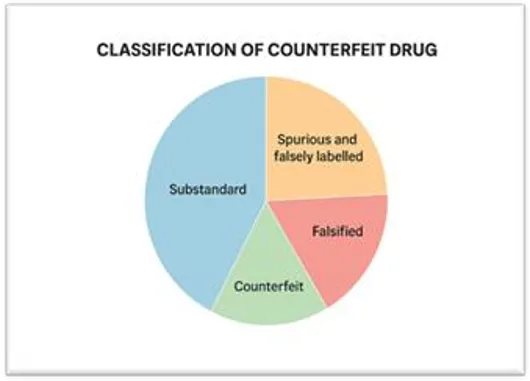
Fig 1. Classification of counterfeit drug
1. Substandard:
Approved medical products that fall short of their requirements, quality standards, or both.
2. Spurious and Falsy Labelled:
The name of a company claiming to be the drug's manufacturer appears on the label or container, but this company is either nonexistent or fictitious, or it claims to be the product of a manufacturer whose product it is not actually.[8]
3. Falsified:
Pharmaceuticals that intentionally or dishonestly misrepresent their source, identity, or composition.
4. Counterfeit:
A medication that is purposefully and dishonestly mislabeled regarding its identity and/or source is considered counterfeit.[9]
COUNTERFEIT PRODUCTS :
1. Goods made with the wrong ingredients.
2. Goods with little or no active ingredients.
3. Items that come in phony packaging.
4. Drugs whose active ingredients differ from those listed on the label. 5.Relabeling expired medications to increase their shelf life.
6. Items that lack the manufacturer's name and address.
7. Products that have expired. 8.Medications that never expire.
9. Goods with the wrong amount of the designated active ingredient.
10. Items with varying amounts of impurities.[10]
GLOBAL IMPACT OF COUNTERFIET DRUG
The state of drug counterfeiting around the world is not good.In 2017, the WHO estimated that 10.5% of the medications worldwide is either subpar or fake. As per a report, the incidence of counterfeit medicines was around 13.6% in low- and middle-income countries (LMICs). The antici-pated financial consequences in this context could be as high as $200 billion.[11]
As shown in Fig. 2, the impact of an increase in counterfeit medications is being felt globally. The financial impact of drug counterfeiting is also significant. Every drug therapy has expenses, whether they are paid for by the government or insurer or by the patient paying cash, which is the only option available to most impoverished people in developing countries. In order to determine how many days a low-income daily wage earner might need to purchase medications for a common treatment, the WHO and Health Action International conducted a survey. Regretfully, several days' worth of wages were required to pay for a standard course of treatment for bacterial infections or malaria.[12]Furthermore, the impact of counterfeit medications on a global scale extends beyond their financial implications and may even be considered a crime against humanity, as they can be converted into poisons that can kill. The WHO estimates that phony medications cause about one million deaths annually. Most of whom reside in Africa, where it is estimated that 200,000 people die annually as a result of taking fake antimalarial drugs.[13]The pharmaceutical industry has always been a haven for criminals and drug traffickers. They produce enormous quantities of phony drugs and distribute them via illicit channels, such as the dark web. The COVID-19 pandemic has exacerbated the illegal drug trade and raised the production of counterfeit drugs due to disruptions, a lack of company resilience, a shortage of skilled resources, and the quick misuse of technologies.[14]The outcomes include increased drug resistance, possible fatalities from critical illness medications, and comparable consequences.Furthermore, the impact of counterfeit medications on a global scale extends beyond their financial implications and may even be considered a crime against humanity, as they can be converted into poisons that can kill. The WHO estimates that phony medications cause about one million deaths annually. Most of whom reside in Africa, where it is estimated that 200,000 people die annually as a result of taking fake antimalarial drugs.[14]The emergence of resistance is one of the main risks associated with using fake or inferior medications. An increase in antibiotic resistance is inevitable if a patient is taking a subpar antibiotic, as antibiotic resistance has become a significant worldwide concern. Similarly, a rise in resistant strains of Plasmodium falciparum and P. vivax may result from inadequate anti-malarial medications.[15]A "digital intervention" is the use of digital technologies, including computers, wearables, smartphones, software, and apps. Using these digital solutions has made our lives easier and better by providing a variety of services.A digital system must also be technically feasible, efficient, effective, and user-satisfying in order to be accepted or adopted in our daily lives.Therefore, it is essential to keep human needs, perceptions, behaviors, and digital intervention functionalities in a healthy balance. Digital interventions are believed to be a more economical strategy that requires fewer personnel and physical space to implement in order to preserve a positive relationship with a system's productivity, human resources, and capital management. [16]
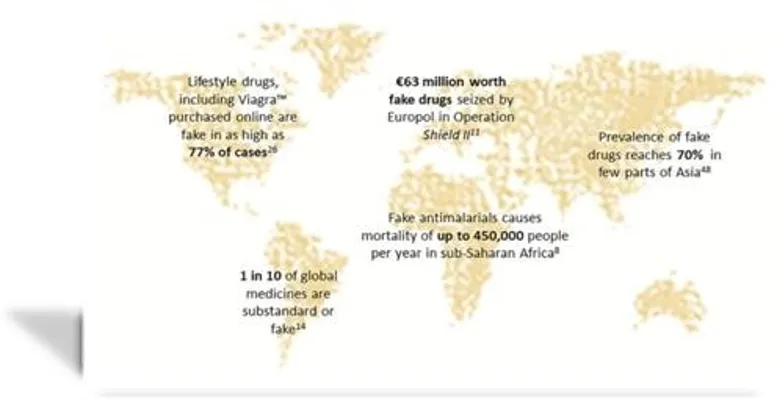
Fig 2.Global impacts
EXAMPLES OF COUNTERFEITING IN WORLD:
1. Around 800 bundles of phony prescription drugs, including Claritin (loratadine), Vicodin (hydrocodonebitartrate and acetaminophen), and Viagra (sildenafil citrate), were discovered during a 2009 U.S. government crackdown.[17]
2. Four inferior cough syrup brands from Maiden Pharma, India, were flagged by the WHO in September 2022 after they were allegedly connected to the deaths of 66 children in the western African nation of Gambia. Later, it was discovered that the product contained high levels of contaminants such as ethylene glycol and diethylene glycol.[18]
3. In 1993, more than 100 children died in Nigeria as a result of the harmful ingredients in counterfeit hack syrup.[19]
4. Similar incidents were reported in China, India, and Panama between 1990 and 2007 due to the use of ethylene glycol in hack syrup instead of glycerol. More than 190,000 deaths occurred in 2002 as a result of paracetamol syrup containing polyethylene glycol.[20]
5. In the United States, fake cancer medications first surfaced in February 2012, and two more cases were documented in February 2013 and June 2012. In all three cases, patients in the US received fake versions of the cancer medication bevacizumab. There are just four approved suppliers of bevacizumab in the US, according to the FDA. Doctors bought fake bevacizumab from unapproved vendors for less than the drug's retail price.[21]
6. In a guilty plea to a misdemeanor of buying unapproved cancer medications,7 Ohio oncologists were sentenced to probation and paid $2.6 million in fines. Medicare fraud was another issue in this case; doctors purchased the medications for less than the list price but charged Medicare the list price.[22]
FACTORS THAT ENCOURAGE COUNTERFIETING
1. Lack of relevant regulation
2. Drug administration body that is weak or absent
3. Lack of a legal requirement for licensing
4. Non-compliance with current regulations
5. Request exceeding available stock
6. Online Drugstore or pharmacy[23]
1. Lack of relevant regulation:
The drug dispersion framework's rule. When there is essentially no regulation in a country, that is the most obvious escape clause.
2. Drug administration body that is weak or absent:
In addition to dealing with manufacturers, a thorough drug regulation system must be in place to track down violating importers and distributors on a national level.[24]
3. Lack of a legal requirement for licensing:
lack of a law requiring licenses for the production or import of pharmaceuticals. It is simple for fake medications to enter the market if manufacturers and importers are not subject to stringent licensing regulations.
4. Non-compliance with current regulation:
Current laws and policies are frequently applied inconsistently. This is caused by a number of factors, such as the level of corruption and poverty in a given nation.
5. Request exceeding available stock:
Forgers are encouraged to flood the market with false medications when a country's production network is unable to meet the demand for medications, such as during the occurrence of plagues. astronomical prices.[25]
6. Online drugstore or pharmacy:
In general, an online pharmacy is a company that enables customers to purchase medications, including those that require a prescription, through an online ordering and mail delivery system. Before the order is delivered, legitimate online pharmacies will ask for registration and card payment details and require that the prescription be sent, usually via postal service. It is illegal to provide those prescriptions without a valid prescription that has been approved by a physician. The Onion Router (TOR) network, also known as the Dark net, is an encrypted area of the internet that considers unknown exchanges with no indication of site history or physical location, making it more frequently mentioned.[26]
CAUSES
• Weak drug regulatory system
• Lack of public awareness
• High drug prices & market demand
• Poor law enforcement
• Internate sales of unverified medicines
• Insufficient international co-operation .[26]
RISK & DANGER OF COUNTERFIET DRUG
1. Failure of treatment
2. End-organ damage
3. Toxic effects
4. False vital signs
5. Death
6. Loss of confidence
7. Economic loss
1. Failure of treatment:
Using fake medications can result in treatment failure and death.
2. End-organ damage:
The liver, kidneys, heart, and central nervous system can all be harmed by using fake medications.
3. Toxic effect:
These drugs carry a significant risk of toxicity, side effects, and therapeutic failures that could result in death. [27]
4. False vital signs:
Consuming counterfeit medication may cause vital sign readings that are not realistic.[28]
5. Death:
The use of fake pharmaceuticals can result in the loss of innocent lives.
6. Loss of confidence:
Adverse or therapeutic events cause people to lose faith in the drug control and enforcement system as well as the health system.
7. Economic loss:
Due to counterfeit goods being sold at lower prices, many pharmaceutical companies suffer significant financial losses.[29]
SOME OF THEIR MAJOR REGULATORY AGENCIES AND THEIR DUTIES
1. FDA (U.S. Food and Drug Administration)
2. EMA (European Medicines Agency)
3. CDSCO (Central Drugs Standard Control Organization)
4. MHRA (Medicines and Healthcare products Regulatory Agency)
5. TGA (Therapeutic Goods Administration)
6. Health Canada.
1. FDA:
To preserve the caliber of the pharmaceutical supply chain, the FDA closely adheres to strict regulations controlling healthcare manufacturing, distribution, and labeling.
2. EMA:
EMA is responsible for approving and overseeing pharmaceuticals within the European Union and enforcing laws to prevent the sale of fake drugs.
3. CDSCO:
For laws pertaining to the efficacy, safety, and quality of pharmaceuticals to be implemented and applied, CDSCO is crucial. The company uses strategies to stop customers from buying fake medications.[30]
4. MHRA:
The regulatory agency responsible for ensuring that pharmaceuticals and medical equipment are safe and effective is the Medical Products Regulatory Agency (MHRA). The UK is home to its headquarters. The organization in the UK regulates medications, medical equipment, and blood components intended for transfusion.
5. TGA:
Australia's regulatory authority for therapeutic products, such as pharmaceuticals and medical devices, is the TGA. These products must pass tests evaluating their efficacy, safety, and quality before they can be formally sold in Australia.
6. Health Canada:
Health Canada is the government organization in charge of assisting Canadians in maintaining and enhancing their health. Health Canada's Health Products and Food Branch (HPFB) is in charge of monitoring and assessing the quality, safety, and efficacy of pharmaceuticals and medical devices across the country.[31]
TRADITIONAL TECHNIQUES FOR EXAMINING COUNTERFIET DRUG
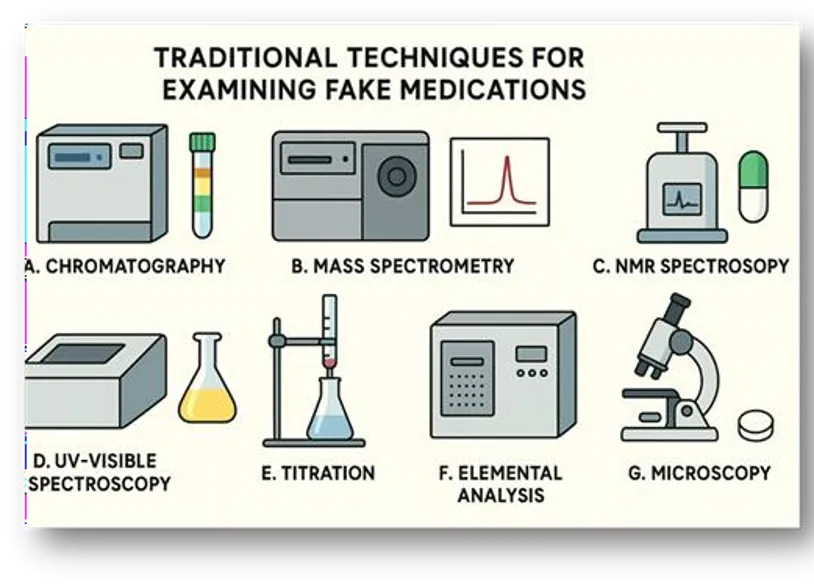
Fig 3. Traditional techniques
1. Chromatography:
The separation method known as chromatography is predicated on the variations in component distribution between a stationary phase and a mobile phase. Pharmaceutical analysis regularly uses chromatographic techniques such as gas chromatography (GC), thin layer chromatography (TLC), and high-performance liquid chromatography (HPLC) to separate and measure a medicine's essential components, such as its active ingredients and impurities.
• TLC appears to be a very basic chromatographic technique that has proven helpful in identifying the presence of fake medications. The active ingredients in counterfeit medications are frequently inaccurate or insufficient. Based on their distinctive spots and migration distances in relation to standards, TLC can distinguish these active ingredients from the filler materials. TLC makes it possible to compare suspected counterfeit medications to real samples. Any variations in
spot patterns or migration distances can be signs of compositional differences when both samples are run on TLC plates under the same conditions.[32]
• Because HPLC provides precise identification and quantification of active ingredients and impurities, as well as accurate identification and quality control, it is an essential tool in the fight against counterfeit medications. Genuine pharmaceutical products can be uniquely identified by their chromatographic fingerprints, which are produced by HPLC. To confirm authenticity and identify fake copies with distinct chromatographic profiles, these fingerprints can be compared to established standards.[33]
• Gas chromatography (GC) has been used to identify and characterize counterfeit medications, confirm the authenticity of essential oils, and check for volatile ingredients, leftover solvents, and unidentified substances or analogues (especially in the quality control of herbal medicines).[34]
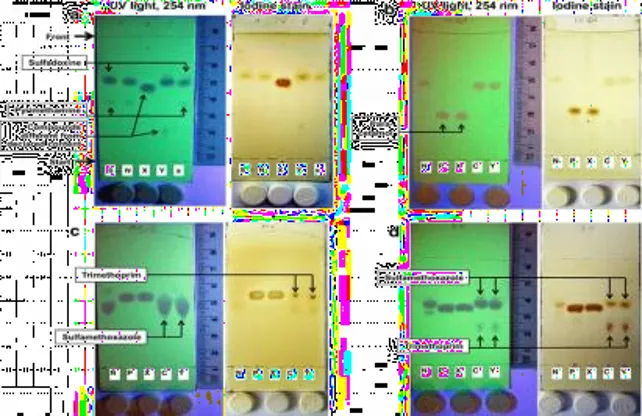
Fig 4. Chromatography
2. Mass spectroscopy:
Based on their molecular signatures and composition, mass spectrometry (MS), in particular High-Resolution Mass Spectrometry (HRMS) in conjunction with LC-MS, has proven to be useful in identifying and distinguishing genuine medications from fake ones.
• When comparing suspected fake tablets to real samples, mass spectrometry (MS) showed notable differences in their molecular profiles. Unexpected contaminants that were either absent or present in trace amounts in authentic medications were found by MS in counterfeit samples. Precise measurements of API concentrations were made possible by quantitative MS data, which also showed that fake tablets had different amounts than those on the label. This case study serves as an example of how mass spectrometry's high sensitivity, specificity, and capacity to deliver comprehensive molecular information help effectively combat the worldwide problem of counterfeit medications.[35]
3. NMR(Nuclear Magnetic Resonance) Spectroscopy:
A flexible analytical method for figuring out the makeup, structure, and behavior of molecules in a sample is nuclear magnetic resonance, or NMR. By analyzing the molecular makeup of tablets, NMR assists in the detection of fake medications. While fake medications display changed or absent peaks, indicating inaccurate or absent active ingredients, genuine medications produce clear, consistent peaks.
4. UV-Visible Spectroscopy:
Applications of spectroscopy include infrared spectroscopy, which can be useful for identifying functional groups within molecules, and ultraviolet (UV)-visible spectroscopy, which is used to measure the concentration of a chemical in a sample.[36]
5. Titration:
Supplements containing chondroitin and glucosamine are widely accessible in many Iranian cities.
6. Elemental analysis:
The structural composition of a sample is determined by elemental analysis, which measures the amounts of elements present. This procedure is necessary to ensure that medications are free of potentially harmful levels of impurities or toxins. One popular technique for elemental analysis is Induction Linked Plasma Mass Spectrometry, or ICP-MS.
7. Microscopy:
When it comes to identifying fake medications, microscopy is essential. Incorporating memo beads into tablets is one creative method that makes it simple to recover and decode the tablets using confocal microscopy. The polymer coating of the tablet can be penetrated by laser beams, enabling the detection of markings or logos that are normally applied by approved producers of authentic goods. This technology is especially user-friendly, even for staff members with little experience, because it is quick, non-destructive, and auto-mated. Important structural details can be revealed by the way light interacts with a drug's molecules and atoms. This interaction produces spectra that reveal information about the product's ingredients and surface structure.[37]
• Scanning Electron Microscopy (SEM) produces finely detailed three-dimensional black-and-white images by examining a sample's surface features with an electron beam in a raster pattern. This technique enables accurate surface analysis of the sample, which aids in the efficient detection of possible fake medications. With the use of sophisticated image processing techniques, these SEM images can be improved and transformed into color images.This enables a thorough analysis of contaminants, crystalline structures, surface fractures, and chemical compositions.[38]
NEW AND CUTTING EDGES TECHNOLOGIES FOR IDENTIFYING COUNTERFIET MEDICATION
Liability lawsuits and medication recalls may result from counterfeit medications. Additionally, when customers perceive additional risks when using a company's products, brand loyalty is weakened. This is avoided and patient welfare is ensured by an efficient anti-counterfeit strategy. Lawful actions against illicit dealers, technological countermeasures, consumer education and information, and cooperation with implementation offices are some strategies for combating counterfeit. By using these technologies, government authorities can make sure that medications in the supply chain are authentic. Drug counterfeiting is currently being fought with a variety of technologies, such as overt, covert, and track-and-trace technology. Without specialized knowledge or sophisticated equipment, packaging can be verified through the use of overt (visible) technologies and visual representations. This technique uses optically irregular elements, such as holograms or color-shift inks on medication packaging, to assess packaging rapidly. [38] In order to highlight different colors from various viewpoints, color-shift inks employ a variety of color combinations.
1. Hologram
2. Block chain technology
3. Overt, Covert and Track-and-Trace Technology
4. Artificial Intelligence (AI)
1. Hologram:
The hologram is a tool used to combat drug counterfeiting.[39]. Although holograms serve as a deterrent to counterfeiting, counterfeiters get around these safeguards by using techniques like label duplication, 3D printing, and modified QR/barcodes. These tactics take advantage of developments in digital, printing, and manufacturing technologies, making it more difficult for regulators and consumers to spot phony goods and guarantee safety. But even counterfeiters can't use these tactics thanks to block chain technology, artificial intelligence, and anti-counterfeit packaging.[40]. They can be made even more difficult to replicate by adding extra security features like ultraviolet (UV)-sensitive inks, buried or jumbled images, micro or Nano textures, or other specialized inks. The production process uses the track-and-trace system, where each stock unit is given a unique identification number that tracks it through the supply chain until it is used. Furthermore, a distinct pack coding creates a link and allows access to the exact data on a safe repository.[41]
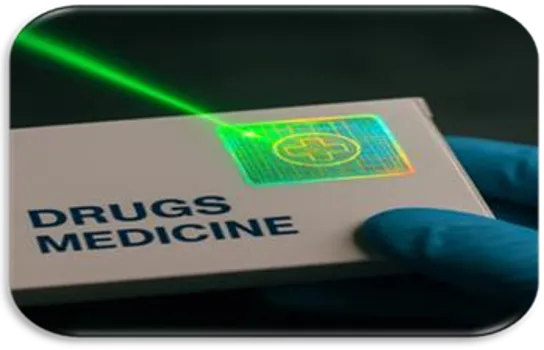
Fig 5. Hologram
2. Block chain Technology:
Manufacturing companies now have a practical means of combating counterfeiting while reducing transaction costs thanks to block chain-based systems that can accurately identify fake goods. Byintegrating block chain technology into their supply networks, companies can lower the risks associated with counterfeit goods and potentially boost profits. It is proposed that a block chain-based architecture be used to enhance the detection and verification of fake medications. Every item in this system has a unique identity that is generated by the maker, much like a scanning tag or QR code. After that, a block chain data set containing comprehensive item details, including production data and dispersion history, is connected to these identities. By comparing the filtered code with the data stored in the block chain data set, the system confirms the product's legitimacy when users scan the QR code using a camera scanner linked to a block chain network.If the code matches the data set; clients are notified that the item is valid. The creator and the customer, however, receive a series of warnings in the unlikely event that confusion occurs that reveals a phoney item, allowing for quick action to remove the phoney item from the course and look into its source items.[42]
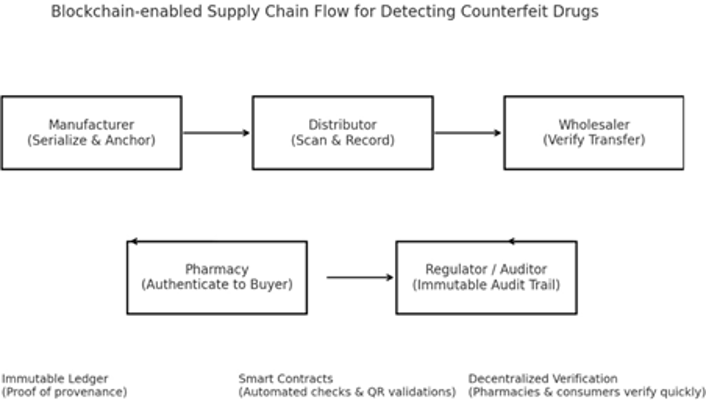
Fig 6.Flow of supply chain
The worldwide pharmaceutical supply chain is complicated, which leaves room for drug counterfeiters to exploit it. Block chain technology processes transactions using a decentralized, peer-to-peer architecture that minimizes the possibility of record-tampering. This would enable the
keeping of an everlasting record of every transaction, complete with information about location, data, quality, and cost that would be available to all parties. The supply chain will be safer, more transparent, and decentralized with the use of block chain technology, allowing for cost savings while guaranteeing the ability to identify questionable areas and fill in any gaps in the supply chain of legitimate medications. Block chain is essential to a number of fields, including supply chain management, public service, healthcare, and logistics. Because it may be helpful in managing medical records, clinical trials, medical supply management, and access control to health care data, such technology should be investigated further from the perspective of suitability for the health care industry.[43]
3. Overt, Covert and Track-and-Trace Technology:
To combat drug counterfeiting, various technologies are currently being used, including overt, covert, and track-and-trace technologies. Visual representations using overt (visible) technology can be used to verify packaging without the need for specialized knowledge or expensive equipment. This technique uses optically uneven elements, like color-shift inks or holograms on drug packaging, to quickly evaluate packaging. Color-shift inks employ a range of color combinations so that specific hues can be seen at various angles. To combat drug counterfeiting, various technologies are
Currently being used, including overt, covert, and track-and-trace technologies. Visual representations using overt (visible) technology can be used to verify packaging without the need for specialized knowledge or expensive equipment. This technique uses optically uneven elements, like color-shift inks or holograms on drug packaging, to quickly evaluate packaging. Color-shift inks employ a range of color combinations so that specific hues can be seen at various angles.[44]
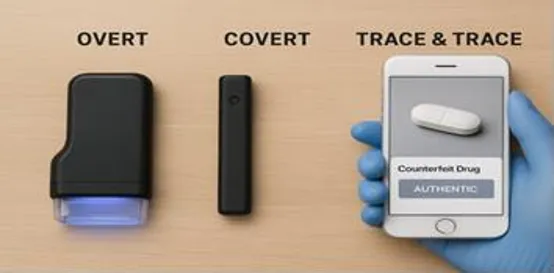
Fig 7.Overt, Covert & Trace-Trace tech.
4. Artificial Intelligence (AI):
That the artificial intelligence (AI) can process vast amounts of data and spot patterns that might point to fraud, it is being used more and more in the detection of counterfeit medications.
• Natural Language Processing (NLP).
• Image Recognition and Analysis.
• Machine Learning for Fraud Detection.
• Pattern Recognition[45]
FUTURE SCOPE
The persistent problem of counterfeit medicines demands a forward-looking, multidisciplinary response that integrates science, policy, and public engagement. The future scope of research and action in this field revolves around technological advancement, stronger international collaboration, data-driven regulation, and community empowerment.
1. Advancement of Detection and Authentication Technologies
• Future research will focus on developing rapid, affordable, and portable analytical tools capable of identifying falsified drugs at every point in the supply chain. Integration of nanotechnology, block chain, artificial intelligence (AI), and Internet of Things (IoT) systems will revolutionize authentication processes.
• Block chain-based traceability will ensure end-to-end transparency.
• AI-assisted image recognition and machine learning models will detect minute packaging deviations.
• Portable spectroscopic and biosensor devices will enable real-time field testing without laboratory dependence.
2. Global Regulatory Harmonization and Policy Integration
• The next decade will see an increasing push toward harmonized international regulations to combat counterfeit drugs globally.
• Establishment of unified global track-and-trace laws under WHO coordination.
• Creation of cross-border data-sharing platforms for counterfeit intelligence.
• Adoption of standardized serialization and labeling protocols across all nations.
• Such regulatory integration will strengthen surveillance and ensure consistency in enforcement.
3. Strengthening Digital and Online Pharmacy Surveillance
• With the rapid expansion of online drug sales, digital surveillance frameworks must evolve.
• Implementation of verified e-pharmacy certification programs.
• Use of AI-powered web monitoring to detect and dismantle illegal online pharmacies.
• Consumer-facing mobile applications will provide instant drug verification through QR or serial number scanning.[46]
4. Public Education and Stakeholder Awareness
• Public participation remains one of the most powerful defenses against counterfeit drugs.
• Governments and NGOs should conduct nationwide awareness campaigns emphasizing the risks of unverified medicines.
• Pharmacist and healthcare professional training programs will enhance frontline detection.
• Community-based reporting systems (via apps or SMS) will facilitate rapid response and monitoring.[47]
5. Research and Innovation Initiatives
• Academic and industrial research should prioritize:
• Development of low-cost field kits for resource-limited regions.
• Study of consumer behavior and socio-economic drivers that enable counterfeit drug markets.
• Exploration of biometric packaging and tamper-proof technologies such as micro-printing, color-shifting inks, and holographic seals.
6. Artificial Intelligence and Predictive Analytics in Surveillance
• Future law-enforcement and supply-chain monitoring will increasingly depend on AI-based predictive models:
• Pattern-recognition algorithms can analyze trade flows and social-media data to predict counterfeit hotspots.
• Automated customs screening systems can detect anomalies in shipping data.
• Predictive dashboards will support proactive intervention before counterfeit batches reach consumers.
7. Strengthening Local Manufacturing and Supply-Chain Security
• Encouraging ethical, sustainable, and decentralized pharmaceutical production—particularly in developing regions—will reduce dependence on vulnerable global supply chains.
• Localized manufacturing supported by quality assurance and regulatory oversight will help prevent counterfeit infiltration.
8. Legal Reforms and Enforcement Modernization
• Future efforts should emphasize stronger deterrence and prosecution mechanisms, including:
• Mandatory serialization of all pharmaceutical products.[48]
9. Multisectoral Collaboration
• A sustainable counterfeit-free environment will rely on Public–Private Partnerships (PPPs) that bridge governments, academia, pharmaceutical companies, and technology firms. Collaborative projects can pool data, funding, and innovation for more effective prevention.
10. Sustainable Development and Ethical Practice
• Counterfeit-drug prevention aligns closely with the United Nations Sustainable Development Goals (SDG 3: Good Health and Well-Being).
• Future strategies should embed ethical sourcing, equitable access to medicines, and green manufacturing, ensuring that affordability does not compromise quality or safety.[49]
CONCLUSION
Every year, millions of lives are put at risk by counterfeit medications, which constitute a chronic and growing global public health concern. They undermine public trust in healthcare systems, impair therapeutic results, and fuel antibiotic resistance. In addition to their negative medical effects, fake medications cause serious financial harm, support organized crime, and undermine respectable pharmaceutical sectors . A comprehensive strategy that incorporates stringent regulatory enforcement, cutting-edge detection technologies, strong supply chain monitoring, and public awareness campaigns is needed to address this complex threat. To guarantee efficient surveillance, information exchange, and legal action against offenders, governments, regulatory organizations, law enforcement agencies, and the pharmaceutical industry must work together internationally.The future of counterfeit drug prevention lies in technological innovation including block chain-based traceability, artificial intelligence for market surveillance, and mobile verification tools that empower consumers to authenticate products in real time. However, these tools must be supported by strong governance and equitable access, especially in low- and middle-income countries where counterfeit medicines are most prevalent.Innovation in technology, such as block chain-based traceability, artificial intelligence for market monitoring, and mobile verification tools that enable customers to instantly verify products, is the key to preventing counterfeit drugs in the future. However, strong governance and fair access are necessary to support these tools, particularly in low- and middle-income nations where counterfeit medications are most common. Ultimately, a top priority for global health should continue to be guaranteeing that everyone has access to safe, efficient, and high-quality medications. The threat of counterfeit medications can only be reduced and patient safety genuinely protected by concerted international action, ongoing attention, and public involvement.
REFERENCES


Harsh Saindane, Tanvi Jadhav, A Systematic Review on Counterfiet Drug, Int. J. of Pharm. Sci., 2026, Vol 4, Issue 8, 3555-3573, https://doi.org/10.5281/zenodo.22055342
 10.5281/zenodo.22055342