

We use cookies to ensure our website works properly and to personalise your experience. Cookies policy
Uttam Budhathoki, Kathmandu University, School of Science, Department of Pharmacy, P.O Box: 6250, Dhulikhel
With the development of Good Pharmacy Practice (GPP) guidelines and adherence to it assessed in developing countries, there is necessity for a systematic approach to outline the scenario of GPP practices. Thus, this systematic review aimed to collate the GPP adherence rates of developing countries. A systematic search of PubMed, Google Scholar, CINAHL, Scopus and Embase was conducted for studies published between January 1990 and December 2025. Data were extracted as per the structured rubric, with following headings; year of publication, study country, sample size, data collection tool and validation status, reported adherence rate, and domain-specific GPP adherence score. Seventeen studies out of ninety-one that spanned across nine developing countries were included for review. GPP adherence reported in the articles ranged from 43.2% to 89%. The most commonly explored domains of GPP were storage, service, health promotion facilities, dispensing, and rational use of medicine. The most commonly used tool was self-developed questionnaires. Implementation efforts by concerned stakeholders is necessary to increase adherence rate by identifying barriers to GPP. Additionally, to assure the GPP assessment’s reflectability to the real practice and relatability among countries, it is necessary to develop domain specific standardized GPP assessment tool.
“Good Pharmacy Practice (GPP) in community and hospital pharmacy setting” a pharmacy services practice standard developed in 1992, was the first and crucial step of the International Pharmaceutical Federation (FIP) to help countries achieve standard pharmacy practice [1]. However, a huge gap in pharmacy practice in terms of service orientation and quality assurance existed and still exists between developed and developing countries [2]. In high-income countries Pharmacist services are integrated into healthcare teams, focused towards patient care and standard. Whereas, in low and middle-income countries it is still in the process of recognition and integration [3] and the assurance on the quality of pharmacy services seems to lack due to the key challenges like regulatory and governance gaps, infrastructure and resource limitations, human resource constrains, educational and training gaps and systemic and communication barriers [4].Thus, the FIP developed a separate guidelines for developing countries, “Good Pharmacy Practice in developing countries: Recommendations for stepwise implementation” which was endorsed by the FIP Congress in 1998 in The Hague, recognizing the difference in the level of Pharmacy practice [2].
Since the release of developing countries specific GPP guidelines, countries such as India, [5,6], South Africa [7], Srilanka [8] and Philippines [9] developed their own guidelines and many others included the key guideline points into governmental rules and regulation [10]. In March 2002, the Indian Pharmaceutical Association developed GPP guidelines focused on Community Pharmacy [6] and later in 2015 India developed GPP regulation [5]. Likewise in 2021, Sri- Lanka endorsed GPP guidelines [8]. Accordingly, the Nepal Pharmacy Council drafted the national GPP guideline for Nepal [11] in 2005, which was finally included as a part of the schedule of “The code on sales and distribution of drug” in April 2024 [12] but only for voluntary GPP certification purpose. With the availability of the GPP guidelines GPP assessment has proven crucial to picturize the practice standard of Pharmacy in those countries there is lack of systematic review on adherence rate of developing countries to GPP, the availability of which would add body of knowledge internationally and help concerned stakeholders to decide on setting goals to implementing GPP.
The GPP practice philosophy outlines four key roles for pharmacists, which may be tailored to serve the needs of individual countries 1: prepare, obtain, store, secure, distribute, administer, dispense, and dispose of medical products; 2) provide effective medication therapy management; 3) maintain and improve professional performance; and 4) contribute to improving the effectiveness of the healthcare system and public health [13]. Each role is supported by the respective functions pharmacists have to fulfil. Most of the GPP assessment tools are based around the above roles but for routine assessment, Trap et al. 2010, is the only indicator-based tool available so far but it too lacks patient care component [14].
Although the formation of the SEAR Pharm forum in 2001 and GPP pilot project in five developing countries [2] reflects FIP’s efforts for GPP implementation in South-east Asian countries, delay in development and adoption of the GPP guidelines from member countries informs on the inadequate efforts from concerned stakeholders toward implementation. Good pharmacy practice is an important standard that highlight the quality of pharmacy services [15] and quantifying it is very crucial in understanding the level at which a particular Pharmacy’s practice prevail. For example; One of the first GPP assessment studies in 2007 reported 45.1% adherence rate to GPP which was assessed utilizing Country Checklist [16]. Such understanding can inform Pharmacists and implementation stakeholders to evidence-based decisions regarding milestones and implementation process. This quantification to broader level through systematic review can render far more benefits in understanding the scenario. But there is lack of systematic review of adherence rates of GPP in developing countries. As the review has reported the tools, questionnaires, and checklists used for GPP assessment and adherence to individual domains, the study can help in improving pharmacy practices and healthcare outcomes in developing countries by informing the current scenario of pharmacy practice standard and gaps in individual domain of GPP. Thus, the aim of this systematic review is to collate the findings from the researches available so far on GPP assessment studies from developing countries.
2. Material and methods
The research protocol based on Preferred Reporting Items for Systematic Reviews and Meta?Analyses (PRISMA) [17] was registered with International Prospective Register of Systematic Reviews (PROSPERO)(registration number: CRD42024552596)[18].
2.1. Eligibility criteria: The eligibility criteria for this study were guided by the PICOS framework: Participants/population, Interventions, Comparators, Outcomes, and Study design. Studies that did not meet the following inclusion criteria were excluded:
2.2. Participant/population: Community pharmacy, hospital pharmacy or health facility meaning any pharmacy other than community or hospital pharmacy
2.3. Intervention: As the review is related to adherence rate, no intervention criteria was set.
2.4. Comparators: Not applicable
2.5. Outcome measures: Adherence rate to Good Pharmacy Practice
2.6. Study design: Cross-sectional
2.7. Data source, search strategy and screening
A systematic search of PubMed, Google Scholar, CINAHL, Embase and Scopus was conducted for studies published between January 1990 and December 2025 that assessed GPP adherence in developing countries. Additionally, citation and grey literature search from Nepal was done. The duration of study was from June 2024 to December 2025. Only primary quantitative literature in English was considered for review. Correspondence was made to the Head of the Department of Pharmacy of the Universities of Nepal (Kathmandu University, Tribhuvan University, Pokhara University, and Purbanchal University) for the availability of grey literature from Nepal. Zotero 7.0.30 software was used to document a collection of screened articles from the initial run (BKC) and removal of the duplicates.
The search strategies for different databases are as follows:
PubMed: (((compliance [Title/Abstract]) OR (adherence [Title/Abstract])) OR (assessment [Title/Abstract])) AND (good pharmacy practice*[Title/Abstract])
Google scholar: allintitle: good pharmacy practice assessment OR adherence OR compliance
Scopus: (TITLE (good pharmacy practice) AND TITLE (assessment OR adherence OR compliance)) AND PUBYEAR > 1989 AND PUBYEAR < 2026 AND (LIMIT-TO (LANGUAGE, "English"))
Embase: ‘good pharmacy practice’:ab,ti AND (‘adherence’:ab,ti OR ‘compliance’:ab,ti OR ‘assessment’:ab,ti) AND [1990-2025]/py
CINAHL: XB (good pharmacy practice) AND XB (adherence or assessment or compliance)
The process of identifying, screening, and including or excluding studies is shown in the PRISMA flow diagram (Figure 1).
2.8. Data extraction, quality assessment and analysis
The studies were distributed among eight reviewers (BKC, RKS, SS, UB, ARP, SKC, NM and ABT) and screened for relevance by considering eligibility criteria in the title and abstract and then in the main body of the articles. The data were then extracted as per the structured rubric, which had the following headings: year of publication, study country, sample size, data collection tool and validation status, reported adherence rate, and domain-specific GPP adherence score. As per the Australian government department of foreign affairs list of developing countries, 2022, literatures were tallied and segregated for inclusion[19]. The quality assessment of the studies was conducted by using modified Newcastle-Ottawa Quality Assessment Scale [20]. following rubric by Emanuela Gualdi-Russo and Luciana Zaccagni., 2026 [21]. It was of moderate quality (Score=12.17). To reduce the risk of bias, individual domains of the GPP have been reported. In addition to that, wherever possible, overall GPP adherence was calculated by identifying the available domains and total score wherever available data allowed. A consensus discussion was adopted as a strategy to resolve conflicts between reviewers during screening and data extraction. Initially two reviewers discussed their interpretations and reasoning for scoring, where discrepancies arose in the assessment of individual studies and wherever consensus could not be reached, a third independent reviewer was consulted. For example, during the sub-analysis of adherence to individual domains, there were differences in opinion regarding the services domain, where it was reported together with health promotion in one study, while with facilities in another. To address this difference in opinion, the third reviewer was consulted, and it was agreed to place it into the facilities domain.
3.1. Search results: Out of total studies (n=91), of which 86 was identified from five databases viz. PubMed, Google Scholar, Embase, CINAHL and Scopus and two from grey literature source and three from citation search, 17 were included for review (n=21).
Pathak et al. 2025 [22] study was conducted in one hospital only so, it was not considered for review. Two grey literatures [23,24] were added from dissertation collection of universities of Nepal. This process is presented in detail in Figure 1 below. Although the filter date was set from January 1, 1990, to December 31, 2025, only two articles (Wijesinghe et al.,2007 and Tiyyagura et al., 2014) were published between 2007 and 2014. All other studies were published from 2016 onwards. Out of 146 developing countries [19] upon the availability of articles that met the inclusion criteria, this review is based on studies from nine countries: India, Lebanon, Nepal, Sri Lanka, Uganda, Thailand, the Philippines, Lao PDR, and Vietnam.
3.2. Characteristics of included studies: The summary characteristics presented in Table. 2 below shows that the studies assessed GPP in community pharmacy (n=15) [15,16,23–36] hospital pharmacy(n=1)[23] and health facility (n=1)[37]. Two studies, in addition to assessing the GPP score, studied the factors affecting the practice to comply with GPP, problems, and obstacles in pharmacy improvement to meet the GPP requirement [33,35]. A study in Uganda [37] was interventional in nature, and the Supervision, Performance Assessment, and Recognition strategy (SPARS) was tested to observe changes in GPP behaviors of which adherence to the GPP of the baseline study was considered for the review.
3.3. Assessment tools: Self-developed tool was used in six studies [25,26,29–31,34]. While only Sapkota et al., 2024 [34] and Poudel et al.,2026 [26] was validated, except Gyawali et al., 2017[30], all four had reliability assessed. Three studies used Trap B et al., 2010 indicator tool [23,24,36] but none of them re-validated and assessed reliability although translation to Telugu was done in Tiyyagura et al., 2014. Six studies used country-specific checklist [15,16,28,32,33,35]. one of the studies used the tool developed by Badro et al., 2020 [27] while the tool based on the revision of the former tool and incorporation of WHO/FIP GPP guideline was used by Trap et al.,2016 in which the former tool on Supervision, Performance Assessment, and Recognition Strategy (SPARS) was pre-tested before using it for the study. The tool is different as it consists of GPP indicators categorized into critical, major, and minor domains. Only indicator-based tool developed by Trap et al. in 2010 describes indicators and their scoring requirements in detail [14]. More details on the study characteristics can be found in Table 1.
3.4. GPP Adherence rates
The adherence to GPP reported below is based on the results of the included studies without analysis on them as there was variation in assessment tools and setting and under reporting in domains. The adherence to GPP reported in community pharmacy settings in the included studies ranged from as low as 43.20%[24] to as high as 89%[35]. Other adherence rates in community
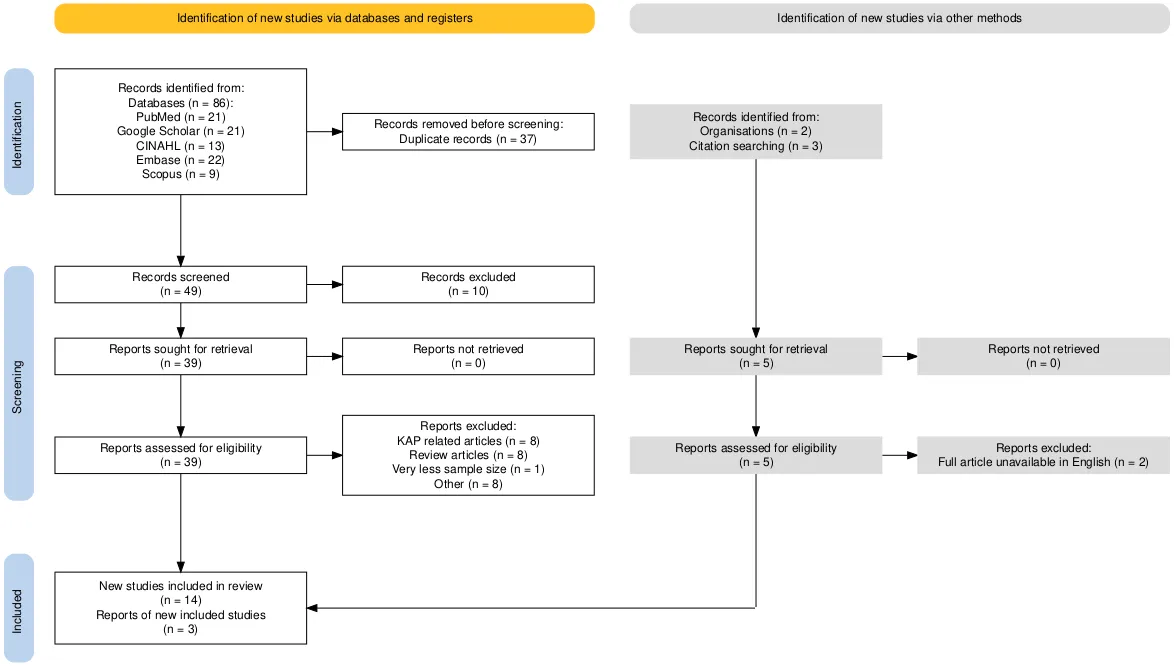
Figure 1. Prisma Flow diagram
pharmacy are; 45.1%[16], 45.48%[36], 50.84%[31], 53.52%[25], 56.21%[34], 59.3%[30], 60.48%[28], 65.09%[15], 65.71%[32,33] and 84%[27]. Badro et al. 2020 considered 75% as the cut-off value for adherence indicators, of which only 18.8% of pharmacies complied with the above 75% cut-off point. However, adherence to all domains of GPP assessed was below 25%. Similarly, in a study done by Wijesinghe et al., 2007, cut off value of 80% had been set and there were deficiencies in registration, the pharmacy premises, order of pharmacy, storage of drugs, maintenance of the cold chain, dispensing and documentation. The GPP adherence reported from hospital pharmacy and health facility was 56.67%[23] and 57%[37] respectively.
Although three studies in system domain have relatively low adherence rate; 18.65%[36], 29.6%[24], 39.04%[30], Cristuta et al.,2024, reported the highest (96.2%) score in system as well as premises/facilities, storage, and dispensing.
3.5. Domain specific GPP adherence rates
The GPP adherence range to different domains reported in the articles are as follows [Table 2]; premises/facilities (n=9)(47.8%[26] - 94.7%[15]), storage (n=12)(36%[26] - 75.4%[27])system (n=5) (18.65%[36] - 75.4%[27]), services and health promotion (n=10) (21.6%[30]- 86.10%
Table 1. Summary of included studies
|
Study details Country |
Study pop /Sample size |
GPP domains |
V |
R |
Questionnaire used |
|
(Wijesinghe et al., 2007) [16] Srilanka |
CP/38 |
Registration of the pharmacy, physical environment, order of the pharmacy, storage of drugs, maintenance of the cold chain, dispensing and documentation |
Yes |
No |
Country Checklist. The items were based on requirements of the Drugs Act and relevant aspects of GPP found in publications. |
|
(Tiyyagura et al., 2014) [36] India |
CP/100 |
System, storage, services, dispensing, rational use of drug |
No |
No |
Trap et al., 2010 indicator tool |
|
(Poudel et al., 2016) [26] Nepal |
CP and wholesale/ 100 |
Physical premises only: Cleanliness, ventilation, protection from physical environment, spaciousness, storage facilities |
Yes |
Yes |
Self-developed based on provisions on drug act and code on sale and distribution of drug |
|
(Trap et al., 2016) [37] Uganda |
Health Facility Pharmacy /455 |
Revisions were based on international GPP standards, the WHO rational drug use indicators, and SPARS indicators, 79 GPP indicators. |
Piloting done. |
Piloting done but reliability data is not available |
Trap et al., 2010 Revised tool |
|
(Gyawali et al., 2017) [30] Nepal |
CP/150 |
System Indicator: prescription recording system, use of a computer, use of inventory control system; Storage Indicator: storage conditions, pharmacy hygiene, an arrangement of medicines in pharmacy; Service Indicator: personnel qualifications, working hours of personnel, additional tests provided by the pharmacy. |
No |
No |
Self-developed |
|
(Lama et al,. 2017) [24] Nepal |
CP/64 |
System, storage, services, dispensing, rational use of drug |
No |
No |
Trap et al. indicator tool |
|
(Sapkota et al., 2024) [34] Nepal |
CP/85 |
Premises, personnel, quality policy, storage, services, documentation, procurement, dispensing and prescription handling |
Yes |
Cronbach alpha - 0.7 |
Self-developed |
|
(Gainju et al., 2019) [23] Nepal |
Hospital Pharmacy/64 |
System, storage, services, dispensing, rational use of drug |
No |
No |
Trap et al., 2010 indicator tool |
|
(Acharya & Khanal., 2020) [31] Nepal |
CP/94 |
premises, personnel, quality policy, service strategy, documentation, procurement, storage, prescription handling and dispensing system |
No |
Reliability only. Cronbach’s alpha - 0.938 |
Self-designed closed ended questionnaire |
|
(Badro et al., 2020) [29] Lebanon |
CP/211 |
A-Data management and data recording, B- services and health promotion, C- dispensing, prep and admins, D- Storage and facilities |
No |
Reliability only. Cronbach alpha A-0.833, B- 0.301, C- 0.119 and D- 0.526 |
Self-designed based on Trap et al., 2010, 109 item questionnaire. |
|
(Sombatpoothon et al., 2022) [35] Thailand |
CP/280 |
management for qualities, good pharmaceutical services, Compliance and ethics, service provision and social participation |
No |
Reliability only. Cronbach alpha = 0.86 |
Country checklist. Questionnaire based on GPP tool developed by Order Pharmacist in Lebanon (OPL) |
|
(Punturungsee & Ploylearmsang., 2023b) [30] Thailand |
CP/32 |
5 categories of GPP including 1) 9-item of Place requirements; 2) 6-item of Equipment for sale, store, and control or preserve the quality of drugs; 3) 5-item of personnel in pharmacy development; 4) 7-item of Quality control for medication; and 5) 12-item of Pharmacy service or practice in pharmacy. |
No
|
No |
Country checklist. 39-item standard assessment according to the Food and Drug Administration, Ministry of Public Health. |
|
(Bou-Saba et al., 2023)[5] Lebanon |
CP/250 |
Total 3: Indicator B (Services and facilities) Indicator C (Dispensing) Indicator D (Storage) |
No |
Cronbach alpha= 0.615 |
Country checklist. Questionnaire based on GPP tool developed by Order Pharmacist in Lebanon (OPL) |
|
(Cristuta et al., 2024) [27] Philippines |
CP/321 |
data management and data recording services and facilities, dispensing, preparation, administration and distribution of medicines, storage |
Yes |
Reliability= 0.813 |
Questionnaire based on Badro et al, 2020 |
|
(Vongsavath et al., 2025)[28] Lao PDR |
CP/180 |
The checklist consisted of facility, storage, services, dispensing and rational use. |
No |
No |
Food and Drug Department (FDD) developed checklist |
|
(Punturungsee & Ploylearmsang., 2023a)31 Thailand |
CP/62 |
5 categories of GPP including 1) 9-item of Place requirements; 2) 6-item of Equipment for sale, store, and control or preserve the quality of drugs; 3) 5-item of personnel in pharmacy development; 4) 7-item of Quality control for medication; and 5) 12-item of Pharmacy service or practice in pharmacy. |
No
|
No |
Country checklist. 39-item standard assessment according to the Food and Drug Administration, Ministry of Public Health. |
|
Shrestha & Ghale., 2018) [25] Nepal |
CP/64 |
System, storage, services, dispensing, rational use of drug |
No |
Kuder Richardson 20 coefficient = 0.769. |
Self-developed |
CP- Community Pharmacy
V – Validation R- Reliablity
[15]), dispensing(n=9)(28%[31] - 68.61%[27]), and rational use of medicine (n=4)(36%[36] - 52.76% [28]). Cristuta et al.,2025 reported the highest adherence rate to premises/facilities, storage, system, and dispensing. Six of the nine studies that assessed adherence to premises domain had score above 60% while six of the twelve in storage domain.
The adherence to GPP reported in the included studies ranged from 43.20%[24] to 89%[35] with less than 70% adherence rate in majority of the studies [23,24,28,31–34,36,37]. The most assessed GPP domains were storage (n=10) followed by services and health promotion (n=9) and dispensing (n=8). Since the main purpose of GPP is to provide optimal, evidence-based care and promote the medication
Table 2. Summary of sample size and GPP domain specific adherence rate
|
Study Site |
Compliance rate to GPP domains (%) |
|||||||
|
Over all GPP (n=16) |
P/F (n=9) |
Storage (n=12) |
Services (n=11) |
RUD (n=4) |
Dispensing (n=9) |
System (n=5) |
||
|
[16] |
CP/38 |
45.1 |
65.55 |
34.14 |
NA |
NA |
21 |
NA |
|
[36] |
CP/100 |
45.48 |
NA |
71.74 |
35 |
NA |
59.1 |
18.65 |
|
[26] |
CP and W/ 100 |
NA |
47.8 |
36 |
NA |
NA |
NA |
NA |
|
[37] |
HF/455 |
57 |
NA |
NA |
NA |
NA |
NA |
NA |
|
[30] |
CP/150 |
59.3 |
NA |
66.85 |
57.28 |
NA |
NA |
39.04 |
|
[24] |
CP/64 |
43.2 |
NA |
51.42 |
54.16 |
44.6 |
37.35 |
29.6 |
|
[34] |
CP/85 |
56.21 |
57 |
46.75 |
47 |
NA |
53.5 |
NA |
|
[23] |
HP/64 |
56.67 |
NA |
66.13 |
55.41 |
52.4 |
51.27 |
51.74 |
|
[31] |
CP/94 |
50.84 |
64.4 |
52.5 |
36 |
NA |
28 |
NA |
|
[29] |
CP/211 |
18% pharmacies >75% To GPP |
||||||
|
[35] |
CP/280 |
89 |
NA |
NA |
NA |
NA |
NA |
NA |
|
[33] |
CP/62 |
65.71 |
85 |
NA |
57.34 |
NA |
NA |
NA |
|
[15] |
CP/250 |
65.09 |
NA |
66.31 |
56.91 |
NA |
68.61 |
NA |
|
[27] |
CP/321 |
84 |
94 |
75.4 |
NA |
NA |
NA |
96.2 |
|
[27] |
CP/180 |
60.48 |
80.34 |
61.68 |
57.88 |
52.8 |
63.33 |
NA |
|
[32] |
CP/32 |
65.71 |
86.30 |
NA |
56.17 |
NA |
NA |
NA |
|
[25] |
CP/ |
53.52 |
58.86 |
46 |
53.73 |
52.41 |
53.13 |
NA |
NA - not available CP - Community Pharmacy W - Wholesale HP-Hospital Pharmacy
HF- Health Facility RUD -Rational Use of Drug P-Premises S-Storage
Since the main purpose of GPP is to provide optimal, evidence-based care and promote the medication safety, there is no any room for compromise. The desirable patient outcome is not achievable with current GPP adherence in developing countries as a consequence it can compromise patient safety, reduce effectiveness of pharmacy services, increase drug resistance. High-income countries have already shifted their focus towards patient oriented pharmacy care [3] but developing countries whose focus is in manufacturing and dispensing medicines still have adherence rate as low as 36%[26] and 28%[31] in storage and dispensing domains respectively.
Few studies included in this review have identified following reasons for such low GPP adherence rates; time restrictions, lack of understanding of GPP, lack of training and resources, time constraints, excessive workload, workforce shortage, lack of support from employers and other colleagues [27], non-trained health staff [31] and non-licensees [30] (Poudel & Ishii, 2016), guideline not tailored to context [29], inadequate budget, lack of support from other organizations or agencies, workload problems, Public relations problem [32].
Out of the six GPP- Pilot project (2005-2007)[2] countries viz; Thailand, Vietnam, Uruguay, Paraguay, Moldova and Mongolia, there were studies only in Thailand and Vietnam. Sombatpoothon et al., 2020 although, didn’t directly report overall GPP adherence rate, it was calculated from the available data on GPP domains and in doing so, in this study and other, the data available for reported domain is considered as 100% for calculation.
FIP states that each country should develop GPP guidelines as per their needs, considering the situation and available resources [2]. Thus, the use of a checklist based on the GPP guidelines of individual countries can act as a gold standard for assessing GPP for that particular country. However, we cannot easily obtain a comparable adherence rate with such tools, and to address this problem, indicator tool for assessing GPP [14] seems convincing although, its wide use was not found. Such tools save a lot of time pertaining to the smaller number of variables to be assessed. But the benefits of having a single gold standard data collection instrument are immense, as it picturizes the GPP scenario worldwide. It has been more than a decade, but the limitation of Trap et al.,2010, i.e lack of patient care component, raised in the study has not been addressed by new researchers yet. Most studies included in this review have concentrated on the assessment towards the first role of Pharmacists [13] i.e. to prepare, obtain, store, secure, distribute, administer, dispense and dispose of medical products dictated by FIP GPP guideline.
3.7. Limitations of study
Since a common tool for data collection was not used in included studies, the overall adherence rate from them may not impart the similar meaning Thus, when referring to the adherence rate individual GPP domain scores need to be referred. Reported adherence of only few domains makes the study compromised in terms of findings and relevance. This limitation can be addressed by conducting more adherence studies through the development of domain specific standardized GPP assessment tool, utilizing the protocol mentioned for validation of community pharmacy services [38]. Potential biases in this study includes exclusion of non-English studies, reliance on secondary data, and the lack of a standardized tool for assessing GPP adherence.
As the quality care standards like Good Pharmacy practice assures the effectiveness of the pharmacy services, pharmacy professionals, decision makers and implementation facilitators from developing countries need to focus on promoting GPP adherence. In order to achieve this among many barriers to GPP implementation attention to the contextual factors like unstrict regulation, lack of awareness and concept and strong commitment towards implementation needs to be given. And to assure the GPP assessment’s reflectability to the real practice and relatability among countries it is necessary GPP philosophy to develop domain specific standardized GPP assessment tool with adaptability potential in diverse pharmacy settings although it is challenging due to diverse country-specific regulations, resources, and healthcare systems.
Acknowledgement
The authors are thankful to all the Department of Pharmacies of Universities of Nepal for providing the information on the grey literatures related to the study. The authors would like to thank the developer of Prisma flow diagram generator[39].
Conflict of Interest
“None to declare”
Statement of Contribution of Researchers
(Concept – B. K.C., A.R.P.; Design – B.K.C., A.R.P.; Supervision – U.B., N.S.; Resources – U.B., N.S; Materials – U.B., N.S.; Data Collection and/or Processing – B.K.C., U.B., N.S., A.R.P., R.K.S., S.S., N.M., A.T., S.KC.; Analysis and/or Interpretation – B. K.C., A.R.P., S.S., N.M., S.KC.; Literature Search – B.K.C., A.T.; Writing – B.K.C., R.K.S., S.KC., S.S.; Critical Reviews – R.K.S., S.S, N.M., A.T.).
REFERENCES










Badri K.C., Uttam Budhathoki, Naeti Suksomboon, Asta Ratna Prajapati, Rojeena Koju Srestha, Sweta Srestha, Nayan Manandhar, Achyut Bikram Thapa, Santosh K.C., Adherence Of Developing Countries To Good Pharmacy Practice: A Systematic Review, Int. J. of Pharm. Sci., 2026, Vol 4, Issue 8, 3669-3683. https://doi.org/10.5281/zenodo.22060676
 10.5281/zenodo.22060676