

We use cookies to ensure our website works properly and to personalise your experience. Cookies policy
1Assistant Professor, QIS College of Pharmacy, Ongole, Andhra Pradesh, India.
2Professor and Principal, QIS College of Pharmacy, Ongole, Andhra Pradesh, India.
3,4,5Research Scholars, QIS College of Pharmacy, Ongole, Andhra Pradesh, India.
High-performance liquid chromatography (HPLC) remains one of the most important analytical platforms in pharmaceutical quality control, stability testing, impurity profiling, dissolution testing and bioanalytical support. However, conventional HPLC workflows may consume substantial volumes of organic solvents, generate hazardous waste, require energy-intensive operation and depend on sample-preparation steps that increase the environmental footprint of analysis. Green analytical chemistry (GAC) therefore seeks to redesign analytical procedures so that analytical performance is retained while resource use, hazard, waste and energy demand are minimized. This review examines the development of greener HPLC methods for pharmaceutical analysis with emphasis on solvent selection, aqueous-rich mobile phases, ethanol and other preferable solvents, reduced flow rates, short and narrow-bore columns, high-efficiency stationary phases, direct analysis, miniaturized sample preparation, automation, and analytical quality by design (AQbD). The review further discusses validation in the context of ICH Q2 (R2), including specificity, accuracy, precision, range, detection and quantitation limits, robustness and system suitability, and explains why greenness should be treated as a design constraint rather than a post-development decoration. Major assessment approaches—including NEMI, Analytical Eco-Scale, GAPI, HPLC-EAT, AGREE and related multidimensional tools—are compared with respect to scope, interpretability, strengths and limitations. A practical framework is proposed for combining chromatographic performance, regulatory validation and sustainability metrics into a single method-selection strategy. Recent literature shows a transition from simply replacing acetonitrile or methanol toward broader sustainability optimization involving solvent volume, energy, sample preparation, instrument
Pharmaceutical analytical chemistry has a dual responsibility: it must generate scientifically defensible measurements and support a manufacturing system that is safe, efficient and increasingly sustainable. HPLC occupies a central position because of its selectivity, reproducibility, broad applicability and compatibility with ultraviolet, fluorescence, mass-spectrometric and other detectors. It is routinely applied to assay active pharmaceutical ingredients (APIs), quantify related substances and degradation products, support dissolution testing, characterize formulations, and investigate stability. The analytical laboratory, however, can consume large quantities of solvents and disposable materials relative to the amount of analyte ultimately measured.
The sustainability challenge is particularly important for reversed-phase HPLC, where acetonitrile and methanol are commonly used as organic modifiers and where conventional analytical methods may operate at millilitre-per-minute flow rates for many minutes. A single sequence containing hundreds of injections can therefore generate litres of mobile-phase waste. In addition to solvent volume, the environmental profile depends on solvent toxicity, volatility, production pathway, waste treatment, energy use, sample preparation, instrument utilization and the fate of consumables. Green analytical chemistry extends the concept of green chemistry into measurement science by emphasizing prevention of waste, reduction of hazardous substances, miniaturization, automation, direct analysis and energy efficiency.
The 12 principles of green analytical chemistry proposed by Galuszka and co-workers provide a practical framework for designing analytical methods with reduced sample and reagent requirements, fewer operations, lower waste and improved safety. These principles complement rather than replace the original principles of green chemistry.
The recent literature demonstrates that green liquid chromatography has moved beyond simple solvent substitution. Contemporary approaches integrate greener solvent systems with short columns, core-shell or sub-2-µm particles, lower flow rates, reduced injection volumes, direct sample preparation, automated workflows and systematic greenness evaluation. A 2024 review of green LC for pharmaceutical analysis highlighted NEMI, Analytical Eco-Scale, GAPI, AMGS and AGREE as important tools and discussed the emerging relationship between green analytical chemistry, white analytical chemistry and circular analytical chemistry.
This review therefore focuses specifically on the pharmaceutical HPLC workflow, from analytical target definition and method development to validation and sustainability assessment. Particular attention is given to practical decisions that can be implemented in academic laboratories and pharmaceutical quality-control environments.
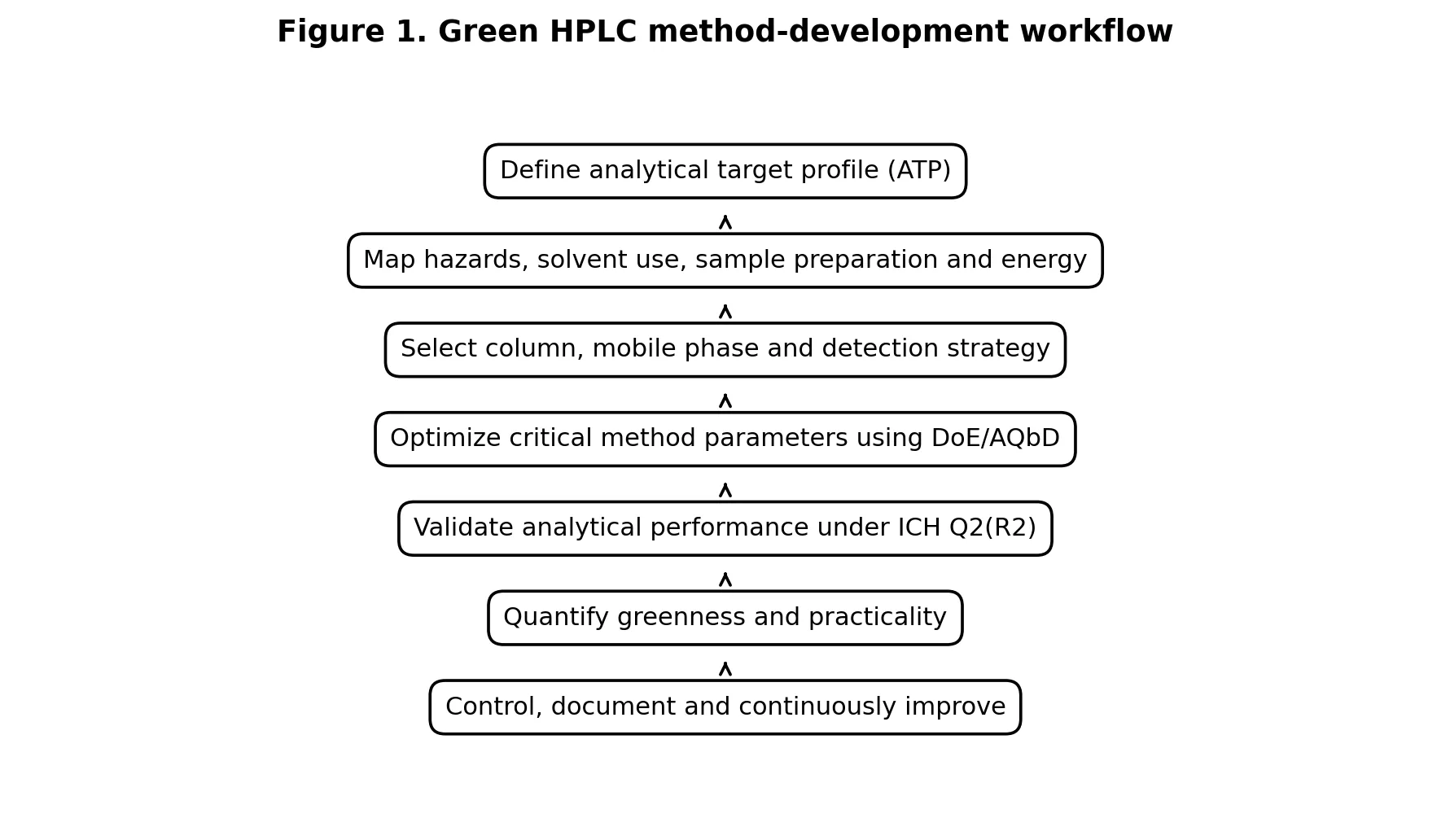
Figure 1: Green HPLC Method-Development Workflow Proposed for Pharmaceutical Analysis.
GREEN ANALYTICAL CHEMISTRY AND THE PHARMACEUTICAL HPLC CONTEXT
Green analytical chemistry is concerned with reducing the environmental and health burden of analytical measurements without compromising the information quality required for a scientifically valid decision. In pharmaceutical analysis, this balance is especially important because analytical methods support decisions about identity, strength, purity, stability and product release. A method that is environmentally benign but insufficiently selective or precise is not an acceptable pharmaceutical method.
Twelve principles of green analytical chemistry
The GAC principles emphasize direct measurement, minimal sample size, in-situ analysis when possible, integration of analytical operations, automation and miniaturization, avoidance of derivatization, waste prevention, renewable or safer reagents, elimination of hazardous substances, longer instrument lifetime and increased sample throughput. Their practical value is that they translate sustainability from an abstract objective into design criteria that can be considered before a method is finalized.
| GAC principle | Implication for HPLC | Typical implementation |
|---|---|---|
| Direct analytical techniques | Avoid unnecessary extraction/derivatization | Direct dilution and injection when matrix permit |
| Minimal sample and solvent | Reduce material intensity | Lower injection volume and sample concentration |
| Integration | Reduce separate operations | Online dilution, automated preparation |
| Miniaturization | Reduce solvent and energy | Narrow-bore/short columns, low-flow LC |
| Avoid derivatization | Reduce reagents and waste | Direct UV/PDA or MS-compatible detection |
| Waste prevention | Minimize generated waste | Shorter run time, lower flow, smaller reservoirs |
| Safer chemicals | Reduce hazard | Ethanol, water and other preferable solvents where suitable |
| Energy efficiency | Reduce power demand | Shorter runs, efficient detectors and instrument standby |
| Automation | Improve reproducibility and reduce handling | Autosamplers and integrated workflows |
| Renewable resources | Prefer renewable feedstocks where technically valid | Bio-derived solvent options when validated |
| Lifecycle thinking | Consider production and disposal | Solvent recovery and waste segregation |
| Analytical quality | Maintain reliable information | Validation, robustness and system suitability |
WHY CONVENTIONAL HPLC NEEDS SUSTAINABILITY OPTIMIZATION
The environmental burden of an HPLC method is not determined by the solvent name alone. Two methods using the same solvent can have substantially different footprints if one uses 1.0 mL/min for 20 min and the other uses 0.3 mL/min for 5 min. Likewise, a method that replaces acetonitrile with ethanol but requires very high pressure, longer retention, more injections or repeated sample extraction may not represent a net sustainability improvement.
| Parameter | Conventional tendency | Greener target |
|---|---|---|
| Organic solvent | High proportion of acetonitrile/methanol | Aqueous-rich or preferable solvent system |
| Flow rate | Often 0.8–1.5 mL/min in 4.6-mm columns | Use the lowest validated flow compatible with performance |
| Run time | Long isocratic/gradient cycles | Short, high-efficiency separation |
| Column | Long conventional column | Short/narrow-bore or high-efficiency column |
| Sample preparation | Multiple extraction/filtration steps | Direct dilution or miniaturized preparation |
| Waste | High solvent and vial consumption | Low-volume injections and reduced sequence waste |
| Energy | Long instrument operation | Shorter runs and efficient thermal control |
| Method optimization | Trial-and-error | AQbD/DoE-guided development |
| Sustainability evaluation | Often absent | Routine use of green metrics |
GREEN SOLVENTS AND MOBILE-PHASE DESIGN
Solvent choice is among the most visible decisions in green HPLC. Acetonitrile provides favorable chromatographic properties and low viscosity, but its toxicity and life-cycle considerations encourage evaluation of alternatives when chromatographic performance allows. Methanol is widely used and is often effective, but it is also hazardous and can generate significant waste. Ethanol is attractive because of its comparatively favorable safety profile and availability from renewable feedstocks in some supply chains; however, its higher viscosity can increase back pressure and may require adjustments in flow rate, temperature, column dimensions or gradient design.
Other solvents such as isopropanol, ethyl acetate and selected bio-based solvents may be useful for particular separations. Their suitability must be judged using chromatographic selectivity, UV transparency, viscosity, miscibility, pressure, analyte stability and compatibility with the detector. A solvent should not be labelled 'green' solely because it is bio-derived; the entire workflow and solvent life cycle should be considered.
| Solvent / system | Potential advantage | Key limitation in HPLC | When to consider |
|---|---|---|---|
| Water | Very low hazard; inexpensive | Limited elution strength for hydrophobic analytes | Aqueous-rich RP-HPLC |
| Ethanol | Preferable safety profile; renewable routes possible | Higher viscosity and pressure than ACN | RP-HPLC when selectivity permits |
| Methanol | Widely available; good chromatographic utility | Toxicity and waste burden | When needed for selectivity or detector compatibility |
| Acetonitrile | Low viscosity; strong and versatile eluent | Toxicity and supply/life-cycle concerns | When performance benefit clearly outweighs alternatives |
| Isopropanol | Useful for selectivity and strong elution | High viscosity | Specialized gradients or normal-phase/SEC contexts |
| Ethyl acetate | Relatively preferable in some applications | Limited water miscibility; UV/phase constraints | Specific extraction/normal-phase applications |
| Bio-based solvents | Potential lower fossil dependence | Variable toxicity, availability and chromatographic behavior | After performance and life-cycle screening |
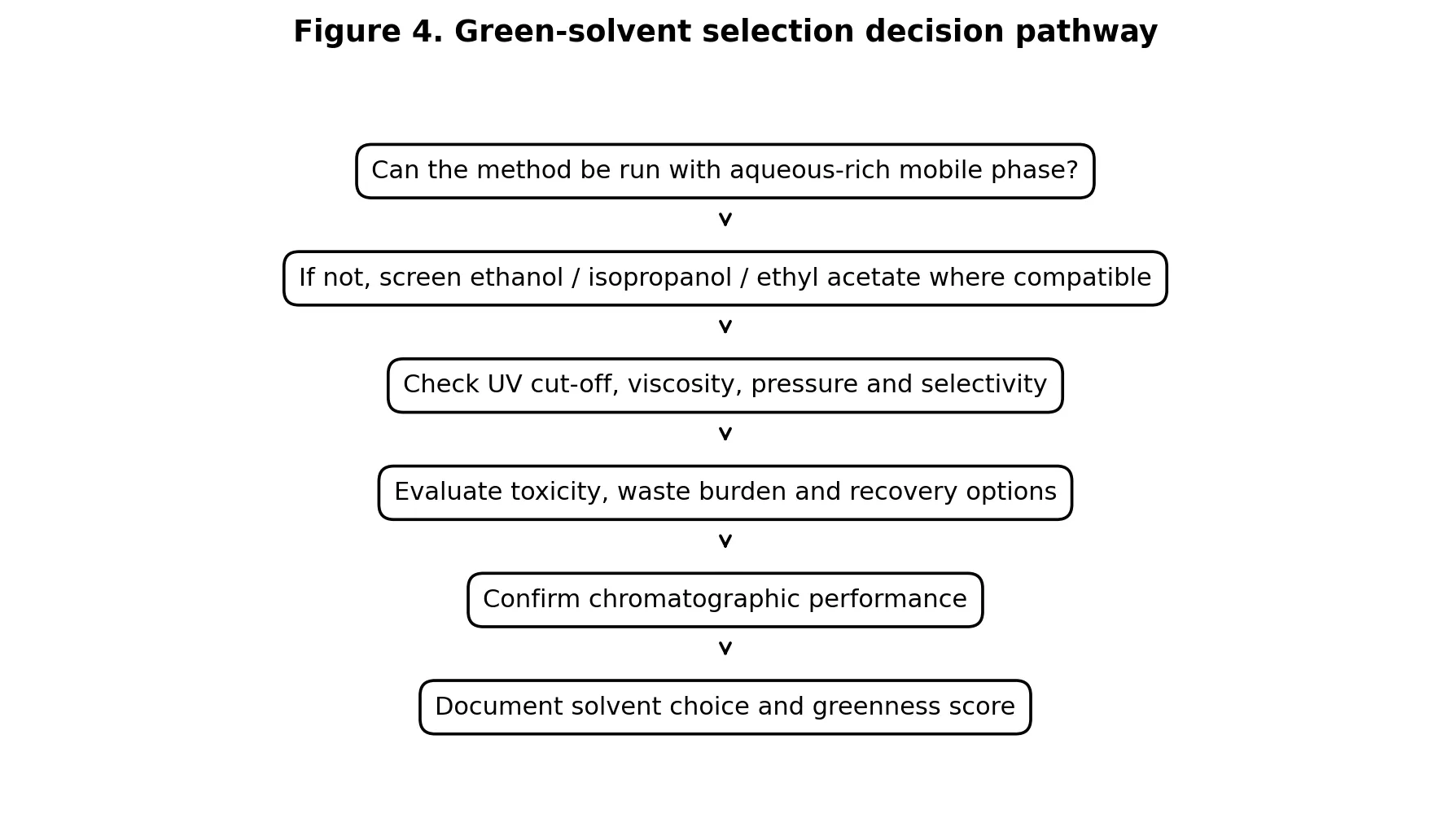
Figure 4: Practical Decision Pathway for Selecting a Greener Mobile-Phase Solvent.
GREEN HPLC METHOD DEVELOPMENT
Green method development should begin before the first chromatographic experiment. The analytical target profile (ATP) should define the intended measurement, matrix, analyte concentration range, required selectivity, expected impurities, detection mode and decision criteria. Sustainability objectives can then be added to the ATP, such as maximum mobile-phase volume per injection, preferred solvent class, maximum run time, target energy use and avoidance of unnecessary sample preparation.
Analytical target profile and critical method attributes
Column selection and miniaturization
Column dimensions are powerful sustainability levers because solvent consumption is directly related to flow rate and run duration. Short columns can reduce analysis time, while narrow-bore columns can reduce volumetric flow. Core-shell particles can provide high efficiency at lower back pressure than some fully porous sub-2-µm systems, depending on column dimensions and instrument capabilities. The choice should nevertheless be validated for resolution, robustness and pressure stability.
Flow-rate and run-time optimization
Reducing flow rate reduces solvent consumption per unit time, but an excessively low flow may broaden peaks, reduce throughput and increase total sequence time. The relevant sustainability variable is therefore not simply flow rate but solvent volume per analysis. A useful design equation is: mobile-phase volume per injection (mL) = flow rate (mL/min) × run time (min). This simple calculation should become a routine development metric.
Sample preparation
Sample preparation can dominate the footprint of an analytical workflow. Liquid-liquid extraction, repeated centrifugation, evaporation, derivatization and extensive filtration add solvents, plastics and energy consumption. Where matrix and sensitivity allow, direct dilution, dilute-and-shoot, microextraction, solid-phase microextraction, micro-solid-phase extraction and other miniaturized approaches can substantially reduce material use. The final choice must be driven by analyte recovery, matrix effects and reproducibility rather than greenness alone.
Detection strategy
PDA/UV detection can be attractive for routine pharmaceutical assays when analyte absorptivity and selectivity are sufficient. Fluorescence or MS may provide greater sensitivity and selectivity but may involve additional gases, solvents or energy demand. Detector selection should therefore be made according to the analytical objective, with the simplest adequate detection principle generally preferred.
AQbD and design of experiments
AQbD provides a structured route for reducing empirical trial-and-error. Instead of changing one variable at a time, a statistically designed experiment can model the effects of mobile-phase composition, pH, flow rate, temperature and other factors on chromatographic responses. Sustainability responses can be incorporated alongside analytical responses. For example, the optimization function can simultaneously maximize resolution and plate count, minimize tailing and run time, and minimize solvent volume.
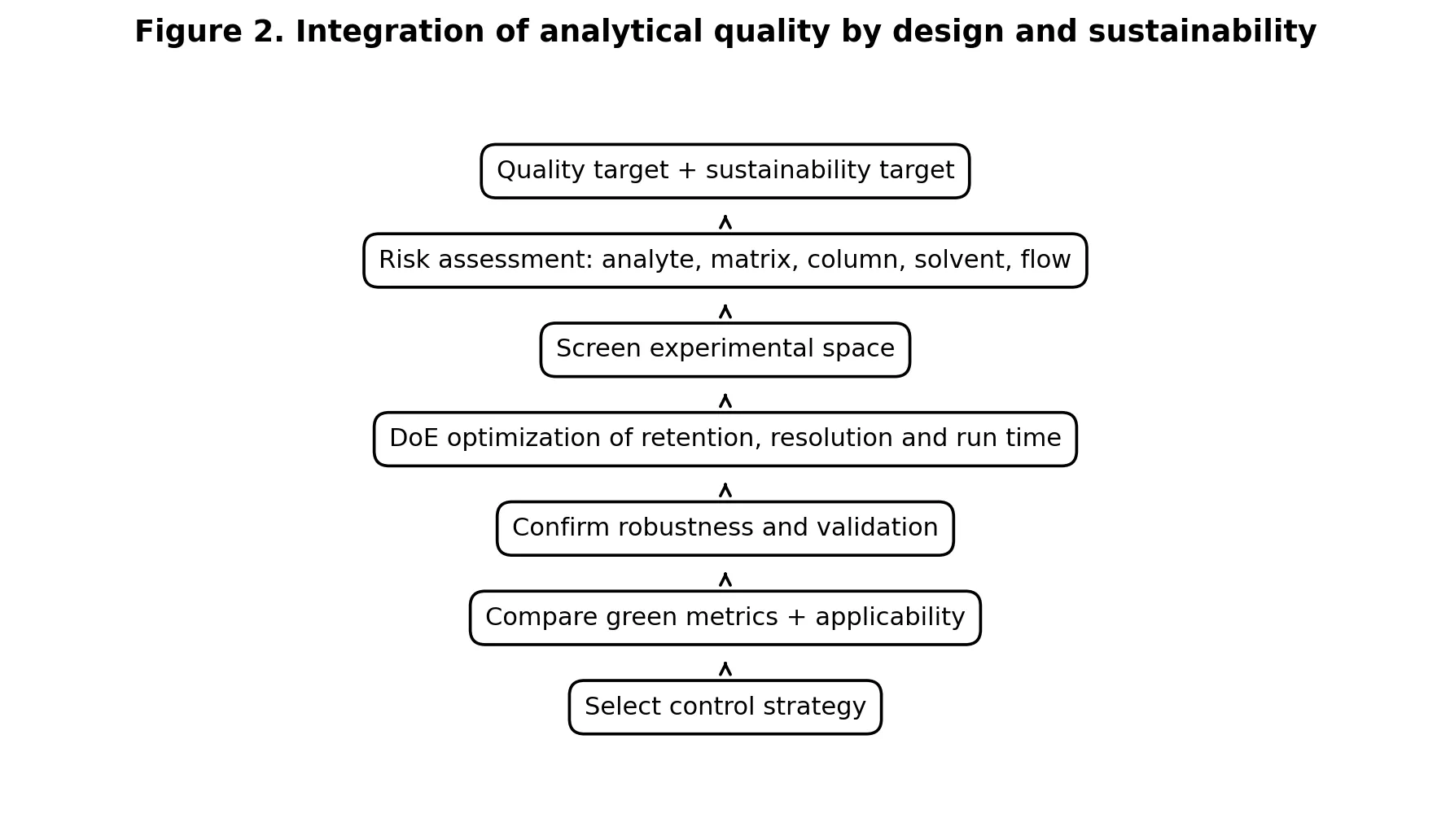
Figure 2: Integration of Analytical Quality by Design (AQbD) with Sustainability Objectives.
VALIDATION OF GREEN HPLC METHODS
A green analytical method must satisfy the same fundamental expectations of analytical reliability as any other pharmaceutical method. ICH Q2 (R2), effective in the European Union from 14 June 2024, provides the current framework for validation of analytical procedures used for purposes such as assay, purity, impurities and other quantitative or qualitative measurements.
Validation should be proportionate to the analytical objective. ICH Q2 (R2) emphasizes selecting validation characteristics according to the purpose of the procedure, with specificity, range, accuracy and precision forming central performance characteristics for many quantitative methods.
| Validation characteristic | Purpose | Typical green-HPLC considerations |
|---|---|---|
| Specificity/selectivity | Demonstrate measurement of analyte without relevant interference | Ensure solvent substitution or shortened separation does not compromise impurity resolution |
| Linearity/response model | Establish relationship across intended range | Use minimum practical concentration points while retaining statistical adequacy |
| Range | Define validated measurement interval | Align with intended pharmaceutical specification and sample concentration |
| Accuracy | Assess closeness to true/accepted value | Recovery experiments should use minimal material consistent with design |
| Repeatability | Assess precision under same conditions | Optimize injection sequence without unnecessary replicate waste |
| Intermediate precision | Assess analyst/day/instrument variation | Use a rational design rather than excessive experiments |
| LOD | Establish detection capability where applicable | Miniaturization may improve sensitivity but should not be assumed to |
| LOQ | Establish quantitative capability where applicable | Confirm precision and accuracy at LOQ |
| Robustness | Evaluate sensitivity to deliberate small changes | Include environmentally relevant parameters such as solvent composition and flow |
| System suitability | Verify ongoing chromatographic performance | Use performance criteria that protect resolution while avoiding unnecessary injections |
Specificity
Specificity is especially important when green method development uses shorter columns, faster gradients or alternative solvents. A reduction in analysis time can unintentionally reduce separation between the API and degradation products. Specificity should therefore be demonstrated using appropriate blank, placebo, standard, sample and stressed or spiked samples as applicable to the method objective.
Accuracy and precision
Accuracy and precision should be demonstrated across the validated range using scientifically justified replicate levels. A greener method should not be granted relaxed acceptance criteria merely because it is environmentally preferable. Instead, the development strategy should seek equivalent or improved analytical performance with lower resource use.
Robustness
Robustness has a sustainability dimension because a method that fails under minor operating variation generates repeat injections, repeat sample preparation and additional waste. Robustness studies should therefore consider variables that are both chromatographically critical and environmentally relevant, including flow rate, organic fraction, pH, temperature and column lot where appropriate.
SUSTAINABILITY ASSESSMENT OF HPLC METHODS
Greenness assessment converts sustainability concepts into a structured comparison. No single metric captures every dimension of an analytical method, so multiple complementary tools may be needed. NEMI provides a simple pictorial screen, whereas Analytical Eco-Scale applies penalty points. GAPI evaluates the full workflow from sample collection to determination. HPLC-EAT was developed specifically to profile environmental, health and safety impacts of LC solvents. AGREE provides a 0–1 score based on the 12 GAC principles and an interpretable pictogram.
| Tool | Main output | Major strength | Important limitation | Best use |
|---|---|---|---|---|
| NEMI | Four-quadrant pictogram | Very simple and rapid | Limited granularity | Initial screening |
| Analytical Eco-Scale | Penalty-point score (100 ideal) | Quantitative and easy to compare | Penalty selection can influence result | Routine method comparison |
| GAPI | Five-pentagram pictogram | Covers whole analytical procedure | Semi-quantitative | Visual workflow diagnosis |
| HPLC-EAT | LC-specific environmental/H&S profile | Designed for HPLC solvent assessment | Less comprehensive for all lifecycle dimensions | LC solvent comparison |
| AGREE | 0–1 greenness score + pictogram | Integrates 12 GAC principles | Requires informed parameter input | Overall GAC assessment |
| AGREEprep | Preparation-focused extension | Highlights sample-preparation burden | Requires appropriate preparation data | Methods with significant extraction |
| AMGS / related scores | Composite score | Useful for benchmarking | Different tools may weight criteria differently | Comparative research |
| Life-cycle assessment | Environmental impacts across life cycle | Most comprehensive conceptual scope | Data intensive | High-value sustainability studies |
NEMI
The National Environmental Methods Index approach classifies methods using four binary criteria related to persistent, bioaccumulative or toxic chemicals, hazardous reagents, corrosive reagents and waste generation. Its simplicity is useful for rapid comparison, but it can overlook meaningful differences in solvent volume, energy use and sample-preparation intensity.
Analytical Eco-Scale
Analytical Eco-Scale begins with an ideal score of 100 and subtracts penalty points associated with reagent hazards, quantities, energy, waste and other undesirable features. Scores above 75 are commonly interpreted as excellent greenness, 50–75 as acceptable and below 50 as inadequate, although these categories should be interpreted within the context of the method and study design.
GAPI
GAPI provides a visual assessment of the entire analytical procedure. Its pentagram-style pictogram uses color zones to identify low, medium and high environmental impact at different stages. This is particularly useful for identifying whether the main sustainability problem lies in sampling, preparation, reagents or instrumental determination.
HPLC-EAT
HPLC-EAT was developed specifically for HPLC and considers environmental, health and safety issues associated with solvents. It is therefore useful when solvent selection is the main development question. The tool can complement broader metrics such as AGREE or GAPI rather than replace them.
AGREE
AGREE translates the 12 GAC principles into a unified 0–1 scale and presents the outcome as a pictogram. It considers multiple dimensions, including sample size, solvent use, energy, waste and other procedural characteristics. Its major advantage is that it provides a single interpretable score while retaining visual information about individual principles.
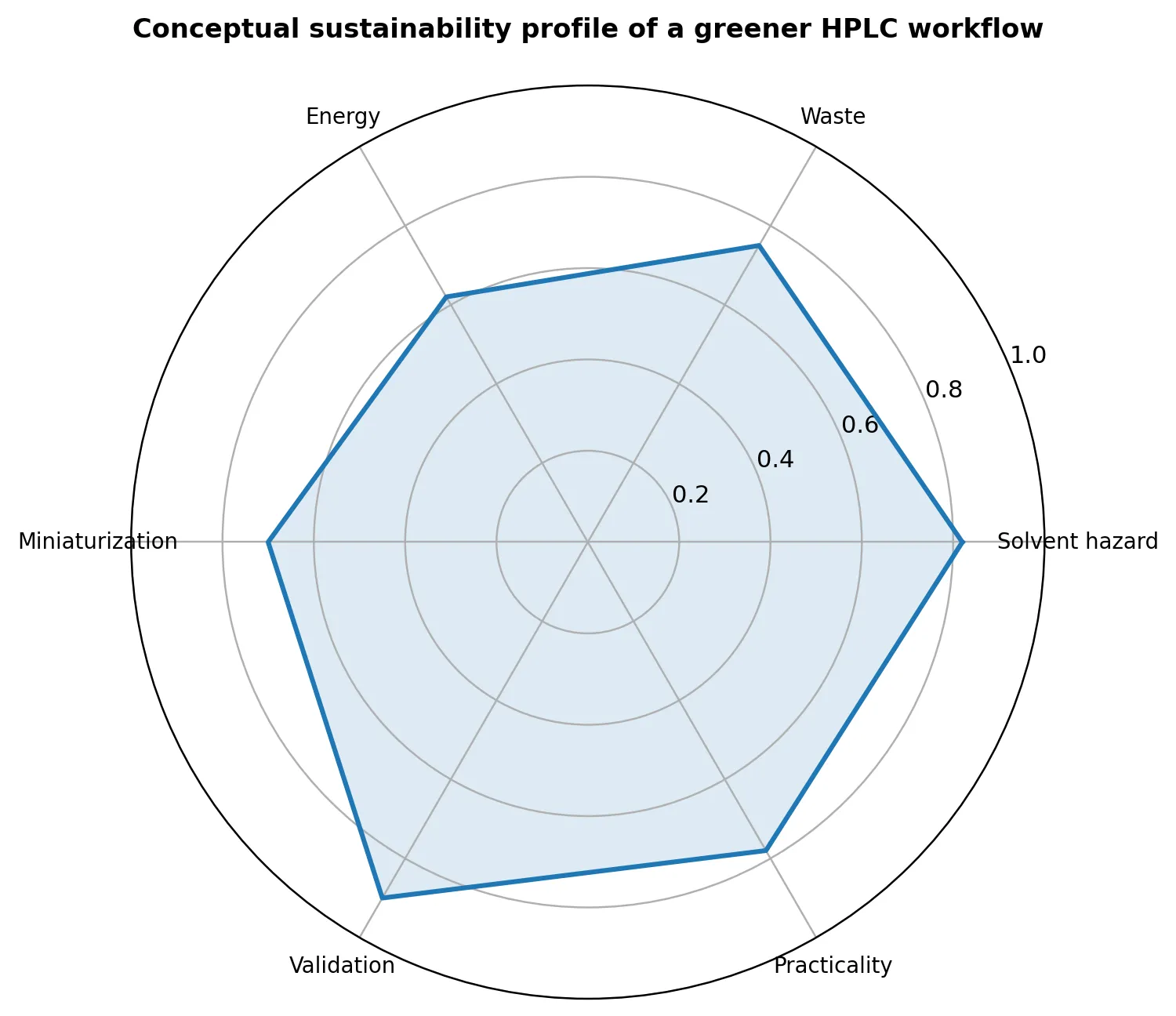
Figure 3: Conceptual Sustainability Profile Illustrating How a Method Can Be Evaluated Across Multiple Dimensions. the Figure Is Illustrative, Not a Numerical Assessment of a Specific Published Method.
RECENT DEVELOPMENTS AND REPRESENTATIVE LITERATURE
Recent reviews show rapid expansion of green LC applications in pharmaceutical analysis. Ahmed et al. summarized pharmaceutical green LC studies and highlighted the use of GAPI, NEMI, Eco-Scale, AMGS and AGREE, together with emerging concepts such as white analytical chemistry and circular analytical chemistry. similarly reviewed recent green LC approaches and emphasized the continued use of GAPI, NEMI, Eco-Scale, AMGS and AGREE. A 2026 review has further emphasized the combination of AQbD with green HPLC/UPLC, including solvent reduction, miniaturized sample preparation and quantitative sustainability evaluation.
| Development trend | Analytical objective | Sustainability contribution | Development caution |
|---|---|---|---|
| Aqueous-rich RP-HPLC | Routine assay/impurities | Reduces organic solvent demand | May alter selectivity and retention |
| Ethanol-based RP-HPLC | Replace/reduce less-preferable solvent | Potentially lower hazard/fossil dependence | Higher viscosity and pressure |
| Short-column LC | Faster analysis | Lower solvent volume per injection | Resolution may decrease |
| Narrow-bore LC | Lower flow | Lower mobile-phase consumption | Requires suitable instrument and tubing |
| Core-shell particles | High efficiency | Potentially shorter columns/runs | Pressure and method transfer must be controlled |
| Direct injection | Reduce sample preparation | Less solvent, plastic and energy | Matrix effects may limit use |
| Microextraction | Trace/selective analysis | Lower extraction solvent volume | Method complexity may increase |
| AQbD/DoE | Robust method development | Fewer empirical experiments; optimized resource use | Requires statistical expertise |
| Automation | Throughput and reproducibility | Less manual handling; standardized consumption | Equipment and maintenance burden |
| Solvent recovery | Waste management | Potentially reduces disposal and virgin solvent demand | Economic and technical feasibility required |
INTEGRATING VALIDATION AND SUSTAINABILITY INTO A SINGLE DEVELOPMENT FRAMEWORK
The principal methodological argument of this review is that analytical quality and greenness should be optimized together. Treating greenness as a final scoring exercise can create a misleading outcome: a method may score well because it uses little solvent while failing to resolve critical impurities. Conversely, a highly robust method may be unnecessarily resource-intensive because solvent volume, run time or sample preparation were never included as development responses.
A practical integrated framework is to define two groups of responses. The first group contains analytical responses such as resolution, theoretical plates, tailing factor, retention time, peak area precision and recovery. The second group contains sustainability responses such as solvent volume per sample, hazardous-solvent fraction, number of preparation steps, waste mass or volume and approximate energy demand. Multi-response desirability or constrained optimization can then identify operating regions that meet analytical acceptance criteria while minimizing environmental burden.
| Stage | Analytical decision | Sustainability decision | Output |
|---|---|---|---|
| 1. Define ATP | What must be measured? | What resource/hazard limits are desirable? | Combined target profile |
| 2. Risk assessment | Which variables affect performance? | Which variables drive footprint? | Critical method parameters |
| 3. Screening | Identify viable chromatographic space | Reject high-hazard/high-waste options early | Candidate method space |
| 4. Optimization | Maximize resolution/precision | Minimize solvent, run time and waste | Design space |
| 5. Validation | Demonstrate intended performance | Confirm green design is retained | Validated green method |
| 6. Metric assessment | Document quality | Quantify greenness | Sustainability profile |
| 7. Control strategy | Monitor system suitability | Monitor solvent use and waste | Continual improvement |
PROPOSED PRACTICAL PROTOCOL FOR GREEN HPLC DEVELOPMENT IN PHARMACEUTICAL LABORATORIES
TEMPLATE FOR REPORTING A GREEN HPLC CASE STUDY
For publication-quality reporting, authors should provide enough information for independent sustainability assessment. The following minimum dataset is recommended: analyte and matrix; column dimensions and stationary phase; mobile-phase composition; solvent grade; flow rate; temperature; injection volume; detection wavelength or detector type; total run time; sample-preparation steps and solvent volumes; number of injections; waste volume; system-suitability criteria; validation results; and the values or inputs used for each green metric.
| Reported item | Minimum information |
|---|---|
| Chromatography | Column chemistry, dimensions, particle size, temperature, flow |
| Mobile phase | Solvents, proportions, pH/buffer, gradient program |
| Injection | Volume and concentration |
| Detection | Detector type, wavelength/conditions |
| Sample preparation | All steps, solvent volumes, filtration and extraction |
| Validation | Specificity, linearity/range, accuracy, precision, LOD/LOQ where relevant, robustness |
| System suitability | Resolution, plates, tailing, %RSD or other predefined criteria |
| Sustainability | Solvent volume, waste, metric scores and assumptions |
| Operational data | Number of samples, sequence duration, instrument utilization |
| Waste management | Segregation, treatment, recovery or disposal route |
REGULATORY AND QUALITY-CONTROL CONSIDERATIONS
Regulatory acceptance is driven primarily by fitness for purpose, validated performance and control of the analytical procedure. Current ICH Q2 (R2) provides a harmonized validation framework, while Q14 addresses analytical procedure development and encourages a science- and risk-based approach. Green objectives should therefore be integrated into development without weakening established expectations for analytical reliability.
In pharmaceutical quality control, method transfer can also be a sustainability issue. A method that depends on a particular instrument configuration, unusually low dwell volume or specialized column may become difficult to transfer, leading to redevelopment and additional solvent consumption. Robust method design should therefore include transferability, instrument availability and lifecycle considerations.
Documentation should distinguish between a method that is validated and a method that has been shown to be greener. Validation demonstrates analytical fitness; greenness assessment characterizes sustainability. Both are needed for a credible green-HPLC claim.
CHALLENGES AND LIMITATIONS
FUTURE PERSPECTIVES
The future of sustainable pharmaceutical chromatography is likely to involve convergence rather than a single technological breakthrough. AQbD can reduce experimental burden; machine-learning and Bayesian optimization can accelerate exploration of chromatographic design spaces; miniaturized LC can reduce solvent use; automated sample preparation can reduce handling; and digital laboratory systems can capture resource-use data for continuous improvement.
White analytical chemistry provides a useful conceptual direction because it considers green, analytical-performance and practical/economic dimensions together. Circular analytical chemistry extends this further by emphasizing resource circulation, waste minimization and lifecycle thinking. Recent literature places these concepts alongside established green metrics and suggests that sustainability evaluation is moving from a single 'greenness score' toward multidimensional decision frameworks. citeturn0search0turn0search8
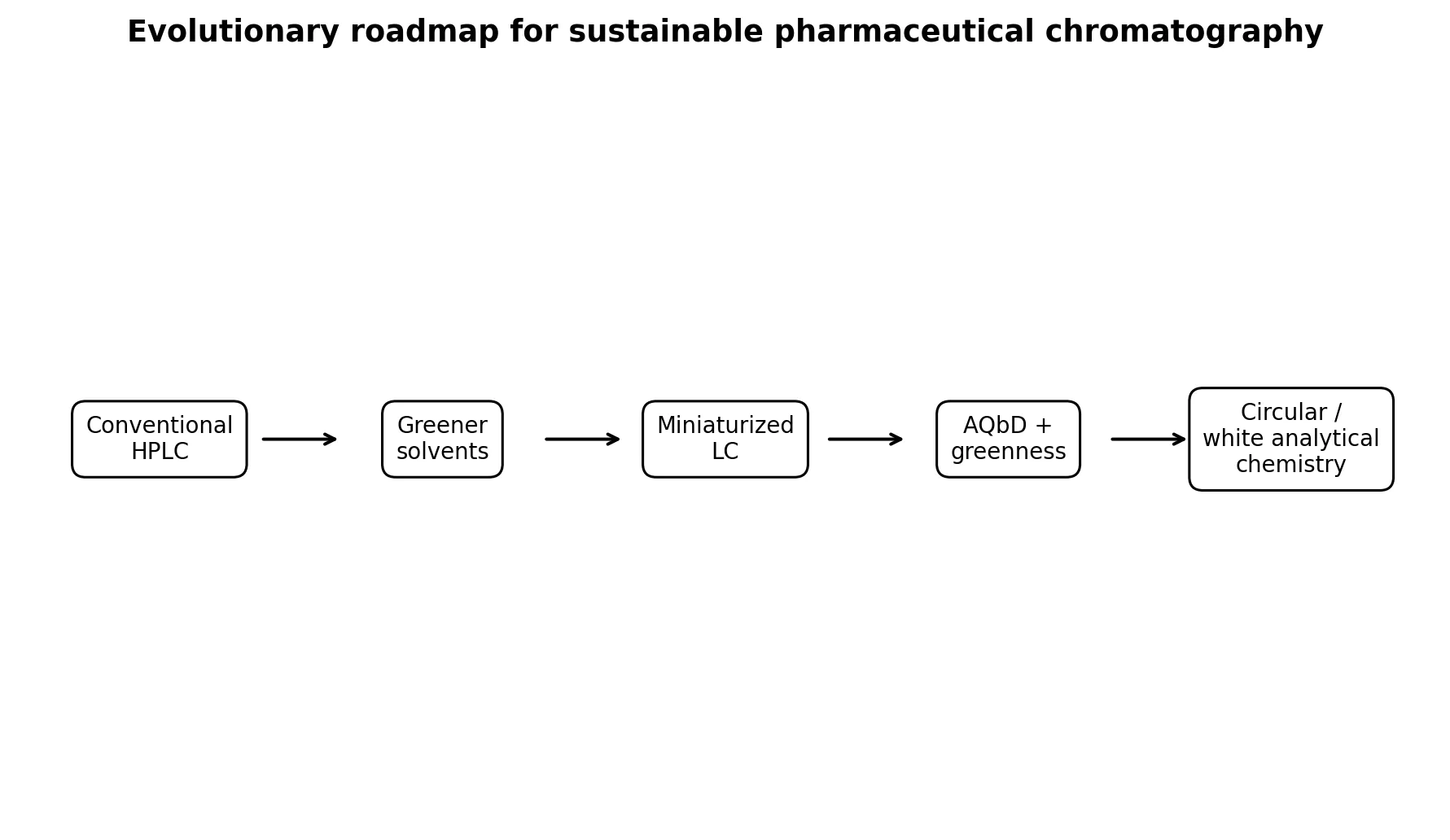
Figure 5: Roadmap from Conventional Chromatography Toward Circular and White Analytical Chemistry.
CONCLUSION
Green HPLC represents a transition from solvent substitution toward comprehensive redesign of pharmaceutical analytical workflows. The most effective strategies combine safer solvent selection with reduction of solvent volume, shorter analysis time, miniaturized columns, efficient stationary phases, reduced sample preparation, automation and statistically guided optimization. Importantly, environmental improvement must be achieved without compromising specificity, accuracy, precision, robustness or other requirements of the analytical purpose.
Greenness assessment tools provide complementary information rather than a universal ranking system. NEMI is useful for rapid screening; Eco-Scale offers a penalty-based quantitative view; GAPI provides a whole-workflow visual profile; HPLC-EAT focuses on LC solvent impacts; and AGREE integrates the 12 GAC principles into a unified score. The strongest reporting practice is therefore to combine at least two metrics and disclose all assumptions and raw inputs.
The integration of AQbD, ICH Q2 (R2) validation and sustainability assessment offers a practical framework for pharmaceutical laboratories. Future green HPLC methods should be designed around both analytical target profiles and sustainability targets, with continuous monitoring of solvent consumption, waste and operational efficiency. This approach can move pharmaceutical analysis toward safer, lower-waste and more resource-efficient laboratory practice while preserving the high level of analytical confidence required for medicine quality.
DECLARATIONS
Author contributions
Sandrapati Keerthana Madhuri: Conceptualization, literature review, manuscript drafting and scientific editing. Dr. M. Kishore Babu: Supervision, critical review and final approval. Ch. Maruthi Manoj, D. Newlin Preethy and Siddha Geetika: Literature collection, data organization, table preparation and manuscript review. All authors approved the final manuscript.
Funding
No specific external funding was received for preparation of this review article.
Conflict of interest
The authors declare no conflict of interest.
Data availability
No new experimental dataset was generated. Literature sources used for the review are listed in the references.
Acknowledgements
The authors acknowledge QIS College of Pharmacy, Ongole, Andhra Pradesh, India, for academic support and access to scholarly resources.
REFERENCES

Sandrapati Keerthana Madhuri, Dr. M. Kishore Babu, Ch. Maruthi Manoj, D. Newlin Preethy, Siddha Geetika, Advances in Green HPLC for Pharmaceutical Analysis: Method Development, Validation, and Sustainability Assessment, Int. J. of Pharm. Sci., 2026, Vol 4, Issue 10, 2304-2317. https://doi.org/10.5281/zenodo.23391423
 10.5281/zenodo.23391423