

We use cookies to ensure our website works properly and to personalise your experience. Cookies policy
Department Of Pharmaceutics, Abhinav Education Society’s College Of Pharmacy, Narhe,Pune.
Herbal cosmetics are really popular these days because they're safe, work well, and don't cost too much. Plus, they don't have as many bad side effects as synthetic cosmetics. One thing people do a lot for looks and culture is color their hair. Synthetic dyes give you fast and long-lasting color, but they have harsh chemicals like para-phenylenediamine, ammonia, and hydrogen peroxide that can cause allergic reactions, irritate your scalp, dry out your hair, and even have long-term toxic effects. So, this study focused on making a herbal hair dye powder using natural ingredients. The powder was made with things like Henna, Indigo, Manjishtha, Shikakai, Beetroot, Neem, Amla, Hibiscus, Coffee, and Aloe vera. Manjishtha was chosen because it's a great natural coloring agent and antioxidant - it has a reddish-brown pigment and can help protect your scalp. All these herbs have properties that color, condition, and strengthen your hair, while also keeping your scalp healthy. The researchers tested the powder to see how it looked, felt, and worked. They checked its pH, moisture content, how well it spread, if it irritated the skin, how well it washed out, and how long the color lasted. They followed standard procedures for testing herbal cosmetics. The powder turned out to be really good - it had a smooth texture, was stable, and colored hair well. It didn't irritate the skin at all. The color it produced was a nice, natural brown-black shade that made hair shiny, soft, and smooth. This study shows that herbal hair dye powder is a great alternative to synthetic dyes. It's safe, doesn't hurt the environment, and works well. Adding Manjishtha made the color better and more stable, and it also helped condition and protect the hair. Overall, this herbal hair dye is a good choice for people who want to color their hair without using harsh chemicals.[1,2,3]
People have been changing their hair color for thousands of years. They used to get colors from plants, minerals, and herbs. Now, we have lots of different hair dyes that can change, fix, or make our hair color look better. Some people use hair dye to cover up gray hair, while others just want to look nicer or follow the latest fashion trends. We can use hair dye to make our hair look more exciting, and it's a big part of how we take care of our appearance. Lots of people use hair dye, and it's a normal part of getting ready.Our hair gets its color from a special thing called melanin. This is what makes our hair brown, blonde, or black. When we use hair dye, it changes the color of our hair by adding color to the outside of the hair or by going inside the hair to change the melanin.
Nowadays, hair coloring has become a common practice among both men and women. The increasing demand for safer and natural cosmetic products has encouraged researchers to develop herbal-based hair dyes as alternatives to synthetic products.]
Herbal hair dyes are made from plants and they can color your hair naturally. They also have some extra benefits for your hair and body.
Hair nourishment
Hair strengthening
Reduction of dandruff
Prevention of hair fall
Improvement of scalp health
The present research focuss on developing a herbal hair dye formulation using Manjishta powder as a rare natural coloring ingredient.
C.NEED FOR PRESENT STUDY:-
These days, a lot of people are coloring their hair, no matter how old they are, just to look good or follow the latest fashion trends. We use hair dye to hide gray hair, look better, and feel more confident about ourselves. But most hair dyes you can buy in stores are made from harsh chemicals like ammonia, para-phenylenediamine, hydrogen peroxide, and resorcinol. If you keep using these dyes, they can really hurt your hair and scalp, causing problems like damage, irritation, allergic reactions, hair loss, dryness, and making your hair weak too soon.[2,3,9]As people become more aware of the dangers of synthetic cosmetics, they're turning to natural and herbal options. Herbal hair dyes are seen as a safer choice because they're made from plants and can also help nourish your hair, protect your scalp, and improve the texture of your hair. But most herbal hair dyes on the market rely on common ingredients like Henna and Indigo. Not much research has been done on using lesser-known herbal coloring agents, like Manjishta, which could offer new and exciting possibilities for natural hair care. This lack of research means we're missing out on the potential benefits of these rare herbs, and it's an area that needs more exploration. By looking into these alternative ingredients, we might discover new ways to create natural hair dyes that not only color your hair but also promote healthy hair and scalp.Manjishta, also known as Rubia cordifolia, is a popular herb in Ayurvedic medicine that has several benefits for our hair. It has natural coloring properties, as well as antioxidant, antimicrobial, and anti-inflammatory effects. The herb contains special pigments called anthraquinones, which can give our hair a nice reddish-brown color. Not only does Manjishta help color our hair, but it also improves the health of our scalp and protects our hair from damage caused by free radicals. Even with all these benefits, Manjishta is not widely used in herbal hair dye products. This is why it's essential to look into the potential of using Manjishta as a natural coloring agent in hair care products. By doing so, we can create herbal cosmetic preparations that are not only good for our hair but also safe and natural.[12,17]
D.INTRODUCTION TO MANJISHTA POWDER:
Manjishta, also known as Rubia cordifolia, is a really important herb in Ayurvedic medicine. It's part of the Rubiaceae family. The roots of the plant are usually dried and used for medicine and cosmetics. For a long time, people have used Manjishta in Ayurveda to clean the blood, help with skin problems, heal wounds, and make the whole body healthier. Because it has natural coloring properties and is good for you, it's now being used more in herbal cosmetics, especially in hair dyes made from herbs. This is a big deal because people are looking for more natural ways to take care of their hair and skin. Manjishta is a great option because it's been used for centuries in traditional medicine, and it has a lot of benefits that can help people look and feel better.[12,13,17]Manjishta contains natural pigments and bioactive compounds that provide reddish to reddish-brown coloration. The herb is rich in anthraquinones, glycosides, tannins, and antioxidants which contribute to its coloring ability and medicinal value. In traditional medicine, Manjishta is known as a “blood purifier” and is widely used to improve skin complexion and scalp health.[12,19]
Biological Name: Rubia cordifolia
Family: Rubiaceae
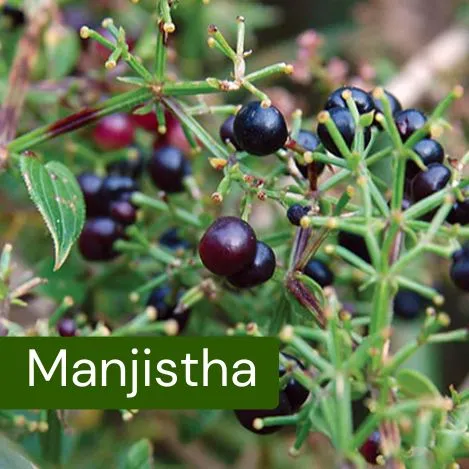
Fig 1:- Manjistha
Manjishta contains several important phytochemicals responsible for its medicinal and coloring properties.
These compounds contribute to:
Manjishta plays an important role in herbal hair dye formulations because of its natural coloring and therapeutic properties.
1. Natural Coloring Agent:-
The major role of Manjishta in hair dye is to provide a natural reddish-brown shade to hair. The anthraquinone pigments present in the roots produce attractive natural color tones.
Benefits:-
2. Antioxidant Protection:-
Manjishta is rich in antioxidants which protect hair from oxidative stress caused by:
Benefits:-
3. Hair Strengthening Property:-
The herb helps nourish the hair roots and improves hair strength.
Benefits:-
4. Salp Health Improvement:-
Manjishta possesses antimicrobial and anti-inflammatory activities that help maintain healthy scalp conditions.
Benefits
Manjishta also known as Rubia cordifManolia, isn used to color hair naturally't often. This is because it's mainly known for its medicinal properties, coloring hair. Although it does have anth rather than forraquinone pigments that-brown color, it's not as strong as can give hair a reddish otheryes like Henna and Indigo. As a result, companies tend natural d to prefer using stronger, more popular natural colorants that can produce more intense shades quickly.
One reason we don't see Manjishtha used more often in hair dye is that there isn't enough scientific research on it. Most of the time, herbal hair dyes use ingredients like Henna, Indigo, and Amla, which are well-known and widely used. Manjishtha, on the other hand, is usually used in Ayurvedic medicine to help purify the blood and treat skin problems. Because of this, there isn't a standard way to use it in hair dye, which makes it harder for companies to develop products with it. As a result, Manjishtha isn't as commonly used in herbal hair dye preparations as some other ingredients
E.REVIEW OF LITERATURE:
1. Rashmi Mallya and Padmini Ravikumar (2014)
Rashmi Mallya and Padmini Ravikumar (2014) conducted a study on the formulation and evaluation of natural hair colorants using herbal ingredients such as Lawsonia inermis (Henna), Emblica officinalis (Amla), Rubia cordifolia (Manjishta), Terminalia belerica, and Juglans regia. The objective of the study was to develop a ready-to-use herbal hair dye with improved rinsability and reduced side effects compared to synthetic hair dyes. The researchers prepared gel formulations containing natural colorants and evaluated their coloring ability and stability. The study concluded that herbal formulations are safer alternatives to synthetic dyes and highlighted the importance of natural ingredients in cosmetic formulations.
2. M. Rajan et al. (2022)
M. Rajan, Malavika M., Megha, Shameemunnissa M.P., and T. Subburaju (2022) carried out research on the formulation and evaluation of herbal hair dye using herbal ingredients with coloring and therapeutic properties. The study focused on reducing the harmful effects associated with synthetic hair dyes such as skin irritation, hair damage, and allergic reactions. The prepared formulation was evaluated for physicochemical parameters and dyeing effect on hair samples. The results showed satisfactory coloring properties and good safety profile. The authors concluded that herbal hair dyes provide natural coloration along with hair nourishing benefits.
3. Shoaeb Mohammad Syed et al. (2023)
Shoaeb Mohammad Syed, Ajinkya Holkar, Priyanka Thore, and Sakshi Vaidya (2023) developed and evaluated a laboratory-scale herbal hair dye formulation using novel combinations of natural ingredients. The objective of the research was to prepare an effective alternative to chemical-based synthetic hair dyes. The prepared formulation was evaluated for organoleptic properties, physicochemical characteristics, patch test, and stability studies. The study reported that the herbal hair dye showed good coloring ability, acceptable stability, and minimal side effects. The authors emphasized the growing demand for safe and herbal cosmetic formulations.
F.INGREDIENTS USED IN FORMULATION:-
1.Henna Powder
Biological Name: Lawsonia inermis
Family: Lythraceae
Henna powder is one of the most widely used natural ingredients in herbal hair dye formulations because of its excellent coloring and conditioning properties. The leaves of Lawsonia inermis contain a natural pigment called lawsone (2-hydroxy-1,4-naphthoquinone) which binds strongly with keratin present in hair and produces an orange-red to reddish-brown coloration. Henna acts as a natural hair colorant without causing the harmful effects associated with synthetic dyes.[11,14]
Uses in Herbal Hair Dye
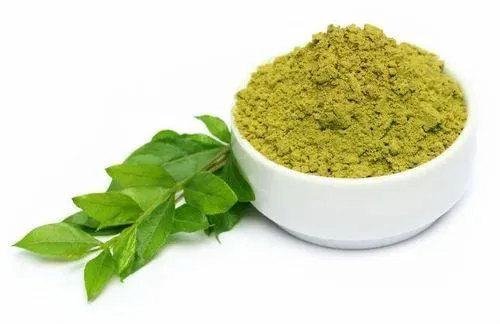
Fig2:-Henna
2.Indigo Powder
Biological Name: Indigofera tinctoria
Family: Fabaceae
Indigo powder is a natural way to get hair colors, darker like brown or black, when you use it with henna. It has a special pigment called indigotin that sticks to your hair and makes it look darker. Not only that, but ind nicer and cools down your scalpigo also makes your hair feel, really nice. A which is lot of people use it in herbal hair products because it's a safer choice than using fake can be bad for you[13,15].
Uses in Hair Dye:
Produces dark brown to black shade
Enhances color depth
Improves hair texture
Natural alternative to chemical black dyes
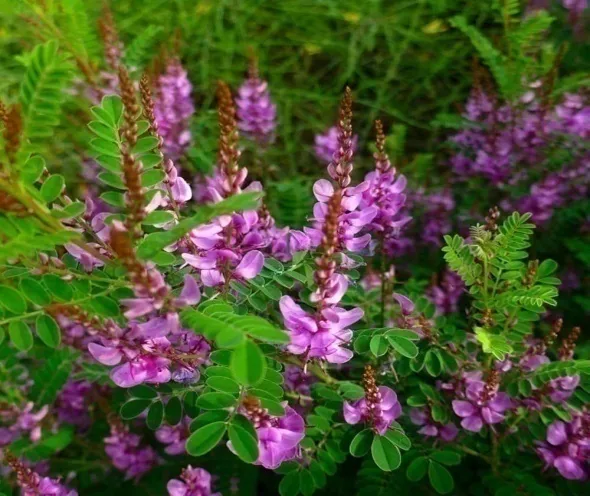
Fig3:-Indigo
3.Shikakai Powder
Biological Name: Acacia concinna
Family: Fabaceae
Shikakai, an old Ayurvedic herb, is really good for cleaning and taking care of your hair. It has natural stuff in it that gently cleans your hair without stripping it of its natural oils. Using Shikakai makes your hair feel softer, smoother, and easier to manage, and it also helps keep your scalp healthy. Plus, it's great for helping hair dye stick to your hair better.[13]
Uses in Hair Dye:
Natural cleanser
Improves softness and shine
Conditions hair
Supports dye fixation
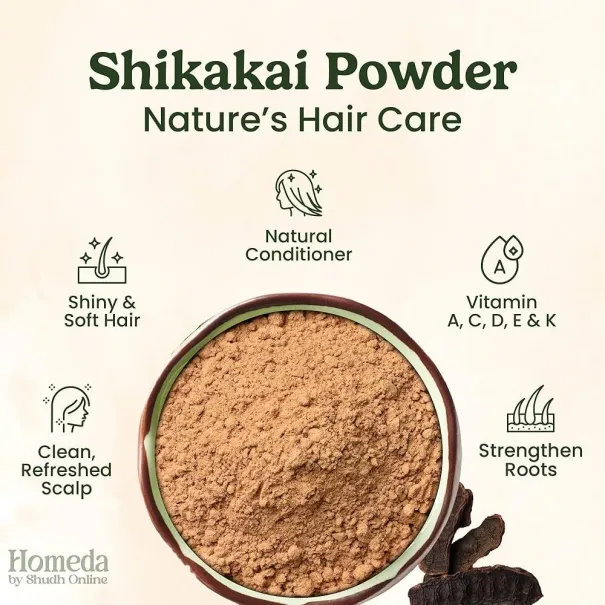
Fig4:-Shikakai powder
4.Beetroot Powder
Biological Name: Beta vulgaris
Family: Amaranthaceae
Be way to add someetroot powder is a great natural color to It's got something your hair dye. called betalains, helpers that make your hair look redder which are like special. keep your hair healthy by fighting They also that can damage off bad stuff it. Plus, beetroot is good for your scalp - it helps get the blood flowing. Lots of people use it and makes your hair grow stronger to make their hair look more or burgundy, and it's a popular red choice for natural beauty products.[19]
Uses in Hair Dye:-
Enhances reddish tint
Antioxidant activity
Improves natural shade
Supports scalp nourishment.
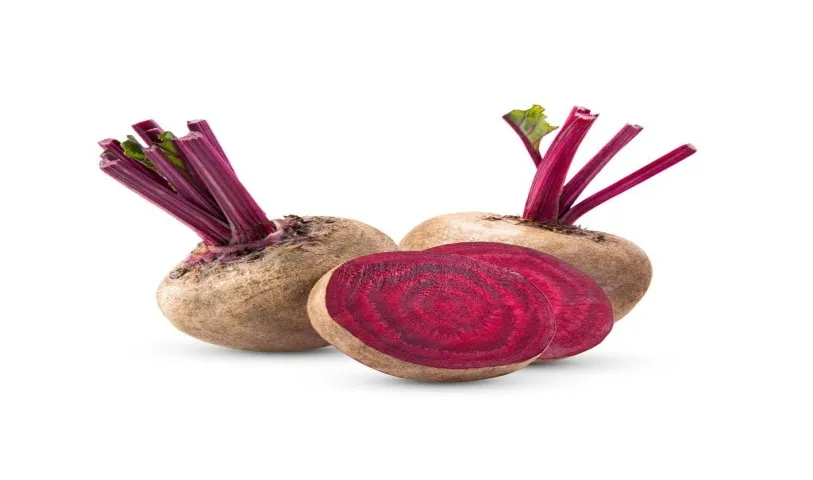
Fig5:-Beetroot
5..Neem Powder
Biological Name: Azadirachta indica
Family: Meliaceae
Neem powder is widely known for its antimicrobial, antifungal and anti-inflammatory properties. It helps reduce dandruff, itching and scalp infections while maintaining scalp hygiene. Neem also protects hair from microbial damage and improves overall scalp health. In herbal hair dye formulations, it acts mainly as a protective and scalp-conditioning ingredient[13,17].
Uses in Hair Dye:
Anti-dandruff action
Antimicrobial activity
Reduces scalp irritation
Maintains scalp hygiene
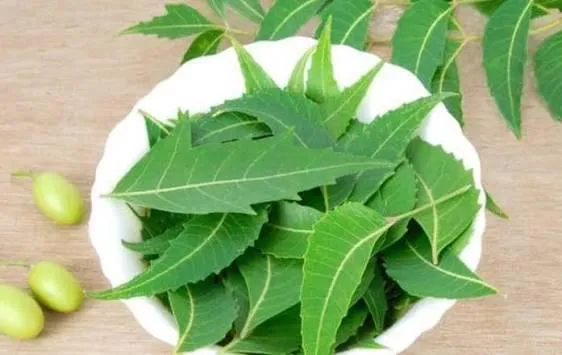
Fig6:-Neem
6..Amla Powder
Biological Name: Phyllanthus emblica
Family: Phyllanthaceae
amla powder is really good for your hair because it's packedA with vitamin C, tann things help make your hair stronger and keep theins, and antioxidants. These color from natural conditioner that helps the color stick to your hair better. If you use henna, amla powder can also help get rid of that too-red tone and give you a cooler, browner color instead. Plus, it's great for your hair roots, making your hair shiny and soft.[13,15]
Uses in Hair Dye:
Improves pigment fixation
Strengthens hair
Adds shine and softness
Reduces excessive red tone
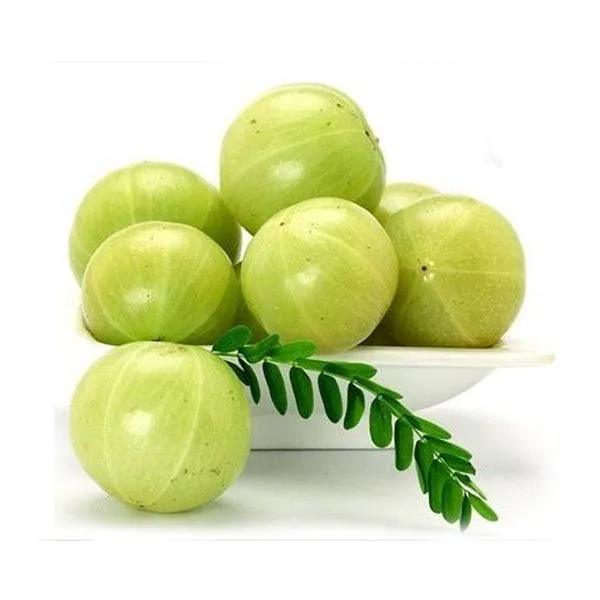
Fig7:-amla
4..MATERIALS AND METHODS
The herbal ingredients required for the preparation of herbal hair dye formulation were collected from a local Ayurvedic medical store and authenticated before use. All the ingredients used in the formulation were of good quality and free from impurities. The powders were stored in clean and dry airtight containers until further use.
The ingredients used in the formulation include:
Distilled water was used during evaluation studies wherever required.
All herbal drugs were collected from a certified herbal market. The crude drugs were cleaned to remove foreign particles and impurities. The collected materials were authenticated based on their morphological and organoleptic characteristics in the Department of Pharmacognosy.
The raw herbal materials were shade dried for 5–7 days to remove moisture content while preserving active constituents. The dried materials were pulverized separately using a grinder and passed through sieve number 80 to obtain fine powder. The powders were stored in airtight containers until further use.
The accurately weighed quantities of each powdered ingredient were mixed geometrically in a clean mortar and pestle to obtain a uniform blend.
TABLE NO.1 :- FORMULATION TABLE OF HERBAL HAIR DYE.
|
SR. NO |
INGREDIENTS |
QUANTITY (GRAMS) |
|
1. |
Henna Powder. |
8 grams. |
|
2. |
Indigo Powder. |
5 grams. |
|
3. |
Manjishtha Powder. |
4 grams. |
|
4. |
Shikakai Powder. |
3 grams. |
|
5. |
Beetroot Powder. |
2 grams. |
|
6. |
Neem Powder. |
2 grams. |
|
7. |
Amla Powder. |
2 grams. |
|
8. |
Hibiscus Powder. |
1 gram. |
|
9. |
Coffee Powder. |
2 grams. |
|
10. |
Aloe Vera Powder. |
1 gram. |
|
TOTAL |
|
30 grams. |
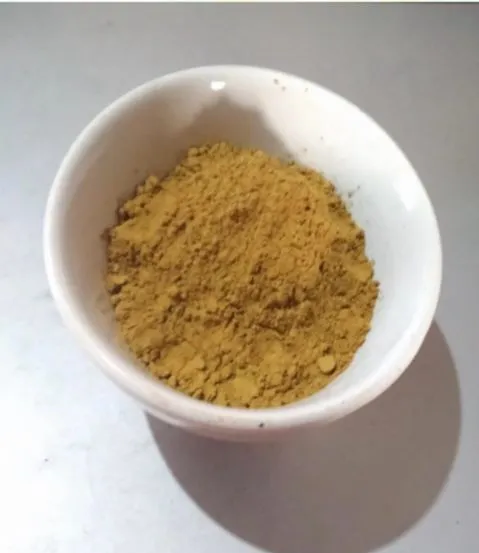
The required quantity of herbal hair dye powder was mixed with distilled water to prepare a smooth paste. The paste was allowed to stand for 30 minutes for proper release of coloring constituents.
The prepared paste was applied uniformly on clean hair samples using a brush. The formulation was kept on the hair for approximately 1–2 hours and then washed with plain water. The hair samples were dried at room temperature and observed for color intensity, smoothness, and conditioning effect.
|
|
|
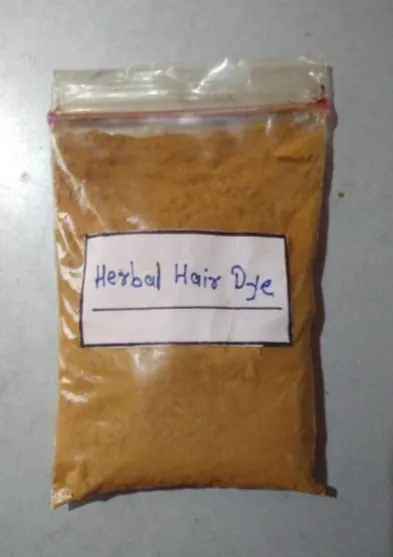
Fig11:-Formulation Sample of Herbal hair dye
5.EVALUATION PARAMETERS OF HERBAL HAIR DYE
1. Organoleptic Evaluation
Principle
Organoleptic evaluation determines physical appearance and sensory characteristics of formulation.
Procedure
The prepared formulation was visually examined for:
Color
Odor
Texture
Appearance
Table2:-organoleptic test
|
Parameter |
Observation |
|
Color |
Dark greenish-brown |
|
Odor |
Pleasant herbal odor |
|
Texture |
Smooth and fine |
|
Appearance |
Uniform powder |
Result:-The formulation showed acceptable organoleptic characteristics
2.PH Determination
Principle:-pH affects scalp compatibility and dye fixation.
Procedure:-1 g powder was dispersed in 10 mL distilled water and pH was measured using digital pH meter.
Result:-
Table3:-Result Of PH Test
|
Trail |
Ph |
|
1. |
5.8 |
|
2 |
5.9 |
|
Average |
5.85 |
Observation Table
Table4:-PH Test Observation
|
Sr.No. |
Parameter |
Observation |
|
1. |
Instrument Used |
Digital pH Meter |
|
2. |
Observed pH |
5.85 |
|
3. |
Nature of Formulation |
Slightly acidic |
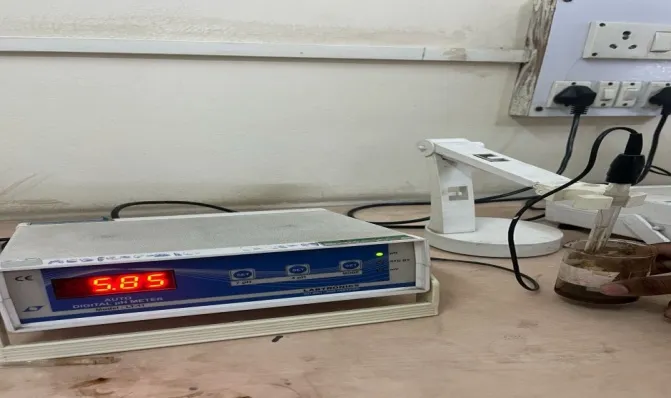
Fig12:-PH meter
3.Dyeing Effect Test
Principle
The dyeing effect test is performed to evaluate the coloring ability of the herbal hair dye formulation on hair strands. The natural pigments present in ingredients such as Henna, Indigo, Manjishtha, Beetroot and Coffee bind with keratin protein present in hair and produce natural color shades.
Procedure
OBSERVATION:-
Table5:-Dyeing effect observation
|
Parameter |
|
Observation |
|
Initial Hair Color |
|
Grey/White |
|
Final Hair Color |
|
Dark Brown to Brownish Black |
|
Color Uniformity |
|
Uniform |
|
Shine |
|
Improved |
|
Hair Texture |
|
Smooth and Soft |
|
Color Intensity |
|
Good |
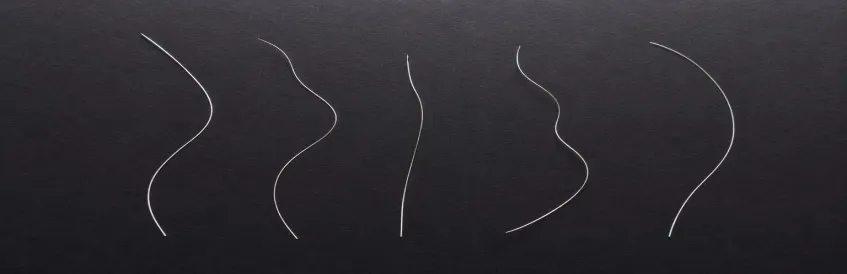
Fig13:-white hairs
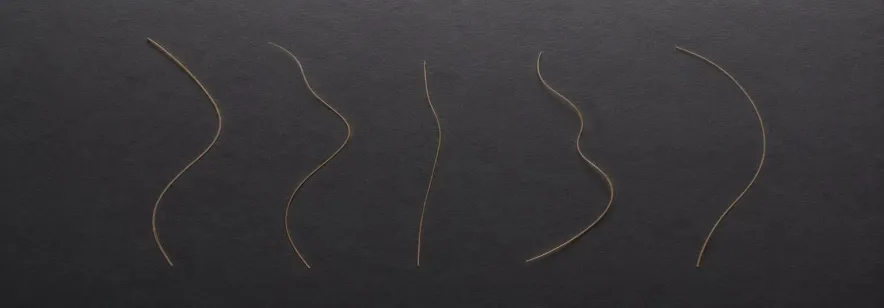
Fig14:-Result of hair
4.Moisture Content
Principle
Excess moisture may promote microbial growth and instability.
Procedure:-
The formulation was dried at 105°C and moisture loss was calculated.
Result:-Moisture content = 4.2%
Conclusion
The moisture content was within acceptable limits.
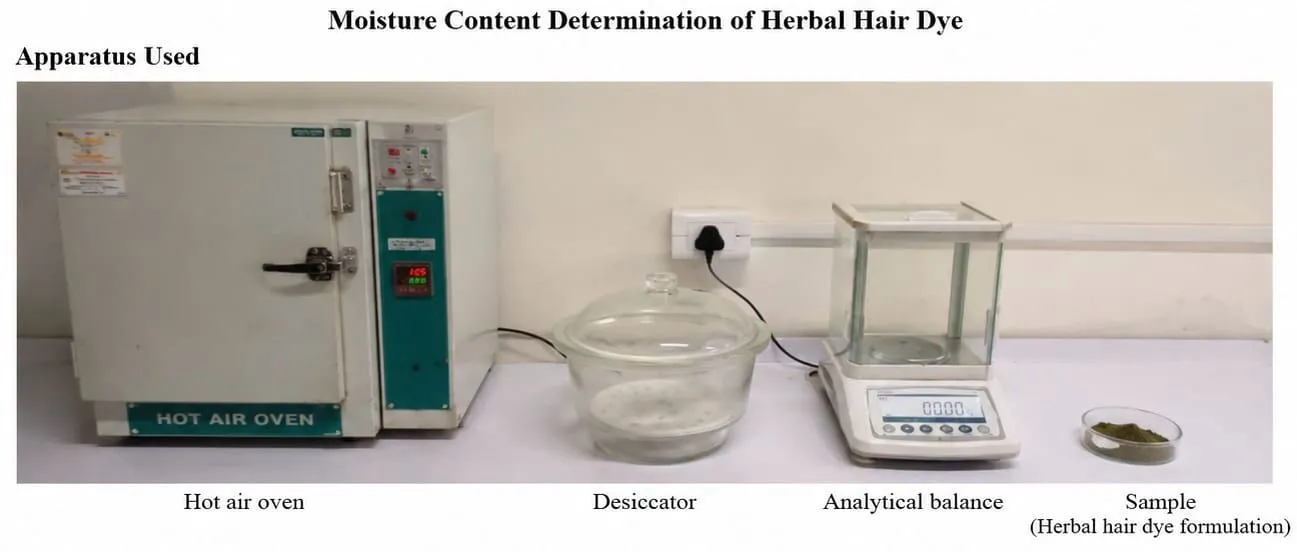
Fig15:-moisture content apparatus
Final Result :-
Initial weight of sample (before drying )=2.600g
Final weight of sample (after drying )=2.487g
Moisture content(%)=(Initial weight –Final weight \Initial weight )×100
=(2.600-2.487/2.600)×100+=4.23%
Moisture content of herbal hair dye formulation=4.23%
5.Antimicrobial Activity Test
Principle:-The antimicrobial evaluation test is performed to determine the ability of the herbal hair dye formulation to inhibit the growth of microorganisms such as bacteria and fungi. Herbal ingredients like henna, manjishta, amla, neem, and indigo may possess natural antimicrobial properties].
Method: Agar Well Diffusion Method
Materials Required
Procedure
Observation Table:-
Table6:-antimicrobial test observation
|
Microorganism |
Zone of Inhibition (mm) |
Result |
|
Staphylococcus aureus |
14mm |
Moderate activity |
|
Escherichia coli |
12mm |
Moderate activity |
|
Candida albicans |
10mm |
Mild antifungal activity |
Result:-
The herbal hair dye formulation showed antimicrobial activity against tested microorganisms by producing clear zones of inhibition. The presence of herbal ingredients contributed to antibacterial and antifungal effects.
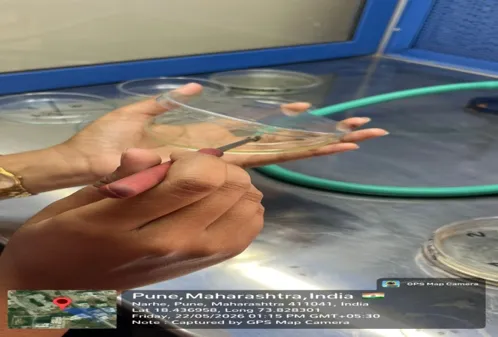
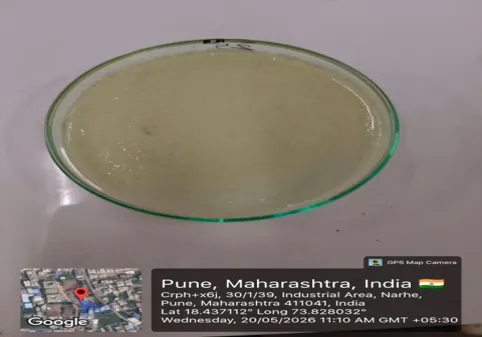
Fig16:-ANTI MICROBIAL EVALUATION TEST
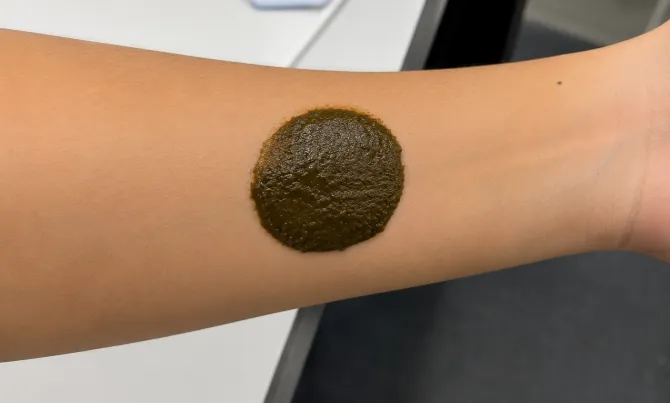
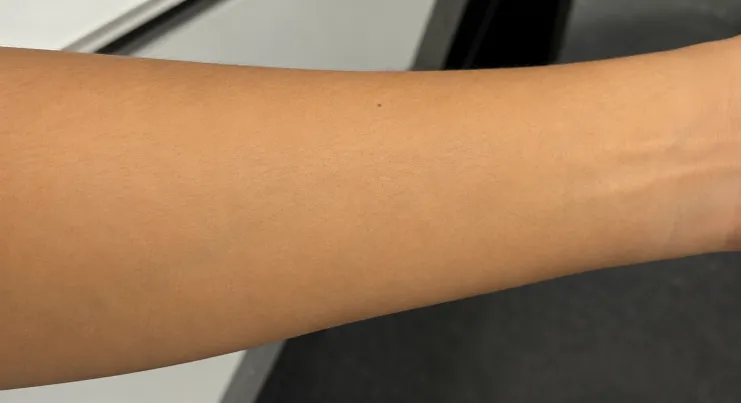
6.Irritation Test
Principle
The irritation test is performed to evaluate the safety and compatibility of the herbal hair dye formulation on skin. The test helps to determine whether the formulation causes any allergic reaction, redness, itching, swelling or irritation after application. Since herbal formulations are intended for direct scalp application, it is important to ensure that the prepared formulation is non-irritant and safe for topical use.[5,16]
Procedure
Observation Table
Table7:-Irritation test observation
|
Sr.No |
Parameter |
Observation |
|
1 |
Redness |
Absent |
|
2 |
Itching |
Absent |
|
3 |
Swelling |
Absent |
|
4 |
Burning sensation |
Absent |
|
5 |
Irritation |
Nil |
Result:-
No visible signs of redness, itching, swelling or irritation were observed after application of the formulation for 24 hours.
|
|
|
Fig17:-Irritation Evaluation test
7.Stability Study
Principle
Stability testing of the prepared herbal hair dye formulation was carried out to evaluate its physical, chemical, and microbiological stability under different storage conditions over a specific period of time. The study helps to determine whether the formulation maintains its original properties such as color, odor, pH, texture, smoothness, and consistency during storage. Stability studies are essential to ensure the safety, effectiveness, and shelf life of the herbal formulation[5,16]
Procedure
Table8:-stability test observation
|
Sr No |
Parameters |
Room Temperature |
35°C |
|
1 |
Color |
No change |
No change |
|
2 |
Odor |
No change |
No change |
|
3 |
Ph |
5.85 |
5.86 |
|
4 |
Texture |
Fine |
No change |
|
5 |
Smoothness |
Smooth |
Smooth |
Observation:-
Result:-
The herbal hair dye formulation remained stable throughout the study period under both room temperature and 35°C storage conditions. No significant changes were observed in color, odor, texture, smoothness, or consistency. The pH of the formulation showed only slight variation and remained within the acceptable range. Hence, the prepared herbal hair dye formulation was found to possess good stability and was considered suitable for storage and topical application.
6.Result of Evalution parameter
TABLE9:-RESULT OF EVALUATION PARAMETER
|
Sr No |
Parameter |
Observation |
|
1 |
Colour |
Dark greenish-brown |
|
2 |
Odour |
Pleasant herbal odour |
|
3 |
Texture |
Smooth and fine powder |
|
4 |
Ph |
5.85 |
|
5 |
Dyeing Effect |
Dark brown to brownish-black shade |
|
6 |
Moisture Content |
4.23% |
|
7 |
Antimicrobial Activity |
Moderate antibacterial and mild antifungal activity |
|
8 |
Skin Irritation Test |
Non-irritant |
|
9 |
Stability |
Stable under room temperature and 35°C |
DISCUSSION
The present study was carried out to formulate and evaluate a herbal hair dye powder using natural herbal ingredients with Manjishtha as a rare natural color-enhancing agent. The formulation was prepared using a combination of Henna, Indigo, Manjishtha, Amla, Neem, Shikakai, Hibiscus, Beetroot, Coffee, and Aloe vera powders. The study mainly focused on developing a safe, effective, and eco-friendly alternative to synthetic hair dyes.
The organoleptic evaluation showed that the prepared formulation possessed acceptable physical characteristics including dark greenish-brown color, pleasant herbal odor, smooth texture, and uniform appearance. These characteristics indicate good quality and proper blending of the herbal ingredients. The smooth texture and fine particle size also contributed to better spreadability and ease of application on hair strands.The pH of the formulation was found to be 5.85, which is slightly acidic and close to the natural pH of scalp and hair. This suggests that the formulation is suitable for topical application without causing scalp damage or excessive dryness. Maintaining a suitable pH is important for dye fixation and scalp compatibility.The dyeing effect study demonstrated that the herbal hair dye produced a natural dark brown to brownish-black shade on grey or white hair strands. The presence of Henna, Indigo, Coffee, Beetroot, and especially Manjishtha contributed to the development of an attractive natural shade. Manjishtha enhanced the reddish-brown undertone and improved overall color depth.
CONCLUSION
The present research work successfully formulated and evaluated a herbal hair dye powder using natural herbal ingredients with Manjishtha as a rare natural color-enhancing agent. The incorporation of Henna, Indigo, Amla, Neem, Shikakai, Hibiscus, Beetroot, Coffee, and Aloe vera contributed to the coloring, conditioning, antimicrobial, and scalp-protective properties of the formulation. The prepared herbal hair dye exhibited satisfactory physicochemical characteristics including acceptable pH, smooth texture, good spreadability, effective dyeing ability, and stability under different storage conditions.The formulation produced a natural dark brown to brownish-black shade on hair strands while improving smoothness, shine, and overall hair texture. The irritation study confirmed the safety and non-irritant nature of the preparation, indicating its suitability for topical application. The antimicrobial activity observed against selected microorganisms further supported the protective effect of the herbal ingredients on scalp health.The stability studies confirmed that the formulation maintained its physical appearance and quality during storage without significant deterioration.
REFERENCES
Harborne, J. B. (2005). Phytochemical methods: A guide to modern techniques of plant analysis (3rd ed.). Springer.



Pratibha Ayanar, Isha Kadam, Pratik Sagade, Datta Avchar, Nilesh Devasi, Formulation & Evaluation of Herbal Hair Dye Powder Containing Manjistha as a Natural Color Enhancer, Int. J. of Pharm. Sci., 2026, Vol 4, Issue 8, 3018-3033, https://doi.org/10.5281/zenodo.22027597
 10.5281/zenodo.22027597