

We use cookies to ensure our website works properly and to personalise your experience. Cookies policy
Department of Pharmaceutics, East Point College of Pharmacy, Bengaluru- 560049, Karnataka, India
Delivering protein and peptide therapeutics through the oral route continues to be a difficult problem, mainly because these molecules break down so readily in the gastrointestinal tract and struggle to cross biological membranes. Their fragility and fast enzymatic turnover typically translate into poor bioavailability, which is why injections remain the default route for most protein and peptide drugs. Over the past several years, silk fibroin (SF) - a natural protein derived from Bombyx mori - has come to be seen as a strong candidate for oral drug delivery. Because SF is highly biocompatible, biodegradable, and structurally versatile, it lends itself well to protecting fragile biomolecules once they are encapsulated. Its amphiphilic character and adaptable structure also allow for efficient drug loading alongside release profiles that can be tuned for sustained, controlled delivery. This review pulls together recent work on silk fibroin nanocarriers built specifically for oral protein and peptide delivery. The focus is on formulation strategies, fabrication techniques, and surface-modification approaches that push nanoparticle performance and drug transport forward. Methods including desolvation, electrospraying, microfluidics, and supercritical fluid processing are examined in terms of how they shape particle characteristics and delivery efficiency, alongside newer stimuli-responsive and hybrid systems. Even with the progress made so far, hurdles around scale-up manufacturing, batch consistency, and clinical translation still stand in the way of wider use. The review closes by looking at where the field might go next in refining the design and performance of SF-based oral delivery platforms.
Proteins and peptides have drawn considerable interest as therapeutic agents thanks to their high specificity for biological targets, potent activity, and capacity to modulate disease pathways that small molecules often cannot touch. Their use spans a wide range of conditions - diabetes, cancer, autoimmune disorders, and neurological disease among them. Delivering them orally, however, is a different matter entirely. Once swallowed, these molecules run into a gauntlet of physiological obstacles: the stomach's acidity, enzymatic breakdown throughout the gut, weak permeability across the intestinal lining, and substantial first-pass metabolism. Together these factors erode stability, cap systemic absorption, and leave oral bioavailability disappointingly low.
To work around these obstacles, researchers have turned to nanocarrier-based delivery systems that shield biomolecules and help them cross the intestinal epithelium. Silk fibroin has stood out among the biomaterials explored for this purpose, largely because of its biocompatibility, biodegradability, mechanical robustness, and the ease with which it can be processed. Regenerated silk fibroin lends itself to many different forms - nanoparticles, microspheres, nanofibers, films, hydrogels, sponges - making it a flexible platform not just for drug delivery but for biomedical applications more broadly [1].
Nanoparticles, in particular, have become one of the more promising silk-fibroin-based formats for oral delivery. Their small size allows efficient encapsulation of fragile biomolecules, shields them from degradation as they move through the gut, and supports sustained, controlled release. Silk fibroin's amphiphilic nature, its tunable β-sheet content, and the availability of reactive functional groups further support high drug loading and relatively straightforward surface modification. These features together make silk fibroin nanoparticles a reasonable choice for delivering proteins, peptides, enzymes, and vaccine antigens by mouth [2].
This review sets out to give a fairly complete picture of the physicochemical properties that make silk fibroin suitable as an oral nanocarrier for proteins and peptides. It works through the physiological barriers that limit oral bioavailability and how silk fibroin nanoparticles might address them, then surveys recent formulation and surface-engineering strategies. It also considers where the field currently falls short and what would need to happen for silk-fibroin-based oral delivery systems to move from the lab bench toward clinical use.
2. PHYSICOCHEMICAL PROPERTIES OF SILK FIBROIN
2.1 Hierarchical Structure
Silk fibroin (SF) is a natural fibrous protein sourced mainly from Bombyx mori cocoons, and it has a hierarchical structure that underlies both its mechanical strength and its stability. At the molecular level, a heavy chain and a light chain are joined by a disulfide bond, together with the glycoprotein P25, forming a stable complex. The heavy chain is dominated by glycine, alanine, and serine, amino acids that give rise to both crystalline and amorphous regions within the protein. This mix of ordered and disordered domains strikes a useful balance between strength, flexibility, and processability - which is precisely why regenerated silk fibroin can be reshaped into nanoparticles and related drug-delivery platforms without losing its functional character.
2.2 Secondary Structure and Conformational Transition
Silk fibroin can adopt several secondary structures, including random coils, α-helices (silk I), and β-sheet-dominated arrangements (silk II). During regeneration and processing, the protein shifts gradually from the water-soluble silk I state toward the more stable silk II form. As β-sheet content builds up, crystallinity increases, mechanical durability improves, and resistance to degradation goes up along with it. These changes give regenerated silk fibroin nanoparticles greater structural integrity and support sustained, controlled release of whatever therapeutic cargo they carry - part of why silk fibroin is considered attractive for oral drug delivery [3].
2.3 Role of β-Sheet Content
β-sheet content is one of the main levers determining silk fibroin's physicochemical behavior and, by extension, its performance as a drug carrier. As β-sheet formation rises, so do crystallinity, mechanical strength, and resistance to water - all of which translate into greater structural stability and slower degradation. In nanoparticle form, this more rigid structure helps sustain drug release and shields encapsulated proteins and peptides during their trip through the gastrointestinal tract, reinforcing silk fibroin's suitability for oral delivery [4].
2.4 Biocompatibility and Biodegradability
Silk fibroin is both highly biocompatible and readily biodegradable, two properties that matter a great deal for oral drug delivery. Once sericin has been removed, it triggers minimal immune response and generally interacts well with biological tissue. Proteolytic enzymes gradually break it down into non-toxic amino acids, and the rate at which this happens can be adjusted by tuning β-sheet content. This combination allows for safe encapsulation and controlled release with a low risk of biological toxicity [5].
2.5 Amphiphilic Nature
Silk fibroin carries both hydrophobic crystalline regions and hydrophilic amorphous regions, giving it an amphiphilic character overall. This dual nature drives the self-assembly of stable nanoparticles capable of holding a broad range of therapeutic molecules, and it also improves colloidal stability, drug-loading capacity, and control over release - all of which make silk fibroin a workable carrier for oral drug delivery systems [6].
2.6 Functional Groups and Modifiability
Silk fibroin carries reactive amino, carboxyl, and hydroxyl groups that permit chemical modification without undermining its biocompatibility. These sites offer convenient handles for attaching drugs, polymers, peptides, or targeting ligands, opening the door to multifunctional delivery systems. Such modifications can boost drug-loading capacity, strengthen mucoadhesion, and enable site-specific delivery. This versatility is a big part of why silk fibroin functions as an adaptable platform for building advanced oral delivery systems for protein- and peptide-based therapeutics.
3. Barriers To Oral Delivery Of Proteins And Peptides
3.1 Enzymatic Degradation
Enzymatic breakdown in the gastrointestinal tract is arguably the single biggest obstacle to oral protein and peptide delivery. After swallowing, these biomolecules meet digestive enzymes - pepsin in the stomach, then trypsin, chymotrypsin, and other proteases further down - that cleave peptide bonds and rapidly dismantle the therapeutic molecule before it has a chance to be absorbed. The end result is diminished drug stability and oral bioavailability, which is why protecting against enzymatic attack sits near the top of the priority list when designing oral protein and peptide formulations.
3.2 Acidic Gastric Environment
Gastric acidity presents another significant hurdle. It can denature proteins and peptides and strip away their biological activity before they ever reach the intestine, where absorption would otherwise occur. An oral delivery system therefore has to shield these molecules during their passage through the stomach and keep their structure intact until they reach a more favorable environment.
3.3 Poor Intestinal Permeability
The intestinal epithelium is a selective barrier, and proteins and peptides - being large, hydrophilic, and generally poor at crossing membranes - struggle to get past it. Tight junctions between epithelial cells add another layer of restriction, further limiting how much drug actually gets absorbed. Improving permeability across this barrier is therefore central to making oral protein and peptide delivery work [7].
3.4 First-Pass Metabolism
Even after absorption, proteins and peptides still have to survive first-pass metabolism in the intestinal mucosa and liver before reaching systemic circulation. This step can strip away a substantial portion of the active drug before it ever gets to do its job, undercutting therapeutic efficacy. Minimizing this loss is an important design goal for any oral delivery system targeting these molecules.
3.5 Mucosal Barrier and Rapid Clearance
The mucus layer lining the gastrointestinal tract is another obstacle, physically hindering the movement of proteins and peptides toward the epithelium beneath it. Because mucus turns over continuously and luminal contents clear fairly quickly, the time available for absorption is limited. Delivery systems aiming for oral protein and peptide delivery therefore need to penetrate this mucus layer, extend residence time in the gut, and improve overall uptake.
4. ROLE OF SILK FIBROIN NANOPARTICLES
Silk fibroin nanoparticles (SFNPs) have gained traction as carriers for oral protein and peptide delivery thanks to their biocompatibility, biodegradability, structural stability, and the relative ease with which their surfaces can be modified. Their small size lets them interact closely with the intestinal epithelium, while the surrounding silk fibroin matrix protects whatever biomolecule is encapsulated from gastric acid and enzymatic attack. SFNPs also tend to offer high drug-loading capacity, sustained release, and the option to functionalize their surface with targeting ligands or mucoadhesive polymers - features that together push intestinal retention, absorption, and overall oral bioavailability in the right direction for protein- and peptide-based therapeutics [8].
5. FORMULATION APPROACHES AND PREPARATION METHODS
5.1 Desolvation / Nanoprecipitation
Desolvation - sometimes called nanoprecipitation - is probably the most commonly used method for making silk fibroin nanoparticles, largely because it's simple, reproducible, and cheap to run. A water-miscible organic solvent, typically ethanol, acetone, methanol, or isopropanol, is added to a regenerated silk fibroin (RSF) solution. This lowers the protein's solubility and drives nanoparticle formation through hydrophobic interactions and hydrogen bonding. Along the way, silk fibroin shifts from the water-soluble silk I form into the more stable, β-sheet-rich silk II structure, which in turn improves nanoparticle stability and resistance to water [9,10].
The process starts with regenerated silk fibroin, produced by degumming Bombyx mori cocoons to strip away sericin, followed by dissolution, dialysis, and purification to arrive at a clear RSF solution. This solution is then brought to the desired concentration before nanoparticle formation begins [10].
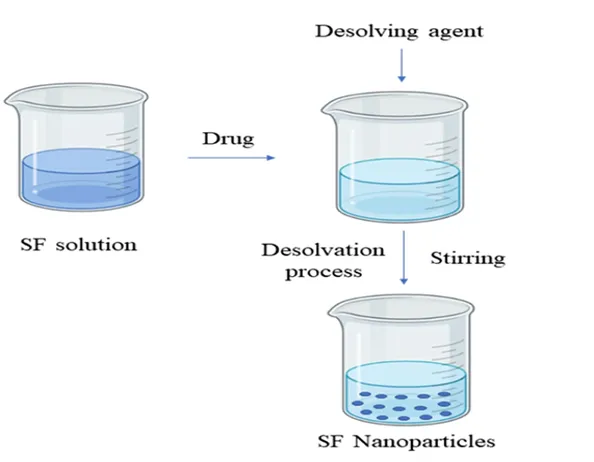
Fig. 3 Preparation of SF NPs by desolvation method
To form the nanoparticles, RSF solution is added dropwise into the desolvating solvent under constant stirring. The resulting particles are collected by centrifugation, washed to remove leftover solvent and unencapsulated drug, and then either redispersed or freeze-dried for storage. What comes out is typically spherical, ranging roughly 40-200 nm in size, with respectable drug-loading efficiency and sustained release behavior [11].
How these nanoparticles turn out depends heavily on the formulation and process parameters used - silk fibroin concentration, the type and amount of desolvating solvent, pH, the solvent-to-polymer ratio, stirring speed, and the rate at which the solvent is added. Tuning these variables lets researchers control particle size, polydispersity, zeta potential, drug loading, encapsulation efficiency, and release behavior. Given how simple, reproducible, and scalable it is - and its ability to encapsulate both hydrophilic and hydrophobic compounds - desolvation remains one of the go-to methods for preparing silk fibroin nanoparticles aimed at oral and targeted drug delivery.
5.2 Electrospraying Technique
Electrospraying is an electrohydrodynamic method for producing silk fibroin micro- and nanoparticles with fairly tight control over size and shape. Regenerated silk fibroin solution is pumped through a metallic needle under a strong electric field, which generates fine, charged droplets that solidify quickly as the solvent evaporates. Compared with emulsion-based approaches, electrospraying tends to yield more uniform particles, gives better control over size, and subjects the material to less shear stress - useful when the therapeutic cargo is fragile [12].
The process begins with preparing regenerated silk fibroin from Bombyx mori cocoons. This solution is loaded into a syringe and delivered at a controlled flow rate while a high voltage runs between the needle and a collector. As the solvent evaporates, solid nanoparticles form, and these are then collected, washed to remove residual solvent, and dried. Final particle properties depend on solution viscosity, polymer concentration, flow rate, applied voltage, and the distance to the collector [13].
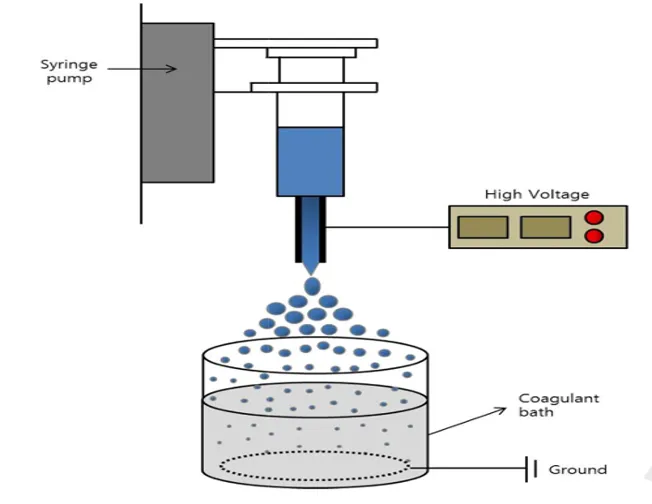
Fig 2: Electrospraying of SF solutions.
A more advanced variant, coaxial electrospraying, uses two concentric needles to build core-shell nanoparticles in a single step. This improves encapsulation efficiency, allows for sustained and pH-responsive release, and sidesteps the need for an emulsion step altogether - which is why electrospraying has become a fairly attractive route for producing silk fibroin nanoparticles for controlled drug delivery [14].
5.3 Emerging Methods
A good deal of recent work on silk-fibroin-based delivery has gone into stimuli-responsive, or "smart," systems - ones that release their payload in response to a specific trigger rather than through passive diffusion alone. These systems give tighter control over release, can improve therapeutic outcomes, and may cut down on side effects. Because silk fibroin is biocompatible, biodegradable, has a tunable β-sheet structure, and can be functionalized fairly easily, it lends itself well to platforms that respond to pH, temperature, enzymes, light, or electrical signals [16].
One line of work worth noting involves electro-responsive silk fibroin systems. Qi and colleagues built silk fibroin microneedles that release insulin in response to an electrical stimulus - the current temporarily disrupts disulfide bonds in the silk network, which swells the hydrogel and speeds up insulin release; once the stimulus stops, the network reforms and release slows back down. Adding graphene to the system further improved its electrical responsiveness, enabling more precise, on-demand insulin delivery [17].
Beyond electrically responsive designs, researchers have also started combining silk fibroin with functional polymers and nanomaterials to build multifunctional delivery systems. Poly(vinyl alcohol)-functionalized silk fibroin nanoparticles, for instance, showed pH-dependent release - holding onto ciprofloxacin under simulated gastric conditions but releasing it once conditions shifted to mimic the intestine. Work like this points toward where silk-fibroin-based systems for targeted, next-generation oral protein and peptide delivery might be headed [18].
5.4 Self-Assembly Method
The self-assembly method takes advantage of regenerated silk fibroin's natural tendency to organize itself into nanoparticles under the right conditions, driven mainly by hydrophobic interactions, hydrogen bonding, and the silk I-to-silk II transition. Solvent composition, pH, ionic strength, temperature, and protein concentration can all be adjusted to encourage this self-organization, and none of it requires harsh crosslinking chemistry - which makes it a relatively simple, biomimetic way to build nanoparticles.
As with the other methods, this one starts with regenerated silk fibroin obtained through degumming, dissolution, dialysis, and purification. The fibroin solution is then exposed to conditions - gradual solvent addition, or shifts in pH or ionic strength - that trigger self-assembly. The resulting nanoparticles are purified by centrifugation or dialysis, washed, and then freeze-dried or redispersed depending on what comes next [20].
Nanoparticles made this way tend to be spherical, nanosized, and structurally sturdy thanks to their high β-sheet content. They also show decent drug-loading capacity while keeping encapsulated therapeutics biologically active. By adjusting protein concentration, solvent conditions, and β-sheet formation, researchers can dial in the physicochemical properties needed for oral and targeted delivery applications [20,21].
5.5 Microfluidic-Based Fabrication Method
Microfluidic fabrication offers a more advanced route to silk fibroin nanoparticles, with better precision, reproducibility, and scalability than bulk desolvation. Silk fibroin and an antisolvent stream mix rapidly within microscale channels, giving more uniform nucleation and growth than conventional batch mixing allows [22]. This cuts down on batch-to-batch variation, uses less solvent, and yields nanoparticles with a narrower size distribution - qualities that matter for pharmaceutical-scale manufacturing.
The process again begins with regenerated silk fibroin prepared by degumming Bombyx mori cocoons, then dissolution, dialysis, and filtration. The silk fibroin solution and an antisolvent - commonly acetone - are loaded into separate syringe pumps and fed into a microfluidic chip at controlled flow rates [23]. Rapid mixing inside the microchannels drives desolvation, encouraging β-sheet formation and spontaneous nanoparticle assembly [24]. Particle size and uniformity can be fine-tuned by adjusting flow rate, residence time, and how the solvent exchange proceeds.
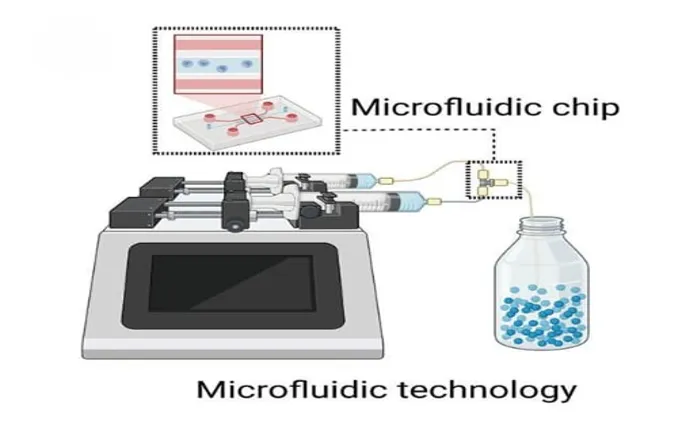
Fig 5: microfluidic technology
Once formed, the nanoparticles are purified by centrifugation, washing, or dialysis before being redispersed or freeze-dried for storage. Compared with conventional batch methods, microfluidic fabrication offers continuous production, tighter control over particle characteristics, better reproducibility, and easier scale-up - all of which make it a promising route for producing silk fibroin nanoparticles for oral and targeted delivery [25,26].
5.6 Supercritical Fluid Technology
Supercritical fluid technology offers a bottom-up route to silk fibroin nanoparticles under comparatively mild conditions. It mainly relies on supercritical carbon dioxide (scCO₂), which combines gas-like diffusion with liquid-like density, allowing particles to form quickly without leaving harmful solvent residues behind [27]. Among the techniques available, Solution Enhanced Dispersion by Supercritical Fluids (SEDS) sees the most use, since it produces nanoparticles with a narrow size distribution while keeping silk fibroin's bioactivity intact [28].
In the SEDS process, regenerated silk fibroin and the drug of interest are dissolved together in an organic solvent such as hexafluoroisopropanol (HFIP). This solution enters through an inner nozzle while scCO₂ flows through an outer one into the SEDS chamber. As scCO₂ diffuses rapidly into the solvent, it reduces the solvent's dissolving power, triggering supersaturation and causing silk fibroin to precipitate around the drug molecules [29]. Pressure, temperature, flow rate, and solution concentration all shape how particle formation unfolds.
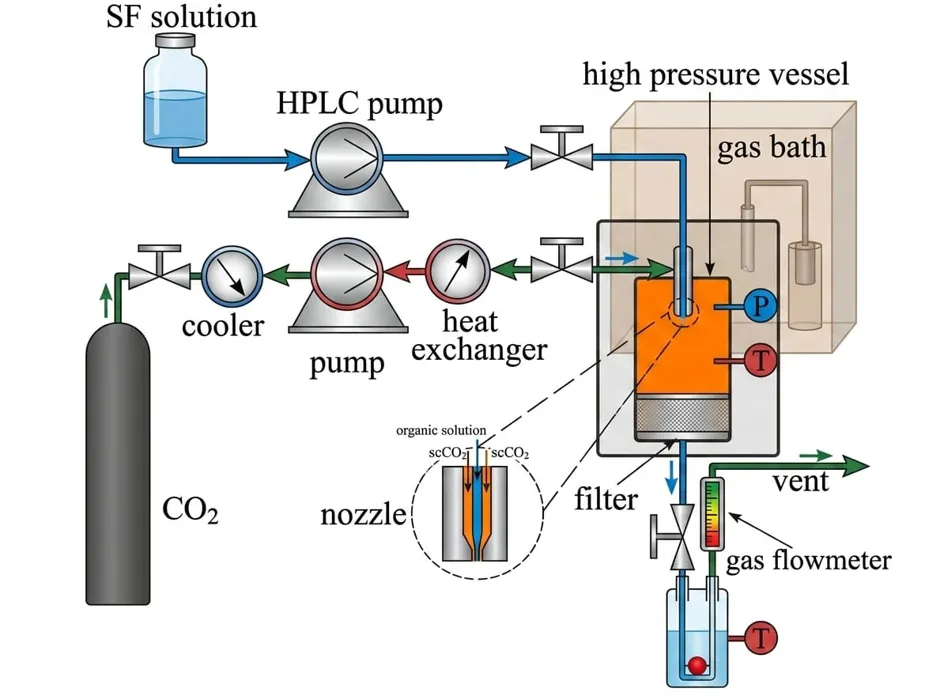
Fig 6: Supercritical Fluid Technology
Once particles have formed, continuous flow of scCO₂ extracts the remaining organic solvent, leaving behind dry nanoparticles with minimal residue. The resulting particles are generally small, uniform, and show improved drug encapsulation along with sustained release [30]. Relative to conventional solvent evaporation or desolvation, SEDS gives better control over particle formation, reduces solvent exposure, and scales up more easily - reasons enough to consider it a promising route for fabricating silk fibroin nanocarriers for oral and targeted delivery [31].
6. FUNCTIONALIZATION AND TARGETING STRATEGIES OF SILK FIBROIN NANOPARTICLES
6.1 Surface Functionalization of Silk Fibroin Nanoparticles
6.2 Surface Adsorption and Drug Immobilization Strategies
6.3 Ligand-Mediated Functionalization for Active Targeting
6.4 Stimuli-Responsive and Multifunctional Functionalization Strategies
7. DRUG RELEASE MECHANISM
Silk fibroin nanoparticles achieve controlled release through a mix of diffusion, polymer degradation, and responsiveness to their surroundings. An initial burst comes from drug sitting near the particle surface, followed by a more sustained release as water slowly works its way into the silk fibroin matrix. The crystalline, β-sheet-rich regions slow this diffusion down, while the amorphous regions let water in and help move drug out. Release rate ends up depending on things like β-sheet content, particle size, and the interaction between drug and polymer [32].
The surrounding physiological environment matters too. At physiological pH (7.4), the tightly packed β-sheet structure keeps release slow and steady, while acidic conditions cause the matrix to swell and drug to diffuse out faster. This pH sensitivity is useful - it allows for preferential release at diseased or intracellular sites while limiting premature release once the particle is in systemic circulation [33].
As the nanoparticles gradually break down, proteolytic enzymes chip away at the silk fibroin matrix and add another mechanism driving release. In the end, the overall release profile reflects the combined contributions of diffusion, water uptake, and biodegradation. By adjusting formulation variables such as β-sheet content, particle size, and drug loading, silk fibroin nanoparticles can be tuned to give the kind of prolonged, controlled release that oral protein and peptide delivery calls for [34].
8. APPLICATIONS OF SILK FIBROIN NANOPARTICLES
8.1 Oral Drug Delivery
Silk fibroin nanoparticles have become an attractive option for oral drug delivery because they shield encapsulated drugs from gastrointestinal degradation while still allowing controlled, sustained release. Their biocompatibility, biodegradability, stability across a wide pH range, and mucoadhesive character all work together to improve intestinal absorption and oral bioavailability, making them well suited to delivering poorly absorbable drugs, proteins, and peptides [35].
PEGylation is a common way to boost the oral performance of silk fibroin nanoparticles, since it improves stability and cuts down on aggregation. PEGylated silk fibroin nanoparticles carrying cefotaxime, for example, came out spherical, with particle sizes between 170 and 650 nm, and showed controlled release under simulated gastrointestinal conditions. Strong non-covalent interactions between the drug and the fibroin further improved stability and delivery performance [35,36].
Recent studies indicate that silk fibroin nanoparticles can deliver antibiotics, anticancer agents, antioxidants, and various other bioactive molecules by mouth fairly effectively. Their capacity to protect the drug, extend release, boost intestinal absorption, and accommodate further surface modification makes them a reasonable bet for future oral protein and peptide delivery systems [36].
8.2 Protein and Peptide Delivery
Silk fibroin nanoparticles have drawn attention as carriers for oral protein and peptide delivery specifically because they shield biomolecules from acidic and enzymatic breakdown in the gut. Their biocompatibility, biodegradability, and controllable degradation rate help preserve the biological activity of whatever's encapsulated while still supporting sustained release. The amphiphilic nature of silk fibroin also supports efficient encapsulation and helps stabilize protein- and peptide-based drugs.
Researchers have looked at using silk fibroin nanoparticles to deliver therapeutic proteins such as insulin, growth factors, and enzymes. The β-sheet-rich structure protects these molecules from premature breakdown while still allowing for gradual release. Surface modification with polymers or targeting ligands can push intestinal uptake and oral bioavailability further, which is part of why silk fibroin looks promising as a carrier for protein therapeutics [36].
PEGylation and other surface-functionalization strategies have been shown to improve nanoparticle stability, cut down on aggregation, and extend how long the particles stay in the gastrointestinal tract. These changes strengthen drug protection, support controlled release, and generally improve the therapeutic performance of orally delivered proteins and peptides [36].
8.3 Cancer Drug Delivery
Silk fibroin nanoparticles have been studied fairly extensively for cancer therapy, given their biocompatibility, biodegradability, and high drug-loading capacity. They stabilize anticancer drugs, encourage cellular uptake, and provide sustained release - together improving therapeutic efficacy while limiting systemic toxicity.
Doxorubicin-loaded silk fibroin nanoparticles, for instance, have shown efficient encapsulation, controlled release, and stronger cytotoxicity against cancer cells than the free drug alone. Their small size supports cellular internalization and prolonged release, contributing to greater anticancer activity while limiting premature leakage [37].
Beyond doxorubicin, researchers have also looked at silk fibroin nanoparticles for delivering agents like naringenin and celastrol. Their controlled-release behavior and relative ease of surface functionalization help concentrate drug at tumor sites, underscoring their potential as targeted nanocarriers in cancer therapy [37].
8.4 Antibiotic and Antimicrobial Drug Delivery
Silk fibroin nanoparticles have also been explored as carriers for antibiotics, since they protect the drug from gastrointestinal degradation and provide sustained release. Their biocompatibility, biodegradability, and high drug-loading capacity translate into better oral bioavailability, stronger therapeutic efficacy, and less frequent dosing.
PEGylated silk fibroin nanoparticles loaded with cefotaxime showed nanoscale size, high encapsulation efficiency, and controlled release under simulated gastrointestinal conditions. PEG functionalization improved stability, and the strong non-covalent interactions between cefotaxime and silk fibroin helped retain the drug and improve delivery performance [38].
Beyond conventional antibiotics, silk fibroin nanoparticles have also been explored for delivering antimicrobial peptides and managing infection more broadly. Their capacity for sustained release and localized antimicrobial action makes them worth considering for treating bacterial and other infectious diseases [38].
8.5 Tissue Engineering and Regenerative Medicine
Silk fibroin nanoparticles have found a place in tissue engineering too, owing to their biocompatibility, biodegradability, mechanical strength, and ability to support cell adhesion and proliferation. They can carry growth factors and other bioactive molecules, helping regenerate bone, cartilage, skin, and nerve tissue.
Silk-fibroin-based biomaterials have shown real promise in wound healing, offering an environment conducive to cell attachment, angiogenesis, and tissue repair. Adding antibacterial agents, antioxidants, or other bioactive molecules can speed healing further while keeping inflammation in check [38].
Beyond skin repair, silk-fibroin-based materials have also been investigated for bone, cartilage, vascular, and nerve tissue engineering. Their tunable degradation, ease of functionalization, and structural versatility make them attractive biomaterials for regenerative medicine and other advanced biomedical uses.
8.6 Emerging Biomedical Applications
Silk fibroin nanoparticles are being explored increasingly for applications that go beyond conventional drug delivery. Their tunable physicochemical properties, ease of surface functionalization, and strong biocompatibility make them suitable for stimuli-responsive delivery, biosensing, gene delivery, and theranostics - positioning silk fibroin as a fairly versatile platform for next-generation nanomedicine [38].
Recent studies have also pointed to silk fibroin nanoparticles' potential in gene and nucleic acid delivery, bioimaging, and biosensing. Their high loading capacity, controllable degradation, and adaptable surface chemistry support efficient delivery of therapeutic biomolecules while keeping them biologically active, extending their reach into precision medicine [38].
Combining silk fibroin nanoparticles with smart polymers, inorganic nanomaterials, and targeting ligands has enabled multifunctional nanoplatforms capable of controlled release, imaging, and tissue regeneration all at once. Developments like these point to a growing role for silk fibroin nanoparticles in personalized medicine going forward.
9. LIMITATIONS
Despite the progress outlined above, silk fibroin (SF)-based nanocarriers still face several obstacles that stand in the way of broader clinical adoption.
10. FUTURE PERSPECTIVES
Going forward, research needs to focus on manufacturing methods for silk fibroin nanoparticles that are scalable, reproducible, and reasonably cost-effective. Advanced fabrication approaches - microfluidics and green synthesis among them - could help improve production efficiency, product consistency, and large-scale output. Surface-functionalization strategies also need further refinement to improve targeted delivery, intestinal absorption, and therapeutic efficacy.
Pairing silk fibroin with other biomaterials and functional nanomaterials could also lead to more capable hybrid delivery systems. Well-designed in vivo studies, clinical trials, and standardized manufacturing protocols will all be necessary before silk-fibroin-based nanocarriers can establish the long-term safety, efficacy, and regulatory standing needed for clinical use.
11. CONCLUSION
Silk fibroin has established itself as a promising biomaterial for oral protein and peptide delivery, owing to its distinctive structural features, strong biocompatibility, biodegradability, and ease of functionalization. Advances in formulation technology have led to silk fibroin nanoparticles with improved drug stability, controlled release, better intestinal absorption, and stronger oral bioavailability - properties that make silk fibroin an appealing platform for delivering sensitive therapeutic biomolecules.
That said, real challenges remain: limited encapsulation efficiency for certain biomolecules, difficulties in large-scale manufacturing, and the need for further clinical validation. Continued work on formulation strategies, functionalization approaches, and standardized production will be essential for clinical translation to succeed. With sustained research effort, silk fibroin nanoparticles have a solid chance of becoming an effective nanocarrier platform for oral protein and peptide delivery going forward.
REFERENCES

Girisankar M, Jyothi M, Silk Fibroin as a Nanocarrier for Oral Delivery of Proteins and Peptides: Current Formulation Approaches and Limitations, Int. J. of Pharm. Sci., 2026, Vol 4, Issue 8, 3070-3084. https://doi.org/10.5281/zenodo.22030906
 10.5281/zenodo.22030906