

We use cookies to ensure our website works properly and to personalise your experience. Cookies policy
1,2,3,4,5,6Department of Microbiology and Biotechnology, Faculty of Arts and Science, Bharath Institute of Higher Education and Research, Chennai, Tamil Nadu, India.
7Department of Microbiology, St. Peter’s Institute of Higher Education and Research, Avadi, Chennai, Tamil Nadu, India.
Multidrug-resistant (MDR) Pseudomonas aeruginosa causes difficult-to-treat acute and chronic infections, and colistin remains a salvage option limited by nephrotoxicity, heteroresistance and uncertain target-site exposure. Lytic bacteriophages are an independent antibacterial modality, but colistin acts on lipopolysaccharide (LPS), which is also a phage receptor, so the two agents may interact in either direction. This focused narrative review appraises evidence on phage–colistin combinations, emphasising reports from 2024 to October 2026, using four evidence tiers: direct phage–colistin studies, phage studies with other antibiotics, clinical phage studies with background antibiotics, and formulation and pharmacokinetic/pharmacodynamic (PK/PD) literature. Direct in vitro data are heterogeneous: synergy or additivity with colistin was reported for a subset of metallo-?-lactamase-producing isolates, colistin sensitisation occurred in nearly all of nine strains in a 2026 pharmacodynamic study, and phage-first application strengthened synergy for one phage, whereas earlier work showed that colistin can suppress phage lysis and progeny production. Human studies of nebulised and personalised phage therapy support feasibility and safety but cannot attribute effects to colistin because background antibiotics were used. Recovery of infectious phage after storage and aerosolisation emerged as a determinant of potency. We propose critical quality attributes, a PK/PD structure with an explicit interaction term, a six-stage roadmap with go/no-go gates and a minimum reporting checklist. Phage–colistin therapy should be developed as an isolate-matched investigational intervention and
Antimicrobial resistance (AMR) is a leading global health threat. A systematic analysis estimated 4.71 million deaths associated with, and 1.14 million deaths directly attributable to, bacterial AMR in 2021, and forecast 8.22 million associated and 1.91 million attributable deaths in 2050 1. Pseudomonas aeruginosa contributes disproportionately to this problem in hospitals and in chronic lung disease because it combines intrinsic impermeability and efflux, adaptive regulation, acquired resistance determinants and biofilm formation 2. The World Health Organization’s 2024 Bacterial Priority Pathogens List retains carbapenem-resistant P. aeruginosa among its high-priority pathogens 3.
Colistin (polymyxin E) binds the lipid A moiety of LPS and destabilises the outer membrane. It is reserved for selected infections for which safer options are unavailable, and its therapeutic window is narrow because nephrotoxicity limits exposure 4; consensus guidelines therefore recommend a weight-based loading dose and a target average steady-state plasma concentration of approximately 2 mg/L 5. Resistance arises through regulatory mutations and lipid A modification, notably in PhoPQ and PmrAB, and has been documented in P. aeruginosa from colistin-treated people with cystic fibrosis (CF) 6-8. Heteroresistance, in which a minority subpopulation survives antibiotic concentrations that inhibit the majority, further limits the information carried by a single MIC 9, and the CLSI and EUCAST positions on polymyxin breakpoints differ 10.
Lytic bacteriophages offer an independent mechanism: they adsorb to specific surface receptors, replicate within the host and release progeny, often by lysis. A systematic review concluded that phage therapy was generally well tolerated and associated with favourable outcomes in many difficult-to-treat infections, while noting that most evidence was uncontrolled 11,12. In a multicentre series of 100 consecutive personalised phage-therapy cases, clinical improvement was reported in 77.2% and eradication of the target bacterium in 61.3%, and eradication was markedly less likely when phages were given without concomitant antibiotics (odds ratio 0.3) 13. A recent review of Pseudomonas similarly emphasised that bacterial clearance was far less likely without antibiotics, yet cautioned that common in vitro readouts are tenuously connected to clinical success 14.
The interaction between a phage and an antibiotic is not inherently synergistic. Sub-inhibitory β-lactam and quinolone exposure can stimulate virulent phage growth (phage–antibiotic synergy, PAS) 15, and phages can be evolutionary complements of antibiotics by selecting for trade-offs 16; for example, phage selection restored antibiotic sensitivity in MDR P. aeruginosa by exploiting efflux-pump receptors 17. Conversely, antibiotics that suppress host growth or alter surface structures can impair phage replication. Colistin is a distinctive case because its target, LPS, is also a phage receptor in many species; an in vitro study found that colistin interfered with lysis and progeny production of three P. aeruginosa phages 18, and narrative reviews have highlighted this antagonism 19.
The literature therefore contains three kinds of statement that are frequently conflated: laboratory interaction data, clinical reports in which phages are given with colistin or other antibiotics, and pharmaceutical studies of phage delivery. The objective of this review is to appraise the evidence for phage–colistin combination therapy against MDR P. aeruginosa and to define how it should be developed. It makes five contributions. First, it separates the evidence into explicit tiers so that direct phage–colistin data are not conflated with adjacent data. Second, it proposes a taxonomy of interaction outcomes with measurable signatures. Third, it defines critical quality attributes for a phage–colistin product. Fourth, it outlines a PK/PD structure with an interaction term. Fifth, it provides a six-stage development roadmap and a minimum reporting checklist (Figure 1).
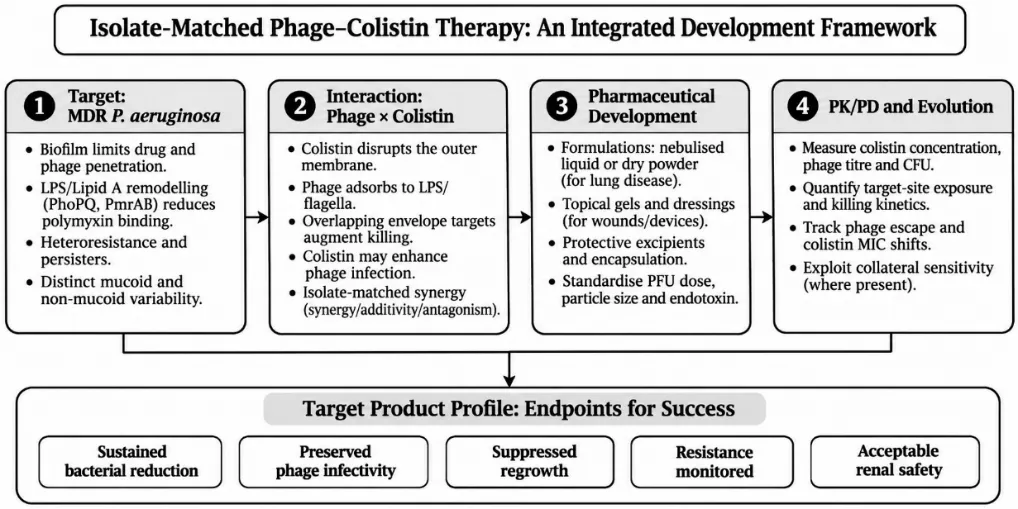
Figure 1: Isolate-matched Phage–Colistin Therapy.
MATERIALS AND METHODS
Review design and scope
This article is a focused narrative review rather than a systematic review or meta-analysis. It synthesises peer-reviewed literature and authoritative guidance relevant to direct phage–colistin interactions, phage combinations with other antibacterial agents, clinical phage experience, and pharmaceutical formulation and pharmacokinetics/pharmacodynamics (PK/PD) in Pseudomonas aeruginosa infection. Publications from 2024 to October 2026 were prioritised, and foundational mechanistic, clinical and methodological papers from earlier years were retained where they were needed to interpret recent findings.
Evidence appraisal
Evidence was interpreted in four tiers (Table 1): (i) direct in vitro phage–colistin studies; (ii) studies involving other antibiotics or bacterial species; (iii) clinical phage studies in which concomitant antibiotics prevent attribution of outcomes to colistin; and (iv) formulation and PK/PD studies informing product development. The tier determines the inferences a study can support, and findings with another antibiotic class or species were not extrapolated to colistin. Data from other species were used only where they informed mechanism and are identified as such. Preprints and conference abstracts were not used as evidence. Because study designs, phages, isolates, assays and endpoints are heterogeneous, no pooled effect estimate was calculated. The review does not claim exhaustive retrieval, duplicate screening or formal risk-of-bias assessment.
Ethical considerations
This review is based on published literature. No human participants or animals were involved, and ethical approval was therefore not required.
Table 1: Evidence Tiers and the Inferences Each Can Support
| Sr. No. | Tier | Evidence type | Can support | Cannot support |
|---|---|---|---|---|
| 1 | i | Direct in vitro phage–colistin interaction studies | Isolate- and assay-specific interaction direction; effect of sequence | Clinical efficacy; colistin sparing; in vivo exposure targets |
| 2 | ii | Phage studies with other species or antibiotics, including biofilm and dynamic models | Mechanistic hypotheses; methodology; cocktail design principles | Class-wide extrapolation to colistin |
| 3 | iii | Clinical studies of phage products with background antibiotics | Feasibility, tolerability, delivery and signals of microbiological effect | Attribution of effect to a phage–colistin interaction |
| 4 | iv | Pharmaceutical, formulation and PK/PD literature | Product-quality requirements; study design; exposure measurement | Efficacy of any specific phage–colistin product |
Tier assignment reflects what each study type can support, not study quality.
RESULTS AND DISCUSSION
The evidence is discussed in the following order: mechanistic basis of the interaction, state of the experimental and clinical evidence, evolutionary dynamics, pharmaceutical design, PK/PD structure, a translational roadmap, reporting standards, and research gaps.
Mechanistic Foundations of the Phage–Colistin Interface
Colistin Action, Resistance and Its Measurement
Colistin’s cationic residues displace divalent cations and bind the negatively charged phosphates of lipid A, permeabilising the outer membrane. Reduced surface negative charge through lipid A modification, controlled by PhoPQ and PmrAB, weakens binding 6,7, and mutations in pmrB arise during treatment of CF airway infection 8. Heteroresistance and tolerance mean that the baseline MIC underestimates the capacity for regrowth 9. In hollow-fibre infection models, colistin monotherapy against P. aeruginosa produced early killing followed by regrowth, whereas a colistin–doripenem combination improved killing and prevented resistance 20. These features matter for combinations because a benefit measured at a fixed concentration in a static assay may not predict regrowth under the changing exposure found in patients.
A combination could in principle improve killing at achievable exposure or suppress regrowth. It cannot be assumed to permit a lower clinical colistin dose: that claim requires pharmacological and safety evidence rather than an in vitro shift in MIC or biofilm eradication concentration. Notably, one review reports that several phages reduced the effective polymyxin B MIC up to four-fold against P. aeruginosa, while stating that whether this reduces toxicity in patients is unclear 14.
Phage Receptors, Host Range and the LPS Overlap
Phages of P. aeruginosa recognise LPS, type IV pili, flagella or other surface structures, and host range, adsorption rate, latent period, burst size, stability and matrix penetration vary between phages 21. A plaque or positive spot test does not establish therapeutic suitability; candidate phages require demonstration of productive infection against the patient’s isolate, genomic safety, manufacturing consistency, potency and purity 22. The overlap between LPS biology and colistin action creates both opportunity and risk. Envelope perturbation may expose receptors or increase permeability, but it may also remove the receptor or the metabolic state needed for productive replication. The direction of the effect must therefore be measured for the specific phage–isolate pair.
A Taxonomy of Interaction Outcomes
Table 2 organises the plausible outcomes. The distinction between killing and amplification is central: colistin may add to bacterial killing while simultaneously suppressing phage progeny, so that overall CFU reduction masks a collapse in infectious phage titre 18. Because phages replicate, the effective phage dose is not fixed, and the order of exposure can change the result 23. Antibiotic mechanism and stoichiometry also determine whether synergy occurs, as shown in an Escherichia coli model 24; in an optimised checkerboard study, synergy with a P. aeruginosa phage appeared with simultaneous application and when the second agent was added after a one-hour delay 25, and sequence effects have been reported in A. baumannii 26.
Table 2: Taxonomy of Phage–Colistin Interaction Outcomes, Their Mechanistic Basis and Measurable Signatures
| Sr. No. | Outcome class | Plausible mechanism | Measurable signature | Development implication |
|---|---|---|---|---|
| 1 | Complementary killing | Colistin permeabilises the outer membrane while phage lyses cells through an independent receptor; phage amplification is not impaired | FICI ≤ 0.5 or ≥ 2 log10 additional kill versus the best single agent, with maintained infectious phage titre | Test simultaneous and sequential regimens; proceed to biofilm and resistance assays |
| 2 | Antibiotic-stimulated phage growth (PAS-like) | Sub-inhibitory stress alters cell morphology and virion production, described for β-lactams and quinolones 15 | Larger plaques and higher progeny counts with antibiotic | Not established for polymyxins; do not extrapolate from other classes |
| 3 | Antagonism through host suppression | Colistin reduces viable, metabolically active hosts and perturbs LPS-dependent adsorption 18 | Falling infectious titre despite CFU reduction; reduced lysis or progeny | Consider phage-first dosing or lower colistin; reject the pairing if antagonism persists |
| 4 | Evolution-mediated sensitisation | Phage-resistant mutants carry envelope or efflux changes that restore antibiotic susceptibility 17,27 | Lower MIC in phage-exposed survivors | Exploit through designed cocktails; verify per isolate |
| 5 | Evolution-mediated cross-resistance | Phage-selected LPS modification could shift polymyxin susceptibility in either direction | Unchanged or higher colistin MIC in survivors | Exclude phages that select for it; monitor survivors |
| 6 | Ecological partitioning | Phage and antibiotic act on distinct subpopulations (for example mucoid versus non-mucoid) 28 | Subpopulation-specific responses over time | Sample multiple isolates and time points |
FICI, fractional inhibitory concentration index; PAS, phage–antibiotic synergy; LPS, lipopolysaccharide.
State of the Evidence
Direct In Vitro Phage–Colistin Studies
The earliest direct signal was antagonistic: colistin interfered with bacteriolysis and progeny production of three P. aeruginosa phages under the tested conditions, showing that killing and phage amplification are separate endpoints 18. More recent work paints a more heterogeneous picture. Paranos and colleagues tested five lytic phages against ten MBL-producing MDR P. aeruginosa isolates (five NDM, five VIM) using checkerboard broth microdilution with five antibiotics, including colistin. Synergy or additivity was seen in 60–80% of isolates for every drug, synergy alone in 40–60% of isolates for amikacin, ciprofloxacin, meropenem and colistin, antagonism was uncommon, and interactions occurred at clinically achievable colistin concentrations; the jumbo phage vB_PaerM_AttikonH10 was additive, not synergistic, with colistin and aztreonam 29. The study is isolate- and assay-specific and does not demonstrate clinical efficacy. The experimental profiles and checkerboard examples are shown in Figures 2–4.
In 2026, Baars and colleagues quantified pharmacodynamic interactions between a lytic Pbunavirus and six antibiotics across nine clinical strains. The phage increased sensitivity to aztreonam, colistin and meropenem for almost all strains, whereas interactions with ciprofloxacin were strongly antagonistic and other antibiotics showed strain-specific divergence 30. Yılmaz and colleagues compared agar-based and checkerboard methods with two lytic phages (BAUNPA1 and BAUNPA3) and colistin, meropenem, ciprofloxacin, tobramycin and the antimicrobial peptides murepavadin and pexiganan; BAUNPA1 showed checkerboard synergy with colistin, which was enhanced by phage-first application, and agar plaque morphology did not consistently match quantitative synergy 31. Related combination studies with other antibiotics have documented synergy in static and dynamic biofilm models 32,33.
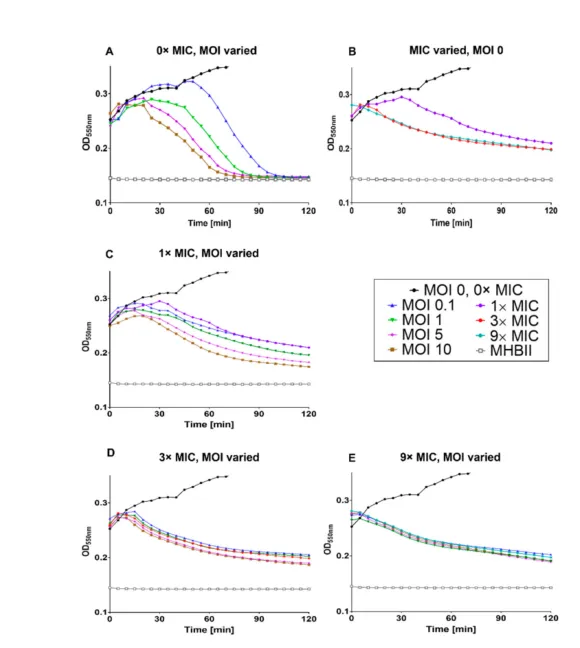
Figure 2: Colistin-associated Suppression of PEV2 Lysis-Profile Activity in Pseudomonas aeruginosa PAO1 (Panels a–E of the Original Figure). Optical Density (OD550nm) Profiles Are Shown over Time for Different Multiplicities of Infection (MOI 0–10) And Colistin Concentrations (0×–9× MIC); The Original Study Reports Reduced Phage-Associated Lysis Under Colistin Exposure 18. Reproduced from Danis-Włodarczyk Et Al. (2021).
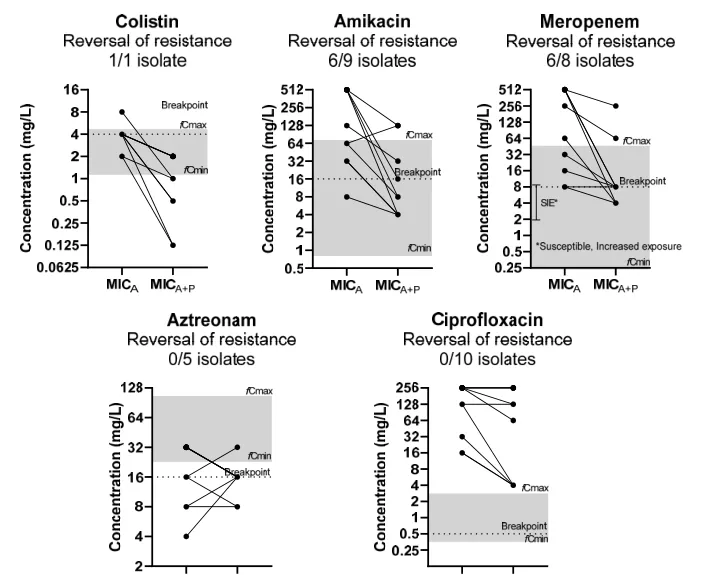
Figure 3: Effect of phage addition on antibiotic MICs relative to clinically achievable concentrations and clinical breakpoints in metallo-β-lactamase-producing P. aeruginosa isolates. In each panel the left and right points are the MIC of the antibiotic alone (MICA) and in the presence of phage (MICA+P); the shaded band spans the clinically achievable free concentrations (fCmin–fCmax). Reversal of resistance was observed in 1/1 colistin, 6/9 amikacin, 6/8 meropenem, 0/5 aztreonam and 0/10 ciprofloxacin isolates 29. Reproduced from Paranos et al. (2025).
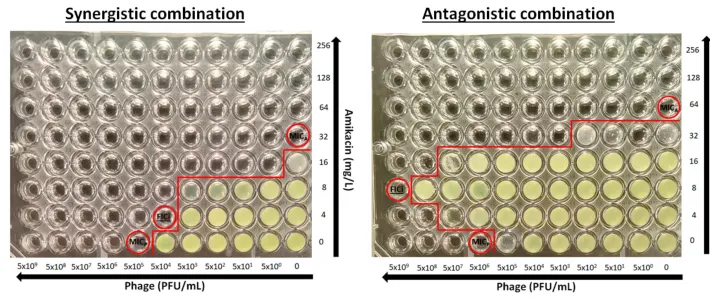
Figure 4: Representative Checkerboard Microdilution Plates Showing a Synergistic (Left) and an Antagonistic (Right) Phage–Amikacin Combination. Red Lines Separate Wells with and without Growth; Circled Wells Indicate the MIC of the Antibiotic (MICA), the MIC of the Phage (MICP) and the Fractional Inhibitory Concentration Index (FICI) 29. Reproduced from Paranos Et Al. (2025).
Cross-Species Evidence for Colistin–Phage Evolutionary Effects
In Acinetobacter baumannii, phage-resistant mutants that evolved without antibiotics became more sensitive to colistin, the phage used the capsule as its primary receptor, and resistant isolates were less virulent in a Galleria mellonella model 27. Phage-resistant A. baumannii were also resensitised to several antibiotics 34. These data support the principle that phage resistance can carry an antibiotic-sensitising cost, but they concern a different species and receptor and must not be treated as evidence for P. aeruginosa.
Phage Combinations with Other Antibiotics in Preclinical Models
In a murine model of P. aeruginosa ventilator-associated pneumonia, a phage cocktail combined with meropenem improved recovery faster than either treatment alone; in human primary epithelial cells the phages lowered the meropenem concentration needed for effect and prevented resistance to both agents 35. Phage–ciprofloxacin combinations have prevented regrowth in hollow-fibre models and, as an inhaled powder, reduced murine lung burden 19. An evolutionarily trained two-phage cocktail exploiting a resistance trade-off acted against biofilm without dual resistance emerging 36. These findings reinforce that outcomes depend on the antibiotic and the receptor, and that the adjunctive principle is plausible, but they are not data on colistin. Receptor-informed design has been formalised: grouping phages by complementary receptor use and pairing them with antibiotics yielded three cocktails, each active against at least 96% of 153 clinical P. aeruginosa isolates 37.
Human Experience
Early compassionate-use experience included adjunctive phage therapy for MDR P. aeruginosa in a person with CF and in lung transplant recipients 38,39. Controlled studies have been less encouraging, which underscores the importance of product quality. In PhagoBurn, a randomised trial of a P. aeruginosa phage cocktail for burn wounds, the phage treatment performed less well than standard care, a result attributed in part to a delivered phage titre substantially below that intended because of product instability 40. In a randomised, placebo-controlled trial of intravesical phages for urinary infection after prostate resection, phage treatment did not outperform placebo or antibiotics 41.
Weiner and colleagues reported a randomised, double-blind, placebo-controlled first-in-human trial of nebulised three-phage cocktail BX004-A in adults with CF and chronic P. aeruginosa infection: nine participants (seven phage, two placebo) were treated in addition to standard inhaled antibiotics, which could include colistin, tobramycin or aztreonam. The primary safety and tolerability endpoints were met, delivery to the lower airways was demonstrated, and exploratory analyses showed between-group differences in sputum bacterial density 42. In a separate 2025 series of nine adults with CF and MDR or pan-drug-resistant P. aeruginosa, personalised nebulised phages were given for 7–10 days; sputum P. aeruginosa density fell and FEV1 improved without reported treatment-related adverse events, and post-treatment isolates showed phage resistance accompanied in some cases by increased antibiotic susceptibility or reduced virulence 43. Both studies are small, uncontrolled or minimally controlled with respect to antibiotics, and cannot isolate a phage–colistin interaction.
Within-Host Ecology
A longitudinal multiomic analysis of phage–antibiotic co-therapy in a person with CF and MDR P. aeruginosa showed that mucoid and non-mucoid subpopulations responded differentially to antibiotic and phage pressures and that phage activity was temporally constrained, with early dominance of one phage attenuating at about seven days despite continued genomic detectability. Colistin had been stopped because of nephrotoxicity before ciprofloxacin and a two-phage cocktail were used; the report therefore does not evidence phage–colistin efficacy, but it illustrates how ecological structure can complicate interpretation of any combination 28.
Table 3 summarises the principal studies by evidence tier. Across tiers the consistent message is conditionality: effects vary with phage, isolate, antibiotic, sequence, assay and model.
Table 3: Principal Studies by Evidence Tier and Their Relevance to Phage–Colistin Development
| Sr. No. | Study (tier) | Design and population | Principal finding | Relevance to phage–colistin |
|---|---|---|---|---|
| 1 | Danis-Włodarczyk 2021 18 (tier i) | In vitro; three P. aeruginosa phages with colistin | Colistin interfered with lysis and progeny production | Defines the antagonism risk; killing and amplification differ |
| 2 | Paranos 2025 29 (tier i) | Checkerboard; 5 phages × 5 antibiotics × 10 MBL-producing isolates | Synergy or additivity in 60–80% of isolates per drug; synergy with colistin in 40–60%; antagonism uncommon | Direct laboratory evidence; isolate-specific; not clinical |
| 3 | Baars 2026 30 (tier i) | Quantitative PD; 9 clinical strains; 1 phage; 6 antibiotics | Colistin sensitivity increased in almost all strains; ciprofloxacin antagonistic | Supports isolate-specific testing |
| 4 | Yılmaz 2026 31 (tier i) | Agar versus checkerboard; 2 phages; 6 antimicrobials | BAUNPA1–colistin synergy; phage-first strengthened it | Sequence matters; methods can disagree |
| 5 | Wang 2021 27 (tier ii) | A. baumannii phage and colistin | Phage-resistant mutants more colistin-sensitive | Principle of sensitisation; different species |
| 6 | Weissfuss 2025 35 (tier ii) | Murine VAP; phage cocktail + meropenem | Faster recovery; lower antibiotic requirement; resistance prevented | Adjunctive principle; not colistin |
| 7 | Pirnay 2024 13 (tier iii) | 100 consecutive personalised cases, 35 hospitals | 77.2% clinical improvement; 61.3% eradication; eradication less likely without antibiotics | Phage–antibiotic co-administration appears important; uncontrolled |
| 8 | Jault 2019 40 (tier iii) | Randomised phase 1/2; burn wounds | Less effective than standard care; low delivered titre | Product potency determines outcome |
| 9 | Weiner 2025 42 (tier iii/iv) | Randomised first-in-human; nebulised BX004-A; 9 adults with CF | Safety met; lower-airway delivery; exploratory sputum differences | Feasibility of inhaled phage; background antibiotics confound |
| 10 | Chan 2025 43 (tier iii) | 9 adults with CF; personalised nebulised phage | Reduced sputum density; improved FEV1; trade-offs in some isolates | Supports trade-off strategy; uncontrolled |
| 11 | Luong 2026 28 (tier iii) | Longitudinal multiomic case | Subpopulation-specific responses; phage activity waned | Ecology and time dependence; colistin stopped |
Tiers: (i) direct in vitro phage–colistin; (ii) other species or antibiotics; (iii) clinical with background antibiotics; (iv) formulation and PK/PD. CF, cystic fibrosis; FICI, fractional inhibitory concentration index; VAP, ventilator-associated pneumonia.
Evolutionary Dynamics, Collateral Sensitivity and Biofilms
Resistance must be measured and not presumed to be prevented by combination therapy. Phage-resistant mutants may show collateral sensitivity, cross-resistance or no change in colistin susceptibility, depending on the receptor and the resistance mechanism. The efflux-targeting phage that restored antibiotic sensitivity in P. aeruginosa 17 and the colistin sensitisation seen in capsule-mutant A. baumannii 27,34 are instructive precedents, and personalised inhaled phage therapy has been designed to exploit such trade-offs 43. The order and timing of exposure to phage combinations also shapes resistance evolution 23, which argues against treating sequencing as a trivial protocol choice. A precision programme should compare parental and post-exposure populations for phage susceptibility, colistin MIC, growth, virulence and biofilm phenotype, and sequence survivors where indicated.
Biofilms contain gradients in oxygen, nutrients and metabolic activity, and their matrix limits antimicrobial access 2. Phages can kill susceptible cells and, for some phages, degrade matrix components, whereas colistin disrupts membranes but does not guarantee eradication of tolerant persisters. Phage-antibiotic combinations have enhanced killing in planktonic and biofilm populations, yet P. aeruginosa infections are frequently polymicrobial and co-colonising organisms can undermine combination activity 14,44. Biofilm endpoints should therefore include viable burden, matrix architecture, regrowth after drug withdrawal, phage titre and susceptibility of survivors.
Pharmaceutical Design of a Phage–Colistin Product
Inhaled Delivery for Pulmonary Infection
Inhalation delivers phages to the airways while limiting systemic distribution 45. Phage-loaded polymeric microparticles reduced acute lung infection in animal models 46, and the BX004-A programme established a nebulisable liquid formulation, evaluated phage losses during aerosol generation and reported a delivered dose of 2.2 × 10⁹ PFU per dose for the selected TRIS-based formulation; sputum phage titres were dose- and time-dependent, peaking about three hours after administration and falling by ten hours, and two participants had detectable sputum PFU on day 15 42. These observations show that formulation, device performance and local PK are part of the therapeutic product. Development should quantify titre before and after nebulisation, aerosol particle-size distribution, delivered dose, formulation stability, nebuliser compatibility and infectivity after aerosolisation.
Colistin is itself administered by inhalation in some settings, so an inhaled phage–colistin regimen raises a compatibility question that is largely unexplored: colistin may be given sequentially through the same device or as a separate dose, and any co-nebulisation would need evidence that colistin does not inactivate virions or alter aerosol characteristics. Dry-powder formulations could offer storage advantages, as illustrated by phage–ciprofloxacin combination powders 19, but drying, reconstitution and aerosolisation may damage virions, and excipient choice must be validated empirically for each phage.
Encapsulation, Excipients and Nanocarriers
A review of 140 phage-formulation publications, selected from 2,096 records, identified encapsulation as the most common technique and highlighted lactose, trehalose, mannitol, polyethylene glycol and leucine as excipients 47. Phage-based and nanoparticle delivery systems are under active development 48, but this literature does not show that a clinically validated nanoparticle co-delivery system for phage plus colistin exists. A co-loaded product would require independent proof of phage infectivity, colistin potency, release kinetics, compatibility, sterility, endotoxin burden, shelf life and device performance, because capsids and infectivity can be compromised by solvents, surfactants, interfaces and sterilisation. Co-encapsulation should accordingly be described as a development concept.
Topical and Device-Associated Delivery
For wounds and device-associated infection, hydrogels, dressings, catheter-compatible formulations or local instillation may achieve high local exposure. PhagoBurn illustrates the risk: a product with unrecognised titre loss failed to deliver the intended dose 40. Suitability depends on infection site, storage stability, host compatibility and regulatory requirements, and a local concentration advantage should not be assumed to translate into improved outcomes, since tissue penetration, biofilm architecture, drainage, host immunity and source control remain relevant.
Quality and Regulatory Considerations
A therapeutic phage product requires identity, genomic characterisation, host-range definition, potency, purity, stability and batch-consistency controls, with attention to residual host-cell material, endotoxin, sterility, contaminating phages and genetic safety 22. Cocktails add complexity because each component has distinct stability and kinetics; specifications should be set for individual phages and for the combined preparation, and composition changes should trigger comparability testing. For a combination product, compatibility with the antibiotic and the intended route must also be demonstrated. Endotoxin can be reduced by dedicated purification steps 49. The Belgian magistral-phage model illustrates a pharmacy-preparation route for personalised products 50, expert guidance addresses clinical use 51, and recent transatlantic policy work has set out considerations for phage therapy development and regulation 52. Table 4 proposes critical quality attributes for a phage–colistin product.
Table 4: Proposed Critical Quality Attributes (CQAs) for an Inhaled or Topical Phage–Colistin Product
| Sr. No. | CQA | Recommended measurement | Rationale |
|---|---|---|---|
| 1 | Infectious phage potency | PFU/mL by double-agar or equivalent on the reference host, per phage in a cocktail; before and after storage and nebulisation | Potency loss can cause product failure (PhagoBurn) 40 |
| 2 | Delivered dose | PFU per actuation at the mouthpiece or applicator; aerosol particle-size distribution for inhaled products | Formulation and device determine dose reaching the target 42 |
| 3 | Colistin potency and identity | Validated assay of colistin content and microbiological activity in the final matrix | Matrix or co-formulation may alter activity |
| 4 | Phage–colistin compatibility | Infectious titre and colistin potency after mixing, storage and aerosolisation at relevant concentrations | Colistin can suppress phage replication 18 |
| 5 | Purity and safety | Endotoxin, residual host DNA and protein, bacterial toxins, sterility; genome free of toxin, integrase and AMR genes | Patient safety and regulatory expectations 22 |
| 6 | Stability | Real-time and accelerated stability of infectious titre and colistin; excipient effects | Excipient benefit is phage-specific 47 |
| 7 | Release and local exposure | Release profile in relevant matrix; sputum or tissue phage and colistin concentrations | Target-site exposure governs effect 42 |
AMR, antimicrobial resistance; PFU, plaque-forming units.
PK/PD Structure with an Explicit Interaction Term
Phage PK/PD differs from that of conventional antibiotics because phage concentrations change through replication on susceptible hosts, adsorption, immune clearance and distribution 53, and mammalian cell layers can take up phages, creating a potential sink 54. Colistin exposure follows conventional absorption, distribution and elimination, and clinical use is guided by weight-based loading and target concentration principles 5. The interaction between the two is therefore dynamic. A 2026 scoping review identified heterogeneity across hosts, pathogens, doses and routes, together with rapid clearance and variable biodistribution, as major translational obstacles 55. Mechanistic models of phage–host dynamics 56 and of phage–antibiotic combinations 57 provide a basis for integrating these elements. We propose the following conceptual structure, in which interaction terms make explicit the two directions of effect discussed above. S denotes susceptible bacteria, P infectious phage and C colistin concentration.
dS/dt = μ·S·(1 − N/K) − Ec(C)·S − a(C)·S·P (1)
dP/dt = (β − 1)·a(C)·S·P − δ·P (2)
Ec(C) = Emax·Ch / (EC50(P)h + Ch), a(C) = a0 / (1 + (C/IC50,a)g), EC50(P) = EC50,0·θ(P) (3)
dC/dt = −ke·C + input(t) (4)
Here μ is the growth rate, N the total bacterial density and K the carrying capacity; a is the adsorption rate constant, β the burst size and δ the phage decay and clearance rate. The term a(C) captures colistin-mediated suppression of phage amplification (antagonism, governed by IC50,a), whereas θ(P) captures phage-induced change in colistin potency (θ < 1 denotes sensitisation). Resistant subpopulations (R) with their own parameters should be added to model escape, with N = S + R; the latent period of infection is omitted for parsimony. This structure is conceptual and has not been fitted; its value is to specify which quantities must be measured: time-resolved colistin concentration, infectious phage titre, viable burden and resistant fraction, with sampling frequent enough to separate early killing from regrowth and phage decay. Models should compare phage alone, colistin alone and the combination, in simultaneous and sequential schedules. Observed sputum kinetics of inhaled phages 42 and the time dependence of phage activity in humans 28 argue for route-specific measurement rather than extrapolation from administered dose to target-site exposure. No universal dosing schedule can be recommended on current evidence.
Table 5: Roadmap Stages, Core Assays and Suggested Gate Criteria
| Sr. No. | Stage | Core assays and readouts | Suggested gate |
|---|---|---|---|
| 1 | 1. Isolate qualification | Species identification; colistin MIC by broth microdilution; phage host range and productive infection in liquid culture; phage genome | Phage kills the target isolate in liquid culture; genome free of toxin, integrase and AMR genes |
| 2 | 2. Interaction testing | Phage, colistin and combination arms; checkerboard plus time-kill; infectious titre alongside CFU | No antagonism at achievable colistin concentrations; result reproduced by two methods |
| 3 | 3. Sequence and dose-response | Simultaneous, phage-first and colistin-first schedules; colistin concentration and MOI ranges | Sequence effect defined for the phage–isolate pair; exposure within a safe colistin range |
| 4 | 4. Biofilm and resistance | Biofilm burden; regrowth after withdrawal; phage escape; survivor colistin MIC; genomics | Regrowth suppressed versus monotherapy; no cross-resistance signal |
| 5 | 5. Formulation and delivery | Infectious PFU before and after storage and nebulisation; delivered dose; release; compatibility; endotoxin | Titre recovery within specification; combination stability shown |
| 6 | 6. Translational validation | Relevant infection model, then prospective trial; target-site phage and colistin exposure; renal safety | Prespecified endpoints and comparators; phage effect separable from background antibiotics |
AMR, antimicrobial resistance; CFU, colony-forming units; MIC, minimum inhibitory concentration; MOI, multiplicity of infection; PFU, plaque-forming units.
Toward Comparable Studies: A Minimum Reporting Checklist
Comparison across studies is hampered because phage dose is reported as PFU/mL, total PFU or MOI, antibiotic exposure in different units, and interaction by different metrics, and because in vitro endpoints such as plaque size and progeny counts may poorly predict clinical outcome 14. Method choice alone changed conclusions in a head-to-head comparison 31, and strain-dependent variability is large 30. Table 6 proposes a minimum reporting checklist for future phage–colistin studies.
Table 6: Proposed Minimum Reporting Checklist for Phage–Colistin Interaction and Formulation Studies
| Sr. No. | Domain | Items to report |
|---|---|---|
| 1 | Phage | Name, taxonomy, genome accession, receptor if known, propagation host, purification and endotoxin removal, titre method and storage |
| 2 | Isolate | Source, species confirmation, colistin MIC by broth microdilution, resistance genotype, mucoid status, relevant lipid A or LPS mutations |
| 3 | Exposure | Phage dose as PFU/mL and MOI; colistin concentration in mg/L with sampling times; sequence and interval; medium and cation adjustment |
| 4 | Interaction metric | At least two complementary methods (for example checkerboard and time-kill); predefined thresholds for synergy and antagonism |
| 5 | Endpoints | CFU and infectious phage titre at each time point; regrowth after washout; biofilm burden; phage and colistin susceptibility of survivors |
| 6 | Formulation | Excipients, process, infectious recovery before and after storage and aerosolisation, delivered dose, particle size, device |
| 7 | Clinical context | Background antibiotics (agent, dose, route), renal function and colistin exposure, concomitant interventions, phage and colistin concentrations at the infection site |
LPS, lipopolysaccharide; MIC, minimum inhibitory concentration; MOI, multiplicity of infection; PFU, plaque-forming units.
Research Gaps and Future Directions
Six gaps stand out. First, interaction testing needs standardisation, since agar-based patterns and checkerboard metrics may disagree and static assays cannot reproduce phage amplification or changing antibiotic exposure 31. Second, larger, more diverse clinical-isolate collections are needed to identify predictors of interaction; the strain-dependent results already reported 29,30 suggest that receptor type, lipid A status and phage family may matter, but this has not been tested systematically. Third, formulation science must report infectious phage recovery and delivery performance, not only particle counts or genome measurements. Fourth, combination studies should include resistance and regrowth endpoints and the colistin MIC of survivors. Fifth, clinical trials must distinguish the contribution of the phage from concomitant antibiotics: add-on designs in which all participants receive standard colistin-containing therapy, with randomisation to phage or placebo and measurement of target-site exposure, would address this directly, as would factorial or adaptive designs. Sixth, polymicrobial and immune contexts require attention 14; in a murine pneumonia model, effective phage-mediated clearance of P. aeruginosa depended on neutrophils 58.
Promising directions include evolutionary training of phages and trade-off-based cocktail design 36,43, integration of phage kinetics into population PK/PD models 55,57, and regulatory pathways suited to personalised products 22,52. A particularly useful programme would link isolate characterisation, interaction and resistance testing, route-appropriate formulation, quantification of infectious exposure at the target site and prespecified clinical endpoints. Whether any phage–colistin combination permits a lower, less nephrotoxic colistin exposure remains an open question that requires dedicated pharmacological and renal-safety studies.
Limitations
This is a narrative review; it does not claim exhaustive retrieval, duplicate screening or formal risk-of-bias assessment, and selection bias is possible. Recent studies are heterogeneous and often small. The BX004-A study was a first-in-human trial of nine participants with concomitant standard-of-care antibiotics and does not establish phage–colistin synergy 42; the 2026 pharmacodynamic and method-comparison studies are in vitro 30,31; and the multiomic human case involved colistin discontinuation, with ciprofloxacin and phages used afterwards, and should not be cited as a phage–colistin success 28. Formulation and nanomedicine literature concerns phages generally and not a validated phage–colistin co-product. The PK/PD structure and roadmap thresholds proposed here are conceptual and require experimental validation.
CONCLUSION
Research from 2024 to October 2026 strengthens the rationale for studying phage–colistin combinations but shows that their effects are conditional. Laboratory studies report synergy or sensitisation for selected phages and strains, as well as antagonism for others; human studies establish early feasibility and safety signals for inhaled phage delivery and give insight into within-host dynamics; neither line of evidence yet establishes a universally effective regimen. The most defensible position is to develop phage–colistin therapy as an isolate-matched investigational intervention in which biological interaction, product quality, target-site PK/PD and evolutionary monitoring are defined together. The central opportunity is not simply to combine a virus and an antibiotic but to coordinate these variables to achieve sustained bacterial control with acceptable safety.
ACKNOWLEDGEMENT
The authors thank the Department of Microbiology and Biotechnology, Bharath Institute of Higher Education and Research, Chennai, and the Department of Microbiology, St. Peter’s Institute of Higher Education and Research, Chennai, for providing the academic environment in which this review was prepared.
CONFLICT OF INTEREST
The authors declare that they have no conflict of interest with the publication of this manuscript.
REFERENCES

D. Manoj, N. Tamilselvi, K. Gokul Hari Prasath, L. Srimathi, M. Ragul Ganth, K. Sandhiya, R. Ramya, An Overview of Phage–Polymyxin Interactions Against Multidrug-Resistant Pseudomonas Aeruginosa, Int. J. of Pharm. Sci., 2026, Vol 4, Issue 11, 2814-2830. https://doi.org/10.5281/zenodo.24332125
 10.5281/zenodo.24332125