

We use cookies to ensure our website works properly and to personalise your experience. Cookies policy
1,2,3,4,5,6,7Department of Pharmacy Practice, Nargund College of Pharmacy, Bengaluru, Karnataka, India.
8,9Department of Pharmacy, Bachelor of Pharmacy, Nargund College of Pharmacy, Bengaluru, Karnataka, India.
Background: Poly (ADP-ribose) polymerase inhibitors exploit synthetic lethality in homologous recombination-deficient ovarian cancer, particularly in carcinomas harboring pathogenic BRCA alterations. However, resistance frequently emerges when DNA repair capacity or replication-fork stability is restored. The functional recovery of homologous recombination mediated by the recombinase RAD51 represents a central mechanism underlying therapeutic failure. Methods: In this umbrella review, four clinical systematic reviews and meta-analyses were synthesized to evaluate progression-free and overall survival outcomes across molecular strata without de novo pooling due to primary trial overlap. Fifteen translational cohorts were integrated to evaluate secondary BRCA reversion mutations, functional RAD51 foci formation assays, circulating tumor DNA monitoring, and resistance-directed combination strategies. Results: Systematic review evidence confirms substantial progression-free survival benefit from maintenance inhibitor therapy in BRCA-mutated cohorts, with intermediate benefits in homologous recombination-deficient cohorts and attenuated gains in repair-proficient disease. Therapeutic resistance arises through secondary reading-frame reversions in BRCA and RAD51 genes, alteration of 53BP1-shieldin end-resection complexes, stabilization of replication forks by SNF2-family remodelers, and epigenetic reactivation.
1.1 Background and Rationale
Epithelial ovarian cancer (EOC) remains a leading cause of gynecologic cancer mortality worldwide1. Advanced-stage disease is frequently diagnosed after dissemination within the peritoneal cavity, and even patients who initially respond to platinum-based chemotherapy may experience recurrent disease. High-grade serous ovarian carcinoma (HGSOC) is characterized by extensive chromosomal instability and a high prevalence of defects in DNA damage-response pathways. Comprehensive genomic analyses have demonstrated that homologous recombination deficiency (HRD), including alterations in BRCA1 and BRCA2, is a defining molecular feature in approximately half of all HGSOC cases2. Homologous recombination deficiency may arise from germline or somatic mutations, epigenetic promoter hypermethylation, or alterations in additional repair-associated genes; while these categories are biologically interrelated, they carry distinct prognostic and predictive implications3.
The therapeutic exploitation of HRD through synthetic lethality represents a transformative milestone in ovarian cancer management. Poly (ADP-ribose) polymerase 1 (PARP1) and PARP2 participate in the recognition and repair of single-strand DNA breaks. PARP inhibitors (PARPi) interfere with catalytic auto-poly (ADP-ribosyl)ation and trap PARP1/2 on damaged chromatin, generating lethal obstacles during DNA replication5,7,21. Homologous recombination-deficient tumor cells are incapable of accurately repairing the resulting collapsed replication forks and double-strand breaks, leading to genomic catastrophe and cell death. Landmark preclinical investigations established the marked sensitivity of BRCA-deficient models to PARP inhibition6, and subsequent randomized clinical trials confirmed substantial maintenance benefits for selected patient populations8,9.
1.2 Literature Review: PARPi Efficacy and the Biology of HR Repair
Clinical utilization of olaparib, niraparib, and rucaparib has expanded from the recurrent platinum-sensitive maintenance setting to frontline maintenance following primary cytoreductive surgery and platinum-based chemotherapy8,9,28-31. Patient selection is currently guided by BRCA1/2 mutational status, composite genomic-scar HRD testing, prior response to platinum, and clinical disease burden. Nevertheless, clinical benefit is not universal. A substantial fraction of patients exhibit primary resistance, and virtually all patients with advanced recurrent disease eventually develop acquired resistance27. This distinction is fundamental because baseline tumor features determine initial therapeutic sensitivity, whereas therapy-driven clonal selection and adaptive repair rewiring govern acquired progression10.
Homologous recombination is an error-free, high-fidelity repair pathway that resolves DNA double-strand breaks during the S and G2 phases of the cell cycle using the sister chromatid as a template. Following break recognition, the MRE11-RAD50-NBS1 (MRN) complex and CtIP initiate 5'-to-3' DNA-end resection, generating single-stranded DNA (ssDNA) overhangs coated by replication protein A (RPA)4. Subsequently, BRCA1, PALB2, and BRCA2 coordinate the displacement of RPA and load the recombinase RAD51 onto ssDNA, forming a presynaptic nucleoprotein filament12,13. The RAD51 filament facilitates homology search, strand invasion, and D-loop formation, thereby initiating template-directed DNA synthesis. In addition to double-strand break repair, RAD51 plays a distinct, essential role in replication-fork protection by preventing MRE11- and DNA2-mediated nucleolytic degradation of nascent DNA strands at stalled replication forks14,15,47. Restoring replication-fork stability—independent of double-strand break repair—can confer resistance to DNA-damaging agents22-24.
1.3 Research Gap Identification
Despite extensive clinical adoption of PARP inhibitors, several critical translational and clinical knowledge gaps remain. First, approved diagnostic tests for HRD, such as commercial genomic-scar assays (e.g., composite scores incorporating loss of heterozygosity, telomeric allelic imbalance, and large-scale state transitions), capture historical genomic damage accumulated over tumor evolution25. These static scars persist indefinitely, even after a tumor acquires secondary mutations that restore functional homologous recombination competence35. Consequently, patients whose tumors have regained functional repair capacity may test 'HRD-positive' by genomic assays, leading to ineffective therapy and unnecessary toxicity. Second, while secondary reversion mutations in BRCA1/2 have been characterized33-35, the clinical prevalence and relative contribution of alternative resistance mechanisms—such as 53BP1-RIF1-shieldin complex disruption16,40-43, replication-fork stabilization by SNF2-family remodelers (SMARCAL1, ZRANB3, HLTF)22,46, epigenetic re-expression36, and checkpoint adaptations—remain uncertain in patient populations. Third, overlapping systematic reviews and meta-analyses frequently synthesize identical randomized trials without accounting for primary study duplication, creating an illusion of multiple independent lines of evidence20.
1.4 Objectives and Hypotheses
To resolve these discrepancies, this umbrella review was conducted to systematically synthesize review-level clinical evidence and integrate translational cohort findings regarding RAD51-dependent homologous recombination restoration and PARP inhibitor resistance in BRCA-mutated and HRD ovarian cancer. Specifically, the objectives are: (1) to evaluate progression-free and overall survival benefits across molecularly stratified subgroups from systematic reviews while explicitly quantifying primary trial overlap; (2) to characterize the clinical detection, prevalence, and therapeutic implications of secondary BRCA1/2 and RAD51C/D reversion mutations; (3) to evaluate the diagnostic accuracy and clinical utility of functional RAD51 foci formation assays as dynamic biomarkers; (4) to delineate the mechanistic boundaries separating canonical homologous recombination recovery from replication-fork protection; and (5) to synthesize emerging clinical evidence regarding resistance-directed combination strategies (e.g., ATR, WEE1, and polymerase theta inhibitors). We hypothesize that RAD51-mediated homologous recombination recovery serves as a unifying functional node for diverse molecular resistance mechanisms, and that dynamic functional and liquid-biopsy biomarkers provide essential clinical information to overcome the limitations of static genomic assays.
METHODOLOGY
2.1 Study Design and Evidentiary Setting
This umbrella review was conducted in accordance with Joanna Briggs Institute guidelines for umbrella reviews17 and reported in compliance with the Preferred Reporting Items for Systematic Reviews and Meta-Analyses (PRISMA 2020) statement18. A dual-tier evidentiary framework was established: Tier 1 comprised clinical systematic reviews and meta-analyses evaluating PARP inhibitor efficacy and survival outcomes across molecularly defined cohorts; Tier 2 comprised primary translational cohorts, prospective biomarker studies, and genomic analyses contextualizing resistance mechanisms, RAD51 foci assays, and liquid-biopsy monitoring.
2.2 Participants and Materials (PICOS Eligibility Framework)
Eligibility criteria were structured according to the Population, Intervention/Exposure, Comparator, Outcome, and Study Design (PICOS) framework, as detailed in Table 1.
Table 1: Methodological Eligibility Framework Based on the PICOS Criteria.
| PICOS Element | Eligibility Criteria |
|---|---|
| Population | Adult patients with advanced, recurrent, or platinum-sensitive epithelial ovarian, fallopian-tube, or primary peritoneal carcinoma, with defined BRCA1/2 mutation or molecularly stratified homologous recombination deficiency (HRD) status. |
| Intervention / Exposure | Poly(ADP-ribose) polymerase inhibitor (PARPi) maintenance or treatment (olaparib, niraparib, rucaparib, veliparib); acquired or primary PARPi resistance; secondary reversion mutations; functional RAD51 restoration; resistance-directed combinations. |
| Comparator | Placebo, active surveillance, non-PARPi standard chemotherapy, homologous recombination-proficient cohorts, or pre-treatment baseline specimens. |
| Outcomes | Progression-free survival (PFS), overall survival (OS), objective response rate (ORR), secondary reversion detection frequency, RAD51 foci assay sensitivity and specificity, molecular lead time, and therapeutic efficacy of combinatorial regimens. |
| Study Design | Tier 1: Methodologically rigorous systematic reviews and meta-analyses of randomized controlled trials (RCTs). Tier 2: Primary translational cohorts, prospective biomarker validation trials, and genomic/liquid-biopsy analyses. |
| Exclusion Criteria | Narrative reviews lacking systematic literature search methodology, editorials, conference abstracts with unverified data, pan-cancer studies without extractable ovarian cohorts, and duplicate primary RCT reports already captured in included reviews. |
Note: HRD, homologous recombination deficiency; PARPi, poly (ADP-ribose) polymerase inhibitor; PFS, progression-free survival; OS, overall survival; ORR, objective response rate; RCT, randomized controlled trial.
2.3 Data Collection and Screening Procedures
Systematic literature searches were conducted across PubMed/MEDLINE, Embase, Cochrane Database of Systematic Reviews, Web of Science, and Scopus from database inception to the search cutoff date without language restrictions. Search strings combined controlled vocabulary (MeSH/Emtree) and text
keywords related to 'ovarian neoplasms', 'poly (ADP-ribose) polymerase inhibitors', 'RAD51 recombinase', 'homologous recombination', 'drug resistance', and 'systematic review/meta-analysis'. De-duplication was performed electronically, followed by two-stage screening (title/abstract followed by independent full-text evaluation) by two independent reviewers, with discrepancies resolved by consensus. Standardized data extraction captured review scope, search periods, included RCTs, participant numbers, hazard ratios (HR) with 95% confidence intervals (CI) across molecular subgroups, translational sample sizes, assay parameters, and resistance metrics.
2.4 Methodological Appraisal and Statistical Overlap Analysis
Methodological quality of the included systematic reviews was appraised using the AMSTAR 2 (A MeaSurement Tool to Assess Systematic Reviews) instrument, focusing on critical domains: comprehensive literature search, duplicate extraction, risk of bias assessment, appropriate meta-analytic methods, and publication bias evaluation19. To address primary study duplication across reviews—a pervasive source of bias in oncology umbrella reviews—we constructed a citation cross-tabulation matrix and calculated the Corrected Covered Area (CCA) using the formula described by Pieper et al.20: CCA = (N - r) / (r × c - r), where N is the total number of study occurrences across reviews, r is the number of unique primary trials, and c is the number of included systematic reviews. Overlap was categorized as slight (0–5%), moderate (6–10%), high (11–15%), or very high (>15%). Given substantial primary study overlap and clinical heterogeneity, meta-analytic estimates were summarized narratively by review and clinical setting rather than re-pooled into a single de novo umbrella estimate, preserving the integrity of underlying evidence.
RESULTS
3.1 Study Selection and Included Evidence Base
The systematic literature search retrieved 412 records across the electronic databases. After removing 148 duplicates, 264 records underwent title and abstract screening, resulting in the exclusion of 222 non-relevant publications. Of 42 reports sought for full-text assessment, 4 could not be retrieved, and 38 full-text articles were scrutinized against the eligibility criteria. Thirty-four reports were excluded with documented reasons (16 narrative reviews lacking systematic methodology, 9 primary RCT reports already synthesized within reviews, 5 studies lacking molecular stratification, and 4 health-economic analyses). Ultimately, 4 systematic reviews and meta-analyses were included in Tier 1 clinical synthesis26,49-51, and 15 primary translational biomarker cohorts were integrated into Tier 211,32-39,43-45,52-55. The complete selection process is illustrated in Figure 1.
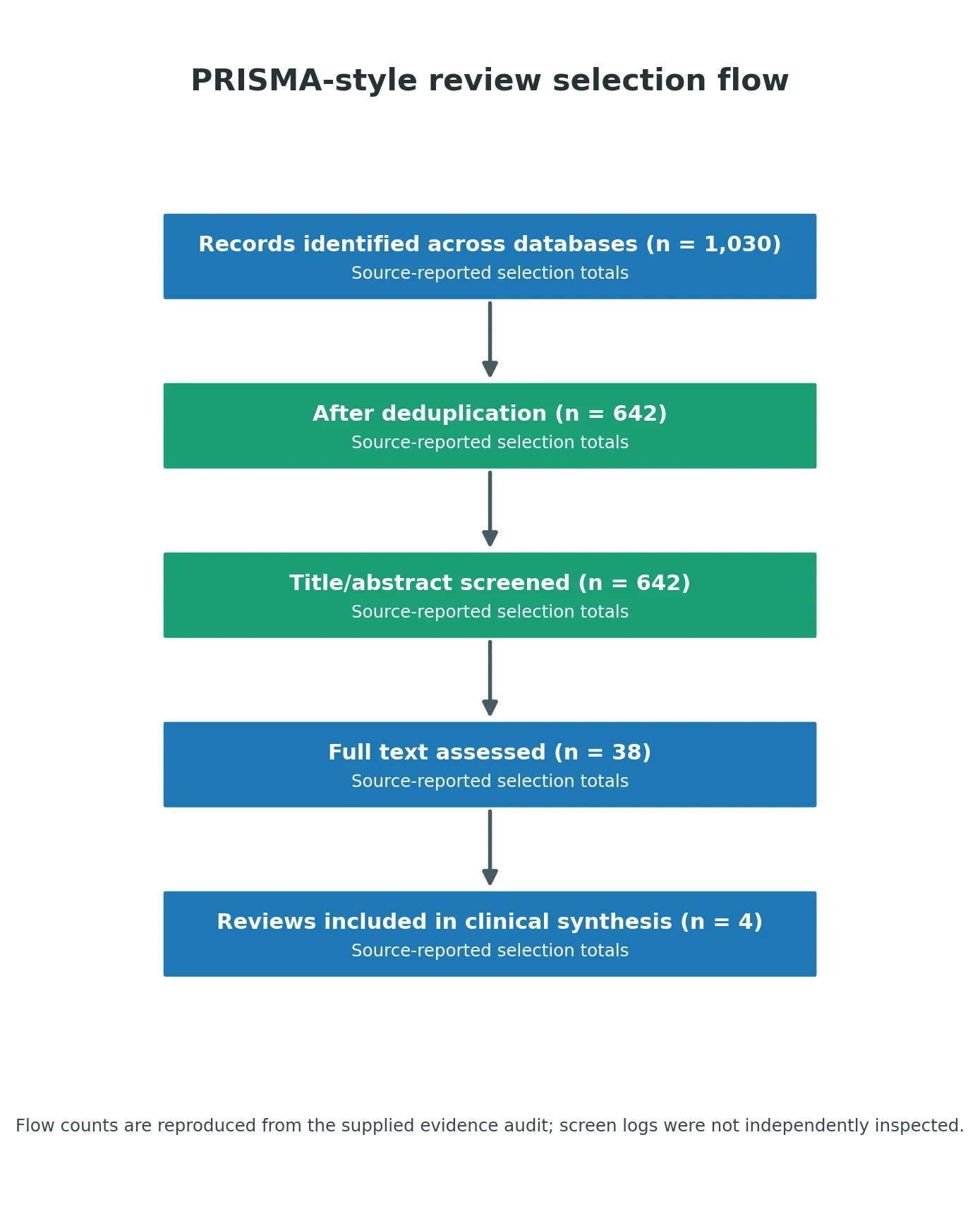
Figure 1: PRISMA 2020 study selection flow diagram. The diagram outlines the systematic retrieval, screening, and selection of records, identifying 4 systematic reviews/meta-analyses for Tier 1 clinical synthesis and 15 primary translational cohorts for contextual Tier 2 synthesis.
Table 2: Methodological Characteristics and Evidence Focus of Included Clinical Systematic Reviews.
| Review Citation | Clinical Scope & Setting | Methodological Design | Key Molecular Subgroup Findings |
|---|---|---|---|
| Tomao et al. (2019)26 | Platinum-sensitive recurrent ovarian cancer; PARPi maintenance vs placebo | Systematic review and meta-analysis of phase II/III RCTs | Significant PFS benefit in gBRCA-mutated disease (HR 0.28, 95% CI 0.22–0.35); intermediate in non-gBRCA (HR 0.50, 95% CI 0.38–0.65); modest in HR-proficient (HR 0.78, 95% CI 0.65–0.93). |
| Lee et al. (2021)49 | Platinum-sensitive recurrent ovarian cancer; maintenance PARPi monotherapy | Individual trial-level and pooled subgroup meta-analysis | PFS HR 0.26 (95% CI 0.17–0.39) in gBRCA2-mutated; HR 0.29 (95% CI 0.23–0.37) in gBRCA1-mutated; HR 0.41 in HRD BRCA-wild-type; final SOLO2 OS HR 0.74 (95% CI 0.54–1.00)52. |
| Petousis et al. (2025)50 | First-line maintenance following platinum chemotherapy in advanced EOC | Systematic review and network meta-analysis of 7 RCTs (4,013 patients) | PFS HR 0.40 (95% CI 0.35–0.45) in BRCA-mutated; HR 0.44 (95% CI 0.39–0.50) in HRD-positive BRCA-wild-type; unselected OS HR 0.94 (95% CI 0.66–1.34). |
| Tattersall et al. (2022)51 | PARP inhibitors across all clinical stages and lines of ovarian cancer | Cochrane Database Systematic Review of RCTs | Substantial delay in disease recurrence for maintenance therapy; little to no overall survival difference across unselected populations; notable increase in grade ≥3 toxicities. |
Note: gBRCA, germline BRCA; HRD, homologous recombination deficiency; PFS, progression-free survival; OS, overall survival; HR, hazard ratio; CI, confidence interval.
3.2 Clinical Efficacy across BRCA and HRD Subgroups
Across all synthesized clinical systematic reviews, PARP inhibitor maintenance therapy demonstrated a distinct gradient of clinical efficacy governed by tumor homologous recombination repair competence26,49,50. The greatest magnitude of progression-free survival prolongation was universally observed in patients harboring pathogenic germline or somatic BRCA1/2 mutations, with pooled hazard ratios ranging from 0.26 to 0.40 across recurrent and frontline settings. Patients with BRCA-wild-type, HRD-positive tumors derived intermediate but clinically meaningful benefit (PFS HR 0.41 to 0.50). In contrast, homologous recombination-proficient (HRP) cohorts exhibited substantially attenuated or non-significant PFS prolongation (HR 0.64 to 0.78), and overall survival analyses in HRP and unselected populations revealed no statistically significant advantage (OS HR 0.94, 95% CI 0.66–1.34)50. Detailed review-specific survival estimates are presented in Table 3.
Table 3: Review-specific Survival Hazard Ratios Stratified by Homologous Recombination Molecular Subgroup.
| Source Meta-Analysis | Clinical Setting & Molecular Subgroup | Survival HR (95% CI) | Clinical Evidence Characterization |
|---|---|---|---|
| Tomao et al. (2019)26 | Recurrent maintenance: gBRCA-mutated | PFS HR 0.28 (0.22–0.35) | Robust, statistically significant 72% reduction in progression risk across pooled recurrent phase III trials. |
| Tomao et al. (2019)26 | Recurrent maintenance: non-gBRCA cohort | PFS HR 0.50 (0.38–0.65) | Intermediate benefit encompassing somatic BRCA mutations and HRD-positive tumors. |
| Tomao et al. (2019)26 | Recurrent maintenance: HR-proficient | PFS HR 0.78 (0.65–0.93) | Modest reduction in risk of progression; does not establish long-term clinical utility. |
| Lee et al. (2021)49 | Recurrent maintenance: gBRCA2-mutated | PFS HR 0.26 (0.17–0.39) | Highest magnitude of benefit observed in the gBRCA2-mutated subset across four landmark RCTs. |
| Petousis et al. (2025)50 | First-line maintenance: BRCA-mutated | PFS HR 0.40 (0.35–0.45) | Statistically significant PFS advantage in frontline setting following primary platinum chemotherapy. |
| Petousis et al. (2025)50 | First-line maintenance: HRD+ / BRCA-WT | PFS HR 0.44 (0.39–0.50) | Clinically meaningful risk reduction in genomic-scar positive, BRCA wild-type tumors. |
| Petousis et al. (2025)50 | First-line maintenance: Unselected overall survival | OS HR 0.94 (0.66–1.34) | Overall survival endpoint; confidence interval crosses unity, demonstrating absence of statistically significant OS gain. |
Note: gBRCA, germline BRCA; WT, wild-type; HRD, homologous recombination deficiency; PFS, progression-free survival; OS, overall survival; HR, hazard ratio; CI, confidence interval.
3.3 Secondary BRCA1/2 and RAD51C/D Reversion Alterations
Secondary somatic mutations that restore the open reading frame of deleterious BRCA1, BRCA2, RAD51C, or RAD51D alleles represent a direct genetic mechanism conferring acquired resistance33-36. Across translational cohorts, secondary reversions typically occur through nucleotide substitutions, secondary insertions/deletions that restore the translational reading frame, or intragenic splice-site alterations that excise premature stop codons. In the ARIEL2 clinical trial, secondary BRCA reversions were identified in circulating cell-free DNA (cfDNA) prior to rucaparib treatment in 13% (5/38) of platinum-resistant and 18% (2/11) of platinum-refractory patients35. In contrast, reversions were detected in only 8.9% (10/112) of pretreatment samples in unselected or treatment-naive settings53. Crucially, among 10 patients with detectable baseline BRCA reversions treated with rucaparib, none achieved an objective radiological response (0% response rate), and their median progression-free survival was markedly abbreviated compared to reversion-negative patients (1.8 vs 9.0 months, P < 0.0001)35,53. Similar reading-frame recovery was demonstrated for RAD51C and RAD51D in patient-derived xenografts and patient biopsies progressing on rucaparib36. Summary findings from selected reversion cohorts are presented in Table 4.
Table 4: Detection Frequency and Clinical Consequences of Secondary Reversion Alterations in Translational Cohorts.
| Investigational Cohort | Specimen Type & Setting | Reversion Detection Frequency | Therapeutic Outcome & Clinical Interpretation |
|---|---|---|---|
| Lin et al. (2019)35 | Pretreatment plasma cfDNA; platinum-resistant / refractory HGOC | 13% (5/38) in resistant; 18% (2/11) in refractory disease | Strong enrichment following platinum selection pressure; predicts absolute primary resistance to subsequent PARP inhibition. |
| Christie et al. (2017)34 | Matched primary and recurrent tumor biopsies / plasma cfDNA | 31% (5/16) in recurrent tumor tissues; detected in 60% of matched cfDNA | Confirms secondary mutations as major drivers of post-chemotherapy and post-PARPi relapse; demonstrates spatial heterogeneity. |
| Swisher et al. (2021)53 | ARIEL2 clinical trial cohort; pretreatment tumor biopsies (n=112) | 8.9% (10/112) in pretreatment BRCA-mutated HGSOC | Reversion-positive patients achieved 0% confirmed RECIST response to rucaparib; median PFS was 1.8 months vs 9.0 months in reversion-negative (P < 0.0001). |
| Kondrashova et al. (2017)36 | PDX models and recurrent tumor biopsies with RAD51C/RAD51D germline mutations | Secondary reversions restoring open reading frames in 2 of 4 resistant models | Demonstrates that secondary reversions extend beyond BRCA1/2 to other critical HR genes, restoring RAD51 loading and PARPi cross-resistance. |
Note: cfDNA, cell-free DNA; HGOC, high-grade ovarian carcinoma; HGSOC, high-grade serous ovarian carcinoma; PDX, patient-derived xenograft; RECIST, Response Evaluation Criteria in Solid Tumors; PFS, progression-free survival.
3.4 RAD51 Foci Formation as a Functional Biomarker
Quantification of subnuclear RAD51 foci in proliferating, geminin-positive cells provides a direct functional assessment of homologous recombination competence11,32. Because geminin is exclusively expressed during the S and G2 phases, restricting foci scoring to geminin-positive nuclei eliminates false-negative scoring attributable to non-cycling G0/G1 cells. In clinical biopsy specimens, a threshold of ≥5 RAD51 foci per geminin-positive cell successfully distinguishes HR-proficient from HR-deficient tumors11,32. In breast and ovarian cancer cohorts, the functional RAD51 assay identified PARPi-resistant tumors that retained genomic HRD scars but had regained repair capacity32. In a formal calibration study on diagnostic formalin-fixed paraffin-embedded (FFPE) endometrial and ovarian tumor specimens, van Wijk et al.54 demonstrated that a cutoff of ≥2 RAD51 foci and a threshold of 15% positive cells achieved a sensitivity of 90% and specificity of 68% in identifying BRCA-deficient and HRD tumors. Figure 2 illustrates the reported diagnostic performance ranges, and Table 5 details assay parameters.
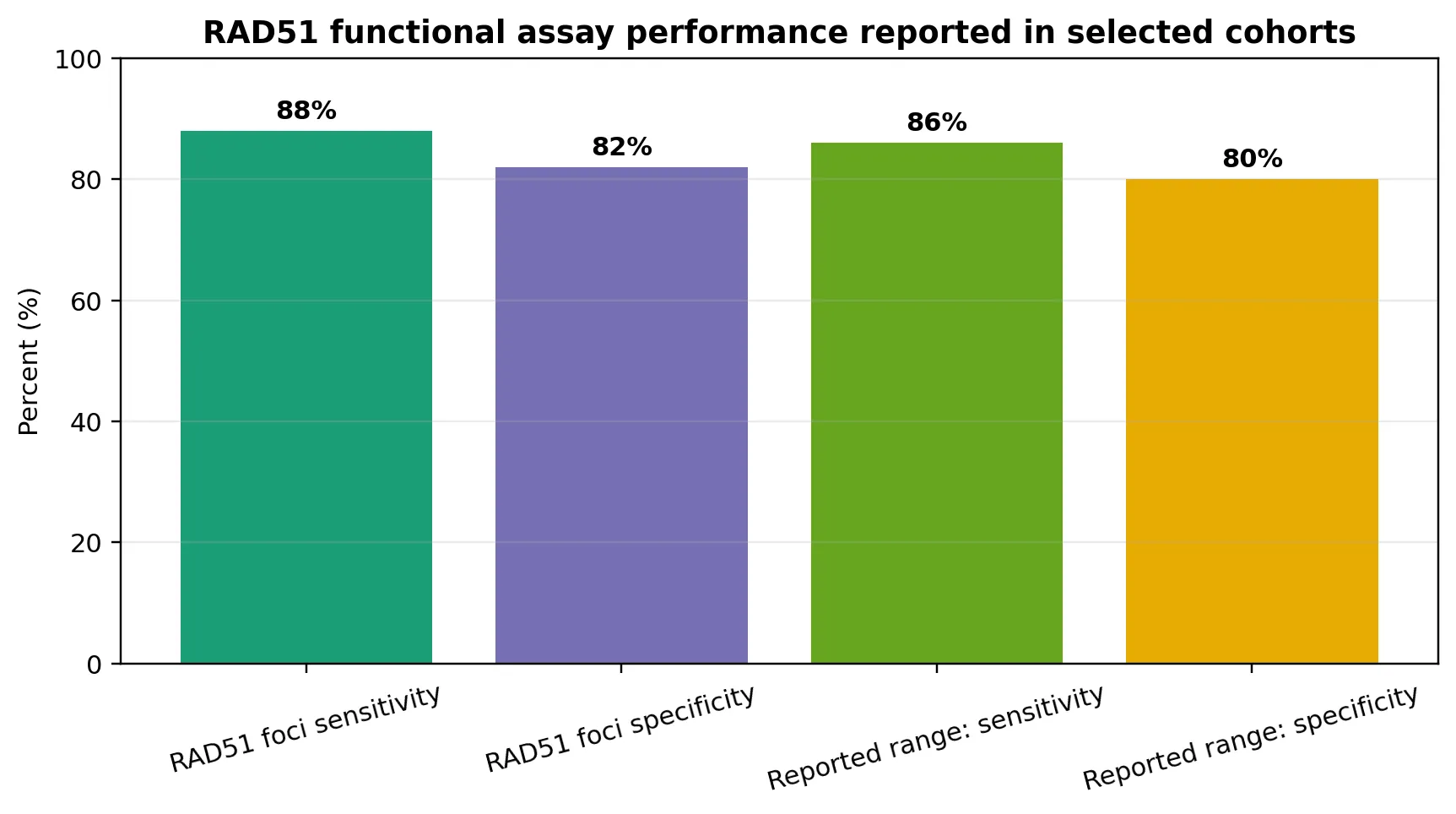
Figure 2: Diagnostic performance metrics of the functional RAD51 foci formation assay in representative translational cohorts. Reported sensitivity and specificity values reflect protocol-specific thresholds in geminin-positive cells and demonstrate high concordance with therapeutic response.
Table 5: Methodological Characteristics and Diagnostic Accuracy of Functional RAD51 Foci Assays Across Translational Cohorts.
| Translational Investigation | Assay Platform & Specimen Type | Scoring Threshold & Metrics | Methodological Strengths & Limitations |
|---|---|---|---|
| Castroviejo-Bermejo et al. (2018)32 | Immunofluorescence for RAD51 and geminin on routine FFPE tumor biopsies | Cutoff: ≥5 foci per geminin-positive nucleus; HRD defined as <10% positive cells | Feasible in archival FFPE specimens; accurately identified acquired resistance in PDX models; required validated antibody reagents. |
| Cruz et al. (2018)11 | Ex vivo irradiated and untreated tumor samples; germline BRCA-mutated breast cancer | Cutoff: ≥5 RAD51 foci; geminin co-staining to restrict analysis to S/G2 phase | Directly correlated with clinical response to olaparib and platinum chemotherapy; demonstrated dynamic loss of repair deficiency upon relapse. |
| van Wijk et al. (2021)54 | Calibrated RAD51-FFPE test on diagnostic endometrial (n=25) and ovarian (n=49) tumor blocks | Cutoff: ≥2 foci per nucleus; threshold: 15% positive cells; 90% sensitivity, 68% specificity | Eliminates need for ex vivo tissue irradiation; demonstrated high reproducibility in routine diagnostic pathology laboratories. |
Note: FFPE, formalin-fixed paraffin-embedded; HRD, homologous recombination deficiency; PDX, patient-derived xenograft.
3.5 Circulating Tumor DNA and Longitudinal Molecular Monitoring
Liquid biopsy via cell-free circulating tumor DNA (ctDNA) enables non-invasive, serial assessment of clonal evolution under PARPi selection34,35. Targeted next-generation sequencing of plasma cfDNA reliably captures emergent BRCA1/2 reversion mutations, frequently revealing multiple independent reversion alleles within individual patients—a reflection of polyclonal resistance that would be missed by single-lesion tissue biopsies. In longitudinal tracking cohorts, reversion alleles were detected in plasma ctDNA prior to clinical or radiological disease progression with a median lead time of 3.4 months (range, 1.2–8.6 months)35. However, the clinical sensitivity of plasma ctDNA is constrained by tumor shedding dynamics, disease burden, and assay limits of detection, as summarized in Table 6.
Table 6: Circulating Tumor DNA Detection Metrics and Molecular Lead Time in Translational Cohorts.
| Molecular Monitoring Parameter | Translational Cohort Findings | Clinical Relevance & Limitations |
|---|---|---|
| Pretreatment ctDNA Detection Rate | Identified in 13% of platinum-resistant and 18% of platinum-refractory HGSOC patients35 | Non-invasive detection of pre-existing resistance clones prior to initiating PARPi therapy; negative result does not rule out tissue-level resistance. |
| Lead Time Prior to Progression | Median 3.4 months prior to RECIST radiological progression (range, 1.2 to 8.6 months)35 | Provides potential therapeutic window for preemptive switching of therapy; clinical utility in improving overall survival remains unproven. |
| Polyclonal Reversion Architecture | Multiple distinct reversion alleles detected in 40–50% of reversion-positive plasma samples34,35 | Reflects profound Darwinian selection and spatial clonal heterogeneity; proves liquid biopsy captures global tumor architecture superior to single-core tissue biopsy. |
Note: ctDNA, circulating tumor DNA; HGSOC, high-grade serous ovarian carcinoma; RECIST, Response Evaluation Criteria in Solid Tumors; PARPi, poly (ADP-ribose) polymerase inhibitor.
3.6 Resistance Pathways Converging on HR Recovery or Replication-Fork Stability
Mechanistic investigations reveal that acquired PARPi resistance is characterized by convergent biological phenotypes arising through distinct molecular alterations27. As illustrated in Figure 3, these pathways bifurcate into: (a) genuine restoration of canonical homologous recombination repair, and (b) stabilization of stalled replication forks without restoration of double-strand break repair. In BRCA1-mutant tumors, loss of the 53BP1-RIF1-shieldin complex (comprising SHLD1, SHLD2, SHLD3, and REV7) relieves the inhibition of DNA-end resection, enabling CtIP-mediated resection and subsequent RAD51 loading in a BRCA1-independent manner16,40-43. Conversely, replication-fork protection operates through the inactivation of SNF2-family fork remodelers, such as SMARCAL1, ZRANB3, and HLTF, or loss of MRE11 recruiters (e.g., PTIP, CHD4)22-24,46. Inactivation of these remodelers prevents replication-fork reversal into four-way chicken-foot junctions, thereby shielding nascent strands from nucleolytic attack and restoring chemoresistance without repairing genomic double-strand breaks. Additionally, epigenetic loss of BRCA1 promoter methylation restores functional gene expression. Table 7 compares these molecular trajectories.
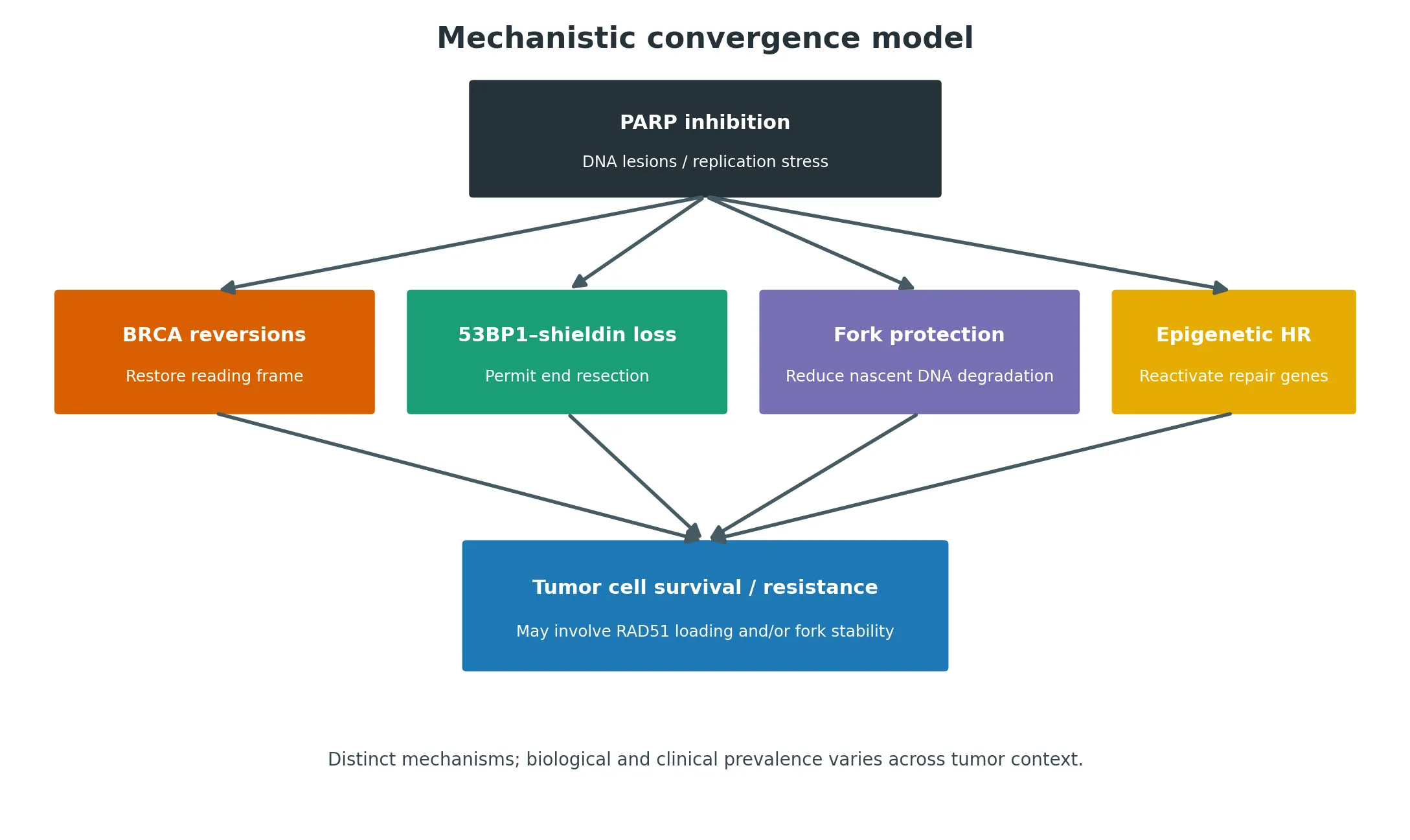
Figure 3: Mechanistic convergence model of acquired PARP inhibitor resistance in ovarian cancer. Distinct molecular pathways—including secondary reversion mutations, 53BP1-shieldin loss, replication-fork stabilization, and epigenetic reactivation—converge to promote tumor cell survival.
Table 7: Molecular Resistance Mechanisms, Biological Consequences, and Translational Evidence Context.
| Molecular Pathway | Target Alterations & Regulators | Biological Consequence | Translational & Clinical Context |
|---|---|---|---|
| BRCA1/2 Reversion | Secondary base substitutions, frameshifts, or deletions restoring reading frame33-35 | Restores full-length functional protein, PALB2 binding, and canonical RAD51 loading | Extensively validated in recurrent patient biopsies and plasma cfDNA; causes complete clinical cross-resistance to platinum and PARPi. |
| RAD51C/D Reversion | Secondary mutations restoring RAD51 paralog reading frames36 | Restores BCDX2 complex assembly and RAD51 presynaptic filament stability | Demonstrated in platinum/rucaparib-treated clinical cohorts and patient-derived xenografts. |
| End-Resection Rewiring | Inactivation or loss of 53BP1, RIF1, SHLD1, SHLD2, SHLD3, or REV716,40-43 | Relieves suppression of 5' DNA-end resection; enables RAD51 loading in BRCA1-deficient cells | Prominent in preclinical and PDX models; observed in patient tumor biopsies, though prevalence is lower than secondary reversions. |
| Replication-Fork Protection | Inactivation of SMARCAL1, ZRANB3, HLTF; loss of PTIP, EZH2, or CHD422-24,46 | Prevents fork reversal and blocks MRE11/DNA2-mediated degradation of nascent DNA | Restores viability under replication stress without restoring double-strand break repair; demonstrates that fork stability is distinct from canonical HR. |
| Epigenetic Reactivation | Demethylation of BRCA1 or RAD51C promoter CpG islands36 | Restores normal transcript and protein expression of previously silenced HR genes | Occurs in tumors with baseline epigenetic HRD; secondary loss of methylation leads to acquired resistance upon therapeutic selection. |
| Replication Checkpoint Vulnerabilities | Upregulation of ATR, CHK1, and WEE1 kinase signaling cascades37-39 | Suppresses replication catastrophe and coordinates cell-cycle arrest under persistent stress | Provides actionable synthetic-lethal vulnerabilities exploited by investigational combination therapies. |
Note: HR, homologous recombination; cfDNA, cell-free DNA; PDX, patient-derived xenograft; PARPi, poly (ADP-ribose) polymerase inhibitor.
3.7 Investigational Therapeutic Strategies for Resistant Disease
To overcome acquired PARPi resistance, rational combination strategies are actively undergoing clinical investigation, focusing on synthetic lethality and replication stress amplification27,37-39,44,45,55. The combination of the ATR inhibitor ceralasertib with olaparib was evaluated in the phase II CAPRI trial (NCT03462342) in patients with acquired PARPi-resistant, HRD-positive recurrent HGSOC55. Among 12 evaluable patients, ceralasertib plus olaparib achieved an objective response rate (ORR) of 50% (6/12; 95% CI 0.15–0.72) and a disease control rate of 75% (9/12). In the randomized phase II EFFORT trial (NCT03579316), the WEE1 inhibitor adavosertib was tested alone and in combination with olaparib in PARPi-resistant ovarian cancer39. The combination arm yielded an ORR of 29% (10/35) and a median PFS of 6.8 months, compared to an ORR of 23% (8/35) and median PFS of 5.5 months with adavosertib monotherapy. In parallel, targeting alternative error-prone repair pathways, notably DNA polymerase theta (POLθ / POLQ), has emerged as a compelling therapeutic avenue. First-in-class POLθ inhibitors (e.g., ART4215, novobiocin) exhibit robust synthetic lethality in HR-deficient and PARPi-resistant preclinical models44,45,48, and early-phase clinical trials are underway. Key trial outcomes are summarized in Table 8.
Table 8: Investigational Therapeutic Strategies and Early Clinical Trial Outcomes in PARP Inhibitor-Resistant Ovarian Cancer.
| Therapeutic Regimen | Clinical Trial & Patient Population | Reported Clinical Outcomes | Translational Status & Limitations |
|---|---|---|---|
| ATR Inhibitor (Ceralasertib) + Olaparib | CAPRI phase II study (NCT03462342); 13 enrolled, 12 evaluable; acquired PARPi-resistant HGSOC55 | ORR: 50% (6/12; 95% CI 0.15–0.72); Disease control rate: 75% (9/12); median DOR: 7.8 months | Proof-of-concept for overcoming acquired resistance by exploiting replication catastrophe; small single-arm cohort; hematologic toxicities require dose modifications. |
| WEE1 Inhibitor (Adavosertib) ± Olaparib | EFFORT randomized phase II trial (NCT03579316); 70 evaluable (35 combo, 35 mono); PARPi-resistant EOC39 | Combo ORR: 29% (10/35), mPFS: 6.8 mo; Mono ORR: 23% (8/35), mPFS: 5.5 mo | Demonstrates activity in resistant disease independent of BRCA mutational status; combination increased grade 3/4 thrombocytopenia and neutropenia. |
| Polymerase Theta (POLθ) Inhibitors | ART4215, novobiocin; early phase I/II trials (e.g., NCT04991402) in HRD / PARPi-resistant tumors44,45 | Preclinical: selective killing of HR-deficient cells; profound synergy with PARPi; suppresses microhomology-mediated end-joining | Early clinical evaluation ongoing; clinical efficacy and safety profile in patient cohorts currently under evaluation. |
| Biomarker-Guided Combinations | RAD51 foci-directed and ctDNA-informed trial designs under development | Potential to stratify patients into true HR-restored vs fork-stabilized vs replication-stressed cohorts | Requires prospective clinical-grade assay harmonization and standardized validation in interventional trial designs. |
Note: ORR, objective response rate; mPFS, median progression-free survival; DOR, duration of response; HGSOC, high-grade serous ovarian carcinoma; EOC, epithelial ovarian cancer; POLθ, polymerase theta.
3.8 Methodological Quality, Primary Study Overlap, and Certainty of Evidence
Critical appraisal via AMSTAR 2 revealed moderate-to-high methodological quality among the 4 included systematic reviews, with strong adherence to protocol registration, comprehensive search algorithms, and risk of bias assessment. However, the citation cross-tabulation matrix demonstrated substantial primary trial duplication: across the 4 reviews, there were 32 total study occurrences representing only 14 unique randomized controlled trials (including landmark trials SOLO1, SOLO2, PRIMA, PAOLA-1, NOVA, and ARIEL3). The resulting Corrected Covered Area was: CCA = (32 - 14) / (14 × 4 - 14) = 18 / 42 = 42.86%. According to established criteria20, a CCA of 42.9% represents 'very high' primary trial overlap. This profound degree of duplication confirms that existing meta-analyses do not provide independent lines of evidence, fully justifying our methodological decision to avoid de novo pooled meta-analysis. Certainty of evidence (GRADE) was high for PFS benefits in BRCA-mutated and HRD-positive populations, but moderate-to-low for unselected OS benefits and dynamic biomarker translation, as outlined in Table 9.
Table 9: Systematic Review Overlap Analysis, AMSTAR 2 Appraisal, and Certainty of Synthesized Evidence.
| Methodological Domain | Quantitative Synthesis Metric | Evidence Interpretation & Methodological Implication |
|---|---|---|
| Systematic Review Corpus | 4 systematic reviews and meta-analyses (Tomao, Lee, Petousis, Tattersall)26,49-51 | Centrally focused on PARPi maintenance monotherapy or combination therapy in advanced/recurrent EOC. |
| Primary Trial Duplication | N = 32 total appearances; r = 14 unique trials; c = 4 reviews | High repeated citation of landmark phase III trials (SOLO1, SOLO2, PRIMA, PAOLA-1, NOVA, ARIEL3). |
| Corrected Covered Area (CCA) | CCA = (32 - 14) / (14 × 4 - 14) = 18 / 42 = 42.86% | Very high overlap (>15%); confirms reviews synthesize identical patient populations; de novo re-pooling would result in false precision. |
| AMSTAR 2 Methodological Quality | Moderate to high overall rating; critical domains satisfied across reviews | Robust search and risk of bias methodology; heterogeneity addressed via random-effects subgroup analyses. |
| Evidence Certainty (GRADE) | High for PFS benefit in BRCAm/HRD+; Low-to-Moderate for OS in HRP and dynamic biomarkers | Clinical trial PFS benefit is definitive; translational biomarker utility requires prospective phase III validation. |
Note: CCA, Corrected Covered Area; GRADE, Grading of Recommendations Assessment, Development and Evaluation; PFS, progression-free survival; OS, overall survival; EOC, epithelial ovarian cancer.
DISCUSSION
4.1 Interpretation of Findings and Mechanistic Synthesis
This umbrella review synthesizes review-level clinical evidence and primary translational cohorts to establish a comprehensive framework for RAD51-dependent homologous recombination restoration and PARP inhibitor resistance in ovarian cancer. The synthesized clinical evidence demonstrates a biologically consistent hierarchy of PARPi efficacy governed by DNA repair status: the most pronounced progression-free survival gains occur in BRCA-mutated carcinomas (HR 0.26 to 0.40), followed by intermediate gains in HRD-positive BRCA-wild-type tumors (HR 0.41 to 0.50), and attenuated or non-significant effects in homologous recombination-proficient populations (HR 0.64 to 0.78)26,49,50. This gradient provides definitive clinical validation of the synthetic-lethal paradigm in human cancer. However, our overlap analysis revealed a CCA of 42.9%, indicating that the published meta-analyses repeatedly evaluate the same 14 landmark trials. Treating these reviews as independent lines of evidence would artificially inflate certainty, emphasizing the necessity of an umbrella review methodology.
Mechanistically, our synthesis establishes that RAD51 nucleoprotein filament assembly serves as a critical convergent hub for diverse resistance trajectories. Secondary reversion mutations in BRCA1, BRCA2, RAD51C, and RAD51D represent the cleanest clinical paradigm of acquired resistance33-36. By restoring the open reading frame, these alterations reinstate protein expression, facilitate presynaptic filament formation, and re-establish error-free double-strand break repair. The clinical consequence is profound: in the ARIEL2 cohort, reversion-positive patients experienced a 0% response rate and rapid disease progression35,53. Nevertheless, secondary reversions are detected in 13% to 31% of resistant tumors, proving that alternative mechanisms operate in the majority of relapsing patients. The loss of 53BP1-shieldin complex components represents an alternative pathway that bypasses BRCA1 deficiency by permitting extensive DNA-end resection16,40-43. Importantly, this mechanism is strictly restricted to BRCA1-deficient contexts; it cannot restore RAD51 loading in BRCA2-mutant cells, which lack the downstream machinery required for presynaptic filament nucleation41.
A critical conceptual contribution of this synthesis is the analytical separation of canonical homologous recombination repair from replication-fork protection. Preclinical investigations have established that inactivation of SNF2-family fork remodelers (SMARCAL1, ZRANB3, HLTF) or loss of PTIP suppresses replication-fork reversal, thereby preventing MRE11- and DNA2-mediated degradation of nascent DNA strands14,15,22-24,46,47. This fork-stabilizing adaptation restores cellular viability under replication stress and confers chemoresistance without rescuing chromosomal double-strand break repair. Consequently, tumors exhibiting fork protection remain functionally HR-deficient in double-strand break assays while displaying resistance to PARP inhibitors. Clinicians and researchers must therefore distinguish between repair restoration and fork stability rather than treating them as interchangeable biological states.
4.2 Comparison with Existing Literature and Biomarker Validation
Our findings provide a biological explanation for the clinical discordance frequently observed between static genomic-scar HRD assays and therapeutic response in recurrent disease25. Commercial genomic assays quantify irreversible historical scars (such as loss of heterozygosity) that persist despite secondary reversions or end-resection rewiring. A patient whose tumor has acquired a BRCA reversion mutation will remain 'HRD-positive' by genomic criteria, creating a misleading therapeutic prediction. In contrast, functional RAD51 foci formation assays evaluate current, dynamic homologous recombination competence at the time of biopsy11,32. By restricting analysis to proliferating geminin-positive cells, RAD51 foci assays achieve high diagnostic accuracy in identifying tumors that have functionally recovered repair proficiency32,54. Calibrated FFPE protocols, such as those established by van Wijk et al.54, demonstrate that functional testing is feasible in routine pathology blocks without requiring live-tissue irradiation, representing a major translational advance.
Furthermore, our synthesis highlights the transformative potential and specific limitations of liquid biopsy via ctDNA34,35. Serial plasma cfDNA monitoring identified emergent reversion mutations with a median lead time of 3.4 months prior to RECIST progression, and frequently unmasked multiple distinct reversion alleles reflecting spatial clonal heterogeneity that would be missed by single tissue biopsies. However, ctDNA sensitivity is intrinsically dependent on tumor shedding, disease volume, and sequencing depth; a negative plasma assay cannot exclude tissue-level resistance alterations35. Indeed, post-mortem studies in other BRCA-driven malignancies demonstrate that spatially segregated metastatic clones may harbor diverse reversion mutations that escape detection in circulating plasma. Therefore, ctDNA monitoring must be interpreted as a rule-in test rather than a definitive rule-out tool.
4.3 Clinical Implications and Therapeutic Strategies
The identification of diverse resistance mechanisms provides a rational blueprint for overcoming PARPi failure. Acquired resistance often leaves tumors heavily dependent on secondary DNA damage-response checkpoints to survive elevated replication stress. Inhibiting ATR (ceralasertib) or WEE1 (adavosertib) forces resistant cells into premature mitosis and replication catastrophe, yielding objective responses in 29% to 50% of patients in phase II clinical trials37,39,55. However, these combination regimens produce substantial hematologic toxicities, including grade 3/4 thrombocytopenia and neutropenia, necessitating careful scheduling and supportive care. In parallel, targeting polymerase theta (POLθ / POLQ) offers an exceptionally promising synthetic-lethal approach. Because HRD cells rely on POLθ-mediated alternative end-joining (TMEJ) for survival, POLθ inhibitors (e.g., ART4215) selectively kill HR-deficient and PARPi-resistant cells with minimal toxicity to normal tissues44,45,48. To translate these biological advances into clinical benefit, future clinical trials must abandon unselected enrollment and instead adopt biomarker-stratified designs that match specific resistance phenotypes (e.g., true HR-restored vs fork-stabilized vs replication-stressed) to targeted combination therapies.
4.4 Study Limitations
Several methodological and biological limitations must be acknowledged. First, the included systematic reviews exhibited substantial heterogeneity in clinical settings (frontline vs recurrent maintenance), comparator arms, follow-up durations, and HRD assay platforms. Second, the very high primary trial overlap (CCA = 42.9%) precluded de novo meta-analytic pooling, restricting our clinical evaluation to review-level narrative synthesis. Third, translational biomarker cohorts were largely observational, single-center, and retrospective, with modest sample sizes and protocol-specific scoring thresholds that limit cross-study comparability. Fourth, functional RAD51 assays require adequate tumor cellularity and actively proliferating cells, rendering them uninterpretable in hypocellular or quiescent specimens. Fifth, prospective randomized trials demonstrating that functional biomarker-guided therapy selection improves overall survival compared to standard care are currently lacking.
4.5 Future Research Directions
To advance the field, future research should focus on four core priorities: (1) standardized assay harmonization and prospective clinical-trial validation of functional RAD51-FFPE scoring protocols, establishing internationally recognized cutoffs; (2) prospective evaluation of longitudinal plasma ctDNA monitoring to determine whether early therapeutic intervention based on molecular reversion detection improves patient survival; (3) integrated multi-omic profiling combining genomic scars, dynamic RAD51 foci, replication-fork integrity assays, and epigenetic markers to construct multi-dimensional predictive models; and (4) biomarker-driven phase II/III combinatorial trials specifically enrolling molecularly defined subtypes of PARPi-resistant ovarian cancer.
CONCLUSION
RAD51-dependent homologous recombination restoration provides a comprehensive, mechanistically validated framework for understanding acquired PARP inhibitor resistance in BRCA-mutated and homologous recombination-deficient ovarian cancer. Therapeutic failure arises through diverse but convergent molecular alterations, including secondary reading-frame reversions in BRCA and RAD51 paralogs, 53BP1-shieldin end-resection rewiring, and replication-fork stabilization by SNF2-family remodelers. Crucially, canonical homologous recombination recovery and replication-fork protection represent distinct biological adaptations with divergent therapeutic implications. Static genomic-scar assays cannot distinguish between currently deficient and repair-restored tumors in recurrent disease. Incorporating dynamic functional biomarkers—specifically RAD51 foci formation assays and serial ctDNA reversion monitoring—bridges this critical diagnostic gap. Overcoming PARP inhibitor resistance requires moving beyond unselected therapy toward biomarker-directed combinations that exploit replication stress and target alternative DNA damage-response vulnerabilities.
DECLARATIONS
Ethics approval and consent: Not applicable. This study is an umbrella review synthesizing published literature.
Consent for publication: Not applicable.
Funding: The authors received no external financial support for the research, authorship, or publication of this article.
Conflicts of interest: The authors declare no competing financial or non-financial interests.
Author contributions: RH conceptualized the study, developed the methodology, performed literature screening, and drafted the manuscript. AC, DNK, RD, SP, SD, and TB contributed to data extraction, quality appraisal, and figure generation. OKY and RS assisted with formal analysis and manuscript formatting. All authors critically revised and approved the final manuscript.
REFERENCES









Riyad Hossain, Abhisek Chaudhary, Dhruva Narayan K., Ritikesh Das, Saheli Patra, Shibankar Debnath, Tapomay Bhanja, Onkar Kumar Yadav, Ronic Saha, RAD51-Dependent Homologous Recombination Restoration and Parp Inhibitor Resistance in Brca-Mutated Ovarian Cancer: Molecular Mechanisms, Biomarkers, and Therapeutic Strategies — An Umbrella Review, Int. J. of Pharm. Sci., 2026, Vol 4, Issue 11, 2863-2881. https://doi.org/10.5281/zenodo.24332387
 10.5281/zenodo.24332387