

We use cookies to ensure our website works properly and to personalise your experience. Cookies policy
Department of Pharmaceutics, Goel Institute of Pharmacy and Sciences, Lucknow.
Nanostructured lipid carriers (NLCs) are lipid-based nanoparticles created from a blend of solid and liquid lipids, with surfactants that help stabilize the mixture. The introduction of liquid lipid can disrupt the orderly arrangement of solid lipid, resulting in spaces that can hold a drug. This structure may enhance drug loading or minimize drug loss during storage, particularly in comparison to certain solid lipid nanoparticle (SLN) systems. The benefits of this approach depend on factors such as the type of drug, the lipid mixture, the surfactant system, and the methods used in manufacturing. This review explores the foundational aspects of NLC formulation, the selection of materials, preparation techniques, and the analytical assessments used to characterize these systems. It also looks at their reported applications across various administration routes, including oral, dermal, transdermal, ocular, pulmonary, nasal, and brain-targeted delivery. The review places significant emphasis on the challenges of transforming a laboratory formulation into a reliable pharmaceutical product, such as variability between batches, inadequate understanding of particle structure, issues with physical and chemical stability, sterilization, scaling up, route-specific safety, and regulatory requirements. Potential solutions to these challenges include Quality-by-Design (QbD), Design of Experiments (DoE), advanced analytical techniques, continuous processing, lyophilization, and surface modification. It is important to note that NLCs should not be seen as universally superior carriers; their effectiveness must be established for each drug and intended delivery route, ideally in comparison to an appropriate reference and using clinically significant outcomes.
The therapeutic effectiveness of a drug relies on factors beyond its pharmacological activity, including solubility, chemical stability, absorption, metabolism, and the ability to reach its target site. Some active pharmaceutical ingredients (APIs) face challenges like poor aqueous solubility or rapid degradation, which can hinder consistent therapeutic exposure after administration. Researchers are exploring nanocarriers as a potential solution to these issues. By pairing a drug with a carrier, it may be possible to modify its release rate, shield it from the external environment, or affect how it interacts with biological barriers. Lipid-based carriers are particularly noteworthy because many of their lipid ingredients are similar to those found in biological systems.
Solid lipid nanoparticles (SLNs) were created as colloidal carriers, where a solid lipid substitutes the liquid oil phase found in traditional emulsions. While SLNs can protect the drug within and sometimes enable extended release, their primary drawback lies in the lipid matrix structure. Over time, as the lipid crystallizes or changes polymorphic forms during storage, the matrix can become more organized, leaving less space for the drug and possibly causing it to be expelled from certain formulations. Nanostructured lipid carriers (NLCs) were developed to overcome this issue by blending solid and liquid lipids, resulting in a less ordered matrix; however, the degree of disorder and its impact on drug retention varies based on the formulation.
NLCs encompass a wide variety of formulations that can have different internal structures rather than conforming to a single particle design. The arrangement of the liquid lipid, the crystallinity of the solid lipid, and the drug's location can all change based on the composition and processing methods. Therefore, a formulation should not be assigned a specific internal structure merely because it contains both solid and liquid lipids; such conclusions require validation through appropriate thermal, scattering, or other structural analysis techniques.
2. STRUCTURE, CLASSIFICATION AND RATIONALE
A standard NLC dispersion features a combination of solid and liquid lipids suspended in water, with surfactant molecules stabilizing the particle interface. The lipid phase is designed to hold the drug, while the surfactant acts to keep the particles from agglomerating. The drug can either be dissolved in the lipid, located in a less structured or crystalline area, concentrated near the particle surface, or partially linked to surfactant-rich structures outside the particles. These variations are significant, as they can influence the assessed entrapment efficiency, initial drug release, and storage stability.
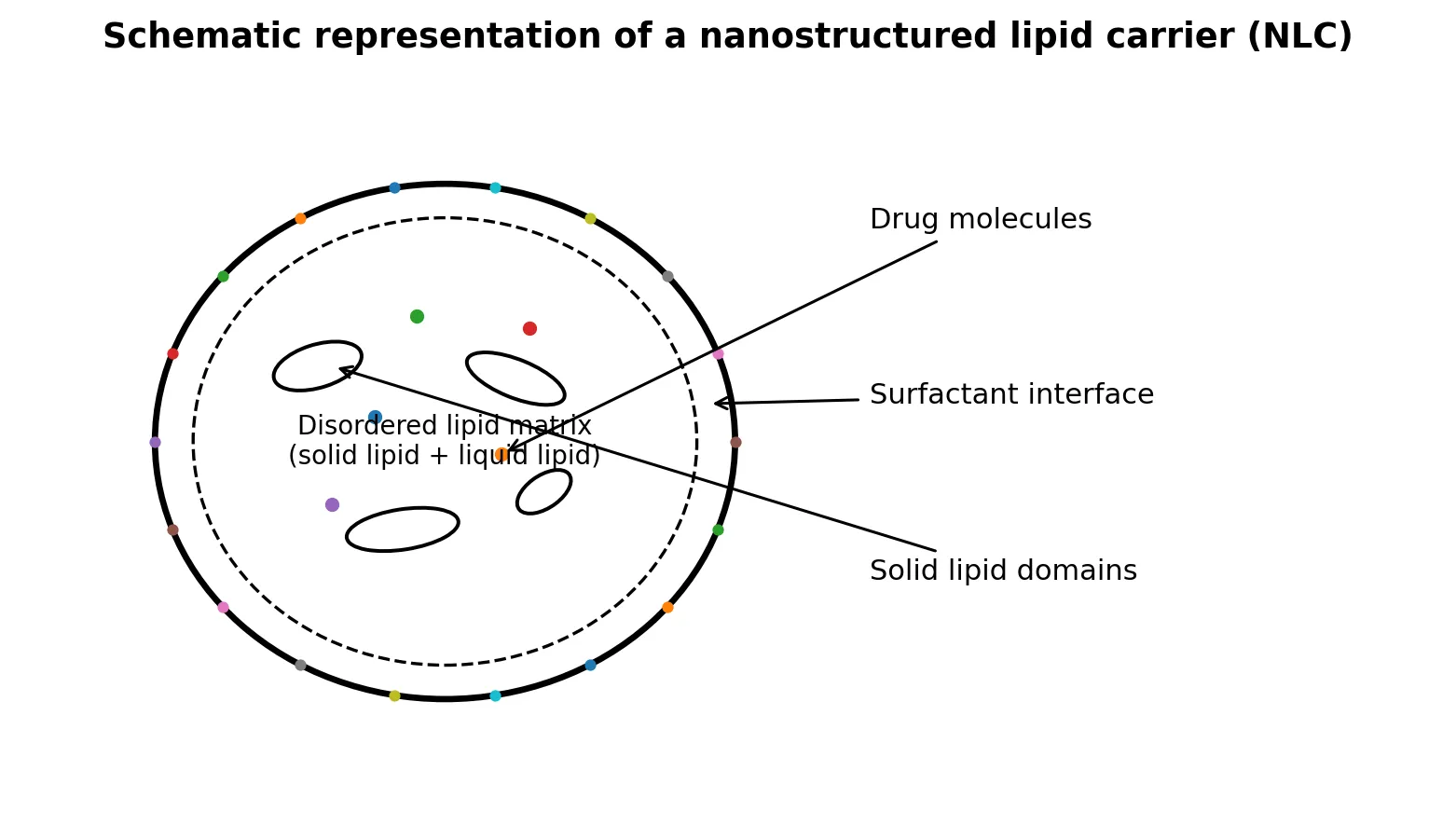
Figure 1: Conceptual schematic of an NLC showing a mixed lipid matrix, drug molecules and surfactant interface.
2.1 Types of NLC
Three structural models are frequently utilized to characterize NLCs. The imperfect-crystal model suggests that variations in lipid chain length or molecular structure disrupt the regular packing. The amorphous model, on the other hand, depicts a lipid blend that creates a matrix with minimal crystalline organization. Lastly, the multiple model describes the dispersion of small, oil-rich regions within a solid lipid matrix. While these models are beneficial for formulation planning, they should not be seen as separate, static structures. To determine the specific characteristics of a given system, experimental validation through complementary analytical techniques is necessary [1,5,6].
Table 1: Classification of nanostructured lipid carriers.
| NLC type | Structural concept | Potential formulation implication |
|---|---|---|
| Imperfect crystal | Irregular packing caused by different lipid molecules | More free volume for drug accommodation |
| Amorphous | Matrix with limited ordered crystallization | May reduce drug expulsion associated with polymorphic transitions |
| Multiple | Oil-rich nanocompartments dispersed in solid lipid | Can accommodate highly lipophilic drugs; may alter release |
2.2 Comparison with SLNs and other lipid systems
NLCs enable formulators to modify the ratios of solid and liquid lipids, potentially allowing for better incorporation of certain lipophilic drugs compared to an SLN matrix. However, this benefit is not guaranteed, as excessive liquid lipid or poor compatibility between lipid components can enhance matrix mobility, alter release characteristics, or result in phase separation. In contrast, liposomes feature a phospholipid bilayer encasing an aqueous compartment, while nanoemulsions consist of liquid oil droplets instead of a solid lipid matrix. NLCs represent an intermediate between these two systems regarding composition and physical state. The most suitable carrier depends on factors such as the specific drug, administration route, desired release profile, and practical manufacturing needs.
Table 2: Comparison of SLNs, NLCs, liposomes and nanoemulsions.
| System | Main structure | Potential strengths | Common limitations |
|---|---|---|---|
| SLN | Solid lipid matrix | Biocompatible materials; sustained release | Limited loading for some drugs; polymorphic drug expulsion |
| NLC | Mixed solid and liquid lipid matrix | Flexible loading and release design | Composition-sensitive structure; possible oil separation |
| Liposome | Phospholipid bilayer vesicle | Hydrophilic and lipophilic payloads | Leakage, oxidation and storage concerns |
| Nanoemulsion | Liquid oil droplets | Solubilization and rapid dispersion | No solid matrix; physical destabilization possible |
3. FORMULATION COMPONENTS AND DESIGN PRINCIPLES
3.1 Solid lipids
The solid lipid is the matrix of an NLC and must be sufficiently solid under the intended conditions of storage and administration. The materials reported in the literature are glyceryl behenate (Compritol 888 ATO), glyceryl monostearate, stearic acid, cetyl palmitate, tristearin, hydrogenated vegetable fats and selected waxes. Melting behavior is only part of the selection process. The formulator should also consider: polymorphism, fatty-acid composition, drug solubility, digestibility, excipient grade, consistency of the batch and acceptability of the material for the intended route [2,5,9].
3.2 Liquid lipids
Liquid lipids are added to disrupt the packing of the solid lipid and, where possible, to increase the solubility of a lipophilic API. Medium chain triglycerides, oleic acid, oleyl oleate, isopropyl myristate, caprylic/capric triglycerides, squalene and some vegetable oils have been studied. The oil with the highest drug solubility value for an individual is not the best oil. The oil should be compatible with the molten solid lipid and should be properly dispersed on cooling of the formulation. Special attention should be paid to oxidative and hydrolytic stability, especially when using unsaturated oils. This means that screening should be performed with the drug-lipid mixture and not just solubility measurements in the liquid lipid [5,9,10].
3.3 Surfactants and co-stabilizers
Surfactants help to stabilize the interface of lipid phase and water. They may also affect particle size, surface properties, drug partitioning and interactions with biological fluids. Materials used in NLC formulations include: polysorbates, poloxamers, lecithin and bile salts. The amount required depends on the lipid composition and the method of preparation. Too low surfactant concentration may cause aggregation, while an unnecessarily high concentration may increase the amount of free surfactant in the dispersion and may influence drug leakage or tolerability. Excipient grade, route of administration, peroxide content and compatibility with drug and lipid should be considered [5,11].
3.4 Drug properties and drug–lipid compatibility
Prior to the selection of an NLC composition, the API should be evaluated for pKa, logP or logD, melting point, solid-state form, solubility in water and lipid, and sensitivity to heat, light and oxidation. These properties assist to assess whether the drug will remain in the lipid phase during preparation and storage. For example, if the drug has a relatively low affinity for the solidified blend, it may dissolve easily in the molten lipid, but crystallize out as the matrix cools. Very lipophilic drugs can remain associated with the particles but be released slowly. DSC, FTIR, XRD, microscopy and stability indicating chromatography can all give useful information but no single test is sufficient to establish compatibility in isolation [6,7].
3.5 Quality-by-design approach
A QbD programme starts by defining the quality target product profile (QTPP): the intended route, dose, release characteristics, container closure, shelf life and expected clinical performance. From this, the development team identifies the critical quality attributes (CQAs) that need to be controlled. Depending on the product, these may include particle-size distribution, polydispersity index (PDI), drug content, entrapment efficiency, lipid polymorphism, residual solvents, microbial quality, sterility, release behaviour and stability. Risk assessment and DoE can then be used to examine how critical material attributes (CMAs) and critical process parameters (CPPs) affect those attributes. This provides a more defensible basis for choosing a formulation than optimizing a single response in one laboratory batch [12,13].
4. PREPARATION METHODS
NLCs can be created using various techniques that involve either high energy or low energy. The selection of a method depends on factors such as the drug's vulnerability to heat and solvents, characteristics of the lipid mixture, target particle dimensions and concentration, as well as the machinery accessible for production and formulation. Factors like temperature, pressure, cycles of homogenization, intensity of sonication, mixing vigor, and rate of cooling can all affect the size of particles, distribution of sizes, crystallization of lipids, and placement of the drug. It is essential to monitor and regulate these variables, as seemingly minor alterations in the process may influence the final outcome of the dispersion [8,14].
4.1 High-pressure homogenization
In high-temperature high-pressure homogenization, the medication is either dissolved or suspended in the heated lipid phase. This lipid phase is subsequently combined with a warm aqueous surfactant solution, producing a rough emulsion. The pre-emulsion is processed through a high-pressure homogenizer, where shear forces, turbulence, and cavitation work to minimize the droplet dimensions. Upon cooling, the lipid droplets solidify into nanoparticles. This technique employs well-established machinery and can be modified for larger quantities, although the drug and excipients are subjected to heat. Managing the temperature is crucial both during the homogenization process and while the dispersion cools down. Performing the process multiple times might also contribute additional energy and affect the final structure of the lipids.
Cold homogenization is typically chosen when extended heat exposure is not preferable. The medication is mixed into the liquid lipid, which is then swiftly cooled and either milled or ground down. The resulting solid particulates are then suspended in a cold surfactant solution and homogenized. This method can shorten the duration that the medication is exposed to a warm aqueous environment, potentially reducing its distribution into that phase. However, it does not eliminate all processing difficulties: the initial milling phase and the following homogenization must be carefully regulated, and an uneven particle-size distribution could occur if the conditions are not optimal [8,14].
4.2 Ultrasonication and high-shear homogenization
Intense mixing can initially create a rough emulsion, which is subsequently subjected to either probe or bath ultrasonic treatment. These methods are useful for testing in a lab setting and do not necessitate the same level of equipment expenditure as high-pressure homogenization does. However, their drawbacks become evident when scaling up. Ultrasonication can lead to localized heating, probes might degrade or cause contamination, and the energy applied to a larger quantity may not match that used for smaller amounts. Thus, merely moving the sonication duration from one container to another is not expected to be an effective scaling approach.
4.3 Solvent emulsification–evaporation and solvent diffusion
For solvent emulsification–evaporation, the lipid and drug are dissolved in a volatile organic solvent and emulsified into an aqueous surfactant phase. The solvent is then removed under controlled conditions. In solvent diffusion, a partially water-miscible solvent moves into the aqueous phase and promotes lipid precipitation. These methods may be useful when a formulation is difficult to prepare by melting the lipid, but they introduce additional controls. Residual solvent levels, solvent recovery, worker safety and environmental impact all need to be addressed. Residual solvents should be measured using an appropriately validated analytical method [8,14].
4.4 Microemulsion and phase-inversion approaches
In a warm microemulsion technique, heated lipids are mixed with a surfactant, any necessary co-surfactant, and water to create a microemulsion. When this mixture is diluted with cold water, it encourages the development of nanoparticles. While small particles can be produced, this technique often requires significant quantities of surfactant and water. In contrast, phase-inversion techniques utilize modifications in surfactant shape or makeup as the temperature or formulation mix is adjusted. The effectiveness of these methods relies on the phase characteristics of the selected excipients and on managing the temperature or the composition changes from one batch to another.
5. CHARACTERIZATION OF NLCs
Characterizing an NLC requires more than reporting its average particle size and entrapment efficiency. The formulation needs to be examined for composition, particle attributes, drug association, internal structure, release, stability and, where relevant, biological safety. Each analytical technique answers a different question. For example, dynamic light scattering provides a hydrodynamic size estimate, whereas microscopy shows selected particles and thermal analysis provides information about lipid transitions. Results are most useful when methods are complementary and their limitations are acknowledged [6,7,15].
5.1 Particle size, size distribution and surface charge
Dynamic light scattering, which is frequently referred to as photon correlation spectroscopy, measures the hydrodynamic diameter and polydispersity index by observing the Brownian motion of particles. Factors such as the medium used for dilution, viscosity, temperature, sample concentration, particulate contaminants, and the optical modeling implemented by the device can influence the outcome. Since DLS relies on intensity weighting, even a few larger particles can disproportionately affect the results obtained. Reports must detail the instrument's settings, outline the sample preparation method, and present repeated measurements along with average size and polydispersity index. Electrophoretic light scattering is often utilized to determine zeta potential. This metric reflects electrokinetic behavior and does not directly measure the surface charge. When the assessed zeta potential is notably low, steric stabilization may also take place [6,15].
5.2 Morphology and ultrastructure
TEM, SEM, and AFM are utilized to assess the form of particles and their surface characteristics. Cryogenic TEM proves to be especially beneficial since it enables the viewing of hydrated specimens with reduced drying and staining artifacts. Nevertheless, microscopy findings should be analyzed in conjunction with measurements like DLS. Typically, images depict a small selection of particles, and the method of preparation may change the look of a sample. For systems where the internal arrangement of lipids is significant, SAXS and various scattering methods can offer insights that standard microscopy may not easily reveal.
5.3 Entrapment efficiency and drug loading
Entrapment efficiency (EE%) is typically described as the fraction of the administered drug that corresponds to the nanoparticle component. Drug loading (DL%) represents the quantity of drug in relation to a specified weight of the carrier or formulation. Given that not all studies utilize the same denominator for DL, it is essential to clearly outline the calculation method. The free drug can be isolated using ultrafiltration, centrifugation, size-exclusion chromatography, or dialysis techniques. However, each method has its drawbacks: the separation process can disrupt the drug–particle balance, and certain drugs might adhere to the membrane. To accurately measure the drug in the relevant fractions, a HPLC or LC–MS method that indicates stability should be utilized; conducting a mass-balance analysis is advantageous when possible [6,15].
EE (%) = [(Total drug − Free drug) / Total drug] × 100.
DL (%) = [Drug associated with particles / Mass of carrier] × 100.
5.4 Thermal and solid-state characterization
Differential scanning calorimetry (DSC) evaluates melting points and variations in enthalpy, which aids in determining lipid crystallinity and potential interactions between the active ingredient and the excipients. X-ray diffraction (XRD) serves to recognize crystalline structures and shifts in polymorphic forms. FTIR can assist in analyzing chemical interactions; however, overlapping signals and low concentrations of the drug can complicate interpretation. Raman spectroscopy and solid-state NMR offer further alternatives. A reduced melting enthalpy may indicate a less organized lipid arrangement, but this alone does not serve as evidence of a distinct NLC configuration [6,7]
5.5 In-vitro release and biorelevant performance
In vitro release can be analyzed through techniques such as dialysis, sample-and-separate approaches, diffusion cells, or flow-through configurations. It is essential to choose the appropriate method to ensure that the observed profile is not significantly influenced by membrane transport, drug crystallization, or an inability to sustain sink conditions. Additionally, the rationale behind the choice of release medium must be clear, taking into account aspects like its pH, ionic strength, surfactant composition, and, if applicable, enzyme interactions. Various mathematical models, including zero-order, first-order, Higuchi, and Korsmeyer–Peppas, can be employed to interpret the data; however, a strong fit with a given model does not necessarily confirm a specific release mechanism. In the case of oral formulations, models focusing on lipid digestion and lipolysis may yield insights that are more pertinent than those derived from release in a simple buffer. For topical formulations, both in-vitro release testing (IVRT) and in-vitro permeation testing (IVPT) are valuable in differentiating between release and skin permeation [6,16].
5.6 Stability and microbiological quality
Stability studies should follow changes in particle size, PDI, zeta potential, appearance, pH, drug content, degradation products, entrapment efficiency, release and lipid crystallinity. Both long-term and accelerated conditions should be selected with the intended product and storage conditions in mind. Possible failure pathways include oxidation of unsaturated oils, hydrolysis, aggregation, Ostwald ripening, drug crystallization and surfactant degradation. Refrigeration should not automatically be assumed to improve stability, since temperature changes can also affect lipid polymorphism. Microbiological quality and preservative effectiveness, where relevant, should be considered alongside physical and chemical stability [15,17].
Table 3: Critical quality attributes and complementary characterization methods
| CQA | Common method | Interpretation |
|---|---|---|
| Hydrodynamic size and PDI | DLS / PCS | Report dilution, medium, temperature and replicates |
| Zeta potential | Electrophoretic light scattering | Not a stand-alone predictor of physical stability |
| Morphology | TEM, cryo-TEM, SEM, AFM | Drying/staining artifacts; sample representativeness |
| EE and DL | Separation + HPLC/LC–MS | Validate free-drug separation and mass balance |
| Lipid crystallinity | DSC, XRD, SAXS | Use orthogonal methods; polymorphism evolves over time |
| Release/permeation | Dialysis, IVRT, IVPT, lipolysis | Maintain sink conditions and justify model relevance |
| Chemical stability | Stability-indicating HPLC/LC–MS | Monitor degradants and lipid oxidation |
6. PHARMACEUTICAL APPLICATIONS AND ROUTES OF DELIVERY
NLCs have been analyzed using a diverse array of medications and through various methods of delivery. The results vary significantly in terms of development across these different uses. A large portion of existing research consists of laboratory tests or studies involving animals, and advancements in cellular absorption or pharmacokinetic indicators in animal models should not be considered as evidence of actual clinical advantages. Each method of delivery presents unique biological challenges, necessary excipients, limitations related to dosage forms, and safety considerations. The subsequent sections will explore the key research domains and the evidence that remains to be obtained.
6.1 Oral delivery
For a poorly water-soluble drugr, a nanostructured lipid carrier might assist in maintaining a portion of the dosage linked to a lipid phase as it passes through the gastrointestinal system. Once digestion occurs, the lipid constituents can create mixed colloidal formations that facilitate the movement of the drug toward the intestinal surface. Based on the type of lipids used, some of the drug may also take routes related to lymphatic transport within the intestines. These outcomes are not guaranteed; they are influenced by the characteristics of the drug, how well the lipid mixture can be digested, and how the formulation interacts with gastrointestinal fluids. Thus, conducting biorelevant digestion tests and pharmacokinetic evaluations is critical when evaluating an oral nanostructured lipid carrier [9,16,19–23].
6.2 Dermal and transdermal delivery
For external application, nanolipid carriers can serve as a localized source from which medication is gradually released. The lipid layer might help retain moisture and enhance hydration in the outermost skin layer; additionally, the lipid elements could engage with the skin barrier. The effectiveness of this enhancement is contingent upon the specific medication and the target area of action. An item crafted for localized skin absorption should ideally boost the concentration of the drug in the appropriate skin strata without elevating systemic exposure unnecessarily. Hence, it is essential to evaluate irritation, sensitization, skin deposition, and permeation instead of solely focusing on particle dimensions or entrapment efficiency [24–28].
6.3 Ocular delivery
Ocular drug delivery is difficult because blinking, tear turnover, and nasolacrimal drainage eliminate a substantial portion of conventional eye drops, while the cornea and other ocular tissues limit drug penetration. NLCs have been studied for their potential to enhance the solubilization or ocular residence time of certain drugs. Surface modification may further alter interactions with the ocular surface, but it also introduces additional formulation variables. Key considerations include sterility, endotoxin levels, pH, osmolality, irritation, and compatibility with the container and delivery device. Favorable in vitro or animal findings cannot substitute for clinical evidence demonstrating ocular tolerability and therapeutic benefit [29–31].
6.4 Pulmonary and nasal delivery
NLCs have been studied for pulmonary and nasal administration; however, the formulation requirements for these routes are distinct from those applicable to oral or topical products. In inhaled formulations, the aerodynamic properties of the emitted droplets or powder primarily govern the site of dose deposition, whereas nanoparticle hydrodynamic diameter alone cannot predict pulmonary deposition. Formulations must also be evaluated for aerosol performance, device compatibility, pulmonary clearance, and local toxicity. For nasal delivery, key considerations include deposition, mucosal tolerability, and clearance. Assertions of nose-to-brain transport require robust pharmacokinetic and biodistribution data rather than merely identifying a fluorescent marker in brain tissue [32].
6.5 Brain targeting and other site-specific applications
The blood–brain barrier (BBB) restricts the passage of numerous therapeutic agents into the central nervous system. Accordingly, researchers have examined nanostructured lipid carriers (NLCs) functionalized with ligands such as transferrin and lactoferrin to potentially promote receptor-mediated uptake or transcytosis. Intranasal delivery has likewise been studied as a potential nose-to-brain administration route. However, the effectiveness of these strategies depends substantially on the formulation and the experimental model used. The detection of fluorescence in brain tissue alone does not demonstrate that intact, drug-loaded particles traversed the BBB or that the drug reached its target site at a therapeutically relevant concentration. Such conclusions require quantitative drug measurements, suitable controls and biodistribution studies [15,18,33,34].
7. TRANSLATIONAL CHALLENGES
7.1 Reproducibility and scale-up
A formulation that performs effectively in a small laboratory vessel may not exhibit the same behavior at pilot or commercial scale. Factors such as mixing geometry, heat transfer, residence time, pressure drop, homogenizer configuration, cooling rate, and batch hold time can affect particle formation and lipid crystallization. Consequently, scale-up should be guided by process understanding rather than by reproducing identical nominal settings on larger equipment. Whenever feasible, equipment-specific parameters should be evaluated comparatively, and the resulting batches should be examined for structural and functional comparability. Although high-pressure homogenization can be adapted for larger production volumes, process validation and control of critical parameters are still required [8,12,35].
7.2 Stability, sterilization and dosage-form integration
Aqueous NLC dispersions can experience aggregation, drug leakage, or chemical degradation, and insufficient control may allow microbial proliferation. Terminal sterilization can compromise the lipid structure or active pharmaceutical ingredient, whereas sterile filtration may eliminate larger particles and alter the particle-size distribution. When sterility is required, the selection among aseptic processing, filtration, and other sterilization methods should be addressed early in development. In some cases, freeze-drying can enhance storage stability; however, the resulting dried formulation must continue to protect the particles and enable reproducible redispersion. Compatibility with vials, syringes, pumps, inhalers, nasal sprays, and topical packaging should also be assessed during development [15,17,35].
7.3 Safety, biodistribution and biological identity
The use of lipids that are considered biocompatible does not establish the safety of the finished NLC. The surfactant, impurities, oxidation products, particle concentration, surface properties, and route of administration may all affect tolerability. Depending on the product, relevant concerns can include cytotoxicity, inflammation, complement activation, and tissue accumulation. In addition, the particle's biological identity may change after it contacts proteins, mucus, bile salts, or pulmonary surfactant. Protein adsorption and lipid digestion can alter its structure and interactions with cells. Safety assessment should therefore use models relevant to the intended route and, where appropriate, include local tolerance, hemocompatibility, repeat-dose toxicology, biodistribution, and clearance [18,35,36].
7.4 Regulatory and analytical challenges
Regulatory expectations depend on the product, its intended use, and the jurisdiction in which it is developed; there is no single approval route that applies to every NLC. Developers need to describe the composition, manufacturing process, critical quality attributes, impurity profile, stability, and evidence of performance. A novel excipient or a material grade without an established history of use may require additional justification. Analytical procedures should be suitable for their intended purpose, and batch comparability should include attributes that are relevant to the particle's structure and function. Changes in lipid source, surfactant grade, equipment, or processing conditions may alter the final product, so a lifecycle control strategy is important [12,35,37].
7.5 Clinical evidence and value proposition
One of the main gaps in the NLC literature is the difference between the large number of formulation studies and the more limited clinical evidence for pharmaceutical products. Higher entrapment efficiency or improved exposure in an animal model may justify further investigation, but neither result demonstrates a benefit for patients. Before development proceeds, the intended clinical advantage should be made clear. This might involve a lower dose, fewer adverse effects, improved adherence, better local control, or a more convenient dosage form. Comparative studies should use a relevant reference product and endpoints that matter for the intended indication. Manufacturing cost, storage conditions, and any special delivery device will also influence whether the product can be used in practice [18,35].
8. EMERGING STRATEGIES
8.1 QbD, DoE and predictive formulation development
QbD and DoE provide a structured way to examine how formulation and process variables interact. For NLCs, these may include the solid-to-liquid lipid ratio, surfactant concentration, homogenization pressure, number of cycles, and cooling rate. Response-surface designs can help identify combinations that meet several CQAs at once, rather than selecting a batch solely because it gives a high entrapment efficiency. Mechanistic models and machine-learning approaches may eventually help prioritize formulations, but their usefulness depends on reliable input data and confirmation by experiments [12,13,35].
8.2 Surface engineering and ligand-mediated targeting
Surface modification has been used to change how NLCs interact with mucus, cells, or biological barriers. Examples include PEG, chitosan, and other mucoadhesive materials, cell-penetrating peptides, antibodies, aptamers, and receptor-binding ligands. These modifications can introduce additional quality attributes, such as ligand density, orientation, conjugation efficiency, coating stability, and the amount of unbound ligand. They may also increase the complexity of manufacture or introduce new safety concerns. A targeting claim should be supported by suitable receptor-blocking or other specificity controls and quantitative biodistribution data; the presence of a ligand on the particle is not sufficient evidence of effective targeting [18,33,34].
8.3 Stimuli-responsive and hybrid systems
Stimuli-responsive systems are designed to change drug release in response to conditions such as pH, enzymes, redox state, temperature, or light. Hybrid systems that combine lipids with polymers, silica, or biomimetic coatings have also been investigated. These approaches may offer useful features, including altered release or improved structural stability, but each added component makes the formulation more difficult to characterize and manufacture. Degradation products, material compatibility, and regulatory questions also need attention. The extra complexity is justified only if the system provides a clear advantage over a simpler NLC [38,39].
8.4 Advanced analytics and continuous manufacturing
Methods including cryo-TEM, SAXS, solid-state NMR, Raman mapping, and complementary chromatographic techniques can yield a more comprehensive understanding of particle structure and drug distribution. Process analytical technology (PAT) can likewise detect manufacturing changes by monitoring particle size, temperature, pressure, turbidity, or spectroscopic signals. Continuous or semi-continuous processing may enhance consistency, although challenges involving residence-time distribution, fouling, cleaning, and process control still need to be addressed. These tools provide the greatest benefit when they are connected to attributes that influence product quality rather than adopted solely for their technical sophistication [7,12,35].
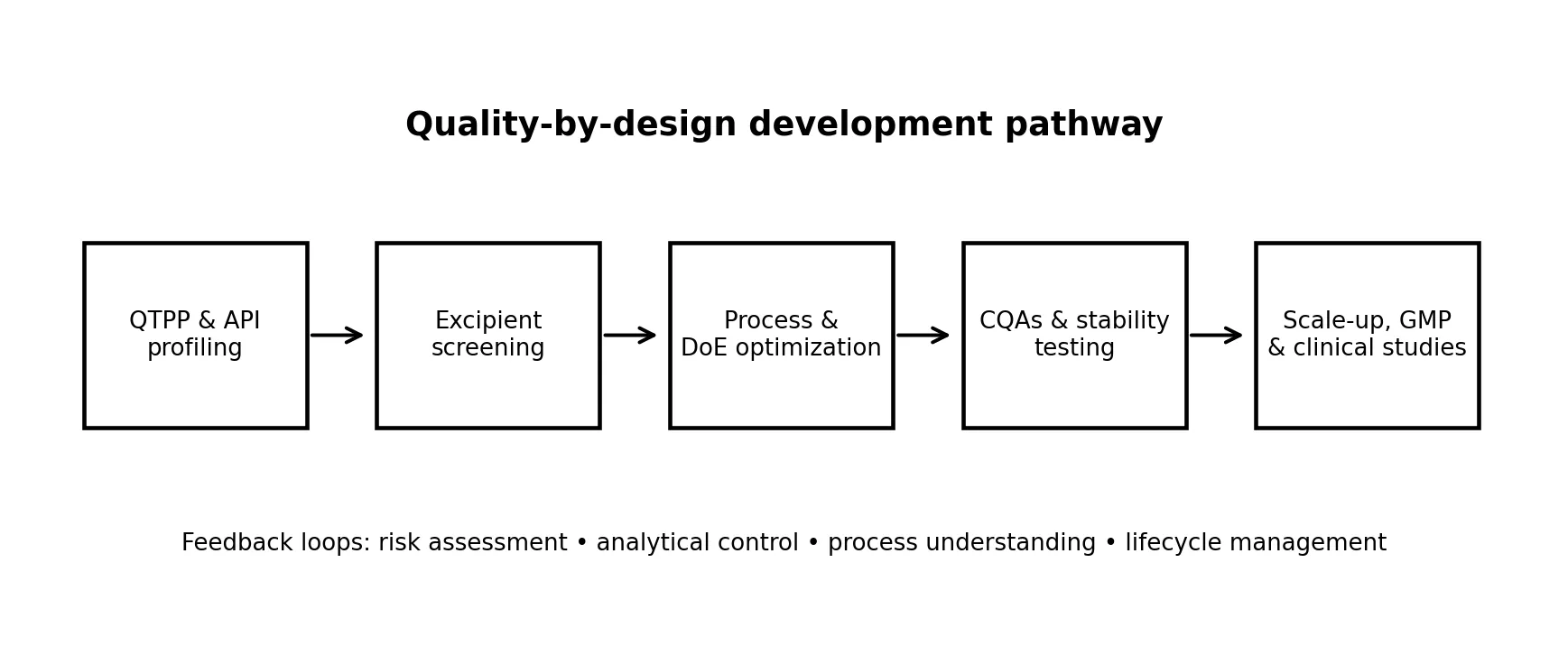
Figure 2: Proposed QbD-oriented development pathway linking target product profile, formulation and process design, CQAs and translation.
9. FUTURE PERSPECTIVES
Additional advances in NLC development will require stronger connections between formulation characteristics and therapeutic outcomes. Reports should provide complete details on composition, preparation conditions, analytical procedures, and stability findings to enable reproducibility by other research groups. In vitro assays should be chosen according to the intended administration route and, whenever feasible, correlated with pharmacokinetic or pharmacodynamic results. Safety evaluations should assess the finished formulation in its entirety rather than presume that lipid-based materials are inherently safe. Scale-up requirements, regulatory strategies, and the selection of a clinically relevant comparator should be addressed at an early stage. More sophisticated targeting or stimuli-responsive features should be developed when they are designed to overcome a specific biological barrier and demonstrate a measurable advantage over a simpler formulation [18,35,37–39].
CONCLUSION
NLC formulations can provide the formulator with a variety of formulation options to meet the needs of each individual product. This is especially true if solubility, stability, or release issues exist. The mixed solid/liquid lipid matrix in an NLC is typically more amorphous (disordered) than that of an SLN. As such, the amorphous nature of the NLC lipid matrix allows it to hold a higher concentration of drug and/or protect against drug degradation during storage. However, this is dependent upon the API being used, the type of lipids being employed, the surfactant system being utilized, and the manufacturing method being applied. Therefore, no generalizations can be made regarding the advantages of all NLC formulations. An effective NLC development program must include both structural and colloidal characterization, along with chemical analysis, release testing, stability assessment, and safety studies appropriate for the intended route of administration. The main challenges associated with transferring NLCs from the laboratory setting to commercial production include maintaining consistency in manufacturing, long-term stability, sterilization, compatibility with different types of dosage forms, reliable analytical control, and insufficient clinical data demonstrating the benefits of NLC formulations. Quality by Design (QbD), improved process monitoring, and well designed comparative studies will allow the formulator to evaluate whether or not an NLC formulation represents a significant improvement over an existing formulation.
REFERENCES


Aastha Gupta, Kalpana Verma, Nanostructured Lipid Carriers for Drug Delivery: Formulation Design, Characterization, Translational Challenges, and Emerging Strategies – A Critical Review, Int. J. of Pharm. Sci., 2026, Vol 4, Issue 11, 2768-2780. https://doi.org/10.5281/zenodo.24331738
 10.5281/zenodo.24331738