

We use cookies to ensure our website works properly and to personalise your experience. Cookies policy
Shankarrao ursal College of pharmacy kharadi Pune 14.
Natural cosmetic formulations are increasingly developed around plant-derived materials that combine traditional use with experimentally investigated physicochemical or biological properties. Moroccan Nila is a term used in traditional and commercial cosmetic contexts, but the name does not by itself establish a single botanical identity. When the research material is authenticated as an indigo-producing plant such as Indigofera tinctoria, literature on the genus Indigofera provides a basis for discussing its traditional applications, phytochemical composition and experimentally observed antioxidant or antimicrobial properties [1–7]. Rice (Oryza sativa) and rice-derived materials have an established history of cosmetic use and have been investigated for antioxidant, moisturizing, barrier-supporting, anti-inflammatory and other dermatological effects [8–17]. This review integrates literature on Indigofera-derived materials and rice-derived ingredients to examine their possible relevance to a cleansing-bar formulation containing Moroccan Nila powder and rice flour. The review considers botanical identity, raw-material authentication, phytochemistry, traditional applications, antioxidant activity, skin-barrier considerations, cleansing and exfoliation concepts, formulation compatibility, safety, stability and evaluation parameters. Particular attention is given to the distinction between evidence obtained from extracts or isolated compounds and evidence applicable to crude powders. Studies of rice starch, rice bran extracts, fermented rice preparations and rice-bran bioactives provide supportive but indirect evidence for the cosmetic potential of rice-derived materials [8–17]. The literature supports the investigation of the two materials as complementary formulation components, but it does not establish that Moroccan Nila powder and rice flour have a clinically demonstrated synergistic action when combined in a cleansing bar. This absence of direct evidence represents the principal research gap. A scientifically defensible formulation study should therefore authenticate the Nila material, standardize the powders, optimize their concentrations and evaluate the finished bar for physicochemical quality, cleansing performance, antioxidant
The skin is the body's largest external organ and provides a physical, chemical and immunological interface between the body and the environment. Daily exposure to dust, sweat, sebum, pollutants, ultraviolet radiation and cosmetic products makes cleansing an important component of routine skin care. At the same time, excessive cleansing or harsh surfactant exposure may disturb the skin barrier. This creates an opportunity for cleansing products designed not only to remove surface impurities but also to provide acceptable skin feel and minimize unnecessary irritation. The modern natural-cosmetics field has increasingly explored plant powders, starches, oils, extracts and fermentation products as alternatives or complementary ingredients in topical formulations. Rice is particularly well represented in this literature. A 2022 review of rice products in dermatology summarized evidence for phenolic compounds, betaine, squalene, tricin and rice-branderived materials and described antioxidant, anti-inflammatory, moisturizing and photoprotective applications [8]. A more recent review similarly emphasized phenolic acids, flavonoids, γ-oryzanol, tocopherols and polysaccharides in rice-derived cosmetic research [9]. Indigo-producing plants represent a second interesting group of natural materials. The genus Indigofera contains a large number of species and has a long history of traditional use. Gerometta et al. reviewed more than 60 species reported in traditional medicine and identified recurring applications involving inflammation, pain, skin ailments and infections [1]. The same review identified more than 200 compounds from the genus, with flavonoids and terpenoids among the prominent classes, while also emphasizing that evidence varies considerably between species and experimental models [1]. The specific expression “Moroccan Nila” requires particular caution in academic writing. A commercial name should not be treated as a botanical identification. For a B.Pharm project, the raw material should be documented by supplier, declared source, plant part or mineral identity if applicable, batch number and certificate of analysis. If the material is confirmed as Indigofera tinctoria, the relevant plant literature can be cited. If it is a mineral or a mixture, the literature and claims must instead be adjusted to that identity. Rice flour and authenticated Nila powder could theoretically provide complementary functions in a cleansing bar. Rice flour can supply a starch-rich powdered component and influence texture, slip and physical cleansing characteristics. An authenticated indigo-derived powder can contribute natural colour and phytochemical interest. The formulation should nevertheless be evaluated as a whole because processing, pH, heat, moisture, particle size and the cleansing base may alter the behavior of individual ingredients.
2. SCOPE AND OBJECTIVES OF THE REVIEW
2.1 Scope
The present review focuses on literature relevant to the use of Nila/Indigofera-derived materials and rice-derived materials in a topical cleansing formulation. Because direct studies of a Moroccan Nila–rice flour cleansing bar are scarce, the evidence is organized according to the level of biological and formulation relevance. Evidence from authenticated Indigofera tinctoria is used to explain the plant-derived Nila hypothesis; evidence from rice starch, rice bran and rice extracts is used to explain the rice component; and formulation science is used to connect these materials to a cleansing-bar dosage form.
2.2 Objectives
• To review the botanical and material identity issues associated with Moroccan Nila and Indigofera-derived powders. • To summarize the major phytochemical classes reported in Indigofera literature [1–7]. • To examine experimental evidence for antioxidant and related biological activities of Indigofera tinctoria [4–7]. • To review the composition and dermatological relevance of Oryza sativa and rice-derived materials [8–17]. • To discuss rice starch and rice flour in relation to skin-barrier support and physical properties [10]. • To identify factors affecting raw-material quality, stability and reproducibility. • To develop a scientifically cautious rationale for combining Nila powder with rice flour in a cleansing bar. • To identify suitable evaluation parameters and the research gap requiring experimental investigation.
2.3 Evidence interpretation
A central principle of this review is that evidence should remain linked to the material actually studied. For example, a study of a hydroethanolic Indigofera extract cannot be used as direct proof that an untreated powder will produce the same antioxidant effect. Likewise, a study of rice-bran oil Page 5 or a purified rice-bran fraction cannot be treated as a direct study of ordinary rice flour. Such studies are valuable for identifying plausible mechanisms and candidate constituents, but the final formulation requires its own characterization.
3. MOROCCAN NILA: IDENTITY, SOURCE AND SCIENTIFIC CONTEXT
3.1 Meaning of Nila in cosmetic practice.
Nila is commonly discussed in beauty practices as a blue or blue-green cosmetic material. The commercial term, however, is not sufficient to establish botanical identity. This is especially relevant because the scientific literature on Indigofera concerns defined plant species, whereas commercial products may use different sources. An academic formulation paper should therefore distinguish between “Moroccan Nila powder” as the material used in the project and “Indigofera tinctoria” as a botanical source only when that identity has been authenticated.
3.2 Indigofera genus
Indigofera is a large genus within Fabaceae. The 2020 review by Gerometta and colleagues described approximately 750 species and reported that more than 60 species have documented traditional medicinal use [1]. The authors noted recurring traditional applications involving skin disorders, inflammation, pain and infections, while also emphasizing substantial variation among species and the need for further mechanistic and toxicological work [1].
3.3 Indigofera tinctoria
Indigofera tinctoria, commonly called true indigo, is particularly important because it is a recognized indigo-producing plant. A 2026 review summarized its taxonomy, distribution, traditional significance, phytochemical composition, agronomy and pharmacological potential [2]. A 2025 open-access sustainability review likewise describes I. tinctoria as a multipurpose plant valued for natural dye production and traditional applications [3].
3.4 Natural indigo chemistry
Indigo is a characteristic blue pigment associated with indigo-producing plants. The biosynthetic pathway involves indole-derived precursors such as indican, which can ultimately give rise to indigo after hydrolysis and oxidation. Literature on I. tinctoria also includes work on UDPglucosyltransferase, an enzyme involved in plant glycosylation pathways relevant to indigo precursor biology [7].
3.5 Traditional relevance versus cosmetic evidence
Traditional use provides a rationale for research but is not equivalent to clinical proof. The genuslevel review reported numerous traditional applications and several experimentally investigated activities, but it also identified gaps in standardization, mechanisms and toxicological understanding [1]. For a cleansing-bar project, the safest scientific position is therefore to describe Nila as a traditional/natural cosmetic ingredient under investigation and to reserve therapeutic claims for evidence that specifically supports them.
4. PHYTOCHEMICAL PROFILE OF INDIGOFERA-RELATED MATERIALS
Phytochemical diversity is one of the principal reasons Indigofera species have attracted pharmacognostic interest. Gerometta et al. reported more than 200 compounds from the genus, with flavonoids and terpenoids among the prominent classes [1]. Other reviews and experimental investigations have described alkaloids, tannins, saponins, phenolic constituents and indigo-related compounds in I. tinctoria [2–6].
| Constituent/class | Reported relevance | Interpretation for cleansing bar research |
|---|---|---|
| Indigo/indigo-related compounds | Characteristic pigments of indigo-producing plants [1,2,7] | May contribute colour; biological activity must be assessed in the actual material. |
| Flavonoids | Associated with antioxidant and other biological activities [1,4–6] | Potential functional interest; concentration depends on extraction and raw-material processing. |
| Phenolic compounds Terpenoids |
Associated with radical scavenging activity [4–6] Reported among Indigofera constituents [1,4] |
Can support antioxidant screening of authenticated materials Phytochemical marker class; individual activity varies. . |
| Tannis | Reported in I. tinctoria phytochemical investigations [4–6] | May affect astringency and chemical profile. |
| Saponins | Reported in phytochemical screening [4,5] |
May contribute surface-active characteristics in extracts, but not necessarily in crude powder. |
| Alkaloids | Reported in Indigofera literature [1–3] |
Requires identity-specific and safety-focused interpretation. |
The presence of a compound class does not automatically predict its concentration in a cosmetic powder. Extraction solvent, plant maturity, geographical source, drying temperature, storage and particle size can alter the measurable chemical profile. For this reason, the proposed project can be strengthened by performing preliminary phytochemical screening and, where facilities permit, chromatographic fingerprinting of the Nila raw material.
4.1 Standardization priorities
• Botanical/material authentication.
• Macroscopic and microscopic examination where the material is plant-derived.
• Moisture content and loss on drying.
• Total ash and, where relevant, acid-insoluble ash.
• Microbial quality.
• Heavy-metal assessment where appropriate.
• Chromatographic fingerprinting for research-grade identity confirmation.
• Documentation of supplier, batch and storage conditions.
5. BIOLOGICAL ACTIVITIES RELEVANT TO INDIGOFERA
5.1 Antioxidant activity
Antioxidant activity is one of the most frequently investigated properties within Indigofera literature. Srinivasan et al. evaluated aqueous I. tinctoria extract using DPPH, nitric oxide and superoxide radical-scavenging assays and reported measurable phenolic and flavonoid content alongside radical-scavenging activity [5]. Singh et al. compared ethanolic and hydroethanolic I. tinctoria extracts and reported stronger antioxidant performance for the hydroethanolic preparation, with the activity associated with phenolic, flavonoid, saponin and tannin content [6]. These findings are useful for a cosmetic formulation project because they provide a basis for including antioxidant assays during raw-material or finished-product evaluation. They do not, however, demonstrate that a solid cleansing bar containing crude Nila powder will provide antioxidant protection on human skin. The formulation matrix, contact time during washing and removal of the material with water all reduce the relevance of simple extract-based antioxidant results.
5.2 Antimicrobial activity
The genus-level review identified antimicrobial activity among the biological effects investigated in Indigofera species [1]. Vijayan et al. also investigated I. tinctoria leaf extract in the context of nanoparticle synthesis and reported antimicrobial and antioxidant properties in the resulting experimental systems [7]. These findings support investigation of antimicrobial characteristics but should not be translated into claims that a Nila cleansing bar treats bacterial or fungal skin infections.
5.3 Anti-inflammatory and other activities
Indigofera literature includes anti-inflammatory and other pharmacological activities, but much of the evidence comes from extracts, animal models or non-dermatological systems [1,2]. The genus review specifically noted that methodological quality and mechanistic information remain uneven [1]. For a cosmetic product, these findings should therefore be described as background evidence rather than as proof of therapeutic efficacy.
5.4 Indigo and epithelial wound closure
Shimizu et al. investigated indigo in an epithelial wound-closure model using Caco-2 cells and reported accelerated closure in scratch assays, with involvement of the aryl hydrocarbon receptor Page 11 [18]. This is mechanistically interesting but is not a skin clinical trial. It should not be used to claim that topical Nila powder heals wounds.
6. RICE (*ORYZA SATIVA*) AS A COSMETIC MATERIAL
Rice is a major cereal crop, and its grain and processing fractions have been used in traditional cosmetic practices. The cosmetic literature is particularly rich for rice bran because bran contains concentrated fractions of lipids, phenolics and other compounds that are removed during polishing. Zamil et al. reviewed rice-related dermatological literature and identified phenolic compounds, betaine, squalene, tricin and rice-bran-derived preparations as areas of interest [8]. A 2025 review by Baby further described phenolic acids, flavonoids, γ-oryzanol, tocopherols and polysaccharides in rice-derived materials and discussed antioxidant, anti-inflammatory, moisturizing, depigmenting and photoprotective research [9]. Importantly, the review also highlighted the need for standardization and clinical validation [9].
6.1 Rice grain, rice flour and rice bran are not interchangeable
A formulation paper should distinguish among rice flour, rice starch, rice bran, rice-bran oil and rice extracts. Rice flour is primarily a milled grain material and is rich in starch. Rice bran is the outer fraction generated during polishing and is comparatively richer in lipids and certain bioactive compounds. Rice-bran oil contains γ-oryzanol, ferulic acid and vitamin-E-related compounds [14]. Extracts can concentrate compounds that may occur at much lower levels in the original flour.
| Rice-derived material | Major formulation relevance | Evidence strength for proposed bar |
|---|---|---|
| Rice flour | Powdered starch-rich material; texture and physical cleansing | Directly relevant as a powder, but skin-benefit evidence is less extensive than for bran. |
| Rice starch | Barrier-supporting and skin conditioning research [10] |
Relevant to starch-rich formulations. |
| Rice bran | Rich source of bio actives [8,9,14] |
Strong background evidence, but not identical to flour. |
| Rice bran oil | Lipidic cosmetic ingredient containing γ-oryzanol and vitamin E compounds [14] | Indirect to a flour-only bar. |
| Rice extracts | Can concentrate phenolics and other actives [8,11,12] | Useful mechanistic evidence; not equivalent to crude flour. |
7. DERMATOLOGICAL AND COSMETIC EVIDENCE FOR RICEDERIVED MATERIALS
7.1 Skin-barrier evidence for rice starch
De Paepe et al. studied rice starch as a bath additive in healthy volunteers whose skin barrier had been experimentally irritated with sodium lauryl sulfate, as well as in patients with atopic dermatitis [10]. Rice-starch-containing bath exposure was associated with improved recovery of barrier function, measured using trans epidermal water loss. The study reported approximately 20% improvement in healing capacity of damaged skin under the experimental conditions [10]. This study is relevant because rice flour contains a substantial starch fraction. Nevertheless, rice flour is not purified rice starch, and a cleansing bar is not a bath additive. The appropriate conclusion is that rice-derived starch has experimental relevance to skin-barrier support, which provides a rationale for investigating rice flour in a mild cleansing formulation.
7.2 Rice-bran antioxidant and photoprotective research
Santa-María et al. evaluated a water-soluble enzymatic rice-bran extract in keratinocyte and reconstructed-human-epidermis models exposed to UVB radiation [11]. The extract reduced lipid peroxidation under the reported conditions and demonstrated skin compatibility in the tested preparation. Such data provide a mechanistic basis for studying rice-bran-derived antioxidants in skin products, but they should not be interpreted as evidence that ordinary rice flour acts as a sunscreen.
7.3 Rice-bran bioactives and hydration
Manosroi et al. incorporated rice-bran bioactive compounds including ferulic acid, γ-oryzanol and phytic acid into niosomal gel and cream systems [12]. The formulations demonstrated antioxidant activity and increases in skin hydration in human testing. A related study evaluated topical niosomal formulations for anti-aging outcomes and reported improvements in hydration, elasticity and other measured skin parameters [13]. These studies demonstrate that rice-derived compounds can be developed into topical products, while also showing that the formulation system strongly influences performance.
7.4 Fermented rice-bran preparations
Chen et al. studied lactic-acid-bacteria-fermented rice bran and reported antioxidant, moisturizing, melanin-synthesis-inhibition and anti-aging-related findings, with proposed applications including cleansing mousse and shower products [15]. Because the study used fermented rice bran rather than plain rice flour, the findings should be regarded as indirect support for rice-derived cosmetic research rather than direct proof of rice-flour efficacy.
8. RECENT DEVELOPMENTS IN RICE-BASED SKIN RESEARCH
Recent research continues to broaden the evidence base for rice-derived cosmetic materials. Chaikul et al. evaluated rice-bran soft and hard waxes in cultured skin cells and reported antioxidant, anti inflammatory, collagen-related and melanogenesis-related effects at non-cytotoxic concentrations [16]. The study is valuable for demonstrating that rice processing fractions can contain functionally interesting materials, although bran waxes are chemically different from rice flour. Chen et al. investigated red rice fermented with Aspergillus oryzae and evaluated anti-aging, antioxidant, moisturizing, reparative and melanin-related effects using fibroblasts, keratinocytes, three-dimensional epidermal models and melanocytes [17]. The results strengthen the general case for rice-derived cosmetic research while again illustrating the importance of distinguishing the studied preparation from ordinary rice flour. Li et al. examined fermented rice products and their components in human dermal fibroblasts exposed to UVA-related stress [19]. Their work explored oxidative stress, senescence, matrix metalloproteinase expression and signaling pathways. Such studies are mechanistically useful for understanding why fermented rice ingredients are being explored in cosmetic science. A 2026 clinical study also investigated oral rice-bran oil enriched with γ-oryzanol and phytosterol esters and reported improvements in skin hydration measures in healthy adults [20]. This evidence concerns oral supplementation, not a topical cleansing bar, and should therefore be cited only as broader evidence for the biological interest of rice-bran constituents.
8.1 Why recent evidence still does not prove the proposed combination The recent literature demonstrates that rice-derived materials are scientifically active areas of cosmetic research, but it does not directly test Moroccan Nila powder combined with rice flour in a cleansing bar. A good review should preserve this distinction. Overstating indirect evidence would weaken the credibility of the project rather than strengthen it.
9. RATIONALE FOR COMBINING MOROCCAN NILA POWDER AND RICE FLOUR
9.1 Conceptual basis
The proposed combination can be understood as a complementary formulation strategy rather than a proven pharmacological synergy. Authenticated Nila may contribute natural colour, traditional cosmetic identity and phytochemical interest. Rice flour may provide a starch-rich powder that can influence bar texture, slip and physical cleansing. The combination therefore offers an experimentally testable formulation concept.
9.2 Possible complementary roles
| Components | Posssible Role | Evidence Basis | Important Limitation |
|---|---|---|---|
| Moroccan Nila powder | Natural colour and traditional cosmetic identity | Indigofera/indigo literature [1–7] | Commercial identity may vary; must authenticate. |
| Rice flour | Powdered starch-rich component; texture; possible mild physical cleansing | Rice/rice-starch literature [8–10] | Direct clinical evidence for plain flour is limited |
| Cleansing base | Removal of sebum, soil and particulate matter | General formulation science | May affect barrier function depending on surfactant/base. |
| Combined system | Potentially distinctive natural cleansing product | Formulation hypothesis | No established clinical synergy between the two powders. |
9.3 Particle size
Particle size is particularly important when rice flour is intended to contribute a physical cleansing or exfoliating sensation. Very coarse particles can increase friction and may be unsuitable for frequent facial use, whereas extremely fine powders may disperse more smoothly. Particle-size distribution should therefore be documented and linked to sensory evaluation
9.4 Concentration optimization
There is no evidence-based universal concentration for Moroccan Nila powder plus rice flour in a cleansing bar. Concentrations should be selected through preliminary batches and optimized according to hardness, colour, spreadability, cleansing performance, foam, washability, stability and skin compatibility. A factorial or response-surface design could be used if adequate laboratory resources are available.
10.PROPOSED FORMULATION DEVELOPMENT STRATEGY
10.1 Raw-material preparation
• Confirm identity and supplier documentation of Nila powder.
.• Sieve both powders to a defined particle-size range.
• Determine moisture content and record storage conditions.
.• Perform preliminary microbial and physicochemical checks.
• Protect powders from excessive humidity and direct light.
10.2 Prototype development
A practical development program can begin with a control base containing no Nila or rice flour, followed by batches containing different ratios of the two powders. The base should remain constant across experimental batches so that the effect of the natural ingredients can be interpreted more clearly.
| Batch | Nila Powder | Rice Flour | Purpose |
|---|---|---|---|
| F0 | 0% | 0% | Control Base |
| F1 | Low | Low | Intial Combination |
| F2 | Low | Medium | Assess rice combiation |
| F3 | Medium | Low | Assess nila combination |
| F4 | Medium | Medium | Balanced prototype |
| F5 | High | Medium | Upper nila range |
| F6 | Medium | High | Upper rice range |
10.3 General manufacturing sequence
Upper rice range A general sequence is: raw-material authentication → sieving → weighing → dry blending of powders → preparation of cleansing-bar base → controlled incorporation of powders → mixing → moulding or compression → drying/curing where applicable → demoulding → packaging → evaluation. The exact method should be adapted to the selected soap or syndet base and should be documented sufficiently to permit reproducibility.
10.4 Packaging
Packaging should minimize moisture uptake and contamination. A moisture-resistant primary pack is particularly important for powder-containing bars because moisture can influence hardness, microbial quality, surface appearance and stability. Batch number, manufacturing date, ingredient declaration and storage instructions should be recorded for research samples.
11.EVALUATION OF THE DEVELOPED CLEANSING BAR
11.1 Organoleptic evaluation
. Appearance, colour, odour, texture and surface uniformity should be recorded for every batch. Colour changes can be especially relevant to Nila-containing products because pigment chemistry may be influenced by oxidation, light and pH.
11.2 Physicochemical evaluation
| Parameter | Purpose |
|---|---|
| pH | Assesses compatibility with intended skin application and formulation consistency. |
| Hardness | Determines handling, resistance to deformation and consumer use. |
| Weight variation | Checks manufacturing uniformity. |
| Moisture content | Relates to stability, hardness and microbial risk. |
| Foamability | Assesses cleansing experience where the base is expected to foam. |
| Foam stability | Measures persistence of generated foam. |
| Washability | Determines ease of removal from skin. |
| Cleansing efficiency | Provides comparative performance among batches. |
| Abrasion/particle characteristics | Important where rice flour contributes physical cleansing |
| Colour stability | Important for Nila-containing products. |
11.3 Functional evaluation
If the project facilities permit, total phenolic content, total flavonoid content and antioxidant activity can be evaluated for the raw materials and/or suitable extracts from the finished formulation. DPPH, ABTS or related assays may be considered, but the method should be validated and interpreted carefully. Because a cleansing bar is a rinse-off product, an in-vitro antioxidant value should not be translated directly into a claim of antioxidant protection on skin.
11.4 Skin compatibility
Skin compatibility is a critical endpoint for a cleansing product. Ethical and institutional requirements should be followed for any human testing. Where a formal human study is not possible, the project can focus on physicochemical evaluation and appropriately designed laboratory safety testing. Claims such as “hypoallergenic,” “non-irritant” or “safe for sensitive skin” should not be made without supporting evidence.
12.STABILITY, QUALITY CONTROL AND SAFETY
12.1 Stability considerations
Natural powders can be sensitive to humidity, light, oxidation and microbial contamination. The finished bar should therefore be monitored for changes in colour, odour, texture, hardness, pH, moisture and microbial quality during storage.
12.2 Microbial quality
A water-containing cleansing formulation presents greater microbial risk than a properly dried solid bar, but solid products are not automatically sterile. Raw-material microbial quality, manufacturing hygiene and packaging should be controlled. Appropriate microbial-limit testing should be selected according to institutional procedures and the intended cosmetic product.
12.3 Contaminant considerations
Plant-derived powders can potentially contain environmental contaminants, pesticide residues, heavy metals or adulterants depending on source. The risk assessment should therefore consider the origin of the raw materials and available supplier documentation. Authentication is particularly important for Nila because the commercial name alone may not identify a single botanical material.
.12.4 Safety interpretation
The genus Indigofera includes species with documented toxicity concerns in the broader literature [1]. This does not establish that an authenticated cosmetic-grade Nila powder is toxic, but it reinforces the need for species identification and appropriate safety assessment. The project should avoid assuming that “natural” is synonymous with “risk-free.” .
13. COMPARATIVE EVIDENCE MATRIX
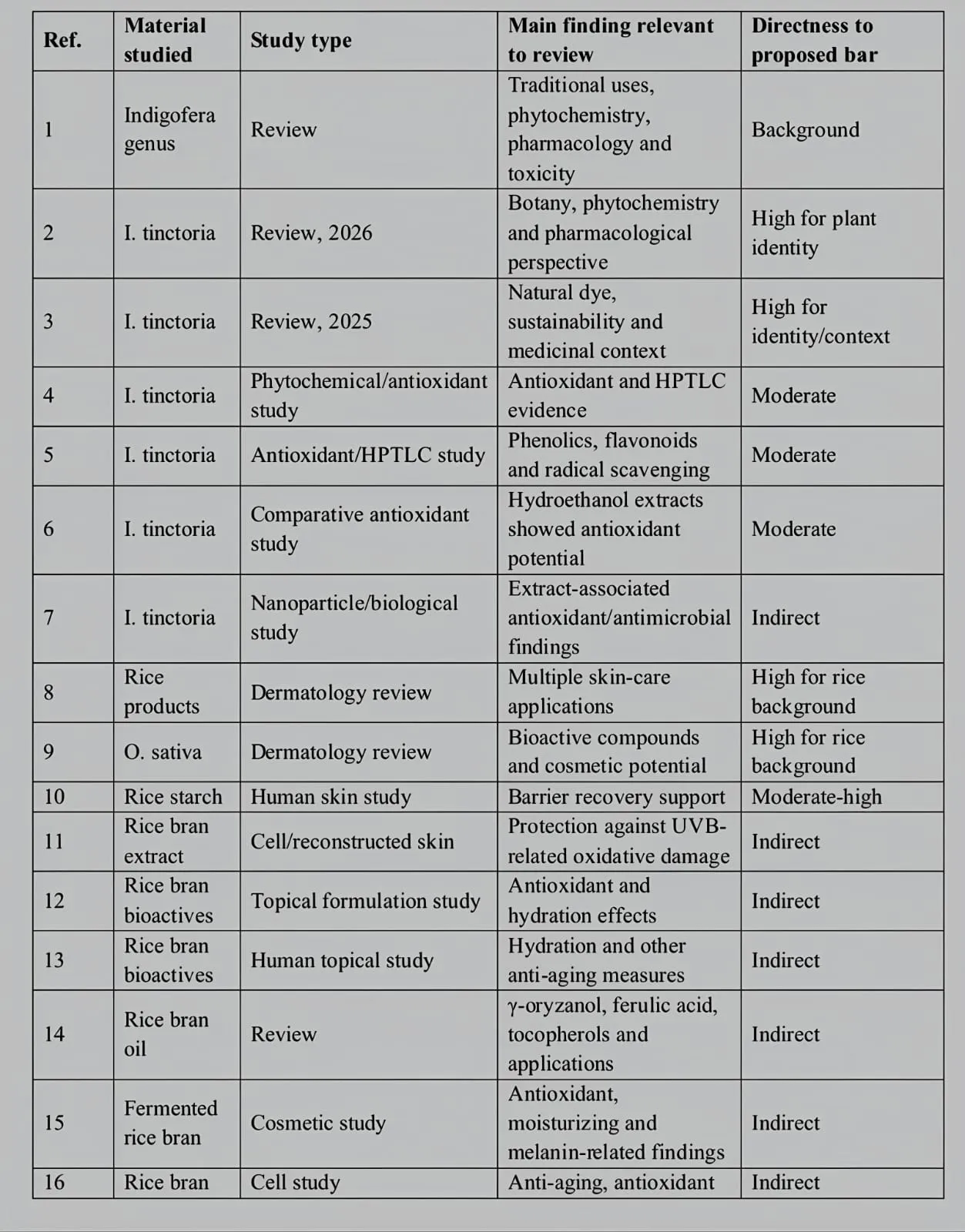
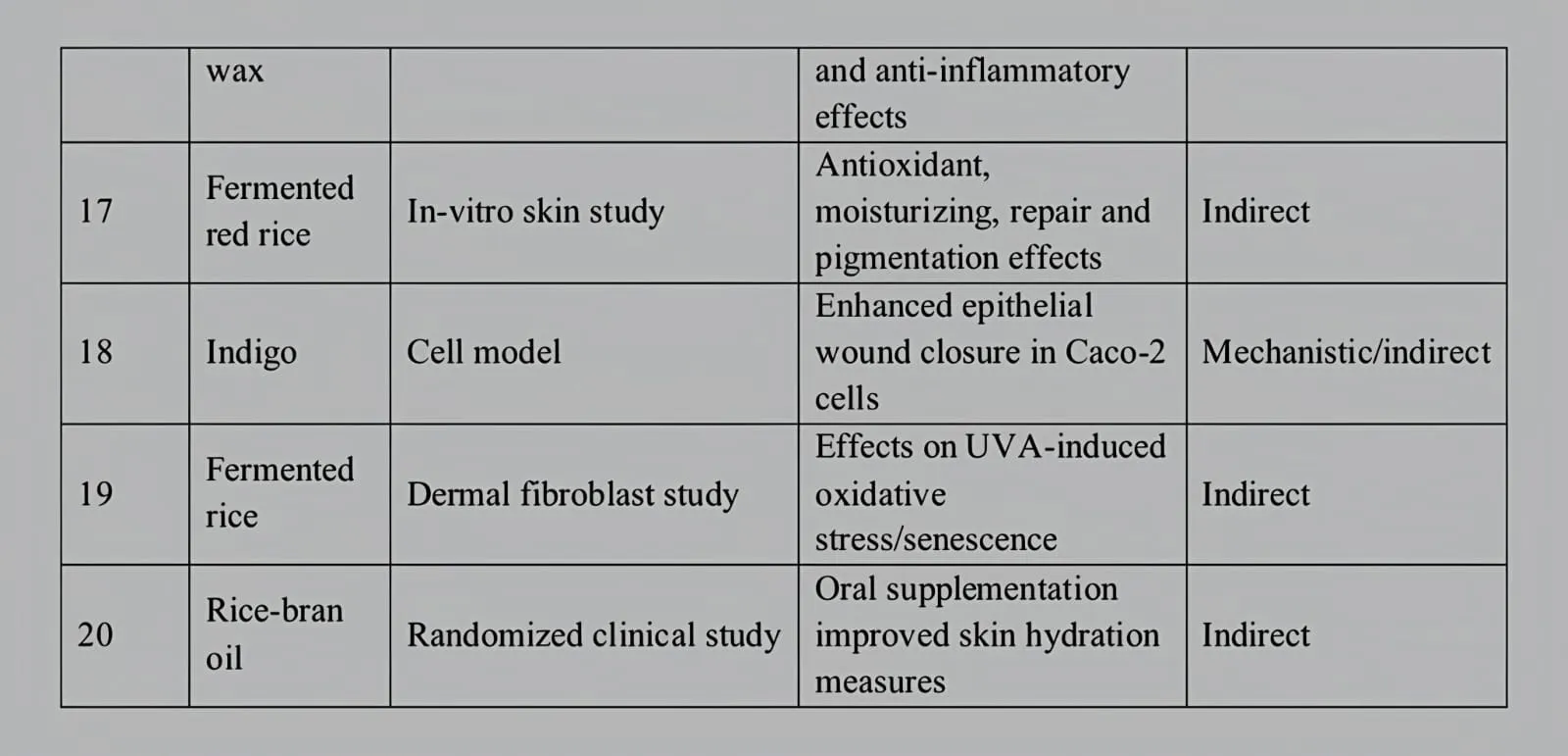
The matrix demonstrates that the strongest evidence is distributed across different materials and study types. There is meaningful evidence for the biological interest of Indigofera and rice-derived materials, but the proposed cleansing bar itself remains an untested formulation hypothesis. This is an appropriate and academically valuable research gap for a final-year B.Pharm project.
14. RESEARCH GAP AND FUTURE RESEARCH DIRECTIONS
The first major gap is raw-material identity. “Moroccan Nila” is a commercial/traditional term and should not automatically be equated with Indigofera tinctoria. A research project that authenticates its actual material can make a stronger contribution than one that simply assumes botanical identity.
The second gap concerns dosage form. Much of the available literature investigates extracts, oils, fermented preparations, isolated compounds, bath additives, gels or creams. A cleansing bar introduces short contact time, washing, mechanical action and a different chemical environment. Consequently, efficacy data from leave-on products cannot be directly transferred to a rinse-off bar.
The third gap is the absence of direct combination studies. There is no established evidence that Nila and rice flour interact synergistically. A future study could compare Nila alone, rice flour alone, the combination and a base control using standardized assays.
The fourth gap is standardization. Future work should investigate particle size, moisture, phytochemical fingerprints, pigment content and batch-to-batch variation. Such information would make the formulation reproducible and improve the quality of any later stability or efficacy study.
The fifth gap is clinical relevance. If a formulation demonstrates acceptable laboratory properties, a properly designed skin-compatibility or user-acceptability study could be considered under institutional ethical requirements. Claims should be limited to outcomes actually measured.
14.1 Recommended experimental design
• Control: cleansing base without natural powders.
• Nila-only batch.
• Rice-flour-only batch.
• Combination batch.
• Optional concentration-gradient batches.
• Compare pH, hardness, moisture, foam, cleansing efficiency, colour stability and antioxidant assay results.
• Use statistical analysis to determine whether observed differences are meaningful.
DISCUSSION
The literature reviewed here supports the scientific investigation of both Indigofera-derived materials and rice-derived materials in cosmetic formulation, but it also shows why careful wording is essential. Indigofera research provides substantial phytochemical and pharmacological background. In particular, I. tinctoria extracts have demonstrated measurable antioxidant properties in several in-vitro assays [4–6]. The genus-level literature also documents antimicrobial and antiinflammatory research [1]. These findings make authenticated Indigofera material scientifically interesting for cosmetic research.
The rice literature is broader in direct dermatological application. Rice starch has been evaluated in relation to barrier recovery [10], while rice-bran extracts and their bioactive compounds have been studied for antioxidant activity, hydration, photoprotection and anti-aging-related outcomes [1116]. Recent fermented-rice studies further support interest in rice-derived preparations for moisturizing, repair and pigmentation-related endpoints [17,19].
At the same time, the literature reveals a recurring issue: the most biologically active preparations are often extracts or fractions rather than crude flour. Rice flour is principally valuable in the proposed project as a practical, low-cost, starch-rich powder. Its inclusion should therefore be justified primarily through formulation function and the broader rice-starch literature rather than by attributing all rice-bran phytochemicals to the flour.
For Nila, the central issue is identity. If the material is authenticated as I. tinctoria, it can be discussed using Indigofera literature. If not, the paper should not claim that I. tinctoria constituents are present. This distinction is particularly important because different Nila products may differ substantially in composition.
From a formulation perspective, the combination is attractive because it is simple and experimentally accessible. A cleansing bar can be produced using relatively low-cost materials, while evaluation can be performed with commonly available pharmaceutical laboratory equipment. The project can therefore address both natural-product research and pharmaceutical formulation principles.
The most defensible anticipated outcome is not a claim that the bar will cure or clinically treat pigmentation. Instead, the study can determine whether the combination produces a stable, acceptable cleansing bar with favorable physicochemical characteristics and measurable antioxidant or skin-compatible properties. That framing is consistent with the current evidence and leaves room for meaningful future work.
CONCLUSION
The literature indicates that Indigofera-derived materials and rice-derived materials each possess substantial traditional and scientific relevance to natural-product and cosmetic research. Indigofera species have a long history of traditional use, and studies of I. tinctoria have documented diverse phytochemicals and measurable antioxidant activity in extract-based models [1–7]. Rice and ricederived materials have been extensively investigated in dermatological research, with evidence involving skin-barrier support, antioxidant activity, hydration, anti-aging-related outcomes and other cosmetic properties [8–17].
For a Moroccan Nila and rice flour cleansing bar, the strongest scientific rationale is therefore based on complementary formulation roles rather than an assumed pharmacological synergy. Authenticated Nila can contribute natural colour and phytochemical interest, whereas rice flour can provide a starch-rich powder component and influence texture and physical cleansing. The combination remains a research hypothesis because direct studies of the finished product are lacking.
A successful B.Pharm project should consequently emphasize authentication, formulation optimization, reproducibility and evaluation. The final product should be examined for organoleptic and physicochemical properties, stability, microbial quality and skin compatibility, with antioxidant or phytochemical assays included when technically justified. The resulting data can provide original experimental evidence for a natural cleansing bar based on two traditional/natural materials.
Overall, the combination represents a reasonable subject for formulation research, particularly because the literature identifies a clear gap between evidence for individual ingredients and evidence for the proposed combined dosage form. A carefully designed study can convert this gap into a scientifically testable formulation rather than relying on unsupported cosmetic claims.
REFERENCES

Mahek Tanveer Shaikh, Moroccan NILA POWDER and RICE FLOUR as Natural Ingredients for a HERBAL Cleansing bar: An Integrated Review, Int. J. of Pharm. Sci., 2026, Vol 4, Issue 11, 2831-2843. https://doi.org/10.5281/zenodo.24332199
 10.5281/zenodo.24332199