View Article

Abstract

Hair care is a vital component of personal grooming and cosmetic science since hair has a significant impact on human appearance and psychological confidence. Although washing, conditioning, and styling are the main functions of traditional hair cosmetics, new developments in cosmetic technology have led to the introduction of multipurpose products known as hybrid hair care cosmetics. These products offer both medicinal and aesthetic benefits by combining biologically active chemicals with traditional cosmetic qualities. In order to enhance hair strength, scalp health, moisture balance, and defense against environmental damage, hybrid formulations combine natural and synthetic substances. The structure of hair and how it differs from skin, typical hair issues, traditional hair care products, and the idea of hybrid hair care cosmetics are all covered in detail in this article. Common hybrid compounds, the benefits and drawbacks of hybrid formulations, herbal and synthetic hybrid ingredients, and prospects for future study in this developing area of cosmetic science are all covered in this paper.

Keywords

Cosmetics for hair care, hybrid cosmetics, hair structure, synthetic and herbal hair ingredients, cosmeceuticals, and multipurpose hair products

Introduction

× Popup Image

The cosmetics industry has evolved from producing products solely for beautification to creating formulations that improve skin health and provide protection against environmental damage. Consumers today prefer products that are both effective and safe, leading to increased interest in natural ingredients. However, synthetic ingredients continue to play an important role because of their proven effectiveness, stability, and long-lasting performance.

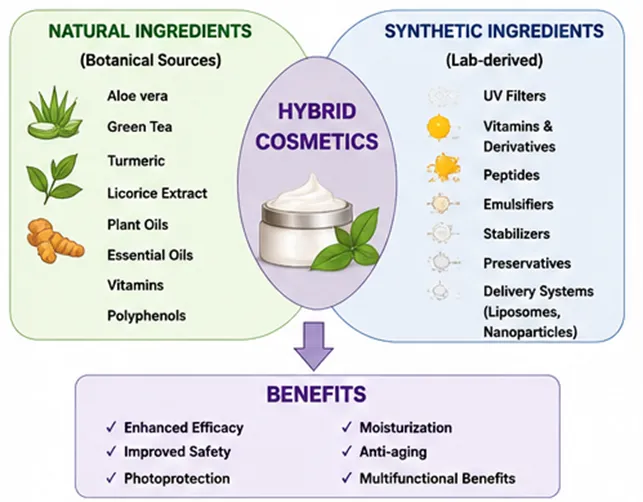
To combine the advantages of both approaches, hybrid cosmetics have emerged. Hybrid skin cosmetics are formulations that intentionally blend synthetic ingredients with natural botanical components. These products aim to provide better efficacy, enhanced safety, improved stability, and greater consumer acceptance than products relying only on natural or synthetic ingredients.

SKIN STRUCTURE AND FUNCTIONS [12]

The skin is the largest organ of the human body and serves as a protective barrier between the body and the external environment. It consists of three major layers:

EPIDERMIS:

The epidermis is the outermost layer of the skin. It contains keratinocytes, melanocytes, Langerhans cells, and Merkel cells. The stratum corneum, the outermost part of the epidermis, acts as the primary barrier against water loss and harmful microorganisms.
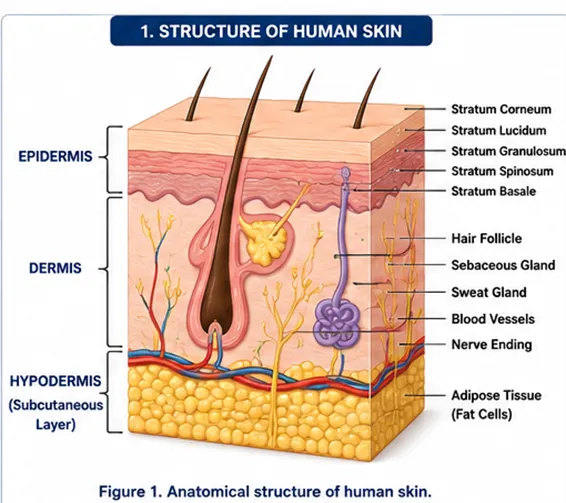


DERMIS:

The dermis lies beneath the epidermis and contains collagen, elastin fibers, blood vessels, nerves, sweat glands, and hair follicles. It provides strength, flexibility, and nourishment to the skin.

HYPODERMIS:

The hypodermis, or subcutaneous layer, contains adipose tissue and connective tissue. It functions as an energy reserve, insulator, and protective cushion.

FUNCTIONS OF SKIN [13]

The skin performs several essential functions:

  • Protection against physical, chemical, and microbial damage
  • Regulation of body temperature
  • Sensory perception
  • Vitamin D synthesis
  • Excretion of waste through sweat

COMMON SKIN PROBLEMS:

  • Many cosmetic products are designed to prevent or manage common skin conditions.

DRY SKIN:

  • Dry skin results from reduced sebum production and impaired barrier function. It often causes roughness, tightness, and flaking.

OILY SKIN AND ACNE:

  • Excessive sebum production leads to oily skin, enlarged pores, blackheads, and acne. Acne may also cause post-inflammatory hyperpigmentation, especially in darker skin types.

SKIN AGING:

  • Skin aging occurs through intrinsic aging and photoaging caused by UV exposure. Common signs include wrinkles, loss of elasticity, and pigmentation changes.

HYPERPIGMENTATION:

  • Conditions such as melasma, sunspots, and post-inflammatory hyperpigmentation occur due to excessive melanin production.

INFLAMMATORY SKIN DISORDERS:

  • Eczema, psoriasis, rosacea, and dermatitis are inflammatory conditions that require soothing and protective skincare formulations.

BASIC SKIN CARE REQUIREMENTS:

  • Effective skin care generally involves three essential steps:

CLEANSING:

  • Cleansing removes dirt, excess oil, makeup, and dead skin cells. Herbal cleansers often contain plant-derived ingredients such as sesame oil and palm oil.

TONING:

  • Toners help restore skin pH balance and remove residual impurities. Common herbal ingredients include sage, lemon, geranium, and essential oils.

MOISTURIZING:

  • Moisturizers maintain hydration and support skin barrier function. Natural moisturizing agents include aloe vera, jojoba oil, rose water, and vegetable glycerin.

OVERVIEW OF SKINCARE PRODUCTS:

  • Skincare products are generally classified according to their function.

CLEANSERS:

  • Used to remove dirt, pollutants, and excess oil from the skin.

MOISTURIZERS:

  • Contain humectants, emollients, and occlusives that help retain moisture and improve skin texture.

SUNSCREENS:

  • Protect the skin from harmful ultraviolet radiation and help prevent sunburn, photoaging, and skin damage.

COSMECEUTICALS:

  • These products combine cosmetic and therapeutic benefits. Examples include anti-aging creams, anti-acne formulations, and pigmentation-control products.

HYBRID SKIN COSMETICS:

  • Hybrid skincare products combine synthetic and natural ingredients to achieve better overall performance. Rather than simply mixing ingredients, hybrid formulations create a synergistic effect where both components work together to enhance efficacy.
  • A hybrid product typically contains:


  1. SYNTHETIC COMPONENTS:
  • UV filters
  • Emulsifiers
  • Stabilizers
  • Peptides
  • Vitamin derivatives
  • Delivery systems such as liposomes and nanoparticles
  1. NATURAL COMPONENTS:
  • Botanical extracts
  • Plant oils
  • Antioxidants
  • Anti-inflammatory compounds
  • Natural colorants
  • Wound-healing agents


  • BENEFITS OF HYBRID COSMETICS:
    1. ENHANCED EFFICACY:
  • The combination of synthetic and natural ingredients often produces better results than either component alone.
    1. IMPROVED PHOTOPROTECTION:
  • Botanical antioxidants support UV filters by reducing oxidative damage and improving sunscreen stability.
    1. REDUCED SKIN IRRITATION:
  • Natural ingredients such as aloe vera and turmeric help soothe the skin and minimize adverse reactions.
    1. BROAD-SPECTRUM PROTECTION:
  • Hybrid formulations protect against UV radiation, visible light, pollution, and environmental stressors.
    1. MULTIFUNCTIONAL BENEFITS:
  • A single product may provide moisturizing, anti-aging, antioxidant, anti-inflammatory, and sun-protective effects simultaneously.

IMPORTANT HYBRID INGREDIENTS:

  1. BOTANICAL ANTIOXIDANTS AND UV FILTERS:
  • Green tea extracts, flavonoids, and carotenoids are commonly combined with synthetic UV filters to improve sun protection and reduce oxidative stress.
  1. VITAMINS AND BOTANICAL EXTRACTS:
  • Vitamins A, C, and E are frequently paired with plant polyphenols to enhance antioxidant activity and improve skin health.
  1. HYBRID UV FILTERS:
  • Modern hybrid UV filters combine organic and inorganic components to increase effectiveness while reducing irritation and improving cosmetic appearance.
  1. PLANT OILS IN EMULSIONS:
  • Natural oils such as jojoba, olive, and coconut oil help moisturize the skin, repair barrier function, and provide antioxidant benefits.

ADVANTAGES AND LIMITATIONS:

ADVANTAGES:

  • Improved effectiveness
  • Better safety profile
  • Enhanced stability
  • Multiple skincare benefits
  • Greater consumer acceptance
  • Environmentally friendly potential

LIMITATIONS:

  • Complex formulation process
  • Higher production costs
  • Variability in natural ingredients
  • Possible allergic reactions
  • Regulatory challenges

FUTURE PROSPECTS:

The future of hybrid cosmetics is promising due to advances in technology and consumer demand.

Emerging developments include:

  • Personalized skincare based on genetic and skin analysis
  • Advanced delivery systems such as nanoparticles and lipid carriers
  • Sustainable and eco-friendly formulations
  • Microbiome-friendly skincare products
  • Smart materials that respond to environmental conditions
  • Protection against pollution, blue light, and climate-related stressors

CONCLUSION

Hybrid skin cosmetics represent a significant advancement in skincare technology. By combining the effectiveness of synthetic ingredients with the safety and natural benefits of botanical compounds, these products offer superior performance and multifunctional benefits. As research and innovation continue to grow, hybrid cosmetics are expected to become an important part of future skincare, providing safer, more effective, and environmentally responsible solutions for maintaining healthy skin.


OVERVIEW
An essential biological component that greatly influences a person's appearance, identity, and self-confidence is their hair. Hair serves functions in sensory perception, heat regulation, and protection in addition to its aesthetic value. Hair damage and scalp diseases have become more prevalent globally due to environmental pollution, chemical treatments, poor diet, and lifestyle changes. As a result, there is an increasing need for sophisticated hair care solutions that repair damaged hair strands and maintain scalp health in addition to improving the appearance of hair.

Shampoos, conditioners, and styling products are examples of traditional hair care cosmetics that are mainly used to clean and enhance the physical appearance of hair. However, cutting-edge formulas known as hybrid hair cosmetics have been introduced by contemporary cosmetic science. These solutions, which frequently include bioactive substances that promote both scalp health and hair fiber repair, combine medicinal and cosmetic qualities in a single formulation. The cosmetics industry is paying close attention to hybrid hair care products because their enhanced performance, ease of use, and multipurpose advantages over traditional items.

2. HAIR STRUCTURE AND DISTINCTIONS BETWEEN SKIN AND HAIR:
The protein keratin makes up the majority of the filamentous biomaterial that is hair.                           It comes from hair follicles in the skin's dermal layer. Three primary structural elements make up each hair strand:
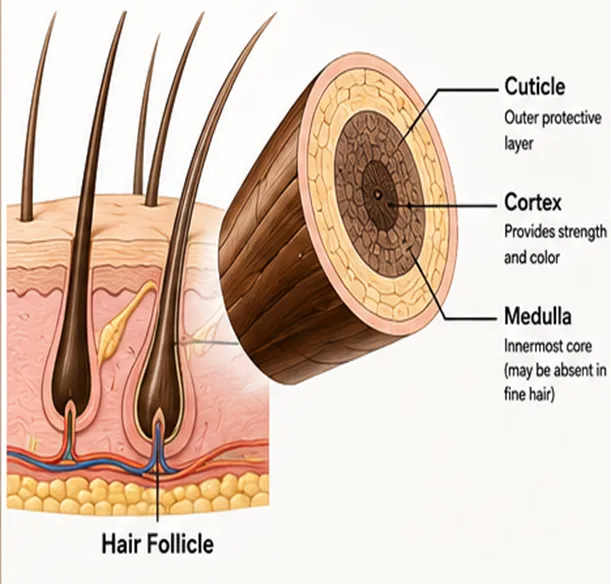
    1. CUTICLE: The outermost layer that shields the underlying hair structure is made up of overlapping cells.
  1.  CORTEX: The main layer that gives hair its strength and color is made up of keratin fibers and melanin pigments.
  2. MEDULLA: In fine hair, the innermost core of the hair shaft may not exist. Despite growing from the skin, hair is very different from skin in both composition and function. Blood vessels, nerves, and glands are found in the skin, which is a living organ made up of several layers, including the epidermis, dermis, and hypodermis. In contrast, once hair shafts emerge from the surface of the scalp, they are made up of non-living keratinized cells.
  • After leaving the follicle, hair lacks metabolic activity, which prevents it from organically repairing itself. As a result, exterior hair care products are crucial for preserving the hair's strength, moisture balance, and defense against environmental harm.


3. PRECAUTIONS AND HAIR CARE:
Appropriate cosmetics and good hair care techniques are necessary to maintain healthy hair. The following are some suggested hair care techniques:

  • Shielding hair from pollutants and UV rays, Eating a well-balanced diet high in proteins and vitamins, Applying makeup that is appropriate for the type of hair
  • Excessive chemical treatments, harsh washes, and heat exposure are examples of improper hair care techniques that can harm the hair cuticle and cause scalp issues or breakage.

4. COMMON HAIR ISSUES ADDRESSED BY HAIR COSMETICS:

Many hair and scalp issues are addressed by hair cosmetics. Typical problems include the following:

DRYNESS OF THE HAIR: Caused by chemical treatments, exposure to the environment, or loss of natural oils.
SPLIT ENDS AND BROKEN HAIR: Frequently as a result of cuticle damage or mechanical stress.
DANDRUFF AND INFLAMMATION OF THE SCALP: Often brought on by fungal development or an imbalance in the microbiota of the scalp.
HAIR LOSS AND THINNING: Can be brought on by nutritional deficiencies, stress, or changes in hormones.
LACK OF SHINE AND FRIZZ: Happens when the cuticle layer becomes uneven and harsh.
Proteins, vitamins, conditioning polymers, moisturizing ingredients, and herbal extracts are all used in the formulation of hair cosmetics to treat various disorders.

5. PRODUCTS FOR HAIR CARE:
Cosmetic formulas created to clean, shield, and enhance the appearance of hair and scalp are known as hair care products. Typical hair cosmetics consist of Shampoos and Conditioners

• Oils for hair

• Masks for hair

• Serums

 • Sprays for hair

 • Tonics for hair

 Surfactants, conditioning agents, emollients, preservatives, scents, and active substances that offer particular hair advantages may be included in these products.

6. COSMETICS FOR HYBRID HAIR CARE:

A contemporary approach to cosmetic formulation that combines several uses into a single product is represented by hybrid hair care cosmetics. To provide improved performance, these products combine medicinal and cosmetic elements.

Hybrid hair products can serve multiple purposes at once, including:

• Scalp care

• Hair restoration

• UV defense

• Hydration

For instance, a hybrid shampoo might have conditioning polymers for better texture, proteins for hair strengthening, botanical ingredients for scalp nourishment, and mild surfactants for cleaning. Combining conventional cosmetic components with biologically active substances that enhance hair health while preserving aesthetic benefits is known as the "hybrid" idea.
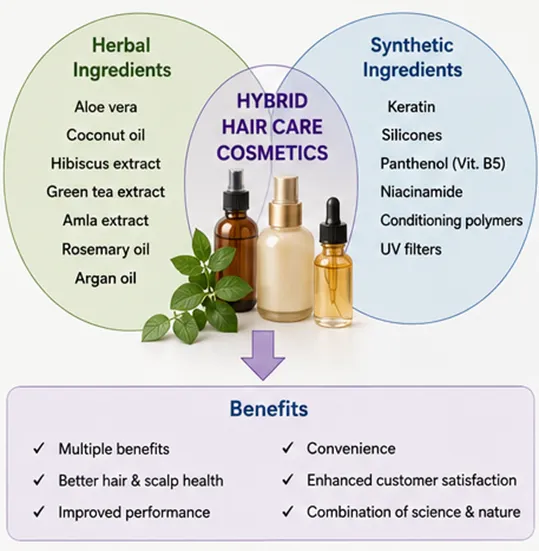


7. HYBRID HAIR COSMETICSBENEFITS:

When compared to conventional hair products

Hybrid formulations provide the following benefits:
• Multiple uses for a single product
• Enhanced customer convenience

• Better scalp care and hair restoration
• Less need for several goods
• A blend of scientific and natural components
• A rise in customer satisfaction
Both customers and cosmetic manufacturers find hybrid hair cosmetics to be a desirable alternative because of these benefits.

8.  TYPICAL HYBRID COMPONENTS OF HAIR COSMETICS:

To optimize efficacy, hybrid formulations frequently incorporate both synthetic and herbal components.

TYPICAL HERBAL COMPONENTS INCLUDE THE FOLLOWING:

•Aloe vera

• Oil from coconuts

 • Argan oil

• Extract from hibiscus

• Extract from green tea

• Oil of rosemary

 • Benefits of amla extract

 • Natural source

 • Packed with vitamins and antioxidants

• Scalp-compatible

DRAWBACKS:

• Variability in stability
• Potential contamination by microorganisms
•Reduced shelf life

ARTIFICIAL COMPONENTS:

Typical synthetic components consist of:

• Vitamin B5, or panthenol

•Niacinamide
•Conditioning polymers

•UV filters

BENEFITS:

• Reliable performance

• Robust conditioning effects

10. THE POTENTIAL OF HYBRID HAIR COSMETICS:
Thanks to developments in biotechnology, green chemistry, and cosmetic dermatology, hybrid hair care cosmetics have a bright future. New studies concentrate on:
• Delivery systems based on nanotechnology
• Biodegradable and sustainable ingredients for cosmetics
• Customized hair care items
• Bioactive substances derived from plants
It is anticipated that these developments will enhance hair cosmetic compositions' efficacy, sustainability, and safety.

CONCLUSION
A major development in contemporary cosmetic research is hybrid hair care cosmetics. These solutions offer multipurpose advantages that enhance hair health and appearance by fusing conventional cosmetic chemicals with physiologically active substances. Hybrid formulas provide ease and enhanced product effectiveness while addressing common hair issues like dryness, breakage, and scalp disorders. Innovative and successful hair care solutions can be created by combining synthetic and herbal elements. It is anticipated that hybrid hair cosmetics will have a significant impact on the cosmetics business in the future due to ongoing research and technical developments.

REFERENCES

  1. Draelos ZD. Hair cosmetics: an overview. Journal of Cosmetic Dermatology.
  2. Gavazzoni Dias MFR. Hair cosmetics: an overview. International Journal of Trichology.
  3. Robbins CR. Chemical and Physical Behavior of Human Hair. Springer.
  4. Alviri H, Lynes J, Habib K. Sustainability in cosmetic research. Global Sustainability.
  5. Chauhan SB et al. Hybrid cosmeceutical innovations and multifunctional cosmetic formulations. Current Aging Science.
  6. Shukla A et al. Cosmeceuticals in modern cosmetic science. Journal of Drug Discovery and Health Sciences.
  7. Trüeb RM. Molecular mechanisms of hair growth and hair loss. Dermatology research and Practice.
  8. Cosmetic Dermatology Draelos ZD. Cosmeceuticals: undefined, unclassified, and unregulated. Clin Dermatol. 2009;27(5):431–434.
  9. Korać RR, Khambholja KM. Potential of herbs in skin protection from ultraviolet radiation. Pharmacogn Rev. 2011;5(10):164–173.
  10. Nichols JA, Katiyar SK. Skin photoprotection by natural polyphenols: anti-inflammatory, antioxidant and DNA repair mechanisms. Arch Dermatol Res. 2010;302(2):71–83.
  11. Pullar JM, Carr AC, Vissers MCM. The roles of vitamin C in skin health. Nutrients. 2017;9(8):866.
  12. Lin TK, Zhong L, Santiago JL. Anti-inflammatory and skin barrier repair effects of topical application of some plant oils. Int J Mol Sci. 2018;19(1):70.
  13. Dreno B, Araviiskaia E, Berardesca E, et al. Microbiome in healthy skin, update for dermatologists. J Eur Acad Dermatol Venereol. 2016;30(12):2038–2047.
  14. Purnamawati S, Indrastuti N, Danarti R, Saefudin T. The role of moisturizers in addressing various kinds of dermatitis. Clin Med Res. 2017;15(3–4):75–87.
  15. Wang SQ, Balagula Y, Osterwalder U. Photoprotection: a review of the current and future technologies. Dermatol Ther. 2010;23(1):31–47.
  16. Mukherjee PK, Maity N, Nema NK, Sarkar BK. Bioactive compounds from natural resources against skin aging. Phytomedicine. 2011;19(1):64–73.
  17. Binic I, Lazarevic V, Ljubenovic M, Mojsa J, Sokolovic D. Skin ageing: natural weapons and strategies. Evid Based Complement Alternat Med. 2013;2013:827248.
  18. Draelos ZD. The science behind skin care: moisturizers. J Cosmet Dermatol. 2018;17(2):138–144.
  19. Addor FAS. Antioxidants in dermatology. An Bras Dermatol. 2017;92(3):356–362.

Reference

  1. Draelos ZD. Hair cosmetics: an overview. Journal of Cosmetic Dermatology.
  2. Gavazzoni Dias MFR. Hair cosmetics: an overview. International Journal of Trichology.
  3. Robbins CR. Chemical and Physical Behavior of Human Hair. Springer.
  4. Alviri H, Lynes J, Habib K. Sustainability in cosmetic research. Global Sustainability.
  5. Chauhan SB et al. Hybrid cosmeceutical innovations and multifunctional cosmetic formulations. Current Aging Science.
  6. Shukla A et al. Cosmeceuticals in modern cosmetic science. Journal of Drug Discovery and Health Sciences.
  7. Trüeb RM. Molecular mechanisms of hair growth and hair loss. Dermatology research and Practice.
  8. Cosmetic Dermatology Draelos ZD. Cosmeceuticals: undefined, unclassified, and unregulated. Clin Dermatol. 2009;27(5):431–434.
  9. Kora? RR, Khambholja KM. Potential of herbs in skin protection from ultraviolet radiation. Pharmacogn Rev. 2011;5(10):164–173.
  10. Nichols JA, Katiyar SK. Skin photoprotection by natural polyphenols: anti-inflammatory, antioxidant and DNA repair mechanisms. Arch Dermatol Res. 2010;302(2):71–83.
  11. Pullar JM, Carr AC, Vissers MCM. The roles of vitamin C in skin health. Nutrients. 2017;9(8):866.
  12. Lin TK, Zhong L, Santiago JL. Anti-inflammatory and skin barrier repair effects of topical application of some plant oils. Int J Mol Sci. 2018;19(1):70.
  13. Dreno B, Araviiskaia E, Berardesca E, et al. Microbiome in healthy skin, update for dermatologists. J Eur Acad Dermatol Venereol. 2016;30(12):2038–2047.
  14. Purnamawati S, Indrastuti N, Danarti R, Saefudin T. The role of moisturizers in addressing various kinds of dermatitis. Clin Med Res. 2017;15(3–4):75–87.
  15. Wang SQ, Balagula Y, Osterwalder U. Photoprotection: a review of the current and future technologies. Dermatol Ther. 2010;23(1):31–47.
  16. Mukherjee PK, Maity N, Nema NK, Sarkar BK. Bioactive compounds from natural resources against skin aging. Phytomedicine. 2011;19(1):64–73.
  17. Binic I, Lazarevic V, Ljubenovic M, Mojsa J, Sokolovic D. Skin ageing: natural weapons and strategies. Evid Based Complement Alternat Med. 2013;2013:827248.
  18. Draelos ZD. The science behind skin care: moisturizers. J Cosmet Dermatol. 2018;17(2):138–144.
  19. Addor FAS. Antioxidants in dermatology. An Bras Dermatol. 2017;92(3):356–362.

Photo
G Govinda Reddy
Corresponding author

Department of Pharmaceutics, T V M College of pharmacy, Ballari

Photo
Jayashree
Co-author

Department of Pharmaceutics,T V M College of pharmacy, Ballari

Photo
K Chethana
Co-author

Department of Pharmaceutics,T V M College of pharmacy,Ballari

Photo
M Krishna
Co-author

Department of Pharmaceutics,T V M College of pharmacy,Ballari

Photo
Chaya P
Co-author

Department of Pharmaceutics, T V M College of pharmacy, Ballari

Photo
Manishankar
Co-author

Department of Pharmaceutics,T V M College of pharmacy,Ballari

G Govinda Reddy, Jayashree, K Chethana, M Krishna, Chaya P, Manishankar, An Overview of The Hybrid Cosmetics for Skin & Hair Care: Concepts, Ingredients, Applicatons & Future Perspectives, Int. J. of Pharm. Sci., 2026, Vol 4, Issue 6, 5908-5916, https://doi.org/10.5281/zenodo.20810927

More related articles
Regulatory Requirements, Clinical Trials, and Lice...
Urvashi Gaidhane, Dr. Manisha Kitukale, Sneha Salve, Prajakta G...
Regulatory Aspects and Approval Pathway of Imigluc...
Shivam Gawande, Dr. Manisha Kitukale, Sneha Salve, Gayatri Gonde,...
Implementation of QbD Strategy in RP-HPLC Method D...
Koshidgewar Anushka, Swami Jayashri...
Clinical Pharmacology in Diuretic Use ...
K. Arun, P. Haripriya, S. Shobhana, V. Harini, T. Madhan, A. Hari krishnan...
Formulation and Evaluation of Tioconazole Liposomal Gel for Enhanced Topical Ant...
Arti Ingole, P. N. Sable, Ashwini Pansare, Hitanshi Darji...
Related Articles
Formulation and Evaluation Study on Herbal Toothpaste...
Yash Chaudhari, Nazeer Ahmed , Latika Gavali, Karan Patil, Abhishek Warkhede, Vaishnavi Patil, Akank...
Evaluating Standardized Momordica Charantia (Bitter Melon) Extracts as A Therape...
Dr. Sarika Shrivastava, Deepa Iyer, Jitendra Banweer, Vikash Kumar Gupta...
Phospholipids as Therapeutic and Diagnostic Tools in Cancer Management ...
Periyala. V. N. Acharyulu, V. Luke Paul, B. Satish Kumar...
Regulatory Requirements, Clinical Trials, and Licensing Aspects of Fentanyl in I...
Urvashi Gaidhane, Dr. Manisha Kitukale, Sneha Salve, Prajakta Gawande, Achal Chavhan, Vedshri Gade...
More related articles
Regulatory Requirements, Clinical Trials, and Licensing Aspects of Fentanyl in I...
Urvashi Gaidhane, Dr. Manisha Kitukale, Sneha Salve, Prajakta Gawande, Achal Chavhan, Vedshri Gade...
Regulatory Aspects and Approval Pathway of Imiglucerase for the Treatment of Gau...
Shivam Gawande, Dr. Manisha Kitukale, Sneha Salve, Gayatri Gonde, Samiksha Gedam...
Regulatory Requirements, Clinical Trials, and Licensing Aspects of Fentanyl in I...
Urvashi Gaidhane, Dr. Manisha Kitukale, Sneha Salve, Prajakta Gawande, Achal Chavhan, Vedshri Gade...
Regulatory Aspects and Approval Pathway of Imiglucerase for the Treatment of Gau...
Shivam Gawande, Dr. Manisha Kitukale, Sneha Salve, Gayatri Gonde, Samiksha Gedam...