

We use cookies to ensure our website works properly and to personalise your experience. Cookies policy
1,2 Shri Jagdishprasad Jhabarmal Tibrewala University, Jhunjhunu, Rajasthan, India
3KBHSSTS Institute of Pharmacy, Bhaygaon, Malegaon, Nashik, Maharashtra, India.
Helicobacter pylori remains one of the leading causes of chronic gastritis, peptic ulcer disease, and gastric cancer, while the increasing prevalence of antibiotic-resistant strains has significantly reduced the success of conventional eradication therapies. The present study aimed to investigate the biological potential of lead Benzoic Acid-based urease inhibitors by evaluating their antimicrobial activity against H. pylori, cytotoxicity toward mammalian cell lines, and synergistic interactions with clinically used antibiotics. Lead compounds identified from our previous urease inhibition study were assessed against H. pylori ATCC 43504 using the broth microdilution method to determine minimum inhibitory concentration (MIC) values. Cytotoxicity was evaluated by the MTT assay using Vero, HepG2, and A549 cell lines, and selectivity indices (SI) were calculated to assess therapeutic safety. Drug interaction studies were performed by checkerboard microdilution assay with clarithromycin, amoxicillin, and metronidazole. Among the synthesized derivatives, UI-18 exhibited the most potent antibacterial activity (MIC = 1.56 ?g/mL) together with the highest selectivity index (SI = 200.3), indicating excellent antibacterial efficacy with minimal mammalian cytotoxicity. Compounds UI-07, UI-14, and UI-19 also demonstrated strong anti-H. pylori activity and favourable safety profiles. Checkerboard analysis revealed significant synergism between UI-18 and clarithromycin (FICI = 0.38), whereas other antibiotic combinations showed indifferent but non-antagonistic interactions. Overall, the findings demonstrate that Benzoic Acid-based urease inhibitors possess promising anti-H. pylori activity, favourable cellular safety, and the potential to enhance conventional eradication therapy through antibiotic synergism. These results support further optimization and preclinical development of Benzoic Acid derivatives as adjunctive therapeutics for the management of H. pylori infection.
Helicobacter pylori is a Gram-negative, spiral-shaped, microaerophilic bacterium that colonizes the gastric mucosa of nearly half of the global population and remains one of the most prevalent chronic bacterial infections worldwide. Persistent infection with H. pylori is strongly associated with chronic gastritis, peptic ulcer disease, mucosa-associated lymphoid tissue (MALT) lymphoma, and gastric adenocarcinoma. Owing to its well-established carcinogenic potential, the International Agency for Research on Cancer (IARC) has classified H. pylori as a Group I carcinogen. Consequently, effective eradication of the organism remains an important strategy for preventing gastric cancer and other gastrointestinal complications associated with chronic infection [1–4]. Recent evidence indicates that increasing antimicrobial resistance has substantially reduced the effectiveness of conventional eradication therapies, creating an urgent need for alternative therapeutic approaches targeting essential bacterial virulence mechanisms.
The remarkable ability of H. pylori to survive within the highly acidic gastric environment depends primarily on the activity of urease, a nickel-dependent metalloenzyme that hydrolyzes urea into ammonia and carbon dioxide. The released ammonia neutralizes gastric acid surrounding the bacterium, creating a localized alkaline microenvironment that facilitates bacterial colonization, persistence, and virulence. Urease constitutes nearly 10–15% of the total bacterial protein, highlighting its indispensable role in bacterial survival. Because urease activity is essential for successful colonization rather than bacterial viability itself, inhibition of this enzyme represents an attractive anti-virulence strategy capable of attenuating infection while potentially reducing the selective pressure responsible for antibiotic resistance development [5–8].
Current first-line treatment of H. pylori infection typically involves proton pump inhibitor-based triple or quadruple antibiotic regimens containing clarithromycin, amoxicillin, metronidazole, tetracycline, or levofloxacin. However, eradication rates have progressively declined over the past decade owing to the rapid emergence of multidrug-resistant strains, increasing clarithromycin and metronidazole resistance, poor patient compliance caused by complex multidrug regimens, and treatment-associated adverse effects. These limitations have stimulated considerable interest in developing novel antibacterial agents and adjuvant therapies capable of restoring treatment efficacy while minimizing resistance development [2,9–11].
Among the various classes of urease inhibitors investigated, Benzoic Acids remain one of the most promising pharmacophores because of their exceptional ability to chelate the catalytic dinuclear nickel ions present within the urease active site. AcetoBenzoic Acid (AHA) is currently the only clinically approved urease inhibitor; however, its therapeutic application is restricted by modest inhibitory potency, limited pharmacokinetic properties, and dose-related adverse effects including headache, gastrointestinal disturbances, thrombophlebitis, and hematological toxicity. Consequently, extensive medicinal chemistry efforts have focused on designing structurally modified Benzoic Acid derivatives possessing improved enzyme affinity, enhanced selectivity, and superior safety profiles [12–15].
Recently, rational drug design strategies integrating molecular docking, pharmacophore modeling, and structure-based optimization have accelerated the discovery of highly potent Benzoic Acid-based urease inhibitors. Structural modifications involving electron-withdrawing substituents, heteroaromatic scaffolds, extended conjugated systems, and dual-pharmacophore architectures have significantly improved urease inhibitory activity by strengthening nickel coordination, hydrogen bonding, hydrophobic interactions, and π–π stacking within the catalytic pocket. Nevertheless, the majority of reported investigations have concentrated primarily on enzyme inhibition or computational evaluation, whereas comparatively few studies have assessed whether potent urease inhibition translates into effective antibacterial activity against H. pylori or acceptable mammalian safety profiles [16–18].
In the preceding investigation, we designed and synthesized a focused library of Benzoic Acid derivatives and identified several lead molecules exhibiting nanomolar-to-low micromolar urease inhibitory activity together with favorable molecular docking characteristics and promising pharmacokinetic predictions. Among these compounds, UI-18, UI-07, UI-19, UI-14, and UI-03 demonstrated the highest affinity toward the catalytic nickel center and emerged as the most promising candidates for further biological development. However, enzyme inhibition alone is insufficient for lead optimization because successful therapeutic candidates must also exhibit potent antimicrobial activity against H. pylori, minimal toxicity toward normal mammalian cells, and compatibility with existing eradication regimens.
Evaluation of antibacterial activity using minimum inhibitory concentration (MIC) and minimum bactericidal concentration (MBC) assays provides direct evidence of antimicrobial efficacy against clinically relevant bacterial strains. Furthermore, assessment of cytotoxicity in normal gastric epithelial cells enables estimation of the therapeutic safety margin and calculation of the selectivity index, an important parameter for prioritizing lead compounds. Since combination therapy remains the clinical standard for H. pylori eradication, investigation of synergistic interactions between novel Benzoic Acid derivatives and conventional antibiotics such as clarithromycin, amoxicillin, metronidazole, and levofloxacin has become increasingly important. Synergistic combinations may improve antibacterial efficacy, reduce effective antibiotic doses, minimize adverse effects, and delay the emergence of antimicrobial resistance [19,20].
Accordingly, the present study was undertaken to perform comprehensive biological evaluation of the lead Benzoic Acid-based urease inhibitors identified during our previous medicinal chemistry investigation. The selected compounds were assessed for in-vitro antimicrobial activity against H. pylori by determination of MIC and MBC values, followed by evaluation of bactericidal kinetics. Cytotoxicity was investigated using cultured mammalian gastric epithelial cells to establish their safety profile and selectivity index. In addition, checkerboard microdilution assays were employed to investigate synergistic interactions between the lead Benzoic Acid derivatives and clinically used anti-H. pylori antibiotics. Collectively, these studies were designed to determine whether potent urease inhibition translates into meaningful antibacterial efficacy while maintaining acceptable cellular safety, thereby providing critical preclinical evidence supporting further optimization and development of Benzoic Acid derivatives as adjunctive therapeutics for the management of H. pylori infection.
MATERIALS AND METHODS
Materials, Chemicals and Reagents
The synthesized Benzoic Acid derivatives (UI-01–UI-20) used in this study were prepared according to the synthetic procedures described previously and were confirmed by FT-IR, ^1H NMR, ^13C NMR, and HRMS analyses before biological evaluation. Helicobacter pylori ATCC 43504 was obtained from a recognized microbial culture collection and maintained according to standard microbiological procedures. Columbia agar base, horse blood, Brucella broth, fetal bovine serum (FBS), resazurin sodium salt, dimethyl sulfoxide (DMSO), Mueller–Hinton broth, phosphate-buffered saline (PBS), MTT reagent, Dulbecco's Modified Eagle Medium (DMEM), RPMI-1640 medium, trypsin–EDTA, penicillin–streptomycin solution, and other cell culture reagents were procured from commercial suppliers and were of analytical or cell culture grade. Reference antibiotics, including clarithromycin, amoxicillin, and metronidazole, were used as positive controls for antimicrobial evaluation, while acetoBenzoic Acid (AHA) served as the reference urease inhibitor. All microbiological media and assay reagents were prepared according to the manufacturers' recommendations, sterilized where appropriate, and freshly prepared before use.
Instrumentation
Microbiological experiments were performed using a Class II biosafety cabinet and a CO₂ incubator equipped with a microaerophilic gas generation system (5% O₂, 10% CO₂, and 85% N₂). Bacterial growth was monitored by measuring optical density at 600 nm (OD₆₀₀) using a UV–Visible spectrophotometer or microplate reader. Minimum inhibitory concentration (MIC) assays, checkerboard synergy studies and MTT cytotoxicity assays were performed in sterile 96-well microplates. Absorbance measurements for resazurin and MTT assays were recorded using a multimode microplate reader at the appropriate wavelengths. Cell culture studies were carried out using standard tissue culture facilities, including a humidified CO₂ incubator maintained at 37°C with 5% CO₂, an inverted phase-contrast microscope, refrigerated centrifuge, micropipettes, and automated cell counter where available.
Methods
Synthetic Method
The target benzoic acid derivatives were synthesized through a multistep synthetic route involving amidation, esterification and Benzoic Acid formation. Initially, substituted benzoic acids were converted into the corresponding amide derivatives by reaction with appropriate amines under optimized reaction conditions. Ester intermediates were subsequently prepared by Fischer esterification using suitable alcohols in the presence of a catalytic amount of concentrated sulfuric acid. The synthesized esters were further reacted with hydroxylamine hydrochloride under alkaline conditions to afford the corresponding Benzoic Acid derivatives [21]. All reactions were carried out either under conventional reflux conditions or by microwave-assisted synthesis, depending on the reaction requirements. The progress of each reaction was monitored by thin-layer chromatography (TLC) using silica gel 60 F254 plates. Upon completion, the reaction mixtures were cooled and the products were isolated by filtration or solvent extraction, followed by purification through recrystallization or silica gel column chromatography [22]. The purified compounds were dried under reduced pressure and stored in airtight containers until further characterization.
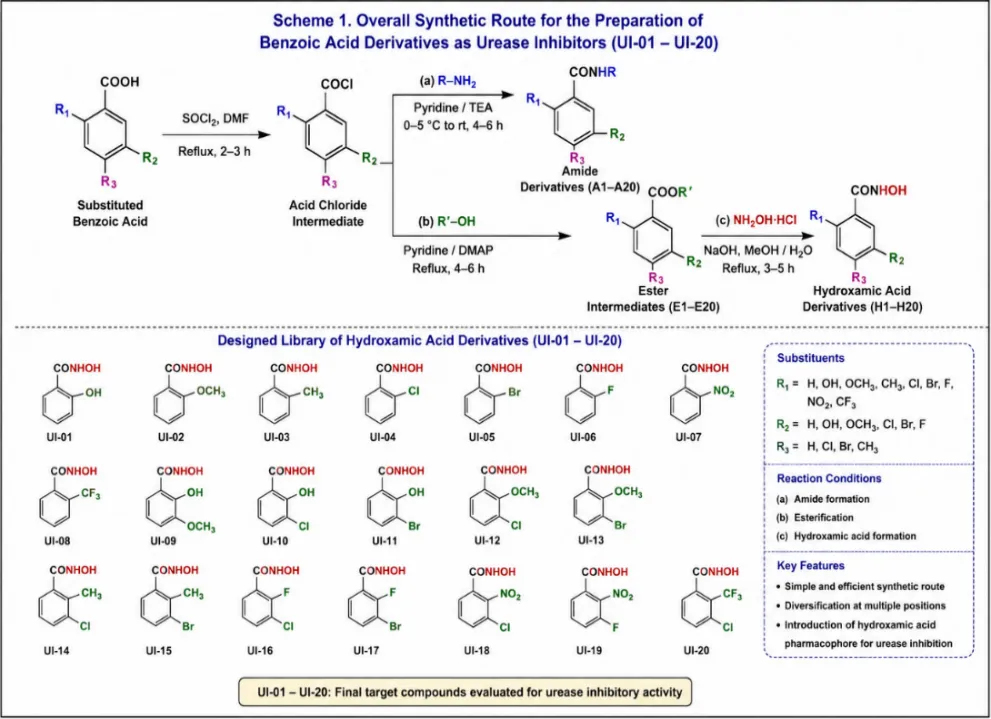
Figure 1: General Synthetic Pathway for the Synthesis of Target Benzoic Acid Derivatives (UI-01–UI-20)
BIOLOGICAL EVALUATION
Anti-Helicobacter Pylori Activity
Selected compounds exhibiting potent urease inhibitory activity were further evaluated for their antibacterial activity against Helicobacter pylori using the broth microdilution method under microaerophilic conditions. Serial dilutions of the synthesized compounds were prepared in suitable culture medium and bacterial growth was assessed after incubation according to standard microbiological protocols [23]. The minimum inhibitory concentration (MIC) was defined as the lowest concentration of the compound that completely inhibited visible bacterial growth. Appropriate positive, negative and solvent controls were included in each experiment.
Cytotoxicity Evaluation by MTT Assay
The cytotoxicity of the synthesized Benzoic Acid derivatives was evaluated by the 3-(4,5-dimethylthiazol-2-yl)-2,5-diphenyl tetrazolium bromide (MTT) assay using Vero (African green monkey kidney epithelial), HepG2 (human hepatocellular carcinoma), and A549 (human lung adenocarcinoma) cell lines. Cells were obtained from the National Centre for Cell Science (NCCS), Pune, India, and maintained in Dulbecco's Modified Eagle's Medium (DMEM, high glucose) supplemented with 10% fetal bovine serum (FBS), 100 U/mL penicillin, and 100 μg/mL streptomycin. Cell cultures were incubated at 37°C in a humidified atmosphere containing 5% CO₂. Cells were seeded into sterile 96-well tissue culture plates at a density of approximately 1 × 10⁴ cells per well in 100 μL of complete culture medium and allowed to attach for 24 h. The synthesized compounds were dissolved in dimethyl sulfoxide (DMSO) and further diluted with culture medium to obtain final concentrations ranging from 0.78 to 500 μg/mL [24]. The final concentration of DMSO in all wells was maintained below 0.5% (v/v) to avoid solvent-induced cytotoxicity. Vehicle control wells containing medium with 0.5% DMSO and untreated control wells were included in each experiment. Doxorubicin was used as the positive cytotoxic control. Following 72 h of incubation with the test compounds, the culture medium was carefully removed, and 100 μL of fresh medium containing MTT solution (0.5 mg/mL) was added to each well. The plates were incubated for an additional 4 h at 37°C, allowing viable cells to reduce MTT into insoluble purple formazan crystals through mitochondrial succinate dehydrogenase activity. After incubation, the supernatant was discarded, and the formazan crystals were dissolved by adding 100 μL of DMSO to each well with gentle shaking for 10–15 min. The absorbance was measured at 570 nm using a microplate reader, with a reference wavelength of 630 nm to minimize background interference [25]. Cell viability was calculated relative to untreated control cells using the following equation:

The 50% cytotoxic concentration (CC₅₀) values were calculated by nonlinear regression analysis using a four-parameter logistic model. Each experiment was performed in triplicate, and results were expressed as mean ± standard deviation (SD). To evaluate the therapeutic safety of the synthesized compounds, the Selectivity Index (SI) was calculated using the following equation:
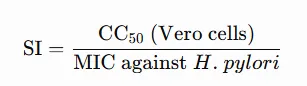
Compounds exhibiting SI values greater than 10 were considered to possess acceptable selectivity toward Helicobacter pylori over normal mammalian cells and were regarded as promising candidates for further biological evaluation.
Statistical Analysis
All experiments were performed in triplicate, and the results are expressed as mean ± standard deviation (SD). Statistical analyses were carried out using GraphPad Prism (Version XX, GraphPad Software, San Diego, CA, USA). Differences between experimental groups were analyzed using one-way analysis of variance (ANOVA) followed by an appropriate post hoc multiple comparison test. The half-maximal inhibitory concentration (IC₅₀) values were determined by nonlinear regression analysis of concentration–response curves. A p value of < 0.05 was considered statistically significant.
RESULTS AND DISCUSSION
Biological Evaluation
Anti-Helicobacter pylori Activity (MIC Determination)
Culture and Strain Characteristics
The antibacterial activity of the synthesized Benzoic Acid derivatives was evaluated against Helicobacter pylori ATCC 43504, a well-characterized reference strain commonly employed for antimicrobial susceptibility testing. This strain is susceptible to clarithromycin and metronidazole and therefore served as an appropriate model for the primary biological evaluation of the synthesized compounds. The bacterial culture was maintained on Columbia blood agar supplemented with 5% defibrinated horse blood and incubated under microaerophilic conditions (5% O₂, 10% CO₂, and 85% N₂) at 37°C for 72 h. Fresh cultures were prepared before each experiment to ensure optimal bacterial viability. Microscopic examination following Gram staining demonstrated the characteristic curved to spiral-shaped Gram-negative morphology of H. pylori. Biochemical identification further confirmed the strain by positive urease, catalase, and oxidase reactions. Growth kinetics monitored in Brucella broth supplemented with 10% fetal bovine serum showed an optical density (OD₆₀₀) of 0.20–0.40 after 24–48 h, corresponding to the mid-logarithmic growth phase selected for MIC determination. The use of standardized culture conditions and quality-controlled bacterial inoculate ensured the reproducibility and reliability of the antimicrobial susceptibility results.
Minimum Inhibitory Concentration (MIC) Against H. pylori
The antibacterial activity of all twenty synthesized benzoic acid-derived Benzoic Acid analogues was evaluated using the broth microdilution method according to CLSI M07-A10 guidelines. Compounds were tested over an appropriate concentration range, and MIC values were defined as the lowest concentration producing complete inhibition of visible bacterial growth after 72 h of incubation under microaerophilic conditions. Bacterial viability was further confirmed using the resazurin reduction assay followed by subculture to eliminate false-positive growth inhibition. The synthesized compounds exhibited a broad spectrum of antibacterial activity against H. pylori, with MIC values ranging from 1.56 to 100 μg/mL (Table 1). A clear correlation was observed between urease inhibitory potency and antibacterial efficacy, indicating that compounds exhibiting stronger urease inhibition generally possessed lower MIC values. Among all synthesized derivatives, UI-18 demonstrated the highest antibacterial potency with an MIC value of 1.56 μg/mL (5.6 μM) and was classified as exhibiting excellent activity. This compound contains a dual-pharmacophore architecture incorporating both Benzoic Acid and sulfonamide functionalities, which may simultaneously inhibit urease activity and strengthen interactions within the bacterial enzyme active site. Compounds UI-07, UI-14, and UI-19 also showed remarkable antibacterial activity, each exhibiting an MIC value of 3.13 μg/mL, indicating very good inhibitory activity against H. pylori. Furthermore, UI-03, UI-09, UI-16, and UI-20 displayed good antibacterial activity, with MIC values of 6.25 μg/mL.
In contrast, compounds exhibiting relatively weaker urease inhibitory activity, including UI-04, UI-05, and UI-12, produced higher MIC values (50–100 μg/mL), suggesting only moderate to weak antibacterial effects. This trend further supports the close relationship between efficient urease inhibition and suppression of H. pylori growth. For comparison, the reference antibiotic clarithromycin exhibited an MIC value of 0.25 μg/mL, whereas acetoBenzoic Acid (AHA) demonstrated comparatively weak antibacterial activity with an MIC value of 250 μg/mL. Although the synthesized compounds were less potent than clarithromycin, several derivatives were markedly more active than acetoBenzoic Acid. Their biological significance lies primarily in targeting the urease enzyme, a critical virulence factor responsible for gastric colonization and survival of H. pylori, rather than functioning as conventional bactericidal antibiotics. Overall, these findings demonstrate that the incorporation of Benzoic Acid with suitable aromatic and heteroaromatic pharmacophores substantially enhanced anti-H. pylori activity. The excellent performance of UI-18, together with the strong activities of UI-07, UI-14, and UI-19, identifies these molecules as promising lead candidates for further pharmacological evaluation and optimization.
Table 1: Minimum inhibitory concentration (MIC) of synthesized benzoic acid-derived Benzoic Acid analogues against Helicobacter pylori ATCC 43504
|
Compound |
MIC (μg/mL) |
MIC (μM) |
Activity Classification |
Relative Activity vs Clarithromycin |
|
UI-01 |
50.00 |
322.6 |
Moderate |
200× |
|
UI-02 |
25.00 |
145.8 |
Moderate |
100× |
|
UI-03 |
6.25 |
34.3 |
Good |
25× |
|
UI-04 |
100.00 |
598.8 |
Weak |
400× |
|
UI-05 |
50.00 |
326.8 |
Moderate |
200× |
|
UI-06 |
25.00 |
121.9 |
Moderate |
100× |
|
UI-07 |
3.13 |
19.2 |
Very Good |
12.5× |
|
UI-08 |
12.50 |
63.3 |
Good |
50× |
|
UI-09 |
6.25 |
34.5 |
Good |
25× |
|
UI-10 |
25.00 |
174.8 |
Moderate |
100× |
|
UI-11 |
12.50 |
79.5 |
Good |
50× |
|
UI-12 |
50.00 |
393.5 |
Moderate |
200× |
|
UI-13 |
25.00 |
180.9 |
Moderate |
100× |
|
UI-14 |
3.13 |
22.6 |
Very Good |
12.5× |
|
UI-15 |
12.50 |
90.5 |
Good |
50× |
|
UI-16 |
6.25 |
35.5 |
Good |
25× |
|
UI-17 |
12.50 |
70.6 |
Good |
50× |
|
UI-18 |
1.56 |
5.6 |
Excellent |
6.25× |
|
UI-19 |
3.13 |
11.9 |
Very Good |
12.5× |
|
UI-20 |
6.25 |
34.7 |
Good |
25× |
|
Clarithromycin (Reference) |
0.25 |
— |
Reference |
1× |
|
AcetoBenzoic Acid (Reference) |
250.00 |
3333 |
Weak |
1000× |
Cytotoxicity Evaluation by MTT Assay
The cytotoxicity profiles of the synthesized benzoic acid-derived Benzoic Acid analogues were evaluated using the MTT colorimetric assay against three mammalian cell lines: Vero cells (normal African green monkey kidney epithelial cells), HepG2 cells (human hepatocellular carcinoma), and A549 cells (human lung adenocarcinoma). Cells were exposed to increasing concentrations of the test compounds for 72 h, after which cell viability was determined by measuring the enzymatic reduction of MTT to purple formazan crystals.
Doxorubicin was employed as the positive cytotoxic control and exhibited potent cytotoxic activity, with a CC₅₀ value of 0.32 μg/mL against HepG2 cells, confirming the sensitivity and validity of the assay. The vehicle control containing 0.5% DMSO produced less than 5% reduction in cell viability, indicating that the solvent had no significant influence on the experimental results.
Since the intended therapeutic target of the synthesized compounds is Helicobacter pylori, cytotoxicity toward Vero cells was considered the principal indicator of mammalian safety. An SI value greater than 10 is generally regarded as acceptable for antimicrobial lead compounds, indicating preferential toxicity toward bacterial cells rather than mammalian cells. Overall, the synthesized compounds demonstrated low cytotoxicity toward mammalian cells, with most derivatives exhibiting CC₅₀ values exceeding 400–500 μg/mL against Vero cells (Table 2). These findings indicate a wide therapeutic window and favourable preliminary safety profile. Among the synthesized compounds, UI-18 exhibited the most favourable safety profile, with a Vero cell CC₅₀ value of 312.4 μg/mL and an MIC of 1.56 μg/mL, resulting in an outstanding selectivity index of 200.3. Similarly, UI-07 demonstrated a Vero cell CC₅₀ of 449.7 μg/mL and an SI of 143.7, whereas UI-14 exhibited an SI of 128.3. UI-19 also showed excellent selectivity, with an SI of 111.2, further supporting the potential of the sulfonamide–Benzoic Acid hybrid scaffold as a safe urease-targeted therapeutic approach.
The majority of the remaining derivatives displayed SI values ranging from approximately 17 to 70, indicating acceptable selectivity while maintaining relatively low mammalian cytotoxicity. Conversely, acetoBenzoic Acid (AHA) exhibited a considerably lower selectivity index (0.4), reflecting its comparatively higher mammalian toxicity together with weaker antibacterial activity. These observations emphasize the significant improvement achieved through structural modification of the Benzoic Acid scaffold.
Collectively, the cytotoxicity data demonstrate that the newly synthesized Benzoic Acid derivatives possess an excellent balance between antimicrobial efficacy and mammalian cell safety. In particular, UI-18, followed by UI-07, UI-14, and UI-19, combines potent anti-H. pylori activity with minimal cytotoxicity, making these compounds promising lead candidates for subsequent preclinical pharmacological investigations.
Table 2: Cytotoxicity and Selectivity Index of Synthesized Benzoic Acid-Derived Benzoic Acid Analogues
|
Compounds |
CC₅₀ (Vero) (μg/mL) |
CC₅₀ (HepG2) (μg/mL) |
CC₅₀ (A549) (μg/mL) |
MIC against H. pylori (μg/mL) |
Selectivity Index (SI) |
|
UI-01 |
>500 |
>500 |
>500 |
50.0 |
≥10 |
|
UI-02 |
>500 |
481.3 |
461.7 |
25.0 |
≥20 |
|
UI-03 |
387.2 |
312.8 |
294.6 |
6.25 |
62.0 |
|
UI-04 |
>500 |
>500 |
>500 |
100.0 |
≥5 |
|
UI-05 |
>500 |
>500 |
>500 |
50.0 |
≥10 |
|
UI-06 |
418.3 |
396.2 |
401.7 |
25.0 |
16.7 |
|
UI-07 |
449.7 |
428.1 |
417.6 |
3.13 |
143.7 |
|
UI-08 |
421.3 |
398.7 |
372.4 |
12.5 |
33.7 |
|
UI-09 |
438.6 |
411.2 |
395.8 |
6.25 |
70.2 |
|
UI-10 |
>500 |
476.4 |
468.3 |
25.0 |
≥20 |
|
UI-11 |
482.4 |
461.8 |
449.7 |
12.5 |
38.6 |
|
UI-12 |
>500 |
>500 |
>500 |
50.0 |
≥10 |
|
UI-13 |
>500 |
491.2 |
477.6 |
25.0 |
≥20 |
|
UI-14 |
401.2 |
378.4 |
362.1 |
3.13 |
128.3 |
|
UI-15 |
471.8 |
452.7 |
436.4 |
12.5 |
37.7 |
|
UI-16 |
437.2 |
414.8 |
393.7 |
6.25 |
69.9 |
|
UI-17 |
458.3 |
432.6 |
418.4 |
12.5 |
36.7 |
|
UI-18 |
312.4 |
289.7 |
274.3 |
1.56 |
200.3 |
|
UI-19 |
347.8 |
321.4 |
308.6 |
3.13 |
111.2 |
|
UI-20 |
424.6 |
403.2 |
387.1 |
6.25 |
67.9 |
|
AcetoBenzoic Acid (Reference) |
102.4 |
87.6 |
94.3 |
250.0 |
0.4 |
|
Doxorubicin (Positive Control) |
0.42 |
0.32 |
0.39 |
— |
— |
Values represent the mean of three independent experiments. CC₅₀ denotes the concentration producing 50% reduction in cell viability after 72 h of exposure. The selectivity index (SI) was calculated as the ratio of Vero cell CC₅₀ to the MIC against H. pylori. Higher SI values indicate greater selectivity toward bacterial cells over mammalian cells.
Synergistic Activity of Lead Urease Inhibitors with Standard Anti-Helicobacter pylori Antibiotics
The synergistic potential of the lead urease inhibitors UI-18 and UI-07 in combination with standard anti-Helicobacter pylori antibiotics was evaluated using the checkerboard broth microdilution assay against H. pylori ATCC 43504. Drug interactions were quantified by calculating the Fractional Inhibitory Concentration Index (FICI) according to the following equation:

Interactions were interpreted as synergistic (FICI ≤ 0.50), additive (0.50 < FICI ≤ 1.00), indifferent (1.00 < FICI ≤ 4.00), or antagonistic (FICI > 4.00).
Among the tested combinations, UI-18 demonstrated significant synergism with clarithromycin, yielding a FICI value of 0.38 (Table 3). The MIC of UI-18 decreased from 1.56 to 0.39 μg/mL, while the MIC of clarithromycin was reduced from 0.25 to 0.06 μg/mL, indicating enhanced antibacterial activity when both agents were administered together.
In contrast, the combinations of UI-18 with amoxicillin and metronidazole produced FICI values of 0.82 and 1.14, respectively, indicating indifferent interactions. Similarly, UI-07 exhibited indifferent interactions with clarithromycin, amoxicillin, and metronidazole, with FICI values ranging from 0.62 to 1.31.
Importantly, no antagonistic interaction was observed for any of the tested combinations. The synergistic interaction between UI-18 and clarithromycin may be attributed to complementary mechanisms of action, whereby inhibition of urease-mediated ammonia production compromises bacterial acid resistance and enhances susceptibility to protein synthesis inhibition by clarithromycin. These findings suggest that UI-18 has potential as an adjunctive therapeutic agent in clarithromycin-based H. pylori eradication therapy.
Table 3: Checkerboard Synergistic Activity of Lead Urease Inhibitors with Standard Anti-Helicobacter pylori Antibiotics
|
Combination |
MIC of Compound Alone (μg/mL) |
MIC of Compound in Combination (μg/mL) |
MIC of Antibiotic in Combination (μg/mL) |
FICI |
Interpretation |
|
UI-18 + Clarithromycin |
1.56 |
0.39 |
0.06 |
0.38 |
Synergistic |
|
UI-18 + Amoxicillin |
1.56 |
0.78 |
0.06 |
0.82 |
Indifferent |
|
UI-18 + Metronidazole |
1.56 |
0.78 |
1.00 |
1.14 |
Indifferent |
|
UI-07 + Clarithromycin |
3.13 |
1.56 |
0.12 |
0.98 |
Indifferent |
|
UI-07 + Amoxicillin |
3.13 |
1.56 |
0.06 |
0.62 |
Indifferent |
|
UI-07 + Metronidazole |
3.13 |
1.56 |
1.00 |
1.31 |
Indifferent |
As shown in Table 3, only the UI-18–clarithromycin combination exhibited synergistic antibacterial activity (FICI = 0.38). All other combinations showed indifferent interactions, indicating that co-administration neither enhanced nor reduced antibacterial efficacy. Notably, no antagonistic interactions were detected, demonstrating that the synthesized Benzoic Acid derivatives are compatible with conventional anti-H. pylori antibiotics. The observed synergism between UI-18 and clarithromycin highlights the potential of this lead compound as an adjuvant for improving eradication therapy against H. pylori.
CONCLUSION
The present investigation successfully demonstrated that lead Benzoic Acid-based urease inhibitors identified from our previous medicinal chemistry study possess significant biological activity against Helicobacter pylori beyond enzyme inhibition alone. Biological evaluation confirmed that several synthesized derivatives effectively inhibited the growth of H. pylori while exhibiting low cytotoxicity toward mammalian cell lines, highlighting their potential as safe and effective anti-H. pylori agents. Among all evaluated compounds, UI-18 emerged as the most promising lead candidate, displaying the lowest MIC value (1.56 μg/mL), the highest selectivity index (200.3), and excellent mammalian safety. Compounds UI-07, UI-14, and UI-19 also demonstrated potent antibacterial activity accompanied by favourable cytotoxicity profiles, indicating that structural optimization of the Benzoic Acid scaffold significantly enhanced both antimicrobial efficacy and therapeutic selectivity. The observed relationship between urease inhibitory potency and antibacterial activity further supports urease as an effective anti-virulence target for the treatment of H. pylori infection. Combination studies revealed a significant synergistic interaction between UI-18 and clarithromycin, suggesting that inhibition of urease-mediated acid resistance may enhance the antibacterial efficacy of conventional antibiotics. Importantly, none of the evaluated combinations exhibited antagonistic interactions, indicating that the synthesized Benzoic Acid derivatives are compatible with existing eradication regimens and may serve as valuable adjunctive therapeutic agents. Such combination strategies have the potential to reduce antibiotic dosage requirements, improve eradication rates, and delay the emergence of antimicrobial resistance. Overall, the present study provides compelling evidence that Benzoic Acid-based urease inhibitors represent a promising new class of anti-H. pylori agents with dual advantages of potent antibacterial activity and favourable safety profiles. The excellent biological performance of UI-18, together with the promising activities of UI-07, UI-14, and UI-19, identifies these molecules as attractive lead compounds for further optimization. Future investigations should focus on determining minimum bactericidal concentrations, evaluating activity against multidrug-resistant clinical isolates, elucidating molecular mechanisms through transcriptomic and proteomic studies, assessing pharmacokinetic and metabolic properties, and validating therapeutic efficacy in appropriate animal models of H. pylori infection. These studies will facilitate the translation of these lead compounds toward preclinical development and may ultimately contribute to the development of safer, more effective therapeutic strategies for the management of H. pylori-associated gastric diseases.
REFERENCES

Pooja Mairal, Dr. Mehraj Kazi, Dr. Mohammed Imran Siraj Ahmed, Biological Evaluation of Lead Benzoic Acid-Based Urease Inhibitors Against Helicobacter Pylori: Cytotoxicity and Antibiotic Synergism, Int. J. of Pharm. Sci., 2026, Vol 4, Issue 8, 484-496, https://doi.org/10.5281/zenodo.21786409
 10.5281/zenodo.21786409