

We use cookies to ensure our website works properly and to personalise your experience. Cookies policy
1Student of M.Pharmacy(Pharmaceutics) R.G Sapkal College of Pharmacy,Trimbakeshwar Nashik
2Head of Department,(Pharmaceutics) R.G.Sapkal College of Pharmacy,Trimbakeshwar,Nashik
3Principal of R.G Sapkal College of Pharmacy,Trimbakeshwar Nashik
Migraine is a common and debilitating neurovascular condition that greatly affects life quality and work efficiency globally. The World Health Organization identifies migraine as one of the top contributors to years lived with disability, particularly impacting people in their most productive years. The intense and episodic characteristics of migraine attacks demand quick and effective treatment to avert worsening symptoms and central sensitization. Triptans, which are agonists of the selective serotonin 5-HT1B/1D receptors, are essential for the immediate treatment of migraines. By causing constriction of cranial blood vessels and reducing the release of calcitonin gene-related peptide (CGRP), triptans can effectively stop migraine attacks when taken at the early stages. Although they are known to be effective, traditional forms of administration like oral tablets often show a slow onset of action due to gastric stasis, absorption issues related to nausea, and significant first-pass metabolism in the liver. To address these challenges, new drug delivery methods are being investigated to improve the pharmacokinetic and therapeutic effects of triptans. These methods encompass sublingual and buccal systems for quick systemic absorption, effervescent formulations to enhance drug dissolution speed, mucoadhesive films for extended mucosal retention, nanocarrier-based delivery systems for better permeability and targeting, transdermal patches, and pulmonary delivery techniques. Such advancements are designed to enhance onset time, bioavailability, and patient satisfaction. Future triptan-based therapeutic perspectives stress personalized medicine, nanotechnology integration with mucosal delivery platforms, quality-by-design formulation methodologies, and innovative system stability and scalability improvements. Continued clinical validation and regulatory development of these developing techniques could considerably improve the treatment of acute migraine attacks
1.1Epidemiology of Migraine
Migraine is one of the most prevalent and disabling neurological disorders worldwide. It affects approximately 12–15% of the global population, with significant variation across geographic regions, age groups, and gender. According to the World Health Organization, migraine is among the leading causes of years lived with disability (YLDs) globally, particularly in individuals under 50 years of age. The high prevalence and recurrent nature of migraine attacks contribute substantially to healthcare utilization, work absenteeism, and reduced productivity.
With a female-to-male ratio of roughly 3:1, migraines are more common in women than in men. Hormonal factors, especially variations in estrogen levels, are largely responsible for this gender gap. After puberty, the prevalence usually rises, peaks between the ages of 30 and 39, and then progressively decreases after the age of 50. However, children and teenagers can also experience migraines, which can have an impact on their quality of life and academic achievement.
The two main subtypes of migraine identified by epidemiological research are migraine without aura, which is the most prevalent variety, and migraine with aura, which is distinguished by brief neurological symptoms prior to the headache phase. About 70–75% of cases are migraine without aura, and 25–30% are migraine with aura.
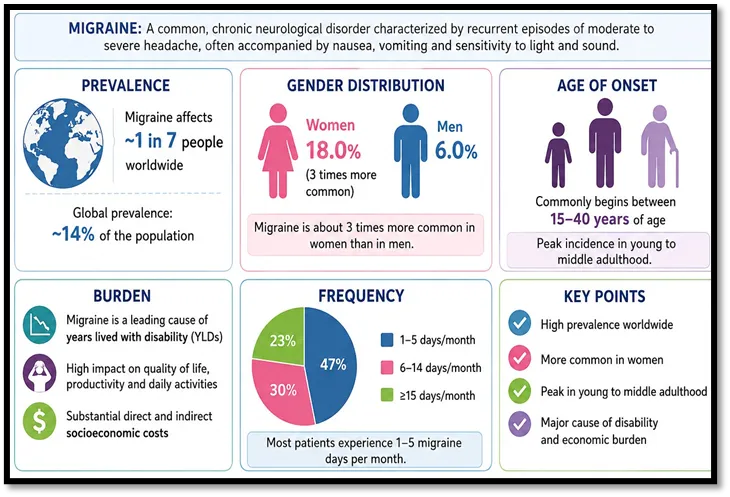
Figure: 01 Epidemiology of Migraine
1.2Need for Rapid-Onset Therapy
Migraine attacks frequently worsen quickly, resulting in excruciating pain, nausea, and impaired functioning. Symptom alleviation from conventional oral drugs may be delayed because of gastric stasis, nausea, or first-pass metabolism. In order to stop attacks early, avoid central sensitization, and improve quality of life, rapid-onset treatment is crucial. The development of innovative delivery systems, such as sublingual, effervescent, and mucoadhesive platforms, is crucial in the therapy of acute migraines because fast-acting formulations enhance patient compliance and overall treatment outcomes.
2.Introduction to Triptans
Triptans are a class of selective serotonin (5-HT1B/1D) receptor agonists that have revolutionized the acute management of migraine attacks. They were first introduced in the early 1990s as a more targeted alternative to conventional therapies such as ergot derivatives and nonsteroidal anti-inflammatory drugs (NSAIDs). By selectively activating 5-HT1B and 5-HT1D receptors, triptans induce cranial vasoconstriction, inhibit the release of pro-inflammatory neuropeptides such as calcitonin gene-related peptide (CGRP), and modulate trigeminal nociceptive pathways. These mechanisms contribute to effective pain relief, reduction of associated symptoms such as nausea and photophobia, and prevention of central sensitization.Interesting Delivery Approaches for Triptans
Despite their efficacy, conventional oral triptans have limitations such as delayed gastric absorption and first-pass metabolism, especially during migraine attacks accompanied by nausea and vomiting. To overcome these challenges, several innovative delivery strategies have been developed:
Triptans act at three main sites in migraine pathophysiology:
3.Inhibition of Pain Transmission
2.1Overview of Migraine Pathophysiology
Trigeminovascular Activation
The Trigeminovascular system is central to migraine.
What it involves:
What happens:
2.3CGRP Release (Calcitonin Gene-Related Peptide)
CGRP is one of the most important molecules in migraine.
During trigeminal activation:
Effects:
Evidence for CGRP’s role:
Examples:
2.4Serotonin (5-HT) Receptor Role
Serotonin plays a regulatory role in migraine.
Important receptors:
Mechanisms:
During migraine:
Triptans (5-HT1B/1D agonists):
Ditans (5-HT1F agonists):
Inhibit trigeminal signaling without vasoconstriction
2.5Central Sensitization
This explains:
Mechanism:
Stage 1: Peripheral Sensitization
Stage 2: Central Sensitization
Clinical implication:
3.PART I: CONVENTIONAL DELIVERY STRATEGIES
Conventional drug delivery strategies refer to traditional methods of administering drugs in which the active pharmaceutical ingredient is delivered in its standard dosage form without advanced targeting or controlled-release technologies. These systems generally rely on natural physiological processes (Absorption, Distribution, Metabolism, and Excretion) to achieve therapeutic effects.
1. Drug Release Pattern
In conventional systems, the drug is released immediately after administration without any control over the release rate.
Characteristics
This leads to fluctuations in plasma drug levels, sometimes causing toxicity or reduced therapeutic effect.
2. Pharmacokinetic Limitations
Conventional delivery systems are strongly affected by pharmacokinetic processes such as:
For example, drugs taken orally may undergo First-pass metabolism in the liver, reducing their bioavailability.
A well-known example is Nitroglycerin, which loses much of its effect when swallowed because it is rapidly metabolized in the liver.
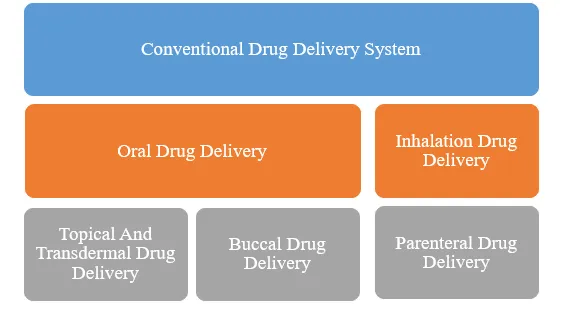
Figure:02 Types of Conventional Drug Delivery
Oral drug delivery is the most commonly utilized method within conventional drug delivery systems due to its non-invasive nature, ease of administration, and high patient compliance. This method encompasses various formulations, including conventional tablets and capsules, liquid formulations, sustained-release systems, and emerging nanocarrier-based approaches. Conventional tablets and capsules remain the most widely used, offering ease of manufacturing and cost-effectiveness, though they often face bioavailability challenges due to solubility issues. The mechanisms governing drug release in oral systems depend on physicochemical properties, GI permeability, and pharmacokinetics. Most conventional oral drugs rely on diffusion and erosion mechanisms for release, which influence their absorption and therapeutic effectiveness.
Inhalation Drug Delivery (IDDS)
Overview and Methods
IDDS is a specialized method used to administer medications directly to the lungs. This route is particularly effective for treating respiratory conditions such as asthma, chronic obstructive pulmonary disease (COPD), and certain infections By delivering drugs directly to the site of action, inhalation therapy can offer rapid relief and targeted treatment, minimizing systemic side effects.
|
Metered Dose Inhaler |
Dry Powder Inhaler |
|
Types of Inhalation Devices 1.Metered-Dose Inhalers (MDIs) MDIs are handheld devices that deliver a specific dose of medication in aerosol form. They consist of a pressurized canister containing the drug and a propellant, which is released when the canister is pressed. Advantages
Portability: Compact and easy to carry, making them convenient Portability: Compact and easy to carry, making them convenient Advantages: Portability: Compact and easy to carry, making them convenient |
2.Dry Powder Inhalers (DPIs): DPIs deliver medication in the form of a fine powder that is inhaled into the lungs. The medication is often stored in a blister or cartridge within the device. Advantages Advantages: No Propellants: DPIs do not require propellants, which can be
|
3.Buccal Drug Delivery System
Buccal drug delivery system is a method of administering drugs through the mucous membranes lining the inside of the cheek (the buccal mucosa). This route allows the drug to be absorbed directly into the bloodstream, bypassing the digestive system and first-pass metabolism in the liver, which can degrade
drugs before they become fully effective.
Buccal Tablets have been the most investigated dosage forms for BDD.
These tablets contain mucoadhesive agents like polyacrylic acids, cellulose
derivatives, etc., either alone or in combination which aid in the adhesion of the tablet to the cheek. These tablets are formulated by direct compression method.
are laminates consisting of an impermeable backing
Patches are laminates consisting of an impermeable backing layer, a drug-containing reservoir layer, and a bio-adhesive surface for mucosal attachment. Patches have been prepared either by solvent casting or hot melt extrusion technique to deliver drugs directly to a mucosal membrane.
3.Injectable Drug Delivery
DD involves administering medications directly into the body via syringes or other devices. This method allows precise control over dosage and provides various routes of administration, each suited to different therapeutic needs. The main types of IDD include intravenous (IV), intramuscular (IM), Intradermal, and subcutaneous (SC) injections.
Intravenous injection delivers the drug directly into the bloodstream
through a vein.This route is commonly used for drugs requiring immediate action or precise control over blood levels.
Intramuscular (IM) Injection
Intramuscular injection involves delivering the drug into the muscle
tissue.This route is used for drugs that benefit from slower, prolonged
release into the bloodstream.
Intradermal Injection
Intradermal injection is a specific type of CDD method where medication is administered into the dermis, the layer of skin just below the outermost layer (epidermis)
4. PART II Emerging Drug Delivery Approches
New drug delivery methods are moving medicine away from general distribution towards targeted, patient-focused treatments. Innovations such as lipid nanoparticles, responsive polymers, and microneedle patches aim to overcome biological barriers, improve bioavailability, and provide medication precisely at the right location and time.
Recent advances in pharmaceutical sciences and biotechnology have led to the development of innovative drug delivery approaches that overcome many limitations of conventional dosage forms, including poor bioavailability, non-specific drug distribution, rapid drug degradation, frequent dosing, and systemic toxicity. Emerging drug delivery systems are designed to improve therapeutic efficacy by enabling controlled, sustained, and targeted release of drugs while minimizing adverse effects. These approaches integrate nanotechnology, biomaterials, tissue engineering, artificial intelligence, and personalized medicine to achieve precise drug delivery.
Nanotechnology-Based Drug Delivery
Nanotechnology has transformed drug delivery by enabling targeted delivery, controlled release, and improved bioavailability. Nanocarriers typically range from 1–1000 nm and can transport both hydrophilic and hydrophobic drugs.
Major Types
Polymeric nanoparticles
Solid lipid nanoparticles (SLNs)
Nanostructured lipid carriers (NLCs)
Dendrimers
3. Targeted Drug Delivery
Targeted delivery directs drugs specifically to diseased tissues while minimizing exposure to healthy organs.
Based on the Enhanced Permeability and Retention (EPR) effect in tumors.
Uses ligands such as
Benefits
4.Implantable Drug Delivery Systems
Implants provide long-term controlled drug release.
Examples
Advantages
Future Perspectives
The future of drug delivery is likely to be influenced by the combination of cutting-edge materials, nanotechnology, biotechnology, artificial intelligence (AI), and precision medicine. Although traditional drug delivery systems will still be important due to their simplicity, cost-effectiveness, and proven clinical applications, future studies will aim to enhance their efficiency through new formulation techniques. Modified-release formulations, combination products with fixed doses, and dosage forms centered on patient needs are predicted to boost therapeutic effectiveness, enhance patient adherence, and minimize the frequency of dosing. In addition, the use of innovative excipients, biodegradable polymers, and advanced manufacturing methods like hot-melt extrusion and three-dimensional (3D) printing is expected to broaden the functionalities of traditional dosage forms.
Lipid nanoparticle (LNP) technology is likely to continue serving as a significant platform for delivering nucleic acid therapies, such as messenger RNA (mRNA), small interfering RNA (siRNA), and CRISPR-based gene editing systems. Building on the achievements of mRNA vaccines, upcoming LNP formulations are expected to enhance tissue-specific targeting, improve intracellular delivery effectiveness, and increase long-term stability, thereby broadening their use in cancer treatments, rare genetic disorders, infectious diseases, and regenerative medicine.
Despite these encouraging advancements, a number of issues need to be resolved before broad clinical adoption is possible. Improving large-scale manufacturing procedures, guaranteeing long-term safety, boosting formulation stability, cutting production costs, and creating uniform regulatory frameworks for cutting-edge drug delivery systems should be the main goals of future research. Transforming laboratory ideas into commercially viable therapeutic treatments will require thorough toxicological screening, standardized characterisation techniques, and well planned clinical trials.
CONCLUSION
Triptans remain the cornerstone of acute migraine therapy due to their selective serotonin (5-HT<sub>1B/1D</sub>) receptor agonist activity, providing effective relief from migraine pain and associated symptoms. However, conventional oral formulations are often limited by delayed onset of action, poor gastrointestinal absorption during migraine attacks, variable bioavailability, and recurrence of symptoms. These limitations have driven the development of alternative drug delivery strategies designed to improve therapeutic outcomes and patient adherence.
Recent advances in pharmaceutical technologies have expanded the range of triptan delivery systems, including intranasal, transdermal, subcutaneous, buccal, pulmonary, and orally disintegrating formulations, as well as novel nanotechnology-based carriers, microneedle systems, lipid-based nanoparticles, polymeric nanoparticles, liposomes, and other targeted delivery platforms. These emerging approaches aim to enhance drug absorption, bypass first-pass metabolism, provide faster onset of action, improve bioavailability, reduce dosing frequency, and minimize adverse effects. Collectively, these innovations have the potential to address the diverse clinical needs of patients with migraine, particularly those who experience nausea, vomiting, dysphagia, or inadequate responses to conventional dosage forms.
Overall, the continued evolution of triptan-based drug delivery systems represents a significant advancement in migraine management. Future research integrating nanotechnology, biomaterials, smart drug delivery platforms, and precision medicine is expected to further improve the efficacy, safety, and patient acceptability of triptan therapy. These innovations hold considerable promise for overcoming the limitations of conventional formulations and advancing more effective, patient-centered migraine treatment.
REFERENCES

Shraddha Chavan, Dr.K.R Jadhav, Rishikesh Bacchav, Triptan-Based Drug Delivery Strategies For Migraine Management: Conventional And Emerging Approaches, Int. J. of Pharm. Sci., 2026, Vol 4, Issue 8, 572-583. https://doi.org/10.5281/zenodo.21790263
 10.5281/zenodo.21790263