

We use cookies to ensure our website works properly and to personalise your experience. Cookies policy
Department of Pharmacy, Vikas Group of Institutions, Nunna, Vijayawada, Andhra Pradesh -521212, India.
Analytical procedures determine whether medicines are released, remain stable and can be changed. In November 2023 the International Council for Harmonisation (ICH) adopted a complete revision of its validation guideline, Q2 (R2), together with a new guideline, Q14, on analytical procedure development. This narrative regulatory review explains how ICH analytical guidance evolved from 1993 to the current pair of guidelines, describes the main elements of Q14 (analytical target profile, minimal and enhanced development approaches, robustness, control strategy and lifecycle management) and summarises what Q2 (R2) changed, including coverage of spectroscopic and multivariate procedures, reuse of development data as validation data and the handling of limited specificity. It links the guidelines to analytical quality by design, compares them with other validation guidance including that of the Indian Pharmacopoeia Commission, and considers greenness assessment as an additional design criterion. A workflow, a checklist and an illustrative HPLC example are proposed. Nineteen verified sources were used, and the review identifies as gaps the limited number of application studies and the lack of information on how Indian regulators apply the new guidelines. The main message is that validation is now one stage in a lifecycle that starts with a defined analytical target profile and continues after approval.
Analytical procedures decide whether a medicine is released, whether it remains stable and whether a change to its manufacture is acceptable. Their reliability therefore underpins every statement about drug quality. For almost three decades the international reference for showing that a procedure is fit for its purpose was the ICH Q2 guideline on validation, which was renamed Q2 (R1) in November 2005 [1,2]. In November 2023 the ICH Assembly adopted a complete revision, Q2 (R2), together with a new guideline, Q14, on analytical procedure development [3-5].
The two guidelines are intended to be read together. Q14 describes scientific principles and a risk-based approach for developing suitable analytical procedures, and Q2 (R2) describes how the finished procedure is validated; jointly they cover the development and validation activities applied during the life cycle of an analytical procedure [2,5]. Both were designed to complement ICH Q8 to Q12 and the guideline Q13 on continuous manufacturing [2,5]. For pharmacy students and analysts this means that “validation” is no longer a single exercise performed once at the end of method development.
The ideas behind the new guidelines were not invented in 2023. Analytical quality by design (AQbD), the application of quality-by-design concepts to analytical methods, had been discussed in the literature for more than a decade, and it allows a method to move within a method operable design region while remaining robust [6,7]. Regulators and pharmacopoeias have also long published their own expectations for validation, and analysts have often found the differences between them confusing [8,9]. Q14 and Q2 (R2) can therefore be understood as a formal, harmonised statement of practices that had been developing in industry and academia.
This review explains how analytical guidance evolved, what Q14 and Q2 (R2) each require, how they relate to analytical quality by design, how they compare with other validation guidance including that of the Indian Pharmacopoeia Commission, how greenness assessment can be added to method design, and what the changes mean for laboratory practice. The objectives are (i) to summarise the guideline elements for students and early-career analysts, (ii) to map them to practical steps, and (iii) to identify gaps that a fuller research programme should address.
MATERIALS AND METHODS
This is a narrative regulatory review. The primary sources are the final ICH texts of Q2 (R2) and Q14 and the earlier Q2 (R1) guideline [1,3,4], the European Medicines Agency page for Q2 (R2) [10] and the guidance document on validation of analytical methods issued by the Indian Pharmacopoeia Commission [11]. Explanatory material on the guidelines was taken from regulatory-news and guidance summaries [2,5,12-14]. Peer-reviewed literature on analytical quality by design, regulatory comparison, application to a stability-indicating method and greenness assessment was added to place the guidelines in a scientific context [6-9,15-17].
Searches were run in October 2026 using the terms “ICH Q2 (R2)”, “ICH Q14”, “analytical procedure development”, “analytical quality by design”, “validation of analytical procedures”, “Indian Pharmacopoeia validation of analytical methods” and “analytical greenness metric”. Only English-language documents were considered. The reference list is deliberately limited to 19 items, each of which was found and checked against a publisher, repository or regulator page during the search. Table 1 summarises the search and selection.
Table 1: Summary of the Literature Search and Selection
| Item | Description |
|---|---|
| Time of search | October 2026 |
| Sources searched | Regulator and pharmacopoeia web pages, bibliographic databases, publisher and repository records |
| Search terms | ICH Q2(R2); ICH Q14; analytical procedure development; analytical quality by design; validation of analytical procedures; Indian Pharmacopoeia validation; analytical greenness metric |
| Inclusion criteria | English language; guideline or regulator document, or peer-reviewed article on analytical procedure development, validation, regulatory comparison or greenness assessment |
| Exclusion criteria | Items whose bibliographic details could not be verified; commercial brochures |
| Final set | 19 sources: 5 ICH, EMA or Indian Pharmacopoeia Commission documents, 5 regulatory-news or guidance summaries and 9 peer-reviewed articles |
Three limitations should be stated. First, the regulatory-news summaries are secondary and non-peer-reviewed, so statements that rely only on them are identified in the text and should be checked against the guideline before they are relied on. Second, only a small number of application studies are included, so the review cannot judge how widely the guidelines have been implemented. Third, no formal protocol such as PRISMA was followed. Statements marked “interpretation” are the author’s reasoning and not findings of the cited sources.
3. Evolution of ICH Analytical Guidance
3.1 Chronology
The first ICH guideline on analytical validation was approved for consultation in October 1993 and recommended for adoption in October 1994 as Q2A. A companion text on methodology, Q2B, followed in 1995 and 1996, and the two were merged in November 2005 into Q2 (R1), titled “Validation of Analytical Procedures: Text and Methodology” [2]. Q2 (R2) and Q14 were endorsed at Step 2 on 24 March 2022 and adopted at Step 4 on 1 November 2023 [3,13]. Table 2 and Figure 1 summarise the main dates reported in the sources.
Table 2: Key Dates in the Development of ICH Analytical Guidance
| Date | Event | Ref |
|---|---|---|
| 26 October 1993 | Q2 approved at Step 2 for public consultation | [2] |
| 27 October 1994 | Q2A approved at Step 4 | [2] |
| 6 November 1996 | Q2B (methodology) approved at Step 4 | [2] |
| November 2005 | Q2 and Q2B merged as Q2(R1) | [1,2] |
| 24 March 2022 | Q2(R2) and Q14 endorsed at Step 2 | [3,13] |
| 1 November 2023 | Q2(R2) and Q14 adopted at Step 4 | [3,13,14] |
| 30 November 2023 | Error correction to Q2(R2) tables issued | [3,12] |
| 7 March 2024 | US FDA announced final guidances (Federal Register notice) | [12] |
| 14 June 2024 | Q2(R2) effective in the EU | [2,10] |
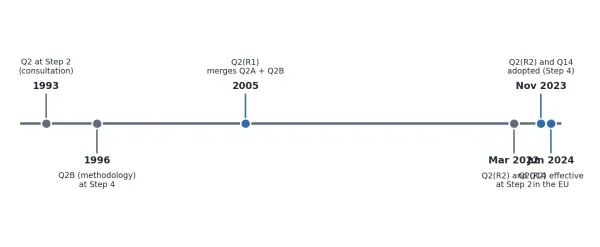
Figure 1: Timeline of ICH Guidance on the Validation of Analytical Procedures, 1993 to 2024 (Dates from References [2,3,10]).
The sequence shows that the revision was not a small update. Q2 (R2) is described as a complete revision that brings in more recent applications of analytical procedures and aligns the text with Q14 [2]. The Q2 (R2) document itself records an error correction to a table on dissolution with HPLC [3], and the regional dates differ, so readers should confirm the implementation date that applies to their own regulator (interpretation).
3.2 Position within the ICH quality guidelines
The analytical guidelines do not stand alone. Q14 and Q2 (R2) were designed to complement ICH Q8 to Q12 and the guideline on continuous manufacturing, Q13 [2,5]. In the AQbD literature, analytical methods are described as a key part of the control strategy under the pharmaceutical quality system of ICH Q10, and AQbD is presented as part of risk management and pharmaceutical development [6]. A white paper adds that AQbD is rooted in ICH Q8 and Q9 translated to the analytical space [18]. The result is a coherent chain: a product is designed with defined quality attributes, a control strategy is chosen, and the analytical procedures that measure those attributes are themselves developed with the same logic of defined purpose, risk assessment and lifecycle management (interpretation).
4. ICH Q14: Analytical Procedure Development
4.1 Structure and purpose
Q14 provides principles for describing the development process of an analytical procedure. It is intended to improve regulatory communication between industry and regulators and to make approval and post-approval change management of analytical procedures more efficient, scientifically sound and risk-based [5]. The guideline is about 40 pages long and covers general considerations, the analytical target profile, knowledge and risk management, evaluation of robustness and parameter ranges, the analytical procedure control strategy, lifecycle management and post-approval changes, development of multivariate procedures, development of procedures for real-time release testing, and the submission of procedure-related information [14].
4.2 Analytical target profile and development approach
The analytical target profile (ATP) states what the procedure must be able to achieve, and Q14 also asks the applicant to choose between a minimal and an enhanced development approach [12,13]. In practice the ATP is written before method development begins, so that experiments are designed to meet a defined performance requirement and not to “see what works” (interpretation). The enhanced approach is associated with the concepts of established conditions and method operable design regions, and with managing changes after approval without unnecessary regulatory burden [13].
4.3 Robustness, control strategy and lifecycle
Robustness, the capacity of a procedure to keep meeting its performance criteria under deliberate small variations of its own parameters, is normally evaluated during development under Q14 and is not repeated in the separate Q2 (R2) validation study [13]. The control strategy includes the system suitability test (SST), whose acceptance criteria come from the procedure’s performance criteria and whose components are selected using the risk assessment and development data [13]. Because a procedure continues to exist after the first approval, Q14 also deals with lifecycle management and post-approval changes [5,14].
4.4 Multivariate procedures and real-time release testing
Q14 contains specific sections on the development of multivariate analytical procedures and of procedures for real-time release testing [14]. This reflects the wider use of spectroscopic and spectrometric techniques such as near-infrared, Raman, nuclear magnetic resonance and mass spectrometry, which often require multivariate statistical analysis [5].
4.5 Key terms
Table 3 defines the terms that students meet most often when reading Q14. The definitions are paraphrased from the descriptions in the cited sources and from the glossary approach of the guidelines, and the guideline glossary should be consulted for the exact wording.
Table 3: Key Terms Used in ICH Q14 and Q2 (R2)
| Term | Meaning in this review | Ref |
|---|---|---|
| Analytical target profile (ATP) | A statement of what the procedure must be capable of measuring and with what performance | [13] |
| Minimal and enhanced approach | Two routes for developing a procedure; the enhanced route involves more systematic knowledge and risk management | [13,14] |
| Established conditions | Procedure elements that are described as necessary to assure performance and that are managed through change control | [13] |
| Method operable design region (MODR) | The region of parameter values within which the procedure meets its performance requirements | [6,13] |
| Robustness | Capacity to keep meeting performance criteria under small deliberate parameter variations | [13] |
| System suitability test (SST) | A check of performance made each time the procedure is run; an integral part of the procedure | [10,13] |
| Lifecycle management | Managing the procedure after approval, including changes | [5,14] |
5. ICH Q2 (R2): Validation of Analytical Procedures
5.1 Scope and structure
Q2 (R2) presents the elements to be considered when validating analytical procedures included in registration applications, and it gives guidance on selecting and evaluating the validation tests [3]. It applies to procedures used for release and stability testing of commercial drug substances and products [12]. The EMA text adds that it applies to procedures used as part of the control strategy following a risk-based approach, that its principles can be applied in a phase-appropriate manner during clinical development, and that it is directed at common uses such as assay, potency, purity, impurity (quantitative or limit test), identity and other quantitative or qualitative measurements [10].
The guideline is about 36 pages long. It is organised into an introduction, general considerations for validation (including the validation study, validation during the lifecycle and considerations for multivariate procedures), validation tests, methodology and evaluation, a glossary, references, and annexes on the selection of validation tests and on illustrative examples for analytical techniques [2,3,14]. The EMA page lists accuracy, precision, specificity, detection limit, quantitation limit, linearity and range as the keywords of the guideline [10].
5.2 Validation characteristics
The Q2 (R1) validation characteristics remain the vocabulary on which most laboratory training is based [1]. Accuracy expresses how close the measured value is to the accepted true value; precision expresses the closeness of agreement between repeated measurements, and includes repeatability and intermediate precision; specificity is the ability to measure the analyte in the presence of other components; the detection limit and quantitation limit are the lowest amounts that can be detected or quantified; linearity is the ability to obtain results proportional to concentration; and range is the interval over which suitable accuracy, precision and linearity are demonstrated [1]. Table 4 shows which characteristics are typically evaluated for each type of test under Q2 (R1); analysts should check Annex 1 of Q2 (R2), which reorganises the selection of validation tests [3].
Table 4: Characteristics Typically Evaluated by Type of Test (Q2 (R1) Approach)
| Characteristic | Identity | Impurity test (quantitative) | Impurity test (limit) | Assay |
|---|---|---|---|---|
| Accuracy | No | Yes | No | Yes |
| Precision | No | Yes | No | Yes |
| Specificity | Yes | Yes | Yes | Yes |
| Detection limit | No | No | Yes | No |
| Quantitation limit | No | Yes | No | No |
| Linearity | No | Yes | No | Yes |
| Range | No | Yes | No | Yes |
Source of Table 4: summary of the Q2 (R1) approach [1]. Several of the entries in Q2 (R1) carry conditions, for example that a lack of specificity in one procedure may be compensated by another, so the table is a teaching summary and not a substitute for the guideline.
5.3 What changed from Q2 (R1)
Table 5 lists the changes that the sources describe. Three are particularly important for laboratories. First, the guideline now explicitly covers validation principles for spectroscopic or spectrometric data, including multivariate methods [5]. Second, suitable data from development studies under Q14 can be used as part of the validation data, so a development robustness study need not be repeated [12,13]. Third, a lack of specificity in one procedure, which Q2 (R1) said “could” be compensated by other supporting procedures, should in Q2 (R2) be compensated by one or more supporting procedures unless appropriately justified [12].
Table 5: Main Changes from Q2 (R1) to Q2 (R2) Reported in the Sources
| Aspect | Q2(R1) | Q2(R2) | Ref |
|---|---|---|---|
| Overall approach | Validation text and methodology (2005) | Complete revision, aligned with Q14 and the analytical procedure lifecycle | [2,5] |
| Techniques covered | Classical procedures | Includes spectroscopic or spectrometric data (NIR, Raman, NMR, MS), often multivariate | [5] |
| Use of development data | Not described as part of validation | Suitable data from Q14 development studies can form part of the validation data | [12] |
| Lack of specificity | May be compensated by other supporting procedures | Should be compensated by supporting procedures unless appropriately justified | [12] |
| Robustness | Treated within validation | Evaluated in development under Q14 | [12,13] |
| System suitability | Not the focus | Integral to the control strategy; set in development under Q14 | [10,13] |
| Phase-appropriate use | Not described | Principles can be applied in a phase-appropriate manner in clinical development | [10] |
5.4 Designing the validation study
A validation study is a planned experiment, and its design should follow from the intended purpose of the procedure. The EMA text states that validation should demonstrate that the procedure is fit for its intended purpose and that the validation strategy is developed from knowledge of the procedure and its intended use, including its performance over the reportable range, for instance specificity or selectivity, accuracy and precision [10]. Because the SST is an integral part of the procedure, as described in Q14, it is established during development and checked each time the procedure is run [10,13].
In practice, a student planning a validation would choose experiments that match the characteristics in Table 4: specificity experiments with placebo and stressed samples, accuracy experiments across the range, precision experiments with replicate preparations, and linearity experiments with several concentrations [1]. Table 6 gives an illustrative plan. The experiments reflect common laboratory practice, but the acceptance criteria are illustrative only and are not taken from Q2 (R2); each laboratory should define criteria from its ATP and from the guideline text.
Table 6: Illustrative Validation Plan for an RP-HPLC Assay of a Tablet (Illustrative Criteria, Not from the Guideline)
| Characteristic | Illustrative experiment | Illustrative criterion |
|---|---|---|
| Specificity | Inject placebo, stressed sample and spiked impurities | No interference at the analyte peak; adequate resolution |
| Accuracy | Spike placebo at three levels in triplicate | Mean recovery within the limits set in the ATP |
| Precision | Six preparations at 100% on one day; repeat on a second day with another analyst | Relative standard deviation within the ATP limit |
| Linearity and range | Five concentrations across the working range | Response proportional to concentration over the range |
| Robustness (development) | Small deliberate changes of pH, flow, temperature and organic proportion | Resolution and peak area stay within limits |
| System suitability | Replicate injections of a reference solution before each run | Resolution, tailing and repeatability within limits |
5.5 Spectroscopic and multivariate procedures
One of the clearest additions of Q2 (R2) is its treatment of spectroscopic and spectrometric procedures. The guideline now covers validation principles for such data, including multivariate methods [5], and its table of contents includes a section on considerations for multivariate analytical procedures [10]. Q14, in turn, has sections on the development of multivariate procedures and of procedures for real-time release testing [14]. The techniques concerned include near-infrared, Raman, nuclear magnetic resonance and mass spectrometry, which often require multivariate statistical analysis [5].
Earlier QbD work already pointed in this direction: Vogt and Kord described the application of QbD principles to vibrational spectroscopy for chemical identification as well as to HPLC and Karl Fischer titration [7]. For a student, the practical consequence is that a model-based spectroscopic procedure is validated as a procedure and not only as an instrument measurement: the calibration model, the reference method used to build it and the range over which it is applied all form part of what has to be shown to be fit for purpose (interpretation). Because the sources used here describe the multivariate sections only briefly, the full guideline text should be consulted before such a validation is planned.
6. Analytical Quality by Design
6.1 Concept and benefits
Analytical quality by design transfers the logic of pharmaceutical quality by design to the analytical laboratory. Quality by design begins with predefined objectives and uses science and risk management to gain understanding and control; for analytical methods it requires that a goal be defined and that alternative methods be evaluated systematically to obtain optimal performance [7]. Peraman and colleagues describe AQbD as allowing a method to move within a method operable design region, which reduces out-of-trend and out-of-specification results because the method is robust within that region [6]. They also argue that AQbD helps to develop robust and cost-effective methods that remain applicable throughout the product lifecycle and that give regulatory flexibility [6].
Method failure during transfer and in quality control laboratories is described as increasingly common, which the authors attribute in part to the way robustness was treated under ICH Q2 [6]. This view helps to explain why Q14 moves robustness into development and why development data can later count as validation data (interpretation).
6.2 Tools: risk assessment, experimental design and design space
Orlandini and colleagues describe the application of QbD concepts to the development of analytical separation methods such as chromatography and capillary electrophoresis [15]. In the review of Vogt and Kord, the design space for an analytical method is the combination of input variables that ensures data quality, and a change within that space is not considered a change of method [7]. Their examples include HPLC, Karl Fischer titration for moisture, vibrational spectroscopy for identification, colour measurement and trace analysis of genotoxic impurities, with potential future uses in methods such as ICP-OES, X-ray powder diffraction and particle size analysis [7]. Table 7 maps the AQbD elements to the corresponding concepts of Q14.
Table 7: Analytical Quality by Design Elements and Their Counterparts in ICH Q14
| AQbD element | Description | Counterpart in Q14 | Ref |
|---|---|---|---|
| Method goal | Definition of the purpose and performance required of the method | Analytical target profile | [7,13] |
| Risk assessment | Identification of parameters likely to affect performance | Knowledge and risk management | [7,14] |
| Systematic evaluation | Scouting of alternative methods and parameters to find optimal performance | Development approach (minimal or enhanced) | [7,13] |
| Design space or MODR | Combination of inputs that ensures data quality; changes within it are not method changes | Method operable design region; established conditions | [6,7,13] |
| Control strategy | Control of input factors to meet performance goals | Analytical procedure control strategy and SST | [7,13] |
| Lifecycle review | Periodic re-evaluation of existing methods for gaps or improvement | Lifecycle management and post-approval change | [6,14] |
6.3 Example: a stability-indicating method
Schmidt and Molnár applied an innovative quality-by-design approach to the development of a stability-indicating ultra-high-performance liquid chromatographic method for ebastine in the active substance and in pharmaceutical formulations [16]. The study illustrates how a method that must separate degradation products from the drug can be designed systematically and not by trial and error. For students, it is a useful example of the kind of development work that Q14 now describes in regulatory terms (interpretation). Readers should consult the paper for its design factors and results, because the details were not reviewed here in full.
The example also shows how specificity and development interact. A stability-indicating procedure has to separate the active substance from products formed by degradation, so the stressed samples used in development are the same materials that are later used in the specificity part of validation [1,16]. Under Q2 (R2), where a single procedure lacks specificity, supporting procedures should compensate unless the lack is appropriately justified [12]. Taken together, these points mean that the stress studies done early in development are not an optional extra but evidence that will be reused (interpretation).
6.4 Risk-based approach
Deidda and colleagues reviewed the use of a risk-based approach in method development for pharmaceutical quality control. They state that regulatory bodies increasingly require systematic approaches, that quality control methods play a key role in the control strategy of drug manufacture, and that a risk-based approach to method development is strongly recommended so that method performance fits its purpose throughout the entire life cycle [19]. Their review describes the AQbD workflow step by step, together with the use of design of experiments and the method operable design region, and discusses recent applications [19]. For a student, the practical meaning is that risk assessment is not a formality: it decides which parameters are studied, how many experiments are needed and where the operating region lies (interpretation).
6.5 Lifecycle management and method control
A white paper by Verch and colleagues addresses AQbD, lifecycle management and method control for analytical methods used in the biopharmaceutical and vaccine industries. It states that AQbD can provide a systematic framework for a continuously validated, robust assay and for lifecycle management, that AQbD is rooted in ICH Q8 and Q9 translated to the analytical space, and that the paper also discusses challenges of implementation and regulatory strategy [18]. The authors liken an analytical method to a pharmaceutical process whose output, the data, must be fit for use [18]. This view fits the Q14 emphasis on ongoing performance and change management after approval [5,14].
The practical difference between the earlier and the lifecycle model is summarised in Table 8. The table is a synthesis of the cited sources and not a quotation from any one of them.
Table 8: Traditional Validation and the Lifecycle Approach Compared
| Feature | Traditional one-time validation | Lifecycle approach (Q14 and Q2(R2)) | Ref |
|---|---|---|---|
| Starting point | Method developed, then validated | Purpose and performance defined first (ATP) | [7,13] |
| Role of development data | Separate from validation | Suitable data can form part of the validation data | [12] |
| Robustness | Often tested late | Evaluated during development | [6,13] |
| Operating conditions | Single fixed set | Region of acceptable settings (MODR or design space) | [6,7] |
| After approval | Changes handled case by case | Lifecycle management and defined change handling | [14,18] |
| Risk management | Implicit | Explicit risk assessment during development | [14,19] |
7. Comparison with Other Validation Guidance
Before Q2 (R2), analysts had to reconcile several sets of validation requirements. Shabir compared the requirements of the US FDA, the US Pharmacopeia and the ICH for HPLC methods, to clear up the confusion that resulted from each source setting out different requirements [8]. A later review compared validation requirements across ICH, the United States Pharmacopeia, the Chinese Pharmacopoeia and the Brazilian regulator ANVISA, and noted the challenge that differences between local requirements and ICH guidelines create for health authorities and for locally established companies [9].
In India, the Indian Pharmacopoeia Commission issued a guidance document on validation of analytical methods on 16 September 2021 (document IPC/GD/04, version 1.0). It describes the method validation process as demonstrating through documentary evidence that the performance characteristics of the method meet the requirements for its intended use, outlines a validation protocol with reference to HPLC, and notes that similar criteria can be used for other instrumental methods [11]. The document predates the adoption of Q2 (R2) and Q14 in 2023, so analysts should check whether it has been updated (interpretation).
Table 9: Selected Sources of Validation Guidance and Their Emphasis
| Source | Emphasis reported | Ref |
|---|---|---|
| ICH Q2(R2) and Q14 (2023) | Lifecycle approach; ATP; validation aligned with development; multivariate procedures included | [3,5] |
| ICH Q2(R1) (2005) | Text and methodology of validation characteristics | [1] |
| FDA, USP and ICH (HPLC, 2003) | Differences and similarities between the three sets of requirements | [8] |
| ICH, USP, ChP and ANVISA (2024) | Comparison of requirements and implementation challenges | [9] |
| Indian Pharmacopoeia Commission (2021) | Validation protocol and process, with reference to HPLC | [11] |
| EMA (effective 14 June 2024) | Adoption of Q2(R2) in the EU; scope and phase-appropriate use | [10] |
8. Greenness Assessment in Method Design
The amounts and toxicity of reagents, waste, energy requirements, number of procedural steps, miniaturisation and automation are among the many criteria used to judge how green an analytical procedure is [17]. Several metric systems exist. The National Environmental Methods Index uses a four-part pictogram, the Analytical Eco-Scale assigns penalty points to aspects that reduce greenness, and the RGB model also includes analytical performance and productivity [17]. None of these systems evaluates each of the 12 principles of green analytical chemistry, which is the gap addressed by the AGREE calculator, whose criteria come from the 12 principles and are transformed onto a 0 to 1 scale to give a pictogram with an overall score [17].
Table 10: Greenness Assessment Tools Described in the AGREE Paper
| Tool | How it works | Limitation noted | Ref |
|---|---|---|---|
| NEMI | Four-part pictogram reflecting criteria such as waste and reagents | Does not assess all 12 principles | [17] |
| Analytical Eco-Scale | Penalty points for aspects that decrease greenness | Does not assess all 12 principles | [17] |
| RGB model | Adds analytical performance and productivity to greenness | Does not assess all 12 principles | [17] |
| AGREE | Scores the 12 principles on a 0 to 1 scale and gives a pictogram; open-source software | Weights are set by the user | [17] |
Greenness is not part of the ATP in Q14 as described in the sources reviewed here. It could nevertheless be added as a design criterion alongside performance, so that two methods that both meet the ATP can be ranked by their environmental and occupational hazards (interpretation). This is a proposal for method developers and is not a regulatory requirement.
Greenness scores should be used with care. In AGREE the assessment criteria are transformed onto a 0 to 1 scale and the final score depends on weights that the user can assign to the principles [17], so two analysts can obtain different scores for the same procedure if they weight the principles differently. A score is therefore best used to compare candidate methods within one project under stated weights, and not as an absolute label of a method (interpretation). It should also never replace the performance requirements of the ATP: a greener method that cannot meet the ATP is not fit for purpose [13].
9. Putting the Lifecycle Approach into Practice
9.1 Workflow
Figure 2 shows the workflow implied by the two guidelines. The ATP is defined first; development and robustness work follow under Q14; validation under Q2 (R2) confirms performance and can reuse suitable development data; and the control strategy and lifecycle management then maintain performance in routine use and when changes are needed [3,4,12].
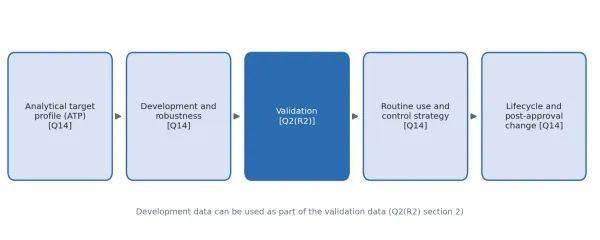
Figure 2: Analytical Procedure Lifecycle Implied by ICH Q14 and Q2 (R2) (Author’s Synthesis Based on References [3,4,12]).
9.2 A practical checklist
Table 11 turns the guidelines into a checklist that a student or analyst can apply to a project. It is the author’s proposal: each step is linked to the guideline element that raises it, but the checklist has not been validated.
Table 11: Suggested Checklist for Developing and Validating an Analytical Procedure (Author’s Proposal)
| Step | Action | Basis |
|---|---|---|
| 1. Define the ATP | State the quantity to be measured and the performance required before experiments begin | [13] |
| 2. Choose the approach | Decide between a minimal and an enhanced development approach and justify the choice | [13] |
| 3. Assess risk | Identify parameters that may affect performance using prior knowledge and risk assessment | [7,14] |
| 4. Test robustness | Evaluate small deliberate variations of parameters during development, for example by experimental design | [13,15] |
| 5. Set system suitability | Base criteria on the performance criteria and on development data | [13] |
| 6. Validate | Select validation tests for the procedure and reuse suitable development data | [3,12] |
| 7. Check greenness | Compare candidate methods using a greenness metric | [17] |
| 8. Plan the lifecycle | Define how changes after approval will be assessed and documented | [5,14] |
9.3 Method transfer and the lifecycle
Method transfer, the movement of a procedure from the developing laboratory to a quality control or contract laboratory, is one of the places where weaknesses in development become visible. Peraman and colleagues state that analytical method failure is becoming more common during method transfer and in quality control departments, and they propose that the range of robustness of a method be proven by verification and scientific understanding to avoid failure at transfer and to reduce out-of-specification and out-of-trend results [6]. They also recommend that analytical methods for existing drugs be periodically re-evaluated to address gaps or improvements in performance, using AQbD [6].
The lifecycle approach changes how transfer is planned. If the ATP and the region of acceptable operating conditions are documented, the receiving laboratory knows what performance is required and how far settings can be varied, which is more informative than a list of fixed conditions [7,13]. The white paper of Verch and colleagues similarly links method control and lifecycle management to continued confidence in the data produced throughout the life of the method [18]. In India, where contract laboratories and multi-site manufacturers are common, such documentation could reduce disputes between laboratories (interpretation).
9.4 Illustrative example: assay of a tablet by RP-HPLC
The following example is hypothetical and is meant only to show how the steps fit together; the numerical values are illustrative and are not taken from any guideline. Suppose a laboratory must develop an assay for a single-drug tablet. The ATP could state that the procedure must quantify the drug over 80 to 120% of the label claim with an accuracy within 98 to 102% and a relative standard deviation of not more than 2%. A risk assessment would list mobile-phase pH, organic-solvent proportion, column temperature, flow rate and wavelength as parameters that may affect resolution and peak area. A small experimental design would then map how these parameters affect resolution from the nearest degradation product, and the combination of settings that keeps resolution acceptable would define the method operable design region [6,7].
The SST would be set from the performance criteria, for example a minimum resolution and a maximum relative standard deviation for replicate injections [13]. Validation under Q2 (R2) would then confirm accuracy, precision, specificity and range, reusing the robustness data from development where suitable [3,12]. If two candidate mobile phases both met the ATP, a greenness assessment could be used to choose the one with the lower environmental impact [17]. After approval, a change in column supplier or mobile-phase composition within the design region would be managed as a change within the established region and not as a new method [7,13].
9.5 What to document
Both guidelines are written with regulatory submissions in mind. Q2 (R2) indicates the data that should be presented in a regulatory submission [10], and Q14 has a section on the submission of procedure-related information [14]. For a laboratory, the lifecycle approach therefore raises the standard of record keeping: the ATP, the risk assessment, the development experiments, the validation data and the control strategy all need to be traceable. Table 12 lists documentation that a laboratory could keep for each procedure. It is the author’s proposal and reflects the guideline topics, not a prescribed list.
Table 12: Suggested Documentation for Each Analytical Procedure (Author’s Proposal)
| Record | Content | Related guideline topic | Ref |
|---|---|---|---|
| ATP | Purpose, analyte, range and required performance | Analytical target profile | [13] |
| Risk assessment | Parameters considered, ranking and rationale | Knowledge and risk management | [14,19] |
| Development report | Experiments, robustness data and operating region | Development and robustness evaluation | [13,14] |
| Validation report | Tests selected, results and reuse of development data | Validation tests and evaluation | [3,12] |
| Control strategy | SST criteria and routine checks | Analytical procedure control strategy | [10,13] |
| Change history | Changes after approval and their assessment | Lifecycle management | [14,18] |
9.6 A second illustrative example: UV spectrophotometric assay
A simple example shows that the lifecycle approach is not limited to chromatography. Suppose a laboratory wishes to develop a UV spectrophotometric assay for a drug with a strong chromophore in a tablet. The ATP would state the concentration range and the accuracy and precision required. The risk assessment would consider the solvent, the wavelength, the excipient absorbance and the sample preparation. A few experiments could confirm that excipients do not absorb at the working wavelength; if they do, a supporting procedure would be needed, because under Q2 (R2) a lack of specificity should be compensated by supporting procedures unless justified [12]. The numerical values and the choice of drug are left open because this example is hypothetical and meant only to show the sequence of decisions.
Compared with the HPLC example, the UV assay has fewer parameters to optimise but a higher risk of non-specificity, which illustrates why the risk assessment is repeated for every procedure and not copied from one method to another (interpretation). It also shows where greenness assessment could be informative: a direct UV method with a simple solvent could score differently from an HPLC method on the criteria of reagent use, waste and energy [17].
9.7 Relevance to India
The Indian Pharmacopoeia Commission guidance on validation of analytical methods (2021) provides a practical protocol for HPLC-based validation [11], but none of the sources used here describes how Q2 (R2) and Q14 are applied by Indian regulators. Readers in India should consult the primary documents of the Central Drugs Standard Control Organisation and the Indian Pharmacopoeia Commission directly before drawing conclusions for local practice. This is a clear gap and a suitable subject for a follow-up study (interpretation).
DISCUSSION
10.1 Principal findings
The central change is conceptual. Under Q2 (R1), validation could be seen as a single set of experiments performed on a finished method. Under Q14 and Q2 (R2), the method has a defined purpose from the start, evidence is built during development, and validation is one stage in a lifecycle that continues after approval [2,5,12]. This is consistent with the quality-by-design thinking of ICH Q8 to Q12, which the new guidelines were designed to complement [5], and with the AQbD literature that preceded them [6,7,15].
10.2 Practical consequences
Three consequences follow (interpretation). Laboratories will need to document development more thoroughly, because development data can now count as validation data [12]. Method comparison and transfer will depend more on a clear ATP than on matching a particular instrument or column, which may help to reduce the transfer failures described in the AQbD literature [6]. And techniques such as NIR and Raman, which rely on multivariate models, are now explicitly within the scope of validation principles [5], which supports the use of real-time release testing [14]. Table 13 corrects some common misunderstandings that these consequences could otherwise produce.
The lifecycle thinking is not limited to small-molecule tablets. The white paper of Verch and colleagues notes that analytical methods are used throughout the biopharmaceutical and vaccine industries for research and development and to help control manufacturing inputs and outputs, and that these methods should continuously provide quality data [18]. For biological products, where assays are often complex, the idea of a continuously validated, robust method with defined lifecycle management may be even more valuable [18]. The sources used here do not describe how Q14 and Q2 (R2) are applied to biological assays in detail, so this remains an area for further reading (interpretation).
Table 13: Common Misunderstandings About Q14 and Q2 (R2)
| Misunderstanding | What the sources indicate | Ref |
|---|---|---|
| Q2(R2) replaces Q14 | The two guidelines complement each other: Q14 covers development and Q2(R2) covers validation | [2,5] |
| Robustness is part of validation | Robustness is normally evaluated during development under Q14 | [13] |
| Development experiments are separate from validation | Suitable development data can form part of the validation data | [12] |
| Validation is done once | Validation is a stage in the analytical procedure lifecycle | [3] |
| Lack of specificity can be ignored if the rest is good | Supporting procedures should compensate unless the lack is justified | [12] |
| Greenness is required by the guideline | The sources reviewed do not make greenness a requirement; metrics are voluntary tools | [17] |
10.3 Challenges and future directions
Table 14 lists the main challenges identified in this review together with possible directions. Many of them concern implementation and not the science: laboratories must adapt documentation and training, regulators must align regional practices, and pharmacopoeias must update their guidance documents [8,9,11].
Table 14: Challenges and Future Directions
| Domain | Challenge | Possible direction | Ref |
|---|---|---|---|
| Training | Analysts and students trained on a one-time validation model | Teach the lifecycle approach, ATP and risk assessment | [7,13] |
| Documentation | Development data must be recorded well enough to serve as validation data | Adopt development notebooks and templates linked to the ATP | [12] |
| Regional alignment | Different implementation dates and local requirements | Monitor regional adoption and pharmacopoeial updates | [9-11] |
| Multivariate methods | Validation of NIR, Raman and other models | Apply Q2(R2) principles; study applications | [5,14] |
| Sustainability | Greenness is not part of the guideline text | Add greenness criteria to method selection | [17] |
| Evidence base | Few application studies reviewed here | Extend the review with case studies of Q14 implementation | [7,16] |
10.4 Recommendations for laboratories, educators and regulators
Three groups can act on the findings of this review. Laboratories can begin by writing an ATP for every new procedure, recording development experiments in a form that can later support validation, and adding a greenness comparison when more than one candidate method meets the ATP [12,13,17]. Educators can teach analytical quality by design and the lifecycle approach alongside the classical validation characteristics, so that students understand both the vocabulary of Q2 (R1) and the logic of Q14 [1,7,19]. Regulators and pharmacopoeias can support implementation through worked examples and updated guidance documents, an area in which the Indian Pharmacopoeia Commission guidance of 2021 could be revisited in the light of Q2 (R2) and Q14 [9,11]. These are the author’s recommendations and not statements of the cited sources.
Table 15: Key Messages for Pharmacy Students
| Message | Why it matters | Ref |
|---|---|---|
| Start with the purpose of the method | The ATP guides all later experiments | [13] |
| Validation is a stage, not the whole story | It sits inside a lifecycle that continues after approval | [3,5] |
| Robustness belongs in development | Q14 places it before validation | [13] |
| Risk assessment is a working tool | It decides which parameters to study | [7,19] |
| Know the vocabulary of Q2(R1) | Accuracy, precision and specificity remain the basis of teaching | [1] |
| Consider greenness | Metrics such as AGREE allow methods to be compared | [17] |
| Read the guideline itself | Summaries may omit details or change emphasis | [3,4] |
10.5 Research agenda for a follow-up study
This review points to several questions that a larger study could answer. They are the author’s suggestions, linked to the gaps identified above.
10.6 Limitations of this review
This review is limited by its narrative design, by the restriction to 19 sources and by reliance on secondary summaries for some details of Q14. It includes only one detailed application study and does not assess how widely the guidelines have been implemented, nor how Indian regulators and laboratories have adapted. Details of some articles were available to the author only in abstract or repository form, and statements based on them are limited accordingly. Readers should read the guideline texts themselves.
CONCLUSION
ICH Q14 and Q2 (R2), adopted together on 1 November 2023, replace a one-time validation mindset with a lifecycle approach in which an analytical target profile guides development, robustness is evaluated early, validation can reuse suitable development data, and procedures are managed after approval [3-5,12]. The approach builds on analytical quality by design [6,7] and sits alongside existing national guidance such as that of the Indian Pharmacopoeia Commission [11]. For pharmacy students and analysts the practical message is to define the purpose of a procedure first, document development carefully, consider greenness when choosing between suitable methods, and read the guideline texts directly. A follow-up study should add case studies of implementation and the Indian regulatory position.
Acknowledgement
Declarations
| Term | Meaning |
|---|---|
| AQbD | Analytical quality by design |
| ATP | Analytical target profile |
| EMA | European Medicines Agency |
| FDA | United States Food and Drug Administration |
| HPLC | High-performance liquid chromatography |
| ICH | International Council for Harmonisation |
| IPC | Indian Pharmacopoeia Commission |
| MODR | Method operable design region |
| NIR | Near-infrared spectroscopy |
| SST | System suitability test |
REFERENCES




Dr. K. Narendra Kumar Reddy, P. Sunil Kumar, Koppula. Jyothsna Rani, Bonu. Jayanth Sree Vignesh., Analytical Procedure Lifecycle Under ICH Q14 and Q2 (R2): A Regulatory Review of the Development and Validation of Analytical Procedures, Int. J. of Pharm. Sci., 2026, Vol 4, Issue 11, 1132-1147. https://doi.org/10.5281/zenodo.23973623
 10.5281/zenodo.23973623