

We use cookies to ensure our website works properly and to personalise your experience. Cookies policy
Department Of Pharmacology, Vidhyabharati College Of Pharmacy, Amravati.
Obesity is a chronic metabolic disorder associated with excessive adipose tissue accumulation, dyslipidemia, insulin resistance, and hepatic dysfunction. The present study was designed to evaluate the anti-obesity activity of ethanolic extract of Fagonia arabica (EEFA) in high-fat diet (HFD)-induced obese rats. Experimental animals were divided into normal control, HFD control, standard drug-treated, and EEFA-treated groups. Body weight, lipid profile, liver biomarkers, and histopathological changes were assessed following treatment.EEFA significantly reduced body weight gain and improved serum lipid parameters including total cholesterol, triglycerides, low-density lipoprotein (LDL), and very low-density lipoprotein (VLDL), while increasing high-density lipoprotein (HDL) levels compared to HFD control animals. Treatment also reduced elevated SGOT and SGPT levels and improved hepatic and adipose tissue architecture. Preliminary phytochemical screening confirmed the presence of flavonoids, phenolic compounds, alkaloids, saponins, and tannins, which may contribute to the observed pharmacological activity.The findings suggest that Fagonia arabica possesses significant anti-obesity, hypolipidemic, and hepatoprotective activities against HFD-induced metabolic alterations and may serve as a promising natural therapeutic agent for obesity management
Obesity is a chronic, multifactorial metabolic disorder characterized by excessive accumulation of adipose tissue resulting from an imbalance between energy intake and energy expenditure. It has emerged as one of the most significant global public health concerns due to its rapidly increasing prevalence and strong association with metabolic, cardiovascular, endocrine, and inflammatory disorders [1]. According to the World Health Organization (WHO), the incidence of obesity has increased dramatically worldwide and is associated with increased morbidity, mortality, and healthcare burden [2] . Obesity is closely linked with several metabolic complications including dyslipidemia, insulin resistance, type 2 diabetes mellitus, hypertension, non-alcoholic fatty liver disease, and cardiovascular diseases [3].
The pathophysiology of obesity involves complex interactions among genetic, environmental, behavioral, neuroendocrine, and metabolic factors that disrupt energy homeostasis and lipid metabolism. Chronic consumption of calorie-dense diets, particularly high-fat diets (HFD), promotes adipocyte hypertrophy and hyperplasia, resulting in abnormal fat accumulation and adipose tissue dysfunction [4]. Adipose tissue acts as an active endocrine organ that secretes adipokines and inflammatory mediators involved in appetite regulation, insulin sensitivity, and metabolic homeostasis. In obesity, dysregulated secretion of leptin, adiponectin, tumor necrosis factor-α (TNF-α), and interleukin-6 (IL-6) contributes to chronic low-grade inflammation, oxidative stress, and metabolic dysfunction [5].
High-fat diet-induced obesity is one of the most widely accepted experimental models for investigating obesity and associated metabolic abnormalities because it closely resembles human obesity pathophysiology [6]. Chronic administration of HFD results in excessive body weight gain, dyslipidemia, hepatic steatosis, oxidative stress, and adipocyte hypertrophy. These alterations further contribute to obesity-associated complications and metabolic syndrome [7].
Although several synthetic anti-obesity agents are available, their long-term use is limited due to adverse effects including gastrointestinal disturbances, cardiovascular complications, and psychiatric manifestations [8]. Consequently, there is increasing scientific interest in medicinal plants possessing anti-obesity, hypolipidemic, antioxidant, and hepatoprotective activities with improved safety profiles. Phytoconstituents such as flavonoids, phenolic compounds, alkaloids, saponins, and terpenoids have demonstrated promising therapeutic potential against obesity and metabolic dysfunction [9].
Fagonia arabica Linn., belonging to the family Zygophyllaceae, is an important medicinal plant traditionally used for the treatment of inflammatory disorders, diabetes, liver dysfunction, and various metabolic abnormalities [10]. Phytochemical investigations have revealed the presence of flavonoids, alkaloids, tannins, saponins, glycosides, and phenolic compounds possessing significant pharmacological activities including antioxidant, anti-inflammatory, hepatoprotective, and antidiabetic effects [11]. However, limited scientific evidence is available regarding its anti-obesity potential against high-fat diet-induced metabolic alterations. Therefore, the present study was designed to evaluate the anti-obesity activity of ethanolic extract of Fagonia arabica in high-fat diet-induced obese rats through assessment of body weight, lipid profile, liver biomarkers, and histopathological changes.
MATERIALS AND METHODS
Plant Material Collection and Authentication
Whole plant of Fagonia arabica Linn. was collected from the local region and authenticated by a qualified botanist [12]. The collected plant material was washed thoroughly to remove adhering impurities, shade dried at room temperature, and coarsely powdered using a mechanical grinder. The powdered material was stored in an airtight container for further experimental use.
Preparation of Ethanolic Extract
The dried powdered plant material was subjected to Soxhlet extraction using ethanol as solvent [13]. The extraction process was continued until complete exhaustion of the plant material. The obtained extract was concentrated under reduced pressure using a rotary vacuum evaporator and dried to obtain a semisolid mass. The percentage yield of extract was calculated and stored in an airtight container for further pharmacological studies.
Experimental Animals
Wistar albino rats of either sex weighing between 150–200 g were used for the experimental study. Animals were procured from a registered animal house and maintained under standard laboratory conditions at controlled temperature (22 ± 2°C), relative humidity (55 ± 5%), and 12 h light/dark cycle. Animals were provided with standard pellet diet and water ad libitum throughout the experimental period. The experimental protocol was approved by the Institutional Animal Ethics Committee (IAEC) in accordance with CPCSEA guidelines [14].
Preliminary Phytochemical Screening
Preliminary phytochemical screening of ethanolic extract of Fagonia arabica was carried out using standard qualitative chemical tests for identification of alkaloids, flavonoids, phenolic compounds, tannins, saponins, glycosides, terpenoids, and carbohydrates [15,16].
Acute Oral Toxicity Study
Acute oral toxicity study of ethanolic extract of Fagonia arabica was performed according to OECD guideline 423 [17]. Experimental animals were observed continuously for behavioral, neurological, and autonomic changes as well as mortality for the specified observation period. Based on toxicity findings, suitable dose levels were selected for evaluation of anti-obesity activity.
Induction of Obesity
Obesity was induced by administration of high-fat diet (HFD) for the experimental duration [18]. The high-fat diet consisted of lard, cholesterol, sucrose, casein, and standard pellet components formulated to induce obesity and associated metabolic alterations in experimental animals [19]
Experimental Design
Animals were randomly divided into five groups containing six animals in each group.
Table No 1 Grouping of Animals and treatment
|
Sr.no. |
Group |
No Of Animals |
Treatment and Dose |
Route of Administration |
|
1 |
Normal Control |
6 |
Normal Diet + Vehicle |
Oral |
|
Obese Control |
6 |
HFD only |
Oral |
|
|
3 |
Standard |
6 |
HFD+ Orlistat (30 mg/kg) |
Oral |
|
Test 1 |
6 |
HFD + EEFA (200 mg/kg) |
Oral |
|
|
Test 2 |
6 |
HFD + EEFA (400 mg/kg) |
Oral |
Evaluation of Anti-Obesity Activity
Determination of Body Weight
Body weight of experimental animals was recorded at regular intervals during the study period using a digital weighing balance. Percentage change in body weight was calculated for assessment of obesity progression and therapeutic response [20].
Biochemical Estimation
At the end of the experimental period, blood samples were collected and serum was separated by centrifugation. Serum biochemical parameters including total cholesterol (TC), triglycerides (TG), high-density lipoprotein (HDL), low-density lipoprotein (LDL), very low-density lipoprotein (VLDL), serum glutamate oxaloacetate transaminase (SGOT), and serum glutamate pyruvate transaminase (SGPT) were estimated using standard diagnostic kits [21]
Histopathological Study
Liver and tissue samples were isolated and fixed in 10% formalin solution. The tissues were processed, embedded in paraffin wax, sectioned, and stained with hematoxylin and eosin (H&E) for histopathological examination under light microscope to evaluate adipocyte hypertrophy and hepatic alterations [22].
Statistical Analysis
All experimental data were expressed as Mean ± SEM. Statistical analysis was performed using one-way analysis of variance (ANOVA) followed by Dunnett’s multiple comparison test using GraphPad Prism software. Values of p < 0.05 were considered statistically significant [23].
RESULTS
Percentage yield of ethanolic extract of fagonia arabica

Table No 2 Physical Examination of Extract
|
Drug |
Ethanolic extract of fagonia arabica |
|
Percentage yield |
7.2 %ww |
|
Extract |
EEFA |
|
Color |
Green |
|
Odor |
Faint Earthy |
|
Solubility |
Soluble In water |
Preliminary phytochemical screening for the presence of alkaloids, flavonoids, tannins, glycosides resins, phenols, Saponin were carried out using standard test procedures
Table 3: Phytochemical screening of ethanolic extract of Fagonia Arabica
|
Sr.no. |
Chemical constituents |
Name of the test |
Result |
|
1. |
Alkaloids |
Iodine Test Wagner’s Test |
+ |
|
2. |
Saponin |
Foam test |
+ |
|
3. |
Carbohydrates |
Molish’s test Barfoed’s test |
+ |
|
4. |
Cardiac Glycosides |
Kedde’s test Legal test |
+ |
|
5. |
Flavonoids |
Shinoda’s test, Alkaline Reagent Test |
+ |
|
6. |
Reducing Sugars |
Fehling’s test |
+ |
|
7. |
Tannins |
Ferric chloride test Gelatin test Lead acetate test |
+ |
|
8. |
Phenolic Compounds |
Ferric Chloride Test |
+ |
{+ indicate present; - indicates absent}
3. Physiological Parameters
3.1 Effect of EEFA on Body Weight
Administration of high-fat diet (HFD) produced a significant increase in body weight in experimental rats when compared with the normal control group, confirming successful induction of obesity. Treatment with ethanolic extract of Fagonia arabica (EEFA) significantly reduced body weight gain in a dose-dependent manner compared to HFD control animals. The high-dose EEFA-treated group demonstrated greater reduction in body weight when compared to the low-dose treatment group. The anti-obesity effect observed in EEFA-treated groups was comparable to that of the standard drug-treated group
Table No 4. Effect of HFD On Body Weight before Treatment
|
S.R. No |
Group |
Body Weight (g) Mean ± SEM |
|
1 |
Normal Control |
192.1 ± 0.58 |
|
2 |
Obese Control |
323.1 ± 0.71 |
|
3 |
HFD + Orlistat (30 mg/kg) |
318.9 ± 0.69**** |
|
4 |
HFD + EEFA (200 mg/kg) |
320.1 ± 0.72** |
|
5 |
HFD + EEFA (400 mg/kg) |
316.3 ± 0.67**** |
Values are expressed as Mean ± SEM (n = 6). Statistical analysis was performed using One-way ANOVA followed by Dunnett’s multiple comparison test. **** p < 0.0001 compared with the Obese Control group
Table No 5. Effect of EEFA on Body Weight After Treatment in High-Fat Diet-Induced Obese rats
|
Weeks |
Normal Control |
Obese Control |
HFD + Orlistat (30 mg/kg) |
HFD + EEFA (200 mg/kg) |
HFD + EEFA (400 mg/kg) |
|
Week 5 |
187.3 ± 2.19 |
441.3 ± 2.1 |
411.0 ± 2.19 |
428.8 ± 2.19 |
418.3 ± 2.19 |
|
Week 6 |
186.8 ± 2.10 |
434.8 ± 2.10 |
358.8 ± 2.10 |
394.8 ± 2.10 |
366.2 ± 2.10 |
|
Week 7 |
194.8 ± 3.21 |
435.2 ± 3.2 |
251.0 ± 3.21 |
309.0 ± 3.21 |
282.5 ± 3.2 |
|
Week 8 |
193.8 ± 3.64 |
440.8 ± 3.6 |
216.8 ± 3.64 |
252.5 ± 3.64 |
233.0 ± 3.64 |
4. Biochemical Parameters
4.1 Effect of EEFA on Serum Lipid Profile in HFD-Induced Obese Rats
HFD-fed animals showed significant elevation in serum total cholesterol (TC), triglycerides (TG), low-density lipoprotein (LDL), and very low-density lipoprotein (VLDL) levels along with significant reduction in high-density lipoprotein (HDL) levels compared to normal control animals. Treatment with EEFA significantly improved lipid profile abnormalities in treated groups. The high-dose EEFA-treated group exhibited marked reduction in TC, TG, LDL, and VLDL levels with concomitant elevation in HDL levels when compared to HFD control animals.
Table No 6 Effect of EEFA on Serum Lipid Profile in High-Fat Diet-Induced Obese Rats
|
Group |
Total Cholesterol (mg/dL) |
Triglycerides (mg/dL) |
HDL (mg/dL) |
LDL (mg/dL) |
VLDL (mg/dL) |
|
Normal Control |
83.67 ± 0.67 |
73.83 ± 0.67 |
57.67 ± 0.67 |
25.67 ± 0.67 |
14.67 ± 0.21 |
|
Obese Control |
210.5 ± 2.05 |
238.7 ± 1.90 |
26.50 ± 0.98 |
124.8 ± 1.57 |
47.67 ± 0.33 |
|
HFD + Orlistat (30 mg/kg) |
109.8 ± 2.05**** |
109.8 ± 1.80**** |
50.17 ± 0.98**** |
39.83 ± 1.57**** |
22.00 ± 0.26**** |
|
HFD + EEFA (200 mg/kg) |
143.8 ± 2.05**** |
168.2 ± 1.50**** |
37.17 ± 0.98**** |
77.83 ± 1.57**** |
34.00 ± 0.26**** |
|
HFD + EEFA (400 mg/kg) |
125.8 ± 2.05**** |
143.8 ± 1.54**** |
44.00 ± 0.98**** |
59.83 ± 1.57**** |
28.83 ± 0.31**** |
Values are expressed as Mean ± SEM (n = 6). Statistical analysis was performed using One-way ANOVA followed by Dunnett’s multiple comparison test. ****p < 0.0001 compared with Obese Control group.
4.2 Effect of EEFA on Liver Biomarkers
Serum SGOT and SGPT levels were significantly elevated in HFD control animals indicating hepatic dysfunction associated with obesity. Administration of EEFA significantly reduced elevated SGOT and SGPT levels in treated groups compared to HFD control animals. The hepatoprotective effect was more prominent in the high-dose EEFA-treated group.
Table No 7 Effect of EEFA on Liver Biomarkers in High-Fat Diet-Induced Obese Rats
|
Group |
SGOT (U/L) MEAN± SEM |
SGPT (U/L) MEAN± SEM |
|
Normal Control |
52.00 ± 0.58 |
41.50 ± 0.76 |
|
Obese Control |
97.00 ± 0.86 |
83.00 ± 1.00 |
|
HFD + Orlistat (30 mg/kg) |
62.50 ± 0.76**** |
48.17 ± 0.60**** |
|
HFD + EEFA (200 mg/kg) |
78.33 ± 0.84**** |
63.33 ± 0.88**** |
|
HFD + EEFA (400 mg/kg) |
68.50 ± 0.76**** |
53.50 ± 0.76**** |
Values are expressed as Mean ± SEM (n = 6). Statistical analysis was performed using One-way ANOVA followed by Dunnett’s multiple comparison test. ****p < 0.0001 compared with Obese Control group
5. Histological Findings:
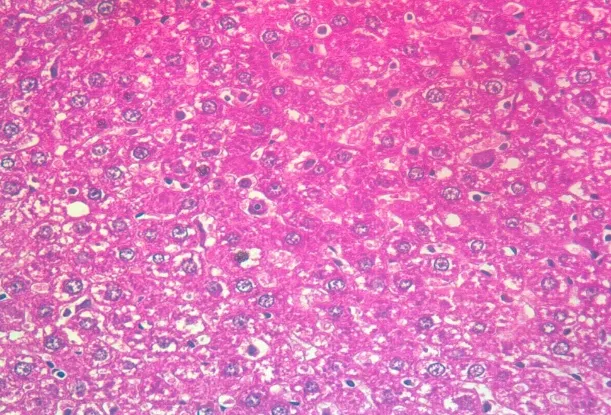

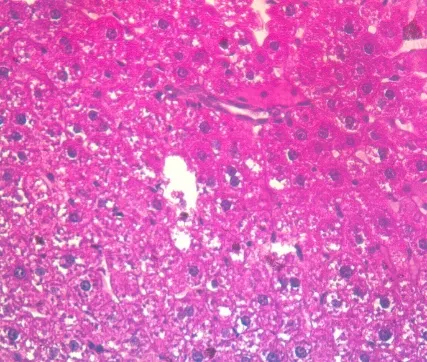
Normal Control Inducing Group Standard Group(Orlistat)


EEFA (200mg/kg) EEFA (400MG/kg)
DISCUSSION
The present study demonstrated that administration of High Fat Diet (HFD) successfully induced obesity in experimental animals, as evidenced by increased body weight, altered lipid profile, and metabolic disturbances. Disease control animals showed elevated total cholesterol, triglycerides, LDL, and reduced HDL levels indicating dyslipidemia. Treatment with extract of Fagonia arabica significantly reduced body weight and improved lipid profile in treated groups. The observed anti-obesity activity may be attributed to phytoconstituents such as flavonoids, phenolics, and other bioactive compounds possessing antioxidant and antihyperlipidemic properties. Among the treated groups, higher dose treatment showed more pronounced improvement indicating dose-dependent activity
CONCLUSION
The present study concluded that Fagonia arabica possesses significant anti-obesity activity against High Fat Diet-induced obesity in experimental animals. Treatment significantly reduced body weight, improved lipid profile, and restored metabolic alterations. The beneficial effect may be attributed to antioxidant and lipid-lowering phytoconstituents present in the extract. Overall, the findings support the potential therapeutic role of Fagonia arabica in the management of obesity and associated metabolic disorders
REFERENCES


Pranjali Bansod, J. Vyas, Dr. Vivek Paithankar, Dr. Anjali Wankhade, Antiobesity Activity of Fagonia Arabica in High Fat Diet Induced Obese Rat, Int. J. of Pharm. Sci., 2026, Vol 4, Issue 8, 1-8, https://doi.org/10.5281/zenodo.21734866
 10.5281/zenodo.21734866