

We use cookies to ensure our website works properly and to personalise your experience. Cookies policy
1,2 University Department of Pharmaceutical Sciences, Utkal University, Vani Vihar, Bhubaneswar, Odisha.
3,4 KIIT School of Pharmacy, KIIT University, Bhubaneswar, Odisha.
5 Dadhichi College of Pharmacy, Vidya Vihar, Sundargram, Cuttack, Odisha.
Oxidative stress plays an important role in chronic diseases associated with increased lipid peroxidation. Clitoria ternatea Linn. contains various antioxidants and bioactive compounds, which exert many functions, such as counteracting oxidative stress, anti-proliferative and anti-inflammatory activities. This study evaluated the antioxidant activity of hydroalcoholic root extract C. ternatea (HARCT). The antioxidant activity was analyzed by using the methods; total phenol content, total flavonoid content, DPPH method, Hydroxyl radical scavenging assay, superoxide assay and nitric oxide radical scavenging assay. Results obtained on the antioxidant studies on HARCT on TPC was 112.54 GAE mg/g and TFC was 92.1 QE mg/g; the plant part (root) showed more phenolics than flavonoids content. The IC50 values of DPPH assay was 32.95 µg/ml, superoxide assay was 55.38 µg/ml, hydroxyl assay was 53.60 µg/ml and nitric oxide assay was 28.53 µg/ml respectively which represent the free radical scavenging properties of the extract. So, it is observed that hydroalcoholic root extract of Clitoria ternatea have the source of natural antioxidants combating the free radicals.
Disease is the inability of cells or tissues normal physiological function under a controlled environmental condition. This is due to the imbalance between the oxidants/free radicals and the neutralizing substances/antioxidants in the body [1]. The free radicals are generated continuously via normal physiology and pathological processes. Free radicals can be defined as potentially damaging chemical species containing an unpaired electron. Free radicals are generally electrically charged and they tend to neutralize themselves by reacting with other substances there by causing oxidation [2].
Reactive species of oxygen, nitrogen and the recently identified reactive sulfur species (RSS) are well known to induce oxidative damage to lipids, proteins and DNA [3].These reactive species could be free radicals or non-radical oxidants.
Among ROS, the major players are free radicals such as superoxide radicals (O−•2), hydroxyl radicals (•OH) and non-radical oxidant such as hydrogen peroxide (H2O2) & singlet oxygen (1O2). Major RNS are nitric oxide (NO) and peroxynitrite (ONOO−) apart from others [4]. RSS include thiyl radical (RS) [4,5,6].
The deleterious effect of free radicals cause alteration of organic biomolecules such as the polyunsaturated fatty acids in membrane lipids, oxidation of proteins, DNA strand breakage, RNA oxidation, mitochondrial depolarization and apoptosis. They are accelerating aging, cancer, diabetes, cardiovascular diseases, neurodegenerative diseases, wound and inflammation [7,8,9].
Antioxidants are those molecules that inhibit, decrease, delay or completely scavenge the action of free radicals and oxidants and protect the body from oxidative damage [10]. For example; scavenging enzymes such as DPPH, Superoxide dismutase (SOD), Catalase (CAT), glutathione peroxidase (GPx), Nitric oxide radical scavenging, Hydroxyl radical scavenging etc. or chemicals inhibiting the activities of oxidant generating enzymes such as xanthine oxidase and polyphenols.
Plants are the natural resources of various medicinally active moieties for the treatment of diseases. Natural antioxidants obtained from plants are mainly from polyphenols, present in fruits, roots, nuts, seeds, barks and leaves [11]. Plant polyphenols can act as reducing agents against the oxidants, metal chelators against the metals and also singlet oxygen quenchers. These polyphenols include flavonoids, anthraquinones, anthocyanidins, xanthones coumarins, tocopherols and organic acids [12].
Clitori ternatea Linn. is a traditional medicinal plant belonging to family Fabaceae. The biological activities of C. ternatea was reported as follows: memory enhancer, diuretics, treatment of asthma and bronchitis, antimicrobial, insecticidal, anxiolytics, sedatives, anticonvulsants, anti-stress, antipyretics, anti-inflammatory and antidiabetic activities [13,14,15]. The root of the plant has anti-inflammatory, analgesic, and antipyretic values with a bitter taste [16,17].
Hence this present study aimed to investigate the total phenolic contents, total flavonoid contents and in-vitro antioxidant activities of the hydro-alcoholic root extract of C. ternatea plant.
MATERIALS AND METHODS:
Collection of Plant parts and preparation of extract
Roots of C. ternatea were collected from the medicinal garden of U.D.P.S, Utkal University, Bhubaneswar, Odisha. The plant material was authenticated by Chief Scientist, Dr. Nabin Kumar Dhal, IMMT, BBSR, Odisha, India (voucher number; IMMT-002/22). Then Cleaning, washing, and room temperature drying were done on the C. ternatea roots in the shade until aridity. The material was crushed and sieved through sizes 10 and 40 meshes. The coarsely ground substance was sieved and then kept in an airtight container until needed.
500 g of dried and coarsely powdered C. ternatea root was extracted in a Soxhlet apparatus using a solvent of ethanol (70): water (30) ratio. The hydro-alcoholic root extract of C. ternatea (HARCT), 11.27% w/w was obtained by drying the extract in a water bath after it was dried in a rotary evaporator with decreased pressure.
Reagents
Chemicals, such as 1, 1 Diphenyl-2-picrylhydrazyl, Methanol, Ethylenediamine tetra acetic acid (EDTA), Thiobarbituric acid (TBA), Nitro blue tetrazolium (NBT), Phosphate buffered saline (PBS) were purchased from Sigma Chemical Co., Sodium dihydrogen phosphate, Disodium hydrogen phosphate, Trichloro acetic acid (TCA), Ethanol, Methanol were purchased from E. Merck Co., Folin-ciocalteu reagent, Gallic acid and Ascorbic acid were purchased from SD Fine chemicals & other chemicals used were of analytical grades.
EVALUATION OF ANTIOXIDANT ACTIVITY
Total Phenolic Content (TPC)
Total phenolic content was determined by using Folin-Ciocalteu reagent. Different dilutions of standard gallic acid were prepared (1 mg/ml). The reaction mixture was prepared by mixing 1 ml aliquots of gallic acid (10-100 μg/ml), 5 ml of Folin-Ciocalteu reagent (diluted 10-fold) and 4 ml of sodium carbonate solution (60 g/l). The blue coloured reaction mixture was incubated at 37 ˚C for 30 min and absorbance was measured at 765 nm in multimode microplate reader (Synergy H1MF, Biotek, USA). Gallic acid was used as standard to plot calibration curve and total phenolic content was expressed as mg/g gallic acid equivalent (GAE) [18].
Total Flavonoid Content (TFC)
Total flavonoid content was determined according to standard protocol with slight modification. Different concentrations (20-100 µg/ml) of quercetin were prepared in ethanol from its stock solution (1 mg/ml). 0.5 ml of 2% aluminium chloride was added and incubated for 1 h at room temperature. The absorbance was measured at 420 nm in multimode microplate reader (Synergy H1MF, Biotek, USA). Quercetin was used as standard and total flavonoid content was expressed as mg/g quercetin equivalent (QE) [19].
1, 1-diphenyl -2-picrylhydrazyl (DPPH) radical scavenging activity
The free radical scavenging activity of hydro-alcoholic root extract of C. ternatea was tested using a 1,1-diphenyl-2-picryl hydrazyl (DPPH) technique. Add 24 mg of DPPH in 100 ml of methanol to prepare the stock solution and filtered the stock solution using methanol, then measure the absorbance at 517 nm (0.973). From the stock solution take 3 ml of DPPH solution and combined with 20-100 µL of root extract in a test tube, which was prepared from 1 mg/ml stock extract solution. After that the tubes were kept for 30 min in dark place. Then the absorbance was determined at 517 nm [20]. Radical scavenging activity was determined by using the following formula
% inhibition of DPPH radical=Abr-AarAbr ×100

Where, Abr is the absorbance of control before reaction and Aar is the absorbance of standard after reaction.
Superoxide Radical Scavenging Activity
Hydro-alcoholic root extracts of C. ternatea (20-100 μg/ml each) were prepared from stock solution (1 mg/ml) and mixed with 1 ml of NADH (468 μM in 100 mM PBS) and 1 ml of nitroblue tetrazolium (NBT) (156 μM NBT in 100 mM PBS). The reaction was initiated by adding 100 μl of phenazine methosulphate (PMS) (60 μM PMS in 100 mM PBS) to the reaction mixture and incubated for 5 min. The absorbance was recorded at 560 nm in multimode microplate reader (Synergy H1MF, BioTek, USA). Quercetin was used as reference drug [21]. Radical scavenging activity was determined by using the following formula
% inhibition of SOD radical=Abr-AarAbr ×100

Where, Abr is the absorbance of control before reaction and Aar is the absorbance of standard after reaction.
Hydroxyl Radical Scavenging Activity
Hydro-alcoholic root extracts of C. ternatea (20-100 μg/ml each) were prepared from stock solution (1 mg/ml) and mixed with 100 μl of 2-deoxy-2-ribose (28 mM in 50 mM PBS), 1 ml of Fe-EDTA solution (1:1, 200 μM ferrous ammonium sulfate and 1 mM EDTA), 100 μl H2O2 (1 mM) and 100 μl ascorbic acid (0.22%). The reaction mixture was incubated at 37 ˚C for 1 h. After incubation, 1 ml of ice-cold TCA (10% w/v) was added to terminate the reaction. The mixture was heated at 100 ˚C for 20 min and allowed to cool. The absorbance was recorded at 532 nm in multimode microplate reader (Synergy H1MF, BioTek, USA). Ascorbic acid was used as reference drug [22]. Radical scavenging activity was determined by using the following formula
% inhibition of Hydroxyl radical=Abr-AarAbr ×100

Where, Abr is the absorbance of control before reaction and Aar is the absorbance of standard after reaction.
Nitric Oxide Radical Scavenging Activity
Hydro-alcoholic root extracts of C. ternatea (20-100 μg/ml each) were prepared from stock solution (1 mg/ml) and 3 ml of sodium nitroprusside (10 mM in PBS) was added and incubated at 25 ˚C for 150 min. To the reaction mixture, 1 ml of Griess reagent (1% sulphanilamide, 2% phosphoric acid and 0.1% naphthylethylene diamine dihydrochloride) was added and absorbance was recorded at 546 nm in multimode microplate reader (Synergy H1MF, BioTek, USA). Quercetin was used as reference drug [23]. Radical scavenging activity was determined by using the following formula
% inhibition of Nitric oxide radical=Abr-AarAbr ×100

Where, Abr is the absorbance of control before reaction and Aar is the absorbance of standard after reaction.
RESULTS:
Total Phenolic Content (TPC)
TPC values of hydro-alcoholic root extracts of C. ternatea was expressed as mg GAE/g. TPC of C. ternatea was recorded 112.54 mg GAE/g (Table 1).
Total Flavonoid Content (TFC)
TFC values of hydro-alcoholic root extracts of C. ternatea was expressed as mg QE/g. TFC of C. ternatea was recorded 92.1 mg QE/g (Table 1).
Table 1. Biochemical Estimation of TPC & TFC of HARCT
|
Plant |
Extract |
Plant parts |
TPC (GAE; mg/g) |
TFC (QE; mg/g) |
|
C. ternatea |
Hydro-alcoholic |
Root |
112.54 |
92.1 |
TPC- total phenolic content, TFC-total flavonoid content, GAE-gallic acid equivalent and QE-quercetin equivalent.
DPPH Radical Scavenging Activity
DPPH radical scavenging assay of hydro-alcoholic root extracts of C. ternatea was shown in Table 2. In DPPH radical scavenging assay of C. ternatea, the IC50 values of hydro-alcoholic extract of root was recorded 32.95 μg/ml. The results were comparable to the IC50 value of standard drug ascorbic acid (18.53 ± 0.52 μg/ml) for C. ternatea (Figure 1).
Table 2: IC50 values (µg/ml) of root of C. ternatea in DPPH Assay
|
Samples |
Concentration (µg/ml) |
% inhibition |
IC50 value (µg/ml) |
Ascorbic acid IC50 (µg/ml) |
|
HARCT |
20 |
32.56 ± 2.32 |
32.95 ± 0.75 |
18.53 ± 0.52 |
|
40 |
61.06 ± 1.69 |
|||
|
60 |
79.46 ± 1.98 |
|||
|
80 |
98.91± 2.13 |
|||
|
100 |
114.57 ± 1.45 |
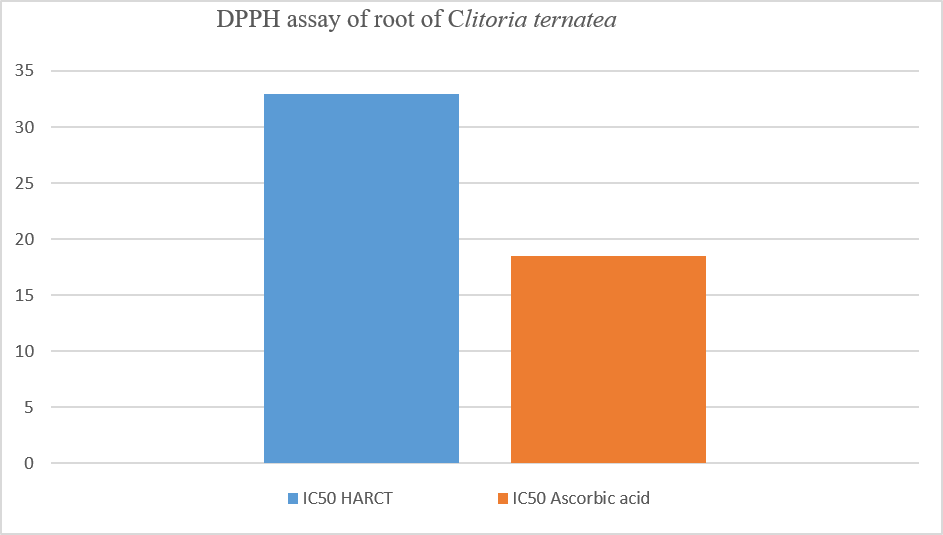
Figure 1: DPPH assay of hydro-alcoholic root extracts of C. ternatea. Ascorbic acid was used as reference drug.
Superoxide Radical Scavenging Activity
Superoxide radical scavenging assay of hydro-alcoholic root extracts of C. ternatea was shown in Table 3. In Superoxide radical scavenging assay of C. ternatea, the IC50 values of hydro-alcoholic extract of root was recorded 55.38 ± 0.72 μg/ml. The results were comparable to the IC50 value of standard drug Quercetin 50 ± 0.46 μg/ml for C. ternatea (Figure 2).
Table 3: IC50 values (µg/ml) of root of C. ternatea in SOD assay
|
Samples |
Concentration (µg/ml) |
% inhibition |
IC50 value (µg/ml) |
Quercetin IC50 (µg/ml) |
|
HARCT |
20 |
20.66 ± 2.51 |
55.38 ± 0.72 |
50 ± 0.46 |
|
40 |
28.33 ± 1.52 |
|||
|
60 |
60.66 ± 1.52 |
|||
|
80 |
73.33 ± 4.93 |
|||
|
100 |
87.66 ± 2.51 |
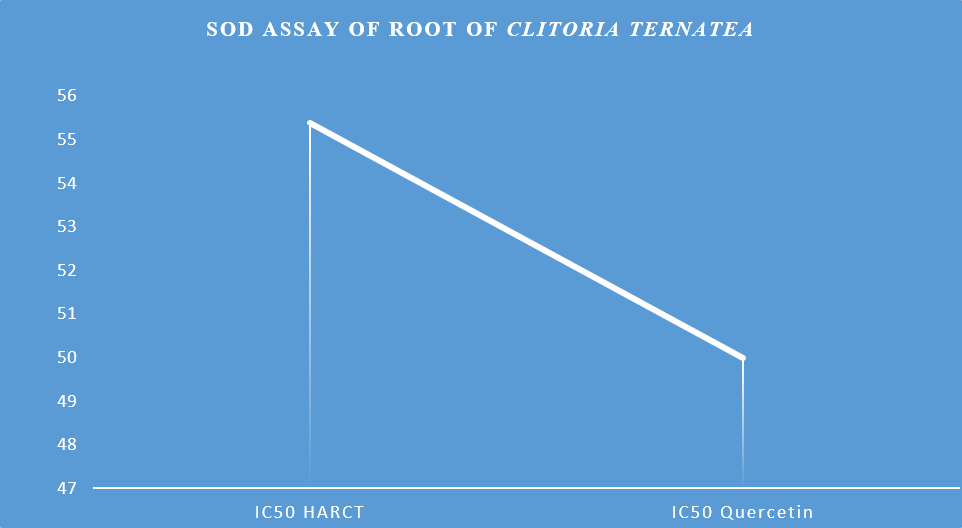
Figure 2: SOD assay of hydro-alcoholic root extracts of C. ternatea. Quercetin was used as reference drug.
Hydroxyl Radical Scavenging Activity
In hydroxyl assay, the radical scavenging activities of hydro-alcoholic root extracts of C. ternatea was shown in Table 4. In hydroxyl radical scavenging assay of C. ternatea, the IC50 values of hydro-alcoholic extract of root was recorded 53.60 ± 0.28 μg/ml. The results were comparable to the IC50 value of standard drug Quercetin 60 ± 0.52 μg/ml for C. ternatea (Figure 3).
Table 4: IC50 values (µg/ml) of root of C. ternatea in Hydroxyl assay
|
Samples |
Concentration (µg/ml) |
% inhibition |
IC50 value (µg/ml) |
Quercetin IC50 (µg/ml) |
|
HARCT |
20 |
23.66 ± 1.15 |
53.60 ± 0.28 |
60 ± 0.52 |
|
40 |
29.66 ± 1.52 |
|||
|
60 |
62.66 ± 1.52 |
|||
|
80 |
73.33 ± 4.93 |
|||
|
100 |
88.33 ± 1.52 |
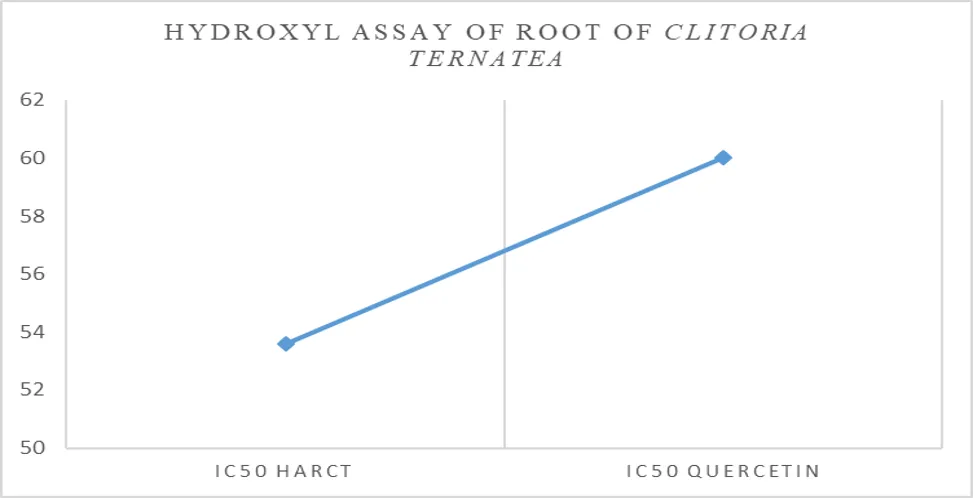
Figure 3: Hydroxyl assay of hydro-alcoholic root extracts of C. ternatea. Quercetin was used as reference drug.
Nitric Oxide Radical Scavenging Activity
In nitric oxide assay, the radical scavenging activities of hydro-alcoholic root extracts of C. ternatea was shown in Table 5. In nitric oxide radical scavenging assay of C. ternatea, the IC50 values of hydro-alcoholic extract of root was recorded 28.53 ± 0.84 μg/ml. The results were comparable to the IC50 value of standard drug Quercetin 60 ± 0.42 μg/ml for C. ternatea (Figure 4).
Table 5: IC50 values (µg/ml) of root of C. ternatea in Nitric oxide assay
|
Samples |
Concentration (µg/ml) |
% inhibition |
IC50 value (µg/ml) |
Quercetin IC50 (µg/ml) |
|
HARCT |
20 |
38.66 ± 2.51 |
28.53 ± 0.84 |
60 ± 0.42 |
|
40 |
61.66 ± 11.01 |
|||
|
60 |
76.33 ± 5.03 |
|||
|
80 |
84.66 ± 4.50 |
|||
|
100 |
94.33 ± 3.05 |
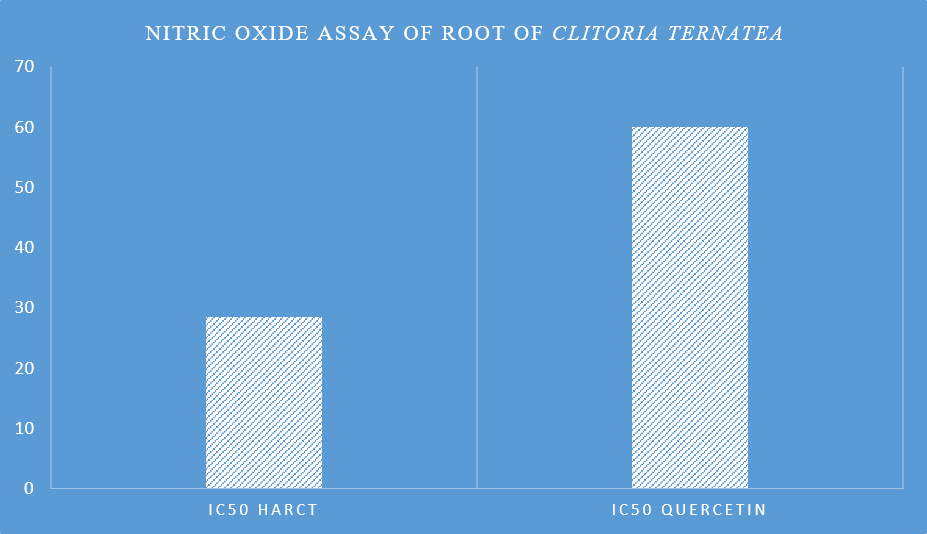
Figure 4: Nitric oxide assay of hydro-alcoholic root extracts of C. ternatea. Quercetin was used as reference drug.
DISCUSSION
Biochemical Estimation of C. ternatea
In human physiological system, free radicals and reactive oxygen species (ROS) are generated due to imbalance between formation and neutralization of prooxidants. To nullify the effect of free radicals, exogenous natural antioxidants rich in phenolics and flavonoids are supplemented mainly from diet. These exogenous antioxidants neutralize free radicals and reverse the metabolic disorders to protect the cells from lipid peroxidation [24].
Total Phenolic Content (TPC)
In the present investigation, TPC of hydro-alcoholic extracts of root of C. ternatea was estimated by using standard gallic acid and expressed in terms of gallic acid equivalent (GAE). The results revealed that the hydro-alcoholic root extracts of Clitoria ternatea possess high content of phenolic compounds 112.54 mg/g shown in Table 1. The presence of phenolic compounds in plants may attribute to free radical scavenging activities by donating hydrogen atoms, electrons, or chelating metal ions. Thus, high phenolic content established positive correlation between antioxidant potential of the plant extracts and its role in management of oxidative stress related chronic diseases.
Total Flavonoid Content (TFC)
In the present study, TFC of hydro-alcoholic extracts of root of C. ternatea was estimated. Standard drug quercetin was used to calculate TFC and the results were expressed as Quercetin gram equivalent (QE). The results revealed that the hydro-alcoholic root extract of Clitoria ternatea possess 92.1 mg/g content of flavonoid compounds shown in Table 1. Flavonoids play crucial role in suppressing ROS production by up regulating antioxidant enzymes or chelating metal ions involved in free radical formation. In current study, the flavonoids in hydro-alcoholic extract of root of C. ternatea plant justifies its significant antioxidant potential.
In-Vitro Antioxidant Activities of Clitoria ternatea
In human physiological system, free radicals are generated due to metabolism, different pathological conditions and may develop oxidative stress. Oxidative stress can be overcome by many synthetic drugs but these are associated with adverse effects. So, there is an increasing demand of natural plant-based antioxidants. Antioxidant activities of plant extracts may not be evaluated by only a single method due to the complexity of the phytochemicals. Therefore, different in vitro antioxidant assays are used to evaluate antioxidant activities of the plant extracts.
In the present study, in vitro antioxidant activities such as 2,2-diphenyl-1- picrylhydrazyl (DPPH), superoxide (SOD), hydroxyl (OH), nitric oxide (NO) assays were performed to establish the radical scavenging activities of hydro-alcoholic root extracts of Clitoria ternatea.
DPPH Radical Scavenging Activity
DPPH radical scavenging assay is one of the most efficient, simple, and relatively inexpensive method for screening of antioxidant activities of plant extracts. DPPH radical assay is based on reduction of DPPH radical (purple) in the presence of antioxidants to produce reduced form of DPPH (yellow). In DPPH assay, the hydro-alcoholic root extract of Clitoria ternatea showed the inhibition percentage with IC50 values 32.95 μg/ml whereas, IC50 values standard ascorbic acid showed IC50 values 18.53 μg/ml shown in Fig. 1.
Superoxide Radical Scavenging Activity
SOD radical is one of the strongest reactive oxygen species that directly or indirectly damage biomolecules by forming hydroxyl, peroxynitrite and singlet oxygen. SOD radicals are generated from dissolved oxygen in PMS-NADH coupling and measured by their ability to reduce NBT (yellow) to formazan (blue). As shown, the hydro-alcoholic root extract of Clitoria ternatea showed the inhibition percentage with IC50 value 55.38 μg/ml whereas, IC50 value standard quercetin showed IC50 value 50 μg/ml shown in Fig. 2.
Hydroxyl Radical Scavenging Activity
Hydroxyl radicals are produced from hydrogen peroxide and cause lipid peroxidation, enzyme inactivation by oxidation of thiol (-SH) groups. Also, it can cause mutagenesis, carcinogenesis and cytotoxicity in cells. In hydroxyl radical scavenging assay, the hydro-alcoholic root extract of Clitoria ternatea showed the inhibition percentage with IC50 value 53.60 μg/ml whereas, IC50 values standard quercetin showed IC50 values 60 μg/ml shown in Fig. 3.
Nitric Oxide Radical Scavenging Activity
Nitric oxide is highly reactive radical produced by endothelial cells and phagocytes. The high level of nitric oxide radicals leads to oxidative tissue damage and associated with inflammation and carcinoma. Also, it reacts with superoxide radicals to form highly reactive peroxynitrite anion. The hydro-alcoholic root extract of Clitoria ternatea showed the inhibition percentage with IC50 values 28.53 μg/ml whereas, IC50 values standard quercetin showed IC50 values 60 μg/ml shown in Fig. 4.
CONCLUSION
On the basis of in vitro antioxidant activities of hydro-alcoholic root extracts of Clitoria ternatea was performed by using different antioxidant assays such as DPPH, superoxide, hydroxyl and nitric oxide assay. It was concluded that Clitoria ternatea exhibited highest inhibition towards free radical scavenging and reducing power activities. The highest radical scavenging potential of the Clitoria ternatea was attributed to high content of phenolic than flavonoids contents as evidenced from estimation of total phenolic and total flavonoid content.
REFERENCES


Debananda Champpatisingh, Dr. Ranjit Mohapatra, Priti Murmu, Rakesh Kumar Pani, Prasanta Kumar Biswal, Antioxidant Activity of Hydro-Alcoholic Root Extract of Clitoria ternatea Linn. Plant, Int. J. of Pharm. Sci., 2026, Vol 4, Issue 7, 458-467. https://doi.org/10.5281/zenodo.21141326
 10.5281/zenodo.21141326