

We use cookies to ensure our website works properly and to personalise your experience. Cookies policy
Sankaralingam Bhuvaneswari College of Pharmacy, Sivakasi. Affiliated to the The TN DR. M.G.R Medical University, Chennai.
Wearable healthcare devices have revolutionized modern healthcare by enabling continuous, real-time monitoring of physiological and health-related parameters. Equipped with advanced biosensors, wireless communication technologies and data analytics, these devices facilitate the collection and transmission of health data to healthcare professionals, supporting timely diagnosis, treatment and remote patient monitoring. Wearable devices are widely used for monitoring heart rate, electrocardiogram (ECG), blood pressure, blood oxygen saturation (SpO?), blood glucose levels, sleep patterns, physical activity and other vital health indicators. They play a significant role in the management of chronic diseases such as cardiovascular disorders and diabetes, promote preventive healthcare through early detection of health abnormalities and enhance patient engagement in self-care. In addition, wearable devices support elderly care through fall detection and emergency alerts and improve sports medicine by enabling performance analysis and injury prevention. Despite challenges related to data privacy, cybersecurity, device accuracy, battery life, interoperability and regulatory compliance, continuous advancements in sensor technology and the role of artificial intelligence are expanding their capabilities and clinical applications. This review highlights the types, applications, benefits, challenges, the role of artificial intelligence and future prospects of wearable healthcare devices, emphasizing their transformative role in improving healthcare quality, accessibility, continuity of care and patient outcomes.
Healthcare technology has advanced significantly in recent years and wearable devices have emerged as one of the most important innovations in modern medicine. Wearable devices are electronic gadgets that can be worn on the body to monitor health-related parameters continuously. These devices collect real-time physiological data and help healthcare professionals make informed decisions regarding diagnosis, treatment and disease management. Examples include smartwatches, fitness bands, biosensors, smart clothing and wearable ECG monitors 1.
The integration of wearable technology into healthcare has transformed the way patients and healthcare providers manage health conditions. Continuous monitoring, remote patient care, early disease detection and improved patient engagement have made wearable devices an essential component of digital healthcare systems 2.
A. TYPES OF WEARABLE DEVICES:
1. SMARTWATCHES:
Smartwatches are the most commonly used wearable devices. They can monitor heart rate, physical activity, sleep quality and blood oxygen levels. Advanced smartwatches also offer ECG monitoring and fall detection features, enabling users to monitor heart rhythm and automatically alert emergency contacts in the event of a serious fall.
Modern smartwatches are capable of monitoring several health parameters, including heart rate, blood oxygen saturation (SpO₂), sleep quality, physical activity, calories burned, stress levels, respiratory rate and electrocardiogram (ECG) readings. The collected information is synchronized with smartphones or cloud-based healthcare platforms, allowing users and healthcare professionals to access health data in real time 3.
COMPONENTS OF SMART WATCHES:
A healthcare smartwatch typically consists of:
2. FITNESS TRACKERS:
Fitness trackers help users monitor daily physical activities such as walking, running, cycling and calorie expenditure. They encourage healthy lifestyles by providing activity goals and performance tracking 4.
These devices continuously track activities such as walking, running, cycling, distance travelled, calories burned, heart rate, sleep patterns and sedentary behavior. The collected information is synchronized with smartphones or cloud-based applications, allowing users to analyze their health status and monitor progress toward fitness goals 5.
COMPONENTS OF FITNESS TRACKERS:
A typical fitness tracker consists of:
3. ECG MONITORS:
Wearable Electrocardiogram (ECG) monitors are advanced medical wearable devices designed to continuously record and monitor the electrical activity of the heart 6. These devices provide real-time cardiac monitoring and help detect abnormal heart rhythms, cardiovascular diseases and other cardiac-related conditions. Unlike conventional ECG machines used in hospitals, wearable ECG monitors allow long-term monitoring during normal daily activities, making them highly valuable for early diagnosis and preventive healthcare 7.
COMPONENTS OF ECG MONITORS:
A wearable ECG monitoring system typically consists of:
4. SMART CLOTHING:
Smart clothing, also known as electronic textiles (e-textiles) or intelligent garments, represents one of the most innovative developments in wearable healthcare technology. Smart clothing integrates electronic sensors, conductive fibers, microprocessors and communication systems directly into fabrics, enabling continuous monitoring of physiological and physical parameters while maintaining the comfort of regular clothing. These garments are designed to collect, process and transmit health-related data without interfering with the user's daily activities 8.
COMPONENTS OF SMART CLOTHING:
Smart clothing typically consists of the following components:
5. WEARABLE BIOSENSORS:
Wearable biosensors are advanced wearable devices designed to continuously monitor physiological, biochemical and metabolic parameters of the human body. These sensors can detect and measure specific biological signals and convert them into electrical signals that can be analyzed and interpreted. Wearable biosensors have become an essential component of modern healthcare because they enable real-time health monitoring, early disease detection and personalized medical care 9.
COMPONENTS OF BIOSENSORS:
A wearable biosensor generally consists of the following components:
The various types of wearable devices used in health care technology are shown in figure:1.
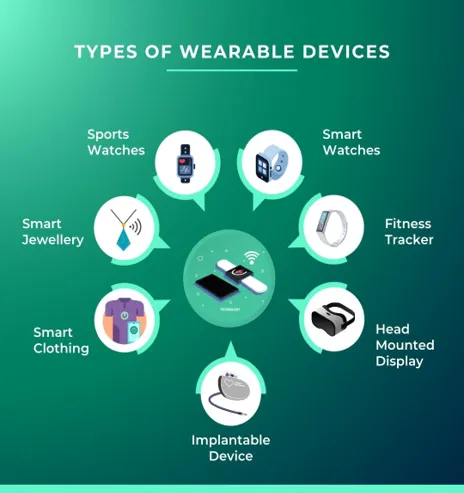
Figure 1: Types of Wearable Devices
B. ROLE OF WEARABLE DEVICES IN HEALTH CARE TECHNOLOGY:
One of the most significant contributions of wearable devices in healthcare is continuous health monitoring. Traditional healthcare systems rely on periodic medical examinations and hospital visits, which provide only limited information about a patient's health condition. Wearable devices overcome this limitation by continuously collecting physiological data throughout the day and night.
Furthermore, continuous monitoring enhances preventive healthcare by helping individuals understand their health status and make informed lifestyle choices. The availability of real-time health information empowers patients to actively participate in their own healthcare management.
Wearable devices play a crucial role in the early detection and prevention of diseases. Continuous monitoring of physiological parameters enables the identification of abnormal patterns that may indicate underlying health problems before clinical symptoms become noticeable.
For example, wearable ECG monitors can detect cardiac arrhythmias, while wearable glucose sensors can identify fluctuations in blood sugar levels among diabetic patients. Similarly, smartwatches can detect irregular heart rhythms and alert users to seek medical attention. Early diagnosis allows healthcare providers to initiate treatment at an early stage, reducing disease progression and improving patient outcomes 10.
Remote patient monitoring is one of the most transformative applications of wearable healthcare technology. Wearable devices enable healthcare professionals to monitor patients from their homes without requiring frequent hospital visits.
The devices continuously collect physiological data and transmit the information through wireless networks to healthcare providers. Physicians can remotely evaluate patient conditions, monitor treatment effectiveness and identify health abnormalities in real time. This approach is particularly beneficial for elderly individuals, patients with chronic diseases and individuals living in remote areas.
Wearable devices contribute significantly to the development of personalized healthcare. Every individual has unique physiological characteristics, health conditions and lifestyle factors. Wearable technologies continuously collect personalized health data, allowing healthcare professionals to design individualized treatment strategies.
The information gathered from wearable devices can be analyzed to understand patient’s health patterns, disease risks, medication responses and lifestyle behaviors. Based on these insights, healthcare providers can recommend customized interventions, exercise programs, dietary plans and treatment regimens.
C. APPLICATIONS OF WEARABLE DEVICES:
Wearable devices are widely used for monitoring cardiovascular health. Smartwatches and wearable ECG monitors continuously track heart rate, heart rhythm, blood pressure and other cardiac parameters. These devices help detect abnormal heart conditions such as arrhythmias, atrial fibrillation, tachycardia and bradycardia at an early stage. Continuous monitoring enables healthcare professionals to provide timely interventions and reduce the risk of serious cardiovascular complications 11.
CARDIAC MONITORING:
VASCULAR MONITORING:
Wearable devices play a crucial role in diabetes management through Continuous Glucose Monitoring (CGM) systems. These devices continuously measure blood glucose levels and provide real-time data to patients and healthcare providers. CGM devices help diabetic patients monitor glucose fluctuations, optimize insulin therapy and maintain better glycemic control. Early detection of hypoglycemia and hyperglycemia improves patient safety and treatment outcomes 12.
GLUCOSE MONITORING AND INSULIN MANAGEMENT:
Sleep monitoring is one of the most common healthcare applications of wearable devices. Smartwatches and fitness trackers monitor sleep duration, sleep quality, sleep stages and sleep interruptions. The collected data help identify sleep disorders such as insomnia, sleep apnea and restless sleep syndrome. Proper sleep analysis supports improved sleep habits and overall health management.
SLEEP ASSESSMENT AND DISORDER DETECTION:
Wearable devices provide significant benefits for elderly individuals by continuously monitoring health conditions and detecting falls. Advanced sensors can automatically identify sudden falls and send emergency alerts to caregivers or healthcare providers. This improves patient safety and enables rapid medical assistance during emergencies 13.
FALL DETECTION AND EMERGENCY RESPONSE:
Athletes use wearable devices to monitor heart rate, oxygen consumption, physical performance, fatigue levels and recovery status. Healthcare professionals and sports trainers use these data to optimize training programs, prevent injuries and improve athletic performance.
PERFORMANCE OPTIMIZATION AND INJURY MANAGEMENT:
D. BENEFITS OF WEARABLE DEVICES:
Wearable devices continuously monitor vital signs such as heart rate, blood pressure, blood oxygen saturation (SpO₂), body temperature and sleep patterns. This enables early detection of health abnormalities and supports proactive medical care.
Wearables can identify irregular physiological changes before symptoms become severe. Early detection of conditions such as cardiac arrhythmias, diabetes-related complications and sleep disorders allows timely medical intervention and improves treatment outcomes.
Patients with chronic diseases can be monitored from their homes using wearable devices. Healthcare professionals receive real-time health data from wearable devices, reducing the need for frequent hospital visits and improving continuity of care through timely monitoring and intervention.
Wearable devices assist in managing chronic conditions such as diabetes, hypertension, cardiovascular diseases and respiratory disorders by continuously tracking health parameters and supporting personalized treatment plans.
Continuous monitoring and early diagnosis help prevent disease progression, reduce hospital admissions, minimize healthcare costs and optimize resource utilization.
Wearables encourage regular physical activity, healthy sleep, stress management and balanced nutrition. This preventive approach helps reduce the risk of lifestyle-related diseases.
Many wearable devices include fall detection, irregular heartbeat alerts and emergency SOS features that notify caregivers or healthcare providers during medical emergencies, improving patient safety.
Wearables encourage regular exercise by tracking steps, calories burned, distance covered and workout intensity. Preventive healthcare reduces the risk of obesity, cardiovascular diseases and other lifestyle-related disorders 14.
The benefits of wearable devices in transforming health care are shown in the figure:2
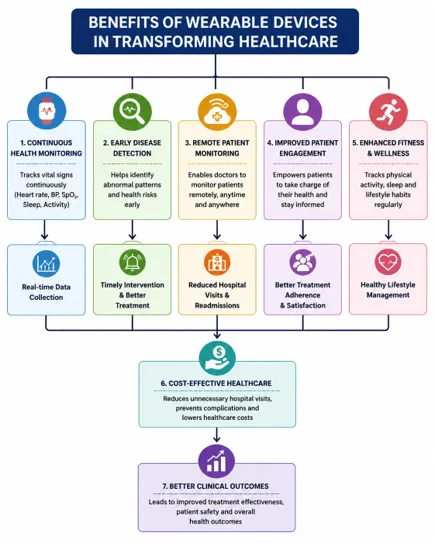
Figure 2: Benefits of Wearable Devices
E. FUTURE CHALLENGES IN HEALTH CARE:
Healthcare costs continue to rise due to advanced medical technologies, expensive treatments, increasing drug prices and growing healthcare demands. Many individuals struggle to afford quality healthcare, especially in low and middle-income countries. High healthcare expenses can lead to delayed treatment, poor health outcomes and financial hardship for patients and their families. Governments and healthcare providers must develop cost-effective strategies to ensure affordable and accessible healthcare for all populations 15.
The global population is ageing rapidly due to improvements in healthcare and increased life expectancy. Older adults are more likely to suffer from chronic illnesses such as arthritis, diabetes, cardiovascular diseases and dementia, which require continuous medical attention. As a result, healthcare systems face increased demand for medical services, hospital care, rehabilitation and long-term care facilities. Meeting the healthcare needs of an ageing population requires additional resources, trained professionals and effective healthcare policies 16.
A shortage of skilled healthcare professionals is a major challenge facing healthcare systems worldwide. The increasing demand for healthcare services, combined with workforce shortages, places significant pressure on existing healthcare staff. Many regions experience shortages of doctors, nurses, pharmacists and allied health professionals, leading to increased workloads and reduced quality of care. Investments in healthcare education, workforce training and retention programs are necessary to address this challenge and maintain effective healthcare delivery 17.
One of the major future challenges is ensuring seamless integration of data generated by wearable devices with electronic health records and other healthcare information systems. Different wearable manufacturers often use different data formats, making it difficult for healthcare providers to access and interpret patient information efficiently. Developing standardized protocols and interoperable platforms will be essential for improving clinical decision making and continuity of care 18.
The accuracy of wearable devices may vary depending on factors such as age, skin tone, body movement and underlying medical conditions. Inaccurate measurements can lead to incorrect clinical decisions and reduced user trust. Future research should aim to improve sensor technology and validate wearable devices across diverse populations to ensure reliable and consistent healthcare monitoring 19.
F. ROLE OF ARTIFICIAL INTELLIGENCE IN IMPROVING WEARABLE TECHNOLOGY:
Artificial Intelligence (AI) has significantly enhanced the capabilities of wearable healthcare devices by enabling them to go beyond simple data collection. AI transforms raw physiological data into actionable clinical insights, supporting early disease detection, personalized healthcare and realtime decision making. AI processes continuous data from wearable sensors in real time and identifies patterns, trends and abnormalities that may not be apparent through manual analysis. It also enables instant feedback to users and healthcare providers.
AI algorithms can detect subtle physiological changes before symptoms become clinically evident. It supports early diagnosis of conditions such as cardiovascular diseases, diabetes, Parkinson's disease, sleep disorders, respiratory diseases, etc. AI also improves long term monitoring and management of cardiovascular diseases, diabetes, hypertension, asthma, neurological disorders, etc.
AI continuously monitors patient health outside hospitals. Healthcare providers receive alerts when abnormal physiological changes are detected. AI improves management of chronic diseases while reducing hospital visits. AI estimates stress, anxiety, fatigue and mood using physiological indicators such as heart rate variability, skin temperature, sleep patterns, etc. AI predicts future health events by analyzing historical and real time data. Examples include: Risk of heart attack or stroke, blood glucose fluctuations, fall risk in older adults, disease progression, etc.
Benefits of AI in Wearable Technology includes continuous health monitoring, early disease detection, predictive healthcare, personalized treatment recommendations, improved diagnostic accuracy, reduced healthcare costs, enhanced patient engagement, better chronic disease management, faster emergency response and support for precision medicine 20.
CONCLUSION:
Wearable devices are transforming healthcare by enabling continuous health monitoring, early disease detection and remote patient care. Their integration with digital health technologies such as mobile applications, cloud computing and telemedicine platforms enables remote patient monitoring and improves communication between patients and healthcare professionals.
As healthcare increasingly adopts digital and patient centered approaches, wearable healthcare devices are expected to play a vital role in improving clinical outcomes, reducing healthcare costs and enhancing the overall quality, accessibility and continuity of healthcare services.
REFERENCES



C. Priya Dhaarani, M. Rajesh, S.V.S. Harish, Wearable Health Care Devices: Transforming Health Care Through Continuous Monitoring, Artificial Intelligence and Remote Patient Care, Int. J. of Pharm. Sci., 2026, Vol 4, Issue 8, 1894-1903. https://doi.org/10.5281/zenodo.21891610
 10.5281/zenodo.21891610