

We use cookies to ensure our website works properly and to personalise your experience. Cookies policy
1,2,3,5 Shri Ram Murti Smarak College of Engineering & Technology, (Pharmacy) Bareilly
4Bareilly College Bareilly.
Background:tarch is a natural, renewable biopolymer that is biodegradable, biocompatible, and functionally versatile. Due to its low cost, natural availability, and eco-friendly nature, it is widely used as a pharmaceutical excipient.Objective:The aim of the paper is to highlight the latest developments in the extraction and modification of native starch and its application in the pharmaceutical industry as a potential excipient.Methods:Different methods of extraction have been used to obtain native starch in a pure form and high yield. Additionally, different methods of chemical, physical, and enzymatic modifications have been used to improve the functional properties of the starch, such as solubility, swelling property, viscosity and controlled release properties.Results:Natural and modified starch has potential as the properties include the ability to bind, disintegrate, form films, and sustain the release. Tablets, capsules, hydrogels, films other sophisticated drug delivery systems are the best drug delivery systems where the native starch be used as a potential excipient. Modified starch has been found to have excellent properties when used in delivery system as hydrogel due to swelling capacity sustained release drug delivery due to the improved matrix.Conclusion:The native starch has been found to be a promising and sustainable excipient in the pharmaceuticals. Additionally, the starch has been found to have diverse and excellent functional properties and biocompatibility. Further research has to be conducted to explore the new methods of modifying the starch and using it in the drug delivery system on the basis of their relevant properties
In the pharmaceutical industry, starch is used as a natural biopolymer because of its availability, low cost, biodegradability, and bio-compatibility. It is adhesive, filler, disintegrant and film-former and it is commonly applied as an excipient in oral solid dosage forms [1]. Starch is a very fundamental part of drug formulation since it possesses the capacity to gel, swell and form films in certain situations. Its competence in the manufacture of safe, efficient pharmaceutical products is also enhanced by its flexibility and regulatory acceptability [2].
Potato starch is among the various botanical starches that possess distinctive characteristics that ensure it is used in pharmaceuticals. It has a fairly large number of phosphate monoester groups that enhance its ability to be clear in pastes, to swell and to be thicker than cereal starches [3]. Also, the size of potato starch granules is large (15-100 μm). This dimension enhances compressibility and tablet disintegration attributes [4]. It is these properties that render potato starch particularly attractive in modified-release and special dosage forms.
There is however limitations to the use of native potato starch in pharmaceuticals as they are limited to their application. It is not very flowable, extremely sensitive to moisture and low in mechanical strength of tablets. Such problems may impact productivity and stability of the product [2]. Consequently, it requires physical, chemical or enzymatic alteration methods in order to enhance its functionality and modify its properties to suit certain pharmaceutical requirements. Adjusted potato starches would be able to overcome these constraints without compromising benefits of their natural attributes [6].
2. Potential Starch, Structure and Properties
Native starch contains two polysaccharides, similar to all starches, amylose and amylopectin, which are the major components of the substance. The amylose content of potato starch is normally between 20 and 30% and the other 70 and 80 percent of the starch is composed of amylocpectin [4]. The chains of 1, 4-linked glucose are primarily linear molecules of amylose. Conversely, amylopectin is very branched and has alpha 1,4 and alpha 1,6 linkages. Potato starch has a high amylopectin composition, thus it is highly viscous, has high film-forming and gelation capability. They may be applied in pharmaceutical recipes where it is needed to bind or have a controlled release [3].
Physical and chemical characteristics of potato starch are unique to it in comparison to other sources of starch. Its granules are very coarse in size with a diameter ranging between 15 and 100 µm and with a smooth surface [6]. Phosphate monoesters in amylopectin make the starch yield a high swelling power and a clear paste because it enhances the ability of the starches to bind water and expand through expansion in the heating process [3]. Potato starch has a low gelatinization temperature ranging between 58 and 66 ℃. This simplifies processing it and it is also acceptable in heat sensitive formulas [4]. The properties cause rapid hydration, efficient disintegration as well as the compression of pills in pharmaceutical processes.
The potato starch has specific advantages when compared to other regular starches such as maize, rice, and cassava. The maize starch is typically less swelling power and smaller in particle size (2 to 30 µm) [12]. Rice starch contains smaller (2 to 8 μm) granules with a lower viscosity and therefore reduced binding capacity, but is potentially more useful in fine powder applications. Although cassava starch contains amylopectin just like potato starch, it lacks the phosphate group resulting in reduced swelling and paste clarity. These are the reasons why potato starch is particularly well suited to processes that require high viscosity, well-formed gels, or rapid disintegration, providing it with a distinctive place in the set of starch-based excipients in pharmaceutical preparations [3, 6].
3 Extraction of Potato Starch
Potato starch is extracted in the following way: washing and grating of tubers. This ruptures the cells and forms slurry which is filtered to eliminate fibers. The starch granules are then separated by the process of sedimentation or centrifugation. It is then washed multiple times to enhance purity and then dried down to a fine powder. This crude process yields high purity starch which is extensively applied in food and pharmaceutical sectors[13].
3.1 Traditional Extraction Methods
Conventional potato starch extraction as Fig. 1 involves physical process in which tubers are broken and starch granules are separated as a result of water-based processes. To start with, the potato is well washed to remove soil and surface dirt. They are then mechanically ground or scraped to puncture the cells to liberate starch [14]. Sieves are then used to remove fibrous material in the starch-water mixture. Table 1 allows the settling of starch through gravity. The liquid is then decanted and the solid is washed a few times to enhance purity. The wet starch cake is then filtered to remove the additional water and dried to achieve appropriate level of moisture in a locked away from [15].
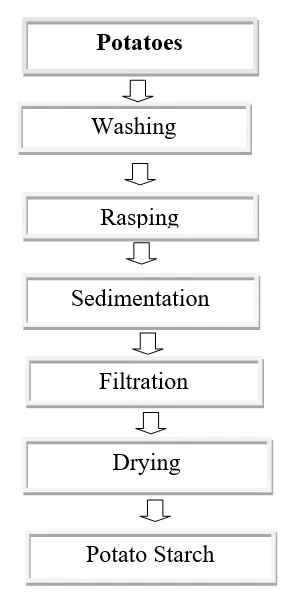
Fig 1: Flowchart of Potato Starch Extraction, Step-Wise Process of Potato to Potato Starch
While this method works well, it has some clear drawbacks. It requires large amounts of water, produces wastewater that needs treatment, and is labor- and time-intensive [16]. Scaling up can be tough due to environmental and economic issues, along with variations in product quality.
Table 1: Different Steps in Traditional Extraction
|
Step |
Description |
Advantages |
Limitations |
|
Washing and rasping |
Cleaning and mechanical disruption |
Simple and cost-effective |
Energy- and water-intensive |
|
Sedimentation |
Starch granules settle by gravity |
Low-cost separation |
Time-consuming, low throughput |
|
Filtration and drying |
Removes water and fibrous matter |
Produces usable dry starch |
May trap impurities, energy use |
3.2 Modern/Green Extraction Approaches
New developments have been made on the more sustainable and efficient techniques as Table 2. Potential extraction based on enzymes, such as celluloses, hemicelluloses or pectinases, assists in disintegration of potato cell walls in a more selective way. This treatment enhances yield of starch and its purity and minimizes mechanical degradation of granules [17]. Ultrasonic-assisted extraction is the other technique which involves high frequency sound waves to generate cavitation and microstreaming. This improves cell disruption and facilitates starch release consuming less water and energy [18]. Also, the studies have investigated organic solvents and supercritical fluids, including supercritical carbon dioxide, to reduce the use of water and enhance selectivity[19]. These contemporary techniques are promising but are not widespread in the industry yet because they are more expensive and they demand more technical expertise.
Table 2: Modern and Green Extraction Approaches
|
Method |
Principle |
Advantages |
Challenges |
|
Enzymatic (cellulose/pectinase) |
Enzymes hydrolyze cell walls |
Higher yield, milder process |
Cost of enzymes, enzyme inhibition |
|
Ultrasonic-assisted |
Cavitation improves release |
Faster, less water-intensive |
Equipment cost, scale-up issues |
|
Organic solvents/supercritical |
Solvents/CO₂ extract starch |
Lower water use, high purity |
Expensive, safety concerns |
3.3 Purification Methods
It is a significant process to purify the solutions in order to eliminate residual proteins, lipids, and phosphate monoesters. These may adversely affect the functional and storage properties as Table 3[20].
Table 3: Purification Methods and their Impact on Quality
|
Method |
Impurity Removed |
Impact on Starch Quality |
Ref. |
|
Washing & centrifugation |
Proteins & lipids |
Improves color and stability |
[21] |
|
Mild acid washing |
Phosphate groups |
Reduces retro gradation tendency |
[22] |
|
Filtration |
Fibers & debris |
Enhances compressibility |
[23] |
3.4 Challenges in Extraction
Despite the advancement in technology, there are still some challenges as Enzymatic inhibition . The natural potato ingredients, such as phenolic compounds and protease inhibitors, can lower the efficiency of using enzymes to extract by disrupting the enzyme activity [24].
4 Modification of Potato Starch
Potassium starch Native potassium starch has limitations. It is easily retrogradable, is weak in terms of mechanical strength, and does not flow well. Such factors limit its application in pharmaceuticals. To address these problems, a number of modification methods are formulated to modify its characteristics to fit certain purposes [28, 29].
4.1 Physical Modifications
Physical methods change the granular structure or crystallinity without altering the chemical makeup. This makes them safe and suitable for food and pharmaceutical applications. Pre-gelatinization partially cooks and dries starch, forming amorphous areas. This allows it to dissolve in cold water and improves compressibility, making it suitable for direct compression in tablet formulations. Different physical modifications are given in Table 4 [30].
Table 4: Physical modifications and their effect on Starch Properties
|
Physical modification method |
Principle / Process |
Effect on Starch Properties |
Applications |
Ref. |
|
Heat-Moisture Treatment (HMT) |
Starch is heated at 90–120 °C with low moisture (10–30%) for a specific time without gelatinization. |
Improves thermal stability, increases resistant starch, modifycrystallinity and viscosity. |
Functional food ingredients, controlled digestion products, pharmaceutical excipients, biodegradable materials. |
[31] |
|
Annealing (ANN) |
Hydrothermal treatment performed at high moisture content and temperature below gelatinization for extended periods. |
Improves molecular order, increases gelatinization temperature and stability. |
Food thickening agents, tablet binders, stabilizers in drug delivery systems. |
[32] |
|
Microwave Treatment |
Microwave energy causes rapid heating and structural rearrangement of starch molecules. |
Alters molecular weight, reduces crystallinity, improves paste properties and digestibility. |
Instant food products, starch-based films, controlled-release matrices. |
[33] |
|
Ultrasound Treatment |
High-frequency sound waves (>20 kHz) create cavitation bubbles that disrupt starch granules. |
Decreases particle size, improves solubility, swelling power, and rheological properties. |
Nanostructured starch carriers, drug delivery systems, food emulsifiers. |
[34] |
|
Extrusion Processing |
Starch is processed using high temperature, pressure, and mechanical shear in an extruder. |
Produces pre-gelatinized starch, improves water absorption and digestibility. |
Instant foods, tablet disintegrants, biodegradable packaging materials. |
[35] |
|
High-Pressure Processing (HPP) |
Starch is subjected to high hydrostatic pressure without high temperatures. |
Modifies granule structure, improves gelatinization behavior and functional stability. |
Food gels, encapsulation materials, pharmaceutical excipients. |
[36] |
|
Pulsed Electric Field (PEF) |
Short bursts of high-voltage electric fields alter starch structure. |
Changes crystallinity, hydration, and digestibility properties. |
Functional foods, encapsulation matrices, modified starch products. |
[37] |
|
Radiation / Electron Beam Treatment |
Exposure to ionizing radiation modifies polymer chains in starch. |
Causes depolymerization and changes physicochemical properties. |
Biodegradable materials, industrial starch products. |
[38] |
4.2 Chemical Modifications
The functional groups are added to starch through chemical modification, which changes the physicochemical behavior of starch [39]. Acetylation of starch involves replacing hydroxyl groups with acetyl groups. This enhances flow ability and compressibility that consequently makes it perfect in direct compression [40]. Carboxy-methyl groups are added by carboxy-methylation. This increases hydrophilicity and maximum swelling capacity, which increases disintegration and release in tablets [41]. Cross-linking bonds the starch chains together with covalent bonds, this enhances the granular structure as given in Table 5. This allows it to resist acidic conditions, shear and high temperatures [42]. Part of the starch is broken down in the oxidation process, with the addition of carboxyl group and carbonyl. This decreases viscosity and enhances solubility and is applicable in film coating and fast release formulation [43].
Table 5: Different Type of Chemical Modifications and their Application
|
Type of Chemical Modification |
Reagents / Agents Commonly Used |
Resulting Changes in Starch Properties |
Common Applications |
Ref. |
|
Oxidation |
Sodium hypochlorite, hydrogen peroxide, sodium periodate, ozone, binuclear manganese catalysts. |
Decreases paste viscosity, depolymerizes starch, reduces retrogradation, and increases hydrophilicityand stability. Modifies hydroxyl groups into carbonyl and carboxyl groups. |
Used as drug delivery agents, food additives, thickeners, emulsifiers, paper/textile sizing, and in biodegradable bioplastic packaging. |
[44] |
|
Esterification (e.g., Acetylation) |
Acetic anhydride, citric acid, succinic anhydride, adipic acid. |
Lowers the gelatinization temperature, increases swelling, solubility, and paste clarity. Prevents retrogradation (aging) and improves freeze-thaw stability. |
Stabilizers for infant foods, bakery products, sauces, ice cream, and improving tensile strength in edible starch films. |
[45] |
|
Etherification |
3-chloro-2-hydroxypropyl trimethyl ammonium chloride (CHPTAC), benzyl bromide, propylene oxide. |
Enhances hydrophobicity or creates cationic starch (depending on the agent). Disrupts hydrogen bonding to reduce crystallinity, alters gelatinization temperature, and improves paste clarity. |
Wastewater treatment (adsorption), thickeners, binders, texture agents for pharmaceuticals, personal care products, and papermaking. |
[46] |
|
Cross-linking |
Sodium trimetaphosphate (STMP), sodium tripolyphosphate (STPP), phosphorus oxychloride ($POCl_3$), adipic acid. |
Forms intermolecular bonds that reinforce the starch granule. Decreases swelling power and increases resistance to heat, acidity (low pH), shear forces, and digestive enzymes (increases resistant starch). |
Canned foods, frozen foods, prolonged-release pharmaceutical capsules, and stable food thickeners. |
[47] |
|
Dual Modification |
Combination of chemical methods (e.g., Cross-linking + Acetylation) or combined with physical annealing. |
Yields tailored functional properties that a single method cannot achieve, such as extreme thermal stability combined with high freeze-thaw resistance. |
Highly specialized industrial processed foods, extreme-condition manufacturing, and advanced biofilms. |
[48] |
4.3 Enzymatic and Genetic Modifications.
The processes to be utilized include enzymatic hydrolysis with alpha-amylase or glucoamylase and these are biological methods that are very specific and environmentally friendly because they selectively hydrolyze starch chains as shown in Table 6. This yields reduced-molecular-weight fractions that portray a controlled release of drugs with regulated solubility and viscosity [49]. The genetic alterations in the potato plants alter the pathways in the synthesis of starch. This leads to high-amylose or waxy starches or starches with modified phosphorylation producing unique functional characteristics in the pharmaceutical and food industries [50].
Table 6: Enzymatic and Genetic Modifications effect on starch properties
|
Modification type |
Method / Enzyme or Genetic Approach |
Principle / Process |
Effect on Starch Properties |
Applications |
Ref. |
|
Enzymatic modification |
α-Amylase treatment |
Hydrolyzes α-1,4glycosidic bonds in starch chains, reducing molecular weight and viscosity. |
Improves solubility, digestibility, and modifies viscosity. |
Food thickeners, pharmaceutical excipients, biodegradable materials. |
[51] |
|
Enzymatic modification |
Pullulanase (debranching enzyme) |
Hydrolyzes α-1,6glycosidic bonds of amylopectin, producing linear chains. |
Increases amylose content and resistant starch formation. |
Controlled-release drug delivery, dietary fiber products, functional foods. |
[52] |
|
Enzymatic modification |
Glucoamylase treatment |
Converts starch polymers into glucose units by hydrolyzing both α-1,4 and α-1,6 bonds. |
Enhances digestibility and reduces molecular size. |
Fermentation substrates, sweetener production, food processing. |
[53] |
|
Enzymatic modification |
Cyclodextringlycosyltransferase (CGTase) |
Converts starch into cyclodextrins through enzymatic cyclization reactions. |
Produces cyclic oligosaccharides capable of forming inclusion complexes. |
Drug encapsulation, controlled drug delivery systems, pharmaceutical formulations. |
[54] |
|
Enzymatic modification |
Amylosubtilin and Bacillus amylase |
Enzymatic hydrolysis modifies starch structure and gel properties. |
Improves texture and emulsifying capacity. |
Fat replacer in dairy products and functional foods. |
[55] |
|
Genetic modification |
GBSSI gene silencing (RNAi technology) |
Suppresses granule-bound starch synthase I responsible for amylose synthesis. |
Produces amylose-free or waxy potato starch (high amylopectin). |
Paper, adhesives, textile industries, biodegradable materials. |
[56] |
|
Genetic modification |
CRISPR-Cas9 genome editing |
Knockout of genes such as GBSSI to alter starch composition in potato tubers. |
Produces starch completely devoid of amylose with improved functional properties. |
Industrial starch production, food processing, starch-based biomaterials. |
[57] |
|
Genetic modification |
Starch branching enzyme (SBE) gene editing |
Modification of SBE genes controlling amylopectin branching. |
Alters amylose/amylopectin ratio and increases resistant starch. |
Functional foods, nutraceuticals, low-glycemic starch products. |
[58] |
|
Genetic modification |
Transgenic overexpression of starch biosynthesis enzymes |
Enhances expression of enzymes involved in starch biosynthesis pathways. |
Improves starch yield, structure, and processing properties. |
Industrial starch production and advanced biomaterials. |
[59] |
5 Pharmaceutical Applications of Modified Potato Starch
The potential of modified potato starch is an adaptable biopolymer capable of significant prospects in the pharmaceutical industry. It has improved physical and chemical properties, which it has acquired as a result of numerous modifications, which make it a useful component in the traditional and novel drug delivery models. Greater flow capability, swelling, mechanical strength, and stability increase its use in different dosage forms.
5.1 As Excipient
In traditional Formulations, potato starch is modified to produce a multifunctional excipient:
5.2 Binder: They are acetylation and pre-gelatinization among others that are some of the modifications applied to enhance compaction properties by enhancing the bondage between the particles. This makes the starch a desirable pill-binding material in the formulation of pills to confer strength and integrity [60].
5.3 Disintegrant: Fast intake of water by acid-treated or cross-linked starch results in swelling of the material, apart the tablet and causes it to dissolve [61].
5.4 Fillers/Diluents: Direct compression fillers are a special form of starches especially with enhanced flow and compressibility
5.5 Coating Agent: Oxidized and acetylated starch are good film forming and suitable for coating agent on tablet [61].
5.6 The Higher Order Drug delivery Systems
Besides the classical uses of excipients, modified potato starch is also a significant ingredient of modern delivery technology:
5.6.1 Sustained-release: Starches (cross-linked and high amylose) are cross-linked to form gel matrices that swell and release drugs at a slow rate and hence they can be utilized in sustained-release formulations [62].
5.6.2 Colon target systems: The starch derivatives enzyme-degradable are applied to deliver drugs to the colon, with the aid of the microbial flora to eliminate the carrier and release the active drug [63].
5.6.3 Micro- particles and nanoparticles: Micro- and nano-carriers made with starch can be used in solubility and bioavailability improvement of drugs with poor solubility and targeted delivery solutions [63].
5.6.4 Hydrogels of controlled release: Cross-linked hydrogels of modified starch are highly water retentious and drug releasing properties and thus can be used in targeted and controlled delivery [64].
Table 7: Comparative Evaluations of Starch and Modified Starch as Pharmaceutical Excipients
|
S. No. |
Study / Case |
Starch Type / Modification |
Drug / Formulation Studied |
Key Findings |
Ref. |
|
1 |
Evaluation of potato starch as pharmaceutical excipient |
Native potato starch |
Paracetamol tablets |
Potato starch showed good binding and disintegration properties and improved tablet hardness and dissolution profile compared with some synthetic excipients. |
[65] |
|
2 |
Drug release from starch–starch glycolatemicroparticles |
Potato starch + sodium starch glycolate |
Model drug (crystal violet dye) in microparticles/films |
Cross-linking of starch improved swelling and controlled release behavior; release followed quasi-Fickian diffusion kinetics. |
[66] |
|
3 |
Modified starch derivatives as drug carriers |
Citric acid modified starch |
Lidocaine hydrochloride hydrogel formulation |
Modified starch significantly prolonged drug release and enhanced stability of the gel matrix compared to native starch. |
[66] |
|
4 |
Effect of modification on excipient properties |
Thermal, pre-gelatinized and carboxymethyl potato starch |
Tablet excipient evaluation |
Carboxymethyl and pre-gelatinized starch improved disintegration and water-holding capacity, enhancing drug release and compressibility. |
[67] |
|
5 |
Phosphorylated potato starch matrix tablets |
Phosphorylated starch |
Sustained-release oral tablets |
Modified starch functioned as a matrix former capable of producing controlled drug release profiles over extended time. |
[67] |
|
6 |
Citrate starch as carrier polymer |
Citric-acid modified starch |
Methylene blue model drug |
Starch citrate demonstrated good drug adsorption and sustained drug release potential in hydrophilic gel systems. |
[68] |
|
7 |
Acid-modified potato starch evaluation |
Acid hydrolyzed starch |
Direct compression tablets |
Acid-modified starch improved flowability, compressibility, and tablet hardness compared with native starch. |
[69] |
|
8 |
3D-printed starch tablets |
Potato starch and waxy maize starch |
Ibuprofen tablets |
Tablets prepared by 3D printing showed controlled release from 10 minutes to 6 hours depending on starch type and geometry. |
[70] |
6 Safety, Regulatory, and Quality Aspects
Modified potato starch, as a pharmaceutical excipient, must meet strict safety, regulatory, and quality standards to ensure patient safety and therapeutic effectiveness. Its use is backed by extensive toxicology data, pharmacopeial standards, and established quality control practices that define its suitability in pharmaceutical products as in Table 8.
Table 8: Safety, Regulatory, Quality Aspects, Challenges and Future Perspectives of Modified Potato Starch
|
Section |
Sub-Section / Topic |
Descriptions |
Ref. |
|
Safety, Regulatory, and Quality Aspects |
Overview |
Modified potato starch used as a pharmaceutical excipient must meet strict safety, regulatory, and quality standards to ensure safe and effective use. |
|
|
GRAS Status and Pharmacopeial Standards |
GRAS Classification |
Native starch and its modified forms are GRAS-approved by the FDA, allowing use without premarket approval. |
[70] |
|
USP/NF Standards |
USP/NF sets standards for starch types, including tests for identity, moisture, microbes, and viscosity. |
[71] |
|
|
European Pharmacopoeia |
Ph. Eu. sets standards for starch excipients, covering purity, properties, and functionality. |
[72] |
|
|
Indian Pharmacopoeia |
The IP recognizes starch as a pharmaceutical disintegrant and filler, defining acceptable limits for heavy metals, microbial load, and chemical purity. |
[73] |
|
|
Safety and Toxicity Assessments |
Biocompatibility |
Natural polysaccharide that is generally biocompatible, non-toxic, and non-immunogenic. Modified derivatives have undergone toxicological assessments |
[74] |
|
Toxicological Evidence |
consumption of modified starch is well tolerated, with no significant adverse effects |
[74] |
|
|
Evaluation of New Derivatives |
starch derivatives still require individual toxicological evaluation to ensure safety |
[75] |
|
|
Quality Control Parameters |
Purity Testing |
Quality control includes evaluation of residual reagents, ash content, heavy metals, and moisture content to confirm chemical purity and integrity. |
[75] |
|
Viscosity and Flow Properties |
Measurement of viscosity and flow behavior ensures appropriate functionality |
[76] |
|
|
Microbial Load |
Testing includes total aerobic microbial count and absence of pathogens |
[76] |
|
|
Functional Performance |
Functional characteristics such as swelling index, gelatinization temperature, and disintegration efficiency are evaluated to confirm excipient performance. |
[76] |
|
|
Challenges and Future Perspectives |
Overview |
Although modified potato starch has great potential as a pharmaceutical excipient and drug delivery material, several scientific, regulatory, and technological challenges remain to be addressed. |
[77] |
|
Regulatory Gaps for Modified Starch Types |
Lack of Regulatory Framework |
While common derivatives such as pregelatinized starch and sodium starch glycolate are pharmacopeially recognized and GRAS classified, many advanced modifications (cross-linked, grafted, or enzymatically modified starches) lack standardized regulatory guidelines. |
[77] |
|
Need for Harmonization |
The absence of unified regulatory frameworks can delay approval and application in pharmaceutical products. Updated pharmacopeial monographs and international harmonization are required. |
[77] |
|
|
Scaling up Green Extraction Methods |
Sustainable Techniques |
Green extraction approaches such as enzymatic processing, ultrasonic extraction, and supercritical fluid extraction provide environmentally friendly alternatives to conventional wet extraction. |
[78] |
|
Industrial Challenges |
Large-scale implementation remains difficult due to high equipment costs, process optimization challenges, and variations in raw material quality affecting yield and functionality. |
[79] |
|
|
Engineering Multi-functional Starches for Precision Delivery |
Smart Excipients |
Modern pharmaceutical research focuses on responsive excipients capable of reacting to environmental conditions such as pH or enzymatic activity. |
[79] |
|
Advanced Starch Derivatives |
Multi-functional starch derivatives such as graft copolymers and enzyme-degradable cross-linked starches could enable targeted and controlled drug delivery systems. |
[79] |
CONCLUSION
In this review, we will provide the different methods applied in extracting and processing potato starch to be used in pharmaceutical applications. Mechanical and sedimentation-based processes are still very popular, as they are simple. But nowadays, more environmentally-friendly approaches like enzymatic, ultrasonic-assisted, and supercritical fluid methods are more yielding, purer, and less harmful to the environment. Equally, the methods of modification include physical processes such as heat-moisture, annealing and chemical processes such as acetylation, cross-linking, and carboxymethylation and enzymatic and genetic processes. These techniques enable us to customize potato starch to fit a particular purpose, such as controlling potential compressibility, release, and delivery.
Modified starch has a great deal of potential in pharmaceutical sciences as it is a flexible ingredient and carrier. Its ability to be biocompatible with the biological systems, degradability, film forming capabilities and variable physical and chemical properties are reasons why it can be used as binder, disintegrant, filler, coating material and even in highly complex delivery methods such as hydrogels, nanoparticles and 3D-printed dosage. Its multi-functionality is appropriate due to the current trends in personalized and precision medicine.
FUTURE PROSPECTIVE
Nevertheless, there are still certain gaps in the research and difficulties. New modified starches do not have a regulatory consensus and cannot be readily approved and accepted in the market. Also, how to make extraction processes sustainable and increase extraction without compromising the quality and calibrating the process is an active research topic. The direction of future research should be on producing multi-functional responsive starch derivatives towards designing smart drug delivery. They also ought to strive to make the best out of incorporation of these derivatives into new technologies such as nanomedicine and three-dimensional printing, and, at the same time, perform rigorous safety and compatibility analyses. Interaction of researchers, industry players and regulatory bodies will be a major factor towards the realisation of the full pharmaceutical potency of potato starch.
Competing interests
The authors declare that they have no competing interests.
Availability of data and material
The data used to support the findings of this study are available from the corresponding author upon request.
Ethics approval and consent to participate
Not applicable.
Acknowledgement
The authors are thankful to the Chairman of Shri Ram Murti Smarak Trust, Sri Dev Murti, for providing all financial assistance during the project.
Author contribution
The authors confirm contribution to the paper as follows: study conception and design: Nita Yadav; data collection: Deepak Babu; Draft Manuscript: Gaurav Kumar Chaurasia; Manuscript Review & comment: Ritesh Kumar Tiwari. All authors reviewed the results and approved the final version of the manuscript.
Declaration of generative AI and AI-assisted technologies in the writing process
During the preparation of this work, the authors used ChatGPT to improve readability and grammar. After using ChatGPT, the authors reviewed and edited the content as needed and take full responsibility for the content of the publication.
Funding
None
REFERENCES


Deepak Babu, Ritesh Kumar Tiwari, Gaurav Kumar Chaurasia, Diksha Devi Nita Yadav Application Of Natural Modified Starch as Excipient for Tailored Pharmaceutical Drug Delivery: An Overview, Int. J. of Pharm. Sci., 2026, Vol 4, Issue 8, 2806-2824, https://doi.org/10.5281/zenodo.22014731
 10.5281/zenodo.22014731