

We use cookies to ensure our website works properly and to personalise your experience. Cookies policy
1,2Assistant Professor, JRG College of Pharmacy, Khordha-752057, Odisha, India.
3QC Chemist, Mannequin Pharmaceutical (P) Ltd., Bhubaneswar-751024, Odisha, India.
4Assistant Professor, Dept. of Pharmaceutics, Luckky College of Pharmaceutical Sciences, Paniora, Khordha, Odisha, India,752054.
The pharmaceutical sector is essential in protecting public health by guaranteeing the reliable quality, safety, and effectiveness of medications. The International Council for Harmonization of Technical Requirements for Pharmaceuticals for Human Use (ICH), formed through the cooperation of regulatory bodies and pharmaceutical industry stakeholders from Europe, Japan, and the United States, has greatly advanced the establishment of universally aligned quality standards. ICH Q7, Q9, and Q10 delineate fundamental frameworks for Good Manufacturing Practice (GMP), Quality Risk Management (QRM), and Pharmaceutical Quality Systems (PQS), respectively. In a similar vein, the United States Food and Drug Administration (USFDA) 21 CFR Parts 210 and 211 delineate regulatory stipulations for current Good production Practices (cGMP) that oversee the production, processing, packing, storage, and quality assurance of pharmaceutical products. Although India is a prominent global center for pharmaceutical production and exports, issues related to the prevalence of Not of Standard Quality (NSQ) medications, manufacturing shortcomings, insufficient documentation, and lapses in data integrity underscore the necessity for enhanced regulatory enforcement and quality assurance measures. These inadequacies could undermine treatment results and present considerable public health hazards, especially in a nation grappling with a heavy load of chronic and infectious ailments, such as diabetes, hypertension, and tuberculosis.
The pharmaceutical sector is foundational to global healthcare, emphasizing the prevention, diagnosis, treatment, and management of illnesses. The quality, safety, and efficacy of pharmaceutical products are contingent not only on the active pharmaceutical ingredients (APIs) and excipients but also on manufacturing consistency, quality control, packaging, storage, documentation, and regulatory compliance throughout their lifecycle. Failures in these processes can lead to serious public health risks, including product contamination and the distribution of Not of Standard Quality (NSQ) medications. Consequently, Good Manufacturing Practices (GMP) have become essential for ensuring uniform production and adherence to quality standards. Modern pharmaceutical quality management has evolved from end-product assessment to a comprehensive, proactive, and risk-focused approach that emphasizes quality assurance at all production stages.
The global pharmaceutical landscape has propelled a demand for standardized regulatory frameworks. In light of increasing complexities, the International Conference on Harmonization (ICH) was established in 1990 to harmonize scientific and technical standards across nations for the development and quality assurance of pharmaceutical products. Key ICH quality guidelines, such as Q7, Q9, and Q10, are vital for forming robust frameworks. ICH Q7 provides GMP requirements for APIs, while Q9 outlines a structured approach to Quality Risk Management (QRM), and Q10 establishes a comprehensive Pharmaceutical Quality System (PQS). These guidelines collectively provide a scientific basis for developing an advanced pharmaceutical quality management framework. In the U.S., the Food and Drug Administration (FDA) enforces compliance via Title 21 of the Code of Federal Regulations (CFR), specifically through Part 210 and Part 211, which set standards for manufacturing, processing, and storage. The integration of ICH guidelines and USFDA regulations is particularly significant for pharmaceutical firms involved in global trade, ensuring that their manufacturing processes align with international quality standards. India has emerged as a key player in pharmaceutical production, supplying generics, APIs, vaccines, and formulations domestically and globally. However, the Indian regulatory system, governed by the Drugs and Cosmetics Act of 1940, faces challenges in ensuring consistent quality, evidenced by reports of NSQ products and other manufacturing issues. Recent amendments to Schedule M reflect efforts to align Indian GMP standards with international expectations, yet smaller enterprises often struggle with implementation due to financial and technical limitations. The complexity of modern pharmaceutical manufacturing, along with emerging technologies such as AI, Machine Learning, and the Internet of Things, emphasizes the need for a transition towards Pharma 4.0. These advancements offer potential solutions for enhancing manufacturing processes and regulatory compliance, but they also require robust validation and cybersecurity measures to ensure product quality and patient safety are not compromised. Despite the presence of global regulatory guidelines, a significant gap exists in how ICH Q7, Q9, and Q10 can be synchronously integrated with USFDA regulations and India's Schedule M. Existing discussions often treat each standard in isolation, overlooking their interconnections and implementation challenges. The current research aims to fill this gap by proposing an integrated regulatory framework that aligns global quality standards with national regulatory requirements, focusing on risk-based implementation, AI-assisted monitoring, and scalable compliance strategies for smaller producers. The analysis emphasizes the importance of comparing international expectations with Indian regulations, identifying compliance challenges, and exploring how Pharma 4.0 technologies can enhance quality assurance. The goal is to support manufacturers, regulatory authorities, and policymakers in fostering consistent production quality, improving inspection readiness, reducing NSQ risks, and promoting continuous improvement. The ultimate ambition is to establish a harmonized, scientifically driven, and risk-based pharmaceutical quality framework that strengthens India's global competitiveness while ensuring the availability of safe and high-quality medicines.
Graphical Abstract
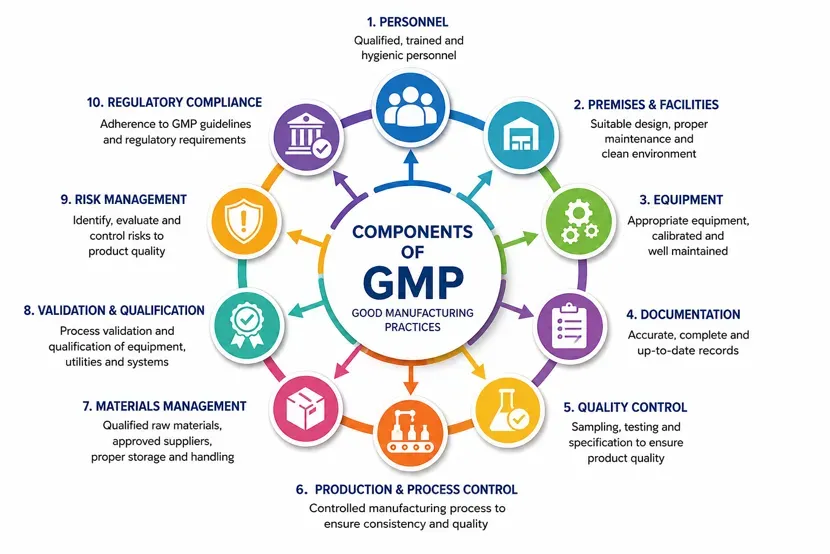
2. Evolution of Pharmaceutical GMP: From Compliance-Based to Risk-Based and Intelligent Manufacturing
Pharmaceutical Good production Practices (GMP) have significantly transformed from traditional regulatory compliance frameworks to integrated, science-driven, risk-focused, and technology-enhanced production methodologies. Historically, the execution of Good Manufacturing Practices (GMP) focused predominantly on compliance with established standard operating procedures (SOPs), manufacturing guidelines, personnel qualifications, equipment upkeep, facility oversight, documentation, quality control assessments, and regulatory evaluations to guarantee the uniform quality, safety, and effectiveness of pharmaceutical products. While these traditional criteria laid the groundwork for pharmaceutical quality assurance, their mostly retroactive nature frequently relied on post-production testing, deviation documentation, and remedial measures following manufacturing errors. Such methodologies might be inadequate in tackling the escalating intricacy of contemporary pharmaceutical formulations, sophisticated manufacturing technologies, international supply chains, and nascent quality hazards. Moreover, traditional quality control cannot autonomously assure product quality, as many process-related fluctuations, contamination incidents, equipment malfunctions, and documentation discrepancies may go unnoticed during standard testing. Thus, modern pharmaceutical production necessitates a shift from reactive adherence to proactive quality assurance, comprehensive scientific process comprehension, and ongoing lifecycle-oriented quality governance. The advancement of Quality by Design (QbD), Quality Risk Management (QRM), and Pharmaceutical Quality Systems (PQS) has greatly facilitated this change by creating a systematic connection among product quality, essential manufacturing parameters, and possible operational hazards. In this context, ICH Q7 provides GMP principles for active pharmaceutical ingredient manufacturing, ICH Q9 (R1) establishes a structured approach to identifying, evaluating, controlling and reviewing quality risks, while ICH Q10 promotes an integrated pharmaceutical quality system supporting process performance monitoring, corrective and preventive actions (CAPA), change management and continual improvement. In a similar vein, USFDA 21 CFR Parts 210 and 211 delineate critical regulatory stipulations for contemporary Good Manufacturing Practices in the realms of pharmaceutical production, processing, packaging, storage, and quality assurance. However, the effective application of these regulatory standards involves more than procedural compliance; it demands tighter coordination between quality assurance, production, engineering, quality control, supply chain management and regulatory affairs. The advent of Pharma 4.0 has brought about a notable change via the incorporation of artificial intelligence (AI), machine learning (ML), Internet of Things (IoT), Process Analytical Technology (PAT), digital twins, automated manufacturing systems, and electronic quality management systems. These technologies provide avenues for instantaneous process oversight, anticipatory maintenance, prompt detection of manufacturing anomalies, automated trend assessment, and data-informed quality decision-making. Particularly, AI-assisted predictive quality management may enhance the identification of possible process failures before they occur in defective goods, hence reinforcing the preventative objectives of ICH Q9 (R1) and the constant improvement principles of ICH Q10. Nevertheless, technology integration must be backed by adequate computerized system validation, data integrity, cybersecurity, algorithmic transparency, human oversight and regulatory responsibility. The unique orientation of modern GMP therefore resides in developing a linked manufacturing environment in which regulatory compliance, scientific risk assessment, verified digital technologies and lifecycle-based quality management operate collaboratively rather than as distinct operations. This evolution provides the foundation for future-ready pharmaceutical manufacturing, transforming GMP from a conventional inspection-oriented compliance mechanism into a predictive, preventive, intelligent and continuously improving system focused on patient safety, manufacturing reliability and consistent pharmaceutical product quality.
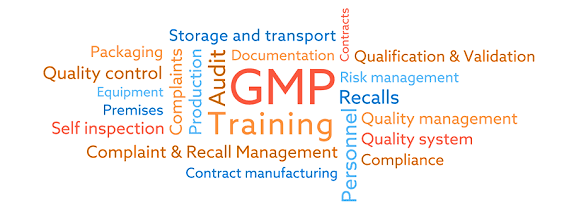
Table 1: Integrated Comparison of ICH Q7, Q9 (R1), Q10 and Us FDA 21 CFR 210/211 for AI-Enabled Pharmaceutical Manufacturing
| Key parameters | ICH Q7 | ICH Q9(R1) | ICH Q10 | FDA 21 CFR 210 | FDA 21 CFR 211 |
|---|---|---|---|---|---|
| Primary focus | API GMP | Quality risk management | Pharmaceutical quality system | General CGMP | Finished drug GMP |
| Main objective | Ensure API quality | Control quality risks | Improve product quality | Establish CGMP standards | Ensure finished drug quality |
| Core mechanism | Process control | Risk assessment | CAPA and change management | Manufacturing controls | Production and laboratory controls |
| Quality approach | Preventive | Science-based | Lifecycle-based | Compliance-based | Operational |
| Digital application | Smart process monitoring | Predictive risk analytics | AI-enabled quality management | Automated manufacturing | Digital quality control |
| Future contribution | Manufacturing reliability | Intelligent risk prediction | Continuous improvement | Regulatory foundation | Product quality assurance |
3. Regulatory Architecture and Interrelationship of ICH Q7, Q9 (R1), Q10 and USFDA 21 CFR Parts 210 & 211
The worldwide pharmaceutical regulatory structure is formed by a blend of globally standardized principles and legally binding national rules aimed at guaranteeing the uniform quality, safety, and effectiveness of medicinal products. The frameworks ICH Q7, Q9 (R1), and Q10, along with USFDA 21 CFR Parts 210 and 211, collectively offer essential stipulations for developing a robust pharmaceutical quality management system across the manufacturing lifecycle. ICH Q7 fundamentally delineates the Good Manufacturing Practice standards for active pharmaceutical ingredients (APIs), focusing on personnel duties, infrastructure and facilities, equipment validation, material oversight, production regulations, packaging, laboratory oversight, documentation, and distribution. Its execution facilitates the avoidance of contamination, cross-contamination, material intermingling, and production discrepancies during API manufacturing. Conversely, ICH Q9 (R1) offers a structured and scientifically grounded approach to Quality Risk Management (QRM), allowing pharmaceutical producers to recognize possible quality threats, assess their likelihood and impact, apply suitable risk mitigation measures, and routinely evaluate the efficacy of risk management efforts. Its tenets can be utilized throughout pharmaceutical development, production, distribution, regulatory processes, and product lifecycle administration. Moreover, ICH Q10 delineates a cohesive Pharmaceutical Quality System (PQS) that links quality risk management with managerial duties, process efficacy, product quality oversight, corrective and preventive actions (CAPA), change management, and management evaluation. The framework encourages ongoing enhancement via methodical assessment of production efficiency and product excellence instead of confining quality assurance to standard inspections and final testing. Complementing these international guidelines, USFDA 21 CFR Part 210 establishes general current Good Manufacturing Practice (cGMP) requirements applicable to drug manufacturing, processing, packaging and holding, whereas Part 211 provides more specific requirements for finished pharmaceutical products, including organization and personnel responsibilities, buildings and facilities, equipment, components, production and process controls, packaging and labelling, laboratory controls, records and reports, and returned or salvaged drug products. The contemporary regulatory viewpoint is to perceive these frameworks as a cohesive quality structure instead of isolated compliance documents. Within this architecture, ICH Q7 establishes manufacturing controls for APIs, ICH Q9 (R1) provides the scientific foundation for evaluating and controlling quality risks, and ICH Q10 integrates these activities into a lifecycle-based quality management system, while USFDA Parts 210 and 211 establish enforceable cGMP expectations for applicable drug manufacturing operations. Their coordinated implementation can further support AI-assisted deviation detection, predictive process monitoring, risk-based equipment maintenance, electronic documentation and continuous process verification, provided that the associated computerized systems are appropriately validated and controlled. Such regulatory compatibility presents an opportunity to bridge the gap between traditional GMP compliance and intelligent pharmaceutical manufacture, particularly in globally competitive manufacturing environments such as India. Consequently, integrating these frameworks can establish a scientifically justified, risk-responsive, digitally supported and continuously improving pharmaceutical quality ecosystem that strengthens regulatory inspection readiness, minimizes manufacturing failures and promotes the reliable production of safe, effective and high-quality medicines.
Table 2: Comparative Regulatory Requirements of Us FDA 21 CFR Parts 210 & 211 and Revised Indian Schedule M (2023)
| Key regulatory requirements | US FDA 21 CFR Parts 210 & 211 | Revised Indian Schedule M (2023) |
|---|---|---|
| Regulatory framework | US federal CGMP regulations | Indian Drugs Rules, 1945 |
| Quality management | Defined quality unit and CGMP controls | Integrated Pharmaceutical Quality System (PQS) |
| Quality risk management | Risk-based quality controls within CGMP | Explicit Quality Risk Management (QRM) |
| Management responsibility | Quality unit authority and responsibilities | Strong senior management accountability |
| Personnel training | Qualification, training and hygiene | Competency-based training and personnel hygiene |
| Premises and equipment | Detailed facility and equipment controls | Enhanced premises, plant and equipment requirements |
| Material management | Component testing, approval and handling | Supplier qualification, material control and traceability |
| Process validation | Production and process control requirements | Lifecycle-based qualification and validation |
| Documentation | Batch records, laboratory records and reports | Comprehensive documentation and record management |
| Data integrity | Accurate, reliable and controlled records | Data governance and computerized-system controls |
| Computerized systems | Applicable electronic record and CGMP controls | Explicit computerized-system validation and control |
| Deviation and CAPA | Investigation of discrepancies and quality failures | Structured deviation management and CAPA |
| Change management | Controlled changes affecting product quality | Formal change control integrated with QRM |
| Product quality review | Annual product review under applicable requirements | Periodic Product Quality Review (PQR) |
| Stability studies | Stability testing and scientifically justified expiration dating | Defined ongoing stability programmed |
| Complaints and recalls | Complaint handling and product recall procedures | Documented complaint handling and recall systems |
| Self-inspection | Quality oversight and applicable CGMP controls | Defined self-inspection programmed |
| AI and digital readiness | AI use must comply with applicable CGMP and electronic-record controls | Computerized-system controls provide a foundation for digital GMP implementation |
| Overall objective | Ensure drug identity, strength, quality and purity | Strengthen pharmaceutical quality, safety and international GMP alignment |
4. Comparative Regulatory Gap Analysis and Compliance Challenges
Despite the availability of internationally recognized pharmaceutical quality guidelines and regulatory requirements, significant differences remain between regulatory expectations and their practical implementation across pharmaceutical manufacturing industries. ICH Q7, Q9 (R1) and Q10 provide harmonized scientific principles for GMP implementation, quality risk management and pharmaceutical quality systems, whereas USFDA 21 CFR Parts 210 and 211 establish specific and enforceable cGMP requirements for applicable pharmaceutical manufacturing operations. Although these frameworks share common objectives, differences in regulatory scope, implementation mechanisms, documentation expectations, quality oversight and inspection approaches may create challenges for manufacturers operating across multiple regulatory jurisdictions. One important gap involves the integration of API manufacturing controls with finished pharmaceutical product quality requirements. While ICH Q7 emphasizes the systematic control of API manufacturing processes, materials, intermediates and associated quality systems, 21 CFR Part 211 provides detailed requirements for finished drug product manufacturing, including production controls, laboratory testing, packaging, labelling and distribution records. In practice, inadequate coordination between API suppliers, formulation manufacturers and quality assurance departments may result in incomplete material traceability, inconsistent specifications and insufficient control of critical quality attributes. Another major challenge involves the practical application of Quality Risk Management under ICH Q9 (R1). Although risk assessment methodologies such as Failure Mode and Effects Analysis (FMEA), Hazard Analysis and Critical Control Points (HACCP) and risk ranking can support systematic decision-making, their implementation may become documentation-oriented rather than scientifically justified when appropriate process knowledge, reliable historical data and trained personnel are unavailable. Similarly, ICH Q10 emphasizes effective CAPA, change management and management review; however, delayed deviation investigations, ineffective root cause identification, repetitive manufacturing failures and inadequate evaluation of CAPA effectiveness can weaken the overall pharmaceutical quality system. Data integrity represents another critical regulatory concern, particularly where manual documentation, uncontrolled spreadsheets, incomplete audit trails, inappropriate access permissions and inadequate electronic record management systems remain prevalent. In the Indian pharmaceutical manufacturing sector, the implementation of revised Schedule M provides an important opportunity to strengthen domestic GMP practices and align manufacturing operations with internationally recognized quality expectations. Nevertheless, small and medium-sized pharmaceutical enterprises may experience financial limitations, insufficient digital infrastructure, inadequate technical expertise, workforce training gaps and difficulties in implementing comprehensive computerized quality management systems. Furthermore, the adoption of artificial intelligence and advanced manufacturing technologies introduces additional challenges associated with algorithm validation, cybersecurity, data governance, model reliability and regulatory accountability. An important novel consideration is that regulatory gaps should not be evaluated only through the presence or absence of documented procedures but also through the effectiveness of their implementation and their measurable impact on product quality. Therefore, a comprehensive comparative assessment should connect regulatory requirements with actual manufacturing performance indicators, including deviation frequency, repeat failures, out-of-specification results, CAPA effectiveness, batch rejection rates, documentation errors and inspection observations. Integrating these indicators with risk-based quality management and validated digital monitoring systems may facilitate early identification of systemic weaknesses and support targeted corrective interventions. Such an approach can help pharmaceutical manufacturers move beyond checklist-based compliance towards evidence-driven regulatory implementation, operational transparency and continual quality improvement. Ultimately, addressing these interconnected regulatory, technological and organizational challenges is essential for establishing a harmonized, practical and sustainable pharmaceutical manufacturing environment capable of meeting evolving international GMP expectations while protecting patient safety.
Table 3: Integration of Artificial Intelligence, Quality Risk Management and Digital Technologies in Future-Ready Pharmaceutical Manufacturing
| Key application | Relevant regulatory framework | AI-driven / digital implementation | Expected benefits |
|---|---|---|---|
| Smart manufacturing | ICH Q7; 21 CFR 210/211; Schedule M | AI-enabled process monitoring | Improved process consistency |
| Predictive risk assessment | ICH Q9(R1); Schedule M | Machine-learning-based risk prediction | Early risk identification |
| Intelligent quality management | ICH Q10; Schedule M | AI-integrated Pharmaceutical Quality Management Systems | Improved quality oversight |
| Process validation | ICH Q7; ICH Q10; Schedule M | Predictive process analytics and continuous verification | Enhanced process control |
| Deviation and CAPA | ICH Q9(R1); ICH Q10; 21 CFR 211 | Automated deviation classification and investigation support | Faster corrective action |
| Data integrity | 21 CFR 211; Schedule M | Electronic records, audit-trail analytics and anomaly detection | Improved data reliability |
| Predictive maintenance | ICH Q7; 21 CFR 211; Schedule M | AI-based equipment failure prediction | Reduced equipment downtime |
| Laboratory automation | 21 CFR 211; Schedule M | AI-assisted analytical data evaluation | Improved testing efficiency |
| Supply-chain control | ICH Q7; ICH Q10; Schedule M | Intelligent supplier and material risk monitoring | Improved material traceability |
| Continuous improvement | ICH Q10; ICH Q9(R1) | AI-supported trend analysis and quality metrics | Sustainable quality performance |
5. Integration of Quality Risk Management and Pharmaceutical Quality Systems
The amalgamation of Quality Risk Management (QRM) and Pharmaceutical Quality Systems (PQS) is a pivotal approach for evolving traditional pharmaceutical production into a proactive, scientifically regulated, and perpetually enhancing quality setting. ICH Q9 (R1) and ICH Q10 offer synergistic guidelines for implementing this integration, wherein risk-based decision-making is a crucial element of pharmaceutical quality management across the product lifecycle. ICH Q9 (R1) underscores a methodical strategy for the discovery, analysis, assessment, management, communication, and reassessment of potential quality risks, guaranteeing that manufacturing choices are grounded on scientific evidence and suitable patient safety considerations. Risk evaluation methodologies like Failure Mode and Effects Analysis (FMEA), Fault Tree Analysis (FTA), Hazard Analysis and Critical Control Points (HACCP), and risk prioritization can be utilized to detect possible origins of contamination, equipment failure, process inconsistency, material breakdown, and product quality decline. Simultaneously, ICH Q10 delineates an extensive Pharmaceutical Quality System (PQS) with four principal components: monitoring of process performance and product quality, Corrective and Preventive Actions (CAPA), change management, and management review, all underpinned by knowledge management and quality risk management as crucial facilitators. The effective amalgamation of these components allows producers to transform recognized hazards into quantifiable quality enhancement initiatives. For instance, discrepancies detected during production can be methodically examined through risk-oriented root cause analysis, succeeded by scientifically substantiated CAPA execution and subsequent evaluation of efficacy. In a similar vein, alterations pertaining to raw materials, manufacturing apparatus, process variables, analytical techniques, or facility infrastructure can be assessed based on their prospective influence on critical quality attributes (CQAs), critical process parameters (CPPs), and the quality of the final product. Moreover, ongoing process surveillance, evaluations of product quality, analysis of stability data, customer feedback, and assessments of supplier performance can yield critical insights for revising risk evaluations and enhancing production regulations. A unique prospect exists in creating an adaptive risk-to-quality feedback system where manufacturing data consistently impacts risk prioritization, CAPA choices, and management evaluations, instead of seeing risk assessment as a standalone documentation task. The amalgamation of artificial intelligence (AI), machine learning (ML), and digital quality management systems could enhance this mechanism by recognizing repetitive deviation patterns, forecasting equipment failures, identifying atypical process variations, and prioritizing potential quality risks through historical and real-time manufacturing data. Nonetheless, AI-assisted risk evaluations must be scientifically substantiated, suitably validated, comprehensible, and subjected to expert human oversight. The efficacy of this comprehensive strategy may be assessed using quantifiable metrics such as recurrence of deviations, effectiveness of CAPA closures, frequency of batch rejections, process capability, out-of-specification outcomes, and a decrease in quality-related production failures. Thus, integrating ICH Q9 (R1) risk management concepts with ICH Q10 pharmaceutical quality system components can formulate a proactive, adaptive, and lifecycle-focused quality management approach. This integration establishes a scientific basis for the adoption of intelligent GMP practices, enhancing regulatory inspection preparedness, fortifying manufacturing uniformity, and guaranteeing the ongoing manufacture of safe, effective, and high-quality pharmaceutical products.
6. Pharma 4.0: Artificial Intelligence and Digital Transformation in GMP Manufacturing
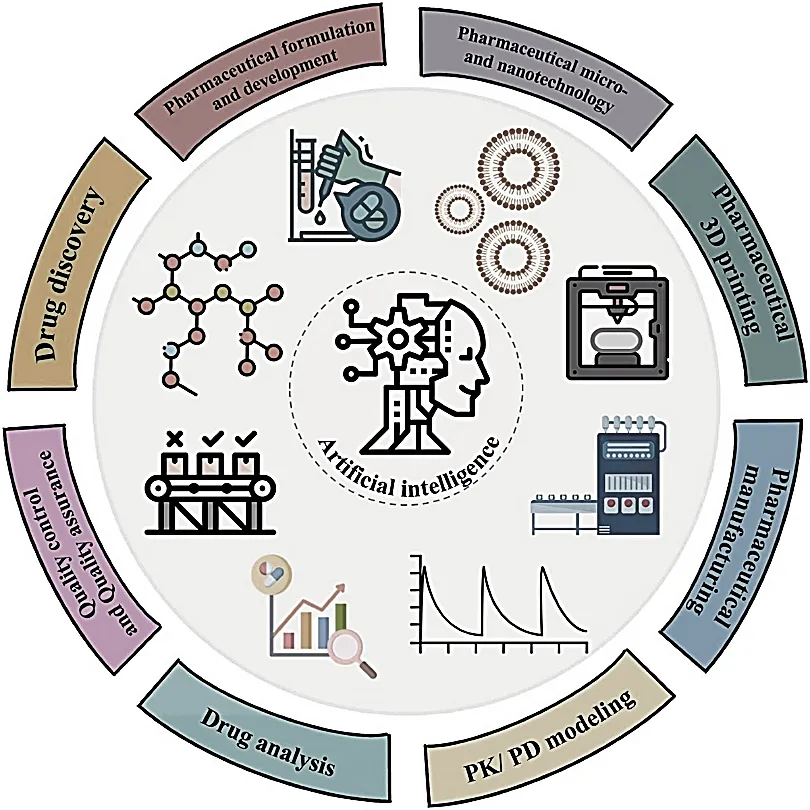
The advent of Pharma 4.0 signifies a profound change in pharmaceutical production via the incorporation of sophisticated digital technology, smart automation, and analytics-based quality management frameworks. Traditional pharmaceutical production predominantly relies on established operational protocols, routine quality evaluations, manual record-keeping, and retrospective analyses of manufacturing discrepancies. While these techniques are crucial for adhering to regulations, the growing intricacy of production and the necessity for uniform product quality necessitate increasingly sophisticated methods that can provide real-time oversight, predictive analytics, and proactive decision-making. Pharma 4.0 establishes a cohesive manufacturing ecosystem wherein Artificial Intelligence (AI), Machine Learning (ML), Internet of Things (IoT), Process Analytical Technology (PAT), digital twins, cloud computing, and automated quality management systems synergistically improve manufacturing efficacy and process dependability. Artificial Intelligence and Machine Learning technologies are capable of examining extensive amounts of historical and real-time production data to discern intricate correlations among process parameters, equipment efficacy, and essential quality characteristics. These talents could facilitate the early detection of process irregularities, forecasting of manufacturing discrepancies, and enhancement of production parameters. In a comparable manner, IoT-integrated sensors within manufacturing machinery may perpetually assess critical operational metrics including temperature, pressure, humidity, mixing velocity, environmental factors, and equipment efficacy. Real-time data can enhance process transparency and enable prompt action when established operational thresholds or irregular process trends are identified. Moreover, PAT establishes a crucial technological basis for comprehending and regulating pharmaceutical production processes by prompt assessment of essential material and process characteristics. Methods including near-infrared spectroscopy, Raman spectroscopy, particle size analysis, and online process monitoring can facilitate better process comprehension, diminish reliance on traditional offline testing, and augment process regulation. Digital twin technology presents a novel opportunity by generating virtual replicas of tangible manufacturing machinery, production lines, or processes, facilitating simulation, performance analysis, and evaluation of possible process alterations prior to executing real manufacturing modifications. Furthermore, electronic batch manufacturing records, laboratory information management systems (LIMS), manufacturing execution systems (MES), and electronic quality management systems (eQMS) can enhance documentation oversight, material traceability, deviation reporting, and preparedness for regulatory inspections. The innovative importance of Pharma 4.0 is in integrating these technologies with the regulatory frameworks of ICH Q7, Q9 (R1), Q10, and USFDA 21 CFR Parts 210 and 211 to create a digitally cohesive GMP environment. For instance, real-time IoT surveillance can produce manufacturing data, AI-driven analytical frameworks can detect possible quality threats, and cohesive eQMS platforms can facilitate deviation analysis, CAPA oversight, and quality assessment. Nonetheless, digital transformation cannot autonomously achieve GMP compliance without suitable system certification, computerized system validation, data integrity measures, cybersecurity safeguards, access control, audit trails, and human supervision. Producers must guarantee that AI-generated suggestions are scientifically substantiated and that essential manufacturing and quality determinations are evaluated by suitably qualified individuals. Consequently, the effective execution of Pharma 4.0 necessitates a harmonious amalgamation of regulatory adherence, technical framework, workforce proficiency, and stringent data management. This technology-driven evolution could advance pharmaceutical manufacturing from traditional quality control to intelligent, predictive, preventive, and continuously monitored production, therefore enhancing product quality, operational dependability, and patient safety.
Table 4: Pharma 4.0 and AI-Driven Pharmaceutical Manufacturing: Integrated Regulatory Convergence Framework
| Strategic dimensions | Pharma 4.0 / AI-driven approach | Regulatory alignment | Expected impact |
|---|---|---|---|
| Smart manufacturing | AI, IoT and connected production systems | ICH Q7; US FDA 21 CFR 210/211; Schedule M | Intelligent manufacturing control |
| Predictive quality | Machine learning and predictive analytics | ICH Q9(R1) | Early quality-risk detection |
| Digital quality management | AI-integrated Pharmaceutical Quality Management System | ICH Q10; Revised Schedule M | Continuous quality oversight |
| Process intelligence | Digital twins and real-time process monitoring | ICH Q7; ICH Q10 | Improved process understanding |
| Automated compliance | Electronic batch records and intelligent documentation | 21 CFR Part 211; Schedule M | Improved traceability and documentation |
| Data governance | Audit-trail monitoring and data-integrity analytics | 21 CFR Part 211; Schedule M | Reliable and secure quality data |
| Predictive maintenance | AI-based equipment performance prediction | ICH Q7; Schedule M | Reduced operational failures |
| Intelligent CAPA | Automated deviation analysis and root-cause support | ICH Q9(R1); ICH Q10 | Effective corrective and preventive action |
| Regulatory convergence | Harmonized digital quality practices | ICH Q7, Q9(R1), Q10; US FDA; Indian Schedule M | Improved global GMP alignment |
| Continuous improvement | AI-assisted performance monitoring and learning systems | ICH Q10 | Future-ready pharmaceutical operations |
Table 5: Proposed Integrated Regulatory Convergence Framework for Future-Ready Pharmaceutical Manufacturing
| Integration level | Regulatory foundation | Proposed integration mechanism | Strategic outcome |
|---|---|---|---|
| Level 1: GMP foundation | ICH Q7; US FDA 21 CFR 210/211; Schedule M | Harmonization of manufacturing and quality requirements | Consistent GMP compliance |
| Level 2: Risk intelligence | ICH Q9(R1) | Science-based risk assessment and AI-assisted prediction | Proactive risk prevention |
| Level 3: Quality integration | ICH Q10; Revised Schedule M | Integrated PQS, CAPA and change management | Unified quality governance |
| Level 4: Digital transformation | Applicable FDA and Indian CGMP requirements | Validated AI, IoT, cloud systems and electronic records | Intelligent manufacturing |
| Level 5: Regulatory assurance | US FDA regulations; Indian Schedule M; ICH guidelines | Data integrity, audit trails, validation and human oversight | Trustworthy digital compliance |
| Level 6: Continuous optimization | ICH Q9(R1) and ICH Q10 | Predictive monitoring, feedback and continual improvement | Adaptive and future-ready manufacturing |
7. AI-Driven Predictive Quality Assurance and Intelligent Manufacturing
Artificial Intelligence (AI) and Machine Learning (ML) are becoming pivotal technologies for revolutionizing traditional pharmaceutical quality assurance into a predictive, preventive, and data-centric manufacturing framework. Conventional quality assurance methodologies often rely on established acceptance standards, regular process evaluations, laboratory analyses, and retrospective enquiries to detect production deficiencies. Nevertheless, these methodologies could fail to identify intricate process deviations or preliminary indicators that lead to a decline in product quality. AI-powered predictive quality assurance provides a sophisticated methodology by examining historical production data, real-time sensor inputs, laboratory findings, equipment performance metrics, and environmental monitoring variables to detect irregular patterns and foresee possible quality-related failures prior to their substantial impact on manufacturing processes. Machine learning algorithms, such as supervised learning, unsupervised learning, and deep learning, can discern connections among critical process parameters (CPPs), critical material attributes (CMAs), and critical quality attributes (CQAs), thus enhancing process comprehension and manufacturing uniformity. Predictive models can detect any discrepancies related to granulation moisture levels, blending consistency, compression pressure, tablet firmness, dissolving characteristics, and coating efficacy in solid dosage production. In a comparable manner, AI-driven surveillance systems can detect atypical temperature changes, machinery vibration trends, pressure irregularities, and environmental anomalies that could signify imminent equipment malfunction or process disruption. A significant application pertains to AI-facilitated root cause analysis, where algorithms scrutinize historical deviation reports, batch production records, laboratory examinations, and CAPA documentation to detect persistent failure trends and aid in the prioritization of corrective measures. Moreover, predictive maintenance systems can assess equipment degradation and determine maintenance needs prior to unforeseen failures disrupting production processes. AI-enhanced analytical instruments can aid in tracking out-of-specification (OOS) trends, out-of-trend (OOT) outcomes, stability information, and supplier performance, thus bolstering risk-oriented quality supervision. The innovative aspect of AI-enhanced predictive quality assurance is in its ability to create an ongoing link between manufacturing process data, quality risk evaluation, and proactive quality measures. This integration can actualize the tenets of ICH Q9 (R1) by facilitating prompt risk identification and fulfilling the aims of ICH Q10 through enhanced process oversight, deviation management, CAPA efficacy, and ongoing improvement. Nonetheless, AI-driven forecasts need not to be seen as autonomous proof of product excellence or replacements for verified analytical techniques, specified criteria, and sanctioned quality determinations. Their application necessitates representative training datasets, suitable model validation, performance surveillance, interpretability, regulated software updates, cybersecurity measures, and competent human supervision. Special emphasis should be placed on data integrity, algorithmic prejudice, and model deviation, since erroneous forecasts could lead to unsuitable manufacturing or quality determinations. The regulatory requirements of USFDA 21 CFR Parts 210 and 211 must be entirely relevant to manufacturing processes, irrespective of the level of automation or AI incorporation. Consequently, AI-based predictive quality assurance ought to operate as a scientifically regulated decision-support tool within a recognized pharmaceutical quality framework. The successful execution of this strategy could diminish repeated manufacturing discrepancies, enhance equipment dependability, bolster process uniformity, and facilitate the early detection of possible product quality issues, thereby leading to safer, more dependable, and future-oriented pharmaceutical production. 8. Data Integrity, Digital Verification, and Regulatory Obstacles.
8. Data Integrity, Digital Validation and Regulatory Challenges
Data integrity and the validation of computerized systems are essential prerequisites for ensuring the reliability, precision, uniformity, and traceability of information produced throughout pharmaceutical production and quality management processes. As the utilization of artificial intelligence (AI), machine learning (ML), electronic batch manufacturing records, laboratory information management systems (LIMS), manufacturing execution systems (MES), and electronic quality management systems (eQMS) rises, pharmaceutical sectors are steadily shifting from traditional paper documentation to digitally integrated manufacturing settings. While digitalization presents prospects for enhanced operational efficiency, real-time oversight, and automated quality evaluation, it simultaneously brings forth supplementary regulatory hurdles related to data governance, cybersecurity, system reliability, and electronic record management. The ALCOA+ principles assert that pharmaceutical data must be traceable, legible, contemporaneous, original, accurate, complete, consistent, enduring, and accessible, forming a crucial basis for preserving data integrity during the product lifecycle. These tenets are especially crucial for guaranteeing that manufacturing documentation, laboratory findings, analytical assessments, equipment calibration logs, deviation enquiries, and batch release records are dependable and appropriate for regulatory scrutiny. In the United States, 21 CFR Part 211 delineates the stipulations for the formulation, preservation, and management of suitable manufacturing and control documentation, whereas 21 CFR Part 11 pertains to relevant electronic records and electronic signatures. Moreover, computerized systems employed in GMP-regulated activities necessitate suitable validation across their whole lifecycle to verify that they reliably operate in accordance with established intended-use specifications. This encompasses system certification, user access regulation, audit trail assessment, backup and recovery protocols, change management, regular evaluation, and regulated software updates. The incorporation of AI-driven systems brings out more intricacies as the efficacy of algorithms might fluctuate over time due to model drift, alterations in input data, software updates, and differences in production environments. Consequently, AI models employed for GMP-related decision assistance necessitate documented intended-use evaluations, scientifically substantiated validation methodologies, performance oversight, regulated retraining, and suitable human evaluation. Cybersecurity constitutes a vital factor as unauthorized access to systems, ransomware incidents, data alteration, and information loss can jeopardize industrial continuity and the integrity of pharmaceutical quality documentation. A new regulatory aspect is the creation of an ongoing digital trust framework that integrates data integrity, system validation, AI model governance, and pharmaceutical quality supervision inside a cohesive GMP structure. This methodology ought to guarantee that each pivotal digital decision can be traced back to its originating data, validated system, algorithmic iteration, and the authorized individuals accountable for its assessment. Furthermore, pharmaceutical producers are required to implement suitable governance frameworks that delineate duties for data stewardship, system accessibility, electronic authorizations, model performance evaluation, and incident documentation. Special consideration is necessary for small and medium-sized firms, since their constrained technological infrastructure and inadequately qualified staff may hinder the adoption of sophisticated digital quality systems. Thus, proficient data integrity management necessitates a synchronized investment in validated technologies, cybersecurity frameworks, workforce expertise, and regulatory comprehension. Incorporating these strategies with ICH Q9 (R1), ICH Q10, and relevant USFDA cGMP standards can enhance digital accountability, bolster inspection preparedness, and guarantee that technological progress enhances pharmaceutical product quality while maintaining regulatory adherence and patient safety.
9. Proposed Integrated Framework for Future-Ready Pharmaceutical Manufacturing
The establishment of a pharmaceutical manufacturing system prepared for the future necessitates a cohesive framework that aligns global regulatory standards, scientifically grounded quality risk management, pharmaceutical quality systems, and validated digital technologies within a singular manufacturing setting. Although ICH Q7, Q9 (R1), Q10 and USFDA 21 CFR Parts 210 and 211 provide key foundations for pharmaceutical quality assurance, their optimum effectiveness can be reached through coordinated implementation rather than isolated regulatory compliance operations. The suggested cohesive framework presents a methodical shift from traditional GMP execution to an AI-enhanced, risk-focused, and lifecycle-driven pharmaceutical quality management system. At its regulatory core, ICH Q7 delineates suitable controls for the production of active pharmaceutical ingredients, whereas USFDA 21 CFR Parts 210 and 211 stipulate relevant current Good Manufacturing Practices for drug production and completed pharmaceutical products. These requirements should be supported by ICH Q9 (R1), which provides a scientific methodology for identifying, assessing, controlling and reviewing potential quality risks, and ICH Q10, which integrates quality risk management with process performance monitoring, CAPA, change management and management review. The second component involves establishing a risk-based manufacturing architecture through the identification of critical material attributes, critical process parameters and critical quality attributes, supported by appropriate process validation, equipment qualification and supplier quality management. The third component incorporates digital transformation through IoT-enabled monitoring, Process Analytical Technology (PAT), electronic batch records, manufacturing execution systems and computerized quality management platforms to facilitate continuous information collection, process traceability and manufacturing oversight. Consequently, AI and ML-driven analytical frameworks may assess both historical and real-time manufacturing data to recognize atypical process behaviors, forecast possible equipment malfunctions, find persistent discrepancies, and facilitate proactive quality measures. The fourth component stresses digital governance, including ALCOA+ data integrity standards, computerized system validation, AI model validation, cybersecurity, audit trail management and controlled electronic documentation. Qualified quality assurance specialists must retain responsibility for examining crucial quality decisions and approving manufacturing or batch-release activities in compliance with applicable regulatory standards. Furthermore, a continuous feedback loop should integrate production performance indicators, deviation investigations, CAPA effectiveness, customer complaints, stability results and management review outcomes to periodically update quality risk assessments and reinforce manufacturing controls. The principal novelty of this proposed framework lies in establishing a closed-loop regulatory-to-risk-to-digital-to-quality integration model in which regulatory requirements guide manufacturing controls, manufacturing data support risk assessment, AI-assisted analytics facilitate predictive interventions and quality system feedback drives continuous improvement. Unlike conventional compliance models that usually evaluate regulation implementation through documentation and inspection preparedness, this integrated approach stresses measurable quality results, early risk detection and continuous process improvement. The execution must be flexible to accommodate various pharmaceutical manufacturing settings, such as API manufacture, solid oral dosage fabrication, and other completed pharmaceutical processes, in accordance with their own regulatory standards and technological proficiencies. For Indian pharmaceutical industry, the framework can provide a viable platform for combining updated Schedule M with internationally recognized GMP requirements while addressing the financial, infrastructural and technical limitations of small and medium-sized enterprises. Ultimately, this suggested architecture aspires to turn pharmaceutical production into a scientifically controlled, digitally connected, risk-responsive and continuously developing ecosystem that fosters manufacturing reliability, regulatory confidence and patient-centric product quality.
10. Implementation Roadmap for Indian Pharmaceutical Industries
The effective execution of a cohesive, AI-enhanced, and risk-oriented GMP framework within the Indian pharmaceutical sector necessitates a methodical strategy that takes into account regulatory requirements, technological proficiencies, financial assets, and organizational preparedness. The updated Schedule M establishes a crucial basis for enhancing the quality of pharmaceutical manufacturing; however, successful alignment with ICH Q7, Q9 (R1), Q10, and USFDA 21 CFR Parts 210 and 211 necessitates ongoing advancements in manufacturing methodologies, quality management frameworks, and digital systems. Pharmaceutical producers must first perform thorough GMP gap analyses to pinpoint shortcomings in documentation, staff training, equipment validation, process verification, deviation oversight, CAPA, and data integrity. According to these evaluations, priorities for risk-based implementation ought to be determined, favoring essential manufacturing processes and actions that could directly affect product quality and patient safety. Pharmaceutical companies of modest scale ought to contemplate a gradual implementation of cost-effective digital solutions, such as electronic documentation, automated environmental monitoring, computerized quality management systems, and fundamental predictive analytics, instead of promptly committing to costly fully automated manufacturing systems. Moreover, enhancing employee proficiency by consistent training in GMP, quality risk management, ALCOA+ principles, computerized system validation, and AI-supported quality management is crucial for enduring digital transformation. Cooperation among pharmaceutical producers, regulatory bodies, academic entities, technological innovators, and quality experts can enhance the exchange of knowledge, technical advancement, and suitable implementation tactics. Regular internal audits, managerial evaluations, performance assessments, and reassessments of regulatory discrepancies ought to be integrated to appraise the efficacy of implementation and ensure ongoing enhancement. A systematic, expandable, and scientifically validated strategy can enhance India's pharmaceutical production skills, bolster international regulatory trust, and guarantee reliable access to quality-assured medications.
11. Future Perspectives and Research Opportunities
Future pharmaceutical manufacturing is predicted to increasingly combine explainable artificial intelligence, enhanced predictive analytics, autonomous process monitoring, digital twins and continuous manufacturing technologies. Further research is essential to build scientifically proven AI models, uniform digital governance processes and regulatory approaches for analyzing AI-assisted GMP choices. Particular effort should be put on developing cost-effective and scalable technologies suitable for small and medium-sized pharmaceutical firms. Integration of real-time production information with quality risk management and lifecycle-based pharmaceutical quality systems may provide new options for enhancing process dependability, minimizing quality failures and strengthening patient safety.
CONCLUSION
Incorporating ICH Q7, Q9 (R1), Q10, along with USFDA 21 CFR Parts 210 and 211, establishes a robust framework for enhancing pharmaceutical production quality beyond standard GMP adherence. Integrating regulatory alignment, evidence-based risk management, proven digital innovations, and AI-enhanced predictive quality assurance may create a forward-thinking and ever evolving pharmaceutical quality framework. The successful execution of this cohesive strategy can improve manufacturing uniformity, compliance preparedness, data reliability, and patient safety, while facilitating the shift toward advanced and future-oriented pharmaceutical production.
*Novelty and Potential Benefits of the Present Review*
The originality of this review is in formulating a cohesive regulatory and technology-focused viewpoint that links ICH Q7, ICH Q9 (R1), ICH Q10, and USFDA 21 CFR Parts 210 and 211 inside a singular framework for future-oriented pharmaceutical production. This review distinguishes itself from traditional evaluations by not only addressing individual GMP guidelines, quality risk management strategies, or digital manufacturing technologies in isolation, but also by analyzing their interconnections and potential for integrated application across the pharmaceutical product lifecycle. A significant unique element is the suggested amalgamation of regulatory adherence, scientifically grounded risk evaluation, Pharmaceutical Quality Systems (PQS), and Artificial Intelligence (AI)-enhanced predictive quality assurance into a continuous quality enhancement framework. The analysis delves into the ways in which machine learning, the Internet of Things (IoT), Process Analytical Technology (PAT), digital twins, and automated quality management systems can facilitate the early detection of manufacturing anomalies, predictive maintenance, process enhancement, and proactive quality measures. A significant addition is the comparative assessment of global regulatory standards in relation to India's updated Schedule M, emphasizing the discrepancies in implementation, technology constraints, and the practical difficulties encountered by small and medium-sized pharmaceutical companies. Moreover, this assessment underscores the necessity of including ALCOA+ data integrity tenets, validation of computerized systems, governance of AI models, cybersecurity measures, and human supervision to guarantee that digital transformation is both scientifically valid and compliant with regulatory standards. The suggested comprehensive framework linking regulation, risk, digitalization, and quality provides a theoretical basis for evolving conventional inspection-focused GMP methodologies into predictive, preventative, and lifecycle-oriented manufacturing systems. The prospective advantages encompass enhanced production uniformity, diminished process variability, more efficient deviation analysis, fortified CAPA execution, heightened preparedness for regulatory inspections, and superior data traceability. Furthermore, the suggested methodology could facilitate economical technological integration, enhanced utilization of production assets, and increased global regulatory competitiveness, especially in the Indian pharmaceutical sector. Ultimately, this review provides a consolidated scientific and practical perspective for pharmaceutical manufacturers, quality assurance professionals, regulatory authorities, researchers and policymakers to advance beyond conventional GMP compliance towards intelligent, risk-responsive and patient-centric pharmaceutical manufacturing.
Credit Author Contribution Statement
REFERENCES




Biswajit Biswal, Jyoti Prasanna Nanda, Deepak Kumar Sahoo, Sourav Kumar Sahoo, Beyond GMP Compliance: Integrating ICH Q7, Q9, Q10 and Us FDA 21 CFR Parts 210 & 211 for AI-Driven, Risk-Based and Future-Ready Pharmaceutical Manufacturing, Int. J. of Pharm. Sci., 2026, Vol 4, Issue 11, 1720-1738. https://doi.org/10.5281/zenodo.24152312
 10.5281/zenodo.24152312