

We use cookies to ensure our website works properly and to personalise your experience. Cookies policy
1,2Pharm D Interns, Ezhuthachan College of Pharmaceutical Sciences, Marayamuttom, Thiruvananthapuram, Kerala, India.
3Assistant Professor, Department of Pharmacy Practice, Ezhuthachan College of Pharmaceutical Sciences, Marayamuttom, Thiruvananthapuram, Kerala, India.
4Consultant Obstetrician, Gynaecologist, and Laparoscopic Surgeon at NIMS Medicity (Noorul Islam Multi-Speciality Hospital) in Aralummoodu, Neyyattinkara, Thiruvananthapuram, Kerala, India.
5Principal/HOD, Department of Pharmacy Practice, Ezhuthachan College of Pharmaceutical Sciences, Marayamuttom, Thiruvananthapuram, Kerala, India.
Recurrent second-trimester pregnancy loss is an important obstetric complication that may occur due to cervical insufficiency, maternal autoimmune disorders, and endocrine or metabolic abnormalities, potentially leading to significant maternal and fetal complications. Cervical insufficiency is characterised by premature cervical dilatation, which may result in pregnancy loss, particularly during the second trimester. We report a case of a 30-year-old woman who presented at 17 weeks and 4 days of gestation with per-vaginal bleeding and lower abdominal pain, with a history of two previous second-trimester pregnancy losses associated with cervical incompetence. Her medical history was significant for antiphospholipid antibody positivity, pregestational diabetes mellitus and hypothyroidism. Early ultrasonography demonstrated a viable intrauterine pregnancy with a cervical length of 4.2 cm and a closed internal os. Although cervical cerclage was planned, spontaneous fetal expulsion occurred before the procedure could be performed. The placenta remained undelivered and required manual removal under general anaesthesia, followed by the development of uterine atony and haemorrhage. This was managed with uterotonic agents, tranexamic acid, intrauterine Bakri balloon tamponade and blood-product transfusion, resulting in clinical stabilisation.
Definition
Second-trimester pregnancy loss refers to the loss of a pregnancy between 13 and 27 completed weeks of gestation. Recurrent pregnancy loss during this period is an important obstetric concern that may arise from maternal, fetal or placental factors. Cervical insufficiency is one of the recognised causes and is characterised by the inability of the cervix to maintain the pregnancy, resulting in premature cervical shortening and dilatation, often without regular uterine contractions. This may lead to bulging of the fetal membranes, membrane rupture and subsequent pregnancy loss. [1, 2]
Etiology
The causes of second-trimester pregnancy loss are varied and may involve anatomical, immunological, endocrine and metabolic factors. Cervical insufficiency may be associated with congenital cervical abnormalities, previous cervical trauma, surgical procedures or weakness of the supporting connective tissue. Antiphospholipid syndrome is another important cause of pregnancy morbidity, as it may interfere with normal placental function. Maternal conditions such as pregestational diabetes mellitus and hypothyroidism may also contribute to adverse pregnancy outcomes, particularly when inadequately controlled. Other possible causes include uterine abnormalities, maternal infections, placental disorders and fetal abnormalities. [3, 4, 5]
Pathophysiology
The underlying mechanisms of second-trimester pregnancy loss depend on the associated maternal or fetal condition. In cervical insufficiency, inadequate cervical strength and structural support may result in progressive shortening and premature dilatation as pregnancy advances. This allows the fetal membranes to descend through the cervical canal, increasing the possibility of membrane rupture and pregnancy loss. In antiphospholipid syndrome, circulating autoantibodies may affect endothelial activity, platelet function, coagulation pathways and placental development, thereby interfering with normal pregnancy progression. Similarly, poorly controlled diabetes and inadequate thyroid hormone levels may disturb maternal metabolic and hormonal functions, potentially affecting fetal and placental development. [1, 6, 7]
Epidemiology
Second-trimester pregnancy loss is less common than early miscarriage but remains a significant cause of adverse pregnancy outcomes. Women with a previous history of mid-trimester pregnancy loss, particularly those with suspected cervical insufficiency, require careful assessment because of the possibility of recurrence. Antiphospholipid syndrome is a recognised autoimmune cause of recurrent pregnancy morbidity, while endocrine conditions such as diabetes mellitus and thyroid dysfunction are also important considerations during evaluation. The identification of these underlying conditions helps guide appropriate antenatal surveillance and preventive management. [3, 4, 8]
Diagnosis & Treatment
The evaluation of recurrent second-trimester pregnancy loss involves a detailed obstetric history, clinical examination and appropriate investigations. Cervical insufficiency is assessed through transvaginal ultrasonography to determine cervical length and identify premature shortening or dilatation. A cervical length below 25 mm before 24 weeks of gestation is an important finding in women with relevant obstetric risk factors. Evaluation for antiphospholipid syndrome includes testing for lupus anticoagulant, anticardiolipin antibodies and anti-beta-2-glycoprotein I antibodies, with persistent positivity on repeat testing at least 12 weeks apart required alongside appropriate clinical criteria. Blood glucose, HbA1c and thyroid function tests are also useful in identifying associated metabolic and endocrine abnormalities. [1, 2, 6]
Management depends on the underlying cause and individual obstetric history. Cervical cerclage may be considered in selected women with cervical insufficiency, while serial cervical length monitoring and progesterone therapy may be appropriate in certain cases. Women with confirmed obstetric antiphospholipid syndrome may require low-dose aspirin combined with prophylactic heparin under specialist supervision. Appropriate glycaemic control and levothyroxine therapy are important in managing pregestational diabetes mellitus and hypothyroidism, respectively. [2, 5, 7]
Retained placenta and uterine atony are rare complications that may occur following second-trimester pregnancy loss. Failure of placental separation or expulsion may necessitate manual removal under appropriate anaesthesia. Uterine atony occurs when the myometrium fails to contract adequately, resulting in continued bleeding from the placental implantation site. Initial management includes uterotonic medications, fluid replacement and tranexamic acid when indicated. Blood-product transfusion may be required in cases of significant blood loss, while intrauterine balloon tamponade, including the Bakri balloon, may be used when bleeding persists despite initial treatment. [9, 10, 11]
This case describes recurrent second-trimester pregnancy loss in a 30-year-old woman with a history of cervical incompetence and antiphospholipid antibody positivity, along with pregestational diabetes mellitus and hypothyroidism. The pregnancy was complicated by spontaneous fetal expulsion at 17 weeks and 4 days, followed by retained placenta requiring manual removal under general anaesthesia. Subsequent uterine atony and haemorrhage were managed with uterotonic agents, tranexamic acid, Bakri balloon tamponade and blood-product transfusion, resulting in maternal stabilisation.
CASE PRESENTATION
Patient information and obstetric history
A 30-year-old woman, gravida 3 with two previous pregnancy losses (G3A2), presented at 17 weeks and 4 days of gestation with complaints of per-vaginal bleeding and lower abdominal pain. Her obstetric history revealed two previous spontaneous second-trimester pregnancy losses, at approximately 20 weeks and 16 weeks of gestation, respectively. Both previous losses were documented as associated with cervical incompetence. The current pregnancy was spontaneously conceived. Her medical history was significant for antiphospholipid antibody positivity, pregestational diabetes mellitus and hypothyroidism. She was receiving treatment for diabetes mellitus and levothyroxine 12.5 micrograms once daily for hypothyroidism. During the current pregnancy, low-dose aspirin and injectable enoxaparin were also documented in her antenatal medication history.
Antenatal assessment
Early obstetric ultrasonography demonstrated a single live intrauterine pregnancy corresponding to approximately 6 weeks and 2 days of gestation, with fetal cardiac activity. The cervical length was recorded as 4.2 cm, and the internal os was closed. First-trimester screening was reported as normal, with a nuchal translucency measurement of 1.5 mm and a low-risk combined screening result. Although the early ultrasonographic findings were reassuring, the patient's previous history of recurrent second-trimester pregnancy loss required careful antenatal surveillance and further obstetric assessment.
Clinical presentation and examination
At 17 weeks and 4 days of gestation, the patient presented with per-vaginal bleeding accompanied by lower abdominal pain. She was conscious and oriented and was documented as afebrile, with no evident pallor or pedal oedema. Cardiovascular, respiratory and central nervous system examinations were unremarkable. Abdominal examination revealed a soft abdomen, with the uterine size corresponding approximately to 18 weeks of gestation. Pelvic examination revealed vaginal bleeding with bulging fetal membranes. Considering her previous obstetric history and current clinical findings, cervical cerclage was planned.
Laboratory investigations
Laboratory investigations were performed to assess the patient's haematological status, coagulation profile, metabolic condition and associated autoimmune markers.
Previous investigations showed elevated anticardiolipin IgM (11.2 MPL U/mL) and anti-beta-2-glycoprotein I IgM (30.2 RU/mL) levels according to the laboratory report. Antiphospholipid IgG was less than 0.5 U/mL, while antiphospholipid IgM was 8.1 U/mL. Anticardiolipin IgG was 4.3 GPL U/mL. Lupus anticoagulant was absent, and the antinuclear antibody test was negative.

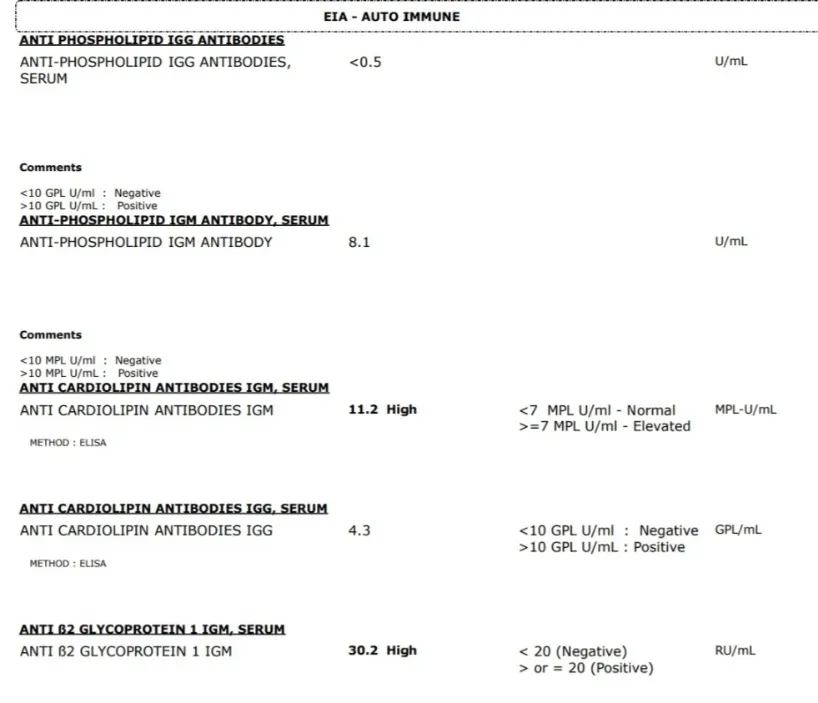
Figure 1: Laboratory evaluation showing antiphospholipid antibodies, including anticardiolipin and anti-β2-glycoprotein I antibodies, along with antinuclear antibody (ANA) results.
The patient's blood group was A positive. Haemoglobin was 9.3 g/dL, which subsequently decreased to 8.7 g/dL during the postoperative period. The platelet count was 2.31 lakh/mm³, and the total leukocyte count was 9,280 cells/mm³. The packed cell volume was 23.4%.
Prothrombin time was 13.2 seconds, with an international normalised ratio of 0.97. Activated partial thromboplastin time was 31.5 seconds.
The HbA1c level was 4.9%. Liver function parameters showed total bilirubin of 0.29 mg/dL, alanine aminotransferase of 14 U/L and aspartate aminotransferase of 15 U/L. Total protein was 5.6 g/dL, albumin was 3.3 g/dL and globulin was 2.3 g/dL.
High vaginal swab culture showed no microbial growth. Serological screening for HIV, hepatitis B surface antigen, hepatitis C and VDRL was non-reactive.s
Clinical course and pregnancy outcome
Considering the patient's previous history of second-trimester pregnancy losses and the presence of bulging fetal membranes, cervical cerclage was planned. However, before the procedure could be performed, spontaneous fetal expulsion occurred. The expelled fetus weighed approximately 170 g. Following fetal expulsion, the placenta remained undelivered, necessitating manual removal under general anaesthesia.
Management of retained placenta and uterine haemorrhage
Following manual removal of the placenta, the patient developed persistent vaginal bleeding consistent with atonic postpartum haemorrhage (PPH). Immediate management was initiated with uterotonic therapy and other measures to control bleeding. Injectable tranexamic acid was also administered as documented in the perioperative records. As bleeding persisted, an intrauterine Bakri balloon was inserted to achieve haemostasis through uterine tamponade. Blood-product replacement was provided to manage blood loss and support haemodynamic stability. The patient received one unit of packed red blood cells intraoperatively and two additional units postoperatively, along with three units of fresh frozen plasma and five units of cryoprecipitate. Intravenous antibiotics, analgesic therapy, fluid replacement and other supportive measures were also provided during the postoperative period.
Postoperative monitoring and additional findings
Following the intervention, the patient was closely monitored for further bleeding, haemodynamic stability, haemoglobin levels and blood glucose fluctuations. A General Medicine consultation was obtained due to elevated blood glucose readings during the postoperative period, and continued glycaemic monitoring was advised.
Ultrasonography of the abdomen and pelvis revealed hepatomegaly with grade I fatty infiltration. The postpartum uterus measured approximately 7 × 9 × 11 cm, with an endometrial thickness of 19 mm. An ill-defined heterogeneous area measuring 2 × 1.7 cm was noted in the lower endometrial cavity, showing minimal internal vascularity. Follow-up evaluation was suggested to assess the possibility of retained products of conception. Mild free fluid was also observed in the pouch of Douglas.
CLINICAL OUTCOME
Following treatment with uterotonic therapy, tranexamic acid, Bakri balloon tamponade and blood-product replacement, the patient's clinical condition gradually improved. No further clinically significant bleeding was documented, and she remained haemodynamically stable during the postoperative period.
Supportive treatment and blood glucose monitoring were continued. The patient was subsequently discharged in a stable condition with advice for follow-up.
DISCUSSION
Recurrent second-trimester pregnancy loss is a significant obstetric complication that may be associated with cervical insufficiency, autoimmune conditions and maternal medical disorders. Cervical insufficiency is characterised by the inability of the cervix to maintain pregnancy, potentially resulting in cervical dilatation, bulging of fetal membranes and pregnancy loss. In the present case, the patient had a history of two previous second-trimester pregnancy losses associated with cervical incompetence and presented during the current pregnancy with vaginal bleeding, lower abdominal pain and bulging fetal membranes at 17 weeks and 4 days of gestation. Although cervical cerclage was planned, spontaneous fetal expulsion occurred before the procedure could be performed. The subsequent development of retained placenta and uterine atony further complicated the clinical course. This case highlights the challenges involved in managing recurrent second-trimester pregnancy loss in women with multiple maternal risk factors. [1, 2, 3, 4]
The American College of Obstetricians and Gynecologists (ACOG) highlighted the role of cervical cerclage in women with a history suggestive of cervical insufficiency, particularly those with previous second-trimester pregnancy losses. Similarly, Shennan et al. described cervical cerclage as an important preventive intervention in selected women at increased risk of second-trimester loss or preterm birth. In the present case, the history of two previous pregnancy losses associated with cervical incompetence supported the decision to plan cervical cerclage. However, spontaneous fetal expulsion occurred before the planned intervention. Unlike cases in which cerclage can be performed before advanced cervical changes develop, this case illustrates the difficulty of preventing pregnancy loss when the patient presents with bulging fetal membranes. [3, 4]
Tektonidou et al. emphasised the association between antiphospholipid antibodies and adverse pregnancy outcomes, including recurrent pregnancy loss and placental complications. Their European League Against Rheumatism (EULAR) recommendations highlight the importance of evaluating the antiphospholipid antibody profile when assessing suspected obstetric antiphospholipid syndrome (APS). Similarly, Miyakis et al. highlighted the importance of specific clinical and laboratory criteria in the classification of APS. In the present case, previous laboratory investigations demonstrated elevated anticardiolipin IgM and anti-β2-glycoprotein I IgM levels according to the laboratory reference ranges, whereas lupus anticoagulant was absent. However, these findings alone do not establish APS, as persistent antibody positivity and the relevant clinical criteria must be considered. Therefore, although antiphospholipid antibody positivity was an important clinical feature in this patient, the pregnancy losses cannot be directly attributed to APS based on the available findings. [5, 6]
Pregestational diabetes mellitus and hypothyroidism were additional maternal comorbidities in this case. The American Diabetes Association (ADA) emphasised that appropriate glycaemic management before and during pregnancy is important to reduce the risk of adverse maternal and fetal outcomes. In the present patient, the HbA1c level was 4.9%; however, this single measurement does not establish glycaemic control throughout pregnancy, particularly because elevated blood glucose readings were observed during the postoperative period. Similarly, Alexander et al. highlighted the importance of thyroid function assessment and appropriate management of hypothyroidism during pregnancy. Although the patient had a known history of hypothyroidism and was receiving treatment, thyroid function results were not available for comparison. These findings emphasise the importance of regular glucose monitoring and thyroid function assessment in pregnant women with pre-existing endocrine disorders. [12, 13]
Perlman and Carusi reported that retained placenta may be associated with significant maternal blood loss and may require manual removal and additional interventions to control bleeding. Their review also highlighted the importance of preparing for haemorrhagic complications when retained placenta is encountered. A similar clinical course was observed in the present case, in which the placenta remained undelivered following spontaneous fetal expulsion and required manual removal under general anaesthesia. The patient subsequently developed uterine atony with persistent bleeding. This outcome highlights the importance of timely placental removal and close monitoring for haemorrhagic complications following pregnancy loss. [7, 8]
Escobar et al., in the International Federation of Gynecology and Obstetrics (FIGO) recommendations, described a coordinated approach to haemorrhage management involving uterotonic therapy, tranexamic acid, fluid replacement and additional interventions when bleeding is not adequately controlled. The World Health Organization (WHO) also emphasised the importance of timely recognition and appropriate escalation of treatment in the management of postpartum haemorrhage. In the present case, persistent bleeding associated with uterine atony was managed with uterotonic therapy, tranexamic acid and intrauterine Bakri balloon tamponade. Blood-product replacement was also required, including packed red blood cells, fresh frozen plasma and cryoprecipitate. The interventions provided in this patient reflect the importance of prompt recognition, escalation of treatment and coordinated obstetric care. Following these measures, the patient's condition improved, and she was discharged in a stable condition. [9, 10, 11]
Compared with previously published clinical recommendations, this case demonstrates the complex management of recurrent second-trimester pregnancy loss in a woman with a history of cervical incompetence, antiphospholipid antibody positivity, pregestational diabetes mellitus and hypothyroidism. The case is particularly important because spontaneous fetal expulsion occurred before the planned cervical cerclage, followed by retained placenta and atonic haemorrhage requiring multiple interventions. Although several maternal risk factors were identified, the available clinical findings do not establish a single cause for the pregnancy loss. The successful control of haemorrhage and subsequent maternal stabilisation highlight the importance of individualised obstetric management, multidisciplinary care, timely intervention and appropriate follow-up in high-risk pregnancies.
CONCLUSION
Recurrent second-trimester pregnancy loss remains a challenging obstetric complication that requires early identification of underlying risk factors and appropriate antenatal management to improve maternal and pregnancy outcomes. This case highlights the importance of recognising cervical insufficiency, evaluating associated maternal comorbidities and providing careful monitoring throughout pregnancy. The patient's clinical course was complicated by spontaneous fetal expulsion at 17 weeks and 4 days, followed by retained placenta and uterine atony with persistent haemorrhage. Timely obstetric intervention, including manual placental removal, haemorrhage control measures, intrauterine balloon tamponade and blood-product replacement, resulted in successful bleeding control and maternal stabilisation. The significance of this report lies in highlighting the complex interplay of obstetric history and maternal comorbidities in high-risk pregnancy management. It also reinforces the importance of individualised antenatal assessment, multidisciplinary care, prompt management of obstetric emergencies and appropriate follow-up to support favourable maternal outcomes.
REFERENCES

Nandana R. S., Alfeena N., Alnon L. J., Shashikala G., Shaiju Dharan, Recurrent Second-Trimester Pregnancy Loss Complicated by Retained Placenta and Atonic Haemorrhage Requiring Bakri Balloon Tamponade: A Case Report, Int. J. of Pharm. Sci., 2026, Vol 4, Issue 11, 1758-1765. https://doi.org/10.5281/zenodo.24152431
 10.5281/zenodo.24152431