

We use cookies to ensure our website works properly and to personalise your experience. Cookies policy
Department Of Pharmacology, Surabhi Dayakar Rao College Of Pharmacy.
Regenerative medicine is a major area of study in contemporary medicine because it has great potential to treat illnesses and irreparable damage that are difficult to treat with traditional techniques. Due to their capacity for self-renewal, stem cells are a crucial component of regenerative medicine, and research on them is growing, presenting them as a cutting-edge treatment option. "Stem cell research and therapy" gives individuals with illnesses that traditional medicine is unable to treat new hope. Stem cell-based therapy, including human pluripotent stem cells (hPSCs) and multipotent mesenchymal stem cells (MSCs), has recently emerged as a crucial role in regenerative medicine. The term "hPSCs" refers to self-renewable cell types that have the capacity to differentiate into three germ layers and other cellular phenotypes of the human body. MSCs are multipotent progenitor cells with self-renewal abilities (limited in vitro) and the potential to differentiate into mesenchymal lineages, according to the International Society for Cell and Gene Therapy (ISCT)Nevertheless, the current body of research does not provide an extensive overview that analyzes stem cell therapy and its different cellular subtypes across multiple medical fields. This review addresses this gap by categorizing contemporary stem cell research according to medical specialty and stem cell classification, providing an exhaustive analysis of their respective benefits and constraints, and thereby elucidating multifaceted perspectives on the clinical implementation of this therapeutic modality
In order to produce a therapeutic effect, cell therapy—also referred to as cellular therapy, cell transplantation, or cytotherapy—involves injecting, grafting, or implanting viable cells into
a patient. Examples of this include grafting stem cells to regenerate diseased tissues or transplanting cells that can fight cancer cells via cell-mediated immunity during immunotherapy.
Cell therapy began in the 1800s when researchers conducted experiments involving the injection of animal substances in an effort to prevent and treat diseases. While these early efforts yielded no beneficial results, subsequent investigations in the mid-twentieth century revealed that human cells could play a role in preventing the rejection of transplanted organs in the body, ultimately leading to the successful practice of bone marrow transplantation for patients whose bone marrow has been compromised due to illness, infection, radiation, or chemotherapy. In recent years, however, there has been a significant surge in interest among researchers regarding stem cell and cell transplantation as a promising new therapeutic approach for a variety of diseases, particularly those involving degeneration and immune response issues.
Patients with illnesses that conventional medicine is unable to treat have new hope thanks to stem cell research and therapy. Among the diseases that cannot be cured are neurodegenerative conditions like Alzheimer's and Parkinson's disease, chronic organ failures like liver cirrhosis and heart failure, complex autoimmune disorders like multiple sclerosis and scleroderma, pediatric conditions like cerebral palsy, autism spectrum disorder, and spinal muscular atrophy, age-related disabilities like osteoarthritis, and some genetic disorders. These illnesses present ongoing difficulties for the global healthcare system. Patients and their families also bear a heavy financial, emotional, and physical strain as a result of these illnesses.
Current medical methods simply address symptoms and use traditional medications to delay the advancement of the disease. However, these methods frequently only offer short-term respite and seldom stop the illness process, leaving patients and their families looking for better solutions. These chronic illnesses are growing more prevalent due to an aging global population, which puts additional strain on both individuals and healthcare systems. Regenerative medicine and stem cell-based therapy have become two of the most promising next-generation medical techniques in response to this increasing issue. Stem cell-based treatments have the potential to restore normal physiological function at the cellular level and repair, replace, or regenerate damaged tissues.
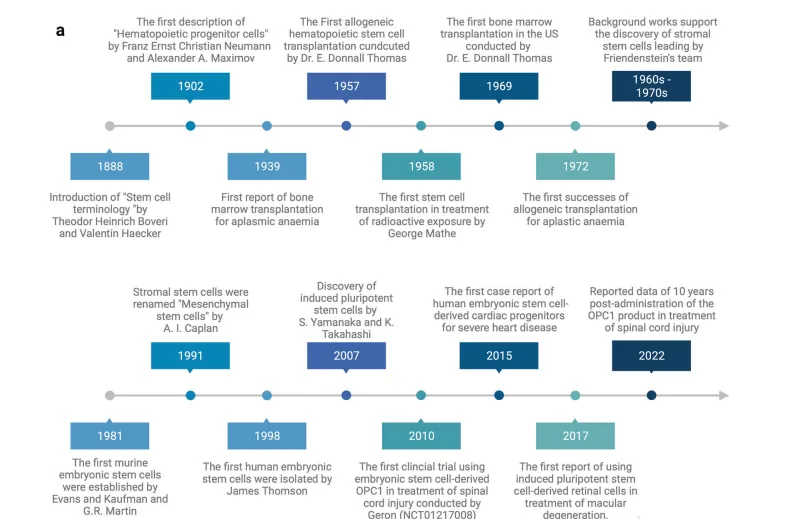
Figure a:It represents history and cell sources in treatment of certain disorders.
Stem cells are undifferentiated biological cells that have the ability to divide (via mitosis) to create more stem cells as well as differentiate into specialized cells. Multicellular creatures contain them. Mammals have two main types of stem cells: adult stem cells, which are present in different tissues, and embryonic stem cells, which are separated from the inner cell mass of blastocysts. Adult tissues are replenished by stem cells and progenitor cells, which serve as the body's repair mechanism. In addition to maintaining the regular turnover of regenerative organs like blood, skin, or intestinal tissues, stem cells in a growing embryo can differentiate into all the specialized cells—ectoderm, endoderm, and mesoderm (see induced pluripotent stem cells).
In actuality, the ability of stem cells to rebuild tissue is used to identify them. For instance, the ability to transplant bone marrow or hematopoietic stem cells (HSCs) and save a person without HSCs is the defining test for HSCs. This shows that the cells are capable of long-term production of new blood cells. Additionally, it should be feasible to separate the transplanted person's stem cells, which can then be transplanted into another person lacking HSCs to show that the stem cell was able to self-renew. Stem cell properties can be demonstrated in vitro by techniques like clonogenic tests, which evaluate the capacity of individual cells to differentiate and self-renew.
A unique set of cell surface markers can also be used to isolate stem cells. It's uncertain, though, if cells would react similarly in vivo because in vitro growing circumstances can change their behavior. The question of whether some suggested adult cell types are indeed stem cells is hotly debated.
There are three known accessible sources of autologous adult stem cells in humans
1.Bone marrow, which requires extraction by harvesting, that is, drilling into bone (typically the femur or iliac crest).
2.Adipose tissue (lipid cells), which requires extraction by liposuction.
3.Blood, which requires extraction through apheresis, wherein blood is drawn from the donor (similar to a blood donation), and passed through a machine that extracts the stem cells and returns other portions of the blood to the donor.
After birth, umbilical cord blood can also be used to harvest stem cells. Autologous harvesting carries the least danger of all stem cell types. Just as a person may bank their own blood for elective surgical treatments, autologous cells are by definition derived from their own body. Many medical treatments, such as bone marrow transplantation, commonly employ adult stem cells.It is now possible to produce stem cells artificially and differentiate them into specific cell types that share traits with cells from different tissues, including muscles or nerves. Autologous embryonic stem cells produced by somatic cell nuclear transfer or dedifferentiation, as well as embryonic cell lines, have also been suggested as viable options for upcoming treatments.
Research into stem cells grew out of findings by Ernest A. McCulloch and James E. Till at the University of Toronto in the 1960s.Immunosuppression may be necessary for stem cell treatments because the patient's immune system may target the stem cells or because radiation therapy is necessary prior to the transplant to eliminate the patient's prior cells. Using stem cells from the patient undergoing treatment is one way to prevent the second scenario. Obtaining a particular cell type may also be challenging due to pluripotency in some stem cells. Because not every cell in a population differentiates in the same way, it is also challenging to obtain the precise cell type required. Unwanted tissues can be produced by undifferentiated cells. Following transplantation, some stem cells develop tumors; pluripotency is associated with the development of tumors, particularly in embryonic stem cells, lethal appropriate stem cells, and induced pluripotent stem cells. Fatal proper
Fatal proper stem cells form tumour’s despite multipotency Stem cells are important tools for disease research and offer great potential for use in the clinic. Some adult stem cell sources are currently used for therapy, although they have limitations. The first clinical trials using cells made from embryonic stem cells have just finished, but further studies are needed before any therapeutics for more patients can be approved. Meanwhile, induced pluripotent stem cells are already of great use in research, but a lot of work is needed before they can be considered for use in the clinic. This also shows in the clinical trials involving either ESCs or iPSCs: while ESCs are used in several clinical trials to treat diseases, iPSCs were so far only used in one single study to treat Age-related Macular Degeneration (AMD), which is currently on hold. All other clinical trials rather involve the derivation of iPSCs from patient cells either for disease modelling, drug testing or to increase our understanding of the basic biology of this cell type. An additional avenue of current research is trans differentiation – converting one type of specialised cell directly into another.
All these different research approaches are important if stem cell research is to achieve its potential for delivering therapies for many debilitating diseases.

STEM CELL THERAPY
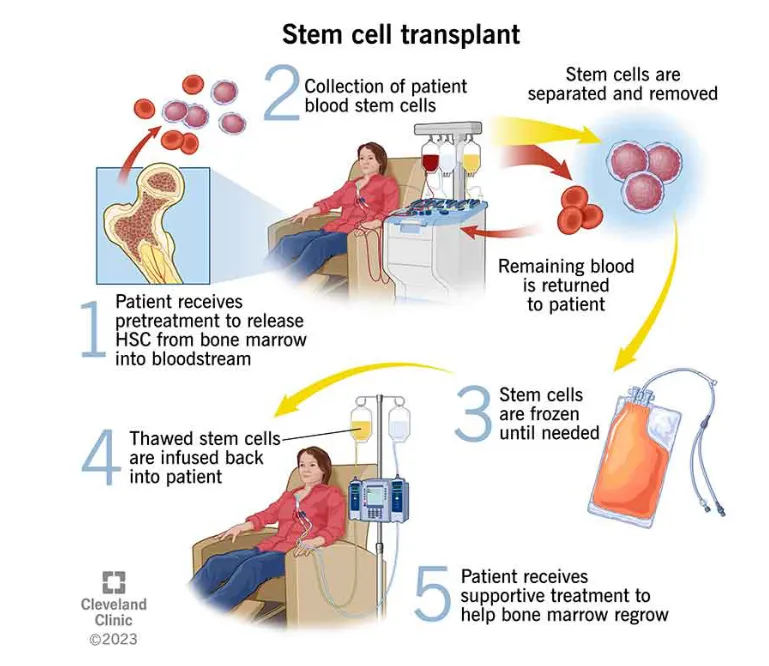
Stem cell therapy is used to treat certain disorders like:
According to studies, applying MSCs to wound sites promotes angiogenesis and fibroblast migration, increases extracellular matrix deposition, aids in wound closure, starts re-epithelialization, and has immunomodulatory effects. BM-MSCs, ADSCs, placental MSCs, and the recently identified ABCB5+ mesenchymal cells have all produced positive results [109,110]. In one study, MSCs from bone marrow were successfully applied via a fibrin spray method to non-healing lesions.Patients with diabetic ulcers who received BM-MSCs in a double-blind, randomized controlled trial saw full healing in four weeks []. Because of their paracrine actions rather than direct cell replacement, ADSCs have also demonstrated efficacy in wound healing in both animal and human trials. Many growth factors are present in the ADSC secretum that promote epithelialization and angiogenesis.
2. Injuries
Studies have shown that MSCs can lessen the development of new scars as well as those that already present. By preventing the conversion of myofibroblasts into fibroblasts, decreasing fibroblast proliferation, and regulating inflammation, UC-MSCs and BM-MSCs have been shown to lessen the development of hypertrophic scars in animal models. Furthermore, ADSCs have been demonstrated to inhibit collagen deposition, fibroblast migration, and proliferation in both in vitro and in vivo models, inhibiting the formation of keloids and hypertrophic scars. ADSCs are widely employed in scar repair and can be applied utilizing methods like fat grafting or stromal vascular fraction since they are easily harvested through treatments like liposuction.
Additionally, a study comparing the efficacy of BM-MSCs and ADSCs found that both were more successful in raising the MMP1/TIMP1 ratio and lowering alpha and IL1-beta, which are critical for scar development. Clinical research has shown that when MSC conditioned media is used in conjunction with laser therapy, the appearance of post-acne atrophic scars improves noticeably more than when laser therapy is used alone. The use of exosomes made by MSCs is another developing field of study. J. Mol. Sci. 2025, 26, 9659 12 of 47 has been demonstrated to inhibit fibroblast differentiation into myofibroblasts by preventing scar formation by horizontal miRNA transfer.
Because stem cells can improve fibroblast development and activity, increase collagen formation, and lower inflammation, they are used in skin rejuvenation. ADSCs are used directly, as fat grafts, or as stromal vascular fractions to address these effects as well as the aging-related decrease in facial fat. According to clinical research, stem cells help rejuvenate skin by changing the dermal pattern in patients who receive stromal vascular fractions or stem cells following facelift surgery, resulting in complete regeneration in situations of solar elastosis. Furthermore, clinical research has shown that nano fat injections can inhibit fat buildup or transplant migration by reducing lower lid pigmentation and eliminating perioral wrinkles. Additionally, in clinical trials using stem cell-conditioned medium in conjunction with techniques like microneedling or laser, it has been shown that combined treatments are more effective than single treatments in reducing wrinkles and pores.
In recent clinical trials, stem cell treatment for diabetes mellitus (DM) has demonstrated encouraging outcomes. In individuals with type 1 diabetes who reported severe hypoglycemia, an allogeneic stem-cell derived islet product (VX-880) effectively produced endogenous insulin. After receiving stem cell therapy, one person actually stopped requiring insulin injections. With varying degrees of success, recent research has assessed the use of MSCs for immunomodulation and regeneration in the treatment of Type 1 diabetes. For instance, one study found no discernible difference in insulin requirements, HbA1C, or C-peptide levels. However, research showing that autologous adipose tissue-MSCs with vitamin D and allogenic Wharton's Jelly MSCs combined with autologous bone marrow-derived mononuclear cells improved HbA1C in individuals with Type 1 diabetes.
Studies assessing stem cell therapy for Type 2 diabetes are less encouraging because the illness impairs stem cell activity and the results are primarily transient. Results, however, were more encouraging for people with T2DM that started less than ten years ago and did not have comorbid obesity.
Stem cell therapy has also been investigated in relation to Addison's disease, often known as adrenal insufficiency. In a recent study, Ruiz-Babot et al. used steroidogenic factor 1 to create in vitro functional cells from human pluripotent stem cells.They exhibited a dose-dependent adrenocorticotropic hormone (ACTH) receptor response and successfully documented steroid hormone production in vitro. This research shows promise for the future of human-induced steroidogenic cells for adrenal insufficiency, even though human introduction is still far off.
The ability to regenerate functioning thyroid cells and skin fibroblasts has been demonstrated by pluripotent stem cells [161]. Thyroid-stimulating hormone (TSH), ethacridine, and activin A were used in this study to differentiate human induced pluripotent stem cells in vivo. Thyroglobulin, thyroid peroxidase, TSH-receptor, sodium/iodide symporter, and even released thyroid hormone (T4) were all expressed by these cells after purification and terminal differentiation. Autoimmune attacks are still a major issue, though, particularly when autoimmune thyroiditis is present.
Stem cells are unique cells that can differentiate into a wide variety of bodily cell types. When illnesses or injuries occur, stem cell treatment employs these cells to restore lost or damaged cells. There are yet no FDA-approved stem cell treatments for eye illness, despite their potential.
Researchers are striving to guarantee this technology's efficacy and safety.
AMD retinal patches
Using stem cells, researchers have produced patches of retinal cells. These can be used to treat ailments like AMD. To restore damaged tissue, these patches are inserted into the eye. Retinal patches of stem cells have been shown to survive longer than some alternative techniques.
Research on retinal progenitor cells
One kind of unique adult stem cell present in the retina is called a retinal progenitor cell. Scientists have figured out how to stimulate these cells in the lab to produce new retinal cells, but they do not replace lost or damaged retinal cells in the eye. These cells are being investigated by researchers as possible remedies for retinal disorders.
Repairing the cornea
There are now new techniques for cultivating and applying limbal stem cells to the surface of the eye. The cornea's periphery contains limbal stem cells. By creating new cells, they contribute to the cornea's continued health. This procedure restores damaged or outdated cells. Chemical burns, illnesses, and corneal injuries are now better treated thanks to limbal stem cell therapy.
Stem cell treatment for lung diseases is a potential field of regenerative medicine. Chronic obstructive pulmonary disease (COPD), pulmonary fibrosis, and cystic fibrosis are among the conditions that often cause irreversible lung damage. While conventional treatments only manage symptoms, stem cell therapy offers a fresh method by potentially repairing damaged lung tissue and reducing inflammation.
There are currently no viable treatments for lung problems, thus researchers are searching for new and effective drugs. A potential therapeutic approach is suggested by the protective characteristics of MSCs and the secretomes they generate against lung diseases. Immune cells play a major role in the development of lung diseases. MSCs contribute to both innate and adaptive immune responses in lung diseases;
They can influence neutrophils, macrophages, T cells, and B cells and have immunomodulatory properties. However, MSCs and associated secretomes have challenges in therapeutic applications due to heterogeneity, dangerous transformation in vivo, a low survival rate, and the lack of standardized methods for the separation, extraction, and preservation of EVs. Larger clinical trials and more comprehensive basic research are required to address these issues in the future.
DATRI BLOOD STEM CELL DONORS REGISTRY
DATRI is a not-for-profit organization and a Section- 25 company registered with the Government of India, with a mission to save lives of those suffering from fatal blood disorders like Lymphoma, Thalassemia, Aplastic Anemia etc.People with these conditions may be saved by a blood stem cell transplant from a willing, genetically matched donor. In 2009, Mr. Raghu Rajagopal founded DATRI (meaning "donor" in Sanskrit), an unrelated blood stem cell donor registry in India with just 3000 registered donors, in collaboration with Dr. Nezih Cereb, President and Co-Founder of Histogenetics, a State-of-the-Art Lab specialized in HLA Typing, and Dr. Soo Young Yang, Chairman and Founder of Histogenetics.
Despite a very low level of awareness in the county and limited medical infrastructure for peripheral blood stem cell donation, DATRI today has over 137000 donors registered. DATRI has facilitated 178 transplantations, of which 18 have been for patients located outside India (USA, London, Italy, Iran, Australia). Several of these patients, are children, with congenital fatal blood related disorders, with blood stem cell transplant being the only available therapeutic option for most of them.The goal of Datri is to establish a database of dedicated, voluntary, tissue/HLA-typed donors who are knowledgeable and prepared to give to a patient in need of life anywhere in the world,to achieve this, in a responsible and ethical manner, through increasing awareness and fostering a deeper understanding of unrelated blood stem cell donation, and enabling informed decision making should be endeavor to succeed in this, through collaborative efforts of representatives of all facets of blood stem cell transplantation such as donors, recipients and their families, corporates, community resources, apheresis centers, transplant centers, and other cooperative donor registries.
REGULATORY AND ETHICAL ASPECTS
Trials have demonstrated the therapeutic potential of stem cell-based therapy, but their clinical application raises significant ethical and regulatory concerns that remain unresolved. The use of human embryonic stem cells (hESCs), in particular, poses challenges, as harvesting hESCsrequires the destruction of embryos. This raises significant ethical concerns for many. Beyond these ethical debates, safety risks also limit the use of hESC-based therapies. hESCs have a higher risk of unchecked proliferation in transplant settings due to their great plasticity and ability to differentiate into many cell types.
Induced pluripotent stem cells (iPSCs) are considered more ethically acceptable since their derivation does not involve the destruction of embryos; however, they are not without risk. Similar to hESCs, iPSCs exhibit genomic instability and incomplete differentiation, which can limit their safety in transplantation. Mesenchymal stem cells (MSCs) are generally viewed as less ethically controversial than embryonic stem cells since their generation does not require embryo destruction. Nonetheless, ethical concerns persist regarding informed consent and ownership of perinatal tissues, such as umbilical cord blood and placental samples. Additionally, across all stem cell types, there are significant concerns surrounding equitable access, as novel therapies risk widening existing healthcare disparities. To protect patient safety and maintain the integrity of research, stem cell-based treatments are subject to various national regulations. The Food and Drug Administration (FDA) and the National Institutes of Health (NIH) are the main federal and state regulators of stem cell-based treatments in the United States. Strict preclinical validation, standardized manufacturing procedures, and careful clinical trial monitoring before to approval are some examples of these restrictions.
Despite these efforts, the rise of unregulated stem cell clinics suggests the need for stricter oversight and transparent reporting. Ongoing collaboration between clinicians, researchers, regulatory authorities, and bioethicists will be critical to balancing innovation with patient safety, ethical responsibility, and equitable access.
CONCLUSION
In conclusion, while there is still much exploration and understanding to be done, the rapidly developing discoveries in stem cell therapy are not only encouraging but transformative. Stem cells possess the capability to not only enhance and prolong life but have fundamentally changed our comprehension, methods, and possibilities for deciding on disease treatment options. The concept of stem cells as “living medications” has redirected attention from synthetic drugs to biological cells. Rather than merely alleviating symptoms, stem cells offer the prospect of therapies that may modify diseases by actively repairing and regenerating tissues. Consequently, stem cell research and therapy represent the future of customized, targeted, and potentially curative healthcare solutions. The term “incurable” used to evoke feelings of despair. However, a deeper understanding and
progress in the realm of stem cells could significantly reduce the number of diseases deemed incurable. Yet, it is essential that innovation and responsibility are intertwined to transform this promise into tangible outcomes. On this Stem Cell Awareness Day, it is crucial not only to acknowledge our successes but also to strengthen our collective commitment to ethical practices, technological advancements, regulatory alignment, and scientific integrity, ensuring that individuals worldwide can benefit from stem cell therapy.
REFERENCES




Narsapuram Bharathi, Annamaina Sai Kiran, Sania Tabassum, Buddi Pravalika, Aliya Siddiqua, Kurakula Manga, Biological Treatments for Incurable Diseases by Using Stem Cells, Int. J. of Pharm. Sci., 2026, Vol 4, Issue 7, 230-239, https://doi.org/10.5281/zenodo.21131552
 10.5281/zenodo.21131552